
Headlines
Interview: Why I wrote mathematics book in Hausa language – Ibrahim Makari


Specialists in education have for long been advocating for teaching students in mother tongue. In fact, the national policy on education mother tongue should be the medium of instruction at the first three years of primary pupils education.
The major concern is rest on how to provide relevant books for primary/secondary school students in mother tongue.
In this interview Ibrahim Danladi Makari disclosed why he wrote ‘Mathematics a harshen Hausa for SS 1 and SS 2’.
Q: What is your name?
A: My name is Ibrahim Danladi Makari

Q: What is your academic qualification?
A: Actually I suppose to answer this question in a simple and plain sentence. But permit me to explain my academic and teaching experiences as they are more relevant to the books in question. I mean, ‘MATHEMATICS A HARSHEN HAUSA FOR SS 1 & SS 2’. This is because they are more of products of four years online and offline researches and teaching experience than my academic qualification. Nonetheless, the explanation will be a reflection to the answer of the question above.
After I finished my secondary school in 1995, I undergone remedial (pre-degree) program at Bayero University Kano in the 1996/97 session. After the session, I switched to University of Jos, where I repeated the same program and subsequently secured the desired course of Pharmacy at the Faculty of Pharmaceutical Sciences. I reached up to 300 level at the faculty but willingly dropped out and left the country with the intention of finishing the studies abroad. But things didn’t work out as planned.
However, when I settled in Ghana for two years, I taught Mathematics and Science subjects. I came back to Nigeria and taught the same subjects for some years. I am now running an educational consultancy which spare headed the productions of the books through online and offline researches and selected the best and simplest methods on how Mathematics topics are taught in developed and developing countries.
So in a nutshell, I was a 300 level self-dropped-out pharmacy student but with several years teaching experience.
However, I didn’t mean to present this explanation as a qualification but I know qualification is all about potential to make positive impact to the society. I hope this lengthy explanations answered the question in some ways.
Q: What inspired you to write the books?
A: Well, it is an established educational research findings that pupils/students understand any topic when taught in their native languages. This is because learning in a native language is just facing a single task. That is, understanding the concepts of the topics.
On the other hand, learning in a borrowed or imposed language involves double tasks. Which means understanding the medium of communication (English language in our own case) in addition to the concepts of the topics.

I remember vividly during my school years, once lectures are over, in most cases Mathematics lectures, the students that understood the lectures better in English language used to dissect the lectures to the less privileged ones in the Hausa language. Which improved their understanding and performance in the tests and exams.
According to my personal educated guess, the students that understand Mathematics finds it easy to understand other subjects once it is well explained. In other words, Mathematics is the brain stimulant academically.
So taking measures to improve the knowledge of Mathematics might have general positive impact on the standard of education among the native Hausa readers and speakers. These are the three major inspirations I got in writing the books so that I will contribute my own quota in the upliftment of the standard of education in the North in particular and Nigeria at large.
Q: Who are the target readers?
A: The books that are about to be launched are for SS 1 and SS 2 students. But SS 3 students can still use them to do revision and prepare for their WAEC and NECO examinations; considering the fact that a lot of SS 3 topics are revisions of SS 1 and SS 2 topics. However, the SS 3 book is already in the pipeline. Hopely, it will be published next year in shaa Allah.
Q: What specific area the books covered?
A: The books extensively covered the foundational topics of SS 1 and SS 2. The topics that are difficult to understand. The topics are explained in such a way that an average student can teach himself or herself with or without little push from the teachers.
Q: What are your expectations?
A: I have an overwhelming expectations insha Allah that the books will be patronized as they are potential solution to the most students’ nightmare (Mathematics). I am not only expecting individual students and parents to embrace the books, I also anticipate educational NGO and philanthropist and most especially northern state governments, where Hausa is the dominant language to purchase the books in substantial quantities and distribute them among their students to improve the understanding of Mathematics in particular and education at large.
In my humble opinion, I think it is about time for us to officially start teaching our pupils and students at least the core science subjects in our native languages. These core science subjects are the major ingredients of economic developments. It is the common practice in most of the so called developed and developing countries such as China, India, Malaysia, Japan etc. That is why so many innovations and inventions come from there.

At this juncture, I think it is noteworthy to reveal that the SS 1 book of the ‘Mathematics A Harshen Hausa’ has won the 2022 contest of Hausa language category of Mathematics written in the three major indigenous languages of Nigeria, that is Hausa, Igbo and Yoruba, organized by ‘Hadiza Ibrahim Annual School Festival (HIASFEST 2022), with an attached prize of N150,000 and a certificate of merit.
Q: Who sponsored the project?
A: The project was 99.9% sponsored by my biological brother, Lit Col U. F. Abdurrahim who is passionate about education. He never complain of any request regarding the project up to this level. Alhamdulillah, I did not disappoint him either in an effort to make the project a reality. However, the 0.1% is from my mother and my elder brother which are request for data and other little logistics. This mostly happened because of slight delay of sending the bulk money due the tight schedules of the main sponsor.
Q: Did you receive any support in the course of the project?
A: Amm! If you mean moral supports, yes, I did received several supports, major of which is the overwhelming moral supports and prayers from my mother, my paternal aunty, my recently late paternal uncle, Alh. Sule Bako (Mai masallacin matafiya Kaduna – Zaria road), my wife and my friends and well wishers.
In fact my mother was the main moral supporter long before I thought of writing this books. Because she used to tell me that and I quote ‘your method of teaching is as if you open the brain of the student and arrange the knowledge sequentially’. My late uncle used to tell me ‘the project is not an easy one but keep it up. Nothing good comes easy’. My wife over the course of four years has been supportive in very many ways. Friends and well wishers that I confided the project to encouraged me with so many elbow greecing words.
Q: What are the challenges you encountered so far in the project?
A: indeed no project of this magnitude will be realized without encountering challenges here and there. The major challenge I faced at the climax of the project is sleep deprivation. I was dominantly preoccupied with the writing, sketching and fixing one or two things regarding the project in the morning and afternoon. Such round-the-clock activities mostly extended up to 2am at night. Most a times I slept for three hours or so in a day. That really put a lot of stress on my body system.
As there are no direct translations to so many Mathematical terminologies and as far as I know, no base or similar book(s) on which to compare and contrast the complex Mathematical expressions between English and Hausa language, I struggled from pillar to post just to make some of the concepts as clearer and simpler as possible. That was really a challenge to me as well.
Lastly, my social life was adversely distorted. I cut off from most of my friends and families just to utilize the time on the project. In a nutshell, explaining my life during the climax of the project in a ‘Four-Burner-Theory’, the project time will take 70% when compared to my other activities. Most of my indoor and outdoor activities were relegated to the back seat.
Q: When will the launching take place?
A: As at 19th February 2022, no date has been fixed yet. We are still scouting for partners, advertisers and possibly additional sponsors. Meanwhile, we are making consultations from the people that have the know-how on how to go about it. You know, being the first time of holding such an event, we have to do a lot of home works. But so far we have started discussing about committees that will strategise on the preparations and programs of the event.
But hopefully, the launching day will be in a couple of weeks time. Once the date is finally fixed it will be widely broadcast insha Allah.
Ibrahim Danladi Makari can be reached via 08099014936, 08163386056
email: mathsahausa@gmail.com

Nasiru Yusuf Ibrahim
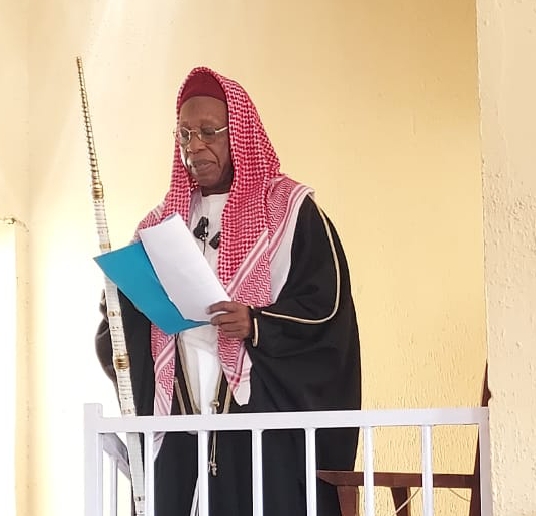
Dr Goni Faruk Umar has urged Muslims to embrace Taqwa in their daily lives, describing it as a foundation of Islam and a key to righteous conduct and success in this world and the hereafter.
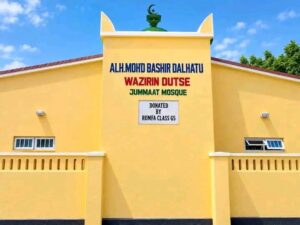
KANO FOCUS reports that the Islamic scholar made the call while delivering a Juma’a sermon at the New Juma’a Mosque, Rumfa College, Kano.
In the sermon, Dr Goni Faruk Umar explained the meaning of Taqwa using classical Islamic scholarship, including an account involving Umar ibn al-Khattab and the companion Ubayy ibn Ka’b to illustrate the concept.
According to the account cited in the sermon, Sayyadina Ubayy once asked Khalifa Umar bin Khattab whether he had ever walked along a thorny path. When Khalifa Umar bin Khattab answered in the affirmative, Sayyadina Ubayy asked how he navigated it. Khalifa Umar bin Khattab replied that he gathered his clothes and proceeded cautiously to avoid being pricked.
Sayyadina Ubayy then explained that this was the essence of Taqwa: being constantly mindful of one’s actions and carefully avoiding what displeases Allah.
Dr Goni Faruk Umar said Taqwa should not be limited to acts of worship but should also guide Muslims’ conduct in contemporary society, particularly in their use of digital platforms and social media, control of the tongue, and relationships within the family.
He urged worshippers to exercise restraint in their speech, act responsibly online and uphold their obligations to family members in accordance with Islamic teachings.
The cleric also highlighted the spiritual and worldly benefits of Taqwa, including relief from hardship, ease in personal affairs, forgiveness of sins and increased rewards in the hereafter.
Quoting verses from the Qur’an, he cited Allah’s promise in Surah At-Talaq, verses 2 and 3, that whoever fears Him will be granted a way out of difficulties and provided for from sources they could not have anticipated.
He also referred to Qur’an 65:4–5, which promises ease in affairs, the removal of sins and the multiplication of rewards for those who maintain Taqwa.
The scholar reminded Muslims that worldly life is temporary and that the hereafter is their permanent destination. He therefore urged them to regard Taqwa as the best provision for the journey beyond this life.
Citing Qur’an 2:197, he emphasised that the best provision for the hereafter is Taqwa, urging believers to remain conscious of their responsibilities to Allah.
The sermon also featured prayers and salutations upon Prophet Muhammad (peace be upon him), his family and companions, in accordance with the Qur’anic instruction in Surah Al-Ahzab, verse 56.
Dr Goni Faruk Umar concluded by encouraging Muslims to remain steadfast in faith, follow the guidance of the Prophet and make righteousness a guiding principle in their daily lives.
Nasiru Yusuf Ibrahim
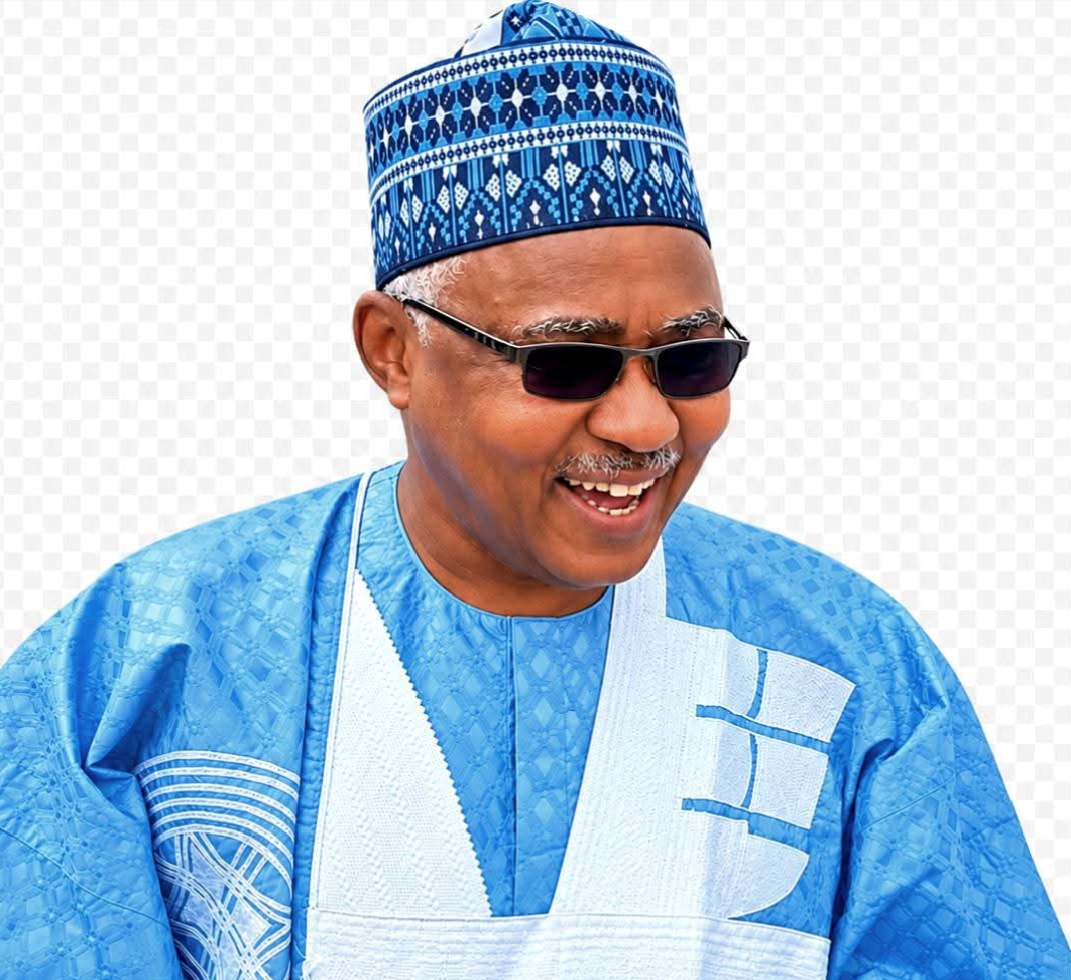
Political allies and loyalists of former Managing Director of the Nigerian Ports Authority (NPA), Arc Aminu Dabo, have begun resigning from the All Progressives Congress (APC) in Kano State following his withdrawal from the ruling party.
KANO FOCUS reports that the supporters, operating under the political group Dabo Alheri Ne, reportedly include members across Kano State’s 44 local government areas.
Barely two days after Dabo announced his resignation from the APC, a prominent stakeholder of the group, Garba Zakiru Dambatta, said members had welcomed the decision and were showing solidarity by submitting their resignation letters to their respective ward party chairmen.
Dambatta, a former APC chairman in Dambatta Local Government Area, said the group’s members were disappointed with what they described as the prolonged marginalisation of Mr Dabo and his supporters within the party.
According to him, despite Mr Dabo’s contributions to the APC and efforts to strengthen the party and manage disagreements among its members, some key stakeholders had continued to sideline him and his loyalists in party activities.
Dambatta reaffirmed the group’s commitment to standing by Mr Dabo’s political decisions and supporting his future political journey.
He also urged the former NPA managing director not to succumb to political pressure or reverse his decision to leave the party.
“This step you have taken, we have the conviction that it is the beginning of a new chapter of goodness in your life,” Dambatta said.
Among the prominent members of the group identified as supporting Mr Dabo’s decision are Abba Rabee’u, a former Senior Special Assistant on Political Awareness; Almustapha Jilani Danmalam, a former Senior Special Assistant on Education; Jamilu Abdullahi Zangon-Mata, a former Senior Special Assistant on Entrepreneurship; and Fahd A. Dabo, a former Special Assistant on Youth Mobilisation.
The individuals reportedly served during the second term of former Kano State Governor Abdullahi Umar Ganduje.
The group also said several other party loyalists and supporters were backing Dabo following his resignation.
However, the statement did not provide the number of members who had formally resigned from the APC or indicate whether the party leadership had responded to the development.
Nasiru Yusuf Ibrahim
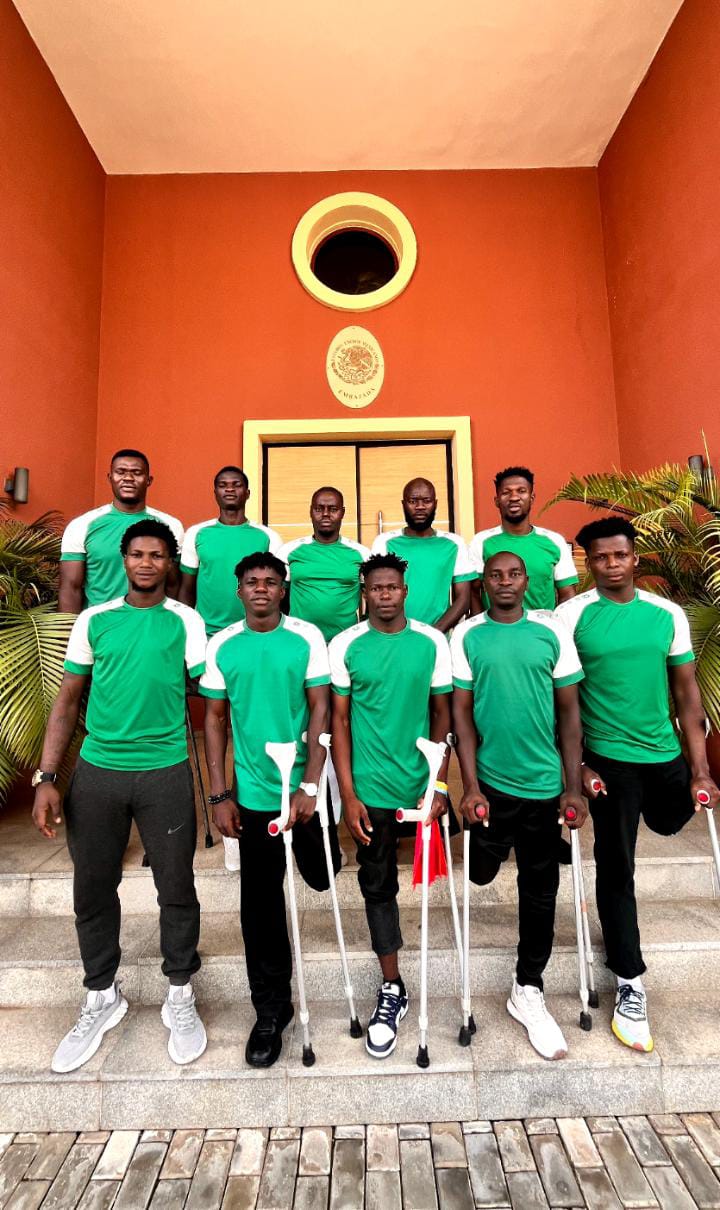
Five players of Kano Pillars Amputee Football Club have been invited to the national camp of Nigeria’s Special Super Eagles ahead of the 2026 Amputee Football World Cup in Mexico.
KANO FOCUS reports that invited players are Isah Yusuf, Abba Musa, Habu Friday, Emanuel Betel and Usman Ahmed. They are currently in Abuja with the national team as preparations intensify for the global tournament.
The Team Manager of Kano Pillars Amputee Football Team, Jamilu Uba Adamu, disclosed this in an interview with Ashiru Rabiu Gidan Tudu, Information Officer of the Kano State Sports Commission.
Adamu described the invitation as recognition of the players’ dedication, discipline and outstanding performances.
He expressed confidence that the players would represent Kano State and Nigeria with honour at the championship.
According to him, the call-up also demonstrates Kano Pillars’ commitment to nurturing talented amputee footballers and contributing to the development of the sport in Nigeria.
The 2026 Amputee Football World Cup is scheduled to take place from November 13 to 22 in San Juan de los Lagos, Mexico. A total of 24 countries, including seven African nations, are expected to participate.
The Executive Chairman of the Kano State Sports Commission, Muhammad Tukur Babangida, congratulated the five players on their invitation, describing it as well deserved.
Babangida expressed confidence that they would justify the confidence reposed in them by the national team selectors.
He assured the players of the commission’s continued support and urged them to remain focused, disciplined and committed to making Kano State and Nigeria proud on the international stage.

Dr Goni Faruk Umar calls on muslims to embrace taqwa in daily life

Dabo’s resignation triggers wave of defections from APC in Kano

Five Kano Pillars Amputee Players Invited to Special Eagles Camp Ahead of World Cup

BUK Professor advocates microfinance to tackle food insecurity, poverty

General Elections 2027: Abba Kabir Yusuf traverses the path to victory

Kano leads again as NECO successes rise to 74,413
Kano tops states in 2026 NECO results, Governor Yusuf hails students

Kano Govt Suspends Durbar Processions, Horse Riding in Metropolis

ACF begins Dangote Refinery IPO sensitisation campaign in Kano

