
Headlines
Naira redesign: Kano ACF asks federal government to extend deadline


Aminu Abdullahi
The Arewa Consultative Forum, ACF, Kano state chapter has appealed to the Federal Government to extend the deadline for the expiration and collection of old naira notes in the country.
KANO FOCUS reports that this is contained in a statement issued by Mallam Bello Galadanci, Publicity Secretary, ACF, Kano State Chapter, on Saturday.
The statement said the January 31 deadline set by the Federal Government had almost grounded socio-economic activities in the state.
It added that people’s refusal to accept the old naira notes in commercial transactions out of fear of possible inability to deposit the notes in commercial banks is causing untold hardship to the masses.

“This has currently made life more difficult for ordinary citizens, because banks, up till today, still give out the old naira notes to customers with the deadline only a few days away,” the statement said.
The ACF said many rural communities in the North are unaware of the new naira note, and may even reject it without proper enlightenment.
The northern sociocultural group, said the government should always consider democratic governments are about the people who in the first instance brought them to power.
The ACF also stands with the Sultan of Sokoto, Abubakar Sa’ad, who earlier blamed poor sensitisation, and engagement of the traditional institutions before embarking on the currency swap at the rural communities.
The forum alleged that the currency redesign has been sabotaged by Nigerian banks. It blamed the CBN for not engaging critical stakeholders before embarking on the exercise.
“Arising from the confusion emanating from almost all the nooks and corners of our Great Fatherland since the announcement by Nigeria’s apex bank, the CBN in the last quarter of 2022, it has become imperative for all patriotic citizens including leaders, professional groups, farmers, traders, civil society and all persons of goodwill to review the development accordingly.
“As a cultural, non-partisan and non-political voluntary organization with a focus on the immediate aspirations and greater interests of our communities, ACF, Kano State Chapter has found it expedient to join the strident calls by Eminent persons and institutions for an amicable solution to the apparent stalemate.
“We believe legitimate reasons exist for the authorities concerned to shift the deadline from January 31 2023 in the greater interest of the majority of our people, particularly communities with no banking facilities and others ravaged by the incessant insecurity.
“Right from day one, Nigerian banks had shown lethargy in complying with the plans of the apex bank, the CBN as their regulator. Their posture suggested they were not part of the scheme. A few days before the deadline, our ATMs continued to dispense old notes while the regulator kept making allegations the banks were not picking up the new notes.
“Overwhelming evidence suggests the non-availability of the new notes in key commercial centres of the federation. The ugly scenario has cast doubts about the genuineness and practicability of the January 31 deadline.
“ACF Kano State calls on the Federal Government, particularly the two chambers of the National Assembly, to prevail on the authorities at the CBN to save us from a catastrophe that may engulf the nation, as the CBN’s hard-line stance is seemingly an act that may plunge our lives into an avoidable disaster.
“In most urban and rural areas, ATMs are no longer dispensing cash; those that do dispense old notes. Presently, the old notes are more in circulation than the new ones, less than 5 days to the decreed deadline. The picture this unhealthy development gives could mean the sensitization campaign on the new currency notes had not been effective.
“Hear what His Eminence, the Sultan remarked when the CBN Comptroller in charge of Sokoto went to brief him on the new currency regime.
“We still have people who didn’t know that our Naira was redesigned. They could reject the new Naira notes when given. The CBN ought to have considered stakeholders ( traditional rulers) right from the day the redesign was announced.
“We have credible means to step down the information to the common man because the conventional media is for the elite.”
“ACF Kano re-echoes the revered traditional ruler’s position. We salute him, other community leaders and the NASS for their doggedness It is very clear, large sections of the populace particularly our local traders and business premises, farmers and artisans have been expressing fears about losses. Unlike the bitterness, hardship and suffering that accompanied the 1984 currency swap under military dictatorship, Nigeria is thankfully now under democracy.
“Democratic governments are about the people who in the first instance brought them to power. The nation must avoid a statement”, the ACF’s official statement said.

Nasiru Yusuf Ibrahim
A coalition of civil society organisations has called on President Bola Tinubu, the Secretary to the Government of the Federation (SGF), the Economic and Financial Crimes Commission (EFCC) and the Independent Corrupt Practices and Other Related Offences Commission (ICPC) to intervene in what it described as administrative and governance challenges affecting the North-West Development Commission (NWDC).
KANO FOCUS reports that the coalition raised concerns over delays in distributing intervention materials procured by the commission for beneficiaries across the seven North-West states, as well as the alleged failure to commence an approved recruitment process and poor coordination between the commission’s governing board and management.
Cooking oil and spaghetti
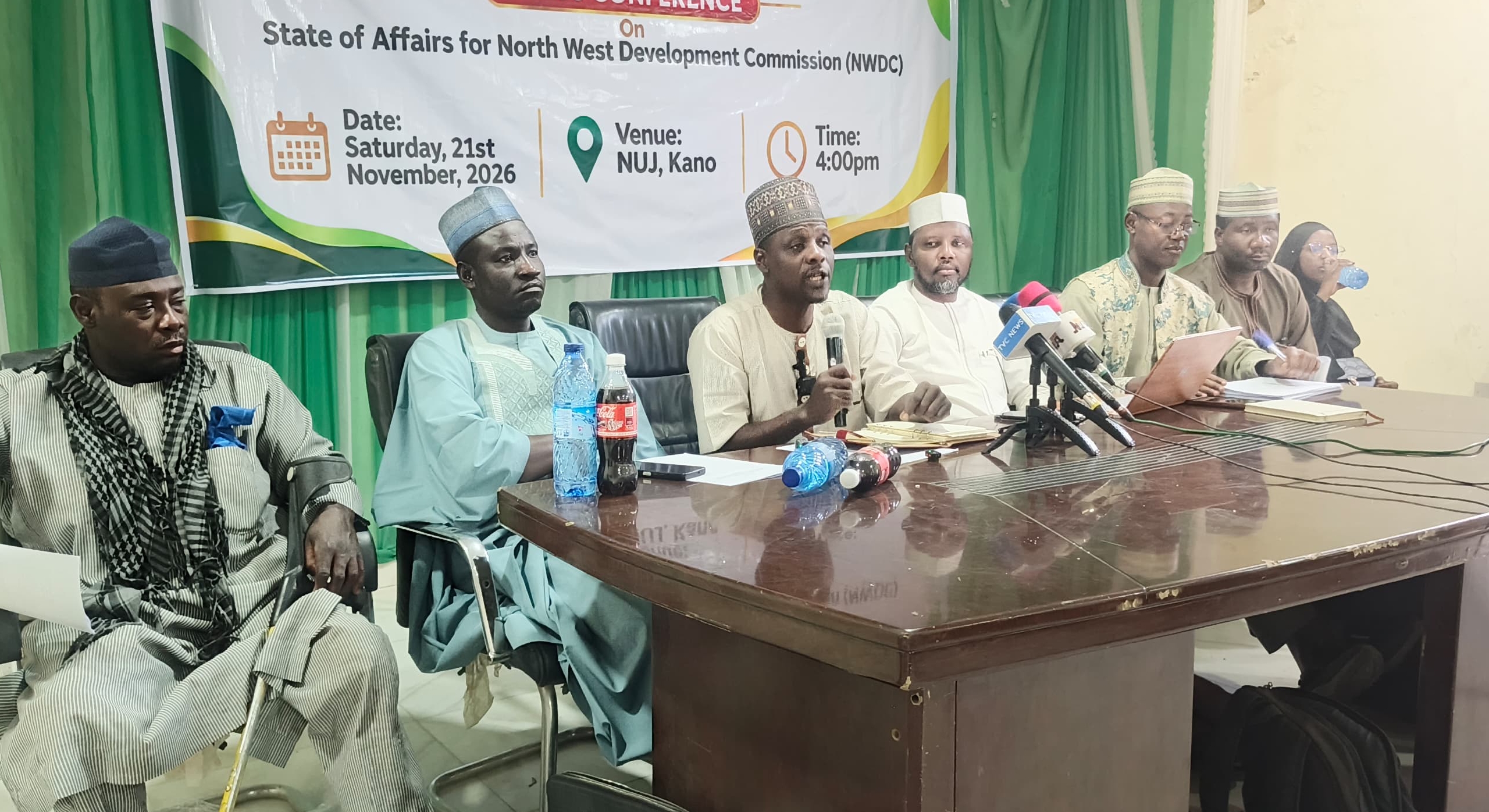
At a press conference on Saturday, the Coalition of Civil Society Organisations on Good Governance and Accountability (CCSGGA) said the situation was undermining the commission’s ability to deliver on its mandate.
The Chairman of the coalition, Dr Abdussalam Muhammad Kani, and Secretary, Comrade Akibu Hamisu, their demand followed an inspection of the commission’s warehouses, where the coalition said it observed several categories of procured intervention materials awaiting distribution.
The items include Hilux vehicles intended for vigilante groups, solar-powered irrigation pumps, fertilisers, food supplies for internally displaced persons (IDPs) and vulnerable households, streetlights and tractors.
Tractor
The coalition said the items were procured under the commission’s 2026 programmes to support farmers, improve community security and provide assistance to vulnerable populations.
It, however, expressed concern that the materials had remained undistributed despite the needs of their intended beneficiaries across Jigawa, Kaduna, Kano, Katsina, Kebbi, Sokoto and Zamfara states.
“Public resources procured to address citizens’ needs should not remain undistributed while intended beneficiaries continue to wait for support,” the statement said.
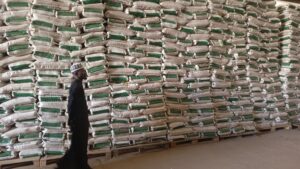
Parboiled Rice
The CSOs also faulted the commission for failing to commence recruitment months after the Federal Character Commission and other relevant regulatory agencies reportedly granted approval for employment.
According to the coalition, no recruitment advertisement, application portal, timeline, shortlist or guidelines had been made public, raising concerns about transparency, possible favouritism and equitable representation across the seven states.

Washing Machine
The group further alleged a lack of coordination between the NWDC governing board and management, noting that no board meeting had reportedly been held for about two consecutive quarters, despite provisions in the NWDC Establishment Act, 2024, for quarterly meetings.
It said the situation had affected oversight and delayed decisions on the distribution of intervention materials and commencement of recruitment.
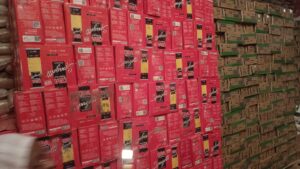
The coalition warned that continued delays could result in the deterioration of food supplies, depreciation of vehicles and equipment, unnecessary storage costs and loss of public confidence in the commission.
It also called on the Minister of Regional Development to facilitate the constitution and appointment of executive directors to provide the commission with the necessary leadership and management structure.
Among its demands, the coalition asked the NWDC Board Chairman, Lawan Sama’ila Abdullahi Yakwada, to convene an urgent meeting to address outstanding issues affecting the commission.
It also urged the commission to publicly announce its approved vacancies, application procedures, recruitment timeline and selection criteria to ensure a transparent, merit-based process that complies with Federal Character Commission principles.
The CSOs called on the National Assembly, particularly committees responsible for regional development and public accounts, to investigate the delays and ensure that all procured intervention materials were accounted for and distributed fairly.
They further urged the EFCC and ICPC to deploy officers to monitor the distribution of intervention materials across the seven states as a preventive measure against diversion and abuse of public resources.

Tricycle Machines
The coalition also demanded a publicly communicated distribution plan and called for credible civil society organisations, community-based organisations and media representatives to be allowed to monitor and document the exercise.
It urged the NWDC to ensure that the materials reached intended beneficiaries without political, geographical or other forms of discrimination.
The group also appealed to President Tinubu to formally commission the NWDC headquarters in Kano, named Bola Ahmed Tinubu House, during his forthcoming visit to the state.
The coalition said the proposed commissioning would provide an opportunity to demonstrate the commission’s institutional progress and operational readiness.

Blankets
It reaffirmed its commitment to monitoring developments in the commission and advocating accountability, fairness and effective service delivery.
“The NWDC was established to advance the collective development interests of the North-West. Its resources and interventions must therefore be managed in the public interest and delivered to the people they are intended to serve,” the statement said.
Nasiru Yusuf Ibrahim
The Bureau of Public Service Reforms (BPSR) has urged federal civil servants to develop alternative sources of income before retirement to avoid financial difficulties after leaving active service.
KANO FOCUS reports that the Director-General of the bureau, Alhaji Dasuki Ibrahim Arabi, gave the advice during a pre-retirement training programme organised for federal workers to equip them with skills in financial management, entrepreneurship and family life after retirement.
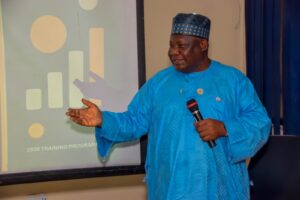
Alhaji Dasuki Ibrahim Arabi
“Retirement is a disaster if you refuse to plan,” Arabi said, stressing the need for public servants to prepare adequately for life after government employment.
He said the programme was designed to ensure that retired workers remained economically productive instead of becoming dependent on their families and society.
According to him, the bureau wants every federal government employee to acquire a skill or learn a trade before leaving active service.
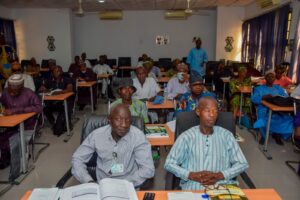
Arabi explained that training and retraining of public servants formed part of the bureau’s mandate, describing the initiative as a way of appreciating workers who had devoted years to serving the country.
He commended President Bola Ahmed Tinubu for providing funds for the programme but appealed for additional financial support to enable the bureau to conduct its second, third and fourth phases.
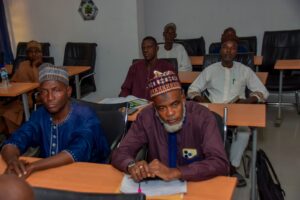
The BPSR director-general disclosed that 660 federal workers had so far benefited from the training conducted in six locations: Kano, Nasarawa, Gombe, Asaba, Enugu and Lagos.
One of the participants, Auwalu Saidu Ahmad, from the National Institute for Hospitality and Tourism, said the training had changed his perception of retirement, particularly his understanding of the need to establish alternative sources of income beyond his government salary.
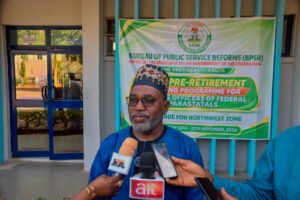
Malam Auwalu Saidu Ahmad
He said the programme exposed him to savings, business opportunities, healthcare and the importance of preparing to spend more time with his family after retirement.
Similarly, Miss Philomina Batuk, from the National Orthopaedic Hospital, Dala, Kano, said she had previously feared retirement because she was uncertain about how to manage life after leaving the service.
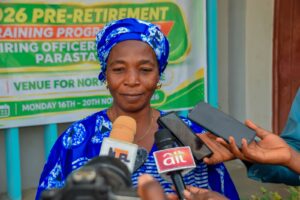
Miss Philomina Batuk
She said the training had taught her how to manage her resources, plan for the future and establish a small business before receiving her pension and gratuity.
“I am now convinced that I will live comfortably after retirement. I now know where to start,” she said.

Dr Faruk Umar urges Northern businesses to embrace corporate governance, value-chain financing

Dangote Coal awards scholarships to 42 students, pays annual surface rent in Kogi

Blowing one’s own trumpet: A 45-year journey in journalism, professional leadership and public service

CSOs ask Tinubu, EFCC, ICPC to intervene in Northwest Commission governance crisis

FUT Babura appoints BUK professor Hussaini as new Vice Chancellor

Uganda woos Dangote for $billions oil refinery, fertiliser, salt investments

Governor Yusuf swears in six commissioners, three advisers, 19 permanent secretaries

Veteran NTA manager Dahiru Biso loses wife at 58

ACF Kano Appoints Isyaku Umar Tofa Interim Chairman

