
Headlines
Immunization awareness tackle measles cases in Kano, as cases rise in Neighboring states

Zulaiha Danjuma

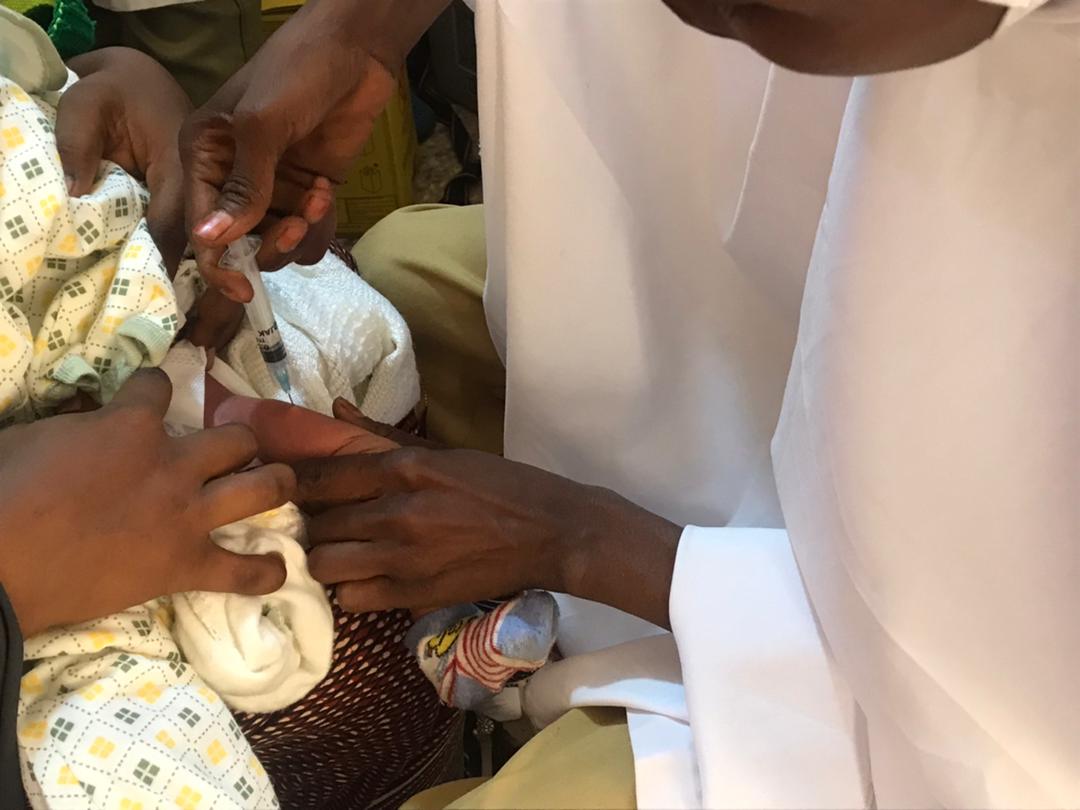
It’s Tuesday morning around 8:30 am at the Kabuga Primary Healthcare Center. The PHC is filled with visitors. The waiting area in less than an hour was packed with people visiting the Primary Healthcare Facility.
Most notable is the crowd of nursing mothers and their babies sitting on branches inside the facility. Four Female healthcare providers took their seats in front of the crowd of babies and mothers.
At 12:15 PM the scene is not different at the Ja’in Primary Health Care Center either. It was immunization day.
Kano Focus reports, 150 to 200 children and mothers visit the Ja’in Primary Health Care Center daily for Immunization.
Vaccination is administered five days a week, from Monday through Friday at the Ja’in PCH.
According to the In-charge at the Ja’in primary health care center, Ahmed Adamu Diso the center saw the need to increase the number of times they attended to infants/toddlers in need of immunization due to the influx of patients to the center
“Before vaccination was done three times a week now it’s been upscaled to 5 times to cater to the demand”
“The constant awareness raising and enlightenment of parents, especially mothers is the reason for the daily influx of patients we see for immunization” Mr Adamu said
Babies from birth to about age two are meant to receive several routine immunizations against vaccine preventable disease. Among these diseases is Measle.
What is Measles?
According to the World Health Organization, Measles is a highly contagious disease caused by a serious virus. The virus spreads through direct contact or through the air. It is solely a human virus, which is not found in animals.
Measles immunization is given at 9 months, recently second dose is introduced at 15 months this has proven to protect and prevent children from coming down with measles
Nigeria is ranked tenth among the top 10 countries with Global Measles Outbreak according to the United States Center for Disease Control (CDC)
In a situation report by the Nigerian center for disease control (NCDC) as of January 2022, Kano state had 9 suspected cases, without any laboratory confirmed case
However, neighboring states like Jigawa had 94 suspected cases and 19 confirmed cases, other states like Katsina, Kaduna, and Sokoto had 88, 18, 34 suspected cases and 6, zero, and 6 confirmed cases respectively.
Kano is one of the most populous states in the country with an annual growth range of more than 3%.
The NCDC January Measle situation report 2022 is the most recent report found on the official website of the NCDC.
Measles cases occur but are less severe
According to the second in charge of the Outpatient department (OPD), Ubaidu Alhassan Yahaya at the Ja’in Primary Health Care center; cases of measles are brought to the facility
“I can tell you that the cases of measles are brought in here from time to time”
“Measles cases are some of the likely epidemic cases we get at this facility” he said
However, the In charge of the PCH Ahmed Adamu Diso said the cases are not as frequent or severe as few years ago
“Due to the level of public awareness people now take immunization more seriously now unlike years ago”
“The cases we see now are not as much as before and they are less severe in terms of the degree of the disease due to the fact that the children may have gotten some level of vaccination prior to getting the Measles disease” he said
Regular, Timely immunization decrease the severity of Measles disease in Children
Ms Aisha Umar a mother to a 5-year-old girl who surfaced measle in April 2023 shared her experience with Kano Focus
Ms Umar said her daughter had fever for about three days accompanied with some rashes on her body
She added, that seeing her daughters condition getting worse she brought her to the Ja’in primary health care center
“When we got to the PCH, she was examined and we were informed she had Measles”
“After the diagnosis she was put on some medication and injections for 3 days” she said
Ms Umar went further to explain that her had daughter been immunized against Measles before she got the disease
“From the time of her delivery I had brought her to the PCH center to get fully immunized for about 9 months”
“That was why when she came down with Measles it was not severe, immediately after her medication for 3 days she was free from Measles”
“Her rashes wasn’t that messy; it was mild because she had been immunized and the whole illness last about 3 weeks and she was well again” she said
Ms Umar added that her daughter’s immunization prior to the illness was done free
“When I gave birth to her, she was given an vaccine shortly after her birth at no cost”
“All other times we came to the PHC for the doses of her immunization shots I paid no money at all”
Ms Umar went on to advise young and expectant mothers to come for their babies’ immunization as the process cost nothing
Reduction of Measle cases in Kano
Compared to states like Jigawa, Zamfara, Kaduna and Sokoto, Kano state has seen a decrease in measle cases going by reports and statistics from the Nigerian Center for Disease Control (NCDC)
In 2019, the Epidemiological summary of suspected Measles cases from week 1 to week 52 of the NCDC showed Kano state having a total of 4,141 suspected Measles cases from week 1 to 52, while Kaduna had 1,821 cases, and Jigawa had 1,160 cases.
In that period Kano had 27 deaths, Katsina had 52 deaths, Kaduna and Jigawa had 14 and zero deaths respectively.
Also in 2021, the Nigerian Center for Disease Control in a situation report compiled from January through August 2021, shows Kano state having 121 confirmed cases of measle, 60.3 % of those confirmed cases were in children between the ages of 9 to 59 months
Jigawa had 48 confirmed cases, Katsina had 132 confirmed cases and Kaduna had 17 cases confirmed.
Conversely, in 2022 Kano state seemed to have recorded lesser cases both those suspected and confirmed to be measles in comparison to its neighbors Katsina and Jigawa state
The reduction in recording cases of measles, especially severe ones, is in the rapid education and awareness around the importance of immunization to expectant mothers.
Importance of Immunization in fighting Measles
The Ward Technical officer/In charge of the Kabuga primary health care center, Yusuf Adamu Muhammad said to prevent diseases like measles starts from visits to the PHC
“This is part of the reasons why in the health talk session health workers have at with expectant mother the importance of immunization is emphasized”
“Being fully immunized as a child plays a major role in fighting most of these epidemic diseases” he said
Mr Yusuf added that, the Kabuga primary health care center health personnel engage in home visits as part of its huge awareness efforts on various vaccinable diseases like Measles to educate people on the importance of immunization and vaccination
“The community is constantly sensitized to take the children for their doses of vaccines at the appropriate time, to get that full immunization status”
“Even the adults in the community are encouraged to get vaccinated whenever a vaccinable disease has been recorded and people are advices to get the vaccine” he said
Mr Yusuf went further to explain to Kano Focus that as part of the PCHs preparedness strategies they envisage certain occurrence of diseases, especially those that are prune in certain weather conditions and they raise awareness about such conditions in the community
“When is cold, heat or raining season we go into communities to enlighten the community of best practices to adopt or things to avoid in other to keep safe” he said
On her on part, a disease surveillance officer, Zainab Aminu Graba at the Ja’in Primary Health Care Center said the center had recorded only 1 case of measles from the beginning of May
“The case was recorded on the 10th of may”
According to Ms Zainab, measles cases during the hot weather are not high
“We get more measles cases during cold weather, the case that we got last week was not a severe case, the girl received medical attention as was sent home” she said
However, Ms Zainab added that with every disease like measles the PHC follows strict documentation of patient and further monitoring of case through the Centers focal person who acts as the centers epidemiologist and takes cases of epidemic nature to the appropriate secondary health facility in the state
“When a case of measles or any other possible epidemic case is brought, we have a register where we take down details if the child, the parents’ home address, contact numbers and other personal data for reference and monitoring” she said
Immunization is totally free and safe
The Ward Technical officer and In-charge of Kabuga primary health care said it is necessary for people to understand the importance of immunization
Mr Yusuf said immunization at Primary Healthcare Centers are absolutely free and of high quality
“Prevention is always better than care, people need to understand that immunization is free at PHCs”
“Some people have a misperception of the quality of the drugs at primary health care centers, but I would like to enlighten people that all vaccines in private hospitals are distributed from Primary health centers” he said
Mr Yusuf went on to say that immunization campaigns carried out by health institutions at the door steps of communities should be highly utilized as such exercise is at no cost to the community
“This door-to-door immunization campaigns caught nothing to the parents of these children, because health works go straight into homes to immunize children”
“Even coming to the primary health care center for immunization is free, nobody is asked to pay anything unlike private clinics” Mr Yusuf said
Mr Yusuf also called on community members to discard remorse about unsafe nature of vaccines
He noted that before any vaccine is approved for distribution it has passed through series of test both globally and nationally to ascertain the save nature of the vaccine before it is administered on patients
Myths hinder immunization exercise in some rural communities
According to the Kano state Epidemiologist Dr. Abdullahi Isah-Kauran Mata measles disease is a vaccine treatable condition and is one of the routine immunizations that can be accessed across all health facilities in the state
However, he noted that despite the fact that Kano has 1,300 hospitals, ranging from primary health centers across the 484 political wards up to the level of teaching hospitals who provide routine immunization which are readily available for parents to take their children
There are still some traditional beliefs that make people hesitate to take vaccines
“Vaccine hesitancy is a global issue, even In the most developed and educated or civilized people in the world, there are still people against vaccination”
“We call these people vaccine hesitate communities, in fact currently there are people campaigning against vaccines in developed countries”
“Literacy levels are also factors that hinder vaccination, because there are people who still don’t believe in vaccines”
“The highest we can do is to sensitize them and correct the misconceptions and provide the services close to their door steps”
“It has become everyone responsible including the media to enlighten people to know that vaccines work and they prevent people from diseases and is the best way to take infectious diseases away” he said
Dr. Isah further called on parents to immunize their children as this will save them time and money as well as ensure their children’s health.

Nasiru Yusuf Ibrahim
Dr Goni Faruk Umar has urged Muslims to embrace Taqwa in their daily lives, describing it as a foundation of Islam and a key to righteous conduct and success in this world and the hereafter.
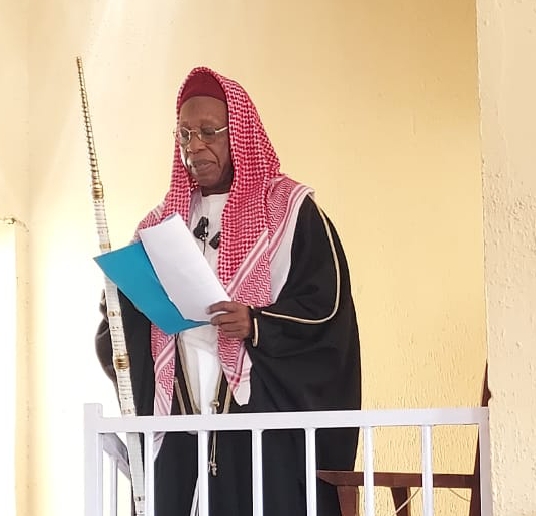
KANO FOCUS reports that the Islamic scholar made the call while delivering a Juma’a sermon at the New Juma’a Mosque, Rumfa College, Kano.
In the sermon, Dr Goni Faruk Umar explained the meaning of Taqwa using classical Islamic scholarship, including an account involving Umar ibn al-Khattab and the companion Ubayy ibn Ka’b to illustrate the concept.
According to the account cited in the sermon, Sayyadina Ubayy once asked Khalifa Umar bin Khattab whether he had ever walked along a thorny path. When Khalifa Umar bin Khattab answered in the affirmative, Sayyadina Ubayy asked how he navigated it. Khalifa Umar bin Khattab replied that he gathered his clothes and proceeded cautiously to avoid being pricked.
Sayyadina Ubayy then explained that this was the essence of Taqwa: being constantly mindful of one’s actions and carefully avoiding what displeases Allah.
Dr Goni Faruk Umar said Taqwa should not be limited to acts of worship but should also guide Muslims’ conduct in contemporary society, particularly in their use of digital platforms and social media, control of the tongue, and relationships within the family.
He urged worshippers to exercise restraint in their speech, act responsibly online and uphold their obligations to family members in accordance with Islamic teachings.
The cleric also highlighted the spiritual and worldly benefits of Taqwa, including relief from hardship, ease in personal affairs, forgiveness of sins and increased rewards in the hereafter.
Quoting verses from the Qur’an, he cited Allah’s promise in Surah At-Talaq, verses 2 and 3, that whoever fears Him will be granted a way out of difficulties and provided for from sources they could not have anticipated.
He also referred to Qur’an 65:4–5, which promises ease in affairs, the removal of sins and the multiplication of rewards for those who maintain Taqwa.
The scholar reminded Muslims that worldly life is temporary and that the hereafter is their permanent destination. He therefore urged them to regard Taqwa as the best provision for the journey beyond this life.
Citing Qur’an 2:197, he emphasised that the best provision for the hereafter is Taqwa, urging believers to remain conscious of their responsibilities to Allah.
The sermon also featured prayers and salutations upon Prophet Muhammad (peace be upon him), his family and companions, in accordance with the Qur’anic instruction in Surah Al-Ahzab, verse 56.
Dr Goni Faruk Umar concluded by encouraging Muslims to remain steadfast in faith, follow the guidance of the Prophet and make righteousness a guiding principle in their daily lives.

Nasiru Yusuf Ibrahim
Political allies and loyalists of former Managing Director of the Nigerian Ports Authority (NPA), Arc Aminu Dabo, have begun resigning from the All Progressives Congress (APC) in Kano State following his withdrawal from the ruling party.
KANO FOCUS reports that the supporters, operating under the political group Dabo Alheri Ne, reportedly include members across Kano State’s 44 local government areas.
Barely two days after Dabo announced his resignation from the APC, a prominent stakeholder of the group, Garba Zakiru Dambatta, said members had welcomed the decision and were showing solidarity by submitting their resignation letters to their respective ward party chairmen.
Dambatta, a former APC chairman in Dambatta Local Government Area, said the group’s members were disappointed with what they described as the prolonged marginalisation of Mr Dabo and his supporters within the party.
According to him, despite Mr Dabo’s contributions to the APC and efforts to strengthen the party and manage disagreements among its members, some key stakeholders had continued to sideline him and his loyalists in party activities.
Dambatta reaffirmed the group’s commitment to standing by Mr Dabo’s political decisions and supporting his future political journey.
He also urged the former NPA managing director not to succumb to political pressure or reverse his decision to leave the party.
“This step you have taken, we have the conviction that it is the beginning of a new chapter of goodness in your life,” Dambatta said.
Among the prominent members of the group identified as supporting Mr Dabo’s decision are Abba Rabee’u, a former Senior Special Assistant on Political Awareness; Almustapha Jilani Danmalam, a former Senior Special Assistant on Education; Jamilu Abdullahi Zangon-Mata, a former Senior Special Assistant on Entrepreneurship; and Fahd A. Dabo, a former Special Assistant on Youth Mobilisation.
The individuals reportedly served during the second term of former Kano State Governor Abdullahi Umar Ganduje.
The group also said several other party loyalists and supporters were backing Dabo following his resignation.
However, the statement did not provide the number of members who had formally resigned from the APC or indicate whether the party leadership had responded to the development.

Nasiru Yusuf Ibrahim
Five players of Kano Pillars Amputee Football Club have been invited to the national camp of Nigeria’s Special Super Eagles ahead of the 2026 Amputee Football World Cup in Mexico.
KANO FOCUS reports that invited players are Isah Yusuf, Abba Musa, Habu Friday, Emanuel Betel and Usman Ahmed. They are currently in Abuja with the national team as preparations intensify for the global tournament.
The Team Manager of Kano Pillars Amputee Football Team, Jamilu Uba Adamu, disclosed this in an interview with Ashiru Rabiu Gidan Tudu, Information Officer of the Kano State Sports Commission.
Adamu described the invitation as recognition of the players’ dedication, discipline and outstanding performances.
He expressed confidence that the players would represent Kano State and Nigeria with honour at the championship.
According to him, the call-up also demonstrates Kano Pillars’ commitment to nurturing talented amputee footballers and contributing to the development of the sport in Nigeria.
The 2026 Amputee Football World Cup is scheduled to take place from November 13 to 22 in San Juan de los Lagos, Mexico. A total of 24 countries, including seven African nations, are expected to participate.
The Executive Chairman of the Kano State Sports Commission, Muhammad Tukur Babangida, congratulated the five players on their invitation, describing it as well deserved.
Babangida expressed confidence that they would justify the confidence reposed in them by the national team selectors.
He assured the players of the commission’s continued support and urged them to remain focused, disciplined and committed to making Kano State and Nigeria proud on the international stage.

Dr Goni Faruk Umar calls on muslims to embrace taqwa in daily life

Dabo’s resignation triggers wave of defections from APC in Kano

Five Kano Pillars Amputee Players Invited to Special Eagles Camp Ahead of World Cup

BUK Professor advocates microfinance to tackle food insecurity, poverty

General Elections 2027: Abba Kabir Yusuf traverses the path to victory

Kano leads again as NECO successes rise to 74,413
Kano tops states in 2026 NECO results, Governor Yusuf hails students

Kano Govt Suspends Durbar Processions, Horse Riding in Metropolis

ACF begins Dangote Refinery IPO sensitisation campaign in Kano

