
Headlines
Breaking: Supreme Court affirms Abba Kabir Yusuf as Kano Governor


Nasiru Yusuf Ibrahim
The Supreme Court on Friday departed from the concurrent decisions of the two lower courts which earlier sacked Mr Yusuf as Kano State governor to uphold his victory at the March 2023 election.
KANO FOCUS reports that the Supreme Court on Friday affirmed the election of Kano State Governor Abba Yusuf, whose victory at the March 2023 poll was earlier overturned by the two lower courts.

A panel of Justices of the Supreme Court led by Inyang Okoro unanimously set aside the concurrent decisions of the two lower courts which had sacked the governor from office over alleged irregularities during the March 2023 disputed election.
The Supreme Court’s decision included setting aside the Court of Appeal’s declaration of Nasiru Yusuf Gawuna of the opposition All Progressives Congress (APC) as the winner of the disputed March 2023 governorship election in the state.
The case is about the most keenly fought governorship election dispute arising from the 2023 election cycle.
The case stood out as the only one in which a winner’s victory was overturned by both the governorship election petition tribunal and the Court of Appeal.
Delivering the lead decision on Friday, Mr Okoro faulted the reasons on which the Court of Appeal and the tribunal anchored their decisions to sack the governor.
The Supreme Court restored Mr Yusuf’s votes that were cancelled by the lower court on the basis that the ballot papers were not signed.
It also affirmed that Mr Yusuf was validly nominated as the candidate of the New Nigeria People’s Party (NNPP) for the election, contrary to the decision of the lower courts that his candidacy was a nullity on the grounds that he was not a bona fide member of the party.
Reviewing the evidence adduced in the case, Mr Okoro noted that the appeal was predicated on alleged forgery of NNPC membership card by Governor Yusuf, and votes manipulation by the Independent National Electoral Commission (INEC) in favour of the governor.
On the issue of sponsorship of a candidate for election, Mr Okoro noted that the Supreme Court had, in a plethora of precedents, established that “the issue of nomination of candidates is exclusively the internal affairs of a political party.”
“Therefore, it is not justiciable,” he said, emphasising the futility of any attempt to challenge the validity of a party’s nomination of a candidate for an election.
Referencing Section 177 (c) of the Nigerian constitution, Mr Okoro said the law “only frowns on independent candidacy and nothing more.”
The court below erred in law by investigating the governor’s membership of NNPP, the party having nominated him as its candidate, Mr Okoro held.
On the other issue of cancellation of over 160,000 votes polled by the governor based on alleged non-signing of ballot papers, the Supreme Court faulted the deduction of Mr Yusuf’s votes by the tribunal, a decision that was affirmed by the Court of Appeal.
“I have found that the decision of the tribunal to deduct 165,616 votes from the governor’s results was based on provisions of the Electoral Act 2022,” Mr Okoro said.
But he added: “The provision does not regulate actions at the polling units. What is the effect of a ballot paper not having the marks by the Electoral commission?”
The APC and its candidate, Mr Gawuna, had argued that the ballot papers for the 165,616 votes credited to Governor Yusuf were not stamped, dated and signed by INEC’s presiding officers. They were able to sway the tribunal and the Court of Appeal to deduct the votes from Mr Yusuf’s scores.
But restoring the votes to Mr Yusuf on Friday, the Supreme Court ruled that “A ballot paper that does not bear INEC marks is not invalid by all purposes.”
He added that “it must be proven that the ballot papers were not the ones deployed for the conduct of the election” before the court can void them.
“There is no proof that the said ballot papers were not the ones used at the election. Thus, the decision of the Court of Appeal affirming the decision of the tribunal ought to be set aside,” Mr Okoro said.
In the final determination of the appeal, Mr Okoro said “the lower court wrongly misconstrued its evaluation of the ballot papers. This amounts to perversion.”
Accordingly, the Supreme Court restored the cancelled ballots to Governor Yusuf.
“Judges should be more meticulous,” Mr Okoro said of the case that generated a controversy at the Court of Appeal.
“There is merit in this appeal. And the appeal is hereby allowed. The appellant won majority of lawful votes.
“The judgement of the lower court voiding the election of the appellant is hereby set aside,” Mr Okoro ruled.
Other members of the five-member panel unanimously consented to the lead decision.
Background
On 17 October 2023, a three-member panel of the Court of Appeal in Abuja led by Moore Adumein sacked Mr Yusuf as governor of Kano State.
Mr Adumein declared Mr Gawuna of the APC winner of the 18 March governorship election in the state.
The tribunal had declared Mr Gawuna the winner of the election after invalidating votes cast in favour of Mr Yusuf.
But the Court of Appeal, in addition to that, disqualified Mr Yusuf as a candidate in the election, on the ground that he was not a member of the NNPP as of the time of the election.
The court added that without being a member of a political party, Mr Yusuf could not have been validly nominated to run for the election in March.
“Yusuf Abba was not a member of the NNPP as of the time he was purportedly sponsored for the 18 March Kano State governorship election,” Mr Adumein had ruled.
However, at the hearing of the case at the Supreme Court on 21 December 2023, Governor Yusuf’s lawyer, Wole Olanipekun, a Senior Advocate of Nigeria (SAN), argued that the concurrent findings of the lower courts were wrong.
He had contended that there was no legal basis for the tribunal and the appellate court to invalidate his client’s election on account of non-compliance with electoral guidelines.
“This is the first time in the annals of Nigeria’s electoral jurisprudence that an election was nullified on the basis that ballot papers were not stamped, dated and signed by INEC,” Mr Olanipekun lamented.
He said the electoral guidelines did not envisage the cancellation of an election on the grounds that the electoral umpire failed to stamp or sign the ballots.
“Nobody raised the legality of the ballots. Ballot papers cannot be invalidated. Ballot papers are in a bundle; there is no way any forgery can arise because it is from the same booklet,” Mr Olanipekun explained.
The lawyer wondered why the governor should be punished for the failure of the electoral commission to stamp, date and sign the ballots that were used for the conduct of the March election.
“Assuming without conceding that INEC was wrong in not stamping, dating or signing the ballot papers, would you visit the sin of the electoral commission on the litigant?
“The judgement of the lower court was unfair to the appellant (Mr Yusuf). We urge this (Supreme) court to overturn the judgement and uphold the election of Mr Yusuf,” Mr Olanipekun said.
On the issue of Mr Yusuf’s membership of the NNPP, Mr Olanipekun referenced a plethora of cases where the Supreme Court held that the membership of a political party cannot be challenged by another political party.
“The tribunal said it is not justiciable. It is a pre-election matter. There is a predicate complaint that Mr Yusuf’s membership card was forged. The lower court found that the card was not forged, yet the appellate court held that he was not a member of the NNPP.”
Mr Gawuna’s lawyer, Akin Olujinmi, a SAN, prayed the Supreme Court to dismiss the appeal and affirm the concurrent findings of the courts.
Citing Section 42 of Electoral Act and regulation 19 of INEC, Mr Olujinmi argued that the electoral umpire ought to have stamped, dated and signed the ballots that are being disputed.
He said the returning officers at the Kano State polls should have stamped, dated and signed the 165,616 ballots.
Mr Olujinmi disagreed with Mr Olanipekun that only 1,886 votes were said not to have been endorsed by INEC.
“When the witness was cross-examined at the tribunal, the expert witness said 165,616 votes. That evidence remains unchanged. The findings were that many of the ballot papers were not signed.”
Mr Olujinmi noted that “these were irregularities that were manifest in the conduct of the election. This amounts to non-compliance with the Electoral Act.”
Referencing section 177 (c) of the Nigerian constitution, Mr Olujinmi contended that the lower court had jurisdiction to hear and determine the issue of Mr Yusuf’s membership of the NNPP.
“The NNPP produced that membership register of Mr Yusuf and his name was conspicuously absent. Mr Yusuf did not address the court on the issue.
“When the issue has to do with the constitution, the court has a duty to look at the issue and determine it.
“It is no longer an internal affair of a political party because it touches on a provision of the Nigerian constitution – membership of a political party,” Mr Olujinmi said.

Nasiru Yusuf Ibrahim
Political allies and loyalists of former Managing Director of the Nigerian Ports Authority (NPA), Arc Aminu Dabo, have begun resigning from the All Progressives Congress (APC) in Kano State following his withdrawal from the ruling party.
KANO FOCUS reports that the supporters, operating under the political group Dabo Alheri Ne, reportedly include members across Kano State’s 44 local government areas.
Barely two days after Dabo announced his resignation from the APC, a prominent stakeholder of the group, Garba Zakiru Dambatta, said members had welcomed the decision and were showing solidarity by submitting their resignation letters to their respective ward party chairmen.
Dambatta, a former APC chairman in Dambatta Local Government Area, said the group’s members were disappointed with what they described as the prolonged marginalisation of Mr Dabo and his supporters within the party.
According to him, despite Mr Dabo’s contributions to the APC and efforts to strengthen the party and manage disagreements among its members, some key stakeholders had continued to sideline him and his loyalists in party activities.
Dambatta reaffirmed the group’s commitment to standing by Mr Dabo’s political decisions and supporting his future political journey.
He also urged the former NPA managing director not to succumb to political pressure or reverse his decision to leave the party.
“This step you have taken, we have the conviction that it is the beginning of a new chapter of goodness in your life,” Dambatta said.
Among the prominent members of the group identified as supporting Mr Dabo’s decision are Abba Rabee’u, a former Senior Special Assistant on Political Awareness; Almustapha Jilani Danmalam, a former Senior Special Assistant on Education; Jamilu Abdullahi Zangon-Mata, a former Senior Special Assistant on Entrepreneurship; and Fahd A. Dabo, a former Special Assistant on Youth Mobilisation.
The individuals reportedly served during the second term of former Kano State Governor Abdullahi Umar Ganduje.
The group also said several other party loyalists and supporters were backing Dabo following his resignation.
However, the statement did not provide the number of members who had formally resigned from the APC or indicate whether the party leadership had responded to the development.
Nasiru Yusuf Ibrahim
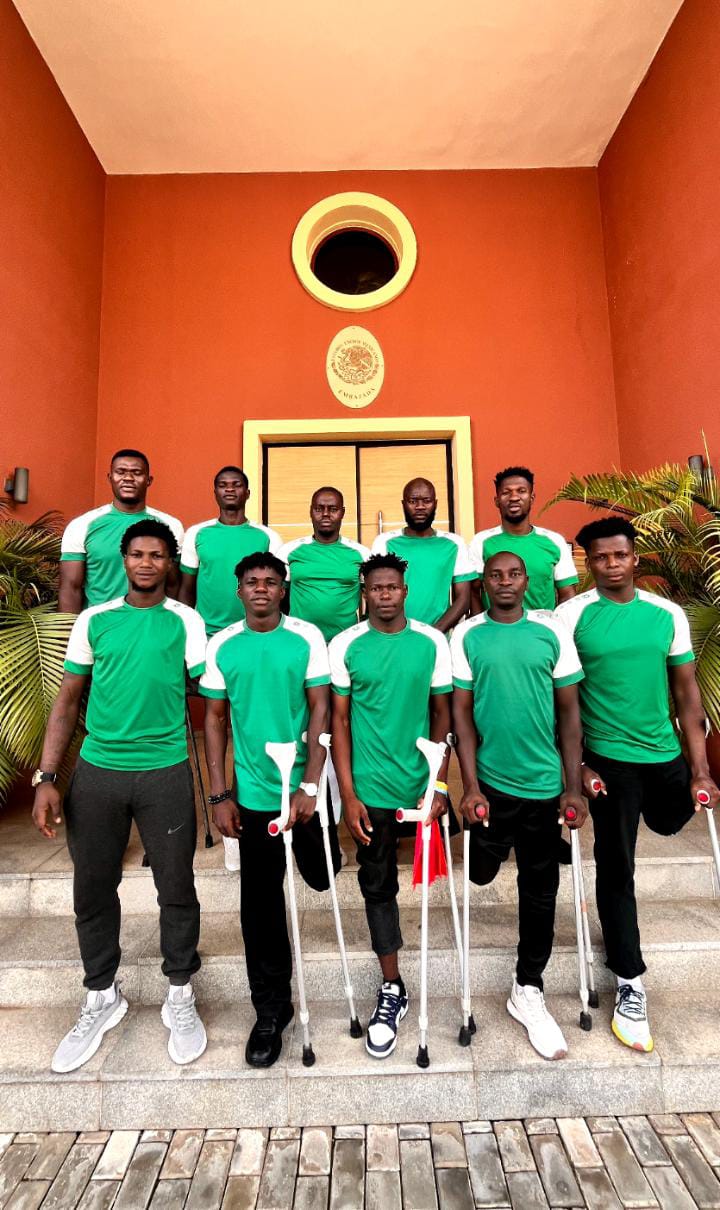
Five players of Kano Pillars Amputee Football Club have been invited to the national camp of Nigeria’s Special Super Eagles ahead of the 2026 Amputee Football World Cup in Mexico.
KANO FOCUS reports that invited players are Isah Yusuf, Abba Musa, Habu Friday, Emanuel Betel and Usman Ahmed. They are currently in Abuja with the national team as preparations intensify for the global tournament.
The Team Manager of Kano Pillars Amputee Football Team, Jamilu Uba Adamu, disclosed this in an interview with Ashiru Rabiu Gidan Tudu, Information Officer of the Kano State Sports Commission.
Adamu described the invitation as recognition of the players’ dedication, discipline and outstanding performances.
He expressed confidence that the players would represent Kano State and Nigeria with honour at the championship.
According to him, the call-up also demonstrates Kano Pillars’ commitment to nurturing talented amputee footballers and contributing to the development of the sport in Nigeria.
The 2026 Amputee Football World Cup is scheduled to take place from November 13 to 22 in San Juan de los Lagos, Mexico. A total of 24 countries, including seven African nations, are expected to participate.
The Executive Chairman of the Kano State Sports Commission, Muhammad Tukur Babangida, congratulated the five players on their invitation, describing it as well deserved.
Babangida expressed confidence that they would justify the confidence reposed in them by the national team selectors.
He assured the players of the commission’s continued support and urged them to remain focused, disciplined and committed to making Kano State and Nigeria proud on the international stage.
Ibrahim Khalil
A chieftain of the All Progressives Congress (APC) in Kano State, Aminu Dabo, has resigned as the party’s caucus chairman in Dambatta Local Government Area and withdrawn his membership of the ruling party.
KANO FOCUS reports that Dabo, a former Managing Director of the Nigerian Ports Authority (NPA), announced his resignation in a letter dated October 7, 2026, addressed to the APC chairman of Dambatta Gabas Ward.
In the letter, personally signed by him, Dabo said he took the decision after careful consideration of personal reasons and his future endeavours.
He confirmed his resignation during a telephone conversation from Abuja on Wednesday, saying he had formally submitted the letter to the appropriate party officials in Dambatta for necessary action.
“I remain grateful for the cordial relationship I enjoyed and appreciative of the experience gained during my time of service,” he said.
The former NPA managing director also thanked the party’s leadership for the opportunity and confidence reposed in him to contribute to its development and progress during his membership.
“I sincerely appreciate the support and opportunity I have received from the party leadership,” he added.
A statement issued by Abdullahi Othman, Media and Publicity Aide to Dabo Dabo, said the former NPA MD did not disclose further details about his reasons for leaving the APC in the resignation letter.

Dabo’s resignation triggers wave of defections from APC in Kano

Five Kano Pillars Amputee Players Invited to Special Eagles Camp Ahead of World Cup

BUK Professor advocates microfinance to tackle food insecurity, poverty

General Elections 2027: Abba Kabir Yusuf traverses the path to victory
Former NPA MD Aminu Dabo resigns as APC caucus chairman in Dambatta

Kano leads again as NECO successes rise to 74,413
Kano tops states in 2026 NECO results, Governor Yusuf hails students

Kano Govt Suspends Durbar Processions, Horse Riding in Metropolis

ACF begins Dangote Refinery IPO sensitisation campaign in Kano

