
Opinion
Friday Sermon: O Muslims, Be Prepared To Pay Your Zakatul Fitr/Sadaqatul Fitr

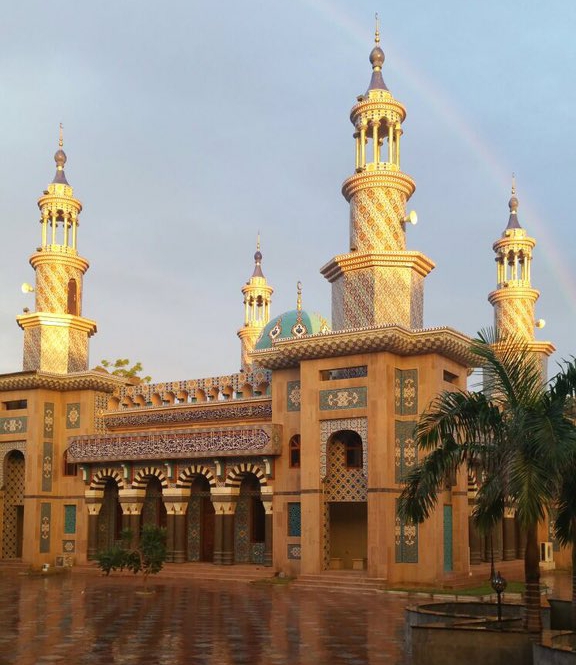
By Imam Murtadha Gusau
In the Name of Allah, the Most Gracious, the Most Merciful
All praise is due to Allah, the Lord of all creation, may Allah extol the mention of our noble Prophet Muhammad in the highest company of Angels, bless him and give him peace and security―and his family, his Companions and all those who follow him correctly and sincerely until the establishment of the Hour.
Dear brothers and sisters! Know that Zakatul-Fitr or Sadaqatul-Fitr is a charity given to the poor and needy at the end of the fasting in the Islamic noble month of Ramadan. The Arabic word Fitr means the same as iftar, breaking a fast, and it comes from the same root word as Futur which means breakfast.

Imam Ibn Qudamah (Rahimahullah) says in his famous book Umdat fil Fiqh:
“Zakatul-Fitr (charity given at the end of Ramadan) is an obligation upon every Muslim men and women who owns more than the essential food he needs for himself and his dependents, to be given on the eve and the day of Eid. The amount of charity is one Sa’i of wheat, barley, flour, rice etc. It can also be paid in crushed form or in dates or raisins. However, if he cannot find this, he should give any kind of food he eats that will measure equally. Whoever must pay charity for himself must also pay it for his dependents if he owns enough on the day before Eid to pay for them. If a person’s provision is the responsibility of a group of people, such as a shared servant or someone in difficulty who is a relative of a group, then his charity is obligatory upon them all in accordance with their share of responsibility for his provision. It is preferable to pay the charity on the day of Eid before the prayer. It is not permissible to delay its payment until after the day of Eid, but it is permissible to pay it a day or two in advance. It is permissible to give charity to one person that which is obligatory upon a group, and also to give charity to a group that which is obligatory upon one person.”
Respected brothers and sisters! Fitr means to break fast or to refrain from fasting. Hence the Eid after the fasts of Ramadan is called Eid-ul-Fitr, as it is the day of rejoicing after the completion of Ramadan fasting.
On this occasion of happiness, as a sign of gratitude to Allah Almighty, one has to give a specific amount in alms, which is called Sadaqatul Fitr or Zakatul Fitr. To purify and obtain complete blessings for the fasts of Ramadan Mubarak one has to give Sadaqatul Fitr.
It is reported from Ibn Abbas (RA) that:
“Messenger of Allah (Peace be upon him) made charity of Fitr compulsory as a purification of fasts from useless talks and vile discourses and also as a food to the poor.” [Abu Dawud]
Thus it is wajib (compulsory) to give Sadaqatul-Fitr to purify one’s fast. The true object in giving Sadaqatul-fitr on this happy occasion, is also to assist the poor and needy, so that, they may rejoice with the more fortunate.
In a narration of Tirmidhi, it is reported that the Messenger of Allah (Peace be upon him) sent a proclaimer through the lanes of Makkah to proclaim:
“Beware, charity of Fitr is compulsory on every Muslim, male or female, free or slave, young or old, two muds [measures] of wheat, or its equivalent, or one Sa’i from food crops.”
It is apparent from this Hadith that Sadaqatul-Fitr is wajib (compulsory) on every Muslim. A person should pay Sadaqatul-Fitr on behalf of his family if they own no wealth. It is wajib to pay Sadaqatul-Fitr, whether one fasts or not.
The time of Sadaqah becomes wajib on the day of Eid when the dawn breaks. If a person dies before Subh Sadiq [dawn], no sadaqatul-fitr will be paid from his wealth, but if a child is born before dawn, it shall be paid on behalf of that child. It is permissible to pay Sadaqatul Fitr during the month of Ramadan, though it is advisable to pay on the day of Eid before the Eid Prayer. It will remain due to him whatever time has passed.
To distribute a specific type of food, barley, dates etc, on the day of Eid-ul-Fitr is wajib (compulsory). This giving of alms to the poor and needy on this auspicious day is called Sadaqatul Fitr as mentioned above. The Messenger of Allah (Peace be upon him) instructed the giving of Sadaqatul Fitr, in the same year fasting of Ramadan was made compulsory. This was in the second year after Hijrah. The reasons for giving Sadaqatul Fitr are:
1. To give Sadaqatul Fitr in lieu of the acceptance of one’s fasting;
2. To thank Allah Ta’ala, for bestowing on us the strength to fast during the month of Ramadan;
3. To purify one’s fast and obtain the complete blessings of fasting;
4. To celebrate the completion of fasting;
5. To demonstrate greatness of the day of Eid;
6. To assists the poor in joining the atmosphere of Eid.
Therefore, respected brothers and sisters! Sadaqatul Fitr is compulsory charity which becomes payable on the occasion of Eid-ul-Fitr.
Sadaqatul Fitr is compulsory upon all Muslims, male, female and children, who on the Day of Eid-ul-Fitr are owners of certain amounts of food.
Zakatul Fitr becomes wajib when the Day of Fitr dawns with the commencement of Fajr time. Therefore, if someone died before entry of Fajr on the Day of Eid, Sadaqatul Fitr will not be paid out of his (the deceased’s) estate, since this Zakatul Fitr is not wajib on him. And, if a child is born before the rising of Fajr, Zakatul Fitr will be paid on his behalf. If the child is born after the entry of Fajr (on the Day of Eid), Zakatul Fitr is not wajib on his behalf.
Dear brothers and sisters! The father has to pay the Sadaqatul Fitr on behalf of his underage children, i.e. those who have not attained the age of puberty.
According to some jurists (fuqaha), it is not obligatory upon the husband to pay Sadaqatul Fitr on behalf of his wife. If she is the owner of the wealth and the husband doesn’t have, she shall have to pay her own Sadaqatul Fitr.
If a minor is the owner of wealth to the amount of Nisab, then payment of Sadaqatul Fitr on behalf of the minor could be made from out of his (minor’s) wealth.
The Sadaqatul Fitr should preferably be paid before the Eid Prayer.
It is not permissible to delay the payment of Sadaqatul Fitr later than the Day of Eid. However, if it was not paid on the Day of Eid or before, the obligation remains and the Sadaqatul Fitr will have to be paid.
According to some jurists (fuqaha), it is permissible to pay the Sadaqatul Fitr in advance at any time during the month of Ramadan. Some even said the Sadaqatul Fitr could be paid even before Ramadan.
Dear servants of Allah! Sadaqatul Fitr is compulsory upon all those who fasted as well as those who did not fast for some reason or the other. And the Sadaqatul Fitr can only be paid to “the poor”, who are the ones entitled to accept Zakah (as some jurists mentioned).
Sadaqatul Fitr cannot be utilised for any charitable purpose other than to give to spelt the poor. Therefore, if Sadaqatul Fitr monies are accumulated and then spent on some other charitable cause, the Sadaqatul Fitr obligation of the fitr payers will not be discharged.
The Messenger of Allah (Peace be upon him) said:
“The fast remains suspended between the Heaven and the Earth until the Sadaqatul Fitr is paid (If the Hadith is authentic).”
This Hadith of the Prophet illustrates the importance of the Sadaqatul Fitr and its direct bearing on the acceptance of our fasting. The fast is only presented for acceptance by Allah Ta’ala when the obligation of Sadaqatul Fitr is correctly discharged. The Muslim public should therefore be very scrupulous when effecting payment of the Sadaqatul Fitr. If the Sadaqatul Fitr is misused or wrongly distributed by the representatives of the public, the public will still be responsible for its fulfilment.
Dear brothers and sisters! Also know that the intent of Lailatul Qadr is not praying a lot, indeed the Messenger of Allah (Peace be upon him) did not increase on eleven units (Raka’ahs) in Ramadan or other than it.
The intent of when the Messenger of Allah (Peace be upon him) would tighten his waist wrapper during the last ten nights is not praying a lot, but the intent is al-I’tikaf as was the situation of the Prophet (Peace be upon him) mentioned in his Sirah. The intent is not a specific ritual which is done in this night! No, this is not the intent. Rather the intent is for the servant of Allah to prepare and spend this night in supplication (Du’a) and Zikr (remembrance of Allah). Do you not see in the Hadith which is collected by Tirmidhi, from Aisha (RA), who said:
“I said O Messenger of Allah what if I knew what night the night of Lailatul Qadr was, then what should I say on that night?’ He said: say Allahummah Innaka Afuwwun, tuhibbul Afwa, Fa’afu anni. (Meaning): O Allah, indeed You pardon and You love pardoning so pardon me.” (Tirmidhi said: this Hadith is Hasan Sahih).
Indeed the Messenger of Allah (Peace be upon him) did not teach her to pray a lot nor to make lots of Du’a or to perform a specific ritual of worship, rather he taught her this Du’a.
In al-Muwatta of Imam Malik in the book of al-I’tikaf, the chapter of what is mentioned about Lailatul Qadr: From Imam Malik that it reached him that Sa’id bin Musayyib used to say:
“Whoever attended the Isha’ prayer on Lailatul Qadr then he has taken his portion of it.”
Respected brothers and sisters! Once again, we are reaching out to you to join us in our noble cause to provide daily meals and Eid-ul-fitr items for 3,000 orphans throughout the noble month. As usual, your support will ensure that those orphans, widows and those in need can break their fast and celebrate their Eid-ul-fitr with dignity and nourishment. Every donation counts in making a difference in the lives of our brothers and sisters during this blessed, merciful and sacred time. Donate now to help us reach our goal and spread the blessings of Ramadan and sallah celebration to those who need it most.
As usual, we sincerely seek your financial support, your help, your assistance, your donation and your contribution about the Ramadan Feeding and Eid celebration for our orphans and the students under our care in our Islamic schools. Your support is highly needed for Allah’s sake, FISABILILLAH!
We sincerely solicit for your kind and sincere contribution towards the good and great work of Iftar and sallah for our orphans and our students; and also for the development of our schools and Islamic Center financially, materially and morally.
Our aim and objective always is to have a standard Islamic center and Arabic/Islamic schools for orphans and less privileged children.
We are soliciting also, if you want to pay your zakah or your zakatul fitr/sadaqatul fitr our great Islamic center is waiting for your kind and merciful gesture. Sincerely, your donation will help distribute iftar food, meat and sallah’s clothes to our orphan students.
Remember, the blessed and merciful month of Ramadan will not be the same without our families, but unfortunately this is not a privilege enjoyed by everyone. This is the reason we’re steadfast in planning to provide food for the orphans, widows and students under our care!
We planned to be distributing food package and clothes that worth amount up to 3,000 orphans In Shaa Allah, this year.
And your contribution is highly needed as usual. May Allah rewards all your efforts and your good deeds; may He Subhanahu wa Ta’ala bless you more, give you long life and protect you from all evils, ameen.
Allah Almighty says:
“If you support the course of Allah, He will support you.” [Qur’an, 47: 7]
The Prophet Muhammad (Peace be upon him) said:
“Whoever relieves his Muslim brother of a hardship from the hardships of this world, Allah shall relieve him of a hardship from the hardships of the Day of Judgement. And whoever makes things easy for a person in difficulty, Allah will ease for him in this world and the Next. Allah is forever aiding a servant so long as he is in the aid of his brother.”
And he (Peace be upon him) said:
“Every act of goodness is considered as Sadaqah.” [Bukhari]
Please donate to our Ramadan iftar food package and Eid celebration project. With your support we can provide essential food Items and help alleviate the difficulties and bring ease to the orphans, needy, women and children who have been affected the most by the problems insecurity, cost of living crisis, inflation and world economic crisis.
Please keep helping the cause of Allah with Allah’s money. Whoever gives for Allah, Allah will give him more. Donate to the Nagazi-Uvete Islamic Center.
This is our account details as follows:
1. Account no. – 0048647196, GTBank
2. Account no. – 1779691620, Access Bank
For more enquiries contact, Imam Murtadha Muhammad Gusau, the director and Imam Of the Center: 08038289761.
And to donate food directly or sallah cows and clothes, etc, contact the following Numbers: 08038289761, 08056557477.
Dear brothers and sisters! Wallahi your generosity can make a real difference in the lives of those in dire need.
May Allah accept your generous contributions and multiply the rewards for you many times over. Ameen!
Jazakumullah Khairan as you kindly contribute.
I ask Allah to give us the ability to restrain our desires and to willingly submit ourselves to His will.
I ask Allah to assist us in living by the Quran and Sunnah. I pray that He lets us recognise the truth for what it is and helps us to follow it, and that He lets us see falsehood for what it is and helps us to avoid it.
O Allah! Guide us and protect us from the causes of ignorance and destruction! Save us from the defects of ourselves! Cause the last of our deeds to be the best and most righteous! And forgive all of us. Ameen.
My respected people! Anything good I have said in my today’s Khutbah (Sermon) is from Allah the Almighty, and any mistakes are my own and we seek refuge in Allah from giving wrong advice and from all forms of calamities and fitnah. And I ask Allah’s forgiveness if I stepped beyond bounds in anything I said or I do.
May Allah be praised; and may the peace and blessings of Allah be upon His Messenger Muhammad (Peace be upon him) and upon his family and Companions.
With this I conclude my Khutbah (Sermon) and ask Allah, the Almighty and the sublime, to forgive all of our sins. So seek his forgiveness, He is all forgiving Most Merciful.
All praise is due to Allah, Lord of the worlds. May the peace, blessings and salutations of Allah be upon our noble Messenger, Muhammad, and upon his family, his Companions and his true followers.
Murtadha Muhammad Gusau is the Chief Imam of: Nagazi-Uvete Jumu’ah Mosque; and Late Alhaji Abdur-Rahman Okene Mosque, Okene, Kogi State, Nigeria. He can be reached via: gusauimam@gmail.com; or +2348038289761.
This Friday sermon (Jumu’ah Khutbah) was prepared for delivery today Friday, 26 Ramadan, 1445 AH (April 05, 2024).

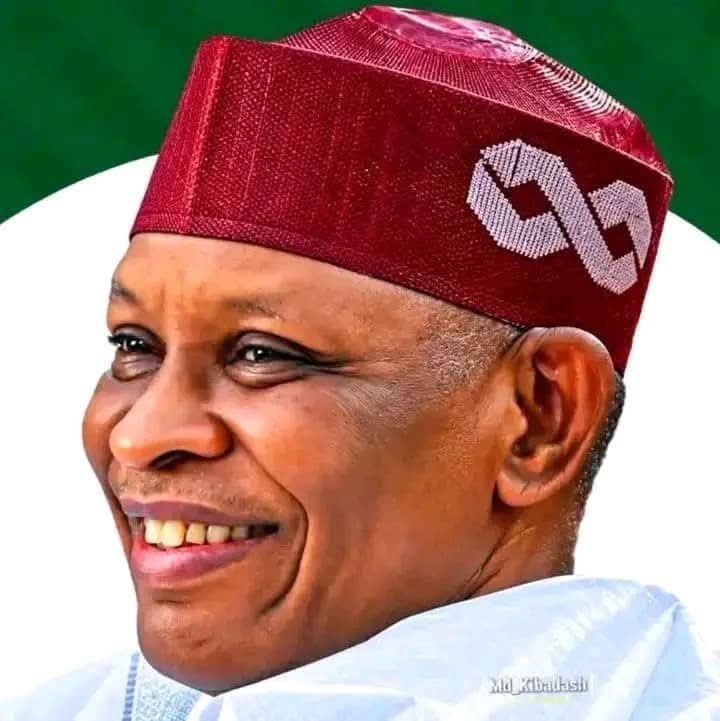
Mustapha Muhammad
As the 2027 general elections draw nearer, the signs pointing towards a possible victory for Alhaji Abba Kabir Yusuf in his bid for a second term as Executive Governor of Kano State are becoming clearer by the day. The road, once fraught with political obstacles, conflicts, and challenges, appears to be clearing rapidly. Victory is increasingly within sight, God willing.
The foundation of Governor Yusuf’s political momentum rests on his administration’s performance, astute political manoeuvring, successful consensus-building during party primaries, and proactive reconciliation efforts. By bringing key political figures from Kano’s three senatorial districts—South, North, and Central—under one umbrella, coupled with the perceived decline in the influence of the Kwankwasiyya movement following widespread defections to the All Progressives Congress (APC), Governor Yusuf has positioned himself favourably ahead of the forthcoming election.
He stands out among the contenders for the Kano governorship. His political resilience and strategic departure from what he considers the troubled waters of the New Nigeria Peoples Party (NNPP) demonstrate his ability to navigate complex political challenges in pursuit of victory.
Below are some of the key factors driving Governor Yusuf’s political momentum ahead of the 2027 general elections.
Transformative Governance and Administrative Scorecard
Over the past three years, Governor Abba Kabir Yusuf has implemented people-oriented projects and policies aimed at improving the lives of Kano residents across critical sectors.
Educational Revitalisation
Increased budgetary allocation: Funding for education rose from 29.5 per cent in 2024 to 30.5 per cent in 2025 and reached 31.5 per cent in 2026, out of a total state budget exceeding ₦1.47 trillion.
Massive recruitment: Nearly 20,000 teachers, including personnel recruited under the Kano State Better Education for All (BESDA) initiative, were employed to address critical teacher shortages in classrooms.
Infrastructure upgrades: Nearly 400 schools across the state’s 44 local government areas (LGAs) have undergone complete renovation, alongside ongoing construction projects.
Academic excellence: Kano State led national performance rankings in the National Examinations Council (NECO) examinations in 2025 and 2026. In 2026, the state produced 74,413 candidates who obtained at least five credits, including English Language and Mathematics, surpassing Lagos State, with 72,496 candidates, and Oyo State, with 55,543.
Healthcare Modernisation and Pension Delivery
Primary healthcare overhaul: More than 340 primary healthcare centres across the 44 LGAs have been renovated.
Hospital expansion: At least 10 new general hospitals have been constructed in underserved LGAs, while work is ongoing on six additional facilities to ensure that every LGA has a dedicated general hospital.
Modern equipment: Health facilities have been equipped with CT scanners, dialysis units, ultrasound machines, and automated laboratory analysers.
Settlement of pension arrears: Of the inherited ₦48 billion backlog of pension and gratuity liabilities, the administration has disbursed more than ₦32 billion to retirees.
Agricultural Development and Rural Infrastructure
Farm mechanisation and subsidies: The state procured 98 tractors and 48 combine harvesters while introducing a 50 per cent fertiliser subsidy programme across all LGAs.
Irrigation expansion: The rehabilitation of the Watari Irrigation Scheme expanded irrigation coverage by 1,000 hectares, with the aim of boosting year-round agricultural production.
Road networks and urban renewal: Eighteen of the 34 planned five-kilometre rural road projects have been completed, with solar streetlights installed. In addition, 12 of the 24 planned urban renewal road projects, covering approximately 76 kilometres, have been delivered.
Bridge reconstruction: The Kubaraci-Kura Bridge was restored, reopening important economic and transportation corridors.
Empowerment and Skills Acquisition
Social safety nets: Monthly stipends of ₦50,000 are provided to 5,200 women, while grants of ₦150,000 have been distributed to youths across the state.
Entrepreneurship: Twenty-six technical and entrepreneurship institutes have been revitalised to provide practical vocational training and equip beneficiaries with relevant skills.
Political Realignment and Party Unity
Governor Yusuf demonstrated political foresight by defecting to the All Progressives Congress (APC). His decision, in the view of his supporters, was timely and strategically informed by the need to secure his political future.
The subsequent defections from the NNPP by members of the Kwankwasiyya movement have, according to this argument, strengthened the case for his political realignment. The move also positioned him and his supporters within a political platform they consider more advantageous ahead of the 2027 elections.
Furthermore, as the state’s APC leader, Governor Yusuf successfully managed the consensus process during the party primaries, resulting in what supporters described as a “no victor, no vanquished” outcome.
His ongoing reconciliation efforts have also helped bring political stakeholders from Kano’s three senatorial districts together, strengthening the prospect of a united political front ahead of the 2027 polls.
With his administration’s reported achievements, political realignment, and reconciliation efforts, Governor Yusuf’s supporters believe he is well positioned to secure a second term in office.
No doubt, Alhaji Abba Kabir Yusuf, the Executive Governor of Kano State, is traversing the path to victory in the 2027 general elections.
Mustapha Muhammad is the Chief Press Secretary to the Executive Governor of Kano State, Alhaji Abba Kabir Yusuf. He writes from Kano.
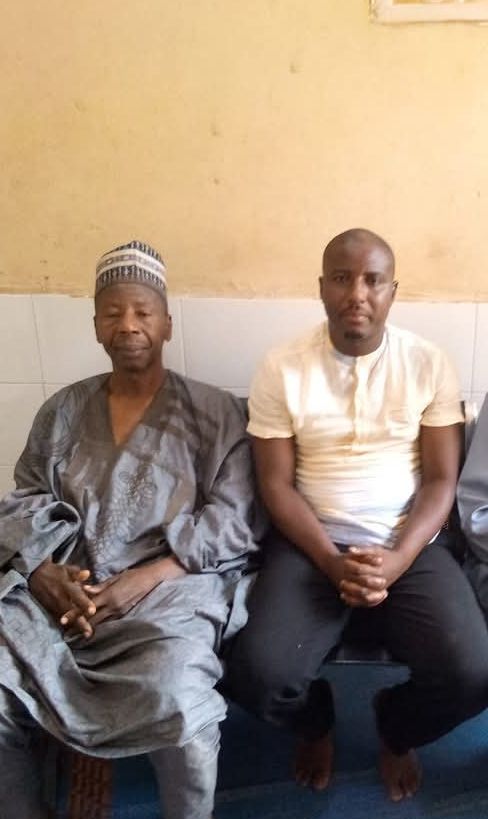
Jamilu Uba Adamu
Some people come into our lives and leave an indelible mark that transcends blood relations. Through their honesty, humility, nobility, contentment and disregard for worldly ostentation, they become more than friends or acquaintances; they become second fathers whose wisdom and kindness shape our lives.
Late Alhaji Bashir Ahmed Maizare was one such rare individual. His death is not merely the loss of a respected sports administrator but the departure of a father figure, mentor and custodian of Kano’s sporting heritage.
A Bond Beyond Blood
My relationship with the late Maizare began through my elder brother, Abdullahi Bayero Uba Adamu, who worked under him at the Kano State Sports Commission. My passion for sports naturally brought me closer to him and strengthened the bond that would eventually develop into a father-and-son relationship.
I vividly remember the day my elder brother escorted me to Maizare’s residence at Kofar Wambai Quarters in Kano and introduced me to him. What began as a simple introduction blossomed into a lasting relationship. From that day, I became a regular visitor to his home, where I found not just a sports enthusiast and administrator but a father figure whose counsel and encouragement meant so much to me.
His home became a place where I could seek guidance, share my concerns and learn valuable lessons about sports and life. He welcomed my questions, listened patiently to my challenges and offered advice without hesitation. His humility made him approachable, while his wealth of experience made his counsel invaluable.
The Shocking News of His Death
I was attending a training course in Jos, Plateau State, when the news of his death reached me. We had just stepped out for a break after a rigorous and exhausting lecture. I switched on my mobile data to check my WhatsApp messages.
Although I belong to several WhatsApp groups, one platform I regularly follow is the Kano Sports Commission group, driven by my enduring passion for sports in Kano.
After attending to some personal messages, I opened the Commission’s group. Almost immediately, I came across a series of condolence messages announcing the death of Alhaji Bashir Ahmed Maizare.
I was stunned. For a moment, I struggled to comprehend what I was reading. Before I could fully process the devastating news, I received a phone call from Malam Haruna Sabga, one of his neighbours at Kofar Wambai Quarters, who confirmed that Maizare had passed away.
The confirmation plunged me into deep sorrow. I felt like crying, my mood changed instantly, and I completely lost my appetite.
It was difficult to accept that someone who had played such a significant role in my life was gone. Beyond the public figure known within Kano’s sporting circles was a man whose personal kindness, encouragement and fatherly affection had touched my life profoundly.
A Mentor Who Believed in My Potential
One of the qualities I will forever remember about Maizare was his unwavering encouragement. He consistently motivated me to participate actively in sporting activities and supported my efforts to contribute to sports development.
His influence and fatherly support recently contributed to my appointment as Team Manager of the Kano Pillars Amputee Football Team and Vice Chairman of the Kano State Tug of War Association.
These appointments represent more than personal achievements to me. They also remind me of the encouragement I received from a man who believed in nurturing others and helping them discover opportunities to serve.
Maizare understood that sports administration was not merely about organising competitions or managing teams. It was also about identifying talent, encouraging young people, sharing knowledge and creating opportunities for others to contribute meaningfully to society.
He was always willing to offer guidance whenever I encountered difficulties. Whenever I faced a challenging situation in sports, he was among the first people I contacted. He would listen attentively and offer practical solutions, never making me feel that my concerns were unimportant.
That willingness to help, even when there was nothing to gain personally, distinguished him as a genuine mentor.
His Contribution to Documenting Kano’s Football History
One of the most enduring aspects of my relationship with the late Maizare was his invaluable contribution to the successful writing of my book, *Takaitaccen Tarihin Wasan Kwallon Kafa a Kano* (A Brief History of Football in Kano).
Documenting the history of football in Kano required access to reliable information, historical accounts and the experiences of people who had witnessed the evolution of the game. Maizare proved to be an invaluable source of knowledge and guidance throughout the process.
He never grew tired of attending to me. He patiently answered my questions and shared insights that helped me navigate the challenges of documenting the history of football in the state.
His support went beyond the ordinary assistance of a friend or acquaintance. He understood the importance of preserving sporting history for future generations and willingly contributed to an effort that would help keep Kano’s football heritage alive.
Looking back, I realise that his contribution to the book was part of a much broader legacy. He was not simply sharing information; he was helping preserve the collective memory of Kano’s sporting community.
More Than a Sports Administrator
Late Alhaji Bashir Ahmed Maizare was more than a sports administrator. He was a school from which others could learn, an archive of sporting memories and an encyclopaedia of Kano’s sports history.
His knowledge, built on years of experience and close association with the sporting community, made him a valuable resource for anyone seeking to understand the development of sports in Kano.
Yet, his greatness was not defined by knowledge alone. His humility, generosity, patience and commitment to youth development made him an exceptional human being.
In a world where positions and titles sometimes create barriers between leaders and those they serve, Maizare remained accessible and approachable. He demonstrated that true leadership is not measured solely by the authority one possesses but also by the lives one touches and the opportunities one creates for others.
His life offers an important lesson to sports administrators and public servants: institutions become stronger when experienced individuals are willing to mentor younger people, preserve institutional memory and pass on knowledge rather than keep it to themselves.
For Kano State, his passing should serve as a reminder of the importance of documenting the experiences of veteran sports administrators and preserving the history of the state’s sporting achievements. When such individuals pass away without their knowledge and experiences being adequately documented, society risks losing an irreplaceable part of its heritage.
A Loss Beyond the Family
The death of Alhaji Bashir Ahmed Maizare is a profound loss not only to his immediate family but also to the sporting fraternity in Kano State and Nigeria at large.
For those who knew him professionally, he was a repository of sports knowledge and experience. For those who benefited from his mentorship, he was a source of guidance and encouragement. For me, he was a father figure whose support and kindness I will continue to cherish.
Although death has taken him away from us, the values he embodied and the lives he influenced remain part of his enduring legacy. His contributions to sports administration, youth development and the preservation of Kano’s football history will continue to inspire those who had the privilege of knowing him.
Personally, I will forever remember him with gratitude. I will remember his patience, his encouragement, his willingness to help and his unwavering belief in the value of sports. Above all, I will remember the fatherly relationship we shared, which was built not on blood ties but on mutual respect, kindness and genuine affection.
May Almighty Allah (SWT) forgive his shortcomings, accept his good deeds, illuminate his grave and grant him Jannatul Firdaus. May Allah also grant his family, friends, colleagues and the entire sporting community the strength and patience to bear this irreparable loss.
Alhaji Bashir Ahmed Maizare may be gone, but his legacy lives on in the people he mentored, the knowledge he shared and the sporting history he helped preserve.
Ameen.
Jamilu Uba Adamu is a sports writer based in Kano.

Safiyanu Bichi
When Abia State Governor Alex Otti recently pulled off his shoe and proudly declared, “This is Aba Made,” the gesture went beyond the shoe itself. It offered a simple but powerful demonstration of what deliberate government patronage can do for local industry.
The message for Kano is equally important: where is Made-in-Kano in government procurement?
This is a question Kano can no longer afford to ignore.
For decades, Kano has been one of Nigeria’s important commercial and industrial centres. The state has a long tradition of manufacturing, textile production, leatherwork, furniture making, tailoring, metalwork, food processing and a wide range of small and medium-scale enterprises.
Yet having businesses and skilled artisans is not enough. Local industries need markets, and government procurement is one of the largest markets available in any economy.
The Kano State Government spends billions of naira annually on infrastructure, furniture, uniforms, clothing, construction materials, office equipment, vehicles, signage and other goods and services. The critical question is how much of this expenditure remains within Kano and how much leaves the state.
This is where a deliberate Kano Local Content Policy becomes necessary.
Every major state government project and Bill of Quantities (BOQ) should, where technically and economically feasible, contain a clearly defined local-content component. A target of 40 per cent Kano content could provide a practical starting point.
The idea is not to sacrifice quality or value for money. Rather, it is to ensure that qualified Kano-based businesses are given a fair opportunity to compete for government patronage.
If the government buys furniture from Kano manufacturers, contracts uniforms from local textile and garment producers, procures locally manufactured footwear and leather products, and sources other goods and services from competent businesses within the state, public expenditure can generate a multiplier effect across the local economy.
The money does not simply disappear after a government contract is executed. It circulates.
A furniture company pays its workers. Workers spend their earnings in local markets. Manufacturers purchase materials from other businesses. Transporters earn income. Artisans receive more orders. Businesses expand and potentially employ more people.
In other words, government procurement can become an instrument of economic development.
This is particularly important at a time when Kano needs to create more productive opportunities for its growing population, especially young people.
The state does not have to begin from scratch. Kano already possesses the human capital, entrepreneurial culture and business networks required to support a stronger local-content regime.
What is needed is deliberate policy, transparent implementation and consistent monitoring.
The government could begin by identifying categories of goods and services that can realistically be sourced within Kano. It could establish a database of qualified local manufacturers, contractors, artisans and suppliers, while maintaining clear standards for quality, pricing and delivery.
There should also be safeguards against turning local-content policy into another avenue for patronage. The objective should not be to favour politically connected businesses. It should be to create opportunities for genuine Kano-based enterprises that can meet established standards.
That distinction matters.
A successful local-content policy must combine local patronage with competition, quality, transparency and accountability.
The experience highlighted by Governor Otti offers Kano an opportunity for reflection. A simple act of wearing a locally made product can draw attention to an entire ecosystem of producers, workers and entrepreneurs behind that product.
Kano can create its own version of that story.
Imagine a government school furnished by Kano manufacturers, public institutions using locally produced furniture, uniforms supplied by Kano garment producers, official events showcasing locally produced textiles and leather goods, and government projects deliberately creating opportunities for competent local suppliers.
That would make “Made-in-Kano” more than a slogan.
It would make it part of government’s economic strategy.
Kano has the people. Kano has the skills. Kano has the entrepreneurs. Kano has the markets.
What is required is a deliberate decision to connect government spending with the productive capacity of the state.
Let Kano Government buy Made-in-Kano.
A 40 per cent Kano Local Content target should not be treated as another political promise. It should be the beginning of a measurable procurement policy that keeps more public money within the Kano economy, strengthens local businesses, supports jobs and helps rebuild the productive foundation of the state.
The real question is no longer whether Kano can produce.
The question is whether Kano is ready to buy what Kano produces.
Safiyanu Bichi is a member of the Kano Budget Working Group.

Dr Goni Faruk Umar calls on muslims to embrace taqwa in daily life

Dabo’s resignation triggers wave of defections from APC in Kano

Five Kano Pillars Amputee Players Invited to Special Eagles Camp Ahead of World Cup

BUK Professor advocates microfinance to tackle food insecurity, poverty

General Elections 2027: Abba Kabir Yusuf traverses the path to victory

Kano leads again as NECO successes rise to 74,413
Kano tops states in 2026 NECO results, Governor Yusuf hails students

Kano Govt Suspends Durbar Processions, Horse Riding in Metropolis

ACF begins Dangote Refinery IPO sensitisation campaign in Kano

