
Headlines
Forbes: Aliko Dangote’s wealth surges by almost 100% to $23.9bn, now 86th richest in the world


Nasiru Yusuf Ibrahim
Billionaire Aliko Dangote has seen his wealth nearly double to $23.9 billion, according to Forbes, which ranks the Nigerian entrepreneur as the wealthiest person in Africa and 86th in the world. It would be recalled that Forbes ranked Aliko Dangote as the 144th richest person in the world in 2024 with $13.4 billion.
KANO FOCUS reports that Forbes estimates Dangote’s net worth at $23.9 billion, primarily due to his 92.3 percent stake in Dangote Petroleum Refinery & Petrochemicals. At 67 years old, Dangote is once again one of the top 100 richest individuals worldwide, a position he has not held since 2018, according to the Forbes Real-Time Billionaires List.
This places him significantly ahead of South African Johann Rupert, who is ranked 161st in the world with an estimated wealth of $14.4 billion and very far above Mike Adenuga, who is the second richest in Nigeria and 481, in the world, with a net worth of $6.8 billion.

Dangote disrupted the government’s oil monopoly by constructing the largest petroleum refinery in Africa. After 11 years, a $23 billion investment, and numerous challenges, the Dangote Refinery began operations last year. Located on a vast 6,200-acre site in the Lekki Free Zone, the refinery, at full capacity, will process a remarkable 650,000 barrels per day (b/d), making it the seventh-largest refinery in the world and the largest in Africa. Additionally, the refinery’s adjacent petrochemical complex has an annual production capacity of 3 million metric tons of urea, making it Africa’s largest fertiliser producer.
The Dangote Refinery is already having a significant impact on global energy markets. Imports of petroleum into Nigeria are on track to reach an eight-year low, affecting European refiners that have traditionally sold to Nigeria, according to energy intelligence firm Vortexa. Furthermore, Nigeria has become a net exporter of jet fuel, naphtha (a solvent used in varnishes, laundry soaps, and cleaning fluids), and fuel oil, according to S&P Global.
Dangote sees the refinery as part of a larger vision to transform Nigeria, one of the world’s largest crude oil producers, into a major producer of refined petroleum products. This would enable Nigeria to compete with European refineries and supply gasoline to Nigerian consumers.
“I want to provide a blueprint for industrialisation across Africa,” Dangote says in an interview with Forbes. “We have to build our nation by ourselves. We have to build our continent by ourselves, not [rely on] foreign investment.” He believes Africa has long been “a mere dumping ground for finished products,” and his refinery represents “a pivotal step in ensuring that Africa can refine its own crude oil, thereby creating wealth and prosperity for its vast population.”
Dangote said the refinery is the biggest risk of his life and without success, it would have affected him greatly.
“It was the biggest risk of my life,” says Dangote about his decision to embark on the project. “If this didn’t work, I was dead.”
Zainab Usman, director of the Africa Programme at the Carnegie Endowment for International Peace, according to Forbes, said Nigerians see Dangote as a hero and a real industrialist transforming the country.
“He is seen in most parts of Nigeria as a hero. He is seen as a real industrialist who builds things,” she said.
A professor of African studies at the Soka University of America, Chika Ezeanya, also corroborated this view, noting that Dangote is meeting the needs of consumers on the continent.
“I think he’s believed staunchly in the fact that Nigerians need products that he has to offer,” he said while adding, “Governments can come and go, policies can be changed, but the needs of the Nigerian consumer will only grow and expand.”




Nasiru Yusuf Ibrahim
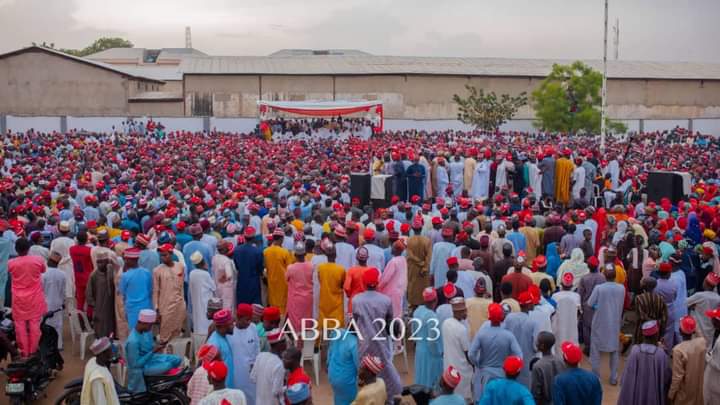
The Kwankwasiyya Movement has expressed concern over what it described as a disturbing pattern of judicial pronouncements across Nigeria, calling on the National Judicial Council (NJC) to urgently intervene.
In a press statement issued on Thursday, the movement’s spokesperson, Dr. Habibu Sale Mohammed, cited a recent judgment delivered by Justice Bello Kawu of the Federal Capital Territory High Court, Abuja, in a matter involving the New Nigeria People’s Party (NNPP) as part of a growing trend of controversial court rulings.
According to the statement, such developments are not isolated but reflect a broader pattern in which judicial actions appear to overstep constitutional boundaries, generate conflicting orders, and raise concerns about neutrality, due process, and adherence to the rule of law.
The movement noted that similar judicial interventions have occurred in the internal affairs of major political parties, including the Peoples Democratic Party (PDP), Labour Party (LP), and African Democratic Congress (ADC), often resulting in confusion, factional disputes, and weakened party structures.
It also expressed concern over what it described as a growing tendency for courts of coordinate jurisdiction to issue conflicting rulings on similar matters, entertain cases already under appellate review, and, in some instances, disregard principles of fair hearing and procedural integrity.
The statement warned that such trends could erode established legal doctrines, including stare decisis, thereby undermining the consistency and predictability of the legal system.
The Kwankwasiyya Movement further stated that the situation is fueling public perception that elements within the judiciary are being drawn into political contests, which could weaken confidence in the courts.
“This is a dangerous trajectory for any democracy, particularly in a country preparing for critical electoral contests,” the statement said.
The group warned that if the trend continues, it could erode trust in democratic institutions, escalate political tensions, and undermine the credibility of future elections.
It therefore called on opposition parties to unite in resisting what it described as any abuse of the judiciary aimed at undermining democratic opposition in the country.
The movement also urged stakeholders to explore lawful and peaceful measures, including engaging civil society, raising international awareness, and organising legitimate public protests where necessary.
It specifically called on the National Judicial Council to review and address concerns surrounding conflicting and controversial judicial decisions, while urging judicial officers to uphold professionalism, fairness, and due process.
The statement also cautioned political actors against resorting to forum shopping and judicial manipulation in resolving internal party disputes.
The Kwankwasiyya Movement reaffirmed its commitment to defending democratic values and advocating for a system where the rule of law prevails, justice is impartial, and the will of the people is respected.

Nasiru Yusuf Ibrahim
The Kano State Government has approved a modified Sallah durbar for the Emir of Kano, Muhammadu Sanusi II, ahead of the forthcoming Eid-el-Fitr celebrations.
KANO FOCUS reports that the approval was contained in a press statement issued by the Commissioner for Information and Internal Affairs, Comrade Ibrahim Abdullahi Waiya, on Tuesday.
According to the statement, the decision followed credible intelligence reports received through the State Security Council, indicating attempts by some individuals to create confusion and disrupt law and order during the festive period.
The government, under the leadership of Governor Abba Kabir Yusuf, reiterated its commitment to preserving Kano’s rich cultural heritage but stressed that it would not compromise its constitutional responsibility to maintain peace and safeguard lives and property.
Following consultations with the Kano Emirate Council and other stakeholders, the government outlined specific arrangements for the celebrations.
It stated that the traditional Hawan Idi (Eid Durbar) would be conducted by the Emir from the Kofar Mata Eid Praying Ground through designated routes to Gidan Shettima, terminating at Kofar Fatalwa within the Emir’s Palace.
The Hawan Nasarawa procession, the statement added, would take place in a modified form without the use of horses.
However, the government announced the suspension of Hawan Daushe, Hawan Fanisau, and Hawan Dorayi, noting that they would be observed during subsequent Sallah celebrations.
The government directed all security agencies to intensify surveillance, ensure strict compliance with the directives, and take necessary measures to prevent any breach of peace before, during, and after the celebrations.
It also urged residents to remain calm, law-abiding, and cooperative with security agencies, while cautioning against the spread of unverified information.
The government commended security agencies for their professionalism and dedication, assuring the public of its commitment to a peaceful and hitch-free Eid-el-Fitr celebration.
It also extended best wishes to Muslims in the state for a peaceful and joyous Sallah celebration.

Bosede Olufunmi
The Federal Road Safety Corps (FRSC) has deployed 1,889 personnel across Kano State to ensure smooth traffic flow and enhance safety during the Eid-el-Fitr celebrations.
KANO FOCUS reports that the Kano Sector Commander, Idris Mohammed-Lawal, disclosed this in a statement issued on Monday by the corps’ Public Relations Officer, Abdullahi Labaran.
According to the statement, the special patrol operations will run from Tuesday to Sunday, with the aim of reducing road crashes, fatalities, and injuries, while ensuring free flow of traffic across the state.
Mohammed-Lawal said the deployment comprises 1,348 regular marshals and 541 special marshals who will maintain 24-hour patrol operations across the 44 local government areas of the state.
He explained that the operation would be supported by five ambulances, one heavy-duty tow truck, and 25 patrol vehicles to ensure prompt rescue services and quick clearance of obstructions on the roads.
The sector commander added that enforcement efforts would focus on common traffic violations, including speeding, dangerous overtaking, lane indiscipline, overloading, use of mobile phones while driving, seat-belt violations, and use of mechanically deficient vehicles.
He further stated that the corps would collaborate with other security and emergency agencies to ensure effective traffic control and rapid response to incidents.
“These include the Nigeria Police Force, Department of State Services, Nigeria Security and Civil Defence Corps, Federal Fire Service, and the Federal Roads Maintenance Agency,” he said.
Mohammed-Lawal urged motorists and members of the public to report crashes or emergencies through the FRSC toll-free number 122 or 0700-CALL-FRSC.
He also wished Muslims a peaceful Eid-el-Fitr celebration and advised motorists to obey traffic regulations, avoid speeding, and ensure their vehicles are roadworthy.

Kwankwasiyya movement raises concern over judicial rulings, urges NJC intervention

Kano Govt approves modified Sallah Durbar for Emir Sanusi

FRSC deploys 1,889 personnel in Kano for Eid-el-Fitr operations

Federal Fire Service saves N560m property in swift response to Kano truck yard outbreak

FRSC sensitises Kano drivers, transport unions on road safety ahead of Sallah

Kwaru Foundation Provides Free Eye Care to Over 1,100 Residents in Kano

K-SAFE commends Kano for timely school census, inclusion of non-formal education data

Kano to distribute 16,906 desks to primary schools in 13 LGAs

Kano disseminates 2024/2025 schools census report, records progress in girls’ enrolment

