
News
World Bank appoints Aliko Dangote to Elite Group


Nasiru Yusuf Ibrahim
…Tasks him to drive Investment and job creations in emerging economies

The President and Chief Executive of the Dangote Group, Aliko Dangote, has been appointed to the World Bank’s Private Sector Investment Lab, joining a select group of global business leaders tasked with driving investment and job creation in emerging economies.
KANO FOCUS reports that in a statement confirming his acceptance, the African industrialist reaffirmed his commitment to fostering sustainable economic growth through private sector-led investment, noting the transformative potential of such initiatives in developing markets.
“I am both honoured and excited to accept my appointment to the World Bank’s Private Sector Investment Lab, dedicated to advancing investment and employment in emerging economies,” Dangote said.
“This opportunity aligns with my long-standing commitment to sustainable development and unlocking the potential of developing economies. Drawing inspiration from the remarkable successes of the Asian Tigers, which have demonstrated the power of strategic investment and focused economic policy, I am eager to collaborate with fellow leaders to replicate such outcomes across other regions.”
The Dangote Group, founded by Aliko Dangote, is the largest conglomerate in West Africa and one of the largest on the African continent. With interests spanning cement, fertiliser, salt, sugar, and oil, the Group employs over 30,000 people and is the largest taxpayer in Nigeria—contributing more in taxes than all of Nigeria’s banks combined. It is also the country’s largest employer after the government.
The $20 billion Dangote Petroleum Refinery & Petrochemicals, the Group’s flagship project, stands as the largest single private investment in Africa.
In addition to his business interests, Dangote leads the Aliko Dangote Foundation (ADF), the largest private foundation in sub-Saharan Africa, with the largest endowment by a single African donor. The Foundation primarily focuses on child nutrition, while also supporting interventions in health, education, empowerment, and disaster relief.
The World Bank announced Dangote’s appointment on Wednesday as part of a broader expansion of its Private Sector Investment Lab, which now enters a new phase aimed at scaling up solutions to attract private capital and create jobs in the developing world.
Joining Dangote in the elite group are Bill Anderson, CEO of Bayer AG; Sunil Bharti Mittal, Chair of Bharti Enterprises; and Mark Hoplamazian, President and CEO of Hyatt Hotels Corporation.
The World Bank said the expanded membership brings together business leaders with proven track records in generating employment in developing economies—supporting the Bank’s sharpened focus on job creation as a central pillar of global development.
“With the expanded membership, we are mainstreaming this work across our operations and tying it directly to the jobs agenda that is driving our strategy,” said World Bank Group President Ajay Banga. “This isn’t about altruism—it’s about helping the private sector see a path to investments that will deliver returns, and lift people and economies alike. It’s central to our mandate.”
The global bank said that over the last 18 months, the Lab brought together leaders from global financial institutions to identify the most pressing barriers to private sector investment in developing countries and to test actionable solutions.
The statement said that the work had now been consolidated into five priority focus areas that were being integrated across the bank operations, including regulatory and policy certainty.
The Lab’s founding members included senior executives from AXA, BlackRock, HSBC, Macquarie, Mitsubishi UFJ Financial Group, Ninety One, Ping An Group, Royal Philips, Standard Bank, Standard Chartered, Sustainable Energy for All, Tata Sons, Temasek, and Three Cairns Group. The Lab is chaired by Shriti Vadera, Chair of Prudential plc.

Nasiru Yusuf Ibrahim
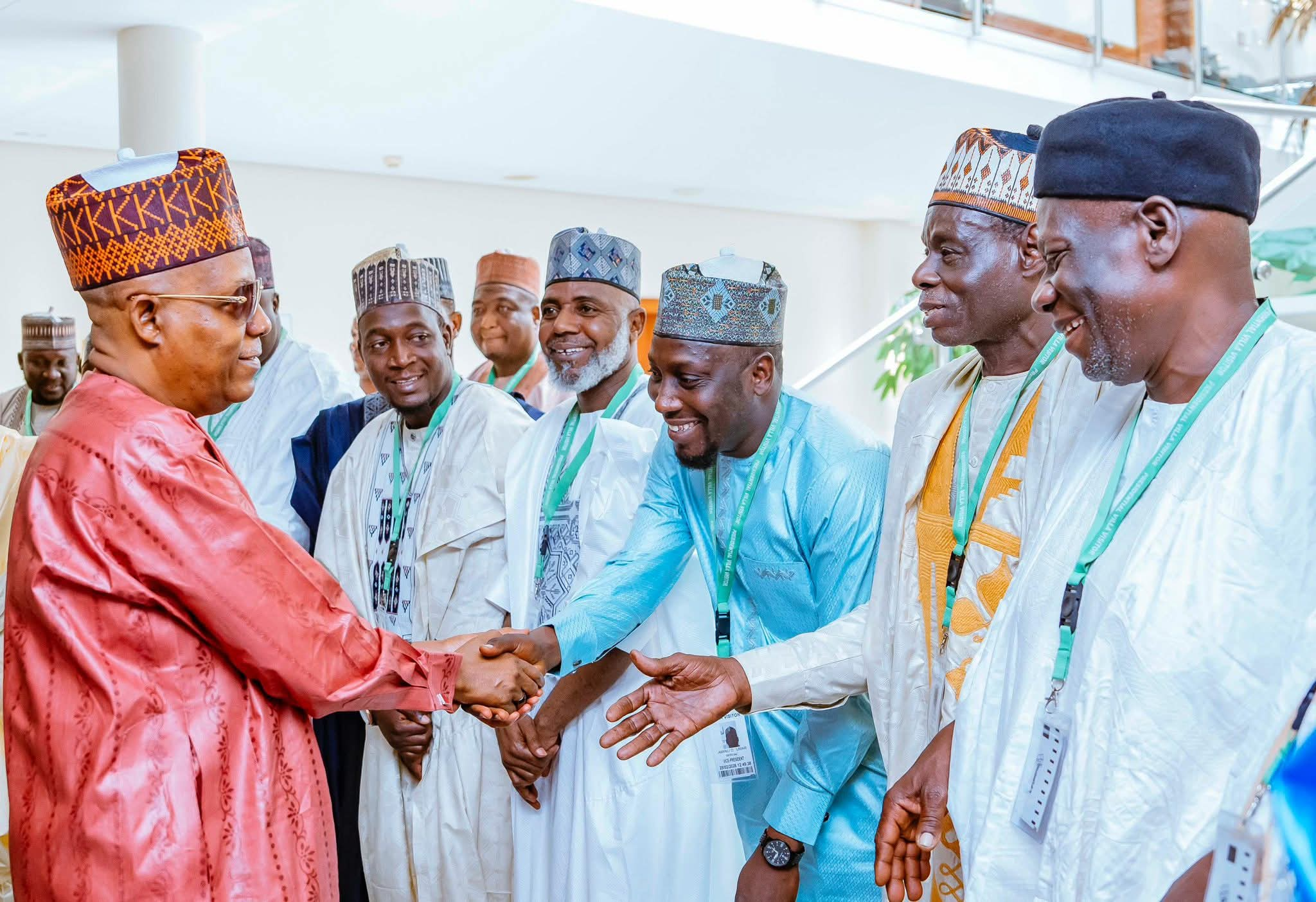
Nigeria’s Vice President, Kashim Shettima, on Tuesday received a delegation from the Association of Kano Business Community at the Presidential Villa, Abuja, during a thank-you visit to President Bola Ahmed Tinubu.
KANO FOCUS reports that the delegation expressed appreciation to the Federal Government for its support to traders and other victims affected by the recent fire incident that razed several sections of the popular Singer Market in Kano.
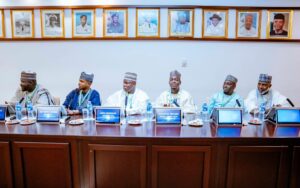
Speaking during the meeting, the Vice President reaffirmed the Federal Government’s commitment to collaborating with the Kano State Government and relevant agencies to prevent a recurrence of fire outbreaks in markets across the state.
He assured the delegation that President Tinubu has the interests of Kano people at heart, noting that the N5 billion approved as immediate relief for victims was based on the findings of a preliminary assessment of the damage caused by the inferno.
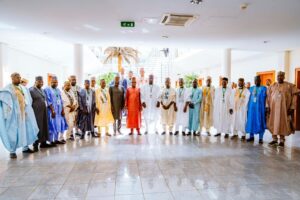
Shettima reiterated that the Federal Government would continue to support efforts aimed at restoring commercial activities and strengthening safety measures in markets to protect lives and property.
Nasiru Yusuf Ibrahim
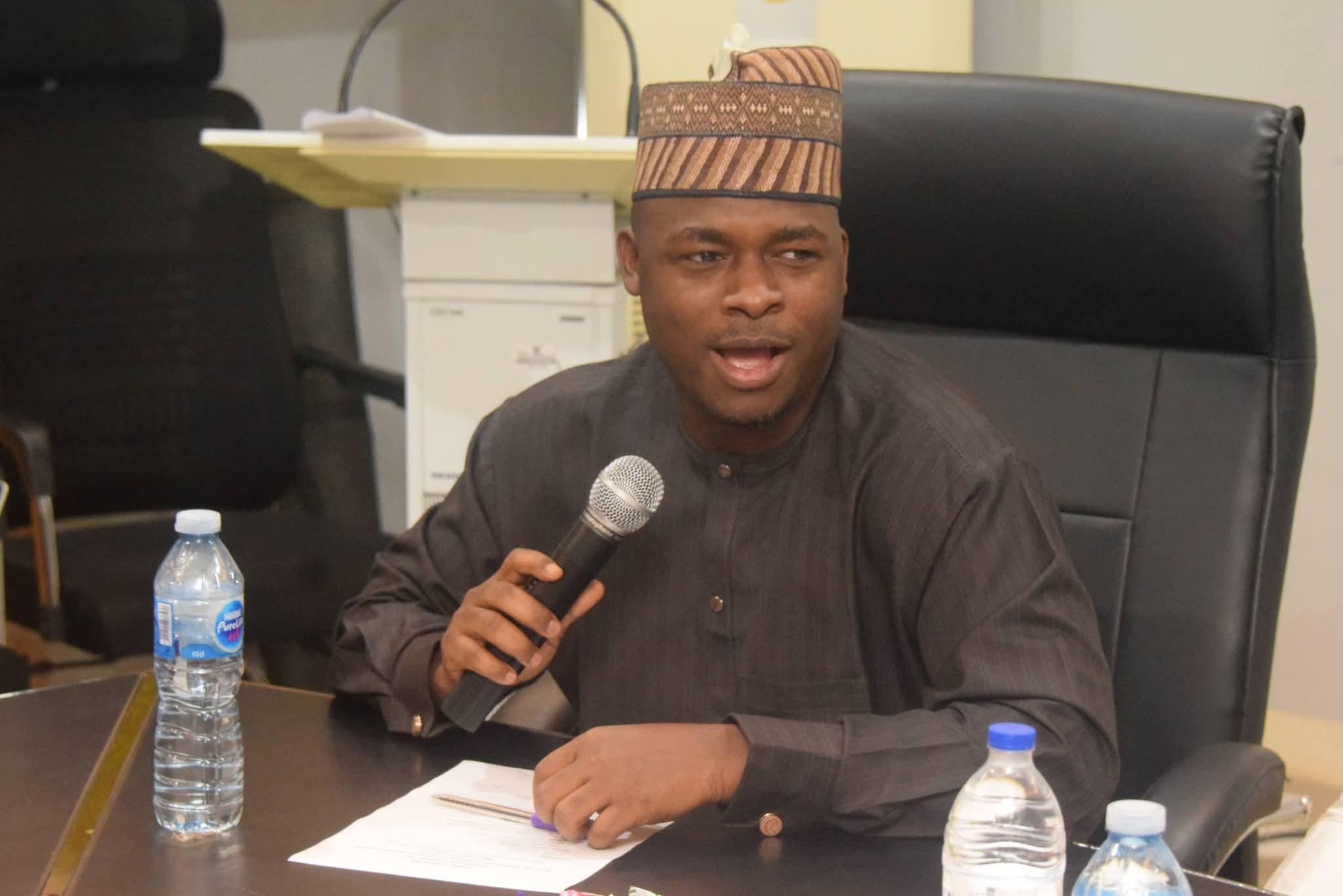
The Kano State Government has inaugurated a 23-member committee to oversee the transparent and equitable distribution of financial assistance and relief materials to victims of the recent Singer Market fire disaster.
KANO FOCUS reports that the inauguration was carried out on behalf of the Secretary to the State Government, Umar Faruq Ibrahim, who chairs the committee. The event was presided over by the state Attorney-General and Commissioner for Justice, Abdulkarim Kabiru Maude.
According to the Attorney-General, the committee comprises representatives from key government agencies, security services, the Kano Emirate Council, religious leaders, and affected traders.
He said the panel’s mandate includes assessing the extent of losses, verifying genuine victims, ensuring timely distribution of support, and recommending measures to prevent future fire incidents.
The intervention follows support approved by President Bola Ahmed Tinubu, as well as contributions from the APC Governors Forum. It also comes in addition to earlier assistance provided by Governor Abba Kabir Yusuf and the Deputy Senate President, Barau I. Jibrin.
The state government reaffirmed its commitment to supporting victims of the disaster and restoring commercial activities at Singer Market.

Nasiru Yusuf Ibrahim
The Kano State Government has announced Saturday, March 1, 2026, as the commencement date for the Eid-el-Fitr break for all public and private primary and post-primary schools in the state.
KANO FOCUS reports that the announcement, contained in the approved 2025/2026 academic calendar, applies to both day and boarding schools across the state.
According to a statement issued by the Director of Public Enlightenment, Musbahu Aminu Yakasai, parents and guardians of pupils and students in boarding schools are expected to convey their wards home by the early hours of Friday, February 28, 2026.
The statement further explained that boarding school students are to resume on Sunday, March 22, 2026, while day students are to resume on Monday, March 23, 2026.
It added that the second term will continue from Sunday, March 22, 2026, and end on Saturday, April 18, 2026.
The government directed all public and private schools in the state to comply strictly with the directive, warning that non-compliance would be treated as a breach of government instructions.
The Commissioner for Education, Ali Haruna Abubakar Makoda, urged parents and guardians to ensure full compliance with the approved resumption dates.
He appreciated parents and residents of the state for their continued cooperation and support to the ministry, and wished pupils and students a successful completion of the Ramadan fast and hitch-free Sallah celebrations.

Kano business community thanks FG for N5bn Singer market relief

Kano Govt inaugurates 23-member committee to disburse Singer market fire relief

Kano Govt announces March 1 for schools’ Ramadan break

NCC board chair hosts licensed telecoms operators in Lagos

Stakeholders seek stronger nutrition financing at local government level

Lami Maccido, first person to appear on screens of NTA Kano, CTV 67, dies at 72

Governor Yusuf Appoints Acting DG for Pilgrims Board, Names Provost for Anti-Corruption Institute

Kano govt investigates reported disease outbreak in Garko community

K-SAFE appeals to Kano Executive Council to pass revised education bill

