
Headlines
Governor Yusuf sets up committee to address employment gaps against indigenes


Nasiru Yusuf Ibrahim

Governor Abba Kabir Yusuf of Kano State has approved the establishment of a Technical Committee to tackle the persistent issue of poor employment representation of Kano State indigenes in federal government agencies, as well as private and voluntary institutions operating within the state.
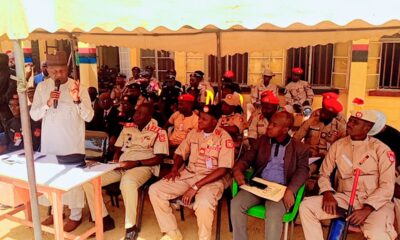
KANO FOCUS the committee was formally inaugurated by the Secretary to the State Government (SSG), Alhaji Umar Faruk Ibrahim, at his office in Kano. Speaking at the inauguration, the SSG expressed deep concern over what he described as the continued marginalisation of Kano indigenes in employment opportunities, despite Kano being the most populous state in the country.
He noted that Kano has not received its fair share of jobs, even in federal and private institutions located within the state, stressing that the high rate of unemployment among youths in Kano—believed to be higher than in any other state—demands urgent and decisive government intervention.
“This is the right time to reclaim what truly belongs to us,” Alhaji Umar Faruk Ibrahim declared, adding that the present moment offers an opportunity for meaningful and sustainable action.
A statement issued on Thursday by the Press Secretary in the Office of the SSG, Musa Tanko Muhammad, explained that the committee was carefully constituted with experienced individuals drawn from various sectors of public service.
He announced Dr. Danyaro Ali Yakasai, Special Adviser to the Governor on Policy and Social Development, as Chairman of the committee, with Dr. Ibrahim Garba Muhammad, Special Adviser on Human Resource, serving as Co-Chairman.
Other members of the committee include Salisu Mustapha, Permanent Secretary, Office of the Head of Civil Service; Ibrahim Muhammad Kabara, Permanent Secretary, Ministry of Special Duties; Hon. Ali Yahuza Gano, Special Adviser on Metropolitan Affairs; Alhaji Salisu A. Kabo, Director General, Youth Empowerment; and Hon. Ado Muhammad Wudil, Executive Secretary, Guidance and Counselling Board. The committee’s activities will be coordinated by Salisu Musa Aliyu, Principal Assistant Secretary in the REPA Directorate of the SSG’s Office.
The committee is mandated to review employment practices in federal, private, and voluntary institutions operating in Kano State, determine the level of employment of Kano indigenes, engage relevant organisations on recruitment guidelines, and collaborate with the Federal Character Commission to ensure fairness and compliance with existing regulations. Its ultimate objective is to develop practical and lasting solutions that will improve employment opportunities for Kano State indigenes.
Speaking on behalf of the committee, its Chairman, Dr. Danyaro Ali Yakasai, expressed gratitude to Governor Abba Kabir Yusuf for the confidence reposed in the team. He assured that members would work diligently to justify the trust and appealed to the people of Kano State for prayers and cooperation.
The committee is expected to submit its report within four weeks.







Nasiru Yusuf Ibrahim
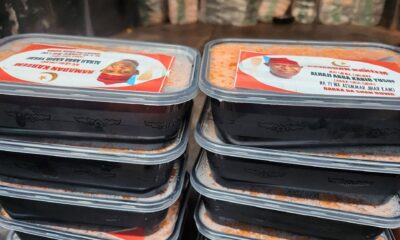
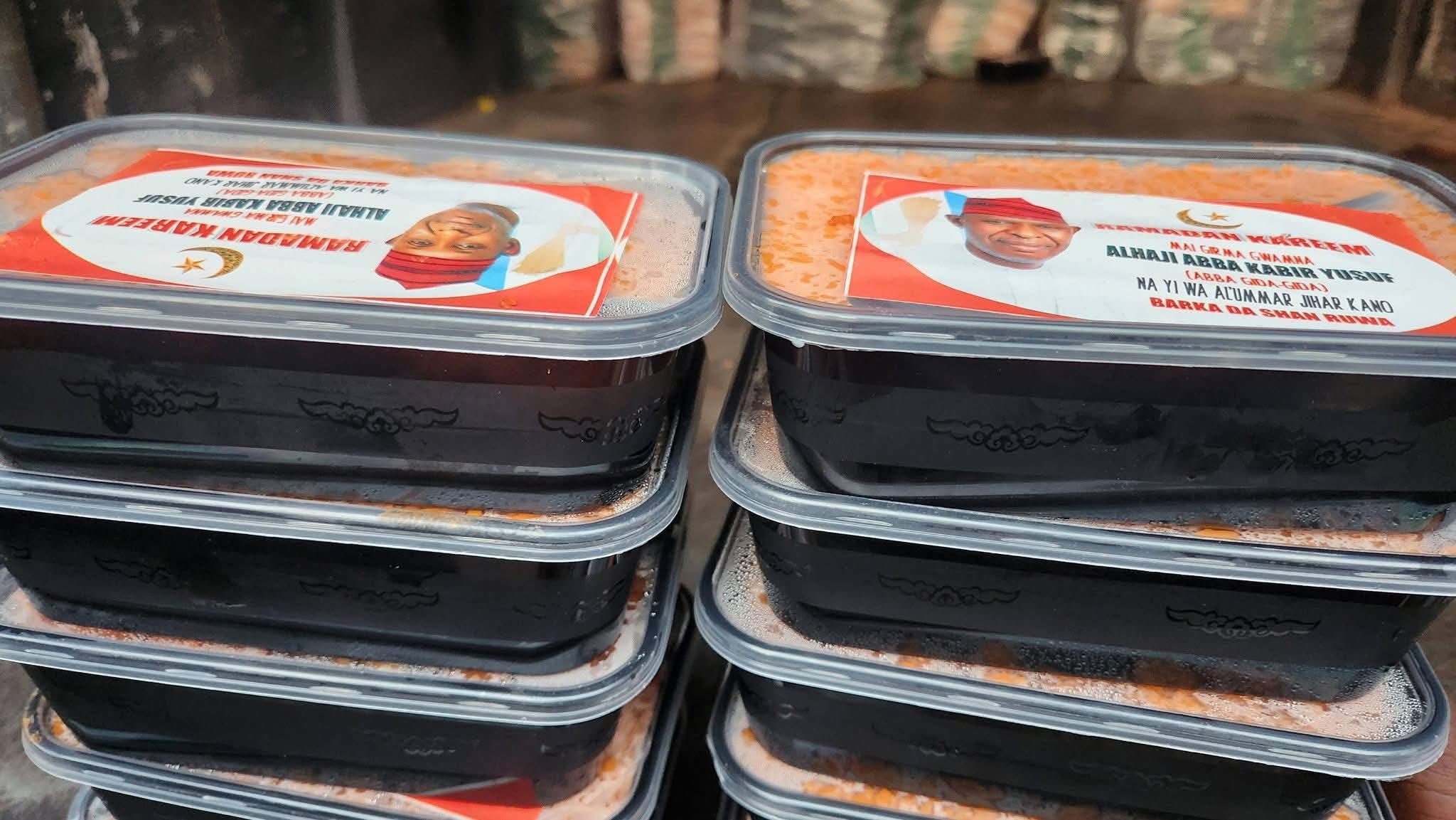
The Kano State Government has commenced the distribution of food items ahead of the 2026/1447AH Ramadan, following the approval of a Ramadan Feeding Programme Committee by Governor Abba Kabir Yusuf.
KANO FOCUS reports that the development was contained in a statement issued on Thursday by the Governor’s spokesperson, Sunusi Bature Dawakin Tofa.
According to the statement, food distribution began on Thursday, February 19, 2026, across 115 feeding centres located within the eight metropolitan local government areas of Kano State.
The governor said the initiative is designed to support the less privileged and ease the burden of fasting during the holy month of Ramadan. He urged members of the newly constituted committee to discharge their responsibilities with dedication, transparency and fear of God to ensure the success of the programme.
Committee Composition
The committee is chaired by the Commissioner for Religious Affairs, Ahmed Tijani Auwalu.
Other members include the Commissioner for Local Government, Muhammad Tajo Othman; Commissioner for Health, Dr. Abubakar Labaran Yusuf; Commissioner for Environment, Dr. Dahiru Hashim; Chairman of the Hisbah Board, Sheikh Ibrahim Shehu Maihula; and several special advisers and directors-general.
Also serving on the committee are the Accountant General of the State, Jamila Magaji Abdullahi; the Director General of the Hisbah Board, Abba Saidu Sufi; Director General, Media and Publicity, Sunusi Bature Dawakin Tofa; and Director General, Protocol, Abdullahi Ibrahim Rogo, among others.
All chairmen of the eight metropolitan local government areas—Tarauni, Fagge, Kano Municipal, Gwale, Nassarawa, Dala, Kumbotso and T/Wada—are members of the committee, alongside representatives from the Government House and the Zakkat Commission.
Akibu Isa Murtala, Special Adviser on Administration, will serve as Secretary, while Bilkisu Shehu Maimota, Permanent Secretary/AGS in the SSG’s Office, will serve as Co-Secretary.
Governor Yusuf reaffirmed that the Ramadan Feeding Programme remains a key social intervention initiative of his administration, aimed at promoting unity and providing relief to vulnerable residents across Kano State during the fasting period.
Nasiru Yusuf Ibrahim
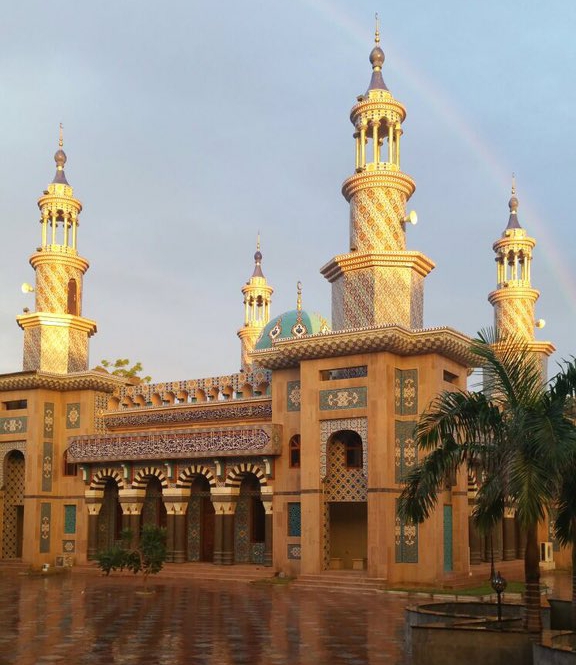
The Chief Imam of Nagazi-Uvete Jumu’ah and the late Alhaji Abdur-Rahman Okene’s Mosques in Okene, Kogi State, Sheikh Murtadha Muhammad Gusau, has called on Muslims to safeguard their wealth from calamity by faithfully paying Zakah.
Delivering his Friday sermon on Ramadan 3, 1447 AH (February 20, 2026), Imam Gusau emphasised that Zakah is not a loss but a divine mechanism for purification and protection of wealth.
According to him, wealth is not preserved through stinginess or hoarding but through obedience to Allah by giving out the prescribed portion to the needy.
“Zakah cleanses wealth from greed and spiritual impurities and blesses the remainder with increase and barakah,” he said, quoting the Prophet Muhammad (Peace be upon him) as saying: “Wealth never decreases from charity.” (Muslim).
The cleric explained that paying 2.5 per cent of eligible wealth purifies the remaining 97.5 per cent, adding that Zakah is not a voluntary act of generosity but an obligation and a right due to the poor.
Citing the Qur’an, Imam Gusau referenced Surah Al-Baqarah (2:261), where Allah likens those who spend in His cause to a grain that grows seven ears, each bearing a hundred grains. He described Zakah as “the most profitable investment,” promising returns both in this world and in the Hereafter.
He also warned against withholding Zakah, recalling a hadith recorded in Sahih Bukhari in which the Prophet Muhammad (Peace be upon him) said that wealth hoarded without paying Zakah would appear on the Day of Judgment as a poisonous snake encircling its owner’s neck.
The Imam highlighted historical examples, noting that during the reign of Umar ibn Abd al-Aziz, proper administration of Zakah led to widespread prosperity to the extent that collectors reportedly struggled to find eligible recipients.
Imam Gusau narrated the well-known story of three men among the Children of Israel—one leprous, one bald and one blind—whom Allah tested with wealth after curing their ailments. According to traditions recorded in Bukhari and Muslim, only the formerly blind man acknowledged Allah’s favour and shared his wealth, earning divine pleasure, while the others faced punishment for their ingratitude.
He described Zakah as one of the five pillars of Islam, quoting the hadith: “Islam is built upon five…”—testifying that there is no deity worthy of worship except Allah and that Muhammad is His Messenger, establishing prayer, giving Zakah, performing Hajj, and fasting Ramadan.
The cleric stressed that Zakah applies only to wealth that reaches a minimum threshold (nisab) and is capable of growth, noting that Islam does not impose it on personal belongings such as homes, vehicles or household items.
He further explained that the Shari’ah requires only a small portion—often one-fortieth—of qualifying wealth, describing the system as just and merciful. He cited the Prophet’s instruction to Mu’adh ibn Jabal when he was sent to Yemen, directing that Zakah be taken from the wealthy and returned to the poor without seizing the best of people’s possessions.
Imam Gusau warned that greed had destroyed past nations, quoting the Prophet’s caution: “Beware of greed, for greed destroyed those before you.” (Muslim).
He noted that Zakah purifies the soul from miserliness and strengthens faith, describing it as proof of sincerity in belief. He also pointed to its social benefits, saying it addresses poverty, supports debtors and stranded travellers, and fosters brotherhood and social harmony.
Referring to early Islamic history, he recounted how Abu Bakr al-Siddiq fought tribes that refused to pay Zakah after the Prophet’s death, declaring that Zakah is the right of wealth and inseparable from prayer.
“Zakah is a bridge of Islam—whoever crosses it is saved, and whoever turns away from it is ruined,” Imam Gusau said.
He urged Muslims to calculate and pay their Zakah promptly and joyfully, describing it as a shield against calamity and a source of peace rather than punishment.
The sermon concluded with prayers for the victory of Islam, security in the land, righteous leadership, and well-being in this world and the Hereafter.
Imam Murtadha Muhammad Gusau can be reached via gusauimam@gmail.com
or 08038289761.

Ibrahim Khalil
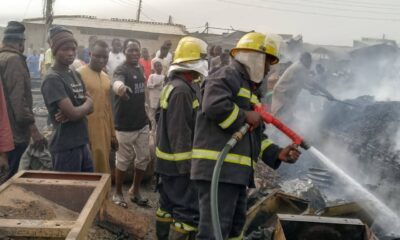
The Federal Fire Service (FFS), Kano State Command, has confirmed a fire outbreak at the Fatima Simra Multi-Purpose Market in Dakata, Kano, in the early hours of Thursday, assuring the public that the blaze has been successfully contained.
In a statement issued on Friday, and signed by the Command’s Public Relations Officer, Al-Hassan Ahmad Kantin, the Service disclosed that it received a distress call at about 5:11 a.m.
According to the statement, firefighters were immediately mobilised to the scene, where they commenced operations in collaboration with other emergency responders to bring the situation under control.
The FFS said the swift response and coordinated efforts of personnel prevented the fire from spreading to adjoining structures and properties within the market and surrounding areas.
“Damping down and overhaul operations are currently ongoing to eliminate any hidden embers and prevent possible re-ignition,” the statement added.
The Service noted that the actual cause of the fire remains unknown and will be determined after a comprehensive investigation by the appropriate authorities.
It also appreciated the cooperation of market stakeholders and members of the public during the emergency response, urging residents and business owners to remain vigilant and adhere strictly to fire safety measures, particularly in markets and other commercial centres.
The Command assured that a detailed report would be made available upon conclusion of the investigation.

Kwankwasiyya movement announces key leadership appointments

Lamin Sani Kawaji: The Gallant Commander Behind Murtala Sule Garo

Kwankwasiyya movement explains position on Kano bye-elections

Kano begins Ramadan food distribution as Gov. Yusuf constitutes feeding committee

Friday Sermon: Imam Gusau urges Muslims to protect wealth through Zakah

Lami Maccido, first person to appear on screens of NTA Kano, CTV 67, dies at 72

Governor Yusuf Appoints Acting DG for Pilgrims Board, Names Provost for Anti-Corruption Institute

Kano Hospitals Board opens recruitment for consultant pediatricians

Kano govt investigates reported disease outbreak in Garko community

