
Headlines
Forgery, illegal taxes, extortion, corruption: Realities of taxing Adaidaita Sahu riders in Kano State Part 2


This is the second and concluding part of a two – part series on corruption that has riddled transport tax collection in Kano State
By Zulaiha Danjuma
Selected Implementation of the KAROTA daily Adaidaita sahu ticket tax in Kano.
When KAROTA and the then Ganduje government started the collection of daily ticket tax from Adaidaita sahu riders, it was announced to cover the entire state, including metropolitan areas, towns and villages. It was discovered that some major townships within Kano who have tricycle activities never paid the daily Adaidaita sahu tax of N120. Those towns include Dambatta and Gwarzo.

The Adaidaita sahu community in Dambatta never paid the Kano State Tricycle daily tax which lasted for about three years. According to the Secretary of the Dambatta Tricycle Association called WASIAN, Mammam Abdu Danbatta, the Adaidaita sahu operatives in Dambatta town only pay N200 for newly registered Adaidaita sahu riders in the village and N50 association dues weekly.
“We our Adaidaita sahu riders only pay an association due of N50 weekly, this money is used to support each other in terms of any eventuality like accidents matters that require the associations involvement.”
“We collect N50 weekly per Adaidaita sahu because we are a small town and we do not have much Keke riders in the village,” he said.
According to Dambatta, when the Kano State government started collecting the N120 ticket tax in Kano metropolis, the Adaidaita sahu operatives in Dambatta were very few and it did not make sense to enforce the tax policy.
“We heard about the collection of N120 from Tricycles but during the time that collection started the Adaidaita sahu in Dambatta were about 10 in number,” he said.
It was gathered though that the Adaidaita sahu Riders Association in Dambatta pays N1,000 tax yearly to the local government secretariat for being in operation as an association.
“We only pay N1000 to the council yearly for renewal of our association registration,” he explained.
The story was not different at Gwarzo Local Government area. The Adaidaita sahu riders in Gwarzo attested to never paying the N120 KAROTA Kano state tricycle ticket tax.
However, the head of the Adaidaita sahu riders Group at Gwarzo, Hassan Abdullahi, he that the only time the personnel of the Kano State Road Traffic Agency (KAROTA) enforced any kind of payment on them was when they came into the town about a year ago to enforce a state government and KAROTA order of re-registration all tricycles in the state.
“When the KAROTA men came that time they caught anyone who did not re-register his Keke, they enforced them to do so.”
“The money we paid at that time was N19,000 each per Adaidaita sahu” he said.
On Monday, January 10, 2022, the Kano state government and KAROTA demanded for a new yearly registration fee that will permit the tricyclists to continue operations in Kano state.
New tricyclists registrants were charged N18,000, while renewal fees for already registered tricyclists was N8,000 per annum. The KAROTA agency had previously put the registration fee at 100,000 Naira before it got reduced to N20,000, then it was left at N18,000.
The new registrants would have a tracking device as part of their payment. This paper-like sticker known as the tracker was sighted pasted on the windshield of one of the Adaidaita sahu riders at Gwarzo village.
KANO FOCUS followed up to find out the reason some areas of Kano state were exempted from the compulsory daily Adaidaita sahu tax.
Na’isa said that the KAROTA was understaffed and could not cover a wide range of areas, hence the management limited the taxing exercise to inside major metropolitan areas in the state.
However, when the reporter enquired deeper on reasons the agency had not deployed its staffs to LGAs to enforce the collection and payment of the tax like it did during the enforcement of the re-registration of operational license, he declined to provide any answer.
Interestingly the Kano State government does not have a record of how much tax it collects from Adaidaita sahu riders in the state daily.

Tracking machine at Kofar Dan’agundi
Our reporter asked both KAROTA and KIRS for the data but neither of them could provide it. KIRS said they did not have it and that all monies coming from KAROTA were cumulatively sent in, without a breakdown of which money was for Adaidaita sahu daily tax and which were for other road offense levies.
On the part of KAROTA, its officials declined any attempt to disclose figures. The KAROTA spokesperson kept saying all the funds were sent to KIRS.
However, it is easy determine that the state government collects up to N6 million as Adaidaita sahu tax daily going by the number of riders in the state, which KAROTA gave as 60,000.
Some Adaidaita sahu Riders Association leaders dispute this figure, saying it is certainly higher. But staying with the government figure, at N100 per day Adaidaita sahu tax collected, the government would make N180 million from this tax alone in a month and over N2 billion in a year.
Yet, this huge revenue source is not properly regulated and is largely in the hands of touts and other non-state actors.
Manual collection of Tax does not aid government accountability.
In a reaction to the issues of selective implementation of government taxes and manual collection of taxes, the Programs Officer of Dispute Resolution and Development Initiative, the secretariat of the tax justice and governance platform for Kano State, Sadeeq Muhammad Mustapha, said there are several modes of payment structures that are made available by the Kano State KIRS as well as the local government revenue administration.
“The KIRS has a website that allows for payment of taxes, the site offers a gateway that allows for payment or the person who intends to make the payment may pay directly by going to the bank and generating an invoice for the payment process,” he said.
However, he added that there are some taxes for the informal sector that are not offered the access to pay directly through the website or go directly to offices of KIRS to process payment.
“In such cases there are certain provisions made by the KIRS to access those taxes,” he said.
Mustapha added that KIRS currently categories daily wage earners into the informal sector category.
“With such earners, the personnel of the KIRS go directly like to the markets to collect these taxes,” he stated.
He recommended that to simplify the process for everyone, the purchase of Adaidaita sahu tax tickets can be done based on daily, monthly, quarterly or even bi-annual basis, adding that “manual collection of taxes does not aid in accountability because it gives an opportunity for corruption, and it makes tax collection processes porous.
“Manual collection of taxes does not give a measuring system that will help ascertain the amount being collected or remitted to the government as exact.
“For example, when a revenue officer collects an approximate amount of N50,000, there is no exact way to ascertain if that N50,000 collected manually by that officer is what is remitted to the government.
“That can easily cause corruption, if a person is not up right that individual might remit much less than they actually collected, so manual collection of taxes and levy by the government doesn’t not aid accountability in the state at all,” he said.
He, however, said to make tax collection and compliance easier tax methods should be simplified for both the formal and inform sector which will increase voluntary tax compliance.
Mustapha also added that the recently adopted consolidation and codification law should be implemented effectively and KIRS should be the sole administrator taxes collected both at local government and state level.
Adaidaita sahu riders speak out.
According to Ahmad Kabir, (38) (Not his real name), who hails from Gezawa LGA but operates his Adaidaita sahu business in Kano metropolis, many Adaidaita sahu operators who live outside the city are harassed, extorted and delayed in carrying out their daily activities.
Mr. Kabir said for any Adaidaita sahu riders coming from Bichi, Tokarawa or Gezawa where the tickets were not sold and was unable to meet any daily Adaidaita sahu tax vendors on his way before having an encounter KAROTA enforcers would be stopped and harassed.
“They would stop us and ask why we didn’t have a ticket; we would say we just entered the metropolis and haven’t bought the tickets yet. They will now tell us to either give them money as bribe or they will take us to the KAROTA headquarters.”
“Most time, to avoid going to the KAROTA head office where we might end up paying up to N10,000 as fine, we will give the men on the road N500 or N,1000 and they’ll let us go,” he said.
He lamented when a Adaidaita sahu rider who lives far away comes into the metropolis around 2.00pm, he would find it a little difficult to get a ticket vendor, because most likely most of them would have finished selling their bundle for that day due to high demand.
Another Adaidaita sahu driver, Muazu Abubakar, a resident of Farawa area of Kano City, said a lot of Adaidaita sahu men were not as bothered with the daily N100 collection as they were angered by the sale of a fake tracking device.
According to Abubakar, the strike action in 2021 by the Adaidaita sahu riders was not really about the enforcement of the daily Adaidaita sahu tax but was an outburst of anger against the issuance in 2020 of paper stickers as tracking device.
“We paid N19,500 each to get that tracking device, they told us that they will give us a tracking device that will be attached to our Adaidaita sahu. The supposed tracking device was meant to be able to secure our tricycles in case of theft, so that the KAROTA agency will be able to track down the location of the Adaidaita sahu and retrieve it,” Abubakar recalled.
Alas!!! When it got to the time for the riders to get the tracking devices as promised, he said, “we were given paper stickers instead, which were pasted on the windshield of our tricycles.”
He stated that the sticker has no electronic device attached to it for it to be considered a tracking device that could locate the whereabouts of a stolen tricycle.
“That is to say they tricked us, and that action greatly angered us,” he said.
Furthermore, Mr. Abubakar also said that aside the collection of 19,500 form Keke men as money for a tracking device in 2020, in 2021 they were compelled to pay a sum of N5,500 as Adaidaita sahu plate number renewal fee.
“The worst part was that we were not given enough time to run around to pay the money, we were given only a period of two days of grace to make the payment of the N5,500 for the Adaidaita sahu number renewal.”
“And anyone who did pay within the two days, they will have to pay N18,500.”
“It is unfair, how would they triple the fees, someone may not even have the N5,000, talk more of N18,500” he said.
A calculation by the reporter of the N19,500 paid as tracker fees by each of the 60,000 registered Keke in the state stood at a figure of 1,170,000,000 (One billion one hundred and seventy million Naira).
KAROTA’S alleged Tracking Machine — is a solar streetlamp.
It has been almost four years since the alleged issuance of fake tracker devices to Keke riders by then Baffa Babba – led KAROTA.
Aside the infamous court cases between Keke riders and Dan-Agundi, there has not been any specific inquiry into the alleged fake tracking device issued to Adaidaita sahu riders in Kano.
In interviews with the Head of Information and Communication Technology (ICT), at the Kano State Road Traffic Agency (KAROTA), Abubakar Aminu Mamade, and Na’isa, the reporter was informed that the paper – like sticker on the windshield of Adaidaita sahu riders was really a tracking device.
Mamade said the agency was able to track the locations of the Keke riders through the barcode on the paper sticker through a tracking sensor machine installed across the state.
“We installed the tracking machine in 50 areas within the state” he said.
According to Mamade the locations of the machine were not previously made public because the agency did not want to tip off the public who may sabotage the agency’s effort to apprehend those who steal tricycles in the state.
Mamade listed the following locations as the places where the tracking machines were installed: Government house by state road, Hadeje road roundabout, Dakata Bus stop, Hadeje Road by Ahmadu Bello road roundabout, Kano Club roundabout, Aminu Dantata bridge by Yan Kura junction, Aminu Dantata bridge by Igbo road, Kafor Nasarawa bridge, Kwanar Tudun Wada, Brigade, Zaria road by Ring, Madobi road bridge, Kofar Fanfo by BUK road, Kabuga bridge, Sarkin Yaki road by court sabon gari, Tijjani hashim bridge, Kadan Kofar ruwa, kwanar Ungoggo, Mill Tara roundabout, Kwanar Jaba junction, Kankare market Gwarzo road, Badawa bus stop, Taludu roundabout, Gadan kaya, Kankara junction opposite gwaran dutse, Gwammaja by Munbaiya house junction, NNPC meger station maiduguri road, Baban Gwari roundabout Katsina road, Hajjo camp roundabout, Katsina road by hajj camp junction, Katsina road by France road, Triphon roundabout, Kofar mazugal, Airport road by Kwanar Jaba, Hamadiya junction, Kings guardian junction, club road by independence road roundabout, Airport road by murtala Muhammad way, Bank road roundabout, Grand central hotel roundabout, Lorge road by Alu avenue, Sabobaki zuhu road by maiduguri road, Kofar Dan Agundi, Zoo Road by Gidan Buhari, Ibrahim Taiwo road by IBB way junction, kwari junction by IBB way, Ibrahim Taiwo road by Bello road roundabout, Igbo road by France road sabon gari, Airport road by new road junction sabon gari, Sabonbaki zuhu by lamido crescent, Court road by teaching hospital road, Ring road by Gwarzo road.
However, KANO FOCUS gathered through a quick Google search that the alleged tracking machines said to be installed across the 50 locations were in fact solar street light lamps and not tracking devices.
The Google search was conducted with pictures given to the reporter by the head of ICT in KAROTA and purported to be snapshots from the field while installation of tracker machines was carried out.
When confronted with our findings, Mamade said the tracking machines could be mistaken for solar street light lamp.
But when further enquiry was made with Google search image on the same images obtained from Mamade, it was said to be a stand-alone module streetlamp. Further searches were made to ascertain if the device could double for a secret tracking device as the KAROTA management alleged. The Google search remained the same, still indicating that the images were solar street light lamps and not tracker machines.
The reporter then visited few of the alleged locations the tracking machine was said to be mounted at State Road, Kofar Dan Agundi, Zoo Road by Gidan Buhari and Gadan kaya. The solar streetlamp at State Road stands close to the Kano state Government House.
However, it is the same lamp obtained from the picture gotten from the head of ICT at KAROTA which was searched and identified as simply a solar street lamp.
At Kofar Dan Agundi, there was not street light mounted directly by the ‘Kofa’ ancient gate. But along the major road crossing from Gangun Albassa to Titin Dan Agundi the same solar street light was mounted beneath a street lamp pole. While at Gadan Kaya, the reporter did not find any street lamp resembling the one obtained from the Head of ICT at the KAROTA.
However, at Zoo Road by Gidan Buhari the same solar street lamp purported to be a tracking machine by the KAROTA was sighted on the middle of the main road by Gidan Buhari. It was also solar street light.
In existence though are smart street lights which are GPS based. These streetlights are regarded as smart streetlights; with their built-in technology they can locate the streetlights in case they get stolen. This is due to the sensor system they possess.
Whereabouts of KAROTA 6.3 billion Plus Revenue Adaidaita sahu Ticket Tax Generation.
According to the released 2022 figures and reconfirmed by Na’isa, there are 60,000 registered tricycles in the metropolitan area of Kano.
A quick calculation of the number of 60,000 registered tricycles multiplied by the daily collection of N100 equals to a sum of N6 million Naira daily. In a month the figure stands at N180 million, and N2.6 billion a year. Thus, the amount generated by Kano State from Adaidaita sahu tax between 2021 and 2023 is about N7.8 billion. But officials of the government could not really say exactly what all the money was used for.
The KAROTA agency had always claimed that the funds generated from the daily Adaidaita sahu taxing were used for road maintenance, among other road related issues in Kano State.
However, not one contrate mention of the funds obtained has been linked to any road maintenance in the state.
In view of this, Kano Focus got in touch with the Kano State Road Maintenance Agency (KARMA) through the media aide to the Managing Director Kano State Road Maintenance Agency (KARMA), Jabir Mukhtar Salisu
After enquiring from the MD of KARMA, Hassan Danbaffa, about the claims made by the KAROTA, Salisu said that the then management of the transport agency gave KARMA some funds to repair damaged roads in the state.
However, the funds were not said to have come from revenue gotten from the daily Adaidaita sahu tax collection, rather the agreement entered was said to be on all funds gotten from KAROTA’s monetary penalty on road use offenders in the state.
“The then KAROTA management had written to the Former Governor, seeking to start the collection of monetary penalties on vehicles found wanting for road & traffic related offenses in the state.”
“The government approved this request, and also directed KAROTA to give the funds generated from such operations to KARMA to fill up potholes on roads in the state.”
Salisu said the project was carried out in three (3) batches. The first batch of the refilling of potholes was in 2021.
According to the Maintenance of Selected Rotary Intersection, U-Turn and Cross Junction within Metropolis document obtained from the Kano State Road Maintenance Agency (KARMA), the reporter was able to obtain that the roads which had refilling and patching of potholes were Katsina road, Sani Marshall/Independence way, Sani Abacha way/Independence way by Eldorado cross junction, Muhammadu Buhari way by Kansakali (Yan rake) and a few intersections and cross junctions along Aminu Kano way.
A sum of 18,782,892.72 million Naira was given for the first batch of the repairs.
However, the reporter was unable to obtain such collaborative documents for the remaining two batches of alleged pothole repairs as the agency did not want to release any of the documents to the public.
The reporter obtained the first document only through picture shots taken at the agency on sighting the document.
In the same vein, in the interview with the Director, Government Business at the KIRS, Sammani Ibrahim, he confirmed that shortly after the Service discontinued direct involvement in the collection of the daily Keke tax, the then KAROTA under the management of Baffa Babba Dan Agundi and the state government approved for KAROTA to handover the revenue generated from the daily Adaidaita sahu taxing to the Kano state Road Maintenance Agency (KARMA).
“I can recall then that there was an approval by his Excellency Dr. Abdullahi Umar Ganduje that whatever amount generated from the daily taxing of Keke riders to be given directly to KARMA for road repairs of roads,” he said.
However, KARMA never confirmed that the money KAROTA gave them for filling and patching potholes came from the daily Adaidaita sahu tax collection, they rather made emphasis that the funds were from all funds gotten through monetary penalties on road and traffic offenses.
The Director Government Business Mr. Ibrahim also confirmed to Kano Focus that the KAROTA pay all agency generated revenue cumulatively into the Kano State Single Treasury Account
“KAROTA has numerous revenue items that generate funds from vehicle riders in the state, if a vehicle breaks traffic law, they collect a fine, if a vehicle rides with lenses or commit any road offense they collect a fine.”
“They cumulate all these various funds as one and deposit it into the bank, they do not specify that a certain fund is for daily Adaidaita sahu tax collection or traffic offense fine” he said.
Mr. Ibrahim said the KAROTA sends the funds they generate to the bank, and they call and also send a written correspondence attached with the teller stating the amount of money they deposit into the Kano State Single Treasury Account.
Mr. Ibrahim added that only the KAROTA could provide specifics on the amount they generate from the daily Adaidaita sahu ticket tax process.
However, the KAROTA were unable to provide any information regarding the money generated from the daily Adaidaita sahu ticket tax collect as the KAROTA PRO Mr. Nabulisi kept referring the reporter to the Kano State Internal Revenue Service.
Reintroduction of daily Adaidaita sahu taxing by Abba Kabir Yusuf Government a Hoax
In September 2023, Na’isa released a press release that the present government would soon begin the collection of daily taxes from Adaidaita sahu riders, as well as enforcement of re-registration payment on the tricyclists.
But KANO FOCUS sources assure that the present government has no plans to carry out the reintroduction of the daily Keke tax or any other form of Adaidaita sahu levy. According to an inside source at the KAROTA, the PRO was being overzealous in making the announcement.
“The declaration was indeed made, but the PRO wasn’t given approval to make the statement public when he did,” the source said. I can tell you that the press release by Nabulisi nearly caused his job,” the insider said.
KANO FOCUS reached out to Na’isa on his statement, and he said the only thing he could say “is that there is no plan yet on reintroducing the daily taxing.”
KANO FOCUS dug deeper to enquire into why the government hasn’t said anything regarding the reintroduction of the daily tax since a press release was made public on the matter, but he declined to answer any further questions on the matter.
This report was done with Support from the International Centre for Investigative Reporting, ICIR.

Nasiru Yusuf Ibrahim
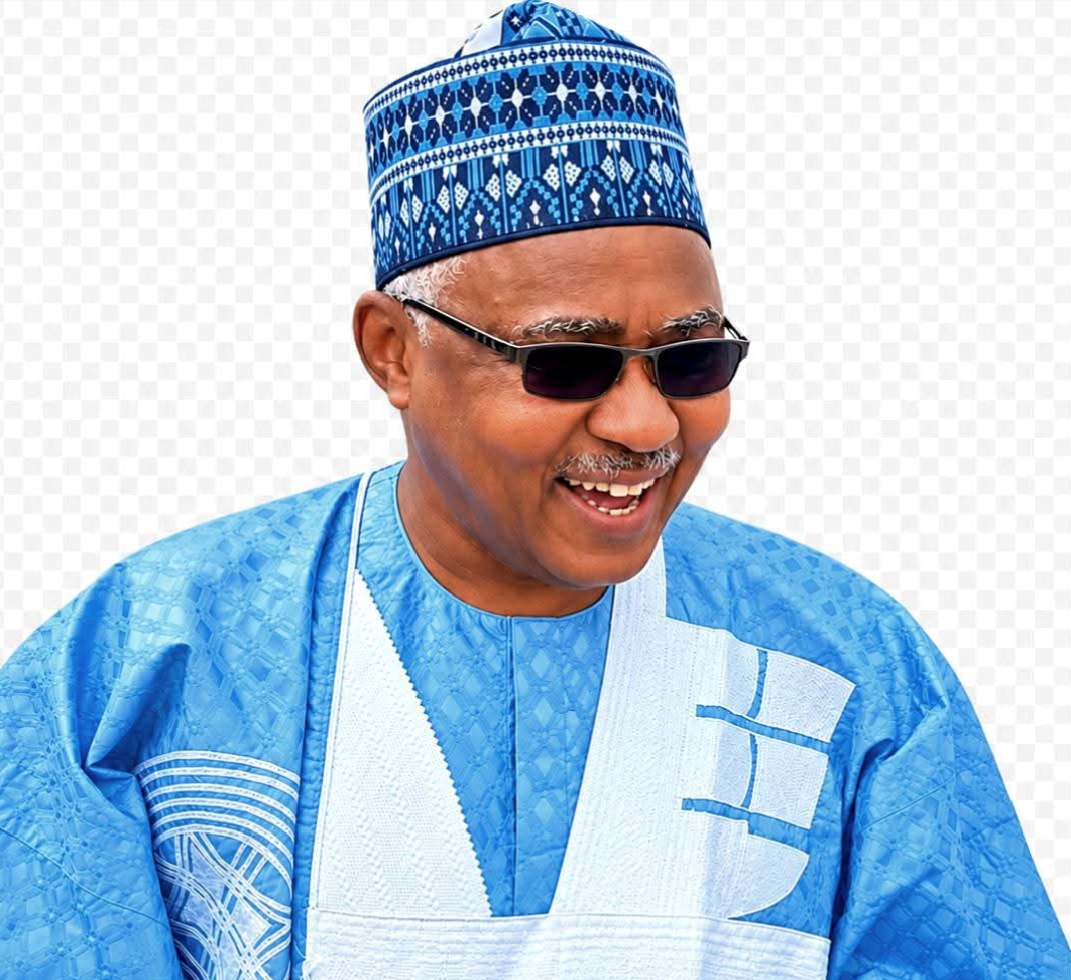
Political allies and loyalists of former Managing Director of the Nigerian Ports Authority (NPA), Arc Aminu Dabo, have begun resigning from the All Progressives Congress (APC) in Kano State following his withdrawal from the ruling party.
KANO FOCUS reports that the supporters, operating under the political group Dabo Alheri Ne, reportedly include members across Kano State’s 44 local government areas.
Barely two days after Dabo announced his resignation from the APC, a prominent stakeholder of the group, Garba Zakiru Dambatta, said members had welcomed the decision and were showing solidarity by submitting their resignation letters to their respective ward party chairmen.
Dambatta, a former APC chairman in Dambatta Local Government Area, said the group’s members were disappointed with what they described as the prolonged marginalisation of Mr Dabo and his supporters within the party.
According to him, despite Mr Dabo’s contributions to the APC and efforts to strengthen the party and manage disagreements among its members, some key stakeholders had continued to sideline him and his loyalists in party activities.
Dambatta reaffirmed the group’s commitment to standing by Mr Dabo’s political decisions and supporting his future political journey.
He also urged the former NPA managing director not to succumb to political pressure or reverse his decision to leave the party.
“This step you have taken, we have the conviction that it is the beginning of a new chapter of goodness in your life,” Dambatta said.
Among the prominent members of the group identified as supporting Mr Dabo’s decision are Abba Rabee’u, a former Senior Special Assistant on Political Awareness; Almustapha Jilani Danmalam, a former Senior Special Assistant on Education; Jamilu Abdullahi Zangon-Mata, a former Senior Special Assistant on Entrepreneurship; and Fahd A. Dabo, a former Special Assistant on Youth Mobilisation.
The individuals reportedly served during the second term of former Kano State Governor Abdullahi Umar Ganduje.
The group also said several other party loyalists and supporters were backing Dabo following his resignation.
However, the statement did not provide the number of members who had formally resigned from the APC or indicate whether the party leadership had responded to the development.
Nasiru Yusuf Ibrahim
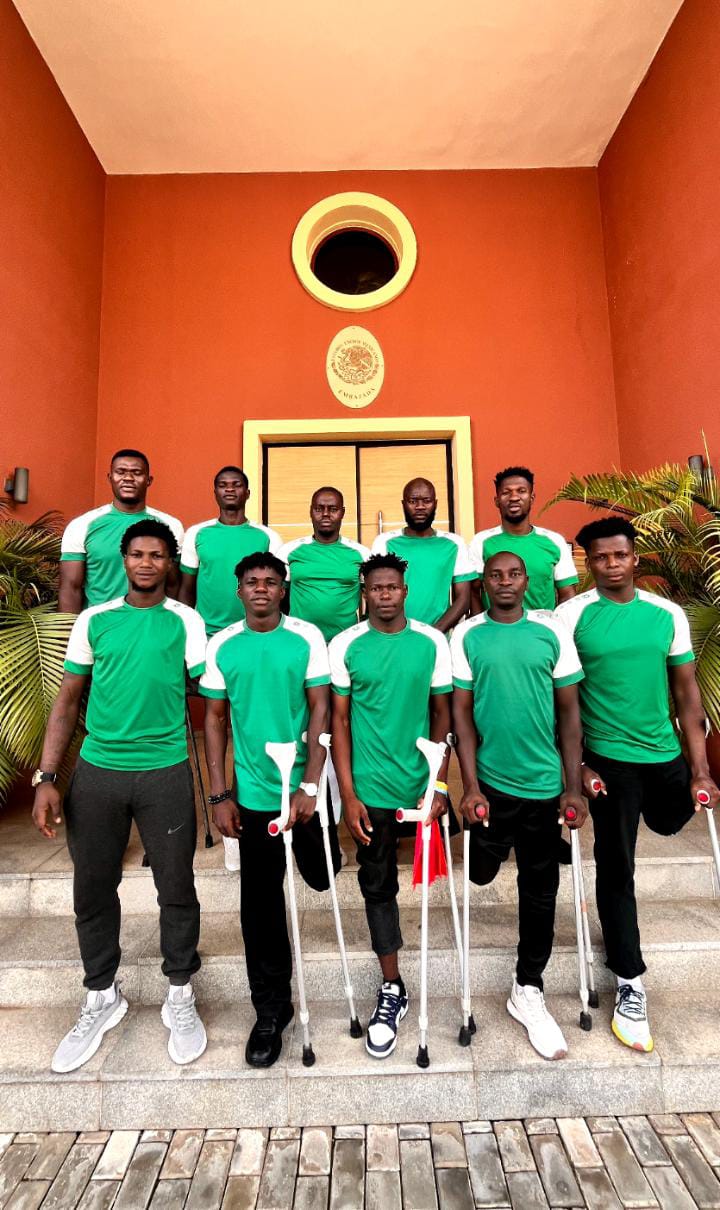
Five players of Kano Pillars Amputee Football Club have been invited to the national camp of Nigeria’s Special Super Eagles ahead of the 2026 Amputee Football World Cup in Mexico.
KANO FOCUS reports that invited players are Isah Yusuf, Abba Musa, Habu Friday, Emanuel Betel and Usman Ahmed. They are currently in Abuja with the national team as preparations intensify for the global tournament.
The Team Manager of Kano Pillars Amputee Football Team, Jamilu Uba Adamu, disclosed this in an interview with Ashiru Rabiu Gidan Tudu, Information Officer of the Kano State Sports Commission.
Adamu described the invitation as recognition of the players’ dedication, discipline and outstanding performances.
He expressed confidence that the players would represent Kano State and Nigeria with honour at the championship.
According to him, the call-up also demonstrates Kano Pillars’ commitment to nurturing talented amputee footballers and contributing to the development of the sport in Nigeria.
The 2026 Amputee Football World Cup is scheduled to take place from November 13 to 22 in San Juan de los Lagos, Mexico. A total of 24 countries, including seven African nations, are expected to participate.
The Executive Chairman of the Kano State Sports Commission, Muhammad Tukur Babangida, congratulated the five players on their invitation, describing it as well deserved.
Babangida expressed confidence that they would justify the confidence reposed in them by the national team selectors.
He assured the players of the commission’s continued support and urged them to remain focused, disciplined and committed to making Kano State and Nigeria proud on the international stage.
Ibrahim Khalil
A chieftain of the All Progressives Congress (APC) in Kano State, Aminu Dabo, has resigned as the party’s caucus chairman in Dambatta Local Government Area and withdrawn his membership of the ruling party.
KANO FOCUS reports that Dabo, a former Managing Director of the Nigerian Ports Authority (NPA), announced his resignation in a letter dated October 7, 2026, addressed to the APC chairman of Dambatta Gabas Ward.
In the letter, personally signed by him, Dabo said he took the decision after careful consideration of personal reasons and his future endeavours.
He confirmed his resignation during a telephone conversation from Abuja on Wednesday, saying he had formally submitted the letter to the appropriate party officials in Dambatta for necessary action.
“I remain grateful for the cordial relationship I enjoyed and appreciative of the experience gained during my time of service,” he said.
The former NPA managing director also thanked the party’s leadership for the opportunity and confidence reposed in him to contribute to its development and progress during his membership.
“I sincerely appreciate the support and opportunity I have received from the party leadership,” he added.
A statement issued by Abdullahi Othman, Media and Publicity Aide to Dabo Dabo, said the former NPA MD did not disclose further details about his reasons for leaving the APC in the resignation letter.

Dabo’s resignation triggers wave of defections from APC in Kano

Five Kano Pillars Amputee Players Invited to Special Eagles Camp Ahead of World Cup

BUK Professor advocates microfinance to tackle food insecurity, poverty

General Elections 2027: Abba Kabir Yusuf traverses the path to victory
Former NPA MD Aminu Dabo resigns as APC caucus chairman in Dambatta

Kano leads again as NECO successes rise to 74,413
Kano tops states in 2026 NECO results, Governor Yusuf hails students

Kano Govt Suspends Durbar Processions, Horse Riding in Metropolis

ACF begins Dangote Refinery IPO sensitisation campaign in Kano

