
Headlines
How Politicians Hijacked Distribution Of COVID-19 Palliatives In Kano


Nasiru Yusuf
When Kano State recorded its first Coronavirus case on April 11, 2020, there was shock, confusion, and palpable tension. It was six weeks after Nigeria recorded its index case which resulted in search for desperate measure to contain the contagious virus.
Following the frenzy across the country, on March 20, 2020, Governor Abdullahi Umar Ganduje, inaugurated the state taskforce on COVID-19 under the leadership of his deputy, Nasiru Yusuf Gawuna, and co-chaired by Prof. Abdul-Razaq Garba Habib, Head of the Infectious Diseases Unit, Aminu Kano Teaching Hospital, Kano.
The committee was saddled with the responsibility of assessing the situation and coordinating the state’s response to the threat posed by the pandemic, through multi-disciplinary approach and inter-sectoral collaboration; and to also advise the government on necessary steps and decisions to combat the threat.
To curtail the virus, the state government ordered the closure of all routes linking the state to other parts of the country from Friday, March 27. During a meeting with religious leaders at the Government House, Mr. Ganduje also announced the complete lockdown of the state, for one week, with effect from Thursday, April 16. He said the lockdown would affect movement of people, markets, as well as social and religious activities. He urged residents to cooperate and support this decision, as a measure to prevent the spread of the dreaded COVID-19 in the state.

With the total lockdown in effect, markets, businesses, and public places shut down, many people lost their means of livelihood. The need to cushion the suffering of the vulnerable became necessary.
Government Inaugurates Palliative Committee
On March 29, the governor set up a 30-member fund raising committee. Part of the responsibilities of the committee was to seek for donations from organisations and individuals, identify the needy to whom the donations will be distributed and design the mode of distribution. The immediate past Vice Chancellor of Bayero University, Kano, Professor Muhammad Yahuza Bello, was appointed to head the palliative distribution committee.
In his inaugural speech at the flag off ceremony on April 23, Bello said the palliatives were meant for 50,000 poor households across the 44 local government areas of the state. He explained that the items were to be distributed to four households each of the over 11, 000 polling units of the 484 political wards in the state. Each household was expected to get a bag of rice, a carton of spaghetti, macaroni, dawavita, four litres of oil, semovita, pasta, noodles, and cash gift of N2,000.
The committee distributed food items in three phases. The first phase and third phases consisted of food items supplied by Kano State government while the second phase was from 139 truckloads of grains given to the state by the Federal Government to cushion the effect of COVID-19 pandemic.
How Politicians Hijacked Palliative Distribution
Investigation by this reporter shows the distribution of lockdown palliatives in Kano was characterized by irregularities. In many places, politicians and traditional leaders assigned to distribute the food items were accused of diverting the items to their family members and political associates.

Abbas Danladi Yalwa
At Yalwa ward for example, one of the beneficiaries, Abbas Danladi, said he was given a 50kg of guinea corn, 2 litres of cooking oil and N2000. Going by the distribution template released by the committee, two litres of cooking oil was missing from Mr. Danladi’s palliative. “I heard that my name was among the beneficiaries of the palliatives,” he noted. “When I went to the resident of the ward head, I received an allocation card, which I presented before I collected the items. I received 50 kilograms of guinea corn, N2000 cash and we shared a four litre gallon of cooking oil with another person.”
However, the traditional ward head of the area, Salahuddeen Muhammad, said they received palliatives with shortage of 20 beneficiaries, hence the reduction in the ration to accommodate everyone.

Salahuddeen Muhammad
One of the executives of Zauren Panshekara, a community-based association at Panshekara town and member of the palliatives distribution committee in the area who pleaded anonymity told this reporter that although the area was expected to get 140 rations of the palliatives to be distributed to four households in each polling units as designed by Kano State taskforce on COVID-19, they ended up with just 100 as the council chairman, Kabiru Ado Panshekara, allegedly cornered the remaining 40.

Kabiru Ado Panshekara, chairman of Kumbutso LG
Mr. Panshekara is currently facing corruption charges at Upper Shariah Court, Shahuchi, Kano, for diverting palliatives. Our source said the chairman gave the area commander of Nigeria Police Force allocation meant for seven households, issued some to Hisbah (Islamic moral police) personnel and his political associates. The chairman’s action violated the provision of distribution which required the officials to distribute the palliatives to the poorest of the poor.
A councilor at Kabuga ward in Gwale Local Government Area, Shehu Aminu Kabuga was also accused of diverting 37 rations of palliative out of 252 meant for his ward. When confronted with the allegation, Mr. Kabuga argued that politicians and party loyalists deserved to be given priority attention during palliative distribution because they contributed during the Kano governorship rerun election.
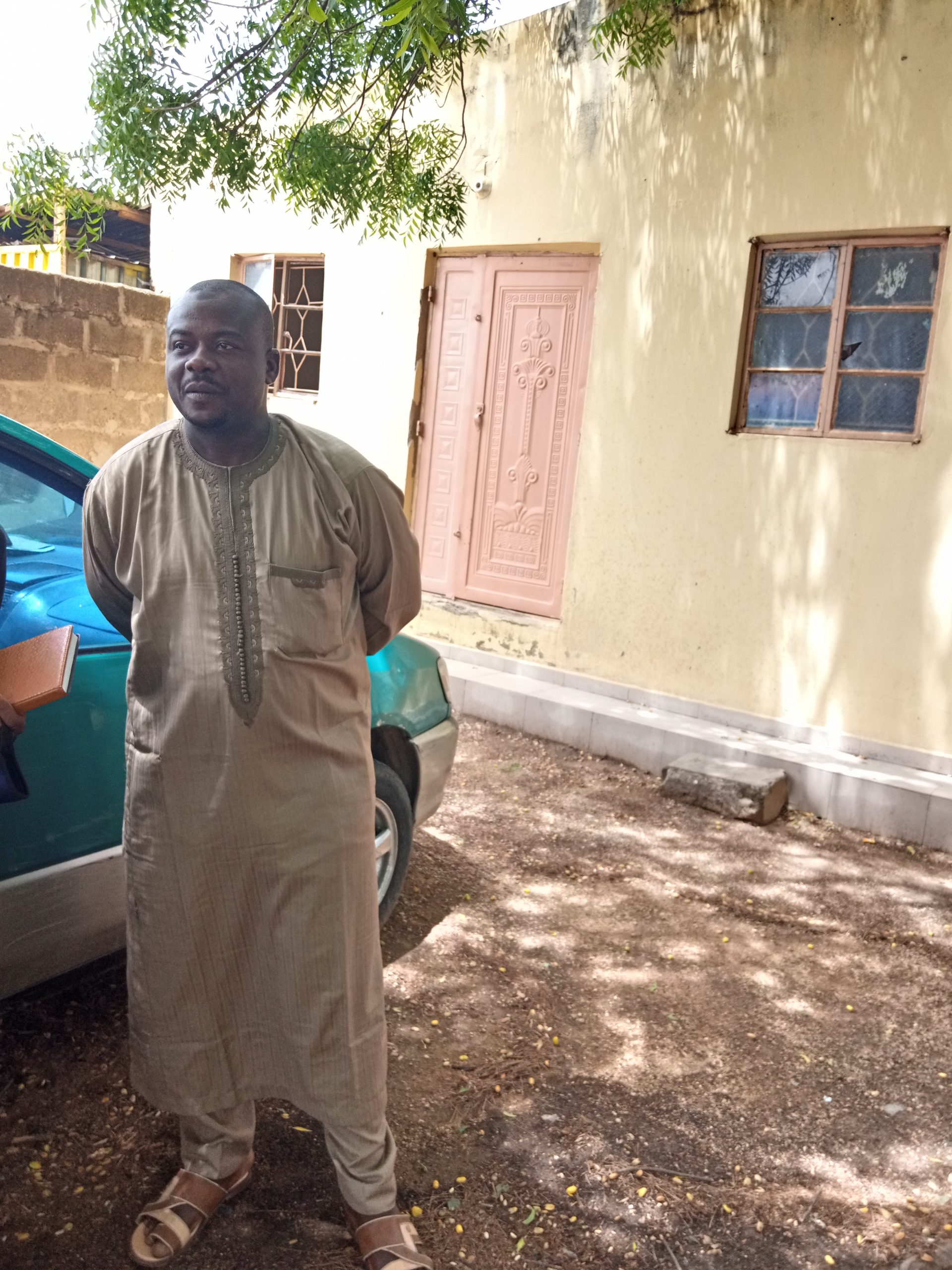
Shehu Aminu, councillor of Kabuga ward
“I am a politician, and I am a member of the palliative distribution committee. It is mandatory for us to give politicians priority,” he said. “They supported the governor in Gama (a ward in Nassarawa Local Government where governorship rerun election was conducted) and toured 44 local government areas. I will rather resign from the palliative distribution committee if I cannot assist party loyalists.”
The story was the same at Getso town, Gwarzo Local Government Area where a commandant of the Kano State Hisbah Corps, Hassan Ibrahim Getso, changed the name of one beneficiary, a father of twelve children, Alhaji Sammani, with his son-in-law as alleged by a resident of the area, Ahmad Yahuza Getso. Mr Getso told this reporter that Mr Sammani was one of the poorest persons in the area, therefore qualified to be the beneficiary of the palliatives.
At Karaye Local Government, an activist, Kabiru Hamisu Kura, said they found a principal of a secondary school among the beneficiaries of the palliative.
The distribution of palliatives at Hotoron NNPC ward in Nassarawa Local Government was also characterized by irregularities and abuse of government directives as revealed by the chairman of Hotoron Kudu Youth Development Association, Jamilu Magaji. Mr Magaji who is also a member of Hotoro NNPC palliative distribution committee lamented how the councilor of Hotoro ward hijacked the distribution exercise and carted away a substantial portion of palliatives meant for the poor.
“On April 14, the village head of Hotoron Kudu invited us to Government Girls Secondary School, Namaituwo, to discuss modalities for the distribution of anticipated palliative in the area,” he said. “He told us that Hotoron Kudu had received 140 allocation of palliatives. Out of this number, the village head said he had allocated 20 slots to community-based organisations, security personnel 15 slots, ward heads 30 slots, imams 20 slots, councilor 30 slots and village head 25 slots.”
“On our part, the CBOs, we protested this sharing formula. We asked them to consider the people of Hotoro. We proposed that the allocation should be shared equally among ten quarters of Hotoron Kudu ward, and he agreed. Each quarter will get 14 allocation. The quarters are Hotoro GRA, Unguwar Nametuwo, Limawa, Tsamiyar Mashaya, Walawai, Hotoro Danmarke, Walawai, Maradi, Maraba and Hotoron Kudu.”
“We proposed that each ward head should liaise with CBOs in his quarters to select 14 beneficiaries. We told them we didn’t need it and directed all our members not to collect it. After the meeting, we mobilized our members to meet their ward heads and select the poorest of the poor in their area. To our greatest surprise, the following day, April 19, I received a call that APC members in Hotoro NNPC had petitioned against the distribution formula as it did not capture party loyalists. On the distribution day, the councilor took 30 slots, the village head 25, ward heads 20, security agencies 15 and CBOs 20.”
Mr. Magaji alleged that the village head deducted five hundred Naira out of the two thousand Naira meant for each beneficiary as transport fare paid for bringing the palliative to the area.
Isa Datti of Hotoro NNPC community concern development association corroborated the allegation of interference from politicians. He said the councilor of Hotoron Kudu had taken 30 slots out of 110 allocated to the area. “Our major concern is that he is distributing it to politicians, not necessarily the poor or needy,” he noted. “As members of community-based organisations, we know those who were qualified to get this palliative, but we were shortchanged. We received only 10 slots to distribute to the poor. Why should politician hijack the distribution, while the government directive was that it should be distributed to the poor irrespective of political affiliation.”
However, the village head of Hotoron Kudu, Ashiru Abubakar Yusuf, denied any irregularities in the distribution process. He argued that the beneficiaries were mainly selected by ward heads and Imams. “It is inappropriate to allocate portions of the palliative to councilor. To avoid political interference, village heads and ward heads were selected to distribute the items to the poor, being closest to people. All beneficiaries received food items with N2,000,” he said.
Civil Society Groups Dissatisfied
Many stakeholders, including civil society groups and People Living with Disabilities decried the irregularities recorded during the last two phases of COVID-19 palliative distributions in Kano. They alleged that the process was hijacked by politicians and occasioned by poor monitoring of the distribution to the last stage of delivery targeting poor residents of the state.
The Kano Civil Society Forum had earlier raised alarm over alleged deliberate exclusion of the group in the composition of the palliative committee to ensure adequate monitoring and evaluation.
Chairman of Kano Civil Society Forum, Ibrahim Waiya, lamented that the exercise had been hijacked by some politicians. He questioned the credibility of the process. “The process was not transparent because up till now, nobody could tell you actually the total amount of money that was received by the fund-raising committee in Kano and the quantity of the items they collected,” he said. Mr. Waiya expressed concern about the inefficiency of the committee due to its limited capacity in monitoring the distribution of palliatives. “The committee has only 35 members or thereabout. It is humanly impossible for them to reach every part of Kano State. That is the reason we expect them to engage the CSOs and other relevant stakeholders who have structures across the 44 local government areas of the state to ensure transparency and accountability,” he added.
Buttressing the position of civil society organisations, the Executive Director of African Center for Transparency and Anticorruption Advocacy in Kano, Ismail Auwal, told this reporter that there were no clearly defined modalities and criteria for the selection of the beneficiaries and the palliatives distributed did not include Personal Protective Equipment (PPEs). “There were no explanations from government on how much was used to procure the palliatives, who procured the palliatives, the sources of the money used to procure the palliatives, and how much the palliatives cost per beneficiary,” he noted.
People Living with Disability Protest Exclusion
The leadership of People Living with Disability in Kano State decried exclusion of their members in the composition of the palliative committee and the distribution of the food items and N2,000 cash.
Chairman of the Joint National Association for Persons with Disability, Kano branch, Musa Muhammed Sa’ada, told this reporter that his members were excluded despite several appeals and a formal letter written to the Secretary to the State Government, Usman Alhaji, in respect of their plights during the mandatory lockdown.
“We have Chairmen in all the 44 LGAs in Kano and I have their contacts. They have not received palliatives from the government. Also, at the State level, we contacted the chairman of the fund raising and palliative distribution committee, notifying them that there were no PWDs in the programme,” Muhammed Sa’ada lamented. “We wrote a letter to SSG Kano, and the SSG referred the letter to the committee. I have seen the letter and the date it was delivered to the committee. Up until now, the committee has not taken any action.
Kano Anti-corruption Agency Points Accusing Finger
The chairman of Kano State Public Complaints and Anti-Corruption Commission (PCACC), Muhuyi Magaji Rimingado, said he had received complaints from different people accusing traditional rulers, including the Eze of Igbo community and Oba of Yoruba community in Kano of diverting palliatives.
Mr. Rimingado made this disclosure during a programme on Abubakar Rimi Television (ARTV), Kano. He revealed that the Commission found some local government chairmen, councilors, district heads and village heads who diverted the allocation forms meant to be distributed to the poor and needy to their families and friends.
According to Mr. Rimingado, “Someone brought a complaint against Oba of Yoruba community and Eze of Igbo community in Sabongari in Kano.” “We have found some local government chairmen, councilors, Hakimai (District Heads) and Dagatai (Village Heads) diverting palliative forms to their families and relatives,” he added. “There is an official who distributed the forms to all his siblings. There is also a local government chairman who allocated 90 forms to himself. There is a councilor who featured in a radio programme saying he only diverted 37 allocations.”
“We have recovered some allocations forms and money from some of these officials. Their argument was that since no food items were found from them, there was no basis for prosecuting them.”
Efforts by this reporter to get Mr. Rimingado’s response on why the PCACC had not prosecuted the local government chairmen and traditional rulers accused of diverting palliatives was not successful, as he did not pick several calls put to hm, neither did he respond to several messages sent to him.
Responding to the alleged diversion of palliatives, the chairman of Kano state palliatives distribution subcommittee Mr Bello said the committee has received one petition and investigated it appropriately.
He told this reporter that he has not heard of all the allegations mentioned, noting that, if they heard it, they would have investigated it appropriately.

“The case of Kumbutso (local government chairman accused with diverting palliatives) is before the court. You should not report it. Muhuyi has taken the chairman to court.
“We investigated the case brought to our attention. But what you are asking, I just heard it for the first time.
“We have received a petition from Dala local government, we set up a committee that investigated it. The findings shows that the ward head erred, though not intentional. What happened was a ward head (Mai unguwa) died, one person was appointed as Acting Ward head. He received the allocation of palliatives meant for twenty persons, but he thought the number is too small. He directed two persons to share one slot. The committee interacted with all stakeholders.
“After thorough investigation, the committee established it was an honest mistake. He has not take a single slot. Hence, we warned him.
“But what you are telling me now, nobody has reported it to us. We have not heard of them. If they reported it, we would have investigated it and take appropriate action. We were not aware wallahi,” Mr Bello said.
Officials Accused of Diverting Palliative Face Prosecution
The Kano State Public Complaints and Anti-Corruption Commission (PCACC) arrested Kabiru Ado Panshekara for diverting palliatives meant to be distributed to the needy. The Commission first arraigned Mr. Panshekara on May 13 at Rijiyar Zaki magistrate court before it withdrew the charges and re-arraigned him at Upper Shari’ah Court, Shahuci, on May 27, on same charges.
The offence according to the anti-graft agency contradicted section 315 of Shari’ah penal code (criminal breach of trust) and section 26 of Public Complaints and Anti-Corruption Law 2008 as amended (making false statement).
The Commission accused the council chairman of distributing palliatives meant for poor people to Police, DSS, Immigration and Hisbah personnel. It alleged that the act contravened the provision of Sections 22, 23 and 26 of the Kano State Public Complaints and Anti-Corruption Commission Law 2008 (as amended).
According to the Commission, the approved list of beneficiaries excluded all political office holders, civil servants, political party officials, traditional rulers, Juma’at mosques Imams or Pastors as well as casual workers.
On June 11, the Commission also arraigned the councilor of Kabuga ward, Gwale Local Government, Shehu Aminu Kabuga, before Shahuchi Upper Shari’ah Court, for allegedly diverting lockdown palliatives meant for his constituents. The offence according to the Commission involved criminal breach of trust and making false statement.
The suspects were granted bail by the presiding judge, Khadi Kamilu Garba, while the trial was still ongoing as at the time of filing this report.
Kano Spends N425m on COVID-19 Palliatives
Amidst the irregularities and alleged hijacking of palliative distribution by politicians, Kano State government said it had spent N425 million to ease the hardship caused by the COVID-19 pandemic.
The state deputy governor, Nasiru Gawuna, said this while launching the third phase of the palliative distribution program at Farm Centre, Tarauni Local Government.
Mr. Gawuna who is the Chairman, Kano State Taskforce Committee on COVID-19 said 100,000 households benefitted from the first and second rounds of the exercise.
This investigation was commissioned by the African Centre for Media & Information Literacy (AFRICMIL) as part of its whistleblowing initiative under its Corruption Anonymous project supported by the MacArthur Foundation. Published materials do not reflect the views of the MacArthur Foundation.

Nasiru Yusuf Ibrahim
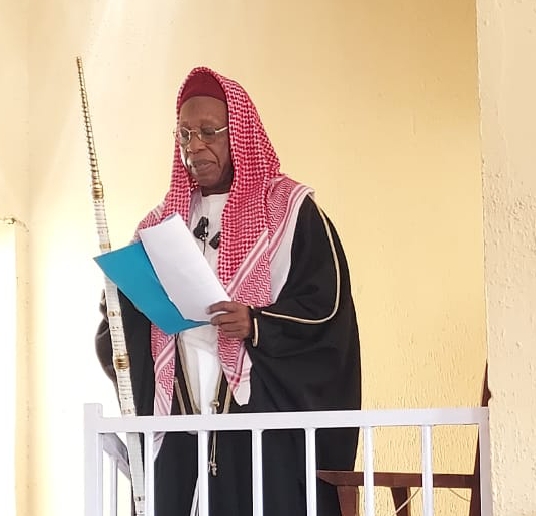
Dr Goni Faruk Umar has urged Muslims to embrace Taqwa in their daily lives, describing it as a foundation of Islam and a key to righteous conduct and success in this world and the hereafter.
KANO FOCUS reports that the Islamic scholar made the call while delivering a Juma’a sermon at the New Juma’a Mosque, Rumfa College, Kano.
In the sermon, Dr Goni Faruk Umar explained the meaning of Taqwa using classical Islamic scholarship, including an account involving Umar ibn al-Khattab and the companion Ubayy ibn Ka’b to illustrate the concept.
According to the account cited in the sermon, Sayyadina Ubayy once asked Khalifa Umar bin Khattab whether he had ever walked along a thorny path. When Khalifa Umar bin Khattab answered in the affirmative, Sayyadina Ubayy asked how he navigated it. Khalifa Umar bin Khattab replied that he gathered his clothes and proceeded cautiously to avoid being pricked.
Sayyadina Ubayy then explained that this was the essence of Taqwa: being constantly mindful of one’s actions and carefully avoiding what displeases Allah.
Dr Goni Faruk Umar said Taqwa should not be limited to acts of worship but should also guide Muslims’ conduct in contemporary society, particularly in their use of digital platforms and social media, control of the tongue, and relationships within the family.
He urged worshippers to exercise restraint in their speech, act responsibly online and uphold their obligations to family members in accordance with Islamic teachings.
The cleric also highlighted the spiritual and worldly benefits of Taqwa, including relief from hardship, ease in personal affairs, forgiveness of sins and increased rewards in the hereafter.
Quoting verses from the Qur’an, he cited Allah’s promise in Surah At-Talaq, verses 2 and 3, that whoever fears Him will be granted a way out of difficulties and provided for from sources they could not have anticipated.
He also referred to Qur’an 65:4–5, which promises ease in affairs, the removal of sins and the multiplication of rewards for those who maintain Taqwa.
The scholar reminded Muslims that worldly life is temporary and that the hereafter is their permanent destination. He therefore urged them to regard Taqwa as the best provision for the journey beyond this life.
Citing Qur’an 2:197, he emphasised that the best provision for the hereafter is Taqwa, urging believers to remain conscious of their responsibilities to Allah.
The sermon also featured prayers and salutations upon Prophet Muhammad (peace be upon him), his family and companions, in accordance with the Qur’anic instruction in Surah Al-Ahzab, verse 56.
Dr Goni Faruk Umar concluded by encouraging Muslims to remain steadfast in faith, follow the guidance of the Prophet and make righteousness a guiding principle in their daily lives.
Nasiru Yusuf Ibrahim
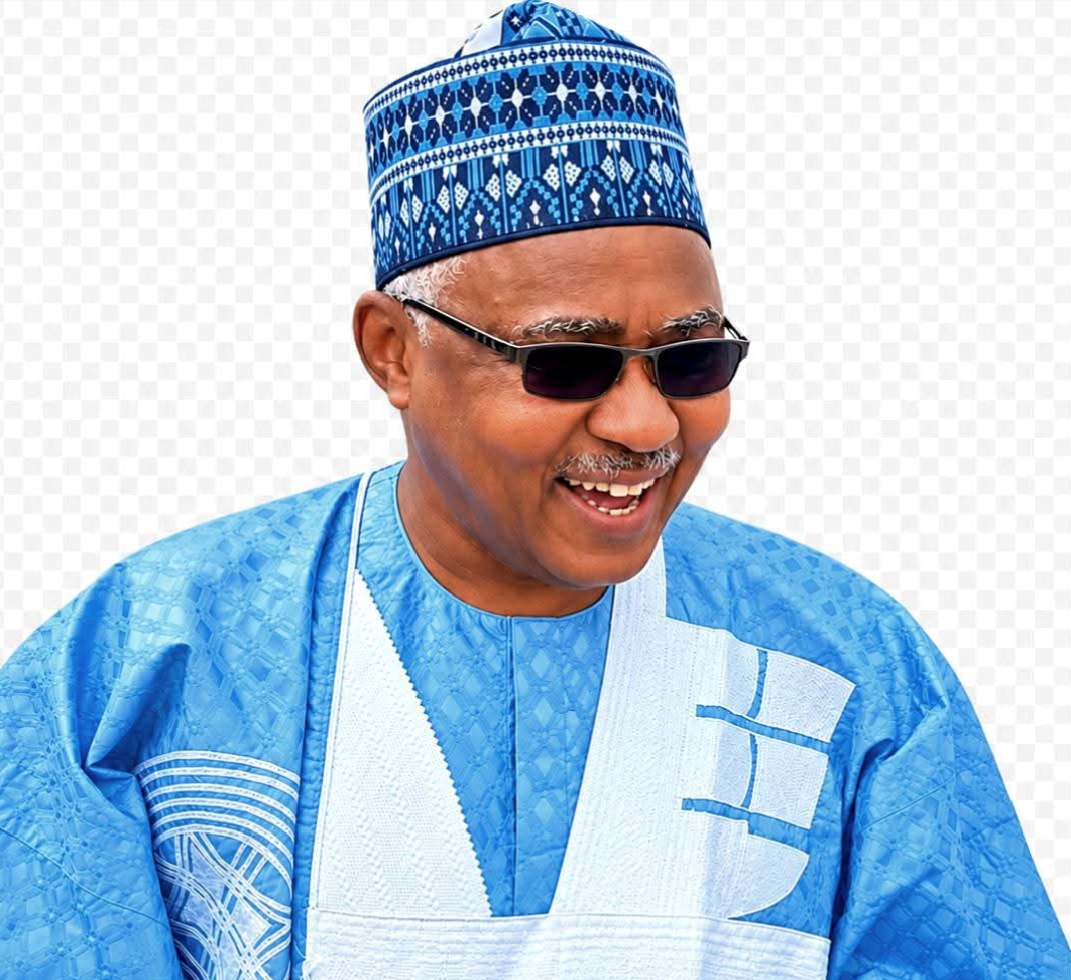
Political allies and loyalists of former Managing Director of the Nigerian Ports Authority (NPA), Arc Aminu Dabo, have begun resigning from the All Progressives Congress (APC) in Kano State following his withdrawal from the ruling party.
KANO FOCUS reports that the supporters, operating under the political group Dabo Alheri Ne, reportedly include members across Kano State’s 44 local government areas.
Barely two days after Dabo announced his resignation from the APC, a prominent stakeholder of the group, Garba Zakiru Dambatta, said members had welcomed the decision and were showing solidarity by submitting their resignation letters to their respective ward party chairmen.
Dambatta, a former APC chairman in Dambatta Local Government Area, said the group’s members were disappointed with what they described as the prolonged marginalisation of Mr Dabo and his supporters within the party.
According to him, despite Mr Dabo’s contributions to the APC and efforts to strengthen the party and manage disagreements among its members, some key stakeholders had continued to sideline him and his loyalists in party activities.
Dambatta reaffirmed the group’s commitment to standing by Mr Dabo’s political decisions and supporting his future political journey.
He also urged the former NPA managing director not to succumb to political pressure or reverse his decision to leave the party.
“This step you have taken, we have the conviction that it is the beginning of a new chapter of goodness in your life,” Dambatta said.
Among the prominent members of the group identified as supporting Mr Dabo’s decision are Abba Rabee’u, a former Senior Special Assistant on Political Awareness; Almustapha Jilani Danmalam, a former Senior Special Assistant on Education; Jamilu Abdullahi Zangon-Mata, a former Senior Special Assistant on Entrepreneurship; and Fahd A. Dabo, a former Special Assistant on Youth Mobilisation.
The individuals reportedly served during the second term of former Kano State Governor Abdullahi Umar Ganduje.
The group also said several other party loyalists and supporters were backing Dabo following his resignation.
However, the statement did not provide the number of members who had formally resigned from the APC or indicate whether the party leadership had responded to the development.
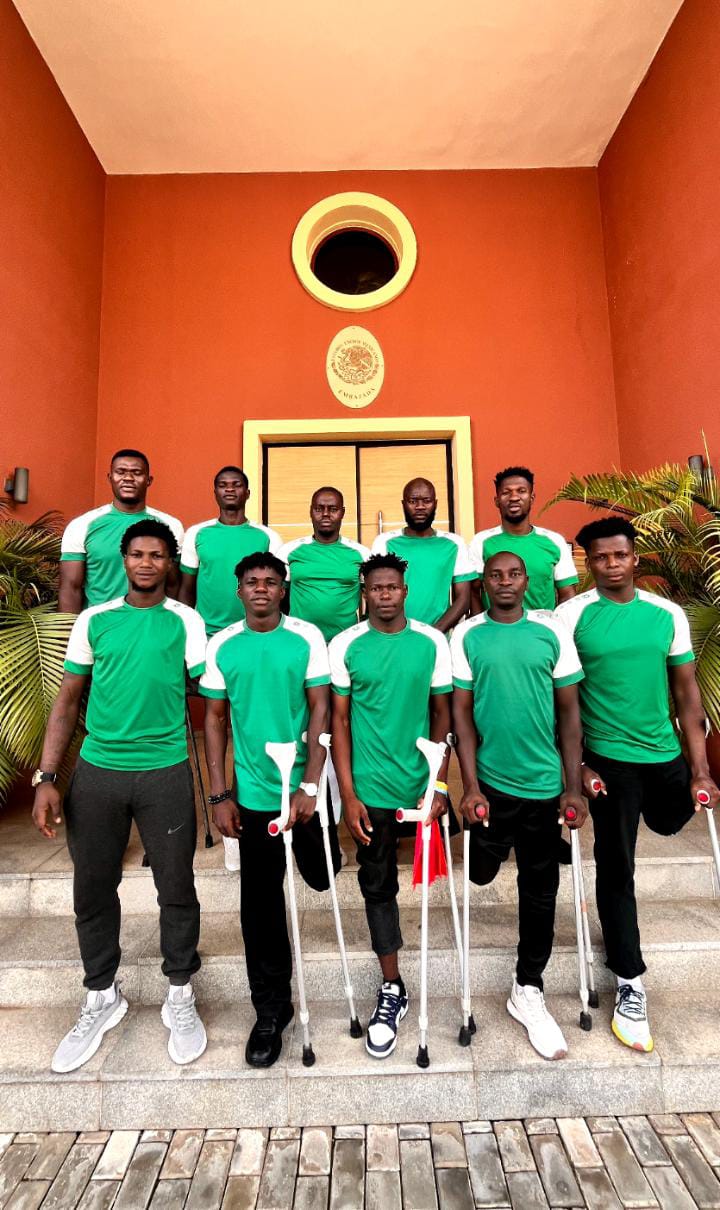
Nasiru Yusuf Ibrahim
Five players of Kano Pillars Amputee Football Club have been invited to the national camp of Nigeria’s Special Super Eagles ahead of the 2026 Amputee Football World Cup in Mexico.
KANO FOCUS reports that invited players are Isah Yusuf, Abba Musa, Habu Friday, Emanuel Betel and Usman Ahmed. They are currently in Abuja with the national team as preparations intensify for the global tournament.
The Team Manager of Kano Pillars Amputee Football Team, Jamilu Uba Adamu, disclosed this in an interview with Ashiru Rabiu Gidan Tudu, Information Officer of the Kano State Sports Commission.
Adamu described the invitation as recognition of the players’ dedication, discipline and outstanding performances.
He expressed confidence that the players would represent Kano State and Nigeria with honour at the championship.
According to him, the call-up also demonstrates Kano Pillars’ commitment to nurturing talented amputee footballers and contributing to the development of the sport in Nigeria.
The 2026 Amputee Football World Cup is scheduled to take place from November 13 to 22 in San Juan de los Lagos, Mexico. A total of 24 countries, including seven African nations, are expected to participate.
The Executive Chairman of the Kano State Sports Commission, Muhammad Tukur Babangida, congratulated the five players on their invitation, describing it as well deserved.
Babangida expressed confidence that they would justify the confidence reposed in them by the national team selectors.
He assured the players of the commission’s continued support and urged them to remain focused, disciplined and committed to making Kano State and Nigeria proud on the international stage.

Dr Goni Faruk Umar calls on muslims to embrace taqwa in daily life

Dabo’s resignation triggers wave of defections from APC in Kano

Five Kano Pillars Amputee Players Invited to Special Eagles Camp Ahead of World Cup

BUK Professor advocates microfinance to tackle food insecurity, poverty

General Elections 2027: Abba Kabir Yusuf traverses the path to victory

Kano leads again as NECO successes rise to 74,413
Kano tops states in 2026 NECO results, Governor Yusuf hails students

Kano Govt Suspends Durbar Processions, Horse Riding in Metropolis

ACF begins Dangote Refinery IPO sensitisation campaign in Kano

