
Headlines
Nigerian tertiary institutions not ICT-friendly for disabled persons–CITAD


Mukhtar Yayha Usman
A research by Center for Information Technology and Development (CITAD) has revealed that in Nigerian institutions students with disabilities have challenges with accessing and using the internet as many of the institutions do not have special provision for appropriate interface tools.
Kano Focus reports that the director of the center Yunusa Ya’u Zakariyya revealed this while presenting CITAD’s research findings with the title: ‘State of Digital Disability Inclusion Compliance for Learning and Research in Tertiary Institutions in the North West of Nigeria’ held on Saturday in Kano.
Mr Ya’u said the research findings show that only three institutions in northern Nigeria–Bayero University, Kano (BUK), Sa’adatu Rimi College of Education and Federal College of Education Technical Bichi–have special libraries for students with disabilities.
He said institutions are not able to accurately capture data about students living with disability, which is shows the carefree attitude of the institutions’ administrations about how they regard disability.

The study also revealed that there is low awareness among both administration and academic staff on the ICT needs of students with disabilities
“Almost all of the policies of tertiary institutions in northern Nigeria do not make provision for people living with disability and therefore assume the provision will apply equally to all regardless of differentials in ability.
“Websites and admission/registration portals of these institutions are not disability compliant.
“Blind prospective students and the deaf they have to get personal assistants to fill the forms for them.
“Digital non-inclusion affects different students with special needs differently,” Mr Ya’u said.
This, he said, means that students living with disabilities are left to use conventional libraries with the expectation that facilities in the libraries can be used by physically challenged persons.
He said registration websites are not accessible to either those with vision impairment or those with hearing impairment, making it impossible for them to register directly by themselves.
He noted that disabled students have to be assisted and that assistance is not provided by the institutions hence the students have to make their personal arrangement.
The research, therefore recommended that “all institutions of higher learning should have a disability policy much in the same line that gender policy was promoted to protect students living with disabilities from discrimination and abuse.”
“Also all ICT policies of the institutions should be reviewed to incorporate the needs of students (and staff) living with disabilities such that they can have access to and use ICTs as tools for academic work.
“Websites of institutions of higher learning should be disability friendly and compliant by making providing for content to be accessible for students with vision and hearing impairment,” the study further recommended.
“Institutions should not derail the ambition of people living with disabilities by denying them the courses they are interested (a discrimination). Rather they should seek for innovative ways to cater for the needs of different disabilities,” it added.

Nasiru Yusuf Ibrahim
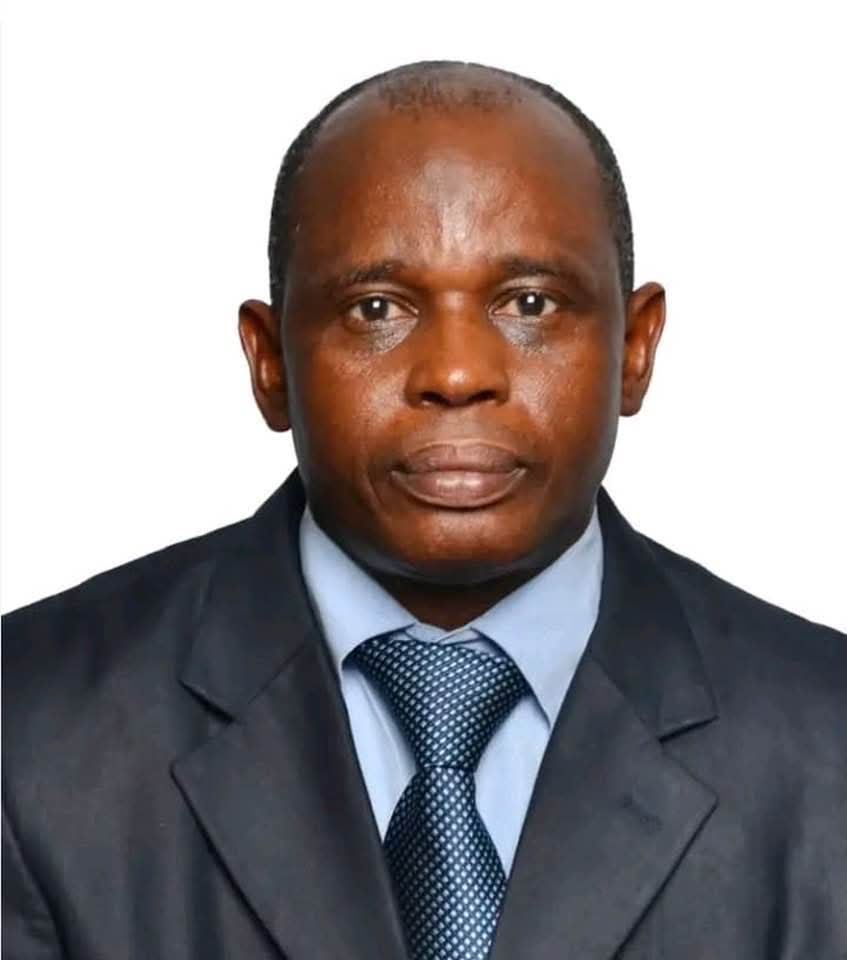
Governor Abba Kabir Yusuf has expressed deep sorrow over the death of former Kano State Commissioner of Finance and renowned academic, Professor Kabiru Isa Dandago.
KANO FOCUS reports that the governor’s reaction was contained in a statement issued on Wednesday by his spokesperson, Sunusi Bature Dawakin Tofa, Director General, Media and Publicity, Government House, Kano.
Governor Yusuf described the late Prof. Dandago as a dedicated public servant and accomplished scholar whose contributions to education and governance left lasting footprints in Kano State.
He noted that the former finance commissioner served the state with integrity and commitment and was widely respected for his professionalism, humility and passion for knowledge.
According to the governor, Kano State has lost a valuable son whose experience and wisdom greatly enriched both public service and the academic community.
Governor Yusuf extended his heartfelt condolences to the family of the deceased, the academic community and the people of Kano State over what he described as an irreparable loss.
He prayed that Almighty Allah forgives the shortcomings of the late Prof. Dandago, grants him Aljannatul Firdaus and gives his family and loved ones the fortitude to bear the loss.
Nasiru Yusuf Ibrahim
The National President of the Government Arabic Teachers College Gwale Old Students Association (GATCOSA), Professor Kabiru Isa Dandago, is dead.
KANO FOCUS reports that Prof. Dandago, a renowned Professor of Accountancy at Bayero University Kano, died on Wednesday evening. His passing has thrown the academic community and associates into mourning.
In a message shared on GATCOSA’s WhatsApp platform, a Director at the Kano State Ministry of Higher Education, Alhaji Nura Dandago, announced that the funeral prayer for the late professor would be held on Thursday at 9:00 a.m. at his residence in Rijiyar Zaki Quarters, Kano.
Until his death, Prof. Dandago served as the National President of GATCOSA and was widely respected for his contributions to education and public service. He previously served as Commissioner for Finance in Kano State during the administration of former Governor Abdullahi Umar Ganduje.
Just last Saturday, the late academic presented a paper on economic challenges in Northern Nigeria at a Ramadan Lecture organised by the Islamic Forum of Nigeria, where he spoke passionately about strategies for economic reform and regional development.
Colleagues and admirers described Prof. Dandago as a dedicated scholar and public servant who was deeply committed to building a prosperous and self-reliant nation. His death marks the end of a distinguished career in academia and public service.
Nasiru Yusuf Ibrahim
The basketball team of Bayero University Kano (BUK) has emerged champions of the Northwest 3×3 Basketball Championship hosted by Ahmadu Bello University (ABU), Zaria.
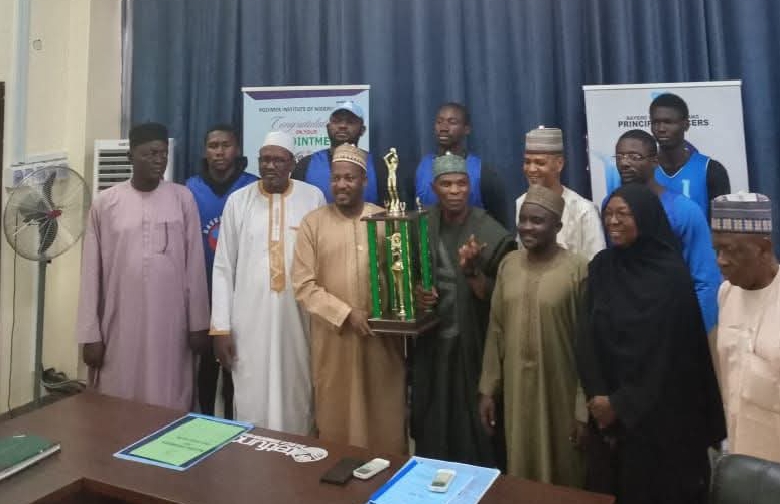
KANO FOCUS reports that the victorious team presented the championship trophy to the Vice-Chancellor, Prof. Haruna Musa, following their impressive performance at the tournament, which featured six universities from across Northern Nigeria.
BUK went unbeaten throughout the competition, winning all six matches and sealing the title with a thrilling 20–18 victory over the host institution, ABU Zaria, in the final.
In the group stage, BUK recorded a 10–0 win against Northwest University, Kano, and defeated the Air Force Institute of Technology 33–20. The team also edged the Federal University of Education, Kano, 11–9, before securing another dominant 10–0 victory over the Federal University of Transportation, Daura. They capped their remarkable run with the narrow 20–18 triumph in the final.
The victory marks BUK’s second championship title in the history of the competition, reinforcing the university’s growing reputation in collegiate sports.
Receiving the team, the Vice-Chancellor congratulated the athletes for bringing pride to the institution and urged them to sustain and surpass their current achievements. He reaffirmed the management’s commitment to strengthening sports development in the university and pledged continued institutional and individual support for the players’ sporting careers.
The presentation ceremony concluded with the formal handover of the trophy and cash rewards to the athletes in recognition of their discipline, teamwork and excellence.

Gov. Yusuf mourns former Kano finance commissioner, Prof. Dandago

Abba Care: A Lifeline of Compassion in Kano State
GATCOSA President, Prof. Kabiru Isa Dandago is dead

BUK clinches Northwest 3×3 basketball title at ABU Zaria

Kano rolls out emergency medical services, deploys 20 Ambulances

Lami Maccido, first person to appear on screens of NTA Kano, CTV 67, dies at 72

Kano begins Ramadan food distribution as Gov. Yusuf constitutes feeding committee

Kano Police announce movement restrictions ahead of assembly by-elections

K-SAFE appeals to Kano Executive Council to pass revised education bill

