
Headlines
We didn’t evict Diaspora Commission from our building–NCC

Nazifi Yusuf
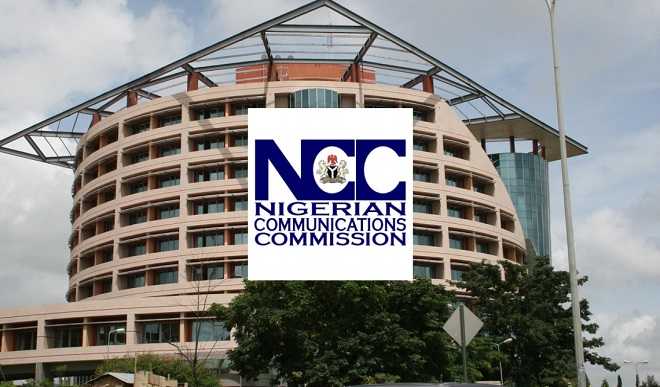
The Nigerian Communication Commission (NCC) has dismissed a video making the rounds on social media alleging that the Nigeria Diaspora Commission (NDC) was thrown out of the NCC building.
A statement sent to Kano Focus on Sunday by director public affairs, Nigerian Communications Commission, Henry Nkemadu said, the commission has allocated the fifth floor of its annex office at Mbora to the Nigeria Diaspora Commission (NIDCOM) but its Director-General Abike Dabiri-Erewa had neither visited the Complex to take possession of any of the offices nor started using any of these spaces as offices.
The statement recalled that, following the completion of the NCC building at Mbora, Abuja designated as NCC Annex and the acute shortage of accommodation space for the staff of the Commission in the NCC Head Office at Maitama, Abuja, the Board of the Commission directed the decongestion of the Head Office Building.
Some of the departments of the NCC, according to the statement had started moving to the new Office Complex of Five (5) Floors when discussions were held between the NCC and the NIDCOM to enable the NIDCOM also to utilise any free offices within the Complex.

The statement noted that, the fifth floor allocated to NIDCOM had to be used to accommodate other departments from the NCC Headquarters to ease the congestion.
The NCC also explained that its offer to house the NIDCOM was predicated on the long-held position of the NCC that agencies of government will achieve more through strategic collaboration, partnership, synergy and sharing to the extent allowed by relevant laws.
“During this period, the NCC secured approval for the commissioning of the Office Complex by the President, His Excellency Muhammadu Buhari and the launching of four important projects of the NCC and the renamed Federal Ministry of Communications and Digital Economy (FMC&DE).
“The projects include the launching and unveiling of the Nigerian National Broadband Plan 2020-2025; the commissioning of the Communications and Digital Economy Complex; the launching of the Emergency Communications Centre and Toll-Free number 112; and flag-off of the Digital Innovation and Entrepreneurship Training.
“These important projects were a culmination of extensive collaboration between NCC and the other parastatals of the FMC&DE and fittingly, the Complex was renamed the ‘COMMUNICATIONS AND DIGITAL ECONOMY COMPLEX’ in tandem with the new drive of the Federal Government towards a digital economy,” Mr Nkemadu said.
The statement noted that the NCC has not withdrawn the offer but had hiccups arising from the preparation for the visit of President Muhammadu Buhari to inaugurate the Communications and Digital Economy Complex and launch of other projects relating to the mandate of government.
The statement however, revealed that the Board and Management of the NCC took a decision to ensure that every activity in the building was in line with the Federal Government’s digital agenda.
“Incidentally, after the offer of the office spaces to the NDC, the Director General, Mrs. Abike Dabiri-Erewa had not visited the Complex to take possession of any of the offices and also the Commission had not started using any of these spaces as offices.
“As is usual in ensuring security and accountability before, during and after presidential visits, the building had to be cleared to allow for only known and identifiable persons to have access within the Complex. Therefore, the Honourable Minister of the Federal Ministry of Communications and Digital Economy, Dr. Isa Ali Ibrahim Pantami, could not have sent armed men to drive the staff of the Diaspora Commission out of the Communications and Digital Economy Complex.
“At this time, only NCC staff were accredited to have access within this premises, as required by the security officials. All the properties belonging to the Diaspora Commission are safely warehoused in some of the offices in the Complex.
This, according to the statement, is contrary to the position of the Director- General of NIDCOM that the removal of her Commission from the building was punitive.
“This is not the correct position and we agree with her that there are always challenges in every human activity but the unforeseen challenges that arose in this case are not different but require understanding of all concerned,” the statement added.



Headlines
NAHCON Secures ₦19 Billion Cost Reduction for 2026 Hajj, Pilgrims to Save Over ₦200,000 Each

Mukhtar Yahya Usman
The National Hajj Commission of Nigeria (NAHCON) has announced a ₦19 billion cost reduction for the 2026 Hajj, following a successful negotiation with Saudi service providers and Nigeria’s State Pilgrims’ Welfare Boards.
Chairman of the Commission, Professor Abdullahi Sale Usman, disclosed this while briefing journalists in Kano on the outcome of his recent official visit to Saudi Arabia. He explained that the deal translates to a direct saving of more than ₦200,000 per pilgrim. Nigeria has been allocated 66,910 Hajj slots for the 2026 pilgrimage.
During the visit, NAHCON signed key service contracts with Mashariq Dhahabiyya for Masha’ir operations and Daleel Al-Ma’aleem for transportation. It also secured better accommodation and feeding arrangements in the Markaziyya area of Madinah at competitive rates.
Professor Sale further announced the official fares for the 2026 Hajj as follows:
Maiduguri/Yola: ₦8.12 million
Other northern states: ₦8.24 million
Southern states: ₦8.56 million
He stressed that State Pilgrims’ Welfare Boards must remit 50 percent of the fares by October 8, 2025, while full payments from intending pilgrims are due by December 31, 2025.
“The deadlines are critical to enable early bookings and smooth operations,” he said, reaffirming NAHCON’s commitment to delivering a hitch-free Hajj exercise in 2026.
The NAHCON boss also appealed to the media for sustained support in sensitizing the public, noting that effective collaboration will ensure that the commission achieves its goals for Nigerians

… As Gov. Yusuf Condemns CP Bakori’s Partisan Conduct
… Demands His Immediate Removal for Sabotage, Unethical Behaviour
Kano State Governor, Alhaji Abba Kabir Yusuf, has condemned in the strongest terms the unprofessional and partisan conduct of the Kano State Commissioner of Police, Ibrahim Adamu Bakori, describing his actions as deliberate sabotage against the people of Kano and the Nigerian state.
In a statement issued by his spokesperson, Sunusi Bature Dawakin Tofa, the governor expressed outrage over the sudden withdrawal of police participation from the 2025 Independence Day celebration in Kano — an order CP Bakori issued just hours before the commencement of the event.
Governor Yusuf said the action was a clear demonstration of bias, insubordination, and betrayal of the Nigeria Police Force’s constitutional duty.
“As the Chief Security Officer of Kano State, we cannot tolerate sabotage to the peace, security, and wellbeing of our citizens. It is disgraceful that a Commissioner of Police would descend so low into partisan politics by boycotting a national event that symbolizes unity, patriotism, and democracy,” Governor Yusuf stated.
The governor accused CP Bakori of consistently aligning with political interests opposed to the will of the people of Kano, thereby eroding public trust in the police command. He described the CP as a “political police officer” who has abandoned professionalism and is actively undermining democracy.
“The police must never be seen as tools of politicians. They are expected to protect all Nigerians, regardless of political leanings. Unfortunately, CP Bakori has turned himself into a willing instrument of division and insecurity in Kano State,” the statement added.
Governor Yusuf therefore led the voices of Kano stakeholders who were present at the 2025 Independence Day Celebration at Sani Abacha Stadium, Kofar Mata, in calling on President Bola Ahmed Tinubu to direct the Inspector General of Police to immediately remove CP Bakori from office and replace him with a competent and non-partisan officer who will restore confidence, fairness, and neutrality in policing Kano State.
The stakeholders who joined their voices with that of the Governor included traditional and religious leaders, NNPP members of the state and national assemblies, the business community, youth groups, and labour organizations.
The governor reaffirmed his administration’s commitment to protecting the lives and properties of the people, stressing that no act of sabotage from compromised security officials will succeed in destabilizing Kano under his watch.
He also commended the efforts of other security agencies in the state — with the exception of the police.
Governor Yusuf appreciated the leadership of the state commands of the Nigeria Customs Service, Nigeria Immigration Service, Nigeria Correctional Service, Federal Fire Service, and the State Directorate of Security Services, all of whom participated in the 2025 Independence Parade.

Aminu Abdullahi Ibrahim
Dr. Musa Mohammed Bello, State Focal Person for the African Health Budget Network (AHBN), announced significant progress in a Gavi-funded immunization project implemented in collaboration with the African Field Epidemiology Network (AFENET) across Sokoto, Kano, Bauchi, and Borno states since September 2023.
KANO FOCUS reports that the project has recorded notable reductions in the number of zero-dose children those who have not received any vaccines particularly in Kano, where 15 local governments were identified as high-burden areas.
During a recent review meeting focusing on Kano State, stakeholders assessed successes and challenges related to immunization budget allocation, vaccine supply chain disruptions, cold chain management, and access to immunization services by parents and caregivers.
Dr. Bello commended the Kano State government for consistently allocating above 15% of the budget to health surpassing the Abuja Declaration recommendation but pointed out issues with approval and release of funds that hinder smooth project implementation.
He also stressed the need for Kano State to reduce its heavy reliance on donor funding from partners such as WHO, UNICEF, and the Bill & Melinda Gates Foundation by strengthening local counterpart contributions. Isyaku Lawan Dawakin from Kano State Bureau of Statistics emphasized the value of peer learning activities to close knowledge gaps and boost vaccine outreach.
Dr. Bello further highlighted the strengthening of advocacy and government relationships through the 2023-2024 Accountability Scorecard initiative, which has enabled better communication and cooperation with key government committees on health and appropriation. Evidence-based advocacy built on decentralized immunization monitoring assessments by AFENET has helped identify specific challenges at the local government and health facility levels, informing targeted interventions.
He presented recent data from September 2025 showing high reporting rates from primary health care facilities on routine immunization services via SMS across the targeted local governments, reflecting increased monitoring and responsiveness. The project has fostered deeper understanding of the budgetary process among civil society and health stakeholders, contributing to increased awareness and coordinated action to address zero-dose children.
Crucially, Dr. Bello revealed that Kano State has seen a tremendous decrease in zero-dose children—from over 539,000 in 2020 to around 120,000 by December 2024—attributed to collaborative government and partner efforts.
This achievement underscores the positive impact of strengthened immunization systems, accountability frameworks, and partner coordination in improving child health outcomes across the region.
”This initiative forms part of a broader push to improve immunization coverage and accountability in West Africa, aiming to ensure that no child is left unvaccinated and vulnerable to preventable diseases,” he said.
Isyaku Lawan Dawakin Tofa from Kano State Bureau of Statistics emphasized the value of peer learning activities to close knowledge gaps and boost vaccine outreach.

BPSR Ranks NCC among Top 3 MDAs in Best Website Performance in 2025

Quality of Service Challenges in Abuja

BEC Ranks NCC Among Top Five Best-Performing Government Agencies in 2025

Dangote Cement commissions 100 Billion CFA Francs Cement Plant in Côte d’Ivoire Cement Plant

