
Headlines
What Emir Muhammadu Sanusi II did for Kano – Kurawa

Mukhtar Yahya Usman
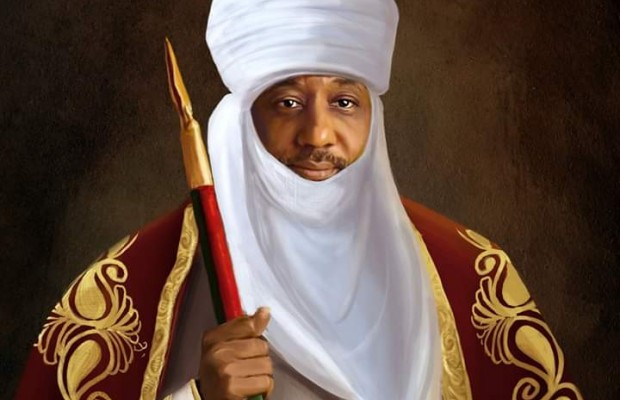
Muhammadu Sanusi II, the 14th Fulani Emir of Kano who was dethroned after a six-year reign assumed office on June 08, 2014.
In this exclusive interview with Kano Focus, Ibrahim Ado Kurawa, historian and close associate of the deposed Emir highlights some of the legacies of Muhammadu Sanusi II.
Emir’s Role
Before talking about the legacies of Emir Muhammadu Sanusi II we need to understand the duties of an emir first.

An emir does not legislate, execute or adjudicate as was the case in the past.
In 1967, the military government removed their judicial powers and in 1976 local government administration was taken away from Emirs.
Therefore an emir’s duties became limited to what he is assigned to do by the government and the provision of leadership for his people.
That was how Emir Alhaji Ado Bayero lived from 1976 until his death.
By the time Muhammadu Sanusi II assumed the throne of Kano Emirate his only function was to provide leadership for his subjects.
Leadership Style
He was asked to provide leadership and everyone has his style.
Some people would keep mute when they see wrongdoing while others will speak up.
Why don’t people like to be corrected? Let them do the right thing and see if he would still criticize them.
Let his detractors come out and refute his criticisms.
Some people fail to understand that there are individual differences in leadership style.
So every Emir has a choice on whether to speak or keep silent.
Uniting the Royal Family
The first thing he did was to unite his subjects especially the royal family.
Emir Sanusi II gave royal titles to all branches of the ruling Dabo family.
These included the descendants of Emir Muhammadu Inuwa and Emir Alu Babba.
The last descendant of Emir Alu to hold a traditional title, Ahmadu Gwadabe – who was appointed Danmaje by Emir Abdullahi Bayero – died in 1967 and they were not given another title since then until the reign of Muhammadu Sanusi II.
As for Emir Muhammadu Inuwa, his descendants did not hold any title even the headship of a ward for 51 years after his death until Muhammadu Sanusi II turbaned one of them as a District Head.
He also appointed Aminu Sadik from the Dan Lawan Ayuba branch of the Abdullahi Maje Karofi royal house as the Zanna of Kano.
From the scions of Emir Sanusi I, he appointed Dan Galadima, Bunu, and Dan Buran.
No previous Emir has done this much to unite the family of Ibrahim Dabo.
Renovating Gidan Rumfa
The Kano royal palace is known as Gidan Rumfa after Emir Muhammadu Rumfa who built it about 500 years ago.
It has never been renovated as it was done during the reign of Muhammadu Sanusi II.
He modernized every nook and cranny of the palace, which is a no mean achievement.
Family Law Bill
Emir Muhammadu Sanusi has done what no Emir has done in the history of Kano by drafting a bill on Islamic Family law.
He gathered a large number of Islamic scholars who spent three years poring over books on Islamic Shari’a to draft the act for a law to regulate the Islamic family in Kano state.
It covers aspects such as marriage, family support, childcare, and divorce.
Most Educated Emir
Emir Muhammadu Sanusi was the most educated emir in the history of Kano in both Islamic and formal education.
That was why he tackled controversial issues to help in resolving them using his vast knowledge.
He also had a wealth of experience in public service culminating in his appointment as Governor, Central Bank of Nigeria.
He used his knowledge and experience to gain access to international organizations and associations.
Economic Development
Emir Muhammadu Sanusi II used his connections to spur the economic development of Kano state.
The African Development Bank engaged in an Industrial Diagnostics of Kano and developed an economic development blueprint for the state.
This is usually reserved for countries.
He brought Chinese investors to set up a $300million textile industry in Kano.
He brought another company “Baban Kowa”, which provides farmers with seeds and inputs as well as buy the produce after harvest.
He also brought Black Rhinos who will set-up a solar power plant worth $100million in Kano.
He had already arranged an agreement with the Federal Government and the contract has been signed.
Defender of the people
These show that his main interest in being a monarch went beyond the paraphernalia of office such algaita, kakaki, and tambari.
He had a plan for the development of his people.
That is why he was always vocal in any matter concerning Kano in particular and Nigeria in general.
He was instrumental in protecting the interests of his fellow Fulani when they were being stereotyped as aggressors in the frequent clashes between farmers and animal herders.
That is why Fulani associations love him very much.
Man of Peace
Emir Muhammadu Sanusi II deserves commendation concerning the peaceful manner he handled his dethronement.
He averted riots in Kano by instructing his followers to leave everything to Allah and accept his successor.
Many thought he would resist or seek legal redress but he forgave and ask the people to obey whoever his successor might be.



Nasiru Yusuf Ibrahim
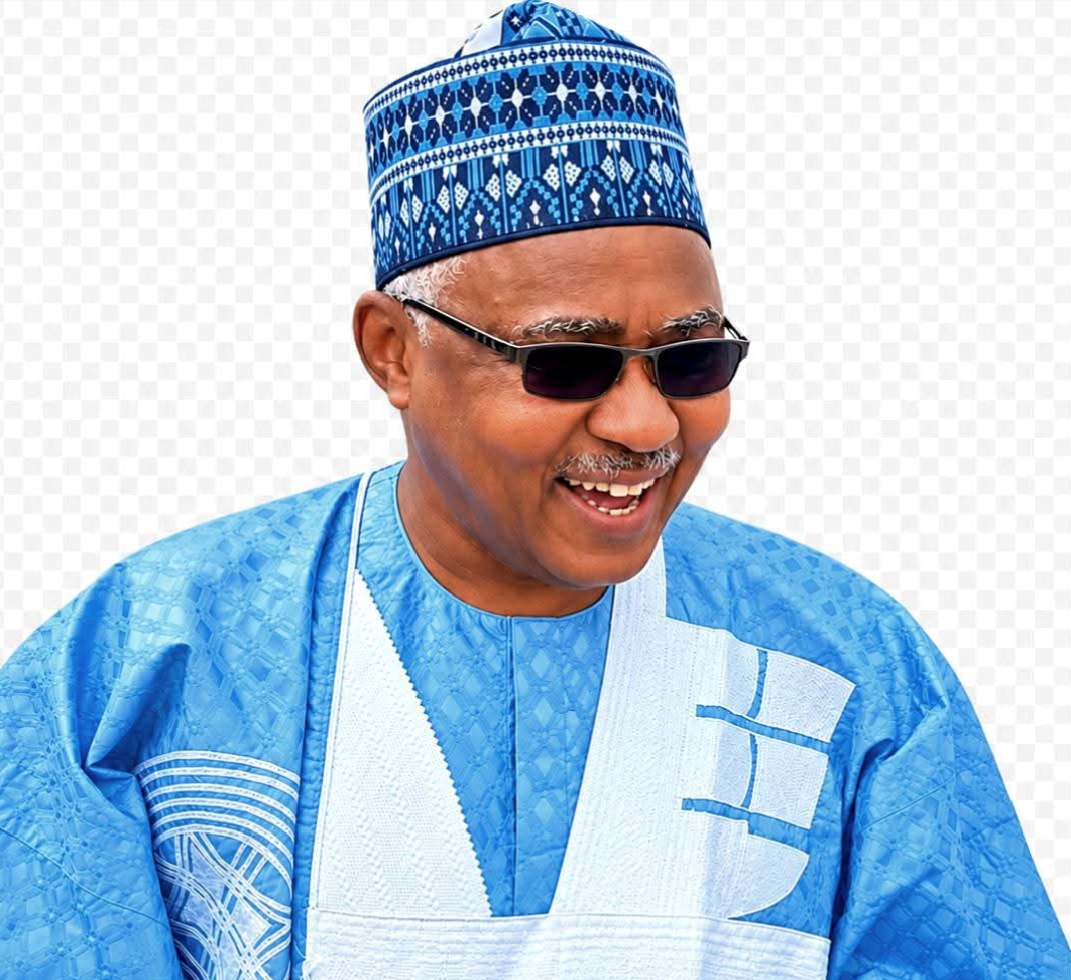
Political allies and loyalists of former Managing Director of the Nigerian Ports Authority (NPA), Arc Aminu Dabo, have begun resigning from the All Progressives Congress (APC) in Kano State following his withdrawal from the ruling party.
KANO FOCUS reports that the supporters, operating under the political group Dabo Alheri Ne, reportedly include members across Kano State’s 44 local government areas.
Barely two days after Dabo announced his resignation from the APC, a prominent stakeholder of the group, Garba Zakiru Dambatta, said members had welcomed the decision and were showing solidarity by submitting their resignation letters to their respective ward party chairmen.
Dambatta, a former APC chairman in Dambatta Local Government Area, said the group’s members were disappointed with what they described as the prolonged marginalisation of Mr Dabo and his supporters within the party.
According to him, despite Mr Dabo’s contributions to the APC and efforts to strengthen the party and manage disagreements among its members, some key stakeholders had continued to sideline him and his loyalists in party activities.
Dambatta reaffirmed the group’s commitment to standing by Mr Dabo’s political decisions and supporting his future political journey.
He also urged the former NPA managing director not to succumb to political pressure or reverse his decision to leave the party.
“This step you have taken, we have the conviction that it is the beginning of a new chapter of goodness in your life,” Dambatta said.
Among the prominent members of the group identified as supporting Mr Dabo’s decision are Abba Rabee’u, a former Senior Special Assistant on Political Awareness; Almustapha Jilani Danmalam, a former Senior Special Assistant on Education; Jamilu Abdullahi Zangon-Mata, a former Senior Special Assistant on Entrepreneurship; and Fahd A. Dabo, a former Special Assistant on Youth Mobilisation.
The individuals reportedly served during the second term of former Kano State Governor Abdullahi Umar Ganduje.
The group also said several other party loyalists and supporters were backing Dabo following his resignation.
However, the statement did not provide the number of members who had formally resigned from the APC or indicate whether the party leadership had responded to the development.
Nasiru Yusuf Ibrahim
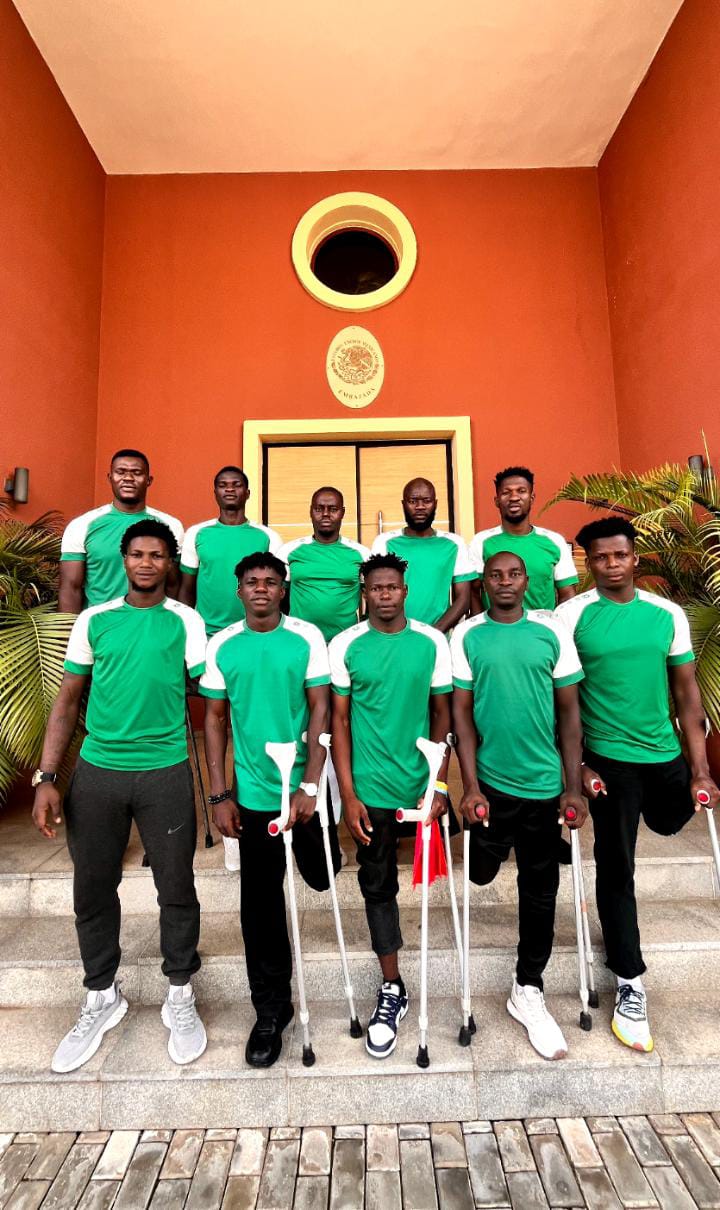
Five players of Kano Pillars Amputee Football Club have been invited to the national camp of Nigeria’s Special Super Eagles ahead of the 2026 Amputee Football World Cup in Mexico.
KANO FOCUS reports that invited players are Isah Yusuf, Abba Musa, Habu Friday, Emanuel Betel and Usman Ahmed. They are currently in Abuja with the national team as preparations intensify for the global tournament.
The Team Manager of Kano Pillars Amputee Football Team, Jamilu Uba Adamu, disclosed this in an interview with Ashiru Rabiu Gidan Tudu, Information Officer of the Kano State Sports Commission.
Adamu described the invitation as recognition of the players’ dedication, discipline and outstanding performances.
He expressed confidence that the players would represent Kano State and Nigeria with honour at the championship.
According to him, the call-up also demonstrates Kano Pillars’ commitment to nurturing talented amputee footballers and contributing to the development of the sport in Nigeria.
The 2026 Amputee Football World Cup is scheduled to take place from November 13 to 22 in San Juan de los Lagos, Mexico. A total of 24 countries, including seven African nations, are expected to participate.
The Executive Chairman of the Kano State Sports Commission, Muhammad Tukur Babangida, congratulated the five players on their invitation, describing it as well deserved.
Babangida expressed confidence that they would justify the confidence reposed in them by the national team selectors.
He assured the players of the commission’s continued support and urged them to remain focused, disciplined and committed to making Kano State and Nigeria proud on the international stage.
Ibrahim Khalil
A chieftain of the All Progressives Congress (APC) in Kano State, Aminu Dabo, has resigned as the party’s caucus chairman in Dambatta Local Government Area and withdrawn his membership of the ruling party.
KANO FOCUS reports that Dabo, a former Managing Director of the Nigerian Ports Authority (NPA), announced his resignation in a letter dated October 7, 2026, addressed to the APC chairman of Dambatta Gabas Ward.
In the letter, personally signed by him, Dabo said he took the decision after careful consideration of personal reasons and his future endeavours.
He confirmed his resignation during a telephone conversation from Abuja on Wednesday, saying he had formally submitted the letter to the appropriate party officials in Dambatta for necessary action.
“I remain grateful for the cordial relationship I enjoyed and appreciative of the experience gained during my time of service,” he said.
The former NPA managing director also thanked the party’s leadership for the opportunity and confidence reposed in him to contribute to its development and progress during his membership.
“I sincerely appreciate the support and opportunity I have received from the party leadership,” he added.
A statement issued by Abdullahi Othman, Media and Publicity Aide to Dabo Dabo, said the former NPA MD did not disclose further details about his reasons for leaving the APC in the resignation letter.

Dabo’s resignation triggers wave of defections from APC in Kano

Five Kano Pillars Amputee Players Invited to Special Eagles Camp Ahead of World Cup

BUK Professor advocates microfinance to tackle food insecurity, poverty

General Elections 2027: Abba Kabir Yusuf traverses the path to victory
Former NPA MD Aminu Dabo resigns as APC caucus chairman in Dambatta

Kano leads again as NECO successes rise to 74,413
Kano tops states in 2026 NECO results, Governor Yusuf hails students

Kano Govt Suspends Durbar Processions, Horse Riding in Metropolis

ACF begins Dangote Refinery IPO sensitisation campaign in Kano

