
Headlines
Five factors that increase divorce rate in Kano


Aminu Abdullahi
A sociologist at Bayero University Kano (BUK) Aminu Sabo Dambazau has identified five factors that increase the rate of divorce in Kano state.
Mr Dambazau told Kano Focus on Thursday that the factors including mismatched characters, rivalry, forced marriage, suspicion, and dissatisfaction.
Mismached characters
Mr Dambazau said intending couples rush into marriage without understanding each other.

“Some people misuse the courtship period in solely expressing their feelings without exploring the characters and expectations of their partners.
“They neither understand the obligations and responsibilities of marriage nor do they have the chance to find out the characters, habits, and life views of each other.
“Therefore after marriage when their true characters appear they would start to have problem in their marriages.” Mr Dambazau said.
Rivalry
The scholar said about 45% of divorce cases in Kano state are caused by co-wife rivalry.
He said a lot of marriages come to an end the moment the husband starts wooing a second wife.
“Most women do not accept a co-wife and prefer to end the marriage than share their husbands with another woman.
“This habit leads to the breakup of many marriages,” he stated.
Forced marriage
Mr Dambazau said another major factor that causes divorce in Kano state is forced marriage.
He said women are still forced into marrying a man they do not love due to financial or social pressure on the parents.
“Whenever a wife doesn’t like her husband she will do anything possible to get a divorce.
“Frankly speaking, forced marriage will never last as no one can stay with a person he hates,” he stated.
Suspicion
The BUK sociologist said suspicion among couples contributes immensely to the high rate of divorce in Kano state.
“No couple will live in peace as long as they are suspicious of one another.
“Unfortunately this is a growing problem as some women always check their husband’s phones in order to find incriminating evidence.” Mr Dambazau said.
Dissatisfaction
He added that some husbands fail to gratify the needs of their wives such as feeding, clothing, and sexual desire.
“Whenever a husband fails to feed his wife he will not get respect from her.
“How will you marry a woman when you cannot cater for her needs?
“This is what is happening in our society.” The lecturer said.
The road to divorce
Some divorcees in Kano corroborated the scholar’s findings.
Maryam Abdullahi, mother of a one year old child said she left her husband after a year because he refused to allow her continue with her studies.
“I was married off to him immediately after completing secondary school even though I told my parents that I want to continue to a higher institution.
“Before the marriage, he promised to allow me continue with my education but he broke the promise after our wedding.” She said.
Ms Abdullahi said she does not regret her decision to end the marriage.
“By God’s will I’ll fulfill my ambition and I’m optimistic to have my desired husband,” Maryam said.
Unfair husband
Another divorcee Surayya Abubakar whose marriage ended after eight months said her husband was giving priority to her co-wife.
“He favored her over me and used to buy things for her that he was not buying for me.
“When I complained, he divorced me.
“Our parents met several times but the mediation was in vain as he did not change.
“I also asked him if I was offending him but he said I wasn’t.” Ms Abubakar said.
I’ll never marry again
But Ramla Yusuf whose marriage lasted five months explained that her husband was a fraud who posed as a rich business man before the marriage.
“I realized that he was a liar during the wedding dinner when he couldn’t provide the bridal gown.
“He lied that he owned a big house but I was taken to an old rental house.
“It turned out that he was jobless and penniless.
“I really suffered in his hand and after only five months I asked him to divorce me.” She said.
Ms Yusuf added that she does not plan to marry again as she didn’t know that marriage could be so painful.
Dirty woman
On his part, a male divorcee, Usman Shehu said he divorced his wife after a year of marriage because she was dirty and did not know how to cook delicious meals.
“I cautioned her to change her habit but she refused and I also complained to her parents but still nothing changed.
“I swear she can spend two days without taking a bath – she was not a wife anybody will bear to live with,” Mr Shehu said.
Another person Umar Ibrahim said he divorced his wife because she did not respect him and his family.
“We married for love but I did not know she was bad until she came to my house.
“She cheated me severely and also inflicted tension between my family and I,” he lamented.
Mr Ibrahim said has been sleeping well since he divorced her two months ago.
How to reduce divorce in Kano
Mr Dambazau, who has a PhD in Sociology, said the best means of reducing the rate of divorce in Kano state is to revive the defunct Zauren Sulhu community forum established by the Ibrahim Shekarau administration.
“Zauren Sulhu was one of the ways to discuss community issues such as marital problems.
“The forum will listen to both sides and counsel them without leading to divorce. He said.
Mr Dambazau said the families of the couples can mediate and save the marriages from divorce.
Islamic perspective
An Islamic cleric Nuhu Muhammad said there are things that couples should observe before getting married.
“Every woman or man should make sure their partner has Islamic knowledge and good character.
“Prophet Muhammad (pbuh) said you should marry whoever you agree with his religiosity,” he said.
Mr Muhammad advised couples to avoid telling lies before marriage because most marriages breakdown due to false expectations.
“They don’t display who they are because they blindly want to possess each other so after the marriage when the truth is revealed they divorce.” The Islamic scholar said.
He therefore advised couples to build their marriages based on the teachings of Islam and exercise patience with one another.

Nasiru Yusuf Ibrahim
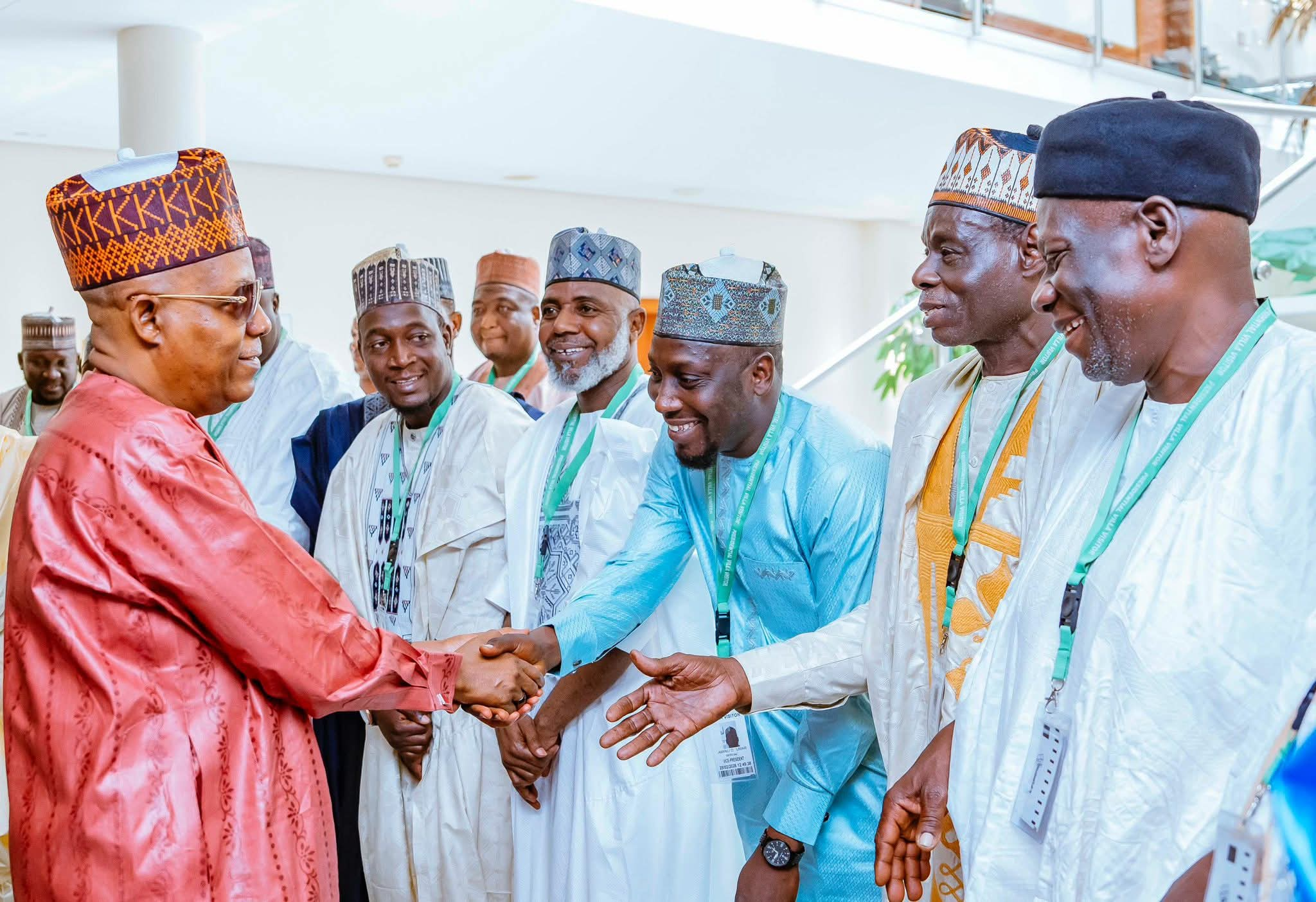
Nigeria’s Vice President, Kashim Shettima, on Tuesday received a delegation from the Association of Kano Business Community at the Presidential Villa, Abuja, during a thank-you visit to President Bola Ahmed Tinubu.
KANO FOCUS reports that the delegation expressed appreciation to the Federal Government for its support to traders and other victims affected by the recent fire incident that razed several sections of the popular Singer Market in Kano.
Speaking during the meeting, the Vice President reaffirmed the Federal Government’s commitment to collaborating with the Kano State Government and relevant agencies to prevent a recurrence of fire outbreaks in markets across the state.
He assured the delegation that President Tinubu has the interests of Kano people at heart, noting that the N5 billion approved as immediate relief for victims was based on the findings of a preliminary assessment of the damage caused by the inferno.
Shettima reiterated that the Federal Government would continue to support efforts aimed at restoring commercial activities and strengthening safety measures in markets to protect lives and property.
Nasiru Yusuf Ibrahim
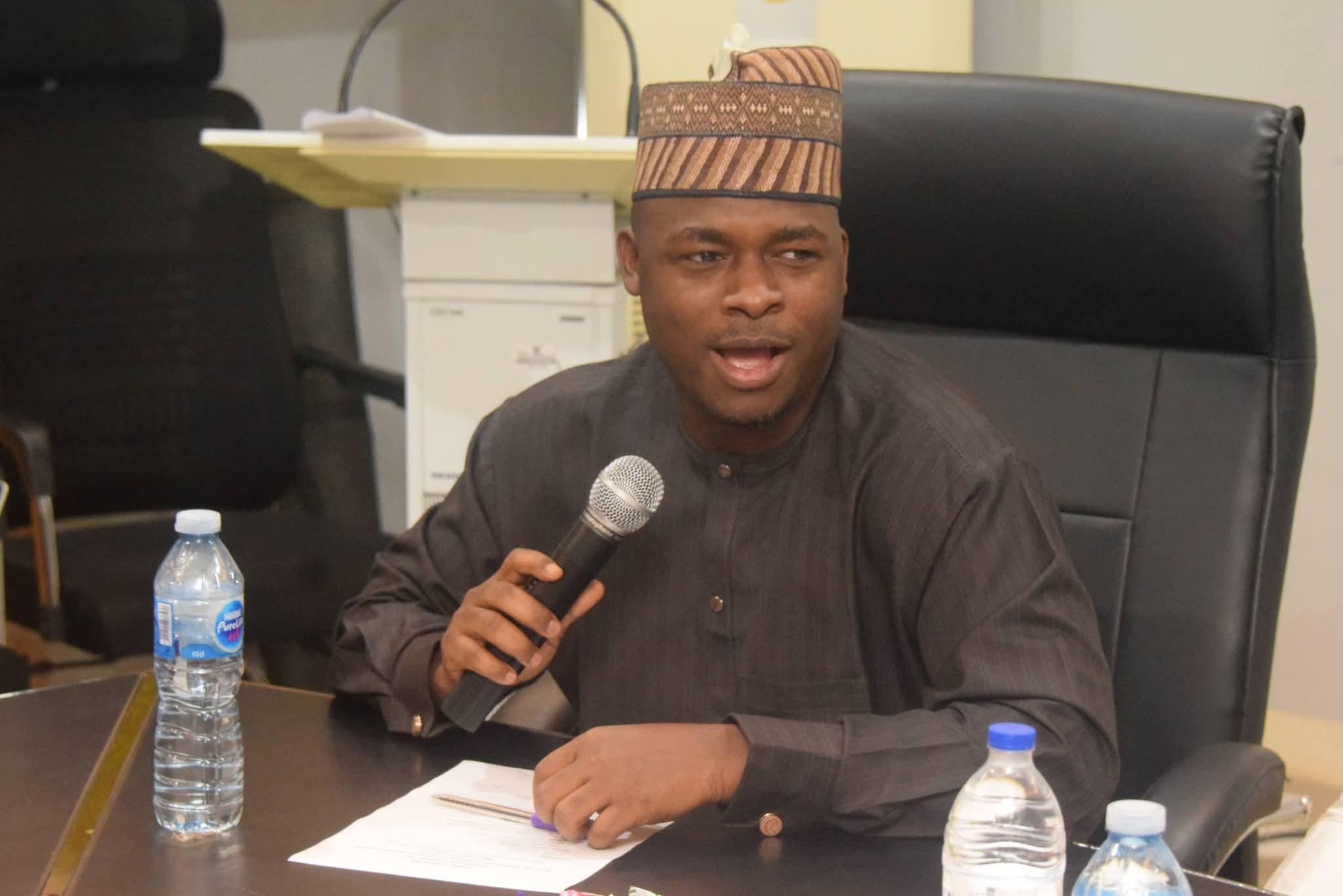
The Kano State Government has inaugurated a 23-member committee to oversee the transparent and equitable distribution of financial assistance and relief materials to victims of the recent Singer Market fire disaster.
KANO FOCUS reports that the inauguration was carried out on behalf of the Secretary to the State Government, Umar Faruq Ibrahim, who chairs the committee. The event was presided over by the state Attorney-General and Commissioner for Justice, Abdulkarim Kabiru Maude.
According to the Attorney-General, the committee comprises representatives from key government agencies, security services, the Kano Emirate Council, religious leaders, and affected traders.
He said the panel’s mandate includes assessing the extent of losses, verifying genuine victims, ensuring timely distribution of support, and recommending measures to prevent future fire incidents.
The intervention follows support approved by President Bola Ahmed Tinubu, as well as contributions from the APC Governors Forum. It also comes in addition to earlier assistance provided by Governor Abba Kabir Yusuf and the Deputy Senate President, Barau I. Jibrin.
The state government reaffirmed its commitment to supporting victims of the disaster and restoring commercial activities at Singer Market.

Nasiru Yusuf Ibrahim
The Kano State Government has announced Saturday, March 1, 2026, as the commencement date for the Eid-el-Fitr break for all public and private primary and post-primary schools in the state.
KANO FOCUS reports that the announcement, contained in the approved 2025/2026 academic calendar, applies to both day and boarding schools across the state.
According to a statement issued by the Director of Public Enlightenment, Musbahu Aminu Yakasai, parents and guardians of pupils and students in boarding schools are expected to convey their wards home by the early hours of Friday, February 28, 2026.
The statement further explained that boarding school students are to resume on Sunday, March 22, 2026, while day students are to resume on Monday, March 23, 2026.
It added that the second term will continue from Sunday, March 22, 2026, and end on Saturday, April 18, 2026.
The government directed all public and private schools in the state to comply strictly with the directive, warning that non-compliance would be treated as a breach of government instructions.
The Commissioner for Education, Ali Haruna Abubakar Makoda, urged parents and guardians to ensure full compliance with the approved resumption dates.
He appreciated parents and residents of the state for their continued cooperation and support to the ministry, and wished pupils and students a successful completion of the Ramadan fast and hitch-free Sallah celebrations.

Kano business community thanks FG for N5bn Singer market relief

Kano Govt inaugurates 23-member committee to disburse Singer market fire relief

Kano Govt announces March 1 for schools’ Ramadan break

NCC board chair hosts licensed telecoms operators in Lagos

Stakeholders seek stronger nutrition financing at local government level

Lami Maccido, first person to appear on screens of NTA Kano, CTV 67, dies at 72

Governor Yusuf Appoints Acting DG for Pilgrims Board, Names Provost for Anti-Corruption Institute

Kano govt investigates reported disease outbreak in Garko community

K-SAFE appeals to Kano Executive Council to pass revised education bill

