
Headlines
Economic diversification panacea to Nigeria’s economic crisis – Danbatta


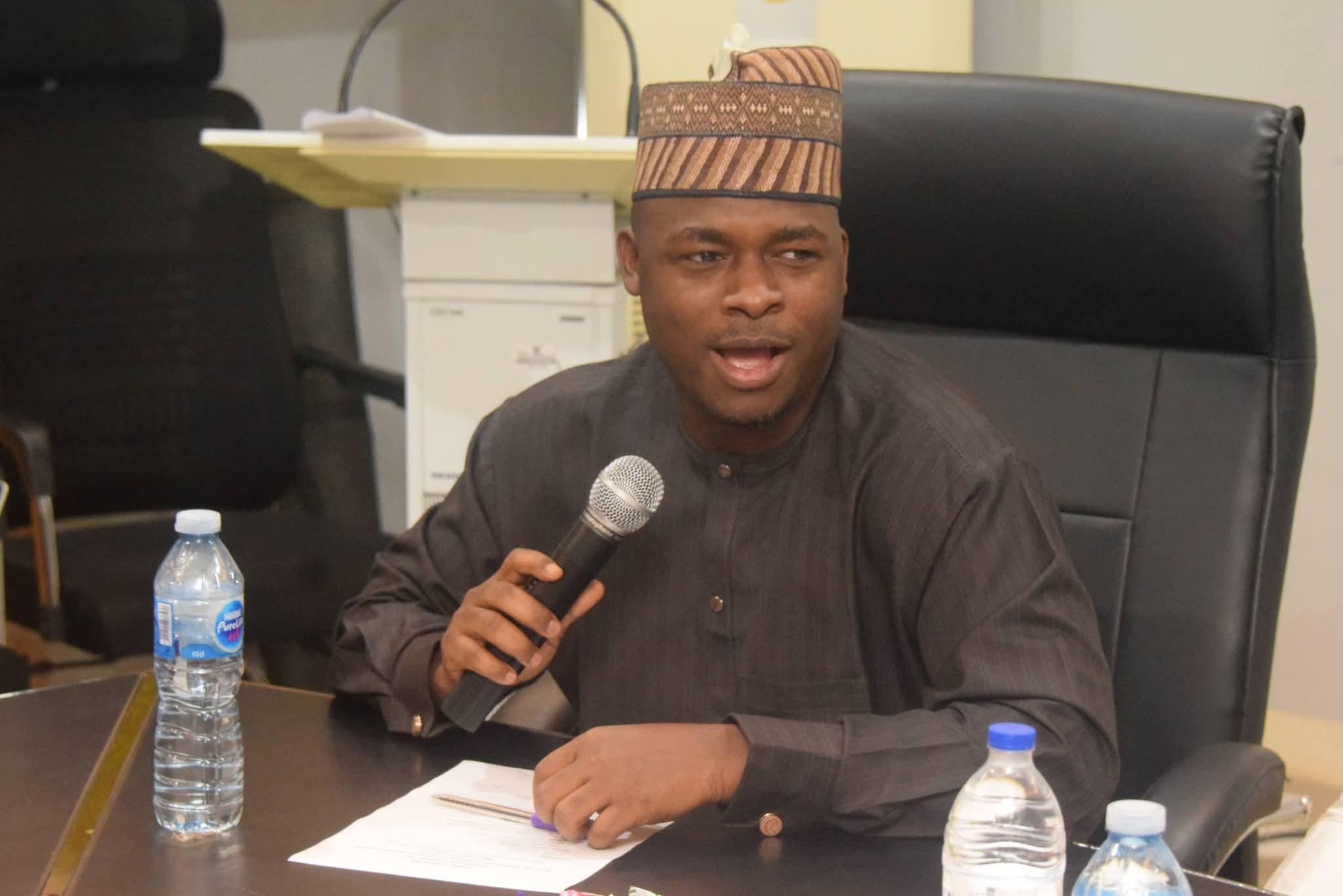
The Executive Vice Chairman, Nigerian Communications Commission (NCC), Umar Garba Danbatta, has underscored the centrality of economic diversification and ethical leadership at all levels of government as panacea to the current economic headwinds in Nigeria.
Kano Focus reports that Mr Danbatta stated this when he delivered a paper titled: “Ethical Leadership as an Instrument for National Sustainability in the Post-Oil Nigerian Economy: a Public Sector Perspective” at a two-day hybrid (online and onsite) Annual Directors Conference (ADC) organized by the Institute of Directors (IoD), Nigeria.
Mr Danbatta emphasized that the fourth industrial revolution (4IR) or digital age promises greater revenue-earning potential to the nation.
Mr Danbatta, said the Federal Government has realized that Nigeria cannot be solely dependent on oil earnings anymore, hence the decision of the FG to explore ways of diversifying the economy.
Sarkin Ban Bichi hails NCC Boss, Danbatta for community devt

NCC detects cloned Facebook account
NCC pledges to promote ICT infrastructure for economic growth
Economic diversification, according to Danbatta, is the process of shifting an economy away from a single income source toward multiple sources from a growing range of sectors and markets.
He said this is with a view to increasing productivity, creating jobs and providing the basis for sustained economic growth.
Danbatta said though, the Federal Government has made several attempts at economic diversification, such attempts have had little impact as majority of them have folded up whilst others are finding it difficult to survive.
He noted that the situation has further been compounded by the recent economic recession and the COVID-19 pandemic, which adversely affected the global economy, including Nigeria.
Danbatta stated that countries and societies have evolved by finding new ways of doing things to ensure economic sustainability, which has led to the first, second and third industrial revolutions.
“Currently, countries are exploiting the 4IR in order to diversify their economies.
“The fourth industrial revolution, which has also been referred to as 4IR or Industry 4.0, describes the age of intelligence and encompasses technologies like high-speed mobile Internet, Artificial Intelligence (AI), automation, the use of big data analytics and cloud computing,” he said.
State legislators honor NCC boss
NCC emergency communications centers process 1,500 COVID-19 related calls – Danbatta
Danbatta, also emphasized that the 4IR is the information and digital economy age, which, if properly enhanced and exploited, can unleash a new phase of massive revenue generation and wealth creation for Nigeria in the post-oil era.
“This is because while natural resources such as oil, gas, and so on, are finite, data and information are infinite.
“Furthermore, the possibilities provided by the 4IR are limitless and can generate employment for Nigeria’s teeming youth population Therefore, in order to achieve economic growth using the 4IR there is the need for ethical leadership,” he said.
Zeroing on the centrality of ethical leadership in the public sector, Danbatta said in order to achieve national sustainability in the post-oil Nigerian economy, the highest standard of ethical leadership is required of all leaders especially in the public sector.
“Ethical leadership is essential for sustainable development of a Country.
“Nurturing an ethical leadership culture is essential and this will determine the transformation and overall development of the Country.
“Nigeria stands at the threshold of history and would definitely need ethical leaders to ensure sustainability in the post-oil era as government takes positive steps to diversify the economy,” he added.
The IoD Nigeria Annual Directors’ Conference is the Institute’s flagship event, which is attended by captains of industry and directors in both private and public sectors of the Nigerian economy.
It is a forum where contemporary issues affecting leadership and corporate governance of Nigeria’s businesses are x-rayed and global best practice solutions provided by professionals and practitioners in corporate administrations.



Nasiru Yusuf Ibrahim
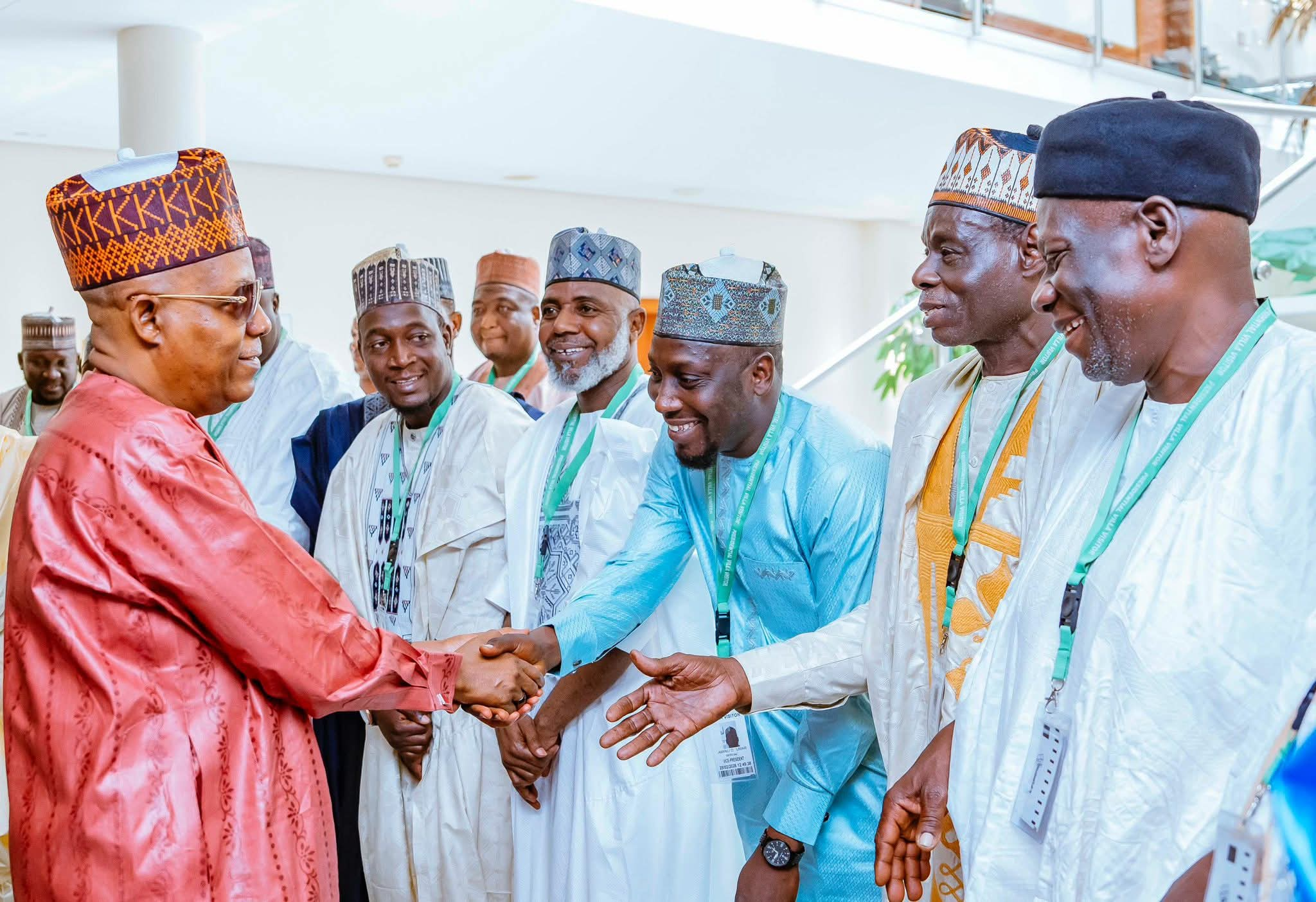
Nigeria’s Vice President, Kashim Shettima, on Tuesday received a delegation from the Association of Kano Business Community at the Presidential Villa, Abuja, during a thank-you visit to President Bola Ahmed Tinubu.
KANO FOCUS reports that the delegation expressed appreciation to the Federal Government for its support to traders and other victims affected by the recent fire incident that razed several sections of the popular Singer Market in Kano.
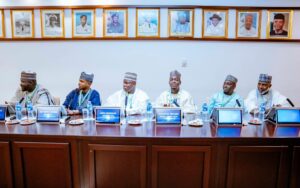
Speaking during the meeting, the Vice President reaffirmed the Federal Government’s commitment to collaborating with the Kano State Government and relevant agencies to prevent a recurrence of fire outbreaks in markets across the state.
He assured the delegation that President Tinubu has the interests of Kano people at heart, noting that the N5 billion approved as immediate relief for victims was based on the findings of a preliminary assessment of the damage caused by the inferno.
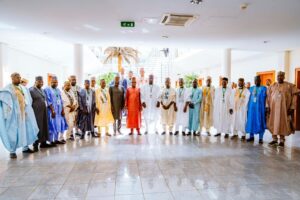
Shettima reiterated that the Federal Government would continue to support efforts aimed at restoring commercial activities and strengthening safety measures in markets to protect lives and property.
Nasiru Yusuf Ibrahim
The Kano State Government has inaugurated a 23-member committee to oversee the transparent and equitable distribution of financial assistance and relief materials to victims of the recent Singer Market fire disaster.
KANO FOCUS reports that the inauguration was carried out on behalf of the Secretary to the State Government, Umar Faruq Ibrahim, who chairs the committee. The event was presided over by the state Attorney-General and Commissioner for Justice, Abdulkarim Kabiru Maude.
According to the Attorney-General, the committee comprises representatives from key government agencies, security services, the Kano Emirate Council, religious leaders, and affected traders.
He said the panel’s mandate includes assessing the extent of losses, verifying genuine victims, ensuring timely distribution of support, and recommending measures to prevent future fire incidents.
The intervention follows support approved by President Bola Ahmed Tinubu, as well as contributions from the APC Governors Forum. It also comes in addition to earlier assistance provided by Governor Abba Kabir Yusuf and the Deputy Senate President, Barau I. Jibrin.
The state government reaffirmed its commitment to supporting victims of the disaster and restoring commercial activities at Singer Market.
Nasiru Yusuf Ibrahim
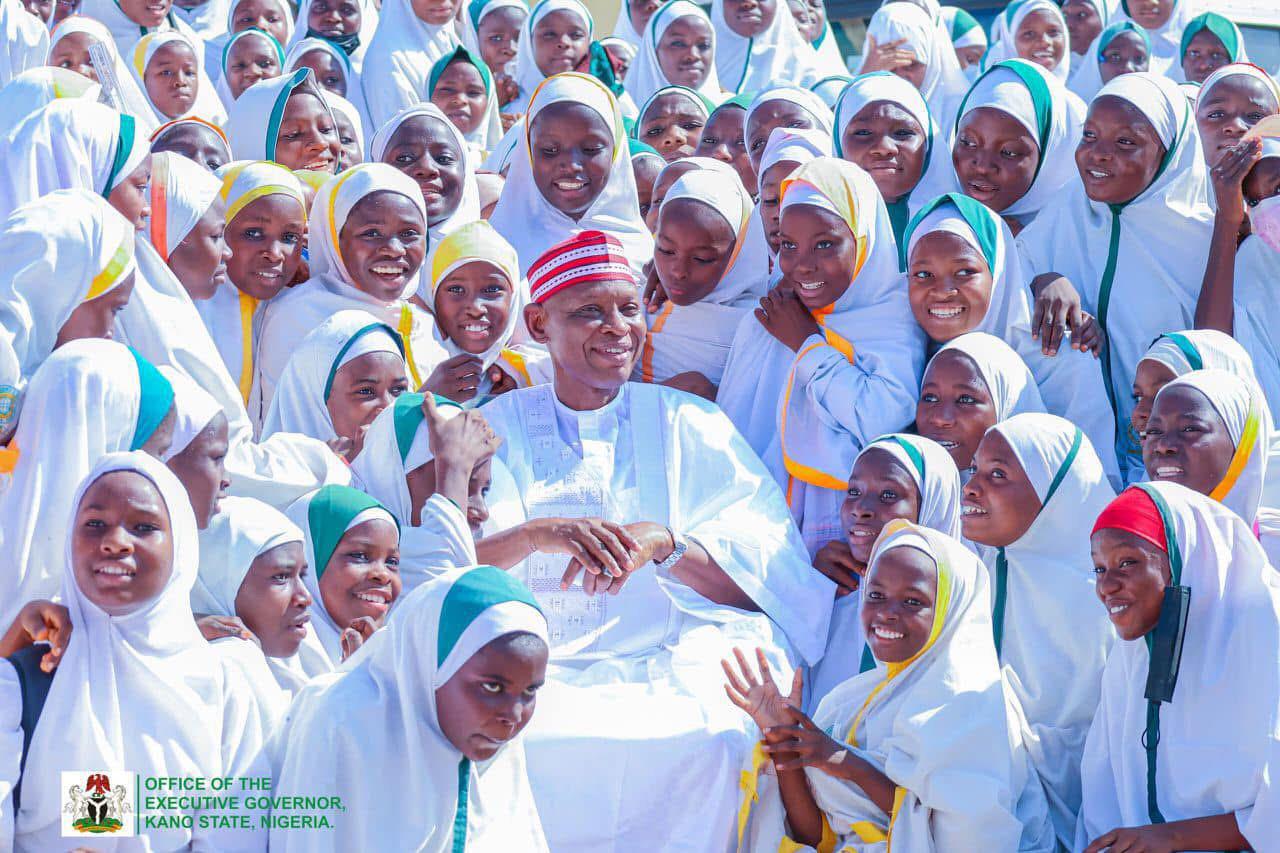
The Kano State Government has announced Saturday, March 1, 2026, as the commencement date for the Eid-el-Fitr break for all public and private primary and post-primary schools in the state.
KANO FOCUS reports that the announcement, contained in the approved 2025/2026 academic calendar, applies to both day and boarding schools across the state.
According to a statement issued by the Director of Public Enlightenment, Musbahu Aminu Yakasai, parents and guardians of pupils and students in boarding schools are expected to convey their wards home by the early hours of Friday, February 28, 2026.
The statement further explained that boarding school students are to resume on Sunday, March 22, 2026, while day students are to resume on Monday, March 23, 2026.
It added that the second term will continue from Sunday, March 22, 2026, and end on Saturday, April 18, 2026.
The government directed all public and private schools in the state to comply strictly with the directive, warning that non-compliance would be treated as a breach of government instructions.
The Commissioner for Education, Ali Haruna Abubakar Makoda, urged parents and guardians to ensure full compliance with the approved resumption dates.
He appreciated parents and residents of the state for their continued cooperation and support to the ministry, and wished pupils and students a successful completion of the Ramadan fast and hitch-free Sallah celebrations.

Kano business community thanks FG for N5bn Singer market relief

Kano Govt inaugurates 23-member committee to disburse Singer market fire relief

Kano Govt announces March 1 for schools’ Ramadan break

NCC board chair hosts licensed telecoms operators in Lagos

Stakeholders seek stronger nutrition financing at local government level

Lami Maccido, first person to appear on screens of NTA Kano, CTV 67, dies at 72

Governor Yusuf Appoints Acting DG for Pilgrims Board, Names Provost for Anti-Corruption Institute

Kano govt investigates reported disease outbreak in Garko community

K-SAFE appeals to Kano Executive Council to pass revised education bill

