
Opinion
Leadership question and the issue of Nigeria’s national unity


Tanko Yakasai OFR
In December 2016, a lecture was organised in Kano to celebrate my 90th birthday. By then, it was a practice to celebrate the annual events of my birthday with public lectures. But since 2016, due to the cumbersome nature of organising such events, the annual celebration was suspended.
Instructively, however, at the celebration of my 90th birthday, my namesake Salihu, whom I mentioned in my autobiography, pointed out a mistake regarding the year we were born. Salihu is older than me by 40 days. He said we were born during the reign of Emir of Kano, Usman Dan Majekarofi in 1925 and not during the reign of Emir Abdullahi Bayero. He revealed that not only his parents told him so but also his school record in Shahuchi elementary school, confirmed that. This revelation encouraged me to investigate further in order to find out how the mistake regarding my date of birth came about.
To this end, the year of my first marriage served as the starting point. As I recorded in my autobiography, I first got married in 1945 which was the year the Second World War ended. I know for a fact that I had my first marriage at the age of 20. Furthermore, I also know that l married on the same day with Sabo Dan Galadiman Tanagar. He was blessed with a child in early 1946 and his personal records corroborated my account regarding the day of our marriage. These facts confirmed to me that the year of my birth was 1925 and not 1926. With this confirmation, my birthday records have been corrected accordingly.
I am very thankful to Almighty Allah for giving me a rare opportunity to once again witness another circle of celebrating my birthday anniversary. Previously, guest speakers were invited to speak at the anniversary. This year, it is very difficult to organize such gatherings mainly due to the global pandemic of Covid-19, and the laid down protocols of social distancing. Therefore, I decided to use this year’s occasion to address burning national issues. Accordingly, I picked what I consider important national issues that kept eluding the country for decades. These issues have over the years generated endless and often misleading debates; two of which are constitutional amendments and national population census.

Yoruba’s claim of inadequacy of 1999 constitution is inaccurate
It may be recalled that on the 11th of September, 2020, the Yoruba Summit Group held a meeting in Lagos and undertook an in-depth review of the State of Nigeria in relation to the interests and aspirations of the Yoruba Nation. At the end of that meeting, they issued a communique in which they stated their positions on some national issues, such as Constitutional Amendment, Census, and the National Waterways Bill (the latter being currently debated at the National Assembly), among others. It is in the light of this that I wish to use this occasion to highlight several key facts which could shed some light on the issues raised in the communique, starting with the constitutional review, which is also currently ongoing at the National Assembly.
The Yoruba Summit Group called for the jettisoning of the 1999 Constitution which they called “fatally flawed” on the excuse that the Constitution was a product of a military decree with imbalances that can stunt the aspirations of many ethnic groups, especially the Southwest zone.
To address this issue, let’s delve briefly into our recent history, especially how the General Abdulsalam Abubakar’s regime came up with the 1999 constitution. We can recall that on coming to power, he set up a Constitutional Review Committee headed by late Honorable Justice Niki Tobi of the Supreme Court, who hailed from the South-South. The Committee, after touring the country stated in its report that based on the memorandums received, the majority of people in Nigeria were not in support of a full scale constitutional conference.The Committee, therefore, decided to limit its recommendation to matters relating to updating the 1979 Constitution in the following key areas:
a. Additional number of states which were 19 in 1979 to 36 in 1999;
b. The Federal Character, including the creation of Federal Character Commission; and
c. Matters related to increase in population, among other issues
However, after concluding its work, nothing major was amended, removed or added to the 1979 Constitution by the committee. After the promulgation of the amended constitution, Thisday Newspaper commissioned its 3 senior editorial staff to undertake a comparison between the two constitutions. At the end of the exercise, Simon Kolawale who was among the 3 editors, published a report which he tagged “This Thing Called 1999 Constitution.” He observed that his team conducted a page by page analysis of the two constitutions and concluded that, except for the items updated above, the 1979 and 1999 Constitutions are the same, almost line by line.
The main take home is that the current 1999 Constitution was an updated version of the 1979 constitution, which was drafted with the full participation of elected and nominated individuals representing different segments of the country. It also benefitted from the endorsement of our known national leaders of the major ethnic groups, regions and political opinions of the country, including:
a. Dr Nnamdi Azikwe of the NCNC in the First Republic and NPP leader in 1979;
b. Chief Obafemi Awolowo of the Action Group (AG) in the First Republic and UPN during Second Republic;
c. Malam Aminu Kano of the Northern Elements Progressive Union (NEPU) during the First Republic and PRP in 1979;
d. Comrade Waziri Ibrahim of NPC and Great Nigerian People Party (GNPP) in 1979.
e. Chief Joseph Tarka of UMBC of First Republic and NPN in 1979.
f. Chief Harold Dappa Bitiye and Chief Milford Okilo of Nigeria Delta Congress (NDC) of First Republic and NPN in 1979.
It is also interesting to note that these leaders who represented different geopolitical zones of the country endorsed the Constitution and virtually all of them contested elections under the 1979 Constitutions which was a product of military decree. Among our founding political fathers only Sir Abubakar Tafawa Balewa and Sir Ahmadu Bello the Sardauna of Sokoto who were not alive in 1979. Therefore, it is inaccurate for the Yoruba Summit Group to claim that the 1999 Constitution is “fatally flawed” on the ground that the Constitution was the product of military decree.
The second important issue of concern is the national population census. The Yoruba Summit Group and other people mainly from Southern Nigeria have disputed Nigeria’s national census figures. They obtrusively argued that the North was unduly favoured by the British in the conduct of national population census. On this too, let’s go down the memory lane, beginning with the first population census that was conducted in 1911, which predated the 1914 amalgamation. The first census conducted in Nigeria was in 1911. In that exercise, the British could not carry out the exercise across the two protectorates simultaneously due to lack of funds and logistical challenges. Therefore, they used the number of tax payers to determine the populations of the protectorates. The same method was applied in the 1921, and 1931 census exercises. In 1941 the census was not conducted due to the Second World War until 1952 and 1953. All these censuses conducted before the Independence, on the average, showed the North had 54% and the South had 46% of the total population.
For example, the total estimated population in 1911 was 18.72 million where the northern and Southern Provinces having 10 million and 8.16 million respectively. Futhermore, the 1921 census indicated a total of 10.26m for the North, which is 55.10%, while 8.37m for the South which represent 44.90% with a total figure of 18.63m. Similarly, in 1931 the total figure was 19.9 million; the North had 11.43 million and the South had 8.4 Million. In 1952 and 1953 when the first actual enumeration across the country was conducted, the total population was 31.1million. The North had 16.8million (54%) and the South 14.3million (46%) of the total population. It is important to note that the pre-independence censuses during the colonial era were initially for reasons of tax collection. The issues of revenue allocation and representation based on population was only introduced after independence. As such, the North had no basis or influence to tilt the percentage of their population in its favour. The colonial powers did not equally have any basis to favour the North in the census because in 1911 there was no entity called Nigeria.
After Independence, censuses were carried out in 1963, 1973, 1991 and then 2006. It is worth noting that the 1963 was eventually cancelled because of the dispute between the Eastern region and the Western regions, largely due to claim of irregularities made by the government of the eastern region in the discovery of some villages in the east which were not counted. This was objected to by the government of the western region. Eventually, the matter was resolved and another headcount was conducted in 1963 which was generally accepted and adopted.
Table 1: Summary of Population Census in Nigeria: 1911-2006
YEAR NORTH SOUTH
1911 55.00% 45.00%
1921 55.10% 44.90%
1931. 57.40 % 42.60%
1952 54.55% 45.45%
1962 56.77% 43.23%
1963 53.51% 46.49%
1973 64.99% 35.01%
1991 51.85% 48.15%
2006 53.59% 46.41%
Source: National Population Commission
Worthy of emphasis here is that during the pre-independence period, women in the North were not counted in the census exercises. This was because the headcount, at that time, was based on taxation, and northern women were not eligible tax payers, unlike their counterpart in the South who paid taxes and were therefore enumerated accordingly. Women taxation from the South led to the Onitsha women riot during 1953 census who felt that their numbers were unjustly increased as an excuse to pay more tax. It is therefore logical that the population of North, which consistently remain over 50% of the population prior to independence, would naturally increase when women were included in the post-independence censuses.
From the 1951 general election up to 1959, representation in government was introduced. The appointment of ministers were based on regional representation. At that period, the entire North had only 4 ministers, whereas the South had a total of 9; 4 from the west, 4 from the east and 1 from Southern Cameroons. It could therefore be argued that due to the non-inclusion of women in the census, the North was shortchanged on the appointment of ministers at the national level throughout the period of colonial administration.
Based on the above reality, it is clear that any claim by any group or individual that the North was being unduly favoured by the British on the issue of population is not supported by facts or history.
The third issue raised by the Yoruba Summit Group and others is the claim that Lagos and Kano have almost the same population but Lagos has 20 local governments while Kano has 44. Therefore they insisted that Kano was unduly favoured in the creation of local governments. In this regard, it is important to appreciate that local government creation was not based on population alone but it is also based on landmass as well. This is the reason why Kano with a landmass of 20,131 square kilometers has more local governments than Lagos which has just 3,345 square kilometers.
Arising from the above issues which continued to generate heated debates and ill-feeling, I’m very much concerned as an elder. What I found very disturbing is that such utterances are directed against the unity of our country. Such narratives resembled that of some political leaders way back in 1953 when a member of the defunct Action Group Party introduced a motion in the House of Representatives, asking Britain to grant independence to Nigeria by 1956. Another Northern member of the House proposed an amendment to the motion by changing 1956 to as soon as practicable. This was because as at 1953, the entire Northern Region, which had 75% of Nigeria’s landmass and about 55% of the country’s population, had only one graduate, Dr R.A.B Dikko. At the same time, the South had thousands of graduates from different fields of expertise including law, engineering, medicine, administration, social sciences, etc. with about 90% of the public services manpower in the North were made up of expatriates or Nigerians from the southern part of the country. Action Group leaders rejected the compromise proposed by the northern legislator in order to enable the north prepare itself for independence. This is because if Nigeria was granted independence by 1956, the North would be under the control of the civil servants from the South, a situation that will put the North under perpetual domination of the South, particularly people from the Western Region, which had the preponderance of the public servants at the time. Such a scenario would have been a perpetual source of tension which would not auger well for the future stability of the nation. That seems to be the origin of the hostility of some Action Group supporters against the North till date. It is my humble submission that the remnant of such predispositions should discouraged.
Recently, I read an online post of the number of billionaires in Nigeria with about 80% of them from the southern part of the country. Similarly, it is on record that the level of poverty index and unemployment are negligible in the South compared to the North which has over 65% of the Nigerian poor people. This has clearly demonstrated that our compatriots from the South benefited more from the Nigerian State than the north. Yet, the north never complains against this disparity even though many of the national endowments are located in the north.
Perhaps, the reason why northerners do not bother about the skewness in the national prosperity is their awareness that human resources and land are key important factors that make a nation great. So, with better education, social re-orientation, effective leadership and good governance, it is only a matter of time before they will catch up with their compatriots from the South. I recall that sixty years ago, when I visited the People’s Republic of China, the country was almost at the same level of development as Nigeria today. However, today China is next to the United States of America in terms of economic development and other areas of human endeavours.
Therefore, there is no gainsaying that Nigeria is endowed with human and material resources that can effectively be harnessed to bring faster growth and development for the benefit of all. Limited opportunity for growth and shrinking opportunities naturally fuel tension and decent. What we need are committed, competence and effective leaders to take the country to the Promised Land. To this end, only a strong political party equipped with vision, agenda for national development and effective process can provide the required leadership. It is therefore necessary to have credible and focused political parties that will be guided by their manifestos and will be willing to implement people’s oriented developmental programmes.
The Action Group was one of the parties that could have provided such a platform if it were able to convince Nigerians that it was for the welfare of every segment of the country. Unfortunately, the leaders of both Action Group and its successor, UPN mainly committed themselves to the interest of the Yoruba people, to the exclusion of the rest of the country. Prominent Northerners who joined the Action Group and UPN were given senior positions in the leadership of those parties but were shabbily treated and eventually they silently abandoned the parties. Such prominent northerners with such experiences include, Abba Maikwaru, Malam Ibrahim Imam, Hon. Muhammadu Basharu, Malam Jamo Funtua, J. S. Tarka, Chia Surma, Patrick Dokotri, Sen. Ibrahim Dimis, Jonah Assadugu, Malam Yabagi Bidda, Alh Maito of Ilorin, Sen Abaagu from Benue, Malam Maiyaqi from Southern Zaria, Malam Haruna Wakilin Doka from Sokoto, Mr Philip Maken from Ganye, Peter Gawon, senior brother of our former head of State, Gen. Yakubu Gowon and Malama Ladi ‘Yartakarda.
It is gladdening to note that today the remnant of Action Group and UPN leadership from Yoruba land are now part of our endangered species. There were many south westerners with total commitment to unity and progress of Nigeria in other political grouping such as the NCNC, NPN, and alike. Today, such southerners with national orientation are gradually evolving and must be encouraged.
While thanking Almighty God for his gift of life to us, it is incumbent on leaders and opinion holders to avoid engaging in divisive tendencies and explore avenues to ensure a peaceful, united and prosperous country. The North can and should encourage movement towards creating a better united Nigeria by reaching out to other regions and also demonstrating good governance and better capacity for managing the multiplicity and often conflicting national and regional interests. Indeed, the North must continue to search for people with the right vision, capacity and predisposition to represent the region in the national space while making concerted efforts to reduce the self-inflicted poverty and unemployment currently ravaging the region. By so doing, the South would clearly appreciate the strategic contribution of the North to national growth, stability and prosperity.
Thank you and God bless the Federal Republic of Nigeria.
Tanko Yakasai OFR, is Nigeria’s elder statesman based in Kano.



Opinion
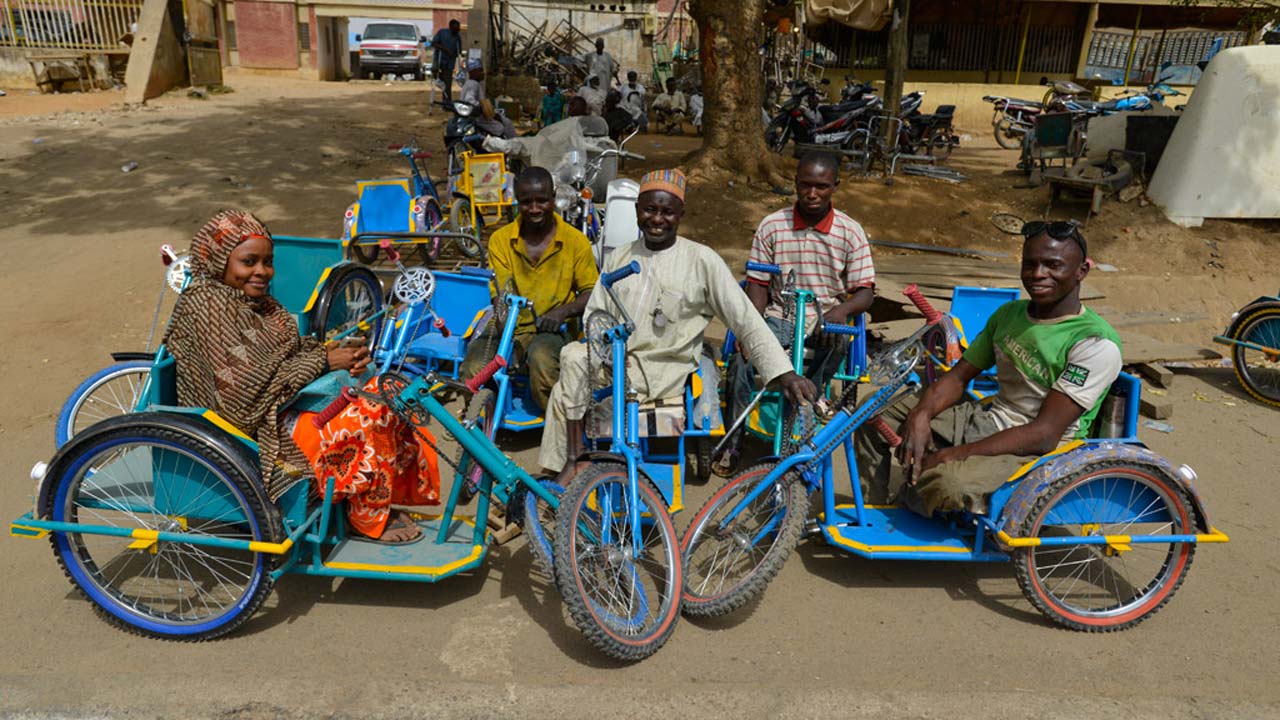
After two years of promises: What is holding back Kano’s Commission for Persons with Disabilities?
By Hannatu Suleiman Abba
During the review of the New Nigeria Peoples Party (NNPP) blueprint at Babale Suite—organised by the AMG Foundation—I vividly recall a series of engagements on the party’s commitment to establish a Commission for Persons with Disabilities if elected. At the event, the Director General of Media, Malam Sanusi Bature, who represented the NNPP gubernatorial candidate, Engr. Abba Kabir Yusuf, spoke clearly about this intention.
Following the election victory, expectations among persons with disabilities and their advocates were understandably high. The proposed commission was widely seen as a critical step toward advancing inclusion, protecting rights, and ensuring coordinated support for persons with disabilities across Kano State.
On December 28, 2023, a press release issued by the Director General of Media, Malam Sanusi Bature, announced that the Kano State Government was set to establish the Commission for Persons with Disabilities in 2024. The statement, conveyed through the governor’s deputy, Comrade Aminu Abdussalam Gwarzo, reaffirmed the administration’s commitment to improving the lives of persons with disabilities.
More than a year later, however, the commission is yet to be established.
In the meantime, the Commissioner for Women, Children and Special Needs, Hajiya Amina Abdullahi (HOD), has continued to carry persons with disabilities along in her ministry’s activities. Through the Director of Special Needs, Dr. Binta Bala, the ministry has promoted inclusivity and engagement. These efforts are commendable and reflect genuine goodwill.
Similarly, Governor Engr. Abba Kabir Yusuf has personally participated in several interventions supporting persons with disabilities—an effort I can attest to as a firsthand witness.
Yet, a critical question remains: can these interventions truly replace the role of a fully established Commission for Persons with Disabilities that serves all disability clusters?
The answer, quite clearly, is no.
A commission is not merely symbolic. It provides structure, continuity, accountability and institutional representation—elements that isolated interventions, no matter how well-intentioned, cannot sustainably guarantee. The absence of such a commission has left many persons with disabilities in Kano State facing persistent challenges, particularly in access to healthcare, education, entrepreneurship and broader social development.
The establishment of a Commission for Persons with Disabilities is essential to bridging existing gaps in government interventions and ensuring coordinated, equitable and inclusive support across all disability groups.
If Kano State successfully domesticates and operationalises this law, it would set a powerful precedent for other northern states—some of which are already making efforts, but lack a strong, unified model to emulate.
As an advocate for marginalised groups, I have held several discussions with key stakeholders, including Abdulrazak Ado Zango, on the transformative impact such a commission could have on the lives of persons with disabilities in Kano State. Beyond service delivery, a commission would serve as a formal platform for inclusion in policymaking and decision-making processes that directly affect persons with disabilities.
While the government’s efforts to give persons with disabilities a voice are sincerely appreciated, it must be emphasised that the establishment of the Commission for Persons with Disabilities remains the most effective, sustainable and institutional path toward meaningful change and full inclusion in Kano State.
Two years after the promise, the question still lingers: what is holding Kano back?
Hannatu Suleiman Abba is a humanitarian journalist and Founder of Beyond Inclusion Media. She can be reached via hannatusuleimanabba@gmail.com
If you’ve ever wondered where to experience the best online shopping in Nigeria, you’re not alone. The shift toward digital buying has transformed how Nigerians shop — from fashion and electronics to home appliances and groceries. One of the fastest-rising names leading this change is Nujora.ng, a trusted platform designed to make shopping easier, faster, and more rewarding for both buyers and local sellers.
Why Online Shopping Is Booming in Nigeria
Nigerians are increasingly turning to online shopping for convenience, better prices, and access to products that aren’t always available in local markets. The ease of browsing and comparing prices from your phone has made e-commerce part of everyday life.
With platforms like Nujora.ng, buyers can enjoy smooth transactions, quick delivery, and reliable customer support — all while supporting homegrown businesses.
Why Nujora.ng Is Your Go-To Online Marketplace
When it comes to the best online shopping experience in Nigeria, Nujora offers more than just a place to buy and sell. It’s a growing community marketplace built around trust, affordability, and local connection.
Here’s why shoppers love Nujora:
🛍️ Wide Range of Products: From fashion to electronics, beauty, and home essentials.
🚚 Fast Delivery: Items are delivered quickly from nearby vendors.
🤝 Trusted Sellers: Verified local sellers ensure genuine products.
💰 Affordable Deals: Competitive pricing with no hidden costs.
🌍 Support Local: Every purchase helps small Nigerian businesses grow.
Calling All Local Sellers – Join Nujora Today!
Are you a business owner, vendor, or artisan looking to grow your sales?
Nujora.ng is your opportunity to take your business online without the stress of building a website. Our mission is to empower local entrepreneurs to reach thousands of new customers easily.
Here’s what sellers get when they join:
A user-friendly dashboard to upload and manage products.
Direct access to nearby buyers.
Marketing and visibility support from Nujora’s team.
Secure transactions and fast payouts.
Join Nujora today — the future of online selling is local, and Nujora is here to make it happen.
Visit www.nujora.ng to start selling now.
Final Thoughts
The best online shopping in Nigeria isn’t just about convenience — it’s about connection. With Nujora.ng, buyers get quality and speed, while sellers gain exposure and growth. Together, we’re building a smarter, more inclusive marketplace that keeps commerce local and digital.
Start your journey today at www.nujora.ng — discover amazing deals, support local sellers, and experience Nigeria’s most convenient way to shop online.

Aliyu Isa Aliyu, Ph.D
During my time as the financial secretary of NNPP in Kano state and other political engagements, I saw clearly how many of the so-called fake Kwankwasiyya loyalists behaved. They always came with sweet promises, showing deep respect for Kwankwaso’s leadership and pretending to be his strongest disciples. They claimed they would defend the party’s ideology even with their lives. But the moment they got what they wanted, whether it was an election victory, recognition, or political favour, they slowly pulled away. Their loyalty was never to the Kwankwasiyya movement, but only to their own ambitions. Personally, I never regarded their loyalty, never praised them, and never wasted my time writing about them.
What surprised me most was Kwankwaso’s ability to take all of this without holding any grudges. Time and again, he welcomed them back whenever they were politically stranded. Instead of shutting them out, he gave them another chance, teaching us that leadership is not about revenge but about building bridges, even with those who once betrayed you. Many of us in the party leadership found it hard to understand this level of patience, but over time, I came to see it as part of what makes him a rare politician in Nigeria.
This same cycle has repeated itself in every election season. Politicians who abandoned kwankwasiyya the most critical times would always return in desperation, and Kwankwaso would open the doors again. For him, the bigger picture has always been the growth of the movement and the empowerment of the masses, not the small politics of exclusion. But from my own experience, I have seen both the strength and weakness of this approach. The strength is Kwankwaso’s unmatched generosity and forgiveness, but the weakness is the opportunism of those who treat leadership as a shortcut to power. In 2024, some of them worked tirelessly with all kinds of deceit just to secure tickets for their boys as local government chairmen, but thankfully Madugu Kwankwaso was firm and did not fall into their trap.
Now the time has come for our leader, Senator Kwankwaso, to reflect on his political generosity and take the right stand. It is better to lose an election with true loyalists than to win with those sabbatical politicians who only come for their selfish gains. Nobody can deny that they contributed to NNPP’s growth in Kano, but the truth is that the sacrifices Kwankwaso made for them are far greater than what they have done for him or the movement. Before their defection to NNPP in 2022, there were committed people already vying for those positions, but they were pleaded to step down and hand over the tickets for free. You cannot build a political movement with people who carry two faces. In politics, you are either here or there; there is no middle ground. Kwankwasiyya is not only about winning elections, it is also about discipline and sacrifice. We won clearly in 2019 before the election was declared inconclusive, and we still won in 2023 despite the odds. If Almighty Allah has destined our victory in 2027, no betrayal can stop it, no matter who leaves Kwankwasiyya.
– Aliyu Isa Aliyu, Ph.D

Kano education ministry holds workshop on inclusive, gender-sensitive learning

Tarauni LG chairman sponsors 622 students for free NCE education

Kano PHC Board sanctions staff after unscheduled visit to Burji facility

Kano Police recover three stolen vehicles, arrest five suspects

Dangote Cement Making Measurable Impacts In Benue Host Communities — FG

Kano SUBEB releases list of shortlisted candidates for teachers’ recruitment exam

Kwankwaso considers ADC Alliance with Atiku, Obi as opposition forces realign ahead of 2027

Delayed, Weaker Harmattan Signals Climate Change Impact Across Northern Nigeria – Anka

Gov. Yusuf Signs N1.47trn 2026 Budget into Law

