
News
On the Controversy in Kano and the Planned Public Debate

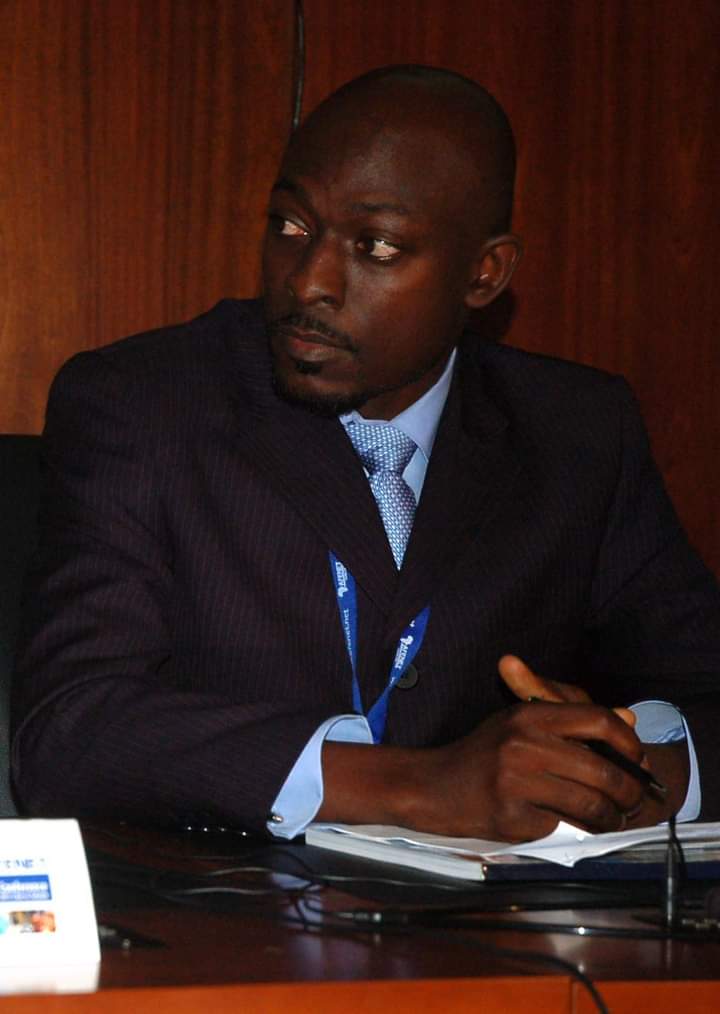
Muhammad Shakir Balogun
Hausa-speaking Muslims are looking forward to a debate coming up in Kano later this month. This ‘debate’ appears to be the latest iteration of the historical encounter that has pitched those who have raised objections to the validity of Sunni Prophetic traditions and the narrative integrity of the Companions of the Prophet against those who have upheld same.
The former includes orientalists, Shi’ites, Mu’tazilites and reformist/modernist Sunni Muslims while the latter are Orthodox Sunni scholars from both Salafi/Athari/Izala and Ash’ari/Sufi persuasions.
The trustworthiness of the ultimate transmitters of hadiths and the validity of the recorded traditions of the Prophet constitute the bone of contention. In Sunni Islam, since al-Shafi’i, authentic hadiths have been regarded as revealed truth just like the Qur’an, and with similar legislative powers. They are unimpeachable.
“There is absolutely nothing new about what Shaikh AbdulJabaar Nasir Kabara, the outspoken scion of the famous Kabara scholarly and Sufi dynasty of Kano, has been saying. He has articulated them in his books to which rebuttals have been penned by local scholars.”

The same arguments have been more eloquently articulated by orientalists like David Samuel Margoliouth, Ignaz Goldziher, Joseph Schacht, and GHA Joynboll; the Egyptians like Muhammad Taufiq Sidqi (of the ‘Qur’an only’ school), Mahmud Abu Rayyah, Ahmed Subhy Mansour, and Muhammad Abu Zayd; the Indians like Chiragh Ali, Aslam Jairajpuri, Abdullah Chakralawi who were mostly of the ‘Qur’an only’ school, and numerous scholars from the Shi’ite camp.
Muhammad Tawfiq Sidqi was engaged by Taha al-Bishri and Salih al-Yafi’i in a series of exchanges on the pages of al-Manar which culminated with his recanting. Prominent among those who have passionately written to defend the Sunnah, as enshrined in recorded hadiths, in modern times are the Syrian Mustafa Siba’i (he specifically incorporated a rebuttal to Abu Rayyah in his book) and Muhammad Ali Sabuni, and the Indian Muhammad Mustafa Azmi. These books are there for those who want to independently follow the arguments.
But can arguments, rebuttals and counter-rebuttals extensively articulated in numerous books be satisfactorily covered in public debates? How many hours or days have been earmarked for the debate? What is the possible outcome of an exchange in which the interlocutors differ fundamentally in methodology and hate each other’s guts?
Can a debate already poisoned by hot polemics and ad hominem attacks really lead anywhere?
Shaikh AbdulJabbaar has impugned the characters of people considered by Sunnis to be beyond reproach like the Companions of the Prophet such as Umar (the second caliph), Anas (the personal attendant of the Prophet), Abu Hurairah (the most prolific transmitter of Prophetic traditions). He has also attacked hadith luminaries like az-Zuhri, al-Bukhari, and Muslim.
He has pummeled Mu’awiyah, the first Omayyad caliph, whose historical legacy is mixed even by Orthodox Sunni accounts, but who is nonetheless counted among the Companions and given a pass.
These are people held in high regard by Sunni Muslims. He has described them as deceivers, hypocrites, and liars. He has also castigated the illustrious exponents of the Salafi methodology such as ibn Taimiyyah, ibnul Qayyim, adh-Dhahabi, ibn Kathir. This is a frontal attack. Ibn Hajar, the great exegete of al-Bukhari’s collection has also not been spared.
AbdulJabbaar has thrown spears at the very heart of Orthodox Islam. He has been boastful and confrontational, and frequently accuses his contemporary adversaries of insincerity, mendacity and ignorance.
“I have personally observed that his translations from Arabic texts are sometimes tendentious, less than faithful to the original. He even interpolates words in translation in order to make his point. This is probably part of what has infuriated the other scholars and made them to impugn his motives.”
Meanwhile, the other scholars have also gratuitously labelled AbdulJabbaar with negative terms like zindiqi (unbelieving heretic), mulhidi (atheist), kafiri (unbeliever), jahili (ignorant), mahaukaci (lunatic), wawa (stupid, foolish), dan iska (worthless), la’ananne/tsinanne (accursed). He has been discursively kicked out of the fold of Islam.
He has also been accused of plagiarizing the work of Mahmud Abu Rayyah in writing his own book while deceptively letting on that he has been conducting independent research. I have Abu Rayyah’s book, but alas I don’t have AbdulJabbaar’s text to compare.
He has been charged with insulting the Prophet, which to me seems a stretch, a long stretch, a part of the polemics borne out of mutual suspicion of evil motives. And he has stated several times that his object is to defend the sanctity of the Prophet that has, in his understanding, been subverted by some narrations. There seems to be an impasse here. They have indirectly instigated Muslims to attack him – many preachers and scholars have said that they would not stop the people from taking action against him.
Pious sentiments got whipped up. Some people even say that Kano was on the verge of exploding. They finally got the State Government to ban him from further public preaching and close his centre.
Because of his actual attack on some revered Companions and the perceived attack on the inviolate personality of the Prophet himself, his condemnation has been near universal. Even the former Emir of Kano, Muhammadu Sanusi II has lent his voice to the condemnation. I recall that he also chastised the Shi’ites in the aftermath of the 2015 Zaria Massacre.
Notably, it has been mainly, but by no means solely, Shi’ite preachers and scholars who have been bold enough to speak in his support. Many sympathisers have self-censured and kept mum.
AbdulJabbaar and his supporters feel that he has been unjustly treated and has not been given a fair hearing. I also think that he shouldn’t have been gagged. I think this public debate being organized by the government is an attempt to address this perception of unfairness.
So far, this exchange between AbdulJabbaar and his interlocutors, as seen in countless videos on Facebook and YouTube, has been acrimonious, polemical, and full of invectives in which the substantial arguments are often difficult to extricate.
Will this public debate change anything? Will he even cooperate to have a real debate? Who will be the judge? How will the ‘winner’ be decided? Will it matter to the followers of the two sides?
“AbdulJabbaar’s frequently expressed desire for a debate comes across as half-hearted. If his ‘debate’ with Alkassim Hotoro is anything to go by, I doubt if anything will come out of this one.”
In that much publicized debate, he surprisingly kept hedging and putting up caveats. He shirked from defending a book written with his own hand. He was less than brave. However, after the ban, he has reiterated his readiness for his views to be challenged and even disproved.
So, let’s wait and see.
This piece was first published on Mr Balogun Facebook timeline

Nasiru Yusuf Ibrahim
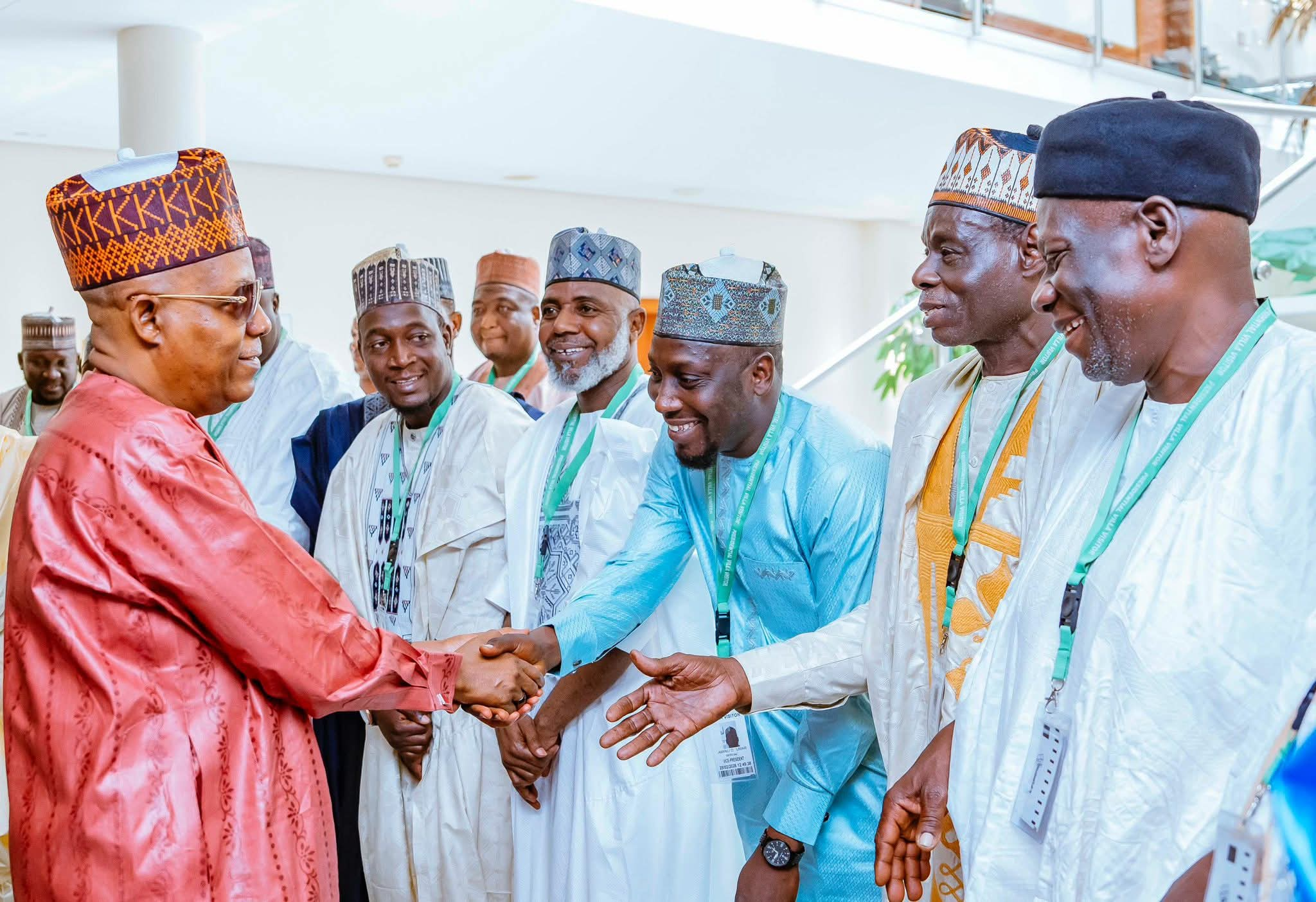
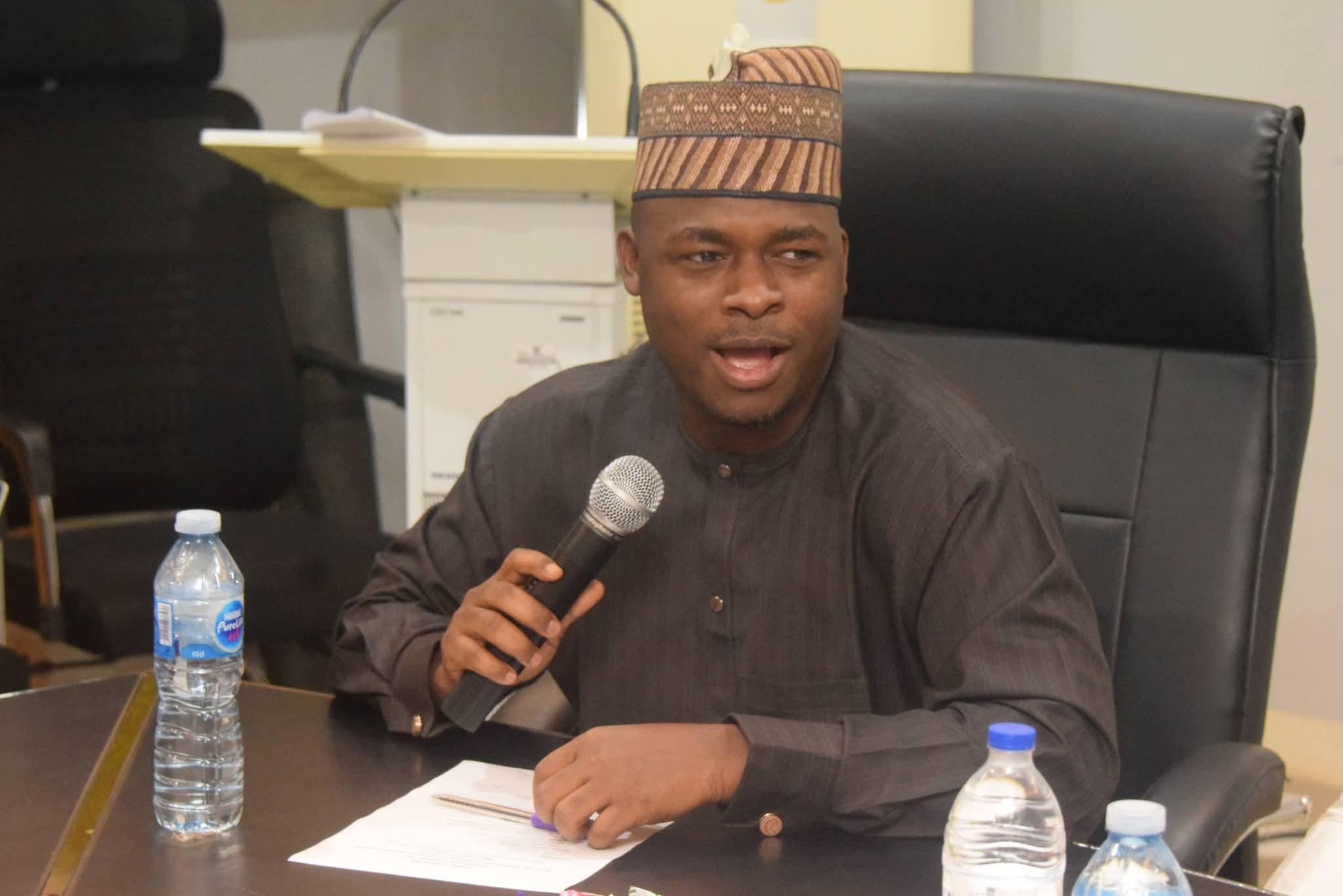
Nigeria’s Vice President, Kashim Shettima, on Tuesday received a delegation from the Association of Kano Business Community at the Presidential Villa, Abuja, during a thank-you visit to President Bola Ahmed Tinubu.
KANO FOCUS reports that the delegation expressed appreciation to the Federal Government for its support to traders and other victims affected by the recent fire incident that razed several sections of the popular Singer Market in Kano.
Speaking during the meeting, the Vice President reaffirmed the Federal Government’s commitment to collaborating with the Kano State Government and relevant agencies to prevent a recurrence of fire outbreaks in markets across the state.
He assured the delegation that President Tinubu has the interests of Kano people at heart, noting that the N5 billion approved as immediate relief for victims was based on the findings of a preliminary assessment of the damage caused by the inferno.
Shettima reiterated that the Federal Government would continue to support efforts aimed at restoring commercial activities and strengthening safety measures in markets to protect lives and property.
Nasiru Yusuf Ibrahim
The Kano State Government has inaugurated a 23-member committee to oversee the transparent and equitable distribution of financial assistance and relief materials to victims of the recent Singer Market fire disaster.
KANO FOCUS reports that the inauguration was carried out on behalf of the Secretary to the State Government, Umar Faruq Ibrahim, who chairs the committee. The event was presided over by the state Attorney-General and Commissioner for Justice, Abdulkarim Kabiru Maude.
According to the Attorney-General, the committee comprises representatives from key government agencies, security services, the Kano Emirate Council, religious leaders, and affected traders.
He said the panel’s mandate includes assessing the extent of losses, verifying genuine victims, ensuring timely distribution of support, and recommending measures to prevent future fire incidents.
The intervention follows support approved by President Bola Ahmed Tinubu, as well as contributions from the APC Governors Forum. It also comes in addition to earlier assistance provided by Governor Abba Kabir Yusuf and the Deputy Senate President, Barau I. Jibrin.
The state government reaffirmed its commitment to supporting victims of the disaster and restoring commercial activities at Singer Market.
Nasiru Yusuf Ibrahim
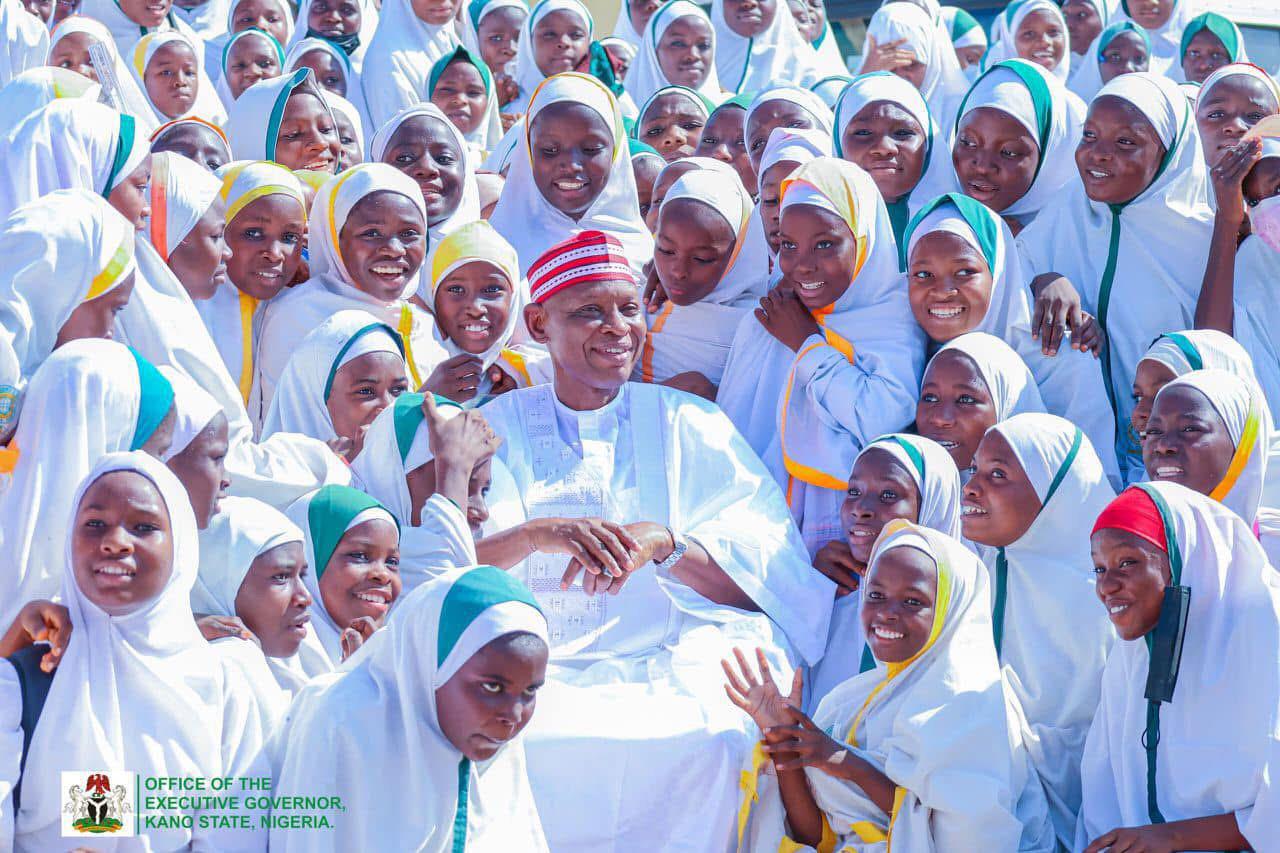
The Kano State Government has announced Saturday, March 1, 2026, as the commencement date for the Eid-el-Fitr break for all public and private primary and post-primary schools in the state.
KANO FOCUS reports that the announcement, contained in the approved 2025/2026 academic calendar, applies to both day and boarding schools across the state.
According to a statement issued by the Director of Public Enlightenment, Musbahu Aminu Yakasai, parents and guardians of pupils and students in boarding schools are expected to convey their wards home by the early hours of Friday, February 28, 2026.
The statement further explained that boarding school students are to resume on Sunday, March 22, 2026, while day students are to resume on Monday, March 23, 2026.
It added that the second term will continue from Sunday, March 22, 2026, and end on Saturday, April 18, 2026.
The government directed all public and private schools in the state to comply strictly with the directive, warning that non-compliance would be treated as a breach of government instructions.
The Commissioner for Education, Ali Haruna Abubakar Makoda, urged parents and guardians to ensure full compliance with the approved resumption dates.
He appreciated parents and residents of the state for their continued cooperation and support to the ministry, and wished pupils and students a successful completion of the Ramadan fast and hitch-free Sallah celebrations.

Kano business community thanks FG for N5bn Singer market relief

Kano Govt inaugurates 23-member committee to disburse Singer market fire relief

Kano Govt announces March 1 for schools’ Ramadan break

NCC board chair hosts licensed telecoms operators in Lagos

Stakeholders seek stronger nutrition financing at local government level

Lami Maccido, first person to appear on screens of NTA Kano, CTV 67, dies at 72

Governor Yusuf Appoints Acting DG for Pilgrims Board, Names Provost for Anti-Corruption Institute

Kano govt investigates reported disease outbreak in Garko community

K-SAFE appeals to Kano Executive Council to pass revised education bill

