
Opinion
[Friday Sermon] Russia-Ukraine Crisis In The Muslim’s Mirror


By Imam Murtadha Gusau
In the Name of Allah, the Most Merciful, the Bestower of Mercy
All praise is for Allah, we praise Him, we seek His help, we ask for His forgiveness, and we seek refuge with Allah from the evils of our own souls and the wickedness of our actions, whoever Allah guides, there is none that can lead him astray, and whoever Allah allows to go astray, there is none that can lead him to the right path.
I testify and bare witness that there is no deity worthy of worship in truth but Allah, alone, without any partners. And I testify and bare witness that Muhammad (Peace be upon him) is His Servant and Messenger.
As for what’s after:
Dear brothers and sisters! This is the Islamic position, from my perspective and understanding, that non-Ukrainian Muslims or Muslims Ummah should have regarding the Russian war against Ukraine:
1. Any global event is relevant to Muslims
Successful people are those who are constantly looking for opportunities to advance their success or to transform their situation into success. Muslims should be wise enough to analyse this situation in order to find any opportunity for their benefits—which are indeed also the benefits of humanity at large—whilst recognising and avoiding any harm for them and for humanity at large. Islam is the way of life that secures maximum benefit and deters maximum harm.
Muslims should feel sad and disturbed when seeing innocent people—Muslim or non-Muslim—killed or driven out of their homes anywhere in the world. Allah Almighty says in the Qur’an:
“Indeed, those who disbelieve and commit wrong [or injustice] – never will Allah forgive them, nor will He guide them to a path.” [Qur’an, 4: 168]
Indeed injustice is one of the major—if not the major—crimes in the sight of Allah the Most High.
2. Muslims are responsible for justice and injustice
Whilst watching these atrocities, Muslims should acknowledge that they are responsible towards any injustice that takes place in the world, as they are appointed by Allah Almighty to ensure that justice prevails on the planet.
Being the best of nations places a huge responsibility on their shoulders to ensure that justice, according to Divine guidance, is established anywhere in the world. Allah the Most High says:
“Thus, have We made of you an Ummah (nation) justly balanced that you will be witnesses over the people and the Messenger will be a witness over you…” [Qur’an, 2: 143]
“You are the best nation produced [as an example] for mankind. You enjoin what is right and forbid what is wrong and believe in Allah. If only the People of the Scripture had believed, it would have been better for them. Among them are believers, but most of them are defiantly disobedient.” [Qur’an, 3: 110]
In the last century or so, increasingly horrific injustices have been taking place as there is no Muslim superpower that has kept order in the world, acting as a bulwark against major injustices anywhere in the world.
3. A key doctrine in Islamic political philosophy
Only those who follow Divine guidance can form a powerful but humble and just nation, thus they are the only qualified nation to be a superpower. This is because they are the only people who believe that, regardless of whatever power they have, they are still controlled and accountable before another power that is superior to them: Allah.
As we are witnessing, any powerful nation that disbelieves in Allah will become arrogant, unjust, and bent on securing its own interests in spite of the damage done to others in the process. This is why western non-Muslims say that power breeds arrogance. Allah, the creator of everyone, knows this nature of human beings. He Almighty says:
“No! [But] indeed, man transgresses, because he sees himself self-sufficient.” [Qur’an, 96:6-7]
4. Everyone else has an agenda
Although scenes of war, bloodshed and destruction are horrifying, and we should certainly feel disturbed about innocent victims of such aggression, it is not our emotions but our thinking that should dictate long-term and holistic understanding, analysis and solutions for the situation.
It is highly unlikely that the duplicitous and murderous regimes in the West sympathise genuinely with Ukrainians from a purely humanitarian (or even values) perspective. If they did not gain more than they stood to lose then they would simply ignore Ukraine altogether—like the long list of countries suffering in the world, not to mention at the hands of their own allies.
Ukraine has been described as a back yard for many sordid activities by corrupted westerners, but the biggest gain for those pushing for western hegemony is to further weaken and eventually destroy their historical competitor, Russia.
5. What are the outcomes for Muslims?
There are three major powers in the world today: USA, China and Russia. Whilst Russia uses mainly its military power to influence other regions, and China mainly its economic power, the US uses both, but adds a third type of power which is more dangerous: ideological power.
If Russia wins this war, its power and influence would likely advance to more and more countries, including Muslim states formerly in the Soviet Union. This would likely be a threat against many Muslims in Central Asia and Turkey, not to mention being very bad for Muslims in Syria. On the other hand, it may also dent US and western hegemony, slackening the noose around the necks of hundreds of millions of others.
This could open doors for da’awah and other activities for Muslims in many places around the world, other than those under Russian hegemony. In fact, the US will likely repeat the Afghan-Soviet Union model from the cold war, by facilitating more space for Islamic da’awah to progress in certain areas as they know that this is the strongest and most effective way to control the advancement of Russia. It is unlikely that Muslims would face major ideological threats in such a case, since Russia is very weak in that regard.
However, if the US wins this war, then it may tighten its grip on the rest of the world, ramping up its ideological domination. Furthermore, it will also be ready to invade other countries in the world, reinforcing the uni-polar model of the globe. It will increase its support for Israel and other despotic regimes and we will see more injustice against many Muslims, besides the Palestinians.
In the case of a decisive victory for either side, the challenges for the Muslim Ummah are countless, and the da’awah will be very much controlled and limited almost all over the world; by Russian in areas under its hegemony, and by the US and the West in areas under their control.
6. Do not be a pawn in someone else’s chess game
I strongly advise all Muslims around the world not to take part in this war and to be careful not to be used by any side. As history has shown us again and again, Muslims will be used as cannon fodder and once they have served their purpose, they will be imprisoned or have their countries invaded, decimated, and bled dry.
Whilst we work diligently to strategically elevate our Ummah according to our context, time and place, we need to ask Allah, the Almighty and Majestic, to provide for this Ummah solutions for its problems, and to make the outcome of this war goodness for the Ummah of Muhammad (Peace be upon him), and the entirety of humanity.
Respected servants of Allah! It is said that someone’s true nature and beliefs come out when they are in crisis. During this ongoing Ukraine-Russia crisis, the political and media establishments in the UK, Europe and the West have been implicitly sharing what they believe about the collective status and worth of Muslims.
Your blood, lives, and honour is worth less to us than that of “civilised Europeans”, with “blonde hair and blue eyes.” Muslim resistance to foreign occupation and oppression (NATO/India/Israel/Russia) is deemed as “terrorism”, while the resistance of Ukrainians is lionised. The BBC celebrates the “brave” Ukrainian women making Molotov cocktail bombs, and the “heroic” Ukrainian soldier who blew himself up. Some may be perplexed why we didn’t see this lionising of the Kashmiris, Palestinians or Syrians, whose women and children continue to bravely resist with rocks and stones.
Your safety, security and salvation when escaping war and famine is important, but you will be treated worse than (some) animals.
While Ukrainian refugees are “welcomed with open arms”, in the same countries that water-hosed, beat and sniper-shot Syrian and Iraqi refugees, black West African students, workers and their families, as well as other “foreign” Muslims are now being blocked from leaving Ukraine, and being turned away at the Polish border. The Ukrainian police have literally threatened them at gunpoint telling them Ukrainians have first priority (many of these West Africans are Christians). Poland, Slovakia and other European countries made it clear in 2015 that they would only accept Christian refugees or migrants.
7. Your Jihad might be fashionable again (if it is saving non-Muslim lives)
There has been a lot of talk on LBC radio about “sending in the mujahidin” to Ukraine to fight Russia. Of course, the West loves the “mujahidin” as cannon fodder for their foreign policy and hegemonic geopolitical interests. But it will hunt down the same mujahidin like animals, along with their families and neighbourhoods, with drones and air strikes when they have served their purpose.
8. Your politics are not welcome in mainstream sports
Should you raise awareness about the plight of the Palestinians (Celtic FC, Moeen Ali) or the Uyghurs (Mesut Ozil) in mainstream sports, be prepared to be penalised or lose sponsorship deals, because we have to “keep politics out of sports.” Unless, of course, it’s a white, non-Muslim European country involved, in which case you’ll have entire teams dabbling in politics by boycotting (Poland, Sweden and Czech Republic have refused to play against Russia). In fact, the sports authorities will even get involved in politics (UEFA Champions League final is being moved to Paris), and an owner of a team (Roman Abramovich) is effectively being kicked out of the country. Showing solidarity with Ukraine is of course a minimum, with Man City and Everton players waving and wearing flags before kick-off.
9. Helping your oppressed could cost you your citizenship
We are often criminalised when we travel to help the oppressed in places like Syria, Palestine and Libya. Whether it is taking up arms to protect people or even simply delivering life-saving aid, countless Muslims have lost their citizenship for having the audacity to empathise with the wrong type of people. But just recently the UK’s foreign minister, Liz Truss, said she “absolutely supports individual Brits travelling to fight in Ukraine.”
10. Invading your countries is justified
When Muslim countries like Afghanistan, Iraq, Syria, Palestine, Mali, Somalia, Yemen (the list goes on) are transgressed upon by the West, Russia or their regional proxies, it is either to “bring democracy”, “fight terrorism”, or to “bring peace.” It is never an “invasion” or “occupation.” Even an excuse as outrageous as “because God gave us this land” is still effectively accepted in public discourse about Palestine.
11. Your global political ambitions are extreme
This entire Ukraine-Russia saga has much to do with the former being pushed to become more integrated into the West (NATO, and to a lesser degree the EU). All of the punditry in the western mainstream media, be it from politicians, academics, activists, journalists, or ordinary folks interviewed in the streets, has been about a “unified West” that has “shared beliefs, values and culture” of “freedom and democracy.” We have seen how NATO mobilised its armoury and troops in Poland, Latvia and elsewhere to protect this European/Western bloc.
However, Islamic activists and revivalist movements are labelled “non-violent extremists” and criminalised by western states for wanting a similar type of political unity, based on “shared beliefs, values and culture” of their respective regions. That is because it would be too much of a risk for the West’s geopolitical and hegemonic interests in the Muslim-majority world, and their puppet despots in those countries will ensure such aspirations will be met with brutal persecution. So we are only permitted to make do with useless puppets like the OIC and the Arab League.
12. Where do we go from here?
The disproportionate and selective outpouring of (rightful) sympathy, outrage and solidarity with Ukrainians shown by the entire Western world makes you wonder: what is our actual worth and status as religious or ethnic minorities in a hemisphere whose elites send us the above messages whilst consistently claiming to champion “equality”, “liberty” and “freedom” at home and abroad?
Despite the hypocrisy and double standards towards our people, plight and values, we are not depressed but empowered to make change. Muslims, by their nature and values, build and produce civilisations. Our role is to contribute and make positive change wherever we are. As such, we will continue to convey the message of Islam, and continue to highlight and speak out against injustices and oppression that we see—whoever commits it, unlike those who only do so when it suits their interests.
At the same time, our beloved Prophet (Peace be upon him) warned us that we are not bitten from the same hole twice. We are not sleepwalking; we are wary of the double standards and hypocrisy of some of our elites. But we are also wary of our immense latent power to make change and steer society towards a better direction, and we will continue to do so even if we face challenges and hatred, by the permission of Allah.
May Allah Almighty rectify the Muslims and make them proud and pleased with what Allah and his Messenger legislated for them in all aspects of live.
Allah surely knows best and he is the Lords of the universe and May his peace and blessing be on his Messenger, his family, his companions and those who follow them.
I ask Allah, the Most High to grant us success and enable us to be correct in what we say and write, ameen.
Murtadha Muhammad Gusau is the Chief Imam of Nagazi-Uvete Jumu’ah and the late Alhaji Abdur-Rahman Okene’s Mosques, Okene, Kogi State, Nigeria. He can be reached via: gusauimam@gmail.com or +2348038289761.
This Jumu’ah Khutbah (Friday sermon) was prepared for delivery today, Friday, Sha’aban 15, 1443 A.H. (March 18, 2022).
Opinion
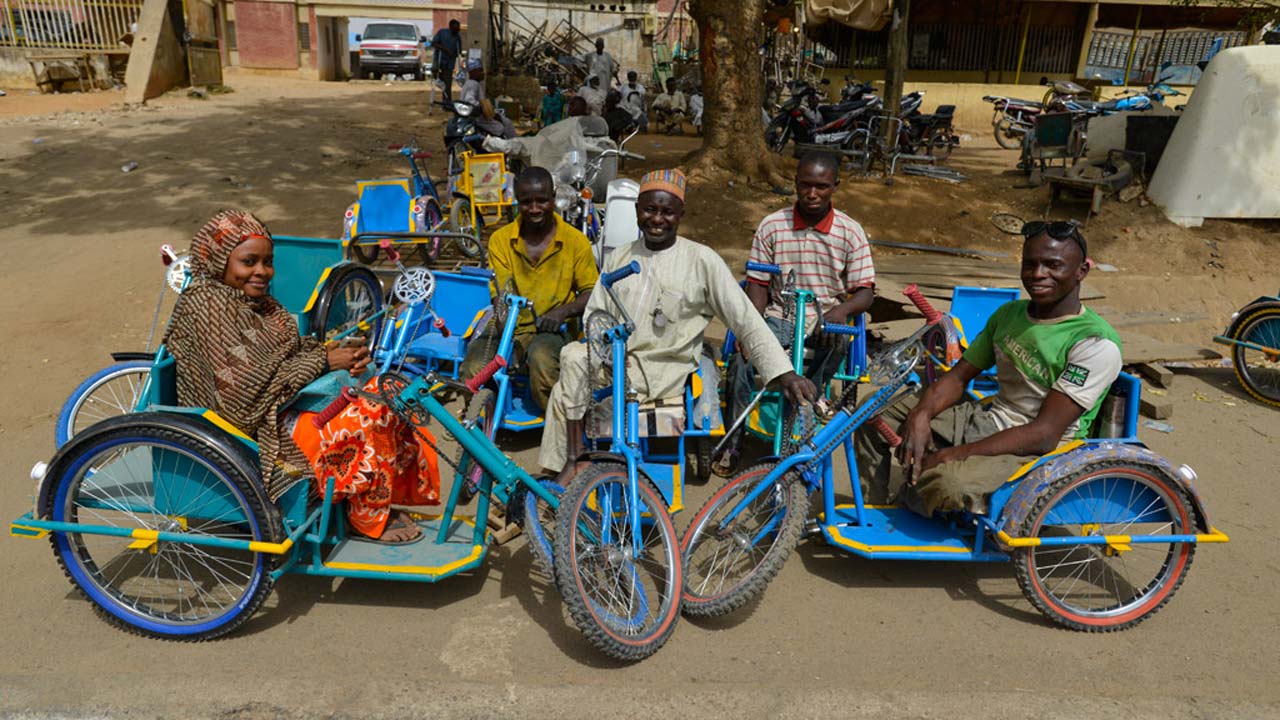
After two years of promises: What is holding back Kano’s Commission for Persons with Disabilities?
By Hannatu Suleiman Abba
During the review of the New Nigeria Peoples Party (NNPP) blueprint at Babale Suite—organised by the AMG Foundation—I vividly recall a series of engagements on the party’s commitment to establish a Commission for Persons with Disabilities if elected. At the event, the Director General of Media, Malam Sanusi Bature, who represented the NNPP gubernatorial candidate, Engr. Abba Kabir Yusuf, spoke clearly about this intention.
Following the election victory, expectations among persons with disabilities and their advocates were understandably high. The proposed commission was widely seen as a critical step toward advancing inclusion, protecting rights, and ensuring coordinated support for persons with disabilities across Kano State.
On December 28, 2023, a press release issued by the Director General of Media, Malam Sanusi Bature, announced that the Kano State Government was set to establish the Commission for Persons with Disabilities in 2024. The statement, conveyed through the governor’s deputy, Comrade Aminu Abdussalam Gwarzo, reaffirmed the administration’s commitment to improving the lives of persons with disabilities.
More than a year later, however, the commission is yet to be established.
In the meantime, the Commissioner for Women, Children and Special Needs, Hajiya Amina Abdullahi (HOD), has continued to carry persons with disabilities along in her ministry’s activities. Through the Director of Special Needs, Dr. Binta Bala, the ministry has promoted inclusivity and engagement. These efforts are commendable and reflect genuine goodwill.
Similarly, Governor Engr. Abba Kabir Yusuf has personally participated in several interventions supporting persons with disabilities—an effort I can attest to as a firsthand witness.
Yet, a critical question remains: can these interventions truly replace the role of a fully established Commission for Persons with Disabilities that serves all disability clusters?
The answer, quite clearly, is no.
A commission is not merely symbolic. It provides structure, continuity, accountability and institutional representation—elements that isolated interventions, no matter how well-intentioned, cannot sustainably guarantee. The absence of such a commission has left many persons with disabilities in Kano State facing persistent challenges, particularly in access to healthcare, education, entrepreneurship and broader social development.
The establishment of a Commission for Persons with Disabilities is essential to bridging existing gaps in government interventions and ensuring coordinated, equitable and inclusive support across all disability groups.
If Kano State successfully domesticates and operationalises this law, it would set a powerful precedent for other northern states—some of which are already making efforts, but lack a strong, unified model to emulate.
As an advocate for marginalised groups, I have held several discussions with key stakeholders, including Abdulrazak Ado Zango, on the transformative impact such a commission could have on the lives of persons with disabilities in Kano State. Beyond service delivery, a commission would serve as a formal platform for inclusion in policymaking and decision-making processes that directly affect persons with disabilities.
While the government’s efforts to give persons with disabilities a voice are sincerely appreciated, it must be emphasised that the establishment of the Commission for Persons with Disabilities remains the most effective, sustainable and institutional path toward meaningful change and full inclusion in Kano State.
Two years after the promise, the question still lingers: what is holding Kano back?
Hannatu Suleiman Abba is a humanitarian journalist and Founder of Beyond Inclusion Media. She can be reached via hannatusuleimanabba@gmail.com
If you’ve ever wondered where to experience the best online shopping in Nigeria, you’re not alone. The shift toward digital buying has transformed how Nigerians shop — from fashion and electronics to home appliances and groceries. One of the fastest-rising names leading this change is Nujora.ng, a trusted platform designed to make shopping easier, faster, and more rewarding for both buyers and local sellers.
Why Online Shopping Is Booming in Nigeria
Nigerians are increasingly turning to online shopping for convenience, better prices, and access to products that aren’t always available in local markets. The ease of browsing and comparing prices from your phone has made e-commerce part of everyday life.
With platforms like Nujora.ng, buyers can enjoy smooth transactions, quick delivery, and reliable customer support — all while supporting homegrown businesses.
Why Nujora.ng Is Your Go-To Online Marketplace
When it comes to the best online shopping experience in Nigeria, Nujora offers more than just a place to buy and sell. It’s a growing community marketplace built around trust, affordability, and local connection.
Here’s why shoppers love Nujora:
🛍️ Wide Range of Products: From fashion to electronics, beauty, and home essentials.
🚚 Fast Delivery: Items are delivered quickly from nearby vendors.
🤝 Trusted Sellers: Verified local sellers ensure genuine products.
💰 Affordable Deals: Competitive pricing with no hidden costs.
🌍 Support Local: Every purchase helps small Nigerian businesses grow.
Calling All Local Sellers – Join Nujora Today!
Are you a business owner, vendor, or artisan looking to grow your sales?
Nujora.ng is your opportunity to take your business online without the stress of building a website. Our mission is to empower local entrepreneurs to reach thousands of new customers easily.
Here’s what sellers get when they join:
A user-friendly dashboard to upload and manage products.
Direct access to nearby buyers.
Marketing and visibility support from Nujora’s team.
Secure transactions and fast payouts.
Join Nujora today — the future of online selling is local, and Nujora is here to make it happen.
Visit www.nujora.ng to start selling now.
Final Thoughts
The best online shopping in Nigeria isn’t just about convenience — it’s about connection. With Nujora.ng, buyers get quality and speed, while sellers gain exposure and growth. Together, we’re building a smarter, more inclusive marketplace that keeps commerce local and digital.
Start your journey today at www.nujora.ng — discover amazing deals, support local sellers, and experience Nigeria’s most convenient way to shop online.

Aliyu Isa Aliyu, Ph.D
During my time as the financial secretary of NNPP in Kano state and other political engagements, I saw clearly how many of the so-called fake Kwankwasiyya loyalists behaved. They always came with sweet promises, showing deep respect for Kwankwaso’s leadership and pretending to be his strongest disciples. They claimed they would defend the party’s ideology even with their lives. But the moment they got what they wanted, whether it was an election victory, recognition, or political favour, they slowly pulled away. Their loyalty was never to the Kwankwasiyya movement, but only to their own ambitions. Personally, I never regarded their loyalty, never praised them, and never wasted my time writing about them.
What surprised me most was Kwankwaso’s ability to take all of this without holding any grudges. Time and again, he welcomed them back whenever they were politically stranded. Instead of shutting them out, he gave them another chance, teaching us that leadership is not about revenge but about building bridges, even with those who once betrayed you. Many of us in the party leadership found it hard to understand this level of patience, but over time, I came to see it as part of what makes him a rare politician in Nigeria.
This same cycle has repeated itself in every election season. Politicians who abandoned kwankwasiyya the most critical times would always return in desperation, and Kwankwaso would open the doors again. For him, the bigger picture has always been the growth of the movement and the empowerment of the masses, not the small politics of exclusion. But from my own experience, I have seen both the strength and weakness of this approach. The strength is Kwankwaso’s unmatched generosity and forgiveness, but the weakness is the opportunism of those who treat leadership as a shortcut to power. In 2024, some of them worked tirelessly with all kinds of deceit just to secure tickets for their boys as local government chairmen, but thankfully Madugu Kwankwaso was firm and did not fall into their trap.
Now the time has come for our leader, Senator Kwankwaso, to reflect on his political generosity and take the right stand. It is better to lose an election with true loyalists than to win with those sabbatical politicians who only come for their selfish gains. Nobody can deny that they contributed to NNPP’s growth in Kano, but the truth is that the sacrifices Kwankwaso made for them are far greater than what they have done for him or the movement. Before their defection to NNPP in 2022, there were committed people already vying for those positions, but they were pleaded to step down and hand over the tickets for free. You cannot build a political movement with people who carry two faces. In politics, you are either here or there; there is no middle ground. Kwankwasiyya is not only about winning elections, it is also about discipline and sacrifice. We won clearly in 2019 before the election was declared inconclusive, and we still won in 2023 despite the odds. If Almighty Allah has destined our victory in 2027, no betrayal can stop it, no matter who leaves Kwankwasiyya.
– Aliyu Isa Aliyu, Ph.D

SUBEB, PLANE train teachers to boost English language learning in Kano primary schools

Waiya tasks LG information officers on enhanced public enlightenment ahead of 2026

Achaba ban: Police impound 172 motorcycles, tricycles in Kano

Kano education ministry holds workshop on inclusive, gender-sensitive learning

Tarauni LG chairman sponsors 622 students for free NCE education

Kano SUBEB releases list of shortlisted candidates for teachers’ recruitment exam

Delayed, Weaker Harmattan Signals Climate Change Impact Across Northern Nigeria – Anka

Kwankwaso considers ADC Alliance with Atiku, Obi as opposition forces realign ahead of 2027

Gov. Yusuf Signs N1.47trn 2026 Budget into Law

