
News
Dangote refinery, fertilizer plant will ensure energy, food security – Minister


Nasiru Yusuf
The Minister of Information and Culture, Alhaji Lai Mohammed, has said the coming on stream of the Dangote Petroleum Refinery and Petrochemicals as well as the Dangote Fertilizer Plant will help to ensure energy and food security in the country.
KANO FOCUS reports that the Minister made the remarks in Lagos on Sunday while touring the sprawling complexes of the refinery and the fertilizer plant in Ibeju-Lekki, according to a statement issued by Segun Adeyemi Special Assistant to the President (Media) office of the Minister of Information and Culture.
“We must not fail to appreciate the fact that it’s not just that we will be self-sufficient in terms of food security and energy security, but the quality of our refined products and fertilizer will be world-class,’’ he said.
Alhaji Mohammed, who was accompanied by 25 journalists, said while the refinery will ensure the availability of the highest quality Euro V Grade petroleum products, the fertilizer plant is producing granulated urea, which is of the highest quality and which does not become sticky and cause loss of value to the farmers.

He said the 650,000 barrels per day Dangote Refinery, which is expected to be commissioned this year, will be a game changer in terms of employment generation, contribution to the GDP and conservation of foreign exchange.
“Gentlemen, based on what we have heard here today with regards to the 650,000 barrels per day Dangote Refinery, it would be a game changer once it comes on stream in terms of employment generation. The refinery as of today employs 35,000 people everyday.
“There will be huge value addition that will contribute to the increase in GDP, conservation of foreign exchange as there will be no more importation of petroleum products, generation of foreign exchange through export of finished product, availability of petroleum products thus ending petrol queues, and attraction of foreign capital investments,” the Minister said.
He said the Dangote Fertilizer Plant, which was commissioned by President Muhammadu Buhari last month, has made Nigeria the leading producer of urea in Africa.
“With the coming on stream of the Dangote Fertilizer Plant, Nigeria is now self-sufficient in the production of urea. In fact, Nigeria is now the leading producer of urea in Africa. The Dangote Fertilizer plant is already exporting to the US, India, Brazil, Mexico and Argentina.
We were fortunate to witness a ship being loaded with urea for export to Argentina during our visit today,” Alhaji Mohammed said..
He said currently the fertilizer plant provides 1,500 direct jobs and 15,000 indirect jobs.
The Minister, who commended the President of Dangote Group, Alhaji Aliko Dangote, for boosting investor confidence in Nigeria, said the
Federal Government will continue to create the enabling environment for businesses to thrive.
“Under this Administration, the Presidential Enabling Business Environment Council (PEBEC) has implemented over 150 reforms, moving Nigeria up 39 places on the World Bank Doing Business index since 2016. Mr. President also signed the Companies and Allied Matters Act, 2020 (CAMA 2020) – Nigeria’s most significant business legislation in three decades.
“The result of this favourable business environment is the birth of new businesses such as the $2.5 billion Dangote Fertilizer Plant that will produce 3 million metric tonnes of urea every year; the 650,000 barrels per day oil refinery due to open later this year; Lekki Deep Sea Port, one of the most modern sea ports in West Africa; BUA’s 3 million metric tonnes cement plant; the 5,000 barrels per day Modular Refinery in Ibigwe, Imo State, and three more modular refineries to be commissioned before May 2023 in Edo and Bayelsa states, just to mention a few,” he said.
The Executive Director, Strategy Capital Projects and Portfolio Development, Dangote Group, Mr. Devakumar Edwin, who conducted the Minister round the two complexes, said 75% hydraulic testing of the refinery as well as 70% of electrical cable fitting have been completed preparatory to the completion of the refinery in the fourth quarter of this year.
He said the refinery, which boasts of 4.742 billion litres storage capacity, will serve as a strategic reserve for the country.
Mr. Edwin said 75% of the products of the refinery (petrol, kerosene, aviation fuel and diesel) will be dispatched through the sea, by which products could be transported to Calabar, Warri, Lagos and Port Harcourt.
The refinery is being built at a cost of $19 billion while the fertilizer plant costs $2.5 Billion.

Nasiru Yusuf Ibrahim
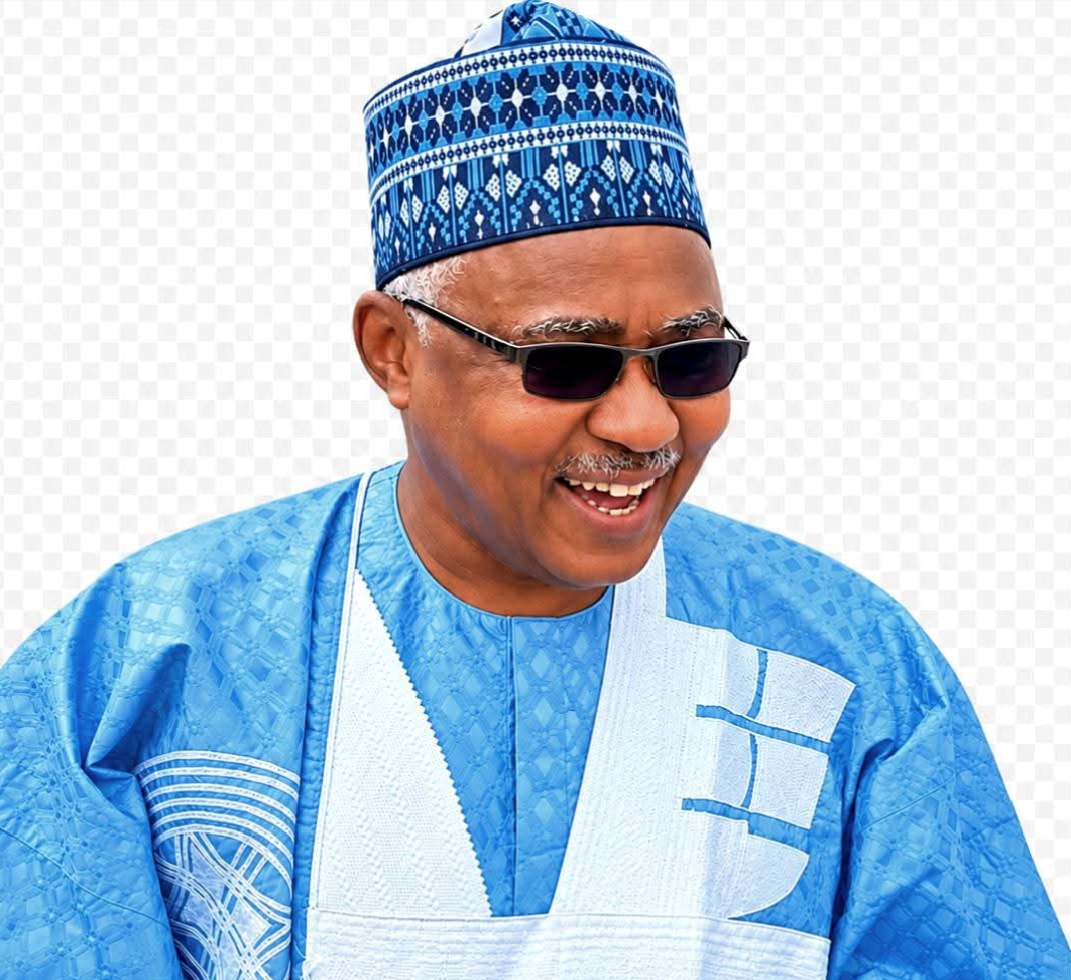
Political allies and loyalists of former Managing Director of the Nigerian Ports Authority (NPA), Arc Aminu Dabo, have begun resigning from the All Progressives Congress (APC) in Kano State following his withdrawal from the ruling party.
KANO FOCUS reports that the supporters, operating under the political group Dabo Alheri Ne, reportedly include members across Kano State’s 44 local government areas.
Barely two days after Dabo announced his resignation from the APC, a prominent stakeholder of the group, Garba Zakiru Dambatta, said members had welcomed the decision and were showing solidarity by submitting their resignation letters to their respective ward party chairmen.
Dambatta, a former APC chairman in Dambatta Local Government Area, said the group’s members were disappointed with what they described as the prolonged marginalisation of Mr Dabo and his supporters within the party.
According to him, despite Mr Dabo’s contributions to the APC and efforts to strengthen the party and manage disagreements among its members, some key stakeholders had continued to sideline him and his loyalists in party activities.
Dambatta reaffirmed the group’s commitment to standing by Mr Dabo’s political decisions and supporting his future political journey.
He also urged the former NPA managing director not to succumb to political pressure or reverse his decision to leave the party.
“This step you have taken, we have the conviction that it is the beginning of a new chapter of goodness in your life,” Dambatta said.
Among the prominent members of the group identified as supporting Mr Dabo’s decision are Abba Rabee’u, a former Senior Special Assistant on Political Awareness; Almustapha Jilani Danmalam, a former Senior Special Assistant on Education; Jamilu Abdullahi Zangon-Mata, a former Senior Special Assistant on Entrepreneurship; and Fahd A. Dabo, a former Special Assistant on Youth Mobilisation.
The individuals reportedly served during the second term of former Kano State Governor Abdullahi Umar Ganduje.
The group also said several other party loyalists and supporters were backing Dabo following his resignation.
However, the statement did not provide the number of members who had formally resigned from the APC or indicate whether the party leadership had responded to the development.

Nasiru Yusuf Ibrahim
Five players of Kano Pillars Amputee Football Club have been invited to the national camp of Nigeria’s Special Super Eagles ahead of the 2026 Amputee Football World Cup in Mexico.
KANO FOCUS reports that invited players are Isah Yusuf, Abba Musa, Habu Friday, Emanuel Betel and Usman Ahmed. They are currently in Abuja with the national team as preparations intensify for the global tournament.
The Team Manager of Kano Pillars Amputee Football Team, Jamilu Uba Adamu, disclosed this in an interview with Ashiru Rabiu Gidan Tudu, Information Officer of the Kano State Sports Commission.
Adamu described the invitation as recognition of the players’ dedication, discipline and outstanding performances.
He expressed confidence that the players would represent Kano State and Nigeria with honour at the championship.
According to him, the call-up also demonstrates Kano Pillars’ commitment to nurturing talented amputee footballers and contributing to the development of the sport in Nigeria.
The 2026 Amputee Football World Cup is scheduled to take place from November 13 to 22 in San Juan de los Lagos, Mexico. A total of 24 countries, including seven African nations, are expected to participate.
The Executive Chairman of the Kano State Sports Commission, Muhammad Tukur Babangida, congratulated the five players on their invitation, describing it as well deserved.
Babangida expressed confidence that they would justify the confidence reposed in them by the national team selectors.
He assured the players of the commission’s continued support and urged them to remain focused, disciplined and committed to making Kano State and Nigeria proud on the international stage.
Nasiru Yusuf Ibrahim
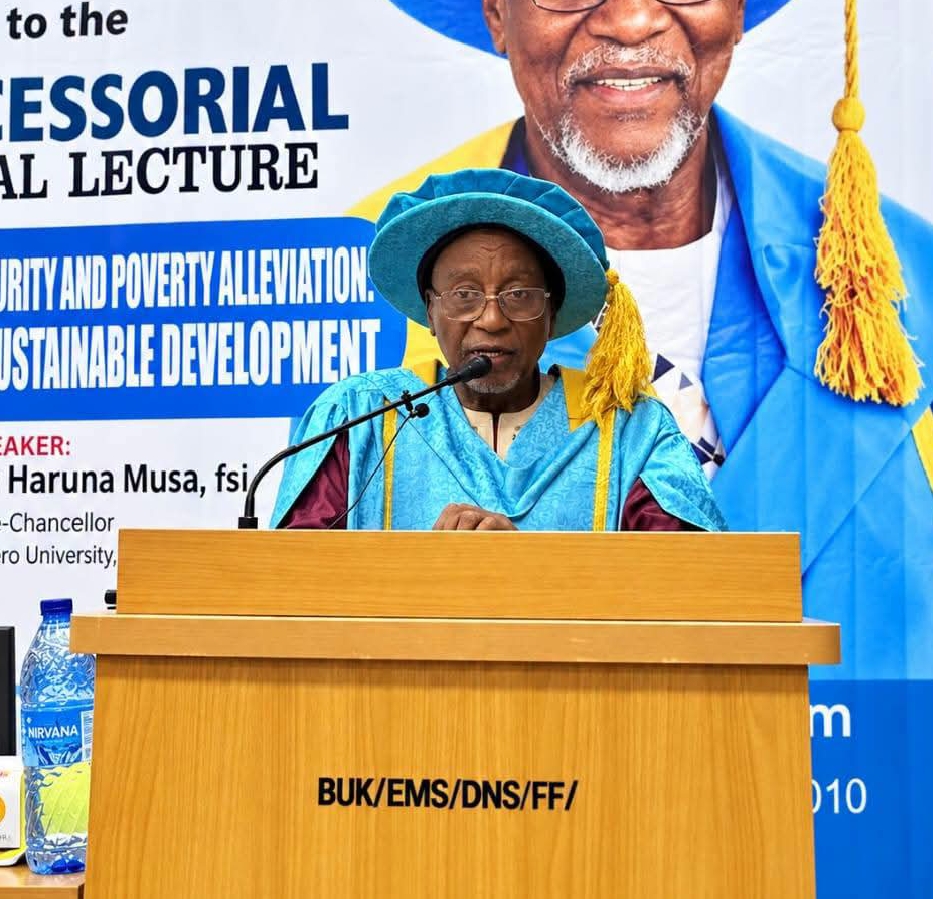
Professor Muhammad Ahmad Makarfi of Bayero University, Kano (BUK), has identified inclusive microfinance as a critical tool for addressing food insecurity and poverty in Nigeria.
KANO FOCUS reports that Prof. Makarfi, of the Department of Agricultural Economics and Extension, made the recommendation while delivering the university’s 64th Professorial Inaugural Lecture on Thursday, October 14, 2026, at the CBN Centre of Excellence.
The lecture, titled *“Innovative Options for Nigeria’s Food Security and Poverty Alleviation: The Microfinance Pathway to Sustainable Development,”* examined how improved access to affordable financing could boost agricultural production and strengthen rural livelihoods.
The professor said that despite Nigeria’s vast agricultural resources, food production and rural livelihoods continued to face challenges, including limited access to affordable finance, insecurity, climate change, inadequate infrastructure and low agricultural productivity.
He argued that expanding access to agricultural finance, particularly for smallholder farmers, would encourage investment, improve productivity and strengthen the country’s food security.
Prof. Makarfi reviewed Nigeria’s agricultural financing policies and interventions, highlighting the need for innovative credit delivery systems that would make funding more accessible, affordable and sustainable for farmers.
He identified microfinance institutions and Islamic finance models as potential avenues for improving access to agricultural credit.
In his recommendations, the professor said sustainable food security and poverty reduction required policies that prioritised increased domestic agricultural production through better access to finance, modern technologies, quality farm inputs and markets.
He also called for stronger microfinance institutions, expanded farmer-friendly financing mechanisms and an enabling environment to attract investment across the agricultural value chain.
According to him, such measures would improve agricultural productivity, enhance livelihoods and accelerate Nigeria’s sustainable development.
Earlier, the Vice-Chancellor of BUK, Professor Haruna Musa, who chaired the lecture, was represented by the Deputy Vice-Chancellor, Academics, Professor Ahmad Muhammad Tsauni.
Prof. Musa commended the lecturer for choosing a topic that addressed critical issues surrounding food insecurity, livelihoods and agricultural development.
The Dean of the Faculty of Agriculture, Professor Aminu Sulaiman, who presented the lecturer’s citation, said Mr Makarfi had published more than 150 local and international publications, contributed 10 book chapters and authored eight books.
Professor Mahmoud Ibrahim Daneji, who represented the Head of the Department of Agricultural Economics and Extension, delivered the vote of thanks.

Dabo’s resignation triggers wave of defections from APC in Kano

Five Kano Pillars Amputee Players Invited to Special Eagles Camp Ahead of World Cup

BUK Professor advocates microfinance to tackle food insecurity, poverty

General Elections 2027: Abba Kabir Yusuf traverses the path to victory
Former NPA MD Aminu Dabo resigns as APC caucus chairman in Dambatta

Kano leads again as NECO successes rise to 74,413
Kano tops states in 2026 NECO results, Governor Yusuf hails students

Kano Govt Suspends Durbar Processions, Horse Riding in Metropolis

ACF begins Dangote Refinery IPO sensitisation campaign in Kano

