
Headlines
Clerics, traditional rulers committed to address violence against women, girls


Nasiru Yusuf
About 100 interfaith and cultural leaders from across the country have vowed to address the gender based violence in Nigeria.
KANO FOCUS reports that the leaders the clerics made the declaration at a national dialogue organized by Women’s Rights Advancement and Protection Alternative (WRAPA) to offer solutions to violence against women and girls (VAWG) in collaboration with Bayero University, Kano (BUK) Centre for Islamic Civilization and Interfaith Dialogue (CICID).
The theme of the dialogue is “Supporting Social Norms Changes and Scaling Up Accountability Commitment Towards Curbing the Prevalence of Violence Against Women and Girls (VAWG): Moving from Rhetoric to Action.”
Speaking, Chief of Ninzo in Sanga Local Government of Kaduna state, Alhaji Umar Musa, who spoke on behalf of traditional rulers said they have a lot to do to check the menace in their respective areas.

He commended WRAPA for the efforts, assuring to continue supporting it to achieve the set objectives.
CAN chairman FCT Reverend Dr. Istifanus Koce and Engineer Bashir Adamu Aliyu noted that both Islam and Christianity prohibits violence against women.
They highlighted that, traditional and cultural norms ,self interest, misinterpretation of religion are at the fore front in promoting gender based violence.
The founder and Chairman, WRAPA Board of Trustees, Justice Fati Abubakar, said that the choice of Interfaith and Culture Leaders was of utmost importance given its over 22 years efforts and campaigns in curbing the prevalence of VAWG.
Mrs Abubakar also said that WRAPA would continue supporting survivors to access justice directly or indirectly through advocacy for legal reforms.
She said: “Religious, traditional leaders and institutions are deeply rooted at all social levels in all communities.
“They command respect, trust and loyalty enabling them to exercise acceptable albeit limited sanctions for social deviations by members in their domains or congregations.
“It is also my appeal that you continue to commit to supporting survivors of violence in private and public spaces by strengthening their abilities and voices to speak out, seek help and access justice.
“We must move from rhetoric to action with everyone playing their roles to achieve as well as demonstrate zero tolerance to Violence Against Women and Girls and its consequences,” Abubakar said.
In his remarks, the Vice-Chancellor, Bayero University, Kano, Prof. Sagir Adamu-Abbas, represented by the DVC, Academics, Dr Sani Gumel, said that programme would assist to strengthen unity and curb the menace in the society.
“The National Dialogue is in conformity with the vision and mission of the university to lead in research and education in Africa and commitment to addressing African development challenges,” he said.
The WRAPA Secretary-General, Hajiya Saudatu Shehu, called for stiffer punishment of perpetrators to serve as deterrent to others.
Shehu said that women required special attention in the society and also called on the society do away with negative norms against women, as well as continue to protect their rights.
In her paper titled ‘ The intersection of social norms and VAWG, identification and evaluation in homes and communities, Professor Aishatu Abdul Isma’il from department of political science Bayero University Kano, identified various forms of violence against women and girls which include discriminatory laws and lack of political participation as well as gender stereotypes.
Others according to the academic are direct physical, psychological and sexualized violence, unpaid care work and segregated healthcare services.
Papers were presented by both Christian and Islamic clerics on the causes of the menace as well as the ways forward.

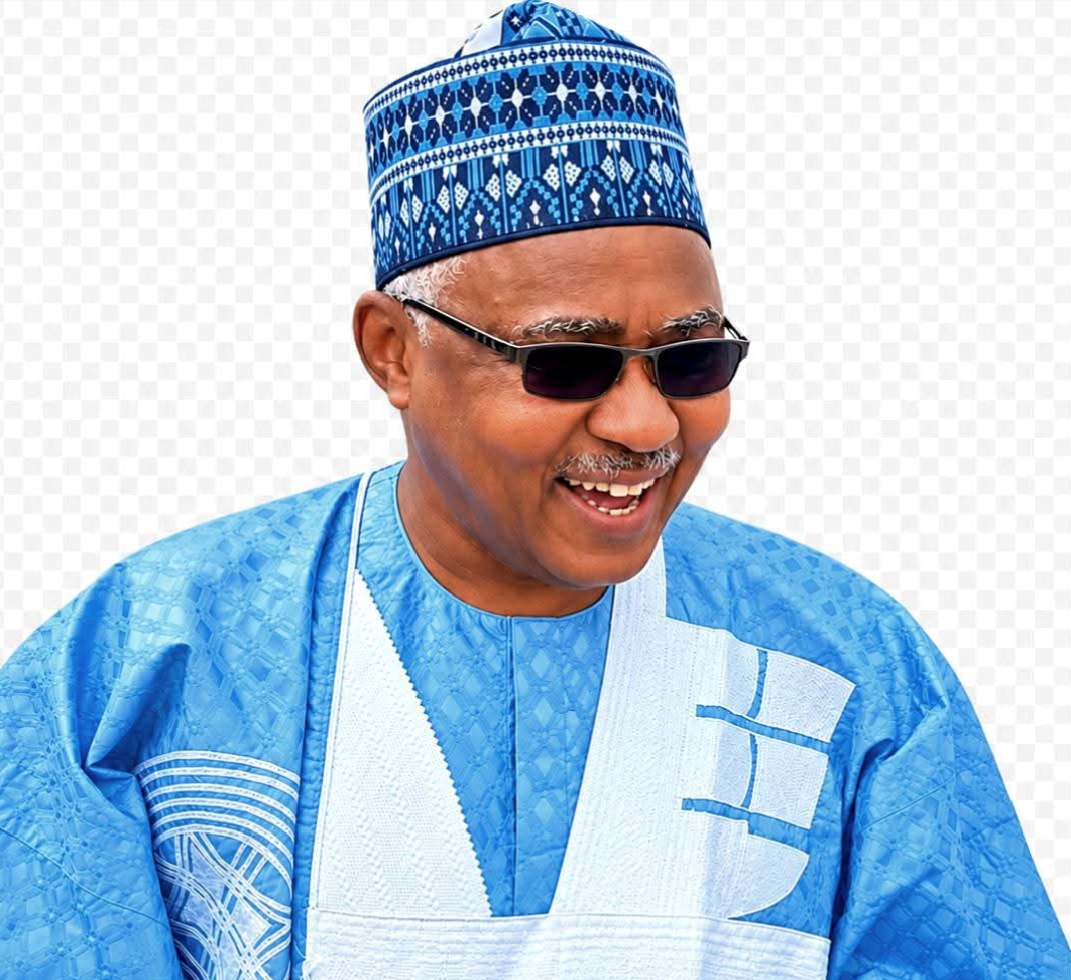
Nasiru Yusuf Ibrahim
Political allies and loyalists of former Managing Director of the Nigerian Ports Authority (NPA), Arc Aminu Dabo, have begun resigning from the All Progressives Congress (APC) in Kano State following his withdrawal from the ruling party.
KANO FOCUS reports that the supporters, operating under the political group Dabo Alheri Ne, reportedly include members across Kano State’s 44 local government areas.
Barely two days after Dabo announced his resignation from the APC, a prominent stakeholder of the group, Garba Zakiru Dambatta, said members had welcomed the decision and were showing solidarity by submitting their resignation letters to their respective ward party chairmen.
Dambatta, a former APC chairman in Dambatta Local Government Area, said the group’s members were disappointed with what they described as the prolonged marginalisation of Mr Dabo and his supporters within the party.
According to him, despite Mr Dabo’s contributions to the APC and efforts to strengthen the party and manage disagreements among its members, some key stakeholders had continued to sideline him and his loyalists in party activities.
Dambatta reaffirmed the group’s commitment to standing by Mr Dabo’s political decisions and supporting his future political journey.
He also urged the former NPA managing director not to succumb to political pressure or reverse his decision to leave the party.
“This step you have taken, we have the conviction that it is the beginning of a new chapter of goodness in your life,” Dambatta said.
Among the prominent members of the group identified as supporting Mr Dabo’s decision are Abba Rabee’u, a former Senior Special Assistant on Political Awareness; Almustapha Jilani Danmalam, a former Senior Special Assistant on Education; Jamilu Abdullahi Zangon-Mata, a former Senior Special Assistant on Entrepreneurship; and Fahd A. Dabo, a former Special Assistant on Youth Mobilisation.
The individuals reportedly served during the second term of former Kano State Governor Abdullahi Umar Ganduje.
The group also said several other party loyalists and supporters were backing Dabo following his resignation.
However, the statement did not provide the number of members who had formally resigned from the APC or indicate whether the party leadership had responded to the development.

Nasiru Yusuf Ibrahim
Five players of Kano Pillars Amputee Football Club have been invited to the national camp of Nigeria’s Special Super Eagles ahead of the 2026 Amputee Football World Cup in Mexico.
KANO FOCUS reports that invited players are Isah Yusuf, Abba Musa, Habu Friday, Emanuel Betel and Usman Ahmed. They are currently in Abuja with the national team as preparations intensify for the global tournament.
The Team Manager of Kano Pillars Amputee Football Team, Jamilu Uba Adamu, disclosed this in an interview with Ashiru Rabiu Gidan Tudu, Information Officer of the Kano State Sports Commission.
Adamu described the invitation as recognition of the players’ dedication, discipline and outstanding performances.
He expressed confidence that the players would represent Kano State and Nigeria with honour at the championship.
According to him, the call-up also demonstrates Kano Pillars’ commitment to nurturing talented amputee footballers and contributing to the development of the sport in Nigeria.
The 2026 Amputee Football World Cup is scheduled to take place from November 13 to 22 in San Juan de los Lagos, Mexico. A total of 24 countries, including seven African nations, are expected to participate.
The Executive Chairman of the Kano State Sports Commission, Muhammad Tukur Babangida, congratulated the five players on their invitation, describing it as well deserved.
Babangida expressed confidence that they would justify the confidence reposed in them by the national team selectors.
He assured the players of the commission’s continued support and urged them to remain focused, disciplined and committed to making Kano State and Nigeria proud on the international stage.
Ibrahim Khalil
A chieftain of the All Progressives Congress (APC) in Kano State, Aminu Dabo, has resigned as the party’s caucus chairman in Dambatta Local Government Area and withdrawn his membership of the ruling party.
KANO FOCUS reports that Dabo, a former Managing Director of the Nigerian Ports Authority (NPA), announced his resignation in a letter dated October 7, 2026, addressed to the APC chairman of Dambatta Gabas Ward.
In the letter, personally signed by him, Dabo said he took the decision after careful consideration of personal reasons and his future endeavours.
He confirmed his resignation during a telephone conversation from Abuja on Wednesday, saying he had formally submitted the letter to the appropriate party officials in Dambatta for necessary action.
“I remain grateful for the cordial relationship I enjoyed and appreciative of the experience gained during my time of service,” he said.
The former NPA managing director also thanked the party’s leadership for the opportunity and confidence reposed in him to contribute to its development and progress during his membership.
“I sincerely appreciate the support and opportunity I have received from the party leadership,” he added.
A statement issued by Abdullahi Othman, Media and Publicity Aide to Dabo Dabo, said the former NPA MD did not disclose further details about his reasons for leaving the APC in the resignation letter.

Dabo’s resignation triggers wave of defections from APC in Kano

Five Kano Pillars Amputee Players Invited to Special Eagles Camp Ahead of World Cup

BUK Professor advocates microfinance to tackle food insecurity, poverty

General Elections 2027: Abba Kabir Yusuf traverses the path to victory
Former NPA MD Aminu Dabo resigns as APC caucus chairman in Dambatta

Kano leads again as NECO successes rise to 74,413
Kano tops states in 2026 NECO results, Governor Yusuf hails students

Kano Govt Suspends Durbar Processions, Horse Riding in Metropolis

ACF begins Dangote Refinery IPO sensitisation campaign in Kano

