
Headlines
Kano 2023: Governorship Candidates roll out policies, programmes at Mambayya town hall meeting


Aminu Abdullahi
Governorship Candidates in Kano have rolled out different programmes and policies for the betterment of Kano state.
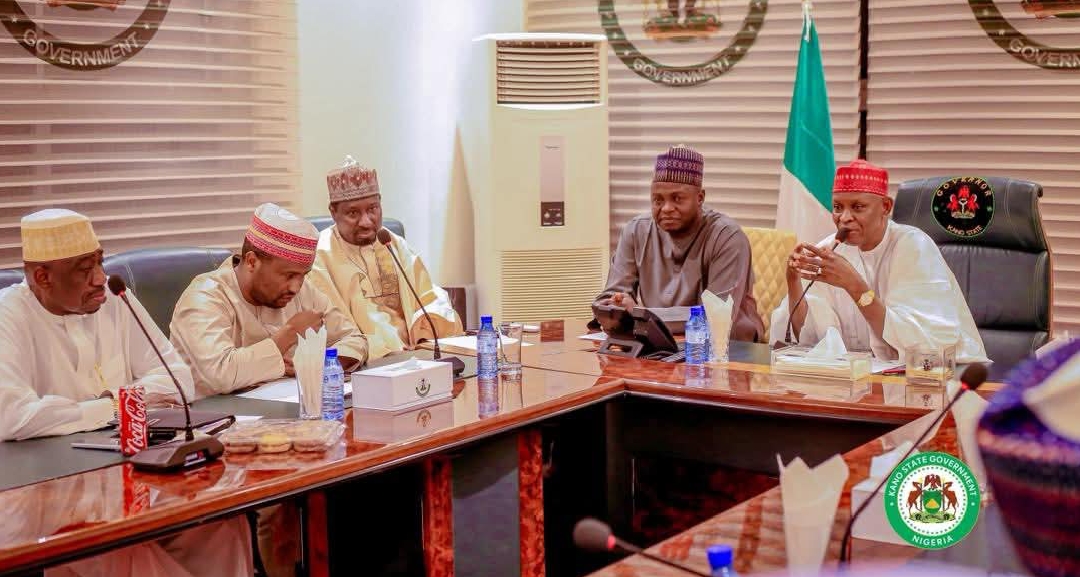
KANO FOCUS reports that the contestants made the presentation at a Townhall meeting with Governorship Candidates organised by the Centre for Democratic Studies in collaboration with KANO FOCUS, media houses and other Non-Governmental Organisations held at the Sa’adu Zungur Auditorium, Mambayya House, Kano.

In his presentation the Kano State Deputy Governor and All Progressives Congress governorship candidate, Dr Nasiru Yusuf Gawuna pledged to sustain and consolidate the security and peace enjoyed in the State when elected in the forthcoming election.
“Security brings development and prosperity to the society, therefore we would increase partnership with the security agencies in order to ensure that Kano people continue to coexist in peace and harmony,” he said.
Gawuna added that his administration would also sustain the development in education through the provision of infrastructure, retraining of the teachers and strengthening of the curriculum with vocational skills, entrepreneurial programmes and community participation.
He also said his administration would tap from the Solid Minerals Kano is endowed with as the effort will create jobs and increase internally generated revenue.
The Deputy Governor also promised to continue to support youths and women through empowerment programmes that will make them more productive.
He however assured to give attention to the Health, Water, Agriculture and Environmental sectors.
Sha’aban pledges to financial autonomy to local government
The Action Democratic Party (ADP), governorship candidate, Sha’aban Ibrahim Sharada has promised to grant full financial autonomy to the 44 Local Government Areas if elected as governor.
While presenting his manifesto, Sharada promised to revive the local government administration system in the state to make them functional, viable, free of interference.
He added that “I will revive the system to make it more accessible to the people living in the rural areas to reduce urban migration.
“My government will fight bribery and corruption; I will review existing data of Kano schools, students, staff, and others, in order to improve the sector.
“Our first budget priority will be on education by giving it the highest allocation to provide a conducive atmosphere for learning.”
Speaking on Health, he said: “We will enhance the allocation to the health sector and upgrade the Primary Healthcare Centers in all the 44 Local Government Areas and employ more community health workers.”
PRP governorship candidate rolls-out 7 Points Agenda
The gubernatorial candidate of People’s Redemption Party (PRP) Salihu Tanko Yakasai has rolled out a seven-point progressive agenda ahead of the 2023 general elections.
The seven-point agenda is focused on Economic growth, Education, Water, Health, Infrastructure, Public Reform, and Security.
He said: “Our administration will focus more on critical infrastructures such as drainages to avoid flooding in the state.
“We will digitalize the public sector by introducing technology in administering the affairs of the state.
“We shall clear pension debts and also grant local government autonomy.
“Promotion of government workers will be based on merit and all government parastatals will be in a single location for easy access to the public institutions.”
Yakasai also promised maximum security by checkmating daily activities of commuters including residents.
“We shall install CCTV and other surveillance equipment in all nooks and crannies of the state,” he added.
Fielding questions from participants on inclusive governance, the PRP governorship candidate assured that PRP will promote inclusive and youth participation in governance.
Muhammad Abacha pledges 500 Megawatts of Electricity
On his part the People’s Democratic Party (PDP) candidate, Muhammad Sani Abacha pledged to provide 500 megawatts of electricity to address the issue of power in the State.
Abacha said the 500 megawatts of electricity will help to revamp the industrial sector and create employment for the teeming unemployed youths in the state.
Talking about other sectors of the economy, he said: “We will introduce sustainable agriculture through modernization and mechanization that will improve irrigation farming and ensure access to agricultural finance.
“On education, we will create more facilities, provide instructional materials, training of teachers to enhance their capacity, and also support skill acquisitions.”
Abacha said Kano State cannot continue to rely on Federal Government allocation when it has the potential to generate over 20 billion internally generated revenue; we will make that happen through digitalization.
“Our development master plan for Kano will make it one of the best states in Nigeria,” he added.
Other candidates who spoke at the occasion include Malam Ibrahim Khalil (ADC), Bala Muhammad Gwagwarwa (SDP), Sani Mahmud (AAC) and Aishatu Mahmud (NRM).


Nasiru Yusuf Ibrahim
The Kano State Government has reaffirmed its commitment to promoting harmonious labour relations, pledging continued engagement with labour leaders through dialogue and diplomacy to enhance socio-economic development and productivity.
KANO FOCUS reports that the Commissioner for Local Government and Chieftaincy Affairs, Alhaji Mohammed Tajo Othman, made the pledge during a two-day seminar titled “Effective Collective Bargaining and Negotiation Between Labour Leaders and Employers at the Local Government Level.” The workshop was held at Royal Blue Hotels in Kaduna.
Represented by the Director of Recruitment, Training and Retirement in the ministry, Alhaji Ali S. Faragai, the commissioner said the training formed part of the state government’s broader efforts to strengthen labour relations and promote industrial peace across Kano.
He emphasised that effective collective bargaining and negotiation are critical tools for resolving labour disputes and fostering mutual understanding between employers and employees at the grassroots level.
According to him, the seminar was organised by the ministry in collaboration with Beatific Synergy and Ventures Limited as part of the present administration’s commitment to continuous capacity building for workers in the state.
The Special Adviser to the Governor on Local Government Matters, Alhaji Garba Umar Durbunde, commended the government’s resolve to build harmonious working relationships and urged participants to apply the knowledge gained for the overall progress of the state.
In his welcome address, the Kano State President of the Nigeria Union of Local Government Employees (NULGE), Comrade Ibrahim Muhammed, described the training as timely and essential in equipping union leaders with the skills required to navigate the complexities of labour relations and ensure peaceful dispute resolution.
Similarly, the National President of NULGE, Comrade Aliyu Haruna Kankara, lauded the Kano State Governor for what he described as visionary leadership and dedication to labour welfare. He noted that the initiative would significantly enhance the capacity of NULGE leaders to effectively represent their members and promote industrial harmony.
“The governor’s initiative is a game-changer, and we appreciate his commitment to improving the capacity of local government personnel through regular training and retraining,” he said.
In a presentation, veteran labour leader and District Head of Rimin Gado, Dr. Auwalu Mudi Yakasai, stressed that honesty, humanity and humility remain essential virtues for achieving lasting success in labour matters.
The training brought together NULGE leaders and local government officials from all 44 local government areas of the state. It covered key topics including collective bargaining strategies, negotiation skills and conflict resolution mechanisms.
Observers say the initiative is expected to improve labour relations, enhance productivity and contribute meaningfully to Kano State’s socio-economic development.
Nasiru Yusuf Ibrahim
The National Chairman of the All Progressives Congress (APC), Prof. Nentawe Yilwatda, has reaffirmed the party’s 60/40 leadership-sharing formula between new defectors and existing members in Kano State.
KANO FOCUS reports that Prof Yilwatda made the declaration during a courtesy visit to the Governor of Kano State, Abba Kabir Yusuf, where he expressed satisfaction with what he described as an impressive turnout of party supporters and leaders.
The development was disclosed in a statement issued on Monday by the Governor’s spokesperson, Sunusi Bature Dawakin Tofa.
According to the APC National Chairman, the 60/40 arrangement was designed to promote inclusiveness, unity, and effective participation of all stakeholders in party affairs and governance activities.
He said he was deeply impressed by the large number of party faithful who attended the meeting, noting that the turnout reflected a high level of enthusiasm, unity, and commitment among APC members in Kano State.
Yilwatda added that the strong gathering was a positive signal that would further strengthen support for President Bola Tinubu and boost his prospects in the forthcoming general elections.
He also commended Alhaji Yusuf Gawuna and Deputy Senate President, Barau Jibrin, for setting aside personal ambitions and aligning with the Governor’s vision for the party in Kano.
The APC Chairman further praised former Kano State Governor and ex-APC National Chairman, Abdullahi Umar Ganduje, for his leadership and contributions to the party’s growth and cohesion in the state.
In his response, Governor Yusuf thanked the APC leadership for the visit and for their continued support toward unity and peace in Kano State.
He reaffirmed his commitment to working collaboratively with party members to ensure that the state remains united and prosperous, in alignment with the Renewed Hope Agenda of President Tinubu.
Governor Yusuf noted that the strong turnout and show of solidarity demonstrated that APC members in Kano are ready to work together for the progress of the party and the overall development of the state.

Bosede Olufemi
A retired Assistant Corps Marshal of the Federal Road Safety Corps (FRSC), Alhaji Kabiru Yusuf-Nadabo, has called for the relocation of Singer Market in Kano to the Dangwaro International Market following repeated fire incidents at the facility.
KANO FOCUS reports that Yusuf-Nadabo, who is also a chieftain of the All Progressives Congress (APC) from Jigawa State, made the call in an interview with the News Agency of Nigeria (NAN) in Kano on Monday.
He said the relocation had become necessary to address persistent fire outbreaks that have plagued the market over the past 15 years.
According to him, he was at the scene of the latest fire incident on February 14 from 4 p.m. to 8 a.m., where he observed serious challenges in accessing the area during rescue operations.
“It took about 12 hours to put out the fire. The current location of the market is not conducive for heavy-duty and articulated vehicles, posing serious safety risks,” he said.
He noted that the market’s environment makes it difficult for articulated vehicles and fire service trucks to move freely, especially during emergencies.
Yusuf-Nadabo added that nearly 100 trucks enter the market daily to offload goods, contributing to congestion. He said major adjoining roads, including Bello Road and Ibrahim Taiwo Road, are often blocked, compounding traffic problems and hindering emergency response.
“Based on my experience in traffic management and public safety, relocating the market to Dangwaro International Market will significantly reduce congestion and help put an end to recurring fire outbreaks,” he stated.
The retired FRSC officer urged the Kano State Government to act urgently in the interest of public safety and sustainable urban development.
Meanwhile, KANO FOCUS reports that the recent fire destroyed goods and property worth over ₦5 billion, affecting more than 1,000 businesses and leaving seven persons missing.
The Chairman of the market, Alhaji Junaid Zakari, disclosed the extent of the damage to NAN in Kano on Sunday.
Singer Market has witnessed several fire outbreaks in recent years. A massive blaze occurred at the market on February 2, 2026, affecting numerous shops before firefighters and emergency agencies brought it under control, with no reported loss of lives.
In November 2025, a dawn fire razed 44 shops, while in March 2023, over 100 shops were destroyed. Similarly, in November 2022, a warehouse and goods worth over ₦100 million were consumed by fire.

Kano Govt trains NULGE leaders to strengthen labour relations

Dangote Group Spotlights Vision 2030 at Kaduna Trade Fair

Ramadan Fasting: An Open Letter to KEDCO

APC chairman reaffirms 60/40 leadership formula during visit to Gov. Yusuf

Ex-FRSC officer calls for relocation of Singer Market after recurrent fires

FG, UBEC commission IsDB–UBEC bilingual boarding school in Kano

Governor Yusuf Appoints Acting DG for Pilgrims Board, Names Provost for Anti-Corruption Institute

Kano Hospitals Board opens recruitment for consultant pediatricians

Kano govt investigates reported disease outbreak in Garko community

