
News
2023 election: Northern states Civil Society Networks rate INEC low


The Conference of Northern States Civil Society Networks has said the Independent National Electoral Commission (INEC) performed below expectation in the last presidential and National Assembly elections across the country.
KANO FOCUS reports that they tasked the electoral umpire to brace up to the challenges and perform better during Saturday’s governorship and state Assembly elections in Nigeria.
The Conference regretted that most Nigerians were not satisfied after the conduct of February 25 elections by INEC.
Addressing Journalists at Tahir Guest Palace, Kano, Chairman of the Conference, Ambassador Ibrahim A. Waiya stated that, “the presidential and National Assembly elections conducted on the 25th February by INEC has fallen short of the standard of all elections practices and ethics.”
According to him, “INEC has raised so much credibility question on its name and created doubt on the minds of Nigerians regarding INEC preparedness to conduct free, fair, credible and acceptable elections in Nigeria.”

He, however, expressed happiness that, “timely distribution of electoral materials especially to LGAs offices were really commendable. Quick responses to BVAS issues on the election day were also impressive. The Election was on a general assessment peaceful.
“The Nigerian security agencies like EFCC, DSS, NDLEA, NSCDC, Nigeria Police Force had performed wonderfully well in ensuring peaceful polls during presidential and national Assembly elections, and that they would continue with the work in the next elections.”
Waiya said it was unfortunate that, “the elections were highly polarized along religion and ethnicity.”
The Conference noted that, “compliance with the provisions of Electoral Act 2022 must be observed to ensure electoral credibility in Nigeria.
“Electoral offenders of any kind must be punished under the laws of the country to discourage others from perpetrating electoral offences again in Nigeria.
“Those found in the act of intimidating and suppressing voters at polling units must be made to face the wrath of the law no matter how highly placed they are.
“The impunity of the state governors during elections must be addressed to checkmate their overbearing interference in elections.
“It is imperative for INEC to review all evidence of electoral malpractices presented before the commission in the interest of peace and security as political party and party processes must be reformed to tackle issues of money bags and Godfatherism in Nigeria’s politics. Where the political parties fail to get it right, it is absolutely impossible for Nigeria to get its general election right.
“Issue-based campaigns must be encouraged rather than identity sentiment along religion and ethnicity
EFCC should continue with their good work to reduce the commercialization of the electoral process through vote buying and selling.”
Waiya regretted that, “the conduct of the 2023 Presidential and National Assembly elections were poor, especially with the attitude of the commission to ditch result transmission from polling units across the country.
“This singular act has given room for suspicion of human interference and manipulation of results and could prune the will of the people as freely expressed at the poll.”
Further speaking during the Press Conference entitled: “The Conduct of Elections and the question of integrity,” Waiya said: “The 25th February, 2023 Presidential and National Assembly elections had keenly generated a lot of attention from within and outside the country.
“However, this may not be unconnected on how Nigeria is strategically positioned as the largest democracy in Africa.
“Many organizations both local and international had passionately observed the conduct of the elections, especially the local organizations who have been on ground and have been following the trend since the release of the elections timetable.
“Many civil society organizations had observed the conduct of the elections across the 774 Local Government Areas in the country.
“While in some states there were other complementary efforts such as hosting of the election situation room which were focused on data collation and analysis, as well as quick response mechanism to address emerging issues such as what was obtained in Kano State
“Although there were many assurances from the Independent National Electoral Commission before the conduct of the elections, on its preparedness to conduct free, fair, credible and transparent elections.
“Unfortunately, what was witnessed during the conduct of the presidential elections on the 25th Feb. fell below the high expectation of the Nigerians, who had have the high hope more than before, to witness a historic elections in the country. This could be evidently justified by the number of Nigerians that registered as voters numbering to more than eighty five million, all as eligible voters who could participate in the elections.
“It is however unfortunate that, the number of Nigerians that participated in the last elections of 25th Feb. were apparently not happy with the outcome of the elections especially as the elections were massively characterized by many irregularities. Although some of the shortcomings that marred the conduct of the elections, could be summarized into pre, during and post elections.
“The undemocratic tendencies played out during the pre-election phase, which bordered on lack of internal democracy in the political parties processes that produced the candidates of major parties, had an over spelling effects on the conduct of the general election.
“For instance, the commercialization of the party elections that produced candidates at the primaries, had institutionalized vote-buying which eventually translated and resurfaced in the general election. In addition to the above, the violence that also accompanied the campaign activities which were turned bloody in some states, such as Kano, and some other parts of the country.
“These ugly practices therefore transcended into mass electoral violence in a number of places during the presidential election.”


Nasiru Yusuf Ibrahim
The management of Bayero University, Kano (BUK) has commenced a preliminary investigation into allegations linking a person reportedly identified as one of its students to acts of online impersonation and financial misconduct circulating on social media.
In a statement issued by the Director of Public Affairs, Lamara Garba, on behalf of the Registrar, the university said it had taken note of the claims being discussed in public commentary and across various online platforms.
The statement noted that BUK maintains strict standards of conduct, discipline, and character for all students throughout the duration of their studies, adding that any behaviour capable of bringing the name and reputation of the institution into disrepute is treated with the utmost seriousness.
According to the university, the alleged actions of an individual student should not be seen as a reflection of the values or character of Bayero University Kano as an institution.
“In view of the allegations, the University has commenced a preliminary inquiry to ascertain the facts surrounding the matter. The appropriate University authorities are reviewing the issue in line with the institution’s established rules and disciplinary procedures governing students’ conduct,” the statement said.
The management also commended the public-spirited efforts of Professor Farooq Kperogi and other individuals who provide financial assistance to students in need, particularly by supporting registration fees and other educational expenses.
The university noted that such acts of generosity continue to play an important role in expanding access to education and supporting deserving students.
BUK assured members of the public that if the allegations are substantiated, appropriate disciplinary measures will be taken in accordance with the university’s regulations and relevant laws.
The institution also urged the public to allow the investigative process to run its course and to refrain from speculation or the spread of unverified information.

Ibrahim Khalil
The Governor of Kano State, Abba Kabir Yusuf, has relieved the State Head of Service, Alhaji Abdullahi Musa, of his appointment with immediate effect.
KANO FOCUS reports that the development was disclosed in a statement issued on Tuesday evening by the Director-General, Media and Publicity, Government House Kano, Sunusi Bature Dawakin Tofa.
According to the statement, the decision forms part of the ongoing efforts of the current administration to reposition the state civil service for greater efficiency, discipline, and improved service delivery across government institutions.
Governor Yusuf expressed appreciation to the outgoing Head of Service for his contributions and dedication to the service of Kano State during his tenure.
“We wish him the best in his future endeavours and pray for his continued success in all aspects of life,” the governor said.
The governor also directed that Hajiya Bilkisu Shehu Maimota, Permanent Secretary, Administration and General Services at the Cabinet Office, should serve as Acting Head of Service pending the appointment of a substantive replacement.
The statement further directed the outgoing Head of Service to hand over the affairs of the office to the acting Head of Service no later than Wednesday, March 11, 2026.
Nasiru Yusuf Ibrahim
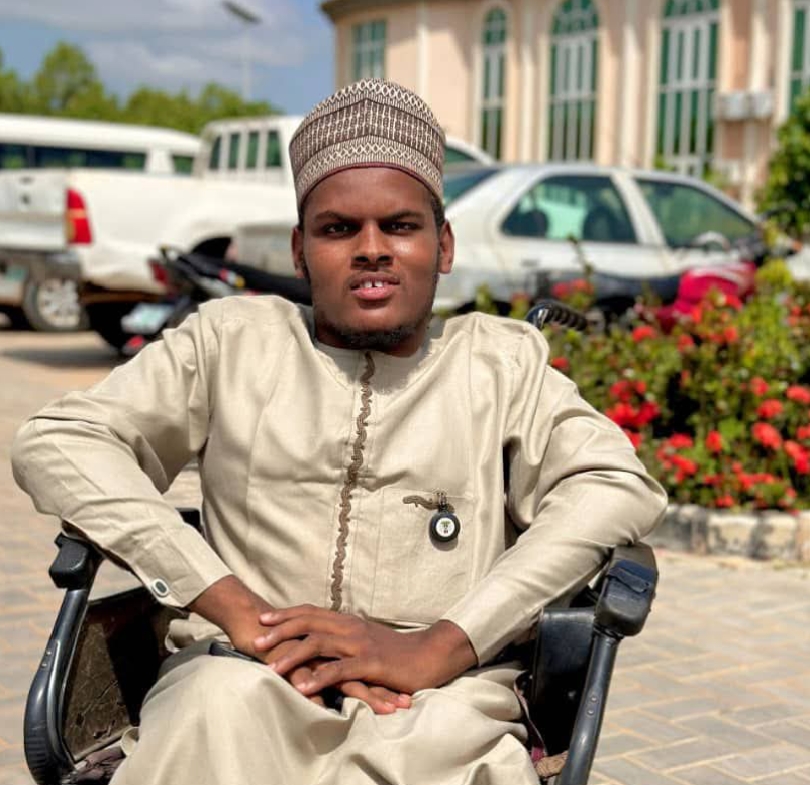
A student of Information and Communication Technology (ICT) at Northwest University Kano has appealed to the university management and relevant authorities to urgently repair a faulty elevator at the institution’s city campus, saying the situation has made access to lectures extremely difficult for him and other students with disabilities.
KANO FOCUS reports that the student, Aminu Jaafar Muhammad, popularly known as Alamein, made the appeal in a post shared on social media, where he narrated the challenges he faces attending lectures at the Ado Bayero City Campus, Kofar Nassarawa.
Muhammad, a Level 300 student preparing to enter his final year, said he lives with a physical disability affecting one of his legs. According to him, the Faculty of Computing, where he studies ICT, holds lectures on the sixth to ninth floors of the campus building, while the elevator meant to provide access to the upper floors has remained out of service.
He explained that due to the faulty lift, his colleagues are forced to carry him up the stairs every day in order for him to attend classes.
“Every day my colleagues carry me from the ground floor to at least the sixth floor, which involves climbing more than 100 stairs,” he said, describing the act as a remarkable show of solidarity from fellow students.
Muhammad noted that during his first year at the university he studied at the main campus, where there were fewer stairs. In his second year, he said the elevator occasionally functioned, but when it broke down again his classmates had to assist him several times a week to reach lecture halls upstairs.
He revealed that he had earlier written to the university management requesting that lectures for his faculty be relocated either to the main campus or to lower floors of the building to make access easier. However, he said the letter, submitted over a year ago, has yet to receive a response.
The student also recalled that during a visit by Kano State Governor Abba Kabir Yusuf following a fire incident at the campus last year, a new elevator was reportedly donated to the university. According to him, the facility is yet to become operational.
While expressing appreciation to his classmates for their continued support, Muhammad said he decided to speak out because the situation affects not only him but other persons with disabilities on campus.
“I know my colleagues have never complained, but I understand that it is not easy for them. I believe raising the issue can bring change and benefit many others,” he said.
He appealed to the university management and relevant authorities to either relocate the lecture venues to accessible floors or ensure that the elevator is repaired and functioning properly.
Muhammad also called on members of the public and stakeholders to help amplify his appeal so that it reaches those in a position to address the situation.
He expressed hope that resolving the challenge would allow him and other affected students to focus on their studies without unnecessary physical barriers.

BUK probes student over alleged Facebook fraud

Gov. Yusuf relieves Kano Head of Service of appointment

Disabled student seeks urgent fix for faulty elevator at Northwest University Kano

Resident raises concern over rising lawlessness, poor urban planning in Kano

Kwaru Foundation Provides Free Eye Care to Over 1,100 Residents in Kano

Lami Maccido, first person to appear on screens of NTA Kano, CTV 67, dies at 72
Kwaru Foundation Provides Free Eye Care to Over 1,100 Residents in Kano

K-SAFE commends Kano for timely school census, inclusion of non-formal education data

Kano to distribute 16,906 desks to primary schools in 13 LGAs

