
Headlines
UNICEF commemorates 10 years abduction of Chibok girls in Kano

Nasiru Yusuf Ibrahim
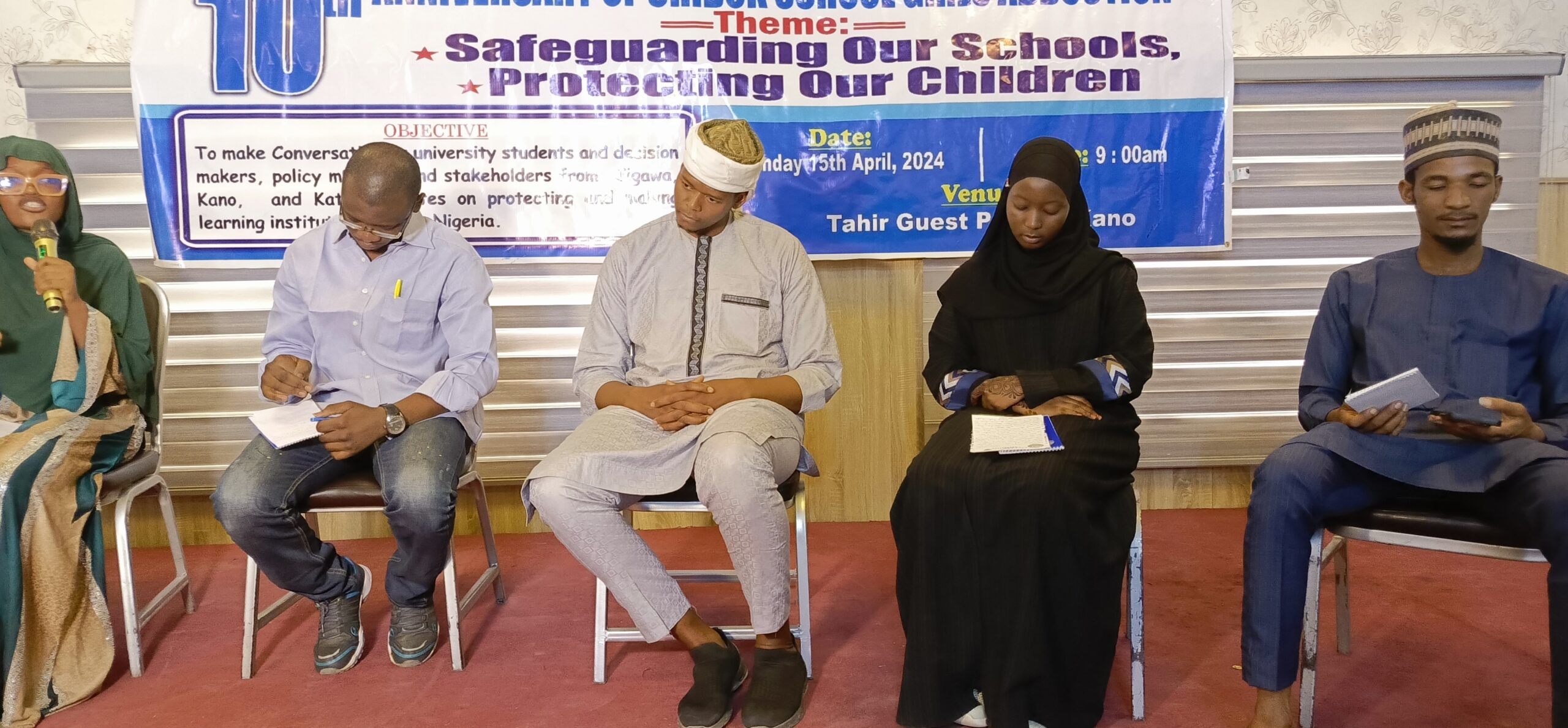
The United Nations Children’s Fund (UNICEF), has organised a one day event to commemorate the 10 years abduction of Chibok girls in Borno state.
KANO FOCUS reports that UNICEF lamented the negative impacts of incidents of abduction and kidnapping of school children to the child education in Nigeria, regretting the rising statistics of out-of-school children due to incessant cases of abduction of school children in some states across the country.

Cross section of the participants at the event
Speaking during the the event held in Kano, Michael Banda, Senior Education Manager, UNICEF Kano Field Office, who was also the officer-in-charge at the occassion, representing the UNICEF Chief of Kano Field Office, Mohammed Rahama, also stressed the need for concerted efforts towards the fight against climate change, as part of endeavours to stop school abduction and ensure security in our schools across the country.
Banda also posited that the spate of insecurity will reduce drastically if Nigerian government puts more efforts in making its teeming population productive, just like China and India did.
He also frowned at religious and cultural ideologies that discredit innovative educational policies that promotes mass enrolmenent of children into schools, particularly, the girls, and called for more orientation and campaigns by religious andbtraditional rulers encouraging children enrolment into schools and adequate protecrion of schools children.
Speaking to journalists after the event, the Commissioner for Higher, Technical and Vocational Education in Katsina state, Prof. Abdulhamid Ahmed blamed porous borders as part of the causes of insecurity in the state, but assured that government has taken adeqaute measures to ensure security of lives and property, particularly, the safety of school children.
Dr. Isa Yusuf, Hafsat Adhama and Prof. Abdulhamid Ahmed
He said that apart from providing enough logistics for security agencies, Governor Dikko Radda recruited thousands of youths across communities in the state to help fight against banditry, kidnapping and other forms of insecurity in Katsina state.
He said all the schools from primary and tertiary instutitions in the state are well secured with fence and one gate and security post manning them.
The Commissioner of Higher Education, Science and Technology of Jigawa state, Dr. Isa Yusuf also told journalists at the event that Jigawa has remained safe for school children due to efforts put in place by Governor Umar Namadi to secure lives and property in the state.
According to him, the state government created synergy and good working relationship among security agencies in the state who always work with one mind to fight any form of insecurity across tge state.
He said tge Safe School initiative launched by the Federal Government is also helping tremendously to enwure security of school children in the state.
Student leaders who spoke at the event, with one voice, called on the Federal Government to put more efforts towards the rescue of remaining Chibok girls, hoping that government will soon find lasting solutions to the problem of insecurity bedevilling education of children and youths in the country.
However, in a Statement made available to journalists on Monday, Susan Akila, Communication Specialist, UNICEF, Abuja, quoted Ms. Cristian Munduate, UNICEF Representative in Nigeria as urging for action to secure children’s education in Nigeria.
According to her, new UNICEF report shows that just 37 per cent of schools across 10 states have early warning systems in place to identify threats, such as school attacks.

A cross section of participants
She added that: ” As Nigeria marks 10 years since the mass Chibok abductions in the Northeast, 90 girls remain in captivity, and the country is recovering from another abduction of schoolchildren in Kaduna state in March of this year. UNICEF is calling for intensified efforts to protect the country’s most vulnerable population—its children.”
According to her, UNICEF has released the ‘Minimum Standards for Safe Schools (MSSS) Monitoring Report,’ revealing a stark reality: the journey toward ensuring every Nigerian child can learn in a safe environment is far from over.
“Most notably, the report shows that just 37 per cent of schools across 10 states have early warning systems in place to identify threats, such as school attacks.
“The kidnapping of the Chibok girls was a wake-up call to the severe risks our children face in their pursuit of education,” she said.
According to her, “Today, reflecting on this tragedy and other recent abductions, it is evident that our efforts to safeguard our children’s futures must be amplified. Given these alarming statistics, we must address not only the symptoms but also the root causes of this crisis. Education is a fundamental right and a crucial pathway out of poverty. Yet, for too many Nigerian children, it remains an unattainable dream,” the Statement said.
She further stated that analysis looked at six result areas – strong school system, violence against children, natural hazards, conflict, everyday hazards, and safe school infrastructure – and uncovered significant disparities in the implementation of safe school standards across Nigerian states.
” Borno State, with a 70 per cent fulfilment of the standards, exemplifies a strong commitment to child safety amidst adversity. Yobe State also demonstrates promising progress. In contrast, Kaduna and Sokoto states lag significantly, with fulfilment rates at just 25 per cent and 26 per cent, respectively.
“In addition to the finding on early warning systems and conflict, the report shows that while schools perform relatively well in terms of training school-based management committees on safety and responding to children’s well-being concerns, only 14 per cent of the participating schools across the 10 assessed states have functioning, safe, accessible infrastructure and just 36 per cent have school staff trained on natural hazards.
“The analysis comes on the heels of disturbing reports of violence affecting schools, with brazen abductions of students on the rise. In the last 10 years, conflict-related violence has led to more than 1,680 children abducted while at school and elsewhere; 180 children killed due to attacks on schools; an estimated 60 school staff kidnapped and 14 killed; and more than 70 attacks on schools, according to verified reports by the United Nations.
” The threat of abduction of students is severely affecting children’s learning. As of 2021, over one million children were afraid to return to school, and in 2020, around 11,500 schools were closed due to attacks, according to Policy Weekly by Nextier,” she said.
UNICEF Nigeria called for the government, partners, and the international community to take decisive action to: ensure all schools across all states have the resources and tools to fully implement the Minimum Standards for Safe Schools, focusing on the most vulnerable regions; address critical gaps in safe school infrastructure, preparedness for natural disasters, conflicts, and comprehensive approaches to violence against children.
UNICEF Nigeria also stressed the need for government to strengthen law enforcement and security measures to protect educational institutions and communities from attacks and abductions; prioritize education and child protection in national policies and budget allocations to create a safer, more inclusive environment for all Nigerian children.
She further stated that government should ensure the continuity of education and learning when schools are shut through multiple learning pathways such as radio and TV programmes and through digital platforms like the Nigeria Learning Passport.
According to her, UNICEF is working with the government to ensure that every child can access safe learning environments.
She said the agency has supported the inauguration of state safe school steering committees and the drafting of state-costed implementation plans for safe schools in 13 states. It also provides school grants, safety kits, training, and awareness raising to accelerate the implementation of the Minimum Standards for Safe Schools.
“As we remember the Chibok girls and all children whose right to education has been compromised, let this sombre anniversary serve as a catalyst for change. However, we must acknowledge the recent abductions, which underscore the persistent vulnerability of our schools. To ensure that schools are safe havens, strong political will and proper implementation of safe school standards are essential. Together, we can restore trust between educational institutions and the communities they serve, ensuring schools are sanctuaries for learning and growth,” said Munduat.

Nasiru Yusuf Ibrahim
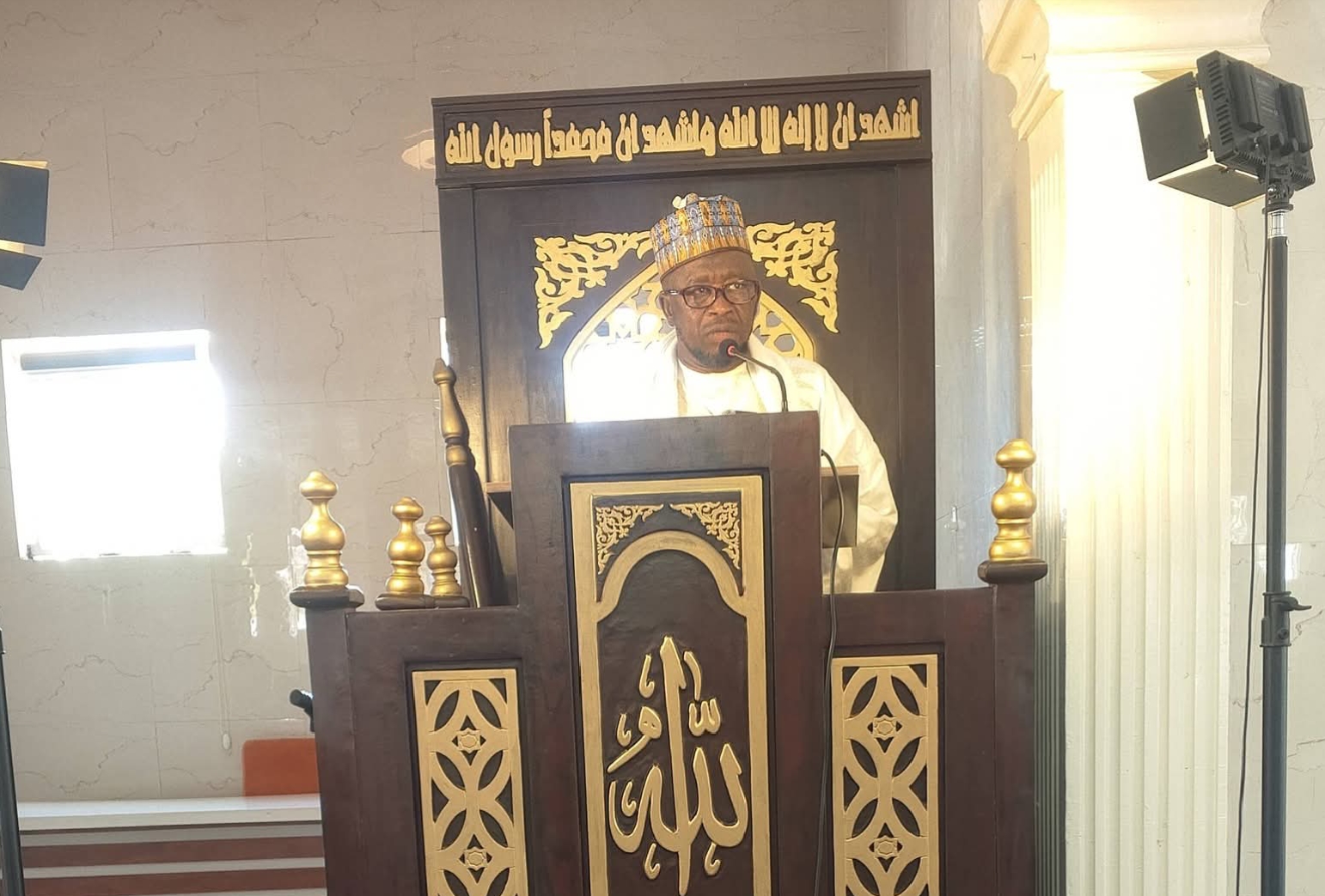
Imam Nura Garba Mato has urged Muslims to remain conscious of their actions, saying that divine reward and punishment often correspond to the nature of people’s deeds.
KANO FOCUS reports that the imam made the call while delivering a Friday sermon at Jami’u Ansar wal Muhajirun Jumaa Mosque, Cotton Ginnery Layout, Zawaciki, Kano State.
The sermon, titled “Al-Jazā’u Min Jinsil-‘Amal” (Recompense Is According to the Nature of Deeds), focused on the Islamic teaching that people’s actions have consequences and that good deeds attract divine reward.
Imam Mato said Allah had established enduring principles in human life that do not change, urging Muslims to understand these principles and allow them to guide their conduct.
He explained that one of these principles was that recompense corresponds to the nature of one’s actions, stressing the importance of living righteously and fulfilling one’s responsibilities to Allah and fellow human beings.
The imam called on Muslims to observe *taqwa* (consciousness of Allah), remain steadfast in their faith and follow the teachings and traditions of Prophet Muhammad (peace be upon him).
He also highlighted the importance of helping people in difficulty, easing the burdens of others and showing compassion to fellow Muslims.
Quoting a prophetic tradition, the imam emphasised that whoever relieves a Muslim of a hardship in this world will receive relief from Allah on the Day of Resurrection.
He further explained that whoever conceals the faults of a fellow Muslim would receive Allah’s concealment of their faults on the Day of Resurrection, while those who make things easier for people in difficulty would receive Allah’s assistance in this world and the Hereafter.
The sermon also underscored the importance of supporting others, noting that a Muslim’s relationship with Allah should be reflected in their treatment of fellow human beings.
Imam Mato urged Muslims to reflect on their deeds and recognise that their conduct carries consequences, encouraging them to embrace good actions, assist those in need and uphold the teachings of Islam in their daily lives.
He stressed that Muslims should make righteousness, compassion and service to others central to their lives in pursuit of Allah’s pleasure and success in the Hereafter.
Nasiru Yusuf Ibrahim
The Kano State Government has directed all civil servants who have attained their statutory retirement age or completed the required length of service to immediately vacate their offices and hand over government property in their possession.
KANO FOCUS reports that the directive was contained in Circular issued on Tuesday by the Establishment Directorate, Office of the Head of Civil Service, Kano State.
The circular, signed by the Permanent Secretary, Establishment, Abba A. Danguguwa, on behalf of the Head of Civil Service, was titled: “Unauthorized Continuance in Service After Statutory Retirement by Civil Servants in Ministries, Departments and Agencies (MDAs) of Government – Call for Immediate Handing Over of Official Documents, Properties.”
The government said it had observed that some civil servants continued to remain in office and operate in official capacities after reaching their statutory retirement period.
According to the circular, such conduct was a “negation to the reputation of the Civil Service of Kano State,” noting that the service had a long-standing tradition of ensuring seamless transition by retiring civil servants.
It described the continued stay in service after retirement as a direct infraction and aberration of relevant provisions of the State Civil Service Rules and other applicable service regulations.
The government stressed that it was legally and administratively untenable for any officer to remain in service or perform official functions beyond the statutory limit.
Consequently, all civil servants who had retired either by age or length of service were directed to immediately exit and hand over all official documents, government property and duties to their immediate subordinates in their respective ministries, departments and agencies.
The circular also directed all Accounting Officers, including Permanent Secretaries and Chief Executives, as well as Directors of Administration and Personnel Management, to ensure strict and immediate compliance with the directive.
It warned that any officer found aiding, abetting or condoning the continued stay of a retired officer in service would face appropriate disciplinary action in accordance with the Civil Service Rules.
The directive takes immediate effect, the circular stated.

Nasiru Yusuf Ibrahim
Kano State Governor Abba Kabir Yusuf says his administration has settled approximately N32 billion out of the N48 billion inherited backlog of gratuities and related liabilities owed to retirees in the state.
KANO FOCUS reports that Gov Yusuf disclosed this on Thursday while addressing residents at the 66th Independence Anniversary celebration held at the Sani Abacha Indoor Stadium in Kano.
The governor said the government had also sustained the regular payment of monthly pensions while increasing the minimum monthly pension from N5,000 to N20,000.
He said the welfare of workers and pensioners remained a priority of his administration, citing timely payment of salaries, improved remuneration and measures aimed at strengthening the public service.
According to him, the state has maintained the practice of paying workers’ salaries on or before the 25th of every month while implementing the N71,000 minimum wage for civil servants.
Gov Yusuf also said his administration was sponsoring public servants for professional training, including programmes at the Administrative Staff College of Nigeria (ASCON), to strengthen their administrative and leadership capacity.
He reaffirmed the government’s commitment to building a professional and motivated workforce, while ensuring that the contributions and sacrifices of serving workers and retirees were recognised and treated with dignity.

Insecurity, hunger have deepened Northern Nigeria’s distrust of Tinubu, Imam Gusau says

Kano Police return recovered car, motorcycle to owners

JONAPWD Kano to hold leadership election Saturday

“As You Sow, So Shall You Reap”: Imam Reminds Muslims of Divine Justice

Kano Govt Orders Retired Civil Servants to Vacate Offices, Hand Over Government Property

Kano leads again as NECO successes rise to 74,413
Kano tops states in 2026 NECO results, Governor Yusuf hails students

Kano Govt Suspends Durbar Processions, Horse Riding in Metropolis

INEC holds campus debate on elections, democracy at BUK

