
Headlines
BUK partners Kano Govt to address poor quality of secondary education


Nasiru Yusuf Ibrahim
Bayero University Kano has indicated its readiness to work with Kano State Government in solving the education crisis facing the state.
KANO FOCUS reports that the Vice Chancellor of the University Professor Sagir Adamu Abbas gave the assurance on Tuesday when he led a team of the University management that at a courtesy visit to the state commisioner of education Alhaji Umar Haruna Doguwa in his office.

Prof. Sagir Adamu Maintained that for education crisis to be solved in Kano, something positive had to be done, noting that one of such step taken by the government was the recent declaration of state of emegency on education.

The Vice Chancellor hinted that in getting to the root of the problems of education in Kano, there is need for the government in power to find out the real picture of the education crisis at hand.
” If you can take your time to conduct research with a view to finding out the real.problem.of education in Kano, the solution is going to be beyond your time.
“So something need to be done. We are highly concerned when we go to do admission, even though Kano is having the largest number of students in Bayero University but during every admission, we are not taking the number we are expected to take because of lack of qualification,” he decried.
Professor Abbas further explained that the only way out of these educational challenges is to conduct what he called a holistic research on education to find out the problem, assuring that the University would remained willing to provide every support to that regard.
He disclosed that there were so many ways the University could assist the state apart from conducting research to get to the real problem.
“Bayero University also has the capacity to provide extensive training to teachers in groups and equip them with what they require to start facing the challenges of education in Kano.” he said.
Prof. Sagir Adamu however attributed the increase cases of Daba, Drugs adiction and other social vises in Kano to the lack of quality education that had characterized the state for quite period of time.
In his response, Kano State Commissioner of education Alhaji Umar Haruna Doguwa described the visit as timely considering the new policies and programmes put in place by the administration to revive the education sector.
“It is obvious, the present administration has inherited the state education sector in a stage of total dilapidation and decay of schools infrastructures and lack of instructional materials resulting to non conducive learning environment.
“We have produced a documentary programme portraying total neglect and decay of the education sector meaning that we have a lot to do in order to address all the challenges of the education sector. This government is now trying to see how it can address those problems inherited on education,” he said.
He assured the management team that the administration would be fully determine to work with University in finding lasting solutions to those challenges by setting a team of researchers that would assist in tackling the situation.
Doguwa asserted that the administration focuses on three basic components aimed at improving the education sector which bordered around access, quality and infrastructural development in schools.
Haruna Doguwa revealed that so many things had been done by the administration since its inception to improve education in the state which include the provision of instructional materials to schools, training of teachers, timely payment of NECO/NBAIS/NABTEB registration fees, recruitment of over 5600 teachers, construction and renovation of schools, repairing of 70 Girl Child Buses, payment of qualifying examination and distribution of free JAMB forms to Kano students among others.
“So, as we really thank and appreciate Bayero University Kano for coming to our aid in finding way forward to our educational crisis, our doors will remain opened at all times for advice and necessary guidance so that we can move the education sector forward ” Doguwa stated.

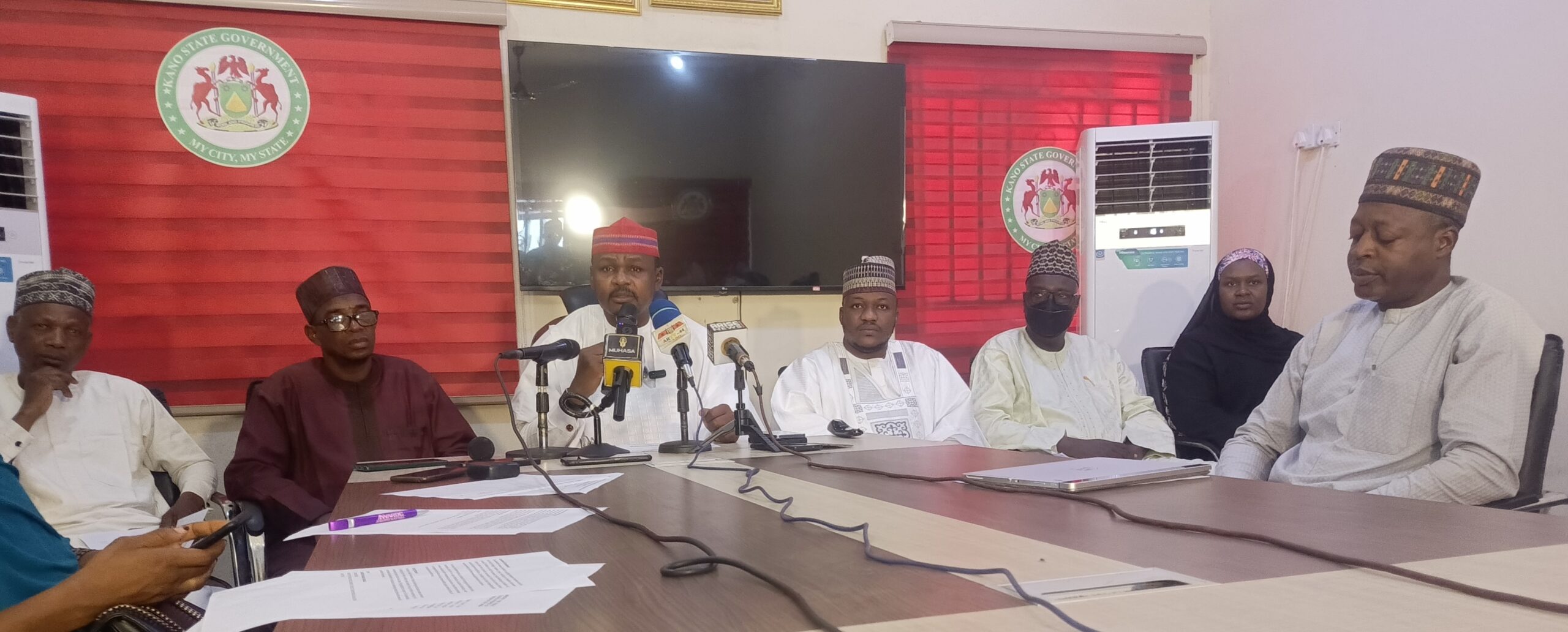
Nasiru Yusuf Ibrahim
The Kano State Government says it has executed 1,508 development projects worth more than N928 billion across the state’s 44 local government areas since Governor Abba Kabir Yusuf assumed office, with about 80 per cent of constituency projects awarded between 2023 and 2025 already completed.
KANO FOCUS reports that the Commissioner for Public Procurement, Projects Monitoring and Evaluation, Comrade Nura Iro Ma’aji Sumaila, disclosed this during an international press briefing on the administration’s infrastructure development programme.
According to Comrade Sumaila, the projects cover critical sectors including roads, urban renewal, education, healthcare, security and other social infrastructure.
He said 799 of the projects have been completed, while 709 are at various stages of execution. He added that the state is also implementing 619 constituency projects through members of the Kano State House of Assembly.
The commissioner noted that about 80 per cent of the constituency projects have been completed. However, he said some projects remain unfinished because of rising construction costs caused by inflation.
He said the government has submitted a request to Governor Abba Kabir Yusuf for an upward review of contract sums to enable contractors complete the affected projects.
Breakdown of projects
Comrade Sumaila said the administration spent over N169 billion on urban renewal projects, including road rehabilitation, drainage construction and other metropolitan infrastructure.
He said another N118 billion was committed to constructing five-kilometre roads in 38 local government areas to improve connectivity across the state.
According to him, the government also awarded contracts worth over N6.8 billion for the construction of Kano State Neighbourhood Watch security divisions in 36 local government areas.
He added that rural infrastructure projects covering education, healthcare and other social interventions across the 44 local government areas account for contracts valued at more than N397 billion, while other ongoing projects have a combined value of about N255 billion.
Commitment to transparency
The commissioner said the Ministry of Public Procurement, Projects Monitoring and Evaluation would continue to ensure compliance with due process and technical standards in the execution of government projects.
He said the ministry’s mandate includes monitoring projects to ensure value for money and prudent utilisation of public resources.
According to him, the administration’s investments in infrastructure are intended to improve mobility, strengthen security, expand access to education and healthcare, improve water supply and stimulate economic growth across the state.
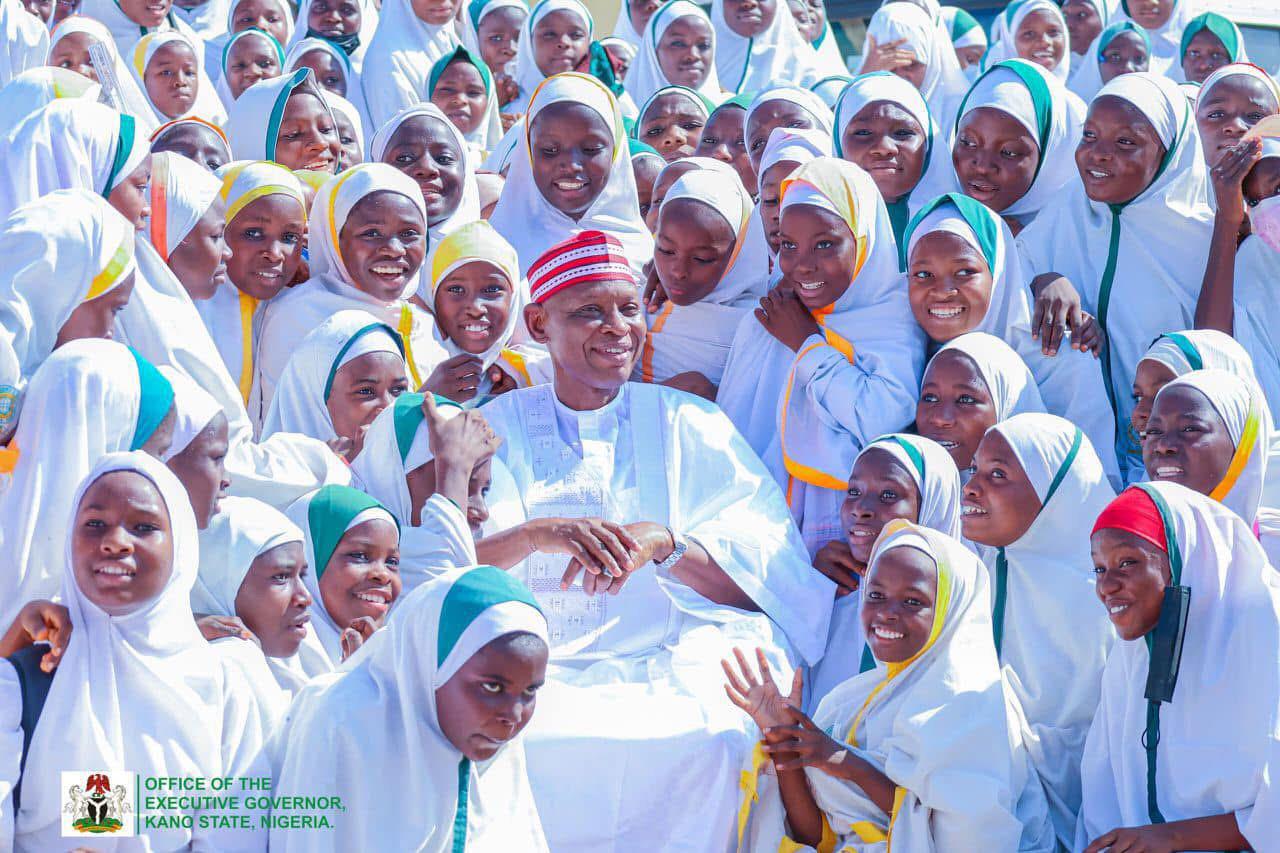
Nasiru Yusuf Ibrahim
Kano State has emerged as the highest-ranked sub-national government in the Economic Community of West African States (ECOWAS) for education spending, according to the latest Sub-National Education Spending Index developed by the University of Paris.
KANO FOCUS reports that the ranking places Kano State first among 209 first-level sub-national governments across 15 ECOWAS member countries, underscoring the state’s growing reputation for prioritising investment in education.
According to the published index, Kano topped the rankings with an overall S-WAESI score of 87.21, outperforming other leading regions, including Dakar and Saint-Louis in Senegal. Lagos State was the second Nigerian state on the list, ranking 16th overall.
The assessment evaluated states and regions using the S-WAESI (Sub-National Weighted Aggregate Education Spending Index) methodology, which measures government commitment to education through indicators such as actual education expenditure, spending per student, budget execution, education priority, transparency and evidence-based reporting.
The methodology assigns 35 points to actual education spending, 25 points to spending per student, 20 points to budget execution, 10 points to education priority and 10 points to transparency.
The report indicated that Kano excelled largely due to its strong actual education spending and budget execution, making it the best-performing sub-national government in the region.
The ranking covered states, regions, districts and municipalities across Nigeria, Senegal, Ghana, Côte d’Ivoire, Sierra Leone, Liberia, Benin, Burkina Faso, Mali, Niger, Togo, Guinea, Guinea-Bissau and Cabo Verde.
Kano State Accountability Forum on Education (K-SAFE) said the recognition reflects Kano State Government’s sustained investment in expanding access to education, improving school infrastructure and strengthening educational planning and budget implementation.
KANO FOCUS reports that the achievement is expected to further boost the state’s profile as a leader in education reform within West Africa and provide additional momentum for ongoing efforts to improve learning outcomes across the state.
The latest ranking comes amid renewed attention on education financing across ECOWAS, with experts increasingly emphasising transparent budgeting, efficient resource utilisation and sustained public investment as critical drivers of quality education.
Nasiru Yusuf Ibrahim
Kano State has emerged as one of the biggest beneficiaries of the World Bank-supported HOPE Governance Programme after qualifying for a total of $3.5 million in performance-based incentives for implementing key governance, education and healthcare reforms.
KANO FOCUS reports that the World Bank, through the HOPE Governance Programme domiciled in the Federal Ministry of Budget and Economic Planning, approved $27 million in incentives for states that successfully met the Year Zero Disbursement-Linked Results (DLRs).
The National Coordinator of the HOPE Governance Programme, Assad Hassan, announced the incentives on Tuesday in Abuja during a retreat attended by commissioners, permanent secretaries and directors of budget and planning from the 36 states and the Federal Capital Territory.
A statement issued by the programme’s Communications Officer, Joe Mutah, said the incentives were based on the recommendations of the Interim Independent Verification Agent, which assessed states’ performance against agreed reform indicators.
Kano ranked among the highest-performing states, qualifying for incentives under three separate reform indicators.
The state will receive $1.5 million under Disbursement-Linked Result (DLR) 2.1 for adopting comprehensive guidelines for the preparation and submission of consolidated work plans for the state basic education budget.
It also qualified for another $1.5 million under DLR 2.2, which recognises states that adopted comprehensive guidelines for consolidated work plans for state primary healthcare budgets.
In addition, Kano secured $500,000 under DLR 2.3 for adopting harmonised budget guidelines and a unified chart of accounts for local governments.
Altogether, the state is expected to receive $3.5 million, making it one of the top-performing states under the programme.
Only five states—Bayelsa, Borno, Kano, Kebbi and Yobe—qualified for both the education and healthcare planning incentives, earning $3 million each from the two indicators alone.
Kano further distinguished itself by qualifying under the local government budgeting reform indicator, increasing its total allocation to $3.5 million.
The state also featured among 15 states that met the requirements under DLR 4.1, which rewards states for publishing their 2025 Citizens Budget for basic education and primary healthcare by February 28, 2025. Each qualifying state under this indicator will receive $500,000.
Other states that qualified under DLR 4.1 are Abia, Bayelsa, Borno, Edo, Ekiti, Enugu, Imo, Jigawa, Kebbi, Kogi, Nasarawa, Ondo, Plateau and Yobe.
According to the programme, the performance-based incentives are designed to encourage states to strengthen governance systems, improve budget transparency and enhance planning in the education and primary healthcare sectors.
KANO FOCUS reports that the HOPE Governance Programme is a World Bank-supported initiative implemented through the Federal Ministry of Budget and Economic Planning to promote improved public financial management and better service delivery across Nigeria’s states.

Kano says it executed 1,508 projects worth N928 billion in three years

World Cup: Imam warns Muslims against allowing football to distract from worship

Kano ranks best in ECOWAS on education spending index
Kano emerges top beneficiary as World Bank rewards states with $27m for reforms

NCC invites stakeholders to public consultation on zero-rated access to educational platforms

Kano recruits over 16,000 teachers, begins 10-year education reform plan

Kano delegation participates in international labour conference in Geneva

UBEC, UNICEF train education stakeholders on SBMCs in Northern Nigeria
Kano ranks best in ECOWAS on education spending index

