
Headlines
People in NNPC don’t want subsidy scam to end’- Emir Sanusi


Nasiru Yusuf Ibrahim
The Emir of Kano, Muhammadu Sanusi II, has said that Alhaji Aliko Dangote should not be blamed for buying dollars at lower rates at the time he was building his refinery because that was the actual rate the apex bank was selling to everybody at that time.
KANO FOCUS reports that Sanusi, who commented on the issue through SOP Chat Group, initially said: “I honestly do not think it is a good idea for me to make comments on these issues, but some comments surprise me, and I just have to say something.”
The emir then went on to remark: “Aliko Dangote did not fix the price at which the CBN sold dollars. Everyone who got dollars from the CBN got dollars at the same rate if they bought on the same day. So we cannot blame him for buying dollars at a rate the CBN itself decided to sell to its customers.
“So the question for me is this. Let us forget the man Dangote. If the Central Bank were to prioritize a single enterprise for forex allocation, how many enterprises can we think of that are worthier than a refinery like this one?

“Consider the drain on our forex from importing petroleum products; the tens of billions of dollars of forex spent abroad; the huge losses due to theft in the name of subsidy.
“By the way, how much forex did Dangote buy from the CBN at this subsidized rate? How much forex did NNPC take from the federation account in the same year in the name of running and turning around its dead refineries? What are we benchmarking against?
“If any Nigerian came to me as a Central Bank Governor with a project like this refinery, I would recognize immediately its potential impact on the economy and give it all the support needed.
“Let our views on forex policies not becloud our sense of priorities. Once the CBN decided to sell dollars at the below market, it would be forced to ration the limited dollars available.”
“To my mind, giving dollars for the construction of a refinery is better than rice importers and, indeed, almost every other enterprise apart from education and health, given the impact on the macro.”
On the argument by NNPC that relying on one refinery is bad for our energy security, Muhammadu Sanusi II said: “This is most laughable. On the contrary, relying on a local refinery is far more secure than these imports.
“It is a very rich argument from an entity that had taken billions of dollars in the name of turnaround maintenance and not produced a drop of product from four refineries because it is more profitable to continue extracting rent in the name of subsidy. If NNPC activated its refineries, there would be no monopoly. Then, we can see the sulphur content of its products and compare them to Dangote’s.”
He said further: “Until then, keeping quiet is the honourable option for it, NNPC and its spinoffs have lost any right to talk until they fix the mess they have thrown us into.
“In any case, if the Dangote refinery is unable to meet local demand, the gap can be filled by imports, these people in NNPC do not want to end their lucrative subsidy scam, and I don’t think they will end it.
” But as a nation, if we do not thank Dangote for what he has done as an African to deal a hammer blow to multinationals and the rentier system and for structural change in this economy through value added in various sectors, we should not condemn him.
“Also, we tend to repeat stories without evidence. We hear about Dangote getting favourable taxation but no one has said what this tax is, if he got it alone or if it was offered to a sector or to pioneers, and if such a practice is in fact normal to encourage investment.”
The emir concluded thus: “Instead of killing Dangote, we should try and make more like him. Nigeria always kills its heroes and its best because of envy and pettiness.”


Nasiru Yusuf Ibrahim
Nafisah Yusuf Hassan, a magistrate in Kano State, has been recommended for appointment as a judge of the Kano State High Court by the National Judicial Council (NJC).
KANO FOCUS reports that Hassan is among four judicial officers from Kano State recommended for elevation to the High Court bench out of 28 candidates selected nationwide.
The other nominees are Halima Yahuza Ahmad, Abdullahi Abdulsalam Bature and Musa Ibrahim Umar.
The NJC disclosed the recommendations in a statement issued by its Deputy Director of Information, Kemi Babalola-Ogedengbe, following its consideration of candidates for judicial appointments across the country.
The council said all recommended candidates were expected to be sworn in by their respective state governors without delay.
Hassan’s recommendation follows her years of service in the Kano State judiciary, where she has reportedly distinguished herself through diligence, professionalism and careful handling of cases.
She has been commended for her commitment to judicial ethics, diligence and fairness in the discharge of her responsibilities, achievements that contributed to her career progression within the judiciary.
Her elevation is part of a broader development in the Kano State judiciary, with four magistrates from the state successfully scaling the selection process for appointment to the High Court.
The four nominees were reportedly assessed during the selection exercise and demonstrated strong professional competence, while their service records were found to be free of adverse remarks.
Their recommendation marks a significant step in their judicial careers and is expected to strengthen the judicial workforce in Kano State upon their formal appointment.
Nasiru Yusuf Ibrahim
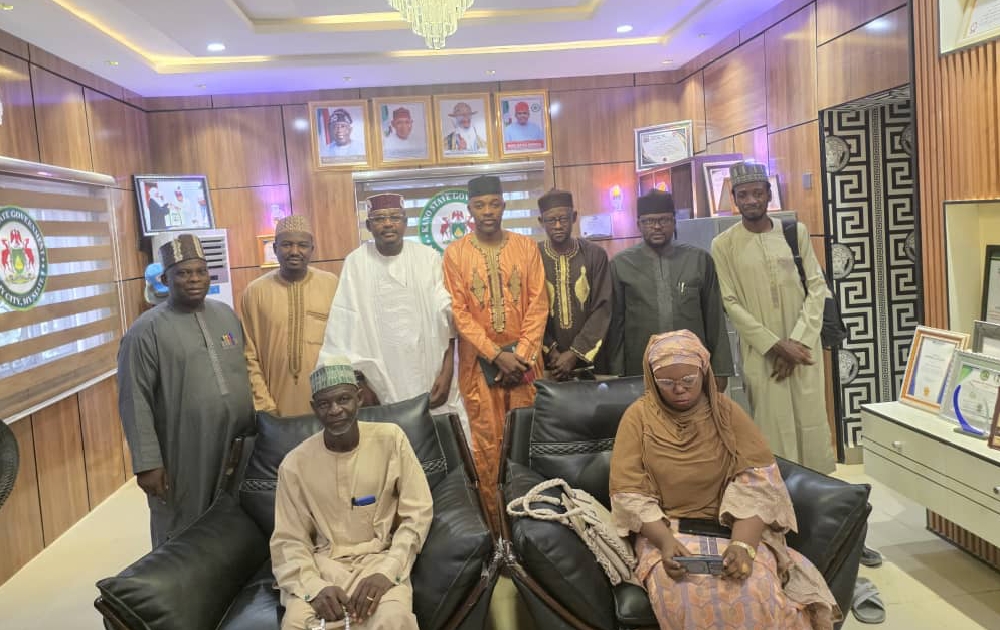
The Kano State Accountability Forum on Education (K-SAFE) says it has tracked nearly 1,000 education projects across the state as part of efforts to promote transparency, accountability and effective service delivery in the education sector.
KANO FOCUS the coalition’s Co-Chair, Dr Auwalu Halilu, disclosed this on Wednesday during an advocacy visit to the Kano State Ministry of Public Procurement and Project Monitoring.
Dr Halilu said K-SAFE had monitored projects in more than six local government areas, covering interventions implemented by the State Universal Basic Education Board (SUBEB), Kano State Senior Secondary Education Management Board and Local Education Authorities (LEAs).
He explained that the monitoring exercise involved physical inspections and documentation of projects through photographs, videos and geographical locations.
According to him, reports of the findings had been submitted to relevant ministries, departments and agencies (MDAs), highlighting projects that met required standards and those requiring further attention.
He cited Rimin Gado Local Government Area, where the coalition tracked more than 80 education projects, adding that it planned to extend the exercise to all 44 local government areas of the state.
The K-SAFE Co-Chair said the visit was aimed at presenting the coalition’s activities to the ministry and exploring areas of collaboration in procurement and project monitoring.
He called for the inclusion of civil society organisations in procurement and monitoring processes, particularly tender board activities and field inspections, to strengthen independent oversight and provide them with firsthand information on government projects.
Dr Halilu also requested the ministry’s support in organising capacity-building programmes for civil society organisations on procurement procedures, due process, project standardisation, monitoring and evaluation.
He said such training would enhance civil society organisations’ understanding of procurement regulations and the technical requirements guiding project implementation.
Responding, the Commissioner for Public Procurement and Project Monitoring, Dr Nura Iro Ma’aji, welcomed the delegation and acknowledged the coalition’s contributions to supporting the state government’s efforts in the education sector.
He expressed the ministry’s readiness to collaborate with K-SAFE through information sharing and other relevant engagements to strengthen accountability and ensure compliance with due process.
“From our side, we are ready to work together because we know what they have been doing to support Kano State Government in the education sector,” he said.
Dr Halilu further disclosed that the coalition and its partner organisations had carried out the monitoring exercise without financial sponsorship, describing it as a demonstration of their commitment to transparency and accountability.
He reaffirmed K-SAFE’s commitment to sustaining engagement with relevant government agencies, civil society organisations and the media to strengthen oversight of education projects across Kano State.
Ibrahim Khalil
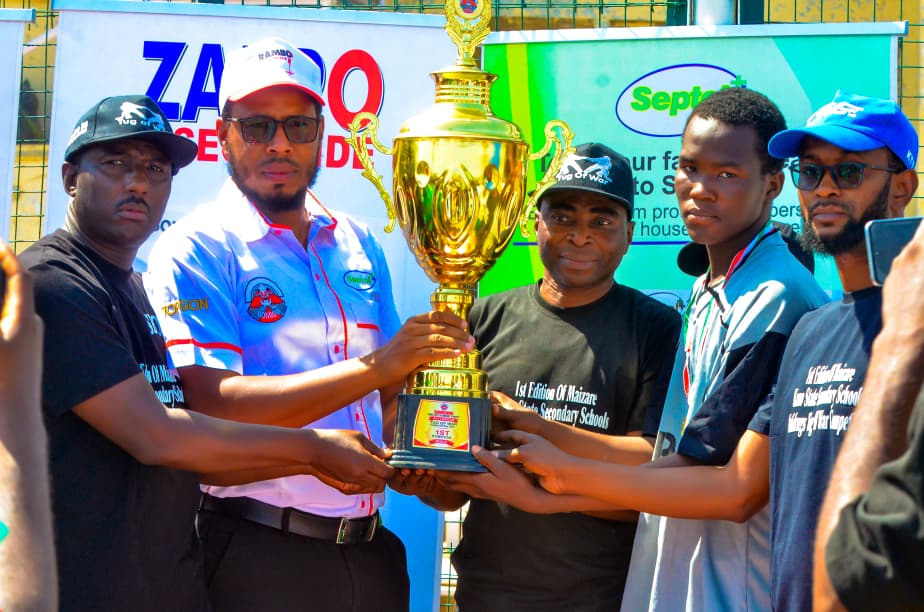
Government Secondary School (GSS) Army Day Bukavu has emerged champion in both the male and female categories of the maiden Kano State Secondary Schools Tug of War Competition.
KANO FOCUS reports that the school clinched the double victory at the competition, which ended on Wednesday at the Kano Pillars Stadium, Sabon Gari, Kano.
Governors College finished as runners-up in the male category, while Government Girls College (GGC) Kano secured second position in the female category.
The competition was organised by the Kano State Tug of War Association in collaboration with the state Ministry of Education, the National Drug Law Enforcement Agency (NDLEA) and the Kano State Sports Commission.
The maiden championship brought together secondary school students to promote teamwork, discipline, unity and sportsmanship, while raising awareness about the dangers of drug abuse.
Speaking at the closing ceremony, the Vice Chairman of the Kano State Tug of War Association, Jamilu Uba Adamu, described the competition as a successful initiative that had achieved its objectives.
He commended the Ministry of Education, Sports Commission, NDLEA, Gongoni Company Limited and MAGZO Pharmaceutical for supporting the event, particularly through the provision of T-shirts and Pocari Sweat drinks.
Also speaking, the Secretary of the Kano State Tug of War Association, Bashir Muhammad Sulaiman, who represented the Executive Chairman of the Sports Commission, Muhammad Tukur Babangida, reaffirmed the commission’s commitment to developing grassroots and school sports.
He said the initiative would help identify and nurture young sporting talents across the state.
The closing ceremony was attended by a member of the Kano State Football Association Board, Rilwanu Idris Malikawa Garu, representatives of the Ministry of Education, NDLEA, the Sports Commission and other stakeholders in the sports sector.
The organisers congratulated the winning schools and commended all participating institutions and partners for contributing to the success of the maiden edition.

Nafisah Yusuf Hassan, three others recommended for appointment as Kano high court judges

K-SAFE tracks nearly 1,000 education projects in Kano, seeks procurement monitoring role

GSS Army Day Bukavu Wins Maiden Kano Secondary Schools Tug of War Championship

Gov Yusuf Nominates Spokesperson, Sunusi Bature Dawakintofa as Commissioner

One Year Without Baba: A Son’s Tribute to Alhaji Yusuf Hassan

Indonesian scholar proposes waqf model to reform almajiri education in Nigeria

Veteran NTA manager Dahiru Biso loses wife at 58

Two suspected bandits killed, N10m ransom recovered in Kano

Gov Yusuf Joins APC Leaders at Kaduna Presidential Campaign Flag-Off as Kano Delegation Draws Attention

