
Headlines
Government is Boosting Education to Transform Nigeria – Dr Suwaiba Said

Nasiru Yusuf Ibrahim
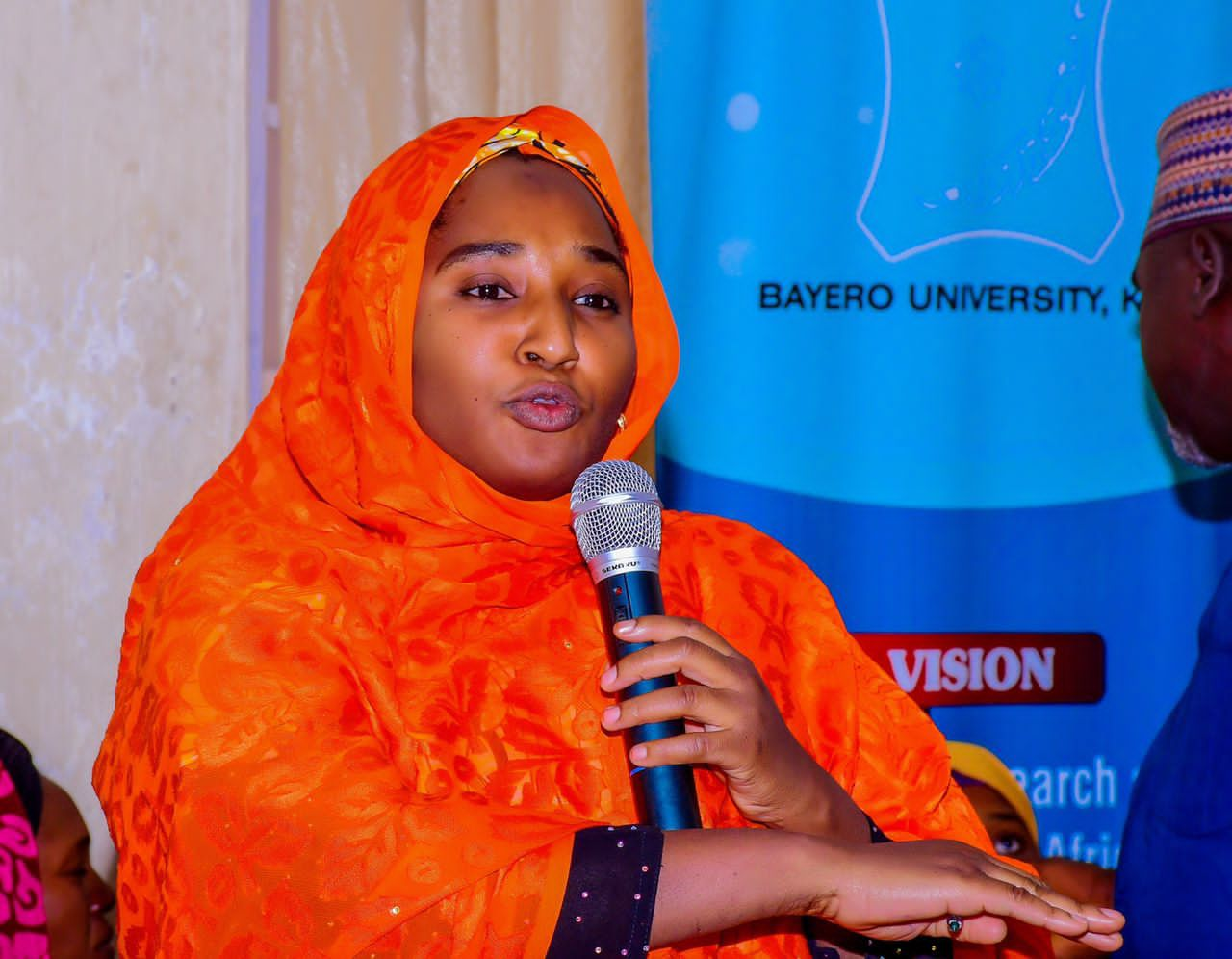
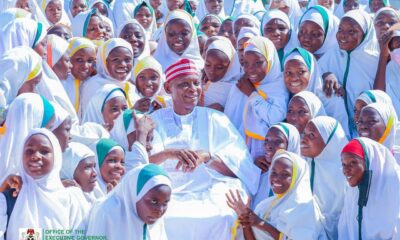
The Minister of State for Education, Dr. Suwaiba Said Ahmad, has reaffirmed the government’s commitment to revitalizing the education sector as part of efforts to transform the country for greatness.

Speaking today at the opening ceremony of the 7th Education for Sustainable Development Conference organized by the Bayero University’s Centre for Gender Studies at the Convocation Arena, the Minister emphasized the crucial role education plays in national growth and development, and reassured Nigerians that the renewed hope agenda of President Bola Ahmed Tinubu is genuine and not just a political gimmick.
The Minister’s speech has rekindled hope among Nigerians that the government is committed to transforming the education sector and improving the lives of citizens
Dr Suwaiba explained that the federal government’s commitment to revitalizing tertiary institutions aimed at not only to serve as centers of learning but as well as hubs of innovation and change. “Education goes beyond acquiring knowledge; it is about shaping minds to create a sustainable future.”
The ESD Program at CGS she said, had amplifies government’s commitment to this vision. She noted that by integrating sustainability into educational curricula, “we are preparing our students to tackle the pressing challenges of our time, including climate change, poverty, and inequality among others”.
The minister disclosed that Youth are central to this administration. Aligned with President Bola Ahmad Tinubu’s renewed hope agenda, government therefore welcome and prioritize such initiatives. “As the Minister of state for Education, I am committed to supporting the ESD Program and ensuring that our educational institutions are not just centers of learning but also hubs of innovation and change. This means investing in infrastructure, providing quality teaching materials, and fostering an environment where students can thrive,” she assured.
Earlier, the Vice Chancellor Professor Sagir Adamu Abbas in a welcome address he commended the centre for organising the conference describing it as timely and apt.
He said university has established the centre as part of the deliberate effort to promote societal growth and development and thank them for keeping to the mission and vision. Professor Abbas said the Management is always ready to support the activities of the Centre.
Also speaking, the Chairman of the occasion, Professor Salisu Shehu who is the Executive Secretary of Nigerian Educational Research and Development Council said poor leadership is the bane of the country’s development. He charged leaders to be honest and transparent in all their undertakings
In his address, the Chairman of BUK Governing Council, Dr Nasiru Yusuf Gawuna reaffirmed the need for leaders to ensure probity and accountability. He said Nigeria is a blessed country with potentiality to prosper if its resources could be judiciously utilized.
Earlier, the Director of the Centre for Gender Studies Ambassador Dr Safiya Nuhu Ahmed revealed that since 2017, Bayero University Kano has been organizing the Education for Sustainable Development (ESD) program, in collaboration with various stakeholders and partners. The ESD program has empowered more than 270 students from more than 20 tertiary institutions.
She said the program’s vision is to equip students with knowledge and skills around the SDGs, to advance the actualization of sustainable development. ESD Ambassadors thus become the bridges through which sustainable development prospects could be achieved. Commendably, BUK has been the pioneer University in Nigeria to train students annually on ‘ESD’, and to institute a mentorship program for the ambassadors’ progressive growth.
“The project essentially targets reducing inequalities between sexes, and age groups by giving skills that equip youth to feel powerful and confident to execute project that alleviate poverty, enhance food security and lead to sustained growth and development.” she declared.
Dr Safiya also hinted that the Project centers the participants’ activities within their environment, which is increasingly threatened by climate change, and integrates climate response into students learning and experience base (SDGs 1,2,10,13 and 17). The project integrates innovative techniques in grooming youth to understand the opportunities presented under the SDGs, and work towards eradicating poverty, ensuring food security and integrating women’s concerns in every development space. It presumes that if youth are trained to be passionate about the wide range of SDGs including SDG 5, gender mainstreaming will be a natural part of their decisions and policies, thus doing away with the need to lobby policy makers and leaders on integrate women’s issues and concerns and give them spaces to have a role in governance, development and other spheres.






Nasiru Yusuf Ibrahim
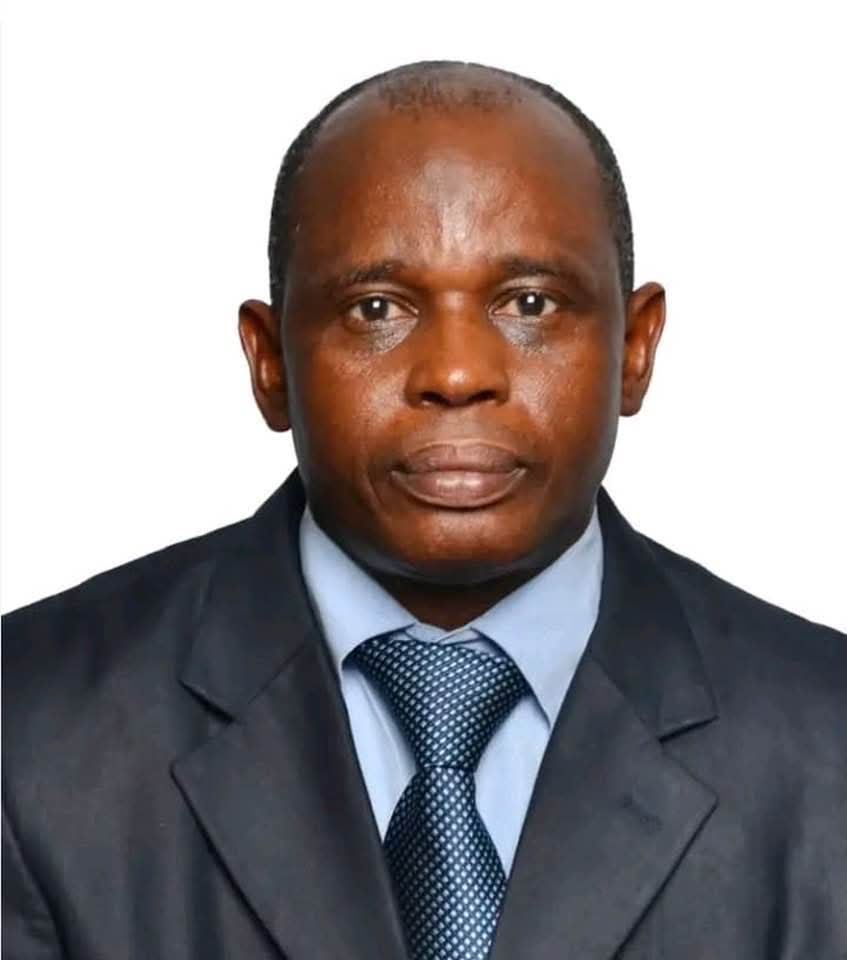
The National President of the Government Arabic Teachers College Gwale Old Students Association (GATCOSA), Professor Kabiru Isa Dandago, is dead.
KANO FOCUS reports that Prof. Dandago, a renowned Professor of Accountancy at Bayero University Kano, died on Wednesday evening. His passing has thrown the academic community and associates into mourning.
In a message shared on GATCOSA’s WhatsApp platform, a Director at the Kano State Ministry of Higher Education, Alhaji Nura Dandago, announced that the funeral prayer for the late professor would be held on Thursday at 9:00 a.m. at his residence in Rijiyar Zaki Quarters, Kano.
Until his death, Prof. Dandago served as the National President of GATCOSA and was widely respected for his contributions to education and public service. He previously served as Commissioner for Finance in Kano State during the administration of former Governor Abdullahi Umar Ganduje.
Just last Saturday, the late academic presented a paper on economic challenges in Northern Nigeria at a Ramadan Lecture organised by the Islamic Forum of Nigeria, where he spoke passionately about strategies for economic reform and regional development.
Colleagues and admirers described Prof. Dandago as a dedicated scholar and public servant who was deeply committed to building a prosperous and self-reliant nation. His death marks the end of a distinguished career in academia and public service.
Nasiru Yusuf Ibrahim
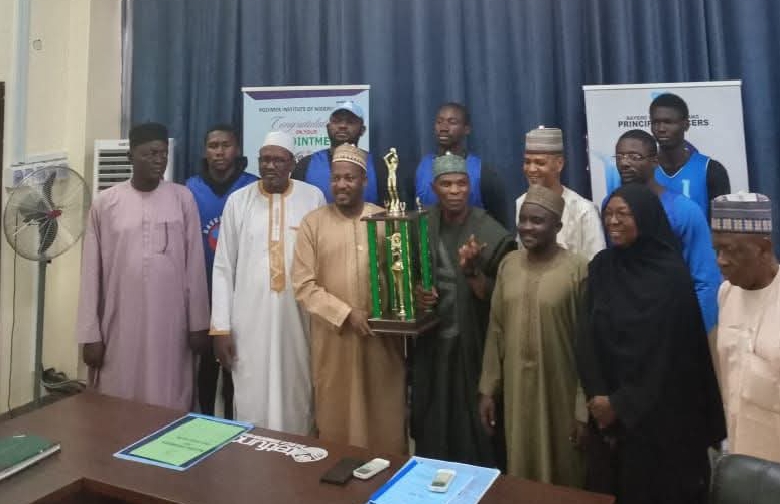
The basketball team of Bayero University Kano (BUK) has emerged champions of the Northwest 3×3 Basketball Championship hosted by Ahmadu Bello University (ABU), Zaria.
KANO FOCUS reports that the victorious team presented the championship trophy to the Vice-Chancellor, Prof. Haruna Musa, following their impressive performance at the tournament, which featured six universities from across Northern Nigeria.
BUK went unbeaten throughout the competition, winning all six matches and sealing the title with a thrilling 20–18 victory over the host institution, ABU Zaria, in the final.
In the group stage, BUK recorded a 10–0 win against Northwest University, Kano, and defeated the Air Force Institute of Technology 33–20. The team also edged the Federal University of Education, Kano, 11–9, before securing another dominant 10–0 victory over the Federal University of Transportation, Daura. They capped their remarkable run with the narrow 20–18 triumph in the final.
The victory marks BUK’s second championship title in the history of the competition, reinforcing the university’s growing reputation in collegiate sports.
Receiving the team, the Vice-Chancellor congratulated the athletes for bringing pride to the institution and urged them to sustain and surpass their current achievements. He reaffirmed the management’s commitment to strengthening sports development in the university and pledged continued institutional and individual support for the players’ sporting careers.
The presentation ceremony concluded with the formal handover of the trophy and cash rewards to the athletes in recognition of their discipline, teamwork and excellence.
Nasiru Yusuf Ibrahim
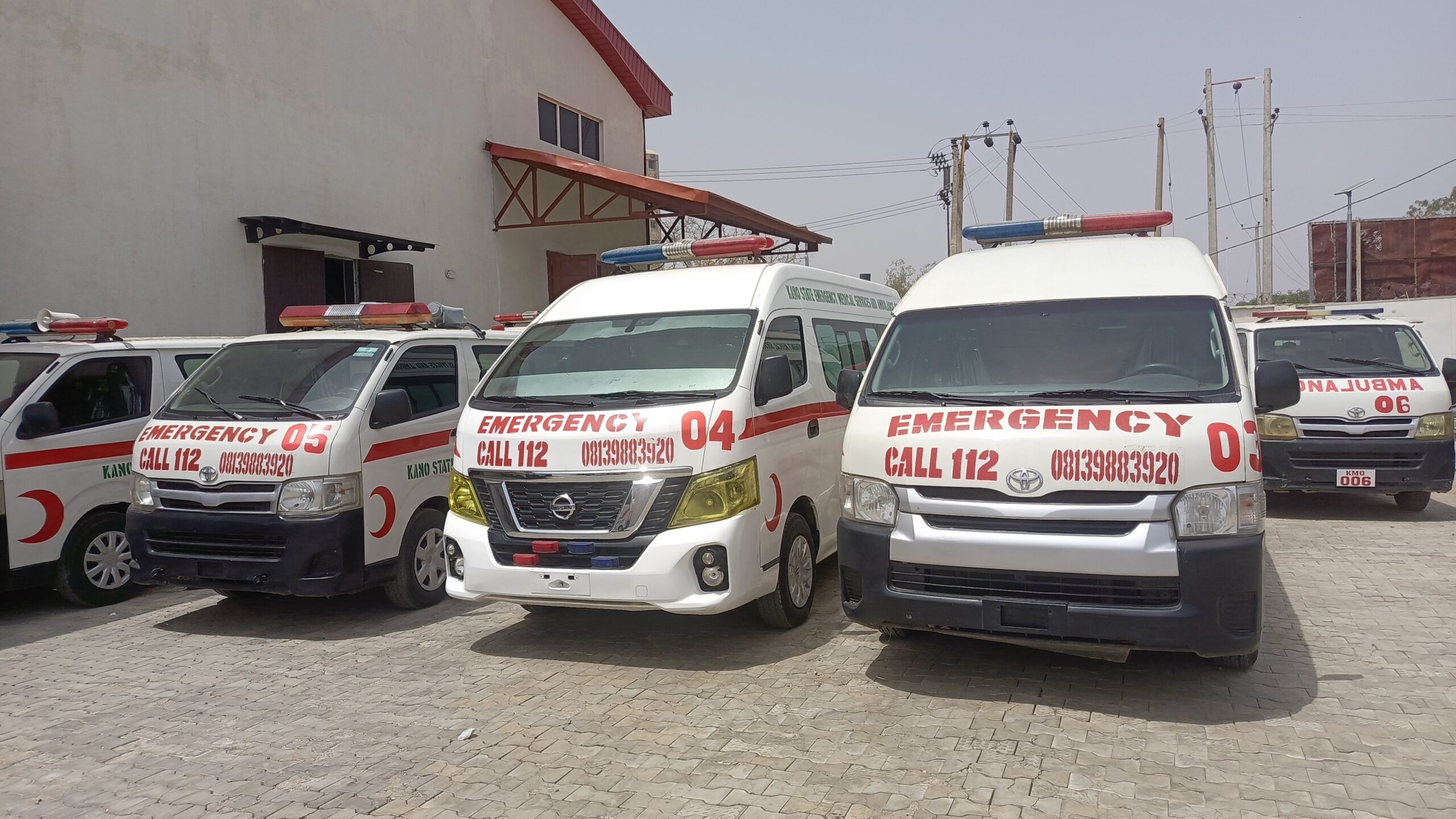
Kano State on Tuesday rolled out the State Emergency Medical Services and Ambulance System (KN-SEMSAS) as part of efforts to strengthen emergency response and improve access to timely healthcare across the state.
Speaking at the ceremony, the Commissioner for Health, Dr. Abubakar Labaran Yusuf, commended the governor for procuring 20 ambulances for the programme, describing the initiative as a strategic step to align the state with ongoing national emergency health interventions. He noted that a formal inauguration of the scheme would be held at a later date.
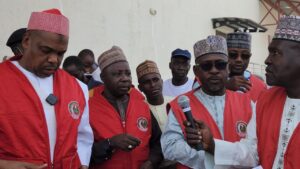
Dr. Abubakar Labaran Yusuf
Dr. Yusuf said the ambulances would play a critical role in transporting pregnant women to hospitals during labour, thereby reducing maternal and infant mortality. He added that any patient conveyed to a hospital through the scheme would have their transportation costs covered by the government.
He also called on members of the Guild of Medical Directors to support the initiative by procuring additional ambulances to complement government efforts.
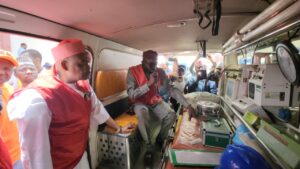
Dr. Abubakar Labaran Yusuf inspecting the ambulances
According to the commissioner, the vehicles are expected to respond to distress calls within the shortest possible time, ensuring prompt medical attention for residents in need.
Dr. Yusuf further stated that KN-SEMSAS would provide free, coordinated pre-hospital and emergency care services statewide. He described the establishment of the system as a major milestone in strengthening emergency medical response, reducing preventable deaths, and improving access to life-saving care for the people of Kano State.
The event was attended by the Director-General of the Drugs and Medical Consumables Agency, Pharmacist Ghali Sule; the Executive Secretary of the Kano State Contributory Healthcare Management Agency (KASCHMA), Dr. Rahila Aliyu Mukhtar; and the Director-General of the Kano State Centre for Disease Control (KNCDC), Prof. Mahmoud Adamu Abbas.
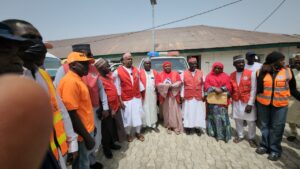
Group Picture
Goodwill messages were presented by representatives of various stakeholders, including the Lafiya Project, the Kano State Accountability Mechanism (KanSLAM), and the Kano State Fire Service, among others.

Abba Care: A Lifeline of Compassion in Kano State

GATCOSA President, Prof. Kabiru Isa Dandago is dead

BUK clinches Northwest 3×3 basketball title at ABU Zaria

Kano rolls out emergency medical services, deploys 20 Ambulances

APC constitutes committees for Kano state congress

Lami Maccido, first person to appear on screens of NTA Kano, CTV 67, dies at 72

Kano begins Ramadan food distribution as Gov. Yusuf constitutes feeding committee

Kano Police announce movement restrictions ahead of assembly by-elections

K-SAFE appeals to Kano Executive Council to pass revised education bill

