
Opinion
Kperogi: A captive of raw emotions


Professor Aliyu Barau
In adding my voice to the latest Kperogi’s punch on the Emir of Kano MSII; I opt to go the way of science. Scientists deploy tools such as ‘research questions’ to find answers for what is unknown and use ‘research hypothesis’ on things which little is known about both in theory and practice. Examples of research questions could be: ‘can influential individuals help the government’s economic policies?’; or ‘can an Emir speak openly in a democratic setting? Examples of research hypotheses could be: ‘Kperogi is a confused academic and journalist’; or ‘Kperogi is not a sadist academic.’ After conducting a study scientists find answers to the research questions through multiple opinions, perspectives, and contexts that deepen our understanding. For research hypotheses, we accept or reject whether Kperogi is indeed a sadist or not, a confused academic/journalist or not. If you profess professorship, you must divorce sentiments. Kperogi’s overloaded bag of insults are unguided by science or decent knowledge. For him, English is a language and a rough and raw tool to misinform the uninformed living in the neo-Babel Tower.
According to myths, arrogance and ignorance made humans build the Tower of Babel to outsmart God. Then, God avenged by sowing confusion and strife among them by making them speak different languages. When humans cannot understand each other bitterness flourishes. Thus, language underpins conflicts and is a strong weapon of disseminating misinformation and disinformation. On the other hand, the Ivory Tower is the rendezvous of knowledge, though an idiom – to ‘live in the Ivory Tower’ denotes being inexperienced or disconnected from the world realities. Nigeria is a Babel Tower in its own right and its Ivory Tower is both amazing and disgusting. Kperogi belongs to both towers – one for a curse and the other for a cause.
I am prompted to pick holes in the ways Kperogi takes a swipe on Mallam Muhammadu Sanusi II, the Emir of Kano. Of course, I am not raising a firewall to fortify the Emir. It is apparent that Sanusi has been in the crosshairs of Kperogi – who lays siege looking for any possible angle to strike. I am particularly distressed by the hideous and superficial scholarship that Professor Kperogi personifies. In 2022, I felt it was compelling to respond to Kperogi’s nonsense when he shamelessly threatened to renounce his Nigerian citizenship should Tinubu emerge as Nigeria’s President. I don’t think Kperogi is the right person to write about the rift between Tinubu and Sanusi because both of them are clowns in the sight of his pen. I know it is not a repentance, and I hope it is not a means to curry favour with Tinubu’s camp. Writing on Sanusi’s Lagos outburst, I expect Kperogi to be deeply critical and analytical.

Academics and outstanding journalists have emotions, but their professionalism guides them to be careful, disinterested, and cautious. I remember the clash of the African giants – Ali Mazrui and Wole Soyinka in the 1990s. It was a merciless and smoldering battle of pens from whose storm settles dazzling knowledge and mastery of language. The duo fired salvos at each other with supreme argumentation exuding sounds and aromas of philosophy, faith, science, logic and above all critical thinking. Kperogi’s attacks on Sanusi are essentially based on ‘out of context statements’ and very unscholarly. Expectedly, the Tinubu’s government responded through boilerplate statements typical of the Nigeria Government media portfolio. For Kperogi, everything is about Sanusi’s hubris and unguarded orals. To me, there is more to this, the examples of questions and hypothesis that I have raised drive how I respond to Kperogi’s unscholarly take on the ‘text’ instead of the ‘context’.
African leaders like their counterparts everywhere can be understood better by looking at their complete lifecycle. This can be achieved through readings to dissect their histories, thinking, feelings, physique and emotions. PBS’ Frontline documentaries cover leaders such as MbS, Putin and Xi Jinping by tracing their lifecycle and stages. Each film on these personalities traces their childhood moments to background how and why they behave the way they do. Critics of Sanusi should at least use Johari Window theory (from Joseph Luft and Harrington Ingham) to understand him in light of the theory’s four windows. Although this theory is meant for individuals to understand themselves heuristically, we can apply it in understanding why people behave the way they do.
There are many Nigerians – living under democratic atmosphere- who wish to see Sanusi and the like silenced or be as silent as a statue. Such people think traditional rulers are meant to be permanently reticent. Such notion or belief is actually backgrounded in colonial mentality and is aimed at gagging the colonized. The British royals are known for observing what is called ‘stiff upper lip’. I am not disputing royal etiquettes which also weakens progressively with time. However, in recent times, we have seen how Prince Harry, born by the stiff upper lip, butchered it in the most horrendous way. Even the heir-apparent, Prince William is widely reported calling the royal stiff upper lip dangerous to their mental health. Kperogi should learn to let Sanusi speak his mind. On the other hand, it is insulting that traditional rulers are caged as ‘agents’ of every governor or government – the good, the bad, the ugly.
On the matter of his friends, unknown to Kperogi, methinks Sanusi plays very smart and proud in his talks. As an economist, he knows the value of the ‘Stop Rule.’ It is called the hard-and-fast simple rule of avoiding frustration. Gerald M. Loeb (1899-1974) in his classic, The Battle for Investment Survival cautioned that investors must apply a Stop Rule once the values start declining. Maybe, Sanusi applies the Stop Rule to his friends whose behaviors apparently honk at him signaling devaluation of the friendship. Many scientists postulate that only 20% and to the maximum of 50% of our friends are real, others are just numbers.
Relatedly, many people felt Sanusi is a narcissist for saying he withheld his advice to the government. I see it differently, individuals with knowledge and proven track records can help governments to turn around the economy. The controversial US ‘Prime Minister’ Elon Musk as Jeffery Sachs calls him is an example. Today, no one in Nigeria would deny that petroleum pricing including subsidy removal is the most frustrating economic issue for both Government and the citizens. Again, nobody can deny that Ali Dangote is the most important private sector player in the petroleum sector. In Nigeria, nobody can deny that the Government has frustrated Ali Dangote to the highest skies. Nobody can deny that Dangote is inflammably incensed. Dangote’s historic shame-breaker investment in the sector should earn him the best spectacular rewards and not the hell he sees. In the US, Beta, Apple, Amazon, Google, Walmart and many others are seen as the face of America and these giants enjoy apparent and cryptic support from every Government in the US. In China Tiktok, BYD and Alibaba and the rest are seen by the Government as the scions of the Government. Dangote is being orphaned and humiliated. This dehumanizing treatment Dangote is receiving is costly for Nigeria. It will take years and prime efforts to fix it. I learned that some investors from North Africa recoiled on the grounds that if Dangote is mishandled in his fatherland, what would be for them. Now, nobody in Nigeria can deny that Emir Sanusi and Dangote are trusted friends. I assume Sanusi could ‘help’ the government to reconcile with Dangote. The Government needs to be assisted to restore the confidence of local and foreign investors. Dangote testimony is about the only one that investors would believe and not any choreographed statements of the Government.
This is how I choose to deconstruct Kperogi by adding my opinion and perspectives to answer the question I raised in the beginning. It is left to the reader to either accept or reject my hypothesis on who actually Keprogi is. One thing I am sure of is that Kperogi’s pen swims in raw emotions. I repeat that betrays his academic ranking and position which I queried for being not-flying in my earlier treatise on his petty products.





Safiyanu Bichi
When Abia State Governor Alex Otti recently pulled off his shoe and proudly declared, “This is Aba Made,” the gesture went beyond the shoe itself. It offered a simple but powerful demonstration of what deliberate government patronage can do for local industry.
The message for Kano is equally important: where is Made-in-Kano in government procurement?
This is a question Kano can no longer afford to ignore.
For decades, Kano has been one of Nigeria’s important commercial and industrial centres. The state has a long tradition of manufacturing, textile production, leatherwork, furniture making, tailoring, metalwork, food processing and a wide range of small and medium-scale enterprises.
Yet having businesses and skilled artisans is not enough. Local industries need markets, and government procurement is one of the largest markets available in any economy.
The Kano State Government spends billions of naira annually on infrastructure, furniture, uniforms, clothing, construction materials, office equipment, vehicles, signage and other goods and services. The critical question is how much of this expenditure remains within Kano and how much leaves the state.
This is where a deliberate Kano Local Content Policy becomes necessary.
Every major state government project and Bill of Quantities (BOQ) should, where technically and economically feasible, contain a clearly defined local-content component. A target of 40 per cent Kano content could provide a practical starting point.
The idea is not to sacrifice quality or value for money. Rather, it is to ensure that qualified Kano-based businesses are given a fair opportunity to compete for government patronage.
If the government buys furniture from Kano manufacturers, contracts uniforms from local textile and garment producers, procures locally manufactured footwear and leather products, and sources other goods and services from competent businesses within the state, public expenditure can generate a multiplier effect across the local economy.
The money does not simply disappear after a government contract is executed. It circulates.
A furniture company pays its workers. Workers spend their earnings in local markets. Manufacturers purchase materials from other businesses. Transporters earn income. Artisans receive more orders. Businesses expand and potentially employ more people.
In other words, government procurement can become an instrument of economic development.
This is particularly important at a time when Kano needs to create more productive opportunities for its growing population, especially young people.
The state does not have to begin from scratch. Kano already possesses the human capital, entrepreneurial culture and business networks required to support a stronger local-content regime.
What is needed is deliberate policy, transparent implementation and consistent monitoring.
The government could begin by identifying categories of goods and services that can realistically be sourced within Kano. It could establish a database of qualified local manufacturers, contractors, artisans and suppliers, while maintaining clear standards for quality, pricing and delivery.
There should also be safeguards against turning local-content policy into another avenue for patronage. The objective should not be to favour politically connected businesses. It should be to create opportunities for genuine Kano-based enterprises that can meet established standards.
That distinction matters.
A successful local-content policy must combine local patronage with competition, quality, transparency and accountability.
The experience highlighted by Governor Otti offers Kano an opportunity for reflection. A simple act of wearing a locally made product can draw attention to an entire ecosystem of producers, workers and entrepreneurs behind that product.
Kano can create its own version of that story.
Imagine a government school furnished by Kano manufacturers, public institutions using locally produced furniture, uniforms supplied by Kano garment producers, official events showcasing locally produced textiles and leather goods, and government projects deliberately creating opportunities for competent local suppliers.
That would make “Made-in-Kano” more than a slogan.
It would make it part of government’s economic strategy.
Kano has the people. Kano has the skills. Kano has the entrepreneurs. Kano has the markets.
What is required is a deliberate decision to connect government spending with the productive capacity of the state.
Let Kano Government buy Made-in-Kano.
A 40 per cent Kano Local Content target should not be treated as another political promise. It should be the beginning of a measurable procurement policy that keeps more public money within the Kano economy, strengthens local businesses, supports jobs and helps rebuild the productive foundation of the state.
The real question is no longer whether Kano can produce.
The question is whether Kano is ready to buy what Kano produces.
Safiyanu Bichi is a member of the Kano Budget Working Group.
Dr Auwalu Halilu
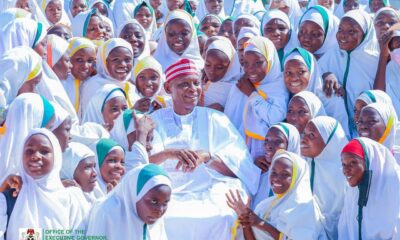
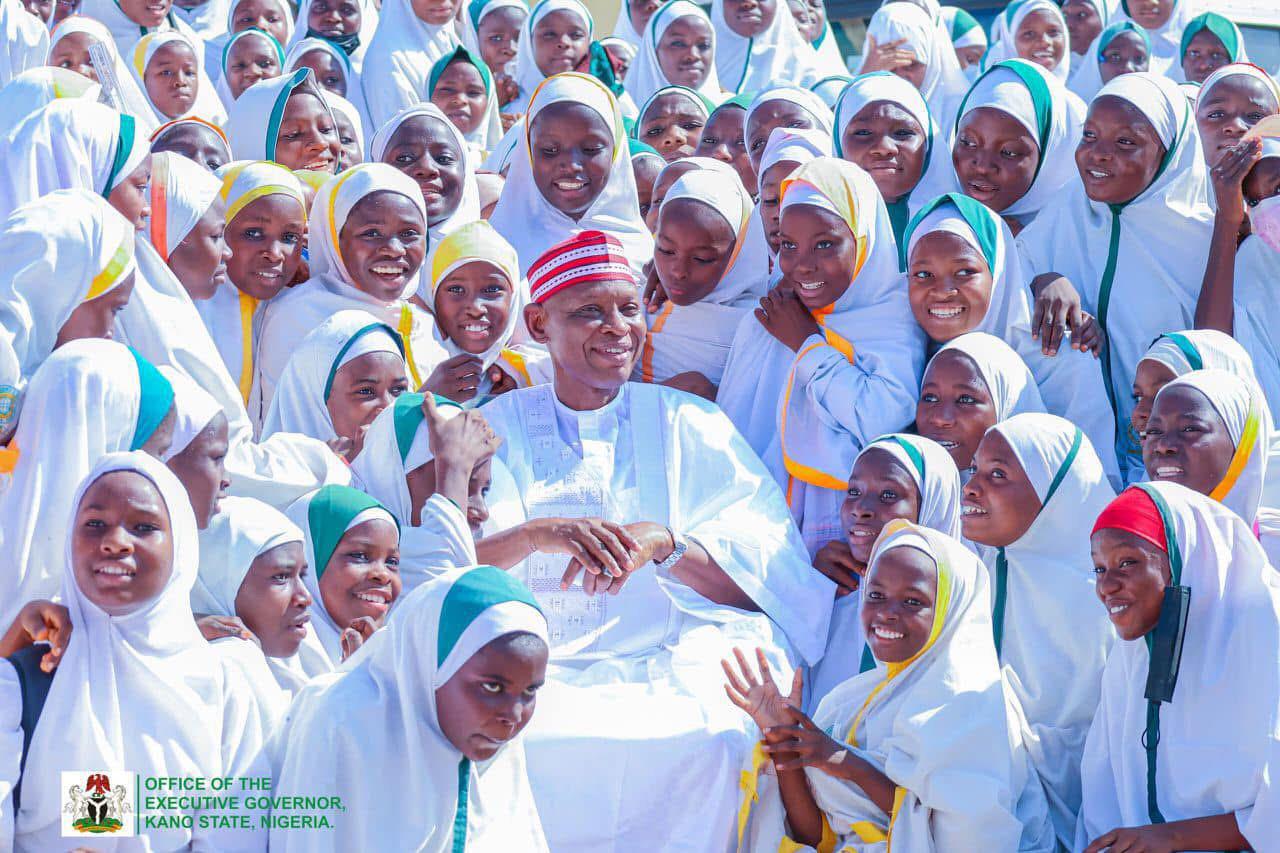
Kano State has recorded the highest number of candidates nationwide who obtained at least five credits, including English Language and Mathematics, in the 2026 Senior School Certificate Examination (SSCE) conducted by the National Examinations Council (NECO).
The state recorded 74,413 candidates meeting the benchmark, up from 68,159 in 2025. The increase represents 6,254 additional successful candidates, or approximately 9.2 per cent year-on-year growth.
Kano’s 2026 figure placed it ahead of Lagos, which recorded 72,496 candidates, and Oyo, with 55,543 candidates.
The result marks the second consecutive year in which Kano recorded the largest absolute number of candidates meeting the five-credit benchmark, including English Language and Mathematics.
The development provides an important opportunity to reflect on the direction of education in the state. While the figures are significant, the relevant measure here is the absolute number of successful candidates. Kano has one of Nigeria’s largest school-age populations and examination cohorts, meaning that the scale of achievement involves tens of thousands of young people attaining a credential that can open pathways to tertiary education, technical and vocational education, employment and further training.
Educational outcomes are rarely produced by a single intervention. They typically emerge from the interaction of financing, teachers, infrastructure, learning materials, school leadership, assessment, family support, community participation and accountability.
Kano’s recent performance should therefore be viewed within the wider pattern of sustained investment and reform in the state’s education sector.
State of emergency on education
One of the defining decisions of the current administration was the declaration of a State of Emergency on Education in June 2024.
The declaration acknowledged structural challenges including inadequate classrooms, teacher shortages, overcrowding, poor learning environments, large numbers of out-of-school children and shortages of teaching and learning materials.
It subsequently created a platform for accelerated interventions in classroom construction and renovation, teacher recruitment, school furniture, textbooks and learning materials, school uniforms, examination support and broader system strengthening.
Its significance lies not only in individual projects but also in the signal that education has been placed at the centre of the state’s development priorities.
Kano’s budgetary pattern is another indicator of the priority attached to education.
In 2024, education accounted for approximately 29.95 per cent of the state budget. In 2025, the allocation rose to about N168.35 billion, representing roughly 31 per cent of the budget. For 2026, approximately N405.35 billion was allocated to education, again accounting for around 30 per cent of the state’s overall spending plan.
Consistency across successive budget cycles is important because education transformation requires predictable financing. Children remain in school for many years, teachers require continuous professional development, infrastructure needs maintenance and learning reforms take time to mature.
However, budget allocation should not be treated as the final measure of success. Sustainability requires transparent reporting on releases, actual expenditure, procurement, outputs and learning outcomes.
Kano should increasingly publish the full chain from budget commitment to classroom-level impact.
Examination support
For low-income families, examination fees can determine whether a young person completes secondary education with a recognised certificate.
The government’s examination sponsorship therefore represents both an education intervention and a social-protection measure.
In 2025, the state approved more than N3 billion for examination registration support covering approximately 141,000 students across qualifying examinations, including WAEC, NECO, NABTEB and NBAIS. Additional support was provided to eligible students in community and voluntary schools.
In 2026, the intervention expanded substantially, with approximately N4.4 billion committed to examination fees for more than 150,000 students.
By absorbing these costs for eligible learners, government reduces the risk that poverty becomes the final barrier between years of schooling and an examination certificate.
The policy is particularly important in a state with a very large population and significant numbers of economically vulnerable households. Examination sponsorship should therefore be viewed as an equity measure that widens participation and helps ensure that family income does not alone determine access to final certification.
Teachers remain central
Classrooms and learning materials are essential, but teachers remain the human engine of the education system.
Kano has pursued large-scale teacher recruitment and absorption as part of its reforms. In September 2025, the state announced the absorption of 4,315 former BESDA volunteer teachers into permanent and pensionable employment.
In July 2026, appointment letters were presented to 8,588 teachers, comprising 4,900 newly recruited and trained teachers and 3,688 BESDA teachers.
These numbers matter because teacher shortages affect class sizes, subject coverage, instructional time and learning outcomes.
Recruitment, however, must be matched by effective deployment. Rural communities, underserved local government areas, girls’ schools and schools with shortages in English, Mathematics, science and technology subjects require particular attention.
Continuous professional development is equally important. The state’s work around the revised competency-based basic education curriculum should be sustained so that teachers are equipped to develop critical thinking, creativity, digital literacy, entrepreneurship, civic values and problem-solving skills rather than relying mainly on rote learning.
Infrastructure and learning materials
The condition of a school shapes attendance, dignity, safety and concentration. Kano has therefore invested in classroom renovation, construction, furniture and other school-level inputs.
Reported interventions include more than N1.9 billion for the renovation of primary school classrooms and approximately N2.925 billion for additional classroom construction.
In 2024, the government also announced the distribution of 73,800 three-seat desks across the state’s 44 local government areas.
Large-scale provision of school uniforms has complemented these investments. Reports indicated the distribution of hundreds of thousands of uniforms, while a further N1.148 billion was approved in 2025 for free uniforms for Primary One pupils in the 2025/2026 academic session.
These may appear to be simple inputs, but a uniform, desk, textbook or safe classroom can be decisive for a child from a low-income household.
The next challenge is to ensure that infrastructure and materials are equitably distributed, properly maintained and linked to measurable improvements in attendance and learning.
Partnerships remain important
Kano’s education challenge is too large for state resources alone. Sustainable transformation requires effective collaboration with federal institutions, development partners, civil society, communities and the private sector.
UBEC-supported interventions have contributed classrooms and teacher support across the state, while programmes such as the UK-supported Partnership for Learning for All in Nigeria (PLANE), UNICEF, Plan International and Save the Children have supported education planning, foundational literacy and numeracy, teacher development, data generation and teaching and learning materials.
The most sustainable partnerships are those that strengthen government systems rather than create parallel structures.
As externally funded programmes close, Kano will need to institutionalise effective approaches, retain trained personnel, budget for successful interventions and preserve the data and monitoring systems developed through such partnerships.
Beyond the NECO table
The movement from 68,159 successful candidates in 2025 to 74,413 in 2026 represents 6,254 additional young people meeting the five-credit benchmark, including English Language and Mathematics.
These are not merely examination statistics. Each number represents a student, a family, teachers, school leaders and communities.
At Kano’s population scale, even modest improvements in system effectiveness can affect tens of thousands of young people.
Education policy should therefore be understood not only as social-sector spending, but also as human-capital investment, poverty reduction, economic development and social stability.
A young population becomes a demographic dividend only when young people acquire knowledge, skills, values and opportunities.
NECO performance is an important indicator, but examination success should not become the final objective of education.
Kano needs young people who can read with comprehension, use mathematics, think critically, communicate effectively, solve problems, use technology, work collaboratively, create enterprises and participate responsibly in society.
The education strategy should therefore connect basic and secondary education more deliberately with technical and vocational education, tertiary education, entrepreneurship, digital skills, innovation and labour-market opportunities.
The long-term test of education investment is not only how many candidates pass an examination, but how effectively graduates convert education into productive lives and social contribution.
What comes next
The second consecutive NECO achievement also raises questions about how the gains can be sustained and deepened.
Kano should develop a medium- and long-term financing framework that protects education investment while shifting attention from allocation alone to releases, expenditure efficiency and value for money.
The Ministry of Education should publish an annual education performance report by local government area covering enrolment, attendance, retention, transition, completion, learning outcomes, teachers, infrastructure, WASH, school safety, gender, disability inclusion, examinations and financing.
Government should also analyse NECO results beyond absolute numbers by tracking percentage pass rates, local government and school performance, subject-level outcomes, gender gaps, urban-rural differences and year-on-year trends.
Examination sponsorship for indigent learners should be protected, with transparent eligibility criteria and a digital beneficiary database to improve targeting, prevent duplication and track beneficiaries’ progression.
Teacher quality should receive as much attention as teacher numbers through institutionalised continuous professional development, mentoring, classroom observation and data-driven deployment, particularly in underserved rural communities and critical subjects.
There is also a need for incentives for rural teacher deployment, including accommodation, transportation support and career incentives that make difficult-to-reach postings more attractive and sustainable.
Learning should be measured before the final examination. Regular state-level assessments in literacy, numeracy, science and other competencies at key stages can help identify and address learning gaps early.
The state should also establish a preventive maintenance culture involving education authorities, school leadership, School-Based Management Committees and communities so that renovated facilities remain functional.
Action on out-of-school children should be intensified through ward- and household-level data to identify who is out of school, why they are out, where they live and what interventions are required.
Girls’ education should remain a priority through sustained scholarships, re-entry opportunities, safe learning environments, WASH facilities, female teacher deployment and community engagement.
School safety and resilience should also be strengthened through early-warning systems, safeguarding, emergency preparedness, community intelligence and collaboration with relevant security institutions.
Digital education should be expanded through improved access to devices, connectivity, digital learning resources and teacher digital competence, including in rural schools.
Credible technical and vocational education and training pathways should also be expanded to give secondary-school leavers stronger routes into technical education, apprenticeships, entrepreneurship and employable skills.
An education research and innovation hub could further connect government, universities, civil society and development partners to evaluate reforms, generate evidence, test innovations and translate research into policy.
Civil society, professional bodies, the media and platforms such as K-SAFE, CSACEFA, OGP and GEP should also be supported to monitor commitments, expenditure and outcomes constructively.
A story of shared responsibility
The emerging Kano education story is encouraging.
In 2025, 68,159 candidates obtained five credits and above, including English Language and Mathematics, in NECO. In 2026, the number rose to 74,413 — 6,254 additional successful young people in one year.
Behind the figures is a wider pattern of public investment: education receiving around 30 per cent of successive budgets; billions of naira committed to examination sponsorship; thousands of teachers recruited or absorbed; classrooms renovated and constructed; desks, uniforms and learning materials provided; and partnerships strengthened with federal institutions and development organisations.
These investments provide an enabling environment for improved participation and learning outcomes.
At the same time, the NECO result should not be attributed to any single intervention or individual. Students, teachers, parents, school leaders, communities, education agencies, federal institutions and development partners all contribute to educational outcomes.
The stronger lesson is that sustained political prioritisation and public investment can create conditions in which progress becomes possible.
Governor Abba Kabir Yusuf and the Kano State Government deserve recognition for placing education prominently within the state’s development agenda, while teachers, parents, communities and, above all, the students deserve recognition for converting opportunity into achievement.
The second consecutive NECO achievement should therefore send two messages: celebration that progress is being recorded, and responsibility to sustain and deepen that progress.
Kano’s ambition must ultimately be larger than leading a national table in absolute candidate numbers.
It should be a state where every child enters school, every child learns, every learner is safe and included, every teacher is competent and supported, and every young person leaves education with the knowledge, character and skills needed to build a productive life.
Education transformation is not achieved in one budget year, one examination cycle or one administration. It is a generational project.
When a society consistently invests in its children, strengthens its teachers, supports its schools and holds its institutions accountable, it is not merely funding education — it is investing in its future.
Dr Auwalu Halilu, Co-Chair (CSO), Kano State Accountability Forum on Education (K-SAFE).

Lamara Garba
Kano is beginning to speak with a more united political voice. As the 2027 general elections draw closer, politicians who once occupied different political camps are increasingly converging under the banner of the All Progressives Congress (APC), creating a political landscape that is noticeably different from the familiar pattern of fierce rivalry and fragmentation.
The arrival of prominent politicians, former elected officials, party leaders and thousands of supporters from different political backgrounds is therefore more than a routine exercise in political realignment; it signals an emerging consensus around stability, continuity and the search for a broader political platform capable of carrying Kano into its next chapter.
The significance of this development extends beyond the movement of politicians from one party or political group to another. It represents an emerging political convergence and a growing search for unity, stability and a shared vision for Kano. The entry of prominent political figures on Saturday, 5th September 2026, including Senator Rufa’i Sani Hanga and former Governor Kabiru Ibrahim Gaya, alongside other experienced politicians and stakeholders, has added a new dimension to the political equation in the state. Their movement into the APC, together with the reported influx of thousands of new members, suggests that Kano’s political landscape is undergoing a significant realignment as the state prepares for another crucial electoral contest.
Politics is ultimately a game of confidence. Political platforms may change and alliances may evolve, but people are generally drawn towards where they see hope, opportunity and the prospect of a better future. That is why the growing political convergence around Governor Abba Kabir Yusuf and the APC deserves attention. The movement of politicians into the APC is undoubtedly significant, but the more important question is why the political landscape is changing.
One possible explanation lies in the growing public acceptance of Governor Yusuf and the direction of his administration, particularly its emphasis on people-centred policies, human capital development and programmes intended to improve the lives and prospects of citizens.
At the heart of this approach is a simple but profound philosophy: government must ultimately be about the people. The greatest political strength of any leader does not lie only in the number of influential personalities standing beside him, but in the confidence of ordinary citizens who believe that government understands their needs and aspirations. People do not live on political slogans; they live with the consequences of government policies. Parents worry about the education and future of their children, young people seek opportunities to develop their potential, families require access to essential services, while communities expect development that they can see and experience. It is in this relationship between government and the people that Governor Yusuf has sought to build the political foundation of his administration.
The emphasis on people-centred policies and human capital development reflects an understanding that the most valuable resource of Kano State is not merely what lies beneath its soil or the structures that stand above it, but its people. A government that invests in people is investing in the future; a society that educates its children is preparing tomorrow’s leaders; a government that creates opportunities for young people is building hope; and leadership that places human development at the centre of governance is laying a foundation that can outlive any political administration. This is why the question of continuity has become increasingly important as Kano moves towards 2027.
Development is not an event; it is a process. No meaningful policy achieves its full potential overnight. Educational investments require time, human capital programmes require consistency, while development plans need stability of leadership and the patience of the people. The argument for the continuity of Governor Yusuf’s administration must therefore be viewed beyond the narrow prism of political ambition. It is about allowing policies to mature, consolidating development programmes, deepening investments in the people and giving a government that has established a development direction the opportunity to take that journey further. This provides a philosophical foundation upon which the case for a second term can be made.
There is also a broader political significance in the growing convergence of leaders and supporters under the APC. For years, Kano politics has been characterised by intense competition, and political rivalry is not necessarily a bad thing because democracy thrives on choices, competing ideas and different visions for society. However, competition must never become a permanent source of division. The people of Kano deserve an election season that inspires confidence rather than fear, and they deserve political leaders who understand that the collective interest of the state is greater than personal disagreements. The growing unity therefore deserves to be encouraged because the coming together of political leaders with different histories and backgrounds provides an opportunity for Kano to reduce tension and strengthen democratic stability as 2027 approaches.
Kano is too politically important to remain trapped in endless divisions. Its population, commercial influence and political consciousness make it impossible to ignore, and whatever happens politically in Kano often carries consequences beyond its borders. The state therefore requires leadership capable of uniting rather than dividing, inspiring confidence rather than uncertainty, and placing development above partisan bitterness. Governor Yusuf’s growing political acceptance and the expanding support for the APC offer an opportunity to build such a broad political consensus, although political unity must always be accompanied by responsibility.
The arrival of influential politicians and thousands of new supporters should not create complacency. Rather, it should strengthen the determination of the government and the party to deliver more meaningful results. The true measure of political popularity is not the size of the crowd at a rally, but the confidence that remains in the hearts of the people after the political excitement has faded. That confidence must be earned continuously through performance, inclusive governance, accountability and policies that address the real needs of citizens. Governor Yusuf and the APC therefore have an opportunity to present the people of Kano with a compelling argument as 2027 approaches, but that argument should not rest merely on promises. It must rest on performance, policies and the visible impact of governance.
The people will ask what has been achieved, what has changed, what opportunities have been created and what remains to be done. They will ultimately decide whether the journey deserves to continue, and that is the essence of democracy. Yet the growing political convergence in Kano has already provided an important indication of the changing mood. The decision of prominent political figures and thousands of their supporters to come together under one broad political platform reflects a growing belief that unity and continuity may offer Kano a stronger path towards the future.
The coming together of these political forces has also helped to reduce some of the anxieties traditionally associated with election seasons. Where leaders are willing to dialogue, cooperate and place the larger interest of society above personal differences, the political atmosphere becomes more stable. For Governor Abba Kabir Yusuf, however, the greatest task remains governance. Political support can be won, but public confidence must be sustained; a leader must continue to listen to the people, a government must continue to respond to their needs, and development must continue to reach beyond political speeches into the daily lives of citizens.
The strongest argument for a second term will therefore be found not merely in the number of politicians who have joined the APC, but in the number of people whose lives have been touched by the policies and programmes of the administration. That is the true meaning of people-centred governance. As Kano moves towards 2027, the state appears to be entering a new political phase in which the convergence of experienced politicians, the growing support for the APC and the increasing confidence in Governor Yusuf have created a momentum that cannot easily be ignored. But the most important political force remains the people, and they will have the final word.
If the administration continues to deepen its people-centred policies, strengthen human capital development, sustain public confidence and promote political inclusion, then the argument for continuity will become even stronger. The politicians may have found a common umbrella, but the ultimate purpose of politics must remain the welfare of the people. If the emerging unity in Kano is sustained and translated into purposeful governance, then the road to 2027 may become more than a contest for political power; it may become a collective decision about the future Kano wants to build and the leadership it believes should continue that journey.
For Governor Abba Kabir Yusuf and the APC, unity has created an opportunity, but performance must justify it. The political realignment may be gathering momentum, but the enduring question will remain whether that momentum can be converted into better governance, greater opportunity and a more united Kano. In the final analysis, it is the people who will decide, and their verdict will be shaped not simply by political alliances, but by their lived experience of governance.
Lamara Garba, a veteran journalist, writes from Kano.

Kano Govt Orders Retired Civil Servants to Vacate Offices, Hand Over Government Property

Nigeria’s Data Demand Surges 47% as Stakeholders Seek Fresh Investment in Digital Infrastructure

Kano must make government procurement work for made-in-Kano

Kano Settles N32bn Pension, Gratuity Liabilities, Says Gov Yusuf

Family Planning: Experts Urge Nigeria to Remove Barriers to Contraceptive Access

Kano leads again as NECO successes rise to 74,413
Kano tops states in 2026 NECO results, Governor Yusuf hails students

INEC holds campus debate on elections, democracy at BUK

Kano Govt Suspends Durbar Processions, Horse Riding in Metropolis

