
Headlines
Tragedy in Kano: Four Sisters Die of Diphtheria in Two Weeks

By Mukhtar Yahya Usman
The small compound of the Maitama family in Hotoron Yan Dodo, Tarauni Local Government Area of Kano State, once echoed with the laughter of children.
Today, silence hangs heavy in the air, broken only by the muffled sobs of a father who has buried four of his daughters in less than two weeks.
For Malam Yusuf Maitama, life has changed forever. “I buried them one after another. Four of my daughters in two weeks,” he says, his voice trembling as he recounts the tragedy. “No father should ever go through this.”
A disease few to recognized

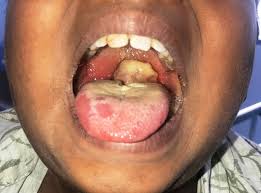
It started innocently enough. His youngest child, a lively girl under five, woke up with fever and sore throat. A whitish membrane appeared in her throat — a warning sign of diphtheria, though the family didn’t recognize it at the time.
“She became weak very quickly,” Yusuf recalls. “We rushed her to the hospital, but she didn’t survive that same day.”
Just days later, tragedy struck again. His seven-year-old daughter developed similar symptoms. This time, the family hurried to seek medical care, but it was too late. She died within two days.
“At that point, neighbors began saying maybe it was spiritual. But the doctors told me clearly — it was diphtheria,” he says, his eyes glistening with tears.
Wthen hospital beds aren’t enough
Soon after, his third daughter fell ill. She was admitted to Aminu Kano Teaching Hospital, where doctors warned that one of her kidneys was failing. Yet with no beds available, the family was forced to take her home temporarily.
“She died that very night,” Yusuf says, his voice heavy with regret.
Just days later, his fourth daughter also died, making the tally four funerals in less than 14 days. Only his eldest child survived, after receiving urgent medical treatment.
A community in fear
The Maitama tragedy has rippled across Hotoron Yan Dodo. Parents now live in fear, clutching their children tighter. Health workers have since moved in, fumigating the family house and vaccinating children in the neighborhood.
“This is a wake-up call for everyone,” says a community health volunteer. “When a disease wipes out almost a whole family, the entire community must pay attention.”
Diphtheria’s grip on Kano
The deaths come amid Kano’s ongoing battle with diphtheria, one of the deadliest vaccine-preventable diseases.
Since 2023, the state has recorded over 10,000 cases and nearly 1,000 deaths.
Health experts warn that low vaccination rates, delays in hospital visits, and poor health infrastructure are fueling the crisis.
A July 2025 study by the National Library of Medicine revealed that unvaccinated children face over double the risk of death compared to vaccinated ones. Even children with no vaccination records were found to have an 87% higher risk of death.
Government response
According to Kano State Ministry of Health spokesperson, Nablusi Abubakar Kofar Naisa, the majority of children who die from diphtheria are unvaccinated.
“If you hear of a death, it’s likely the child was not vaccinated. That’s the main issue. Immunization is free, yet many parents don’t take advantage of it,” he said.
The state government has since designated a special hospital for diphtheria cases, directed all hospitals to provide free treatment, and intensified vaccination campaigns.
A father’s unshakable loss
For Malam Yusuf, however, government statistics are far removed from his reality. His once lively home now feels hollow.
He remembers their laughter, the way they ran around the compound, the way the youngest always clung to his side. Now, he only has one daughter left.
“They were healthy. They were full of life. Then suddenly, they were gone,” he says, his voice breaking. “I still can’t believe it.”
The four small graves in Hotoron Yan Dodo stand as a stark reminder: diphtheria is not a forgotten disease. It is here, it is deadly, and it is preventable.
Until parents embrace immunization and health systems are strengthened, tragedies like that of the Maitama family may continue to haunt Kano.


Nasiru Yusuf Ibrahim
Nigeria’s Vice President, Kashim Shettima, on Tuesday received a delegation from the Association of Kano Business Community at the Presidential Villa, Abuja, during a thank-you visit to President Bola Ahmed Tinubu.
KANO FOCUS reports that the delegation expressed appreciation to the Federal Government for its support to traders and other victims affected by the recent fire incident that razed several sections of the popular Singer Market in Kano.

Speaking during the meeting, the Vice President reaffirmed the Federal Government’s commitment to collaborating with the Kano State Government and relevant agencies to prevent a recurrence of fire outbreaks in markets across the state.
He assured the delegation that President Tinubu has the interests of Kano people at heart, noting that the N5 billion approved as immediate relief for victims was based on the findings of a preliminary assessment of the damage caused by the inferno.

Shettima reiterated that the Federal Government would continue to support efforts aimed at restoring commercial activities and strengthening safety measures in markets to protect lives and property.

Nasiru Yusuf Ibrahim
The Kano State Government has inaugurated a 23-member committee to oversee the transparent and equitable distribution of financial assistance and relief materials to victims of the recent Singer Market fire disaster.
KANO FOCUS reports that the inauguration was carried out on behalf of the Secretary to the State Government, Umar Faruq Ibrahim, who chairs the committee. The event was presided over by the state Attorney-General and Commissioner for Justice, Abdulkarim Kabiru Maude.
According to the Attorney-General, the committee comprises representatives from key government agencies, security services, the Kano Emirate Council, religious leaders, and affected traders.
He said the panel’s mandate includes assessing the extent of losses, verifying genuine victims, ensuring timely distribution of support, and recommending measures to prevent future fire incidents.
The intervention follows support approved by President Bola Ahmed Tinubu, as well as contributions from the APC Governors Forum. It also comes in addition to earlier assistance provided by Governor Abba Kabir Yusuf and the Deputy Senate President, Barau I. Jibrin.
The state government reaffirmed its commitment to supporting victims of the disaster and restoring commercial activities at Singer Market.

Nasiru Yusuf Ibrahim
The Kano State Government has announced Saturday, March 1, 2026, as the commencement date for the Eid-el-Fitr break for all public and private primary and post-primary schools in the state.
KANO FOCUS reports that the announcement, contained in the approved 2025/2026 academic calendar, applies to both day and boarding schools across the state.
According to a statement issued by the Director of Public Enlightenment, Musbahu Aminu Yakasai, parents and guardians of pupils and students in boarding schools are expected to convey their wards home by the early hours of Friday, February 28, 2026.
The statement further explained that boarding school students are to resume on Sunday, March 22, 2026, while day students are to resume on Monday, March 23, 2026.
It added that the second term will continue from Sunday, March 22, 2026, and end on Saturday, April 18, 2026.
The government directed all public and private schools in the state to comply strictly with the directive, warning that non-compliance would be treated as a breach of government instructions.
The Commissioner for Education, Ali Haruna Abubakar Makoda, urged parents and guardians to ensure full compliance with the approved resumption dates.
He appreciated parents and residents of the state for their continued cooperation and support to the ministry, and wished pupils and students a successful completion of the Ramadan fast and hitch-free Sallah celebrations.

Kano business community thanks FG for N5bn Singer market relief

Kano Govt inaugurates 23-member committee to disburse Singer market fire relief

Kano Govt announces March 1 for schools’ Ramadan break

NCC board chair hosts licensed telecoms operators in Lagos

Stakeholders seek stronger nutrition financing at local government level

Lami Maccido, first person to appear on screens of NTA Kano, CTV 67, dies at 72

Governor Yusuf Appoints Acting DG for Pilgrims Board, Names Provost for Anti-Corruption Institute

Kano govt investigates reported disease outbreak in Garko community

K-SAFE appeals to Kano Executive Council to pass revised education bill

