
Headlines
Tragedy in Kano: Four Sisters Die of Diphtheria in Two Weeks

By Mukhtar Yahya Usman
The small compound of the Maitama family in Hotoron Yan Dodo, Tarauni Local Government Area of Kano State, once echoed with the laughter of children.
Today, silence hangs heavy in the air, broken only by the muffled sobs of a father who has buried four of his daughters in less than two weeks.
For Malam Yusuf Maitama, life has changed forever. “I buried them one after another. Four of my daughters in two weeks,” he says, his voice trembling as he recounts the tragedy. “No father should ever go through this.”
A disease few to recognized

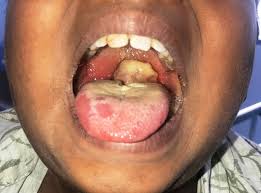
It started innocently enough. His youngest child, a lively girl under five, woke up with fever and sore throat. A whitish membrane appeared in her throat — a warning sign of diphtheria, though the family didn’t recognize it at the time.
“She became weak very quickly,” Yusuf recalls. “We rushed her to the hospital, but she didn’t survive that same day.”
Just days later, tragedy struck again. His seven-year-old daughter developed similar symptoms. This time, the family hurried to seek medical care, but it was too late. She died within two days.
“At that point, neighbors began saying maybe it was spiritual. But the doctors told me clearly — it was diphtheria,” he says, his eyes glistening with tears.
Wthen hospital beds aren’t enough
Soon after, his third daughter fell ill. She was admitted to Aminu Kano Teaching Hospital, where doctors warned that one of her kidneys was failing. Yet with no beds available, the family was forced to take her home temporarily.
“She died that very night,” Yusuf says, his voice heavy with regret.
Just days later, his fourth daughter also died, making the tally four funerals in less than 14 days. Only his eldest child survived, after receiving urgent medical treatment.
A community in fear
The Maitama tragedy has rippled across Hotoron Yan Dodo. Parents now live in fear, clutching their children tighter. Health workers have since moved in, fumigating the family house and vaccinating children in the neighborhood.
“This is a wake-up call for everyone,” says a community health volunteer. “When a disease wipes out almost a whole family, the entire community must pay attention.”
Diphtheria’s grip on Kano
The deaths come amid Kano’s ongoing battle with diphtheria, one of the deadliest vaccine-preventable diseases.
Since 2023, the state has recorded over 10,000 cases and nearly 1,000 deaths.
Health experts warn that low vaccination rates, delays in hospital visits, and poor health infrastructure are fueling the crisis.
A July 2025 study by the National Library of Medicine revealed that unvaccinated children face over double the risk of death compared to vaccinated ones. Even children with no vaccination records were found to have an 87% higher risk of death.
Government response
According to Kano State Ministry of Health spokesperson, Nablusi Abubakar Kofar Naisa, the majority of children who die from diphtheria are unvaccinated.
“If you hear of a death, it’s likely the child was not vaccinated. That’s the main issue. Immunization is free, yet many parents don’t take advantage of it,” he said.
The state government has since designated a special hospital for diphtheria cases, directed all hospitals to provide free treatment, and intensified vaccination campaigns.
A father’s unshakable loss
For Malam Yusuf, however, government statistics are far removed from his reality. His once lively home now feels hollow.
He remembers their laughter, the way they ran around the compound, the way the youngest always clung to his side. Now, he only has one daughter left.
“They were healthy. They were full of life. Then suddenly, they were gone,” he says, his voice breaking. “I still can’t believe it.”
The four small graves in Hotoron Yan Dodo stand as a stark reminder: diphtheria is not a forgotten disease. It is here, it is deadly, and it is preventable.
Until parents embrace immunization and health systems are strengthened, tragedies like that of the Maitama family may continue to haunt Kano.

Nasiru Yusuf Ibrahim
The Kano State Government says it has executed 1,508 development projects worth more than N928 billion across the state’s 44 local government areas since Governor Abba Kabir Yusuf assumed office, with about 80 per cent of constituency projects awarded between 2023 and 2025 already completed.
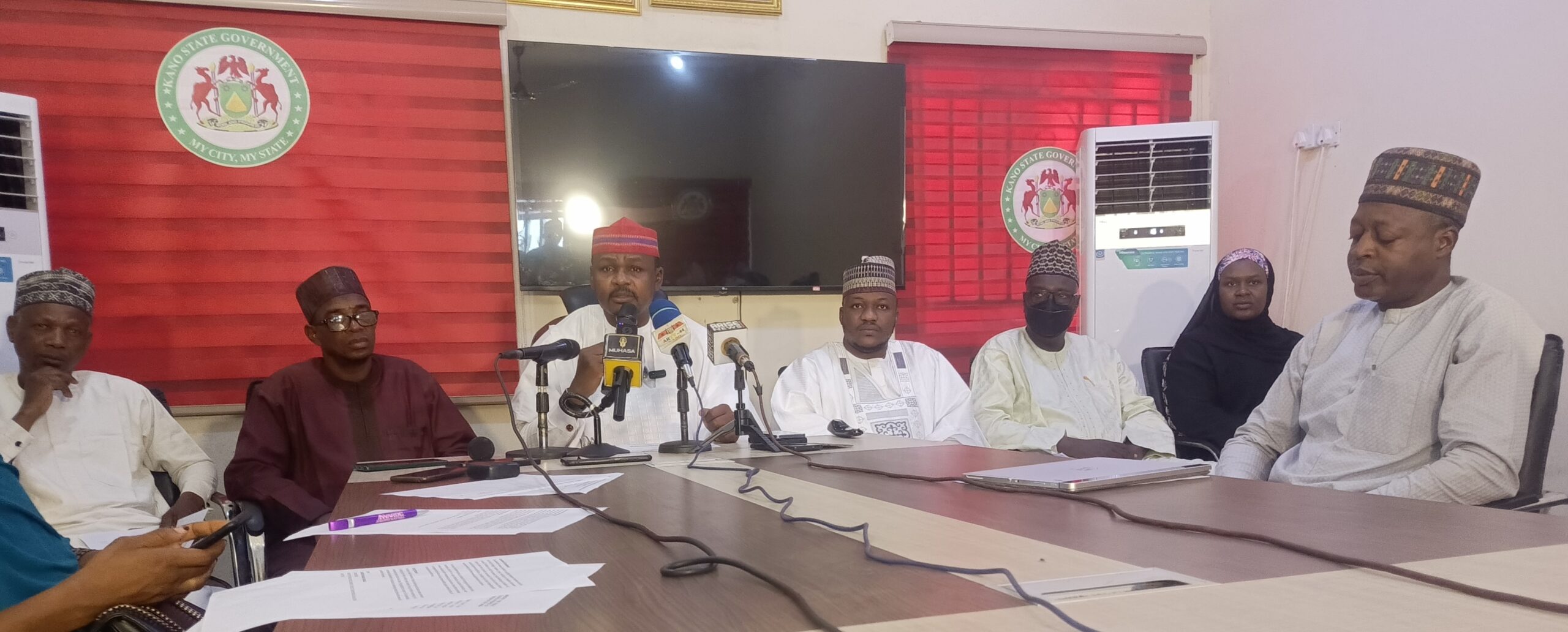
KANO FOCUS reports that the Commissioner for Public Procurement, Projects Monitoring and Evaluation, Comrade Nura Iro Ma’aji Sumaila, disclosed this during an international press briefing on the administration’s infrastructure development programme.
According to Comrade Sumaila, the projects cover critical sectors including roads, urban renewal, education, healthcare, security and other social infrastructure.
He said 799 of the projects have been completed, while 709 are at various stages of execution. He added that the state is also implementing 619 constituency projects through members of the Kano State House of Assembly.
The commissioner noted that about 80 per cent of the constituency projects have been completed. However, he said some projects remain unfinished because of rising construction costs caused by inflation.
He said the government has submitted a request to Governor Abba Kabir Yusuf for an upward review of contract sums to enable contractors complete the affected projects.
Breakdown of projects
Comrade Sumaila said the administration spent over N169 billion on urban renewal projects, including road rehabilitation, drainage construction and other metropolitan infrastructure.
He said another N118 billion was committed to constructing five-kilometre roads in 38 local government areas to improve connectivity across the state.
According to him, the government also awarded contracts worth over N6.8 billion for the construction of Kano State Neighbourhood Watch security divisions in 36 local government areas.
He added that rural infrastructure projects covering education, healthcare and other social interventions across the 44 local government areas account for contracts valued at more than N397 billion, while other ongoing projects have a combined value of about N255 billion.
Commitment to transparency
The commissioner said the Ministry of Public Procurement, Projects Monitoring and Evaluation would continue to ensure compliance with due process and technical standards in the execution of government projects.
He said the ministry’s mandate includes monitoring projects to ensure value for money and prudent utilisation of public resources.
According to him, the administration’s investments in infrastructure are intended to improve mobility, strengthen security, expand access to education and healthcare, improve water supply and stimulate economic growth across the state.
Nasiru Yusuf Ibrahim
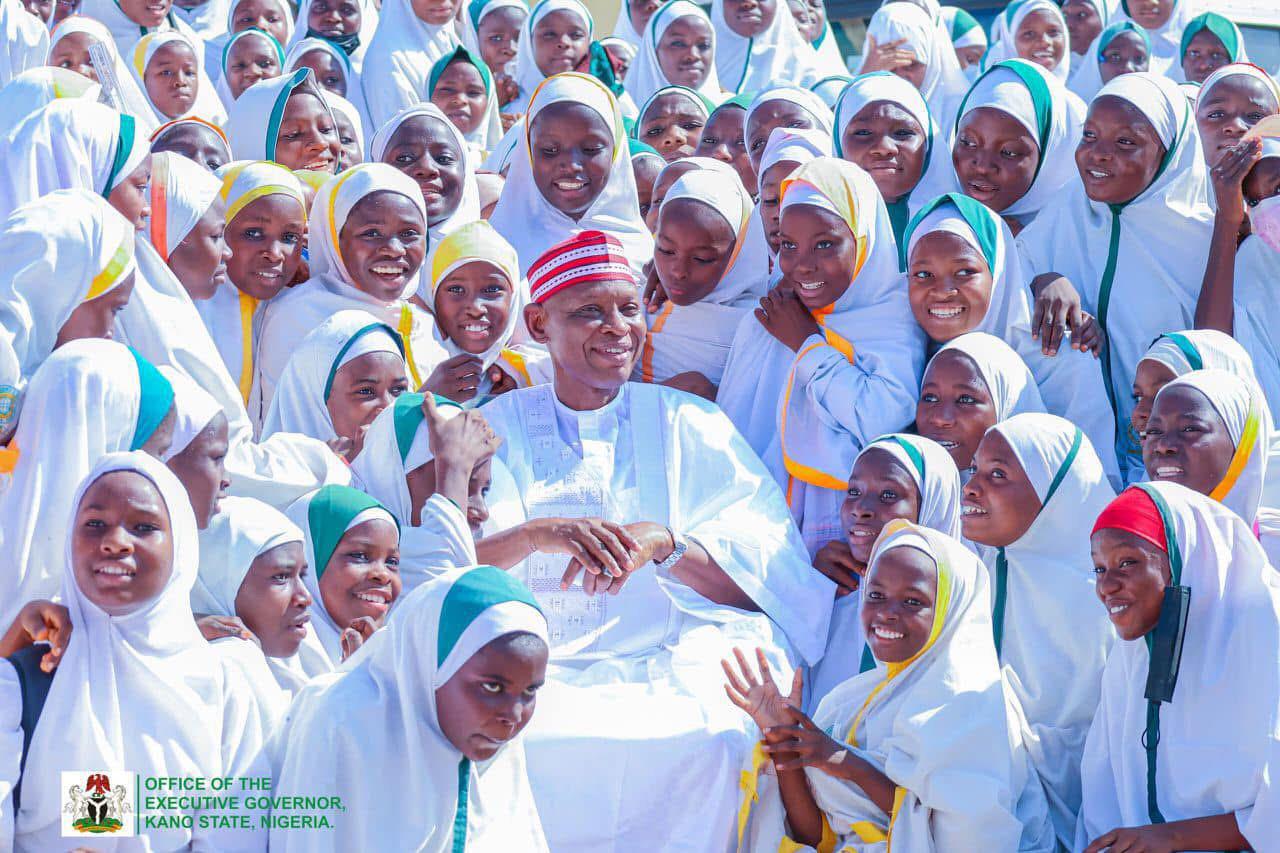
Kano State has emerged as the highest-ranked sub-national government in the Economic Community of West African States (ECOWAS) for education spending, according to the latest Sub-National Education Spending Index developed by the University of Paris.
KANO FOCUS reports that the ranking places Kano State first among 209 first-level sub-national governments across 15 ECOWAS member countries, underscoring the state’s growing reputation for prioritising investment in education.
According to the published index, Kano topped the rankings with an overall S-WAESI score of 87.21, outperforming other leading regions, including Dakar and Saint-Louis in Senegal. Lagos State was the second Nigerian state on the list, ranking 16th overall.
The assessment evaluated states and regions using the S-WAESI (Sub-National Weighted Aggregate Education Spending Index) methodology, which measures government commitment to education through indicators such as actual education expenditure, spending per student, budget execution, education priority, transparency and evidence-based reporting.
The methodology assigns 35 points to actual education spending, 25 points to spending per student, 20 points to budget execution, 10 points to education priority and 10 points to transparency.
The report indicated that Kano excelled largely due to its strong actual education spending and budget execution, making it the best-performing sub-national government in the region.
The ranking covered states, regions, districts and municipalities across Nigeria, Senegal, Ghana, Côte d’Ivoire, Sierra Leone, Liberia, Benin, Burkina Faso, Mali, Niger, Togo, Guinea, Guinea-Bissau and Cabo Verde.
Kano State Accountability Forum on Education (K-SAFE) said the recognition reflects Kano State Government’s sustained investment in expanding access to education, improving school infrastructure and strengthening educational planning and budget implementation.
KANO FOCUS reports that the achievement is expected to further boost the state’s profile as a leader in education reform within West Africa and provide additional momentum for ongoing efforts to improve learning outcomes across the state.
The latest ranking comes amid renewed attention on education financing across ECOWAS, with experts increasingly emphasising transparent budgeting, efficient resource utilisation and sustained public investment as critical drivers of quality education.
Nasiru Yusuf Ibrahim
Kano State has emerged as one of the biggest beneficiaries of the World Bank-supported HOPE Governance Programme after qualifying for a total of $3.5 million in performance-based incentives for implementing key governance, education and healthcare reforms.
KANO FOCUS reports that the World Bank, through the HOPE Governance Programme domiciled in the Federal Ministry of Budget and Economic Planning, approved $27 million in incentives for states that successfully met the Year Zero Disbursement-Linked Results (DLRs).
The National Coordinator of the HOPE Governance Programme, Assad Hassan, announced the incentives on Tuesday in Abuja during a retreat attended by commissioners, permanent secretaries and directors of budget and planning from the 36 states and the Federal Capital Territory.
A statement issued by the programme’s Communications Officer, Joe Mutah, said the incentives were based on the recommendations of the Interim Independent Verification Agent, which assessed states’ performance against agreed reform indicators.
Kano ranked among the highest-performing states, qualifying for incentives under three separate reform indicators.
The state will receive $1.5 million under Disbursement-Linked Result (DLR) 2.1 for adopting comprehensive guidelines for the preparation and submission of consolidated work plans for the state basic education budget.
It also qualified for another $1.5 million under DLR 2.2, which recognises states that adopted comprehensive guidelines for consolidated work plans for state primary healthcare budgets.
In addition, Kano secured $500,000 under DLR 2.3 for adopting harmonised budget guidelines and a unified chart of accounts for local governments.
Altogether, the state is expected to receive $3.5 million, making it one of the top-performing states under the programme.
Only five states—Bayelsa, Borno, Kano, Kebbi and Yobe—qualified for both the education and healthcare planning incentives, earning $3 million each from the two indicators alone.
Kano further distinguished itself by qualifying under the local government budgeting reform indicator, increasing its total allocation to $3.5 million.
The state also featured among 15 states that met the requirements under DLR 4.1, which rewards states for publishing their 2025 Citizens Budget for basic education and primary healthcare by February 28, 2025. Each qualifying state under this indicator will receive $500,000.
Other states that qualified under DLR 4.1 are Abia, Bayelsa, Borno, Edo, Ekiti, Enugu, Imo, Jigawa, Kebbi, Kogi, Nasarawa, Ondo, Plateau and Yobe.
According to the programme, the performance-based incentives are designed to encourage states to strengthen governance systems, improve budget transparency and enhance planning in the education and primary healthcare sectors.
KANO FOCUS reports that the HOPE Governance Programme is a World Bank-supported initiative implemented through the Federal Ministry of Budget and Economic Planning to promote improved public financial management and better service delivery across Nigeria’s states.

Kano says it executed 1,508 projects worth N928 billion in three years

World Cup: Imam warns Muslims against allowing football to distract from worship

Kano ranks best in ECOWAS on education spending index
Kano emerges top beneficiary as World Bank rewards states with $27m for reforms

NCC invites stakeholders to public consultation on zero-rated access to educational platforms

Kano recruits over 16,000 teachers, begins 10-year education reform plan

Kano delegation participates in international labour conference in Geneva

UBEC, UNICEF train education stakeholders on SBMCs in Northern Nigeria
Kano ranks best in ECOWAS on education spending index

