
Headlines
Kano Govt inaugurates 23-member committee to disburse Singer market fire relief

Nasiru Yusuf Ibrahim
The Kano State Government has inaugurated a 23-member committee to oversee the transparent and equitable distribution of financial assistance and relief materials to victims of the recent Singer Market fire disaster.

KANO FOCUS reports that the inauguration was carried out on behalf of the Secretary to the State Government, Umar Faruq Ibrahim, who chairs the committee. The event was presided over by the state Attorney-General and Commissioner for Justice, Abdulkarim Kabiru Maude.
According to the Attorney-General, the committee comprises representatives from key government agencies, security services, the Kano Emirate Council, religious leaders, and affected traders.
He said the panel’s mandate includes assessing the extent of losses, verifying genuine victims, ensuring timely distribution of support, and recommending measures to prevent future fire incidents.
The intervention follows support approved by President Bola Ahmed Tinubu, as well as contributions from the APC Governors Forum. It also comes in addition to earlier assistance provided by Governor Abba Kabir Yusuf and the Deputy Senate President, Barau I. Jibrin.
The state government reaffirmed its commitment to supporting victims of the disaster and restoring commercial activities at Singer Market.







Nasiru Yusuf Ibrahim
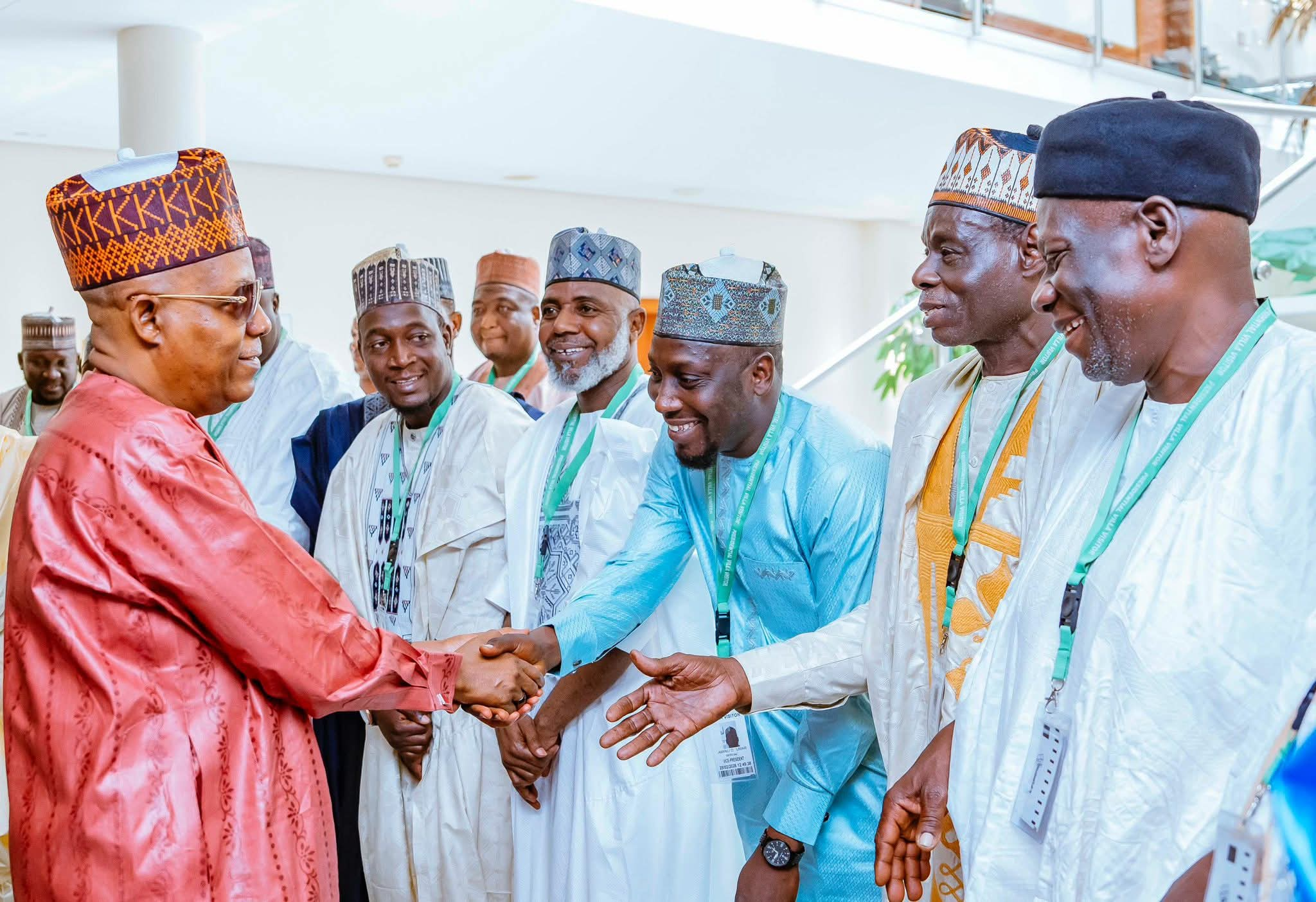
Nigeria’s Vice President, Kashim Shettima, on Tuesday received a delegation from the Association of Kano Business Community at the Presidential Villa, Abuja, during a thank-you visit to President Bola Ahmed Tinubu.
KANO FOCUS reports that the delegation expressed appreciation to the Federal Government for its support to traders and other victims affected by the recent fire incident that razed several sections of the popular Singer Market in Kano.
Speaking during the meeting, the Vice President reaffirmed the Federal Government’s commitment to collaborating with the Kano State Government and relevant agencies to prevent a recurrence of fire outbreaks in markets across the state.
He assured the delegation that President Tinubu has the interests of Kano people at heart, noting that the N5 billion approved as immediate relief for victims was based on the findings of a preliminary assessment of the damage caused by the inferno.
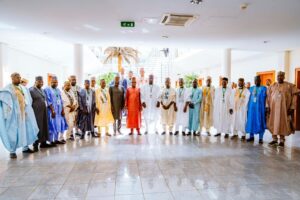
Shettima reiterated that the Federal Government would continue to support efforts aimed at restoring commercial activities and strengthening safety measures in markets to protect lives and property.

Nasiru Yusuf Ibrahim
The Kano State Government has announced Saturday, March 1, 2026, as the commencement date for the Eid-el-Fitr break for all public and private primary and post-primary schools in the state.
KANO FOCUS reports that the announcement, contained in the approved 2025/2026 academic calendar, applies to both day and boarding schools across the state.
According to a statement issued by the Director of Public Enlightenment, Musbahu Aminu Yakasai, parents and guardians of pupils and students in boarding schools are expected to convey their wards home by the early hours of Friday, February 28, 2026.
The statement further explained that boarding school students are to resume on Sunday, March 22, 2026, while day students are to resume on Monday, March 23, 2026.
It added that the second term will continue from Sunday, March 22, 2026, and end on Saturday, April 18, 2026.
The government directed all public and private schools in the state to comply strictly with the directive, warning that non-compliance would be treated as a breach of government instructions.
The Commissioner for Education, Ali Haruna Abubakar Makoda, urged parents and guardians to ensure full compliance with the approved resumption dates.
He appreciated parents and residents of the state for their continued cooperation and support to the ministry, and wished pupils and students a successful completion of the Ramadan fast and hitch-free Sallah celebrations.
Nasiru Yusuf Ibrahim
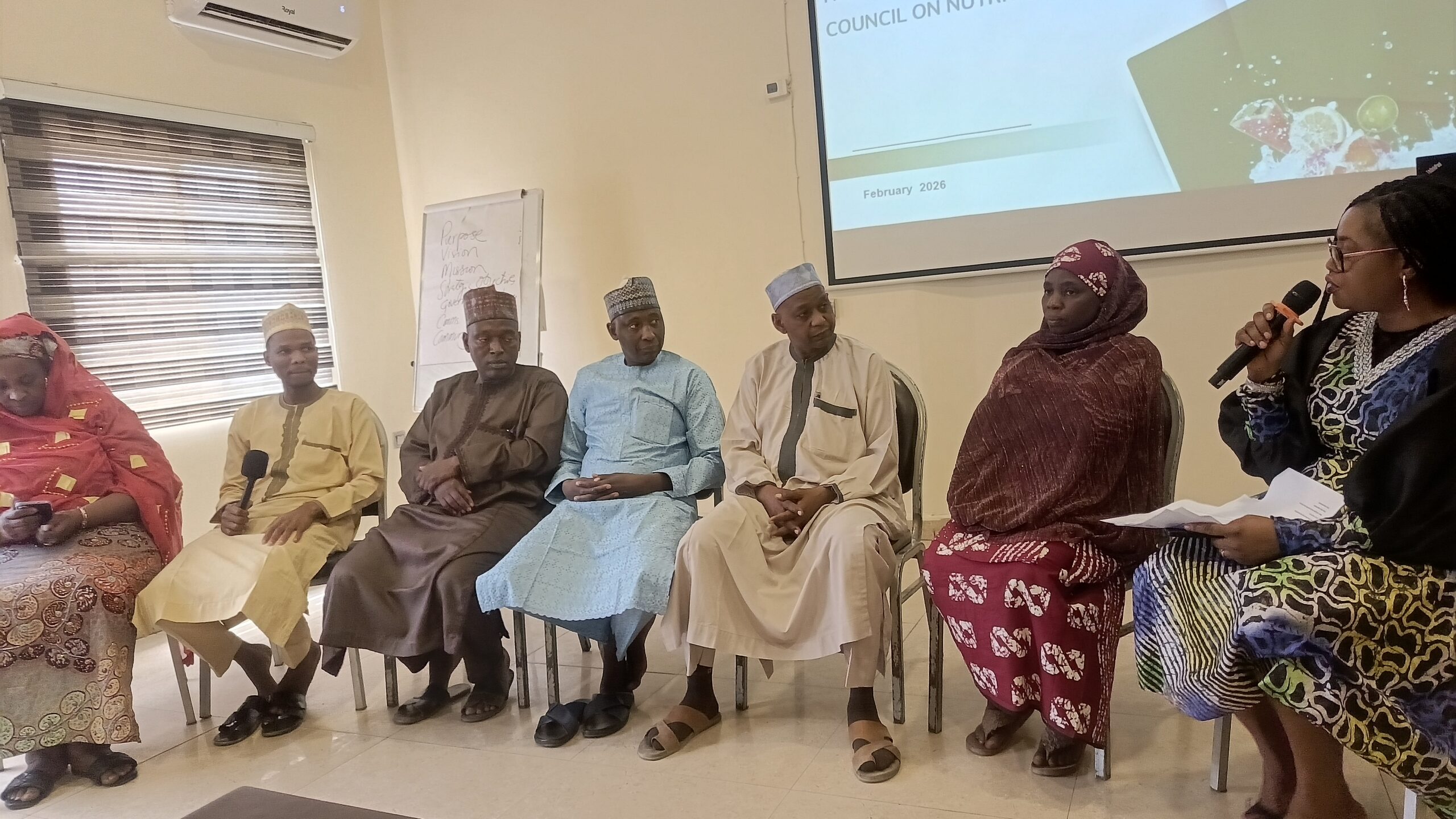
Civil society organisations, government officials and development partners have called for stronger financing, improved coordination and enhanced accountability to tackle malnutrition at the Local Government Area (LGA) level.
KANO FOCUS reports that the call was made at a high-level meeting convened by the Civil Society Scaling Up Nutrition in Nigeria in collaboration with the State Committee on Food and Nutrition. The meeting brought together representatives of LGAs, relevant ministries, departments and agencies, development partners, media actors and nutrition advocates to review the status of nutrition financing and governance at the grassroots.
Participants described the forum as a strategic platform for dialogue and collective commitment aimed at accelerating progress in addressing malnutrition through strengthened governance structures, sustainable financing and community-driven accountability systems.
Key Concerns Raised
Stakeholders expressed concern over the persistently high burden of malnutrition in several LGAs, noting alarming rates of stunting, wasting, micronutrient deficiencies and maternal malnutrition. They warned that these trends pose serious threats to child survival, cognitive development and long-term productivity.
The meeting also highlighted inadequate and inconsistent budgetary allocations for nutrition-specific and nutrition-sensitive interventions across federal, state and LGA levels. In many cases, participants observed, funds are either insufficient or released irregularly, undermining effective implementation and sustainability of nutrition programmes.
Other challenges identified included weak multi-sectoral coordination among critical sectors such as health, agriculture, education, water, sanitation and hygiene (WASH), and social protection; limited community engagement and accountability systems; and technical capacity gaps at the LGA level affecting planning, budgeting, monitoring and reporting.
Resolutions and Commitments
In response to the identified gaps, stakeholders resolved to prioritise investment in preventive, high-impact, low-cost nutrition interventions while strengthening curative measures at the grassroots. They emphasised that LGA budget allocations should focus more on preventive strategies to reduce long-term costs and save more lives.
Participants also pledged support for scaling up the local production of Ready-to-Use Therapeutic Food (RUTF) as both a preventive and therapeutic measure against acute malnutrition, while strengthening local economic value chains.
The meeting further resolved to improve budgetary releases for nutrition interventions, reactivate and strengthen Local Government Committees on Food and Nutrition (LGCFN), and revitalise coordination mechanisms at state and LGA levels to ensure integrated, evidence-based programming.
Stakeholders committed to facilitating continuous capacity building for LGA nutrition focal persons, civil society organisations and community structures. They also agreed to institutionalise community-led monitoring and social accountability mechanisms to track budget releases and service delivery performance.
In addition, participants called for intensified behaviour change communication campaigns promoting optimal Infant and Young Child Feeding (IYCF), dietary diversity, micronutrient supplementation and maternal nutrition. Traditional, religious and community leaders, as well as women’s groups, are to be engaged as nutrition champions.
Call to Action
The meeting urged state governments to prioritise nutrition in annual budgets, ensure timely release and efficient utilisation of funds, and institutionalise performance tracking mechanisms.
Local Government Authorities were called upon to mainstream nutrition into development plans, strengthen primary healthcare delivery systems, ensure functional Ward Development Committees and reactivate LGCFN platforms.
Development partners were encouraged to sustain and expand technical and financial support in alignment with national and subnational priorities.
Communities and caregivers were advised to adopt improved nutrition practices for children, adolescents, pregnant women and lactating mothers.
The media and civil society organisations were also tasked with institutionalising quarterly budget performance review sessions across the 44 LGAs, publicly recognising high-performing LGAs while constructively engaging those performing below expectations.
Commitment to Action
In their concluding remarks, stakeholders reaffirmed that improving nutrition at the LGA level is urgent and foundational to Nigeria’s socio-economic transformation. They stressed that ending malnutrition requires coordinated action, strong political will, transparent financing, empowered communities and sustained investment.
The communiqué was endorsed by Tijjani M., Mustapha Uba and Aminu Musa Saji of the Ministry for Local Government, as well as Sheriff Abubakar of CS-SUN Kano State.

Kano business community thanks FG for N5bn Singer market relief

Kano Govt inaugurates 23-member committee to disburse Singer market fire relief

Kano Govt announces March 1 for schools’ Ramadan break

NCC board chair hosts licensed telecoms operators in Lagos

Stakeholders seek stronger nutrition financing at local government level

Lami Maccido, first person to appear on screens of NTA Kano, CTV 67, dies at 72

Governor Yusuf Appoints Acting DG for Pilgrims Board, Names Provost for Anti-Corruption Institute

Kano govt investigates reported disease outbreak in Garko community

K-SAFE appeals to Kano Executive Council to pass revised education bill

