
News
MRA faults poor funding for FOI implementation in 2026 budget

Nasiru Yusuf Ibrahim
The Media Rights Agenda (MRA) has criticised the Federal Government over what it described as inadequate funding for the implementation of the Freedom of Information (FOI) Act in the 2026 budget.

In a statement issued on Tuesday in Lagos, the organisation said more than 99 per cent of public institutions failed to make budgetary provisions for FOI-related activities, accusing the government of entrenching a culture of secrecy in governance.
MRA said its review of the 2026 federal budget showed that only 13 ministries, departments and agencies—representing less than one per cent of over 1,300 public institutions—made specific allocations for FOI implementation.
According to the group, out of the total federal budget of over ₦58.47 trillion, only ₦191.1 million was earmarked for FOI-related activities across the 13 institutions, representing just 0.00033 per cent of the total expenditure.
MRA’s Deputy Executive Director, Ayode Longe, said the lack of funding undermines compliance with the FOI Act, which mandates public institutions to proactively disclose information, maintain records, train personnel, and respond to public requests.
“Effective compliance with these obligations requires dedicated financial resources. Without adequate funding, these responsibilities cannot be meaningfully discharged,” he said.
Longe noted that the absence of budgetary provisions over the years has contributed to poor record-keeping, low awareness among public officials, delays in responding to information requests, and a general weakening of citizens’ right to access information.
He described the continued failure to fund FOI implementation as a deliberate attempt to weaken transparency and accountability mechanisms.
“By failing to fund the FOI Act, the Federal Government is effectively emasculating the law and rendering it inoperative,” he said.
The organisation also expressed concern that the Office of the Attorney-General of the Federation, the body mandated to oversee compliance with the Act, did not make any allocation for FOI-related responsibilities in the 2026 budget.
Longe said the development sends a wrong signal to other public institutions, suggesting that compliance with the law can be ignored without consequences.
MRA, therefore, called on the National Assembly to reject budget proposals from public institutions that fail to include provisions for FOI implementation.
It also urged the Attorney-General to work with relevant government agencies to mandate all public institutions to include dedicated funding for FOI activities in their annual budgets.
The group further recommended the creation of a special FOI Act Oversight Fund within the Federal Ministry of Justice to strengthen monitoring and enforcement of the law.
MRA reaffirmed its commitment to promoting transparency, accountability, and citizens’ right to access information in Nigeria.




Hauwa Umar
The Nigerian Communications Commission (NCC) has introduced a device verification platform to strengthen regulatory compliance, protect consumers and curb the circulation of counterfeit, cloned and unauthorised communication devices in Nigeria.
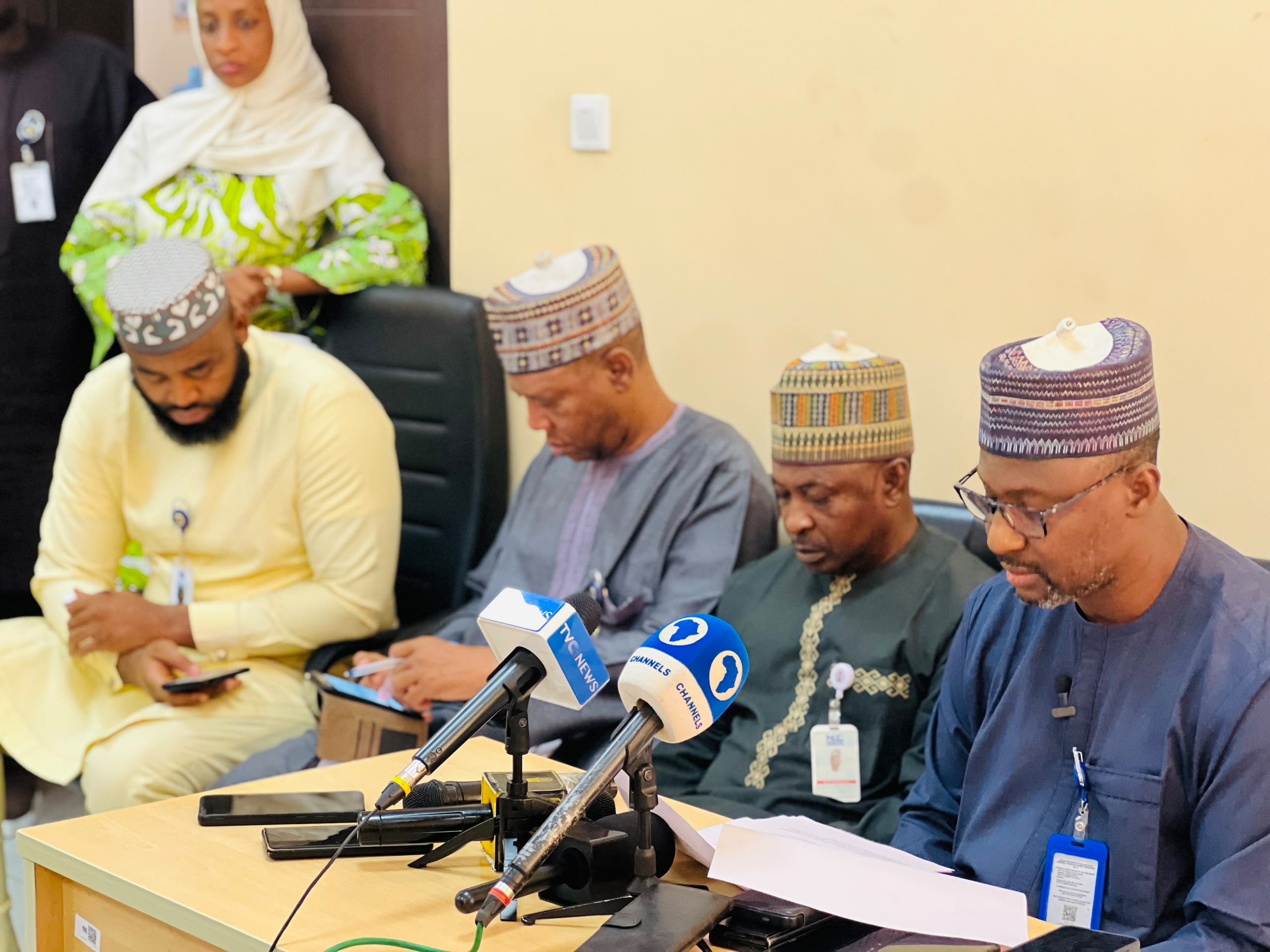
KANO FOCUS reports that the commission said the NCC Device Checker Platform would enable consumers to verify the regulatory approval status of SIM-enabled devices before purchasing them, while helping ensure that devices connected to Nigerian telecommunications networks meet established technical standards.
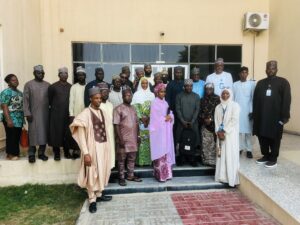
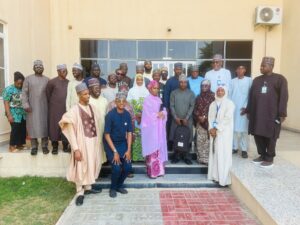
The Kano Zonal Controller of the NCC, Engr. Maigana Gidado, disclosed this on Thursday during a media briefing at the commission’s zonal office in Kano.
Engr. Gidado said the initiative was part of the commission’s efforts to strengthen Type Approval compliance and improve the integrity of communication devices used on Nigerian networks.
According to him, the commission has made progress in implementing the initiative through the regularisation and licensing of device dealers, as well as sensitisation engagements with importers and other industry stakeholders.
He said the commission had streamlined its licensing and regularisation processes, enabling a significant number of device dealers in Kano State to obtain licences.
The NCC had also conducted stakeholder sensitisation engagements in Lagos and other parts of the country to improve awareness of Type Approval requirements and obligations under the Device Checker framework.
“These initiatives have strengthened accountability across the device supply chain and improved compliance with regulatory requirements,” he said.
Engr. Gidado added that the commission had developed a user-friendly Device Checker application that allows authorised stakeholders to scan device International Mobile Equipment Identity (IMEI) numbers and upload information directly to the platform.
He said the application was designed to simplify compliance procedures, improve efficiency and make the verification process more accessible to relevant industry participants.
The zonal controller urged consumers to verify the status of devices before purchasing them through the commission’s *Check Your Device* portal at [www.ncc.gov.ng/devicechecker](http://www.ncc.gov.ng/devicechecker) by entering the device’s IMEI number.
He also directed manufacturers, importers, distributors and dealers to consult the Type Approval and Device Verification Guide available at [www.ncc.gov.ng/DeviceCheckerGuide](http://www.ncc.gov.ng/DeviceCheckerGuide) to understand their responsibilities under the regulatory framework.
According to him, organisations seeking Equipment Type Approval can access the relevant application requirements and procedures through the Type Approval section of the commission’s website.
Engr. Gidado, however, clarified that the Device Checker Platform was not a surveillance tool and would not access users’ personal data, messages, photographs, contacts, financial information or other private content stored on their devices.
He explained that the platform’s purpose was limited to device identification and verification of regulatory compliance.
The NCC urged consumers to patronise reputable and licensed dealers and take advantage of its online resources to make informed purchasing decisions.
It also encouraged industry stakeholders to familiarise themselves with the commission’s Type Approval requirements and ensure full compliance.
Engr. Gidado said consumers requiring assistance or wishing to lodge complaints could contact the commission through its 315 toll-free consumer line.
He reaffirmed the NCC’s commitment to consumer protection, fair competition and network integrity, adding that the commission would continue to promote a trusted communications ecosystem in Nigeria.

Suspect returned to Kano to face investigation, prosecution
Nasiru Yusuf Ibrahim
The Kano State Multi-Agency Task Force on Drug Abuse and Illicit Trafficking has arrested a suspected gang leader and sponsor, Ishaq Lawan Ibrahim, popularly known as Malam Keya, in Port Harcourt, Rivers State.
KANO FOCUS reports that the 27-year-old suspect, from Yelwa in Dala Local Government Area of Kano State, is accused of sponsoring violent gang clashes that have claimed lives and heightened insecurity in parts of the state.
The task force disclosed this in a statement, saying the suspect was arrested following intelligence-led operations after allegedly fleeing Kano as security operations against gang violence intensified.
According to the statement, operatives tracked him to Port Harcourt and arrested him in an operation led by the task force’s Head of Operations, CSP Bashir Gwadabe. He has since been returned to Kano.
The task force alleged that Malam Keya played a leading role in orchestrating and financing hoodlums involved in violent attacks in Dala and other affected communities.
The areas reportedly affected by the gang violence include Jakara, Madigawa, Yalwa, Sanka, Kul Kul, Dogon Nama, Kukar Bulukiya, Dala, Shatsari and Dandalin Turawa.
Confirming the arrest, the task force chairman, Barr Muhuyi Magaji Rimin Gado, said the operation demonstrated the agency’s determination to pursue suspected sponsors of violence beyond Kano State.
“Let me assure you that those who bankroll violence should know that no distance, and no hiding place, will protect them. This arrest is only the beginning. We will not rest until peace is fully restored,” he said.
The task force said the suspect remained in custody for further investigation and would be prosecuted upon the conclusion of the investigation.
It added that its operations would continue in accordance with the law, with all suspects entitled to due process.
The agency also pledged to sustain efforts to dismantle criminal gangs, identify their alleged sponsors and disrupt drug supply networks linked to criminal activities.
It urged residents, community and religious leaders, parents and youths to support security efforts by reporting suspicious persons and activities, monitoring their neighbourhoods and discouraging young people from being recruited into criminal gangs.
The task force described public cooperation as essential to restoring peace and security across the state.
It also acknowledged the support of the Kano and Rivers state police commands and other law enforcement agencies in the operation.
Ibrahim Khalil
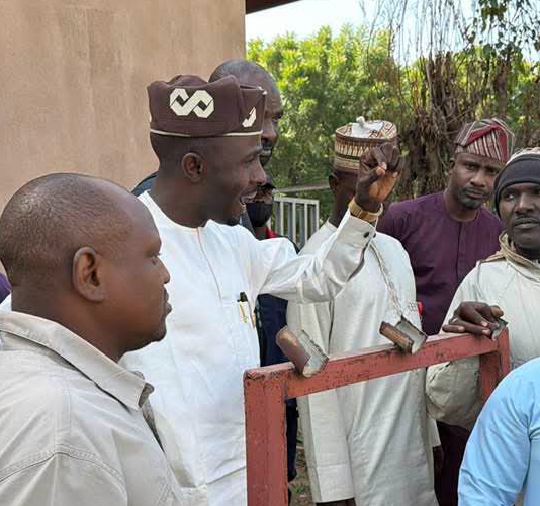
The Kano State Small Towns Water Supply and Sanitation Agency (KASSTOWA) has strengthened security at Joda Waterworks to prevent vandalism, theft and unauthorised access to the facility.
KANO FOCUS reports that the agency disclosed this in a statement issued on Wednesday, following an assessment visit to the waterworks by its interim managing director to evaluate the security situation.
According to the statement, additional security personnel have been deployed to protect the facility and ensure uninterrupted water supply.
The agency said the measure was part of efforts to safeguard critical water infrastructure and protect public assets from potential threats.
It added that the intervention aligned with the commitment of the administration of Governor Abba Kabir Yusuf to protecting government facilities and ensuring the delivery of essential services, in collaboration with the state’s Ministry of Water Resources.
KASSTOWA also emphasised the importance of inter-agency collaboration in strengthening infrastructure protection.
The agency called on community leaders, traditional institutions, youth organisations and residents to remain vigilant, report suspicious activities and cooperate with security personnel deployed to the facility.
It stressed that protecting water infrastructure was a shared responsibility requiring the cooperation of government agencies and host communities.

Election-Era Extravagance: Why Nigeria Must Reject the Latest Debt Plan

NCC introduces device checker to curb counterfeit phones, protect consumers

Kano Task Force Arrests Suspected Gang Sponsor ‘Malam Keya’ in Rivers

Kano water agency strengthens security at Joda waterworks

Kano Police foil kidnap plot, arrest two suspects in Gezawa

Kano must make government procurement work for made-in-Kano

Indonesian scholar proposes waqf model to reform almajiri education in Nigeria

Nigeria’s Data Demand Surges 47% as Stakeholders Seek Fresh Investment in Digital Infrastructure

Kano Settles N32bn Pension, Gratuity Liabilities, Says Gov Yusuf

