
Opinion
Religious Identity Should Not Be a Test of Fitness for Public Office

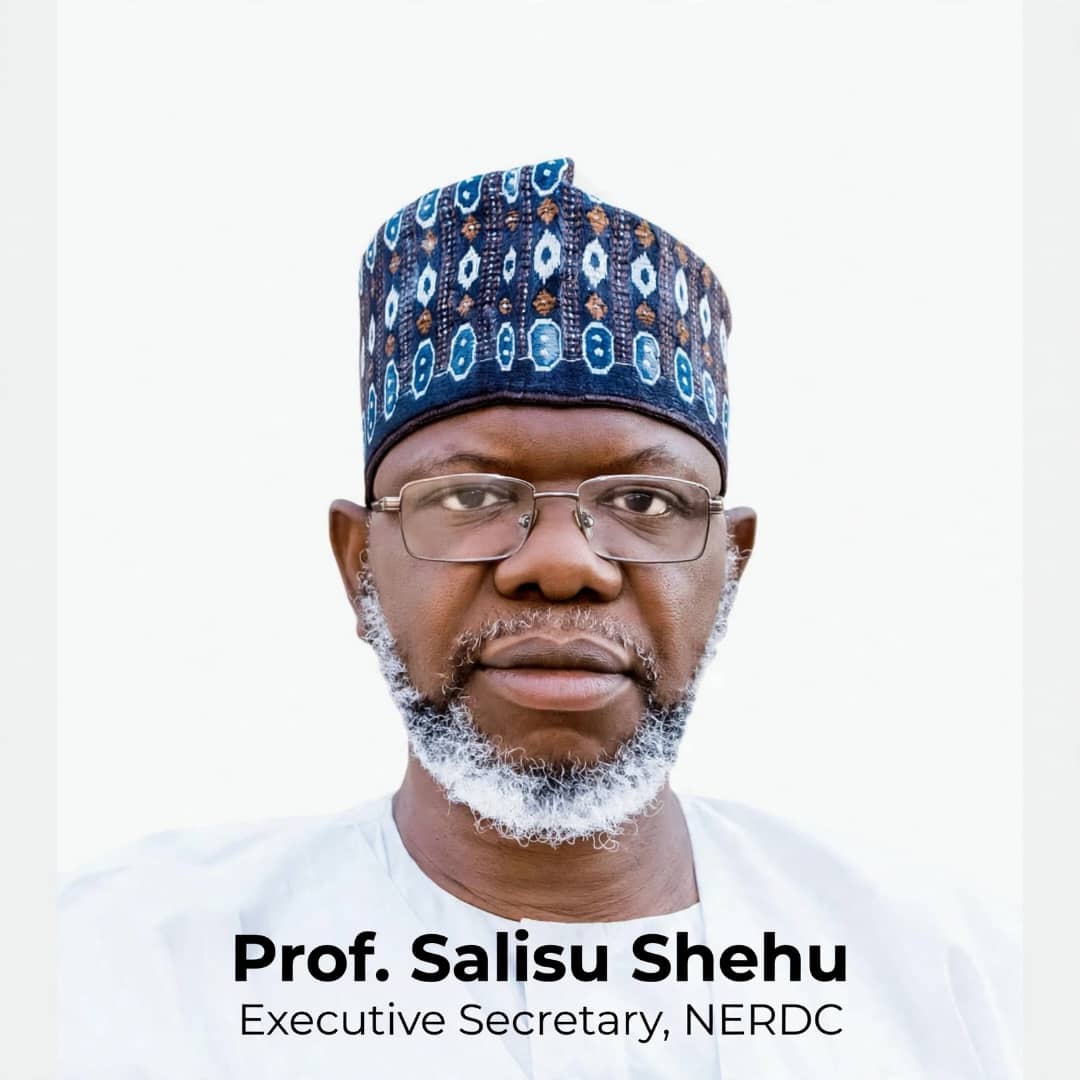
Ibrahim Shehu Giwa
Professor Salisu Shehu, an accomplished professor of Educational Psychology, has come under religious scrutiny following his appointment as Executive Secretary of the Nigerian Educational Research and Development Council (NERDC). Much of the suspicion appears to stem from his authorship of a book on the Islamisation of Knowledge and his association with Islamic organisations.

But before passing judgment on his suitability for the position, it is worth reflecting on Nigeria’s history of public office holders whose religious identities were neither hidden nor treated as automatic disqualifications.
Consider the following examples:
1. Pastor Yemi Osinbajo: An ordained pastor of the Redeemed Christian Church of God (RCCG), who served as Nigeria’s Vice-President from 2015 to 2023, occupying the country’s second-highest political office.
2. Rev. Jolly Nyame: An ordained Christian minister who served as Governor of Taraba State from 1992 to 1993 and again from 1999 to 2007.
3. Rev. Fr. Hyacinth Alia: An ordained Catholic priest who became Governor of Benue State in 2023.
4. Pastor Umo Eno: An ordained Christian minister who became Governor of Akwa Ibom State in 2023.
5. Pastor Ben Akabueze: A pastor of the RCCG who served as Director-General of the Budget Office of the Federation, an institution central to Nigeria’s fiscal administration.
6. Pastor Oluremi Tinubu: An ordained pastor of the RCCG and Nigeria’s First Lady, who occupies an influential public position and has openly supported Christian organisations. In 2025, she reportedly donated seven compressed natural gas (CNG)-powered buses to the Youth Wing of the Christian Association of Nigeria (YOWICAN) to support its activities. She also reportedly donated ₦100 million to the Christian Northern Nigeria Political Forum during Christmas activities in Kaduna.
These are only a few examples. They raise a fundamental question that deserves an honest answer: If a pastor can become Nigeria’s Vice-President, a Catholic priest can govern a state, and a pastor can head an institution central to the country’s budget administration, why should an Islamic scholar’s religious and intellectual background automatically become evidence of his unfitness to lead an educational research institution?
Did Pastor Osinbajo have to renounce his pastoral calling before becoming Vice-President? Was Rev. Fr. Alia required to abandon his priestly identity before governing a state whose population includes Christians and Muslims? Certainly not. Neither should they have been required to do so.
The same standard of fairness should apply to Professor Shehu.
The First Lady’s public support for Christian organisations also raises a question about consistency in how Nigerians judge the relationship between religious identity and public responsibility.
If a prominent Muslim public figure donated seven buses specifically to support Islamic Da’awah activities, would the reaction be equally accommodating, or would allegations of Islamisation dominate the conversation?
This is not an argument against the right of public office holders to support religious causes within the law. Rather, it is a call for consistency and fairness in judging people, regardless of their faith.
Professor Shehu is not an accidental entrant into academia. He holds a PhD in Educational Psychology, has spent decades in university teaching and administration, served as a university vice-chancellor and participated in educational policymaking. These are credentials directly relevant to the responsibilities of NERDC.
The fact that he authored a book on the Islamisation of Knowledge does not, in itself, establish that he intends to impose Islamic teachings on Nigerian schoolchildren. Intellectual engagement with a religious or philosophical subject should not automatically be interpreted as a declaration of intent to use public office to advance that ideology.
Nigeria has had other prominent Muslim scholars in public service. Professor Isa Ali Pantami, who served as Minister of Communications and Digital Economy from 2019 to 2023, faced intense public scrutiny, including criticism of his earlier religious statements. His tenure also witnessed significant developments in the communications and digital economy sectors.
Similarly, Professor Is-haq Oloyede, former Registrar of the Joint Admissions and Matriculation Board (JAMB), earned recognition for reforms in the examination body, particularly in financial accountability, revenue remittances and examination administration. Yet, his public engagements and religious identity have also attracted criticism from some quarters.
The point is not that religious leaders or scholars should be exempt from scrutiny when they occupy public positions. Rather, the same standards of scrutiny should apply to everyone.
The concern arises when some Nigerians appear comfortable with Christian religious figures occupying influential public offices but become suspicious when an Islamic scholar receives a similar appointment, even when his academic and administrative qualifications are relevant to the position.
This double standard does little to promote national unity or strengthen confidence in public institutions.
Professor Shehu’s critics have every right to examine his publications, question his policies and scrutinise his administrative decisions. That is part of democratic accountability. If he uses his position at NERDC to promote religious discrimination, undermine the constitutional rights of citizens or compromise the neutrality of the institution, he should be held accountable.
But such concerns must be established through evidence, not assumptions based on his religious identity or intellectual interests.
Religious affiliation is not misconduct, just as belonging to a religious organisation is not, in itself, proof of bias or incompetence.
Ultimately, Professor Shehu should be judged by his professional competence, integrity, policies and performance in office. The same principle should apply to every Nigerian entrusted with public responsibility, regardless of religion.
**15 November 2026**

Opinion
Rejoinder to Sahara Reporters on the Appointment of Prof. Salisu Shehu as Executive Secretary of NERDC
Ado Sunusi Sabangida
The recent publication by Sahara Reporters concerning the appointment and activities of Professor Salisu Shehu as Executive Secretary of the Nigerian Educational Research and Development Council (NERDC) raises important questions about fairness, accuracy and the standards that should guide public discourse on national institutions.
While media scrutiny of public office holders is essential in a democracy, such scrutiny must be grounded in verifiable facts, balanced reporting and objective assessment. Allegations and insinuations, particularly those touching on religion and national identity, should not be allowed to overshadow evidence or distort public understanding.
Professor Shehu is a scholar, educationist and administrator whose appointment, in my view, should be assessed against his professional qualifications, experience and record of service to the education sector. His leadership of NERDC should equally be evaluated on the basis of institutional performance, transparency, inclusiveness and adherence to established procedures.
One critical issue in the controversy is the development and review of Nigeria’s national curriculum. It is important to clarify that curriculum development is not the personal project of the Executive Secretary or any single individual. It is a structured and collaborative process involving academics, subject specialists, universities, colleges of education, professional bodies, religious organisations and other relevant stakeholders from across the country.
This process is designed to accommodate diverse perspectives and reflect the country’s pluralistic character. It would therefore be misleading to attribute the content or direction of the national curriculum solely to the personal views or religious beliefs of the head of NERDC.
The council’s institutional procedures and safeguards are expected to ensure that curriculum decisions are guided by professional standards, national priorities and the need for inclusiveness. Any allegation that these processes have been compromised should be supported by specific evidence.
It is also necessary to place the religious dimension of the controversy in proper perspective. NERDC, like other national institutions, has been led by individuals from different religious and regional backgrounds. The religious identity of an office holder should neither confer an advantage nor constitute a basis for questioning their suitability for public service.
What matters is whether the individual possesses the competence, integrity and commitment required to discharge the responsibilities of the office impartially.
Similarly, Professor Shehu’s previous engagements with academic and professional organisations, including the International Institute of Islamic Thought (IIIT), should not, in themselves, be interpreted as evidence of religious bias or a lack of professional neutrality. Membership of, or association with, an academic organisation does not automatically disqualify anyone from serving in a national institution.
Like every public office holder, Professor Shehu is bound by the Constitution and the laws of Nigeria to serve all citizens fairly, regardless of their religion, ethnicity or political affiliation. His conduct and decisions in office should be the basis for assessing whether he has upheld that responsibility.
Those who have raised concerns about alleged religious bias in the curriculum are entitled to have their concerns examined. However, such claims should move beyond generalisations and be supported by concrete evidence.
For instance, which specific provisions of the Christian Religious Studies curriculum have been removed, altered or unfairly treated? What sections of the curriculum promote one religion at the expense of another? Are there provisions that compel students to accept beliefs contrary to their faith?
These are legitimate questions that deserve clear, evidence-based answers. A careful examination of the relevant curriculum documents and the processes through which they were developed would provide a more constructive basis for the debate than speculation or social media commentary.
This is not to suggest that NERDC or its leadership should be exempt from criticism. On the contrary, public institutions must remain open to scrutiny, and their decisions should be subjected to legitimate questions from citizens, educators, religious organisations and the media.
However, criticism must be responsible, fair and informed. Unsubstantiated allegations can damage the reputation of individuals, deepen religious suspicion and weaken public confidence in institutions that are expected to serve the entire country.
Nigeria’s education system faces serious challenges, including declining learning outcomes, inadequate infrastructure, teacher shortages and the need to make curricula more responsive to contemporary realities. These issues require sustained attention, professional collaboration and constructive engagement among stakeholders.
The debate surrounding Professor Shehu’s appointment should not distract from these broader priorities. Rather, it should provide an opportunity to strengthen public confidence in NERDC by encouraging transparency, wider stakeholder participation and clear communication about curriculum policies and decisions.
Professor Shehu should be given the opportunity to discharge his responsibilities without being subjected to prejudice based on his religious identity or previous academic affiliations. At the same time, his leadership must remain open to legitimate scrutiny and should ultimately be judged by measurable achievements, respect for due process and the quality of his contribution to national educational development.
At a time when Nigeria needs stronger institutions and greater national cohesion, public debate must be guided by facts rather than assumptions. The media has an important responsibility to hold public officials accountable, but that responsibility must go hand in hand with accuracy, fairness and balance.
Ultimately, what Nigeria needs is an education system that serves every child, irrespective of religious or ethnic background. That objective is best advanced through evidence-based debate, institutional accountability and a shared commitment to national development.
Opinion
From the Governor’s Voice to Kano’s Information Vanguard: Why Sanusi Bature Dawakin Tofa Is the Right Choice
Lamara Garba
Thomas Jefferson, the third President of the United States and one of the most influential thinkers on democracy and liberty, is widely credited with making a profound observation about the relationship between government and the press: that if he had to choose between a society with a government but no newspapers and one with newspapers but no government, he would not hesitate to choose the latter. Although the quotation has appeared in different forms over the years, the principle behind it remains remarkably relevant: a government, no matter how well-intentioned or accomplished, cannot sustain public confidence for long without an effective means of communicating with the people it governs.
The lesson is particularly relevant to Kano State at this moment. A government may construct roads, improve schools, strengthen healthcare, invest in agriculture, empower young people, expand social interventions and pursue policies capable of transforming lives, but if those initiatives are not properly communicated, explained and understood by the public, their impact can easily be diminished in the court of public opinion. Good governance, therefore, requires good communication, and good communication requires competent leadership.
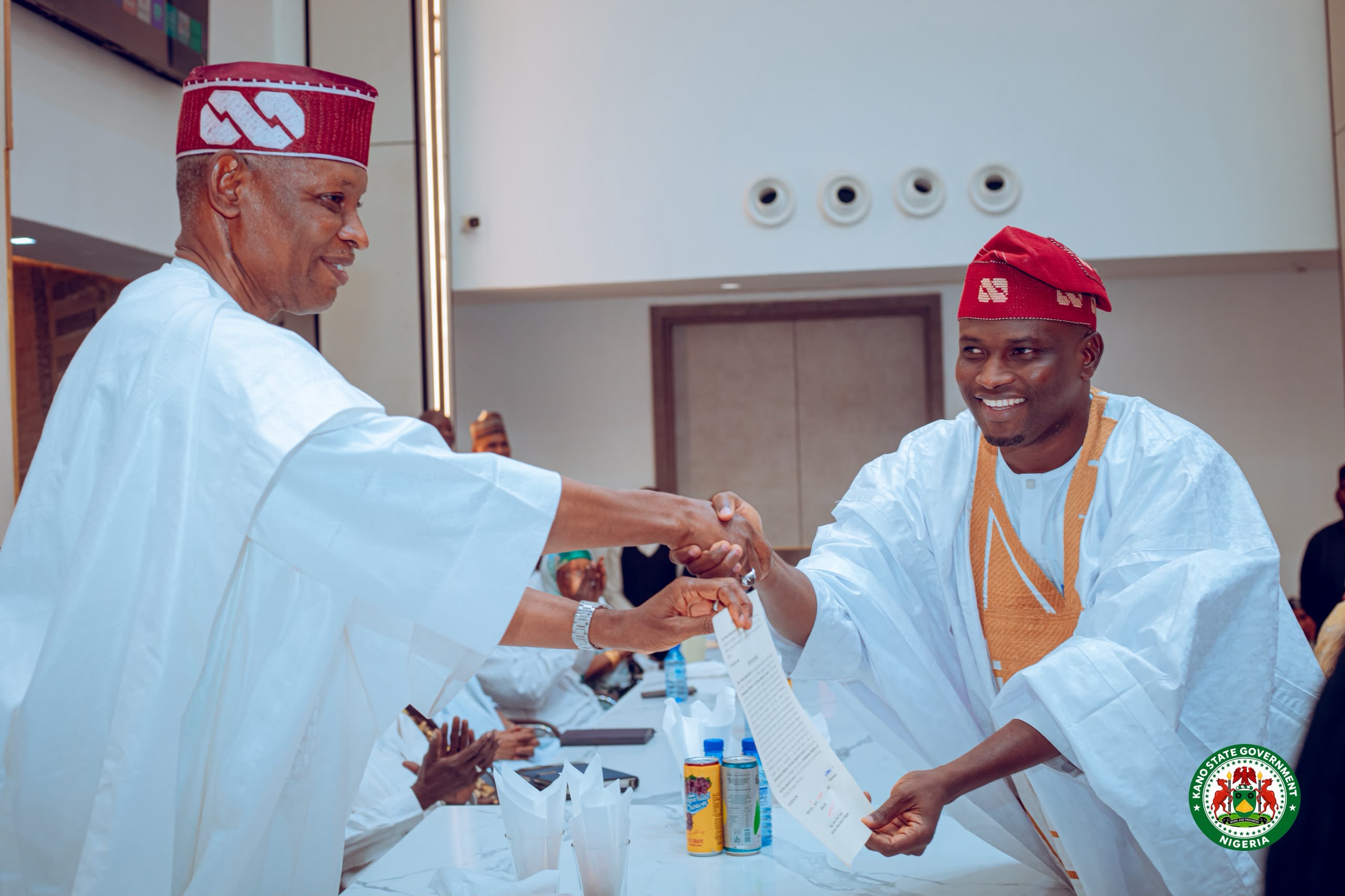
It is against this background that the appointment of Alhaji Sanusi Bature Dawakin Tofa as Commissioner for Information in Kano State assumes considerable significance. His emergence is not simply another appointment to the State Executive Council; it is a strategic decision to place an experienced communicator at the centre of the machinery through which the government communicates its policies, programmes, achievements and challenges to the people of Kano.
Sanusi Bature is not entering the business of government communication as a stranger. Indeed, his previous assignment has provided him with perhaps the most relevant preparation for the portfolio he now occupies. Before his appointment as Commissioner, he served as Director-General of Media and Publicity at Government House, Kano, where he was one of the principal voices of Governor Abba Kabir Yusuf’s administration. In that capacity, he communicated government policies, explained decisions, responded to criticism, engaged journalists and helped the administration navigate the increasingly complex relationship between government, the media and public opinion.
That experience is now being deployed on a much larger platform.
The transition from Director-General of Media and Publicity to Commissioner for Information is, therefore, not a leap into the unknown but a logical progression from one level of responsibility to another. The man who previously stood close to the Governor to explain the administration’s position has now been entrusted with the broader responsibility of leading the ministry charged with communicating the activities of the entire state government.
And the Governor himself has made clear why he has confidence in the new Commissioner.
Speaking during the swearing-in ceremony of two newly appointed Commissioners at Government House, Kano, Governor Abba Kabir Yusuf said the selection of the appointees was carefully undertaken on the basis of merit, competence and integrity, stressing that they were expected to contribute meaningfully to the development of the state. In addressing Sanusi Bature specifically, the Governor charged him to bring his wealth of experience to bear on the Ministry of Information by ensuring the timely, effective and strategic dissemination of government information to the general public.
That statement provides important context for the appointment because it demonstrates that Sanusi Bature’s elevation was not presented merely as a political reward or routine cabinet reshuffle. Rather, the Governor explicitly linked the choice to competence, integrity, experience and the capacity to contribute to the development of Kano State. In the case of the new Information Commissioner, the relevance of that experience is particularly obvious because the responsibility he has now assumed is closely connected to the work he previously performed at Government House.
Governor Yusuf’s charge is also a reminder that the Ministry of Information is much more than a publicity office. In a modern democracy, it is one of the principal bridges between government and citizens, with the responsibility of translating policies into public understanding, providing accurate and timely information, correcting misinformation, facilitating access to government programmes and creating an environment in which citizens can engage meaningfully with the administration.
This responsibility is especially important in Kano, a state with a highly politically conscious population, a vibrant media environment and a long tradition of public debate. Government decisions are closely scrutinised, political narratives are vigorously contested, and information travels rapidly through radio, television, newspapers, social media and countless informal communication channels. In such an environment, a government that does not communicate effectively risks allowing others to define its story for it.
The Information Commissioner, therefore, occupies a strategically important position. A competent communicator can amplify the achievements of a government, explain difficult policies, calm unnecessary fears and provide clarity when confusion arises, while an ineffective communication structure can create information gaps that are quickly filled by rumours, speculation and misinformation. The responsibility is not simply to announce what government has done, but to help citizens understand why it is doing so, how its policies affect them and where they can access the opportunities created by those policies.
This is precisely where Sanusi Bature’s experience becomes an important asset. His years as Director-General of Media and Publicity gave him a front-row seat to the workings of the Yusuf administration. He witnessed policies and programmes from close quarters, interacted with journalists and other stakeholders, responded to controversies and defended the administration’s position on issues of public interest. More importantly, he experienced the pressure that accompanies government communication in an environment where every statement can be scrutinised, challenged and amplified within minutes.
Such experience cannot be acquired overnight. It is earned through service, exposure and responsibility, and Sanusi Bature now brings that accumulated experience to the Ministry of Information.
His challenge, however, is to move beyond the role of being the Governor’s voice and help build a stronger institutional voice for the entire government. As Director-General of Media and Publicity, his principal responsibility was closely associated with the Governor and Government House; as Commissioner for Information, his mandate is considerably broader. He must now help coordinate the communication activities of ministries, departments and agencies, strengthen government-media relations, promote public enlightenment, harness digital platforms and ensure that citizens have timely access to credible information about government policies and programmes.
This is particularly important in the digital age, where the traditional boundaries between the newsroom, the government press office and the public have virtually disappeared. A government statement can reach thousands of people within minutes, while an inaccurate social media post can travel even faster. A rumour can become accepted as fact before the government has an opportunity to respond, making speed, accuracy and credibility essential components of modern public communication.
The Ministry of Information must, therefore, understand both traditional media and the digital communication ecosystem. It must appreciate the discipline and credibility of journalism while also understanding the speed, reach and conversational nature of social media. Government communication can no longer be confined to press releases, official ceremonies and occasional media briefings; it must be continuous, strategic, accessible and responsive to the information needs of citizens.
Perhaps the most significant indication of what Governor Yusuf expects from the new Commissioner is the specific directive he gave him concerning the growing challenge of drug abuse. The Governor emphasised the need for increased public sensitisation and education of young people on the dangers of drug abuse, illicit drugs and tobacco consumption. He also directed the Commissioner to work closely with the recently established Kano State Multi-Agency Task Force on Drug Abuse and Illicit Trafficking to intensify public awareness campaigns and promote collective efforts to tackle the menace.
That directive illustrates the expanding role of the Ministry of Information in contemporary governance. The fight against drug abuse is not exclusively a law enforcement responsibility; it is also an information, education and community mobilisation challenge. While law enforcement agencies may arrest offenders and the justice system may prosecute them, prevention requires sustained communication that reaches young people before harmful habits become entrenched. Schools, families, religious leaders, traditional institutions, civil society organisations, the media and government agencies must, therefore, be brought into a coordinated public enlightenment campaign.
This is an area in which Sanusi Bature’s communication experience could become particularly valuable. He understands how to develop government messages, engage the media and take public information beyond the walls of government offices. Under his leadership, the Ministry can help turn information into a preventive tool by using radio, television, newspapers, digital platforms, schools, community structures and youth organisations to communicate the dangers of substance abuse in language that resonates with young people.
The Governor’s emphasis on dedication, humility, transparency and accountability is equally significant. While administering the oath of office, he reminded the new Commissioners that public office is a public trust and a commitment, urging them to uphold the highest standards of integrity, professionalism and discipline in the discharge of their responsibilities. For an Information Commissioner, that responsibility has an additional dimension because information itself is a public trust. Citizens have a right to accurate information about the policies being implemented in their name, just as they have a right to explanations when government takes decisions that affect their lives.
This is why credibility must remain at the heart of the new Commissioner’s communication philosophy. Government communication should not be reduced to celebrating every achievement or defending every decision. Its real strength lies in its ability to provide facts, explain policies, correct misinformation and engage legitimate criticism constructively. A mature Ministry of Information should not fear questions from journalists or citizens; rather, it should regard informed public questioning as part of the democratic process.
Sanusi Bature, therefore, has an opportunity to build a Ministry of Information that is not simply a publicity machinery but a strategic communication institution. Such a ministry would help government ministries and agencies communicate more professionally, ensure that important information reaches citizens promptly, strengthen the relationship between government and the media, and establish public enlightenment as an integral part of policy implementation rather than an afterthought.
This is where the Governor’s confidence in him becomes particularly important. Governor Yusuf has already seen Sanusi Bature operate in the demanding environment of Government House, where he was required to communicate government positions under pressure and in the face of competing political narratives. He, therefore, knows the experience and capacity that the new Commissioner brings to the table. His decision to appoint him to the Information portfolio, followed by the explicit charge to deploy his wealth of experience to the ministry, represents a clear vote of confidence.
But it is also a responsibility that must now produce results.
The new Commissioner must convert familiarity with the administration into institutional capacity, experience into innovation and political understanding into professional communication. He must help ensure that government achievements are properly documented and communicated without exaggeration, that policies are explained in language ordinary citizens can understand, and that information gaps do not become unnecessary crises.
The appointment also carries a broader lesson about the relationship between governance and public perception. Governments are ultimately judged not only by what they do but also by what citizens know, understand and experience about what they do. An achievement that is not properly communicated can easily be forgotten, while a policy that is poorly explained can be misunderstood. This does not mean government communication should become propaganda; rather, it means that good governance deserves a communication system capable of presenting facts clearly and credibly.
In that regard, Sanusi Bature’s appointment appears to address an important need in the Yusuf administration. The Governor has chosen someone who understands the administration, knows its communication environment, has worked closely with the media and has already been tested in the public arena. More importantly, he has chosen someone whose previous responsibilities are directly relevant to the portfolio he has now been asked to lead.
It is, therefore, difficult to see the appointment as anything other than a logical and strategic choice.
The journey from Director-General of Media and Publicity to Commissioner for Information is, in many ways, a progression from representing the Governor’s voice to helping shape the institutional voice of government. It gives Sanusi Bature the opportunity to take the experience he acquired at Government House and use it to build a broader communication system capable of connecting the government with millions of citizens across Kano State.
The expectations are understandably high, but so is the opportunity. If he combines his previous experience with professionalism, humility, transparency, accountability and a willingness to embrace new communication technologies, he can help transform the Ministry of Information into a more responsive, strategic and citizen-centred institution.
Ultimately, the wisdom behind Jefferson’s famous observation remains relevant: government without effective communication risks becoming disconnected from the society it exists to serve. In today’s world, the equivalent of the newspaper in Jefferson’s formulation is not merely the traditional press but the entire ecosystem of credible journalism, digital communication, public enlightenment and citizen engagement.
Kano, therefore, needs a government that does not merely govern well but communicates well; a government whose policies are understood, whose achievements are documented, whose decisions are explained and whose citizens are given the information necessary to participate meaningfully in public life.
For that reason, the appointment of Sanusi Bature Dawakin Tofa as Commissioner for Information can rightly be regarded as a significant choice by the Yusuf administration at this stage. He comes into the ministry with institutional knowledge, media experience, political understanding and a tested record of communicating the Governor’s message. More importantly, he comes with the explicit confidence of the Governor, who has publicly identified merit, competence, integrity and experience as the qualities that informed his selection.
The microphone is now bigger, the responsibility is considerably greater, and the expectations are higher. But the man holding it is not new to the sound of government.
He has been the Governor’s voice.
He now has the opportunity to become one of the principal voices of Kano.
And if he succeeds in turning experience into effective institutional communication, he will not merely tell Kano what its government is doing; he will help Kano understand why it matters.
That, ultimately, is what good government communication should achieve.
Lamara Garba is a veteran journalist based in Kano.
Hashim Yusuf Hassan
It is strange how the world keeps turning. The sun still rises, the seasons still change, and people continue to go about their daily lives. But there is now a quiet space in my world, a silence where your voice used to be. It is a silence that has taught me more about love and loss than words could ever express.
I still find myself reaching for my phone to tell you something, seek your advice or simply hear you say, “Don’t worry, it’ll be alright.” I still see you in the most unexpected places—in a particular shade of blue in the sky or in the way someone leans back in their chair. For a fleeting moment, it feels as though you are still here. Then the moment passes, and the ache reminds me that you are no longer with us.
But here is the truth I am learning to live with: you are not truly gone. You are woven into the very fabric of who I am. I am the person I am today because of the lessons you taught me, not just through your words but also through the way you lived. You taught me what quiet strength looks like. You taught me that integrity means doing the right thing, even when no one is watching. You taught me how to be strong, but, more importantly, you taught me how to be kind.
When I look in the mirror, I see your eyes. When I hear my own laughter, I sometimes hear yours. When I stand up for something I believe in, I feel your hand on my shoulder. You remain the compass that guides me and the voice in my head that says, “You can do this.” You are the reason I know what it feels like to be truly and unconditionally loved.
I will not pretend that I have no regrets. I wish I had called you more often. I wish I had listened more. I wish I had told you “I love you” one more time, or a thousand more times. I wish you could see all that I have accomplished and the person I have become. But I choose to believe that, somehow, you know. I choose to believe that you are proud of me.
Grief, I have learned, is simply love with nowhere to go. And my love for you is an ocean. Now that you are gone, it has nowhere to land, so it washes over me, sometimes in gentle waves and sometimes in a tide that threatens to pull me under. It is the price of having loved you so deeply, and it is a price I would gladly pay a million times over.
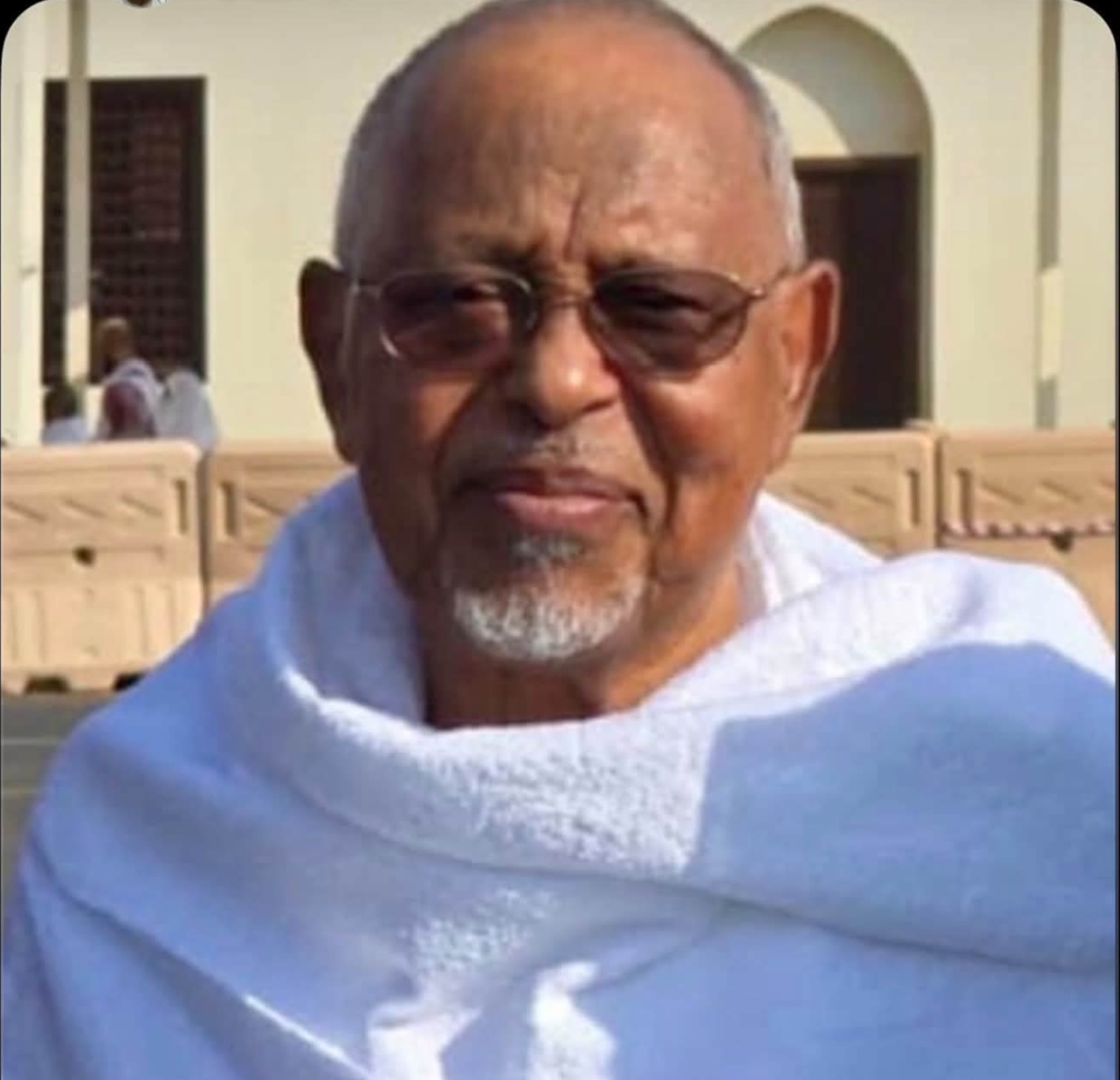
Thank you, Baba, for everything, for the laughter, the lessons, the protection and the love. You were my first hero, my protector and my safe place. Even now, you remain my anchor.
I miss you more than words can ever express. I will carry you with me in every step I take, in every choice I make, and in every moment of joy and sorrow. I will strive to live a life that would make you proud. I promise.
Allah Ubangiji Ya yi maka rahama.
Your son, forever and always.
Hashim Yusuf Hassan.

Religious Identity Should Not Be a Test of Fitness for Public Office
Rejoinder to Sahara Reporters on the Appointment of Prof. Salisu Shehu as Executive Secretary of NERDC

ADC governorship candidate appoints campaign council in Kano

Police arrest eight over political clash in Bichi

Dangote Sinotruk rolls out Nigeria’s first locally assembled electric heavy-duty truck

Uganda woos Dangote for $billions oil refinery, fertiliser, salt investments

Governor Yusuf swears in six commissioners, three advisers, 19 permanent secretaries

Veteran NTA manager Dahiru Biso loses wife at 58

Gov Yusuf Joins APC Leaders at Kaduna Presidential Campaign Flag-Off as Kano Delegation Draws Attention

