
News
Education best investment for politicians – Kwankwaso

Nasiru Yusuf
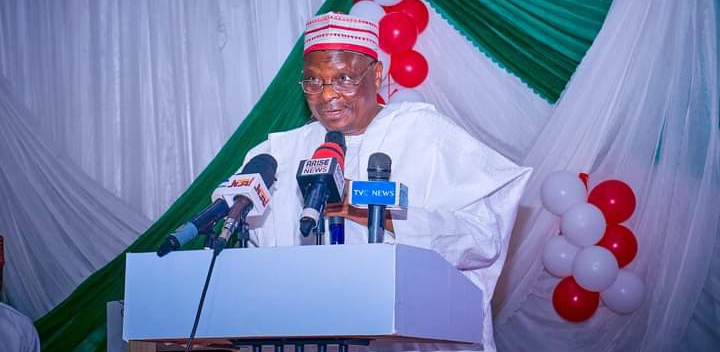
The presidential candidate of New Nigeria Peoples Party, Rabiu Kwankwaso, on Monday, said education was the best investment for any politician.

KANO FOCUS reports that the former governor of Kano State stated this in Abuja during a colloquium organised by the Kwankwasiyya Development Foundation to mark his 66th birthday with the theme, ‘Democracy and good Governance in Nigeria: The legacy of Dr. Rabiu Musa Kwankwaso.’
While specifically reeling out his humanitarian achievements especially in the area of education, he said the kind of leadership he would provide the nation if elected in 2023 would be totally different from what the other political parties had offered.
According to him, his political group was concerned about the general development of the nation.
At the event, the vice presidential candidate of the NNPP, Archbishop Isaac Idahosa, dismissed the recent prediction by Fitch, a global rating company, that the presidential candidate of the ruling All Progressives Congress, Asiwaju Bola Tinubu, may win the 2023 presidential election.
He described the Fitch report and the outcomes of other poll surveys ahead of the forthcoming elections as fake and “paid for”, saying the NNPP would spring surprises nationwide, going by the political structures and alliances it was building across the country.
Kwankwaso said, “I’m happy to say that in the 2019 elections in Kano, we (the Kwankwasiyya Movement) had no governor, no minister, no serving or former member (House of Representatives). We had just these young men and women and we were able to win our election for the governorship.
“And that was why I was encouraged to create the scholarship scheme for our young men and women. When we advertised in 2019, believing that there are few people who are first class, we exhausted them in Kano. Second-class upper – we exhausted them. We went on to second-class lower levels when I left government in 2015.
“We had over 3000 of them going to 14 countries across the world. I’m also happy that we sponsored students into private universities in Nigeria. More than 412 benefited and over 3000 were sent abroad. They are in different sets all sponsored by the Kwankwasiyya Foundation.
“I feel the best investment for any politician is education because I was trained in Kano, in northern Nigeria. And Nigeria can only grow if we have educated people. When I was governor, we were able to feed our children in primary schools, return them to school.
“I realised that I had a few things that I didn’t need, and I had to sell almost all things that I didn’t directly require for myself to pay for the scholarships.
“Our scholarship was not only for Kano indigenes. It was for residents, people who are living in Kano because we believe in the fact that where you live is your home.
“Today, they have an association of those who collected our uniforms in primary schools. They are in millions,” I thank all my brothers and sisters, my friends across the countrymen who supported the foundation.”

Nasiru Yusuf Ibrahim
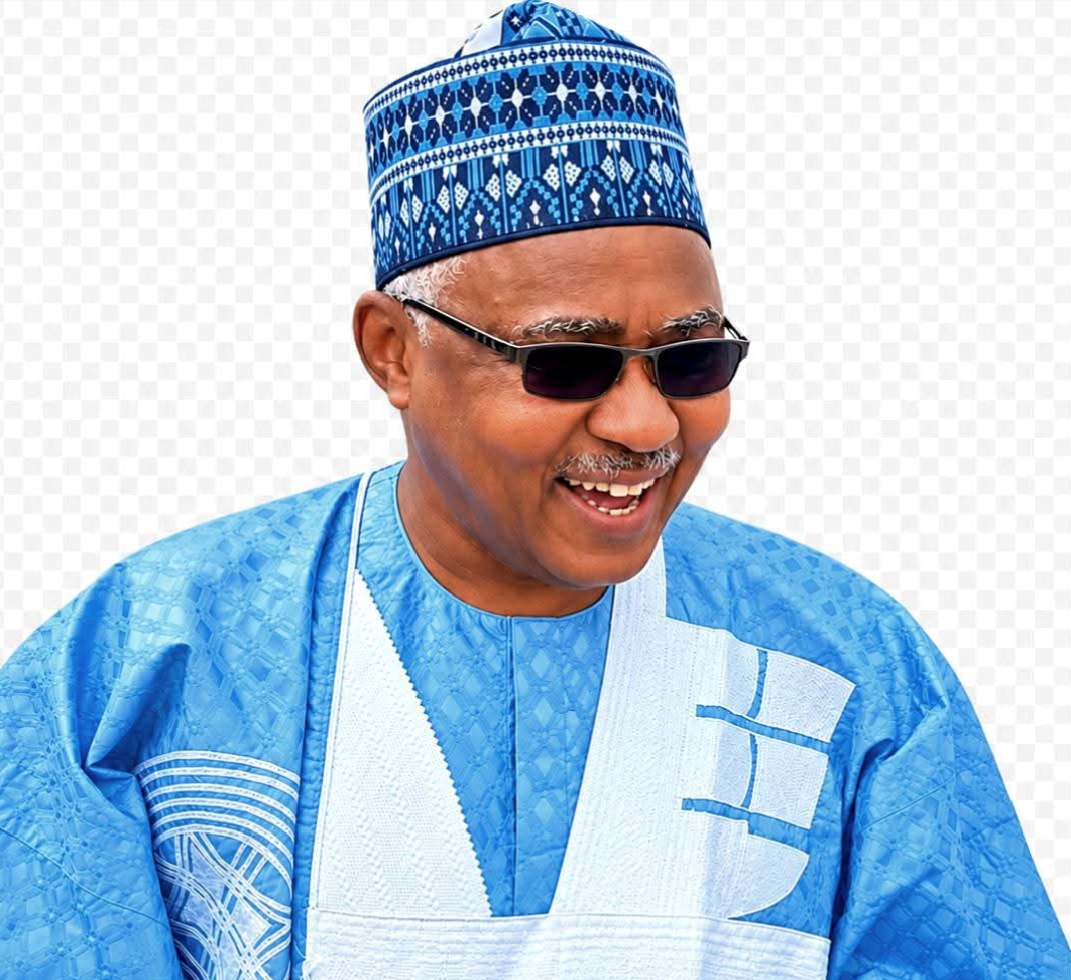
Political allies and loyalists of former Managing Director of the Nigerian Ports Authority (NPA), Arc Aminu Dabo, have begun resigning from the All Progressives Congress (APC) in Kano State following his withdrawal from the ruling party.
KANO FOCUS reports that the supporters, operating under the political group Dabo Alheri Ne, reportedly include members across Kano State’s 44 local government areas.
Barely two days after Dabo announced his resignation from the APC, a prominent stakeholder of the group, Garba Zakiru Dambatta, said members had welcomed the decision and were showing solidarity by submitting their resignation letters to their respective ward party chairmen.
Dambatta, a former APC chairman in Dambatta Local Government Area, said the group’s members were disappointed with what they described as the prolonged marginalisation of Mr Dabo and his supporters within the party.
According to him, despite Mr Dabo’s contributions to the APC and efforts to strengthen the party and manage disagreements among its members, some key stakeholders had continued to sideline him and his loyalists in party activities.
Dambatta reaffirmed the group’s commitment to standing by Mr Dabo’s political decisions and supporting his future political journey.
He also urged the former NPA managing director not to succumb to political pressure or reverse his decision to leave the party.
“This step you have taken, we have the conviction that it is the beginning of a new chapter of goodness in your life,” Dambatta said.
Among the prominent members of the group identified as supporting Mr Dabo’s decision are Abba Rabee’u, a former Senior Special Assistant on Political Awareness; Almustapha Jilani Danmalam, a former Senior Special Assistant on Education; Jamilu Abdullahi Zangon-Mata, a former Senior Special Assistant on Entrepreneurship; and Fahd A. Dabo, a former Special Assistant on Youth Mobilisation.
The individuals reportedly served during the second term of former Kano State Governor Abdullahi Umar Ganduje.
The group also said several other party loyalists and supporters were backing Dabo following his resignation.
However, the statement did not provide the number of members who had formally resigned from the APC or indicate whether the party leadership had responded to the development.
Nasiru Yusuf Ibrahim
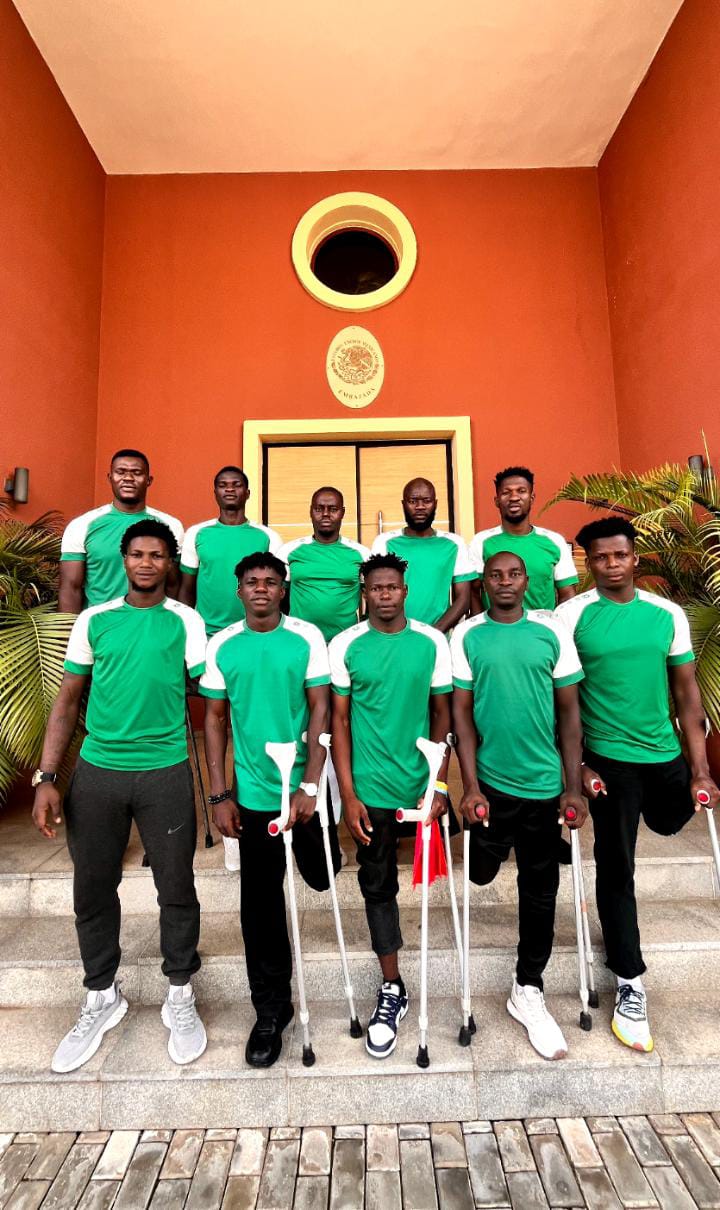
Five players of Kano Pillars Amputee Football Club have been invited to the national camp of Nigeria’s Special Super Eagles ahead of the 2026 Amputee Football World Cup in Mexico.
KANO FOCUS reports that invited players are Isah Yusuf, Abba Musa, Habu Friday, Emanuel Betel and Usman Ahmed. They are currently in Abuja with the national team as preparations intensify for the global tournament.
The Team Manager of Kano Pillars Amputee Football Team, Jamilu Uba Adamu, disclosed this in an interview with Ashiru Rabiu Gidan Tudu, Information Officer of the Kano State Sports Commission.
Adamu described the invitation as recognition of the players’ dedication, discipline and outstanding performances.
He expressed confidence that the players would represent Kano State and Nigeria with honour at the championship.
According to him, the call-up also demonstrates Kano Pillars’ commitment to nurturing talented amputee footballers and contributing to the development of the sport in Nigeria.
The 2026 Amputee Football World Cup is scheduled to take place from November 13 to 22 in San Juan de los Lagos, Mexico. A total of 24 countries, including seven African nations, are expected to participate.
The Executive Chairman of the Kano State Sports Commission, Muhammad Tukur Babangida, congratulated the five players on their invitation, describing it as well deserved.
Babangida expressed confidence that they would justify the confidence reposed in them by the national team selectors.
He assured the players of the commission’s continued support and urged them to remain focused, disciplined and committed to making Kano State and Nigeria proud on the international stage.
Nasiru Yusuf Ibrahim
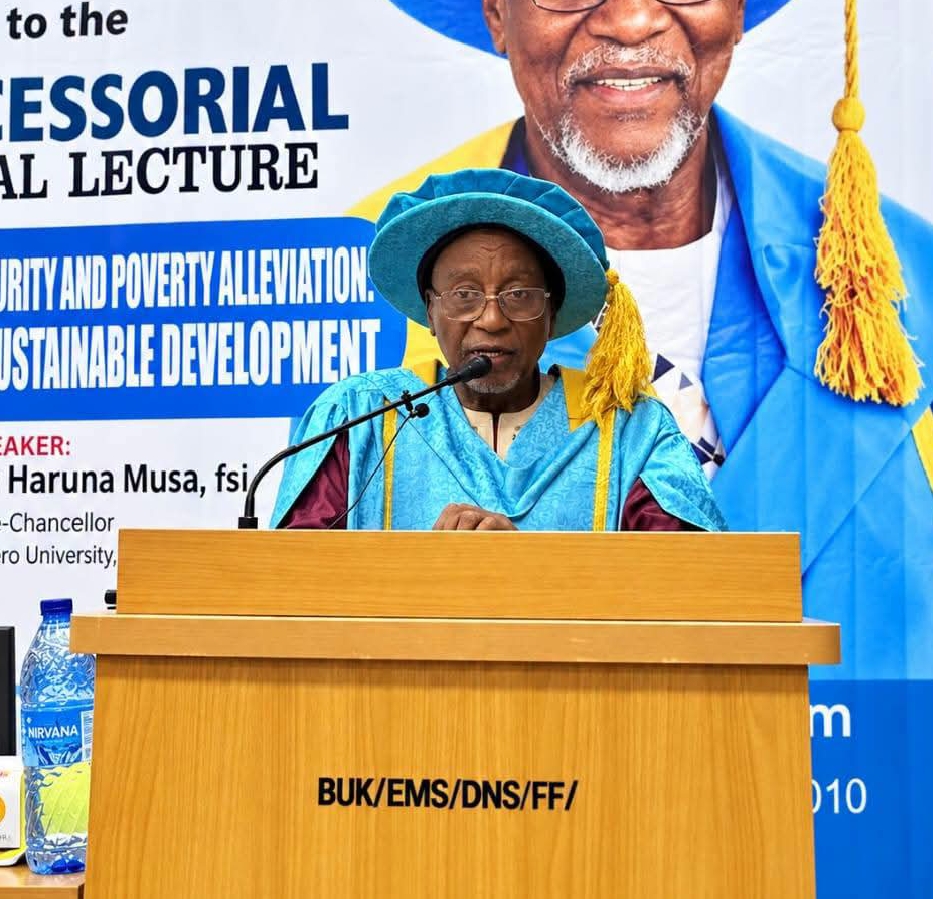
Professor Muhammad Ahmad Makarfi of Bayero University, Kano (BUK), has identified inclusive microfinance as a critical tool for addressing food insecurity and poverty in Nigeria.
KANO FOCUS reports that Prof. Makarfi, of the Department of Agricultural Economics and Extension, made the recommendation while delivering the university’s 64th Professorial Inaugural Lecture on Thursday, October 14, 2026, at the CBN Centre of Excellence.
The lecture, titled *“Innovative Options for Nigeria’s Food Security and Poverty Alleviation: The Microfinance Pathway to Sustainable Development,”* examined how improved access to affordable financing could boost agricultural production and strengthen rural livelihoods.
The professor said that despite Nigeria’s vast agricultural resources, food production and rural livelihoods continued to face challenges, including limited access to affordable finance, insecurity, climate change, inadequate infrastructure and low agricultural productivity.
He argued that expanding access to agricultural finance, particularly for smallholder farmers, would encourage investment, improve productivity and strengthen the country’s food security.
Prof. Makarfi reviewed Nigeria’s agricultural financing policies and interventions, highlighting the need for innovative credit delivery systems that would make funding more accessible, affordable and sustainable for farmers.
He identified microfinance institutions and Islamic finance models as potential avenues for improving access to agricultural credit.
In his recommendations, the professor said sustainable food security and poverty reduction required policies that prioritised increased domestic agricultural production through better access to finance, modern technologies, quality farm inputs and markets.
He also called for stronger microfinance institutions, expanded farmer-friendly financing mechanisms and an enabling environment to attract investment across the agricultural value chain.
According to him, such measures would improve agricultural productivity, enhance livelihoods and accelerate Nigeria’s sustainable development.
Earlier, the Vice-Chancellor of BUK, Professor Haruna Musa, who chaired the lecture, was represented by the Deputy Vice-Chancellor, Academics, Professor Ahmad Muhammad Tsauni.
Prof. Musa commended the lecturer for choosing a topic that addressed critical issues surrounding food insecurity, livelihoods and agricultural development.
The Dean of the Faculty of Agriculture, Professor Aminu Sulaiman, who presented the lecturer’s citation, said Mr Makarfi had published more than 150 local and international publications, contributed 10 book chapters and authored eight books.
Professor Mahmoud Ibrahim Daneji, who represented the Head of the Department of Agricultural Economics and Extension, delivered the vote of thanks.

Dabo’s resignation triggers wave of defections from APC in Kano

Five Kano Pillars Amputee Players Invited to Special Eagles Camp Ahead of World Cup

BUK Professor advocates microfinance to tackle food insecurity, poverty

General Elections 2027: Abba Kabir Yusuf traverses the path to victory
Former NPA MD Aminu Dabo resigns as APC caucus chairman in Dambatta

Kano leads again as NECO successes rise to 74,413
Kano tops states in 2026 NECO results, Governor Yusuf hails students

Kano Govt Suspends Durbar Processions, Horse Riding in Metropolis

ACF begins Dangote Refinery IPO sensitisation campaign in Kano

