
Opinion
Tinubu’s seven wonders in seven weeks

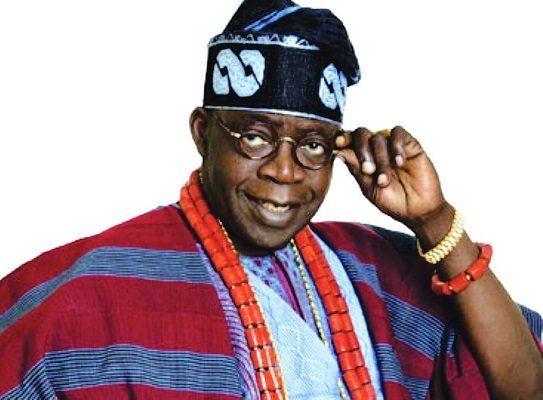
VILLA BEAT with Abdulaziz Abdulaziz
Tinubu’s seven wonders in seven weeks
That President Bola Ahmed Tinubu has ramped up the engine of governance in Nigeria and hit the waves immediately he was sworn in on May 29, 2023, is not news anymore. From Abuja to Zurich, the story is the same: a new sheriff is in town and he is in a haste to give the giant of Africa a new lease of life.
In the seven weeks he has been on the saddle at the Presidential Villa, President Tinubu has made those who stuck out their necks for him proud. He has also put to shame those who wanted anyone but him. Those who sold a grotesque caricature of the man in a bid to stop him are embarrassed. Doubters and naysayers who were either skeptical or outrightly opposed to a Tinubu presidency are being converted not by propaganda but by the weight of the man’s actions.
Just as I was settling down to work on this piece a cerebral friend, who I know as not generous with praises, called me to confess how he was “happily disappointed” by President Tinubu’s leadership skills. He has now been converted to be a BAT cheerleader.

For my friend and many others, there are myriad of things that President Tinubu has done or traits he has exhibited in the past seven weeks that they never thought he could do. Some of us are not entirely surprised having had the opportunity to see the President at close quarters.
In the run-off to the election, the opposition threw spanners in the works, pulling the wool over the eyes of many Nigerians. But with President Tinubu now at the centre stage, at a vantage position for all to see the stuff he is made up, most Nigerians are now wiser.
In public and in small group chitchats, the talk now is how the President has been performing wonders to the surprise of many. Here I curate a few of the talking points on the lips of many Nigerians.
1. ENERGY, SHEER ENERGY: One of the first wonders for many people who were brainwashed into believing candidate Tinubu was some walking-dead person was the energy they now see him exude effortlessly. Some of us who were in the campaign had seen the real Asíwájú on the hustings, different from the insinuations and fake news they peddled out there. In a piece just before the election, I wrote that Candidate Tinubu worked more than any other candidate. It was no exaggeration. The man visited all states, some of them more than once. He never rested. In fact, some times, he would have to be begged, cajoled or even compelled to take a rest as he worked even into the morning hours of the next day.
Nigerians began to see this energy from the inauguration day where President Tinubu stood through the long inauguration ceremony. Immediately afterwards, he moved to the State House for another long ritual of standing to receive the retinue of world leaders for pleasantries and photo opportunity. From that moment, governance began and it’s no stopping. For many State House staff it was strange that the President would be in the office everyday of the week till late hours. Often very late. Many would have to quickly adjust to the extended schedule of the new Sheriff.
2. DECISIVENESS: In the weeks since coming on board, President Tinubu has demonstrated that important attribute of a leader: Decisiveness. It was the 26th President of the United States, Theodore Roosevelt, who said while a leader should always target the right thing in moments of decision, the worst thing to do is to do nothing.
Like all great leaders in history, President Tinubu has demonstrated that he is no fence-sitter in the business of governance. With him, there is no beating about the bush or procrastination in matters that require expeditious attention. Thus far, the President has left no one in doubt that he is fully in charge and responsible for decisions taken by his administration. No shadow president somewhere or some clearing houses outside of the precincts of the President’s office.
With uncommon courage, President Tinubu has taken a number of decisions, which surprised many observers. Some of these decisions were on mattees hitherto considered too hot to handle. The gist in town is the feeling that the country is not on autopilot. One may disagree with the direction he goes but no one will accuse him of taking no decision at all. Yet, in taking these decisions President Tinubu has proven to be an inclusive leader who consults widely and falls for the wisest of counsel. His mantra is “open door policy”.
Among other many voices home and abroad, the Oba of Benin, Omon’Oba N’Edo Uku Akpolokpolo Ewuare II, expressed awe at the President’s energy and decisiveness when he visited him last week. “We’ve predicted that you will hit the ground running and you have done so, even faster than we thought,” the monarch said, wondering where the President tremendous energy comes from.
3. KILLING THE SUBSIDY LEECHES: It was a shock to many when on May 29 President Tinubu pronounced the subsidy leech dead. It was one decision that generated a lot of positive reactions home and abroad. Yes, it comes with some pains in form of inflationary trends but it is a concensus that it is the least pain to bear compared with the crumbling effect of continuous payment of subsidy on the Premium Motor Spirit (PMS).
In later speeches, President Tinubu would liken the current situation to the pains of labour and the happiness that comes with childbirth. We are currently experiencing labour pains but in the end, Nigerians would smile, like a mother who is comforted the sight of a new baby.
The wisdom is already glaring. Two videos hit the social media since that decision. One was of a group of young people in one of the neighbouring countries lamenting the subsidy removal in Nigeria. The latest I watched showed a large number of fuel kegs and drums at a village along the border that have been rendered fallow by the subsidy removal. The village bristled with Nigeria’s smuggled fuel until May 29.
The magic reflected in the numbers as well. The regulator reported daily fuel consumption figures falling by a whooping 35 percent.
4. SAVING THE NAIRA FROM THE RENT-SEEKERS: For years, experts and economists have warned that the hitherto way of managing our forex was unsustainable. Buoyed by permissible Central Bank management, rent-seekers had taken over, cashing out at the expense of our collective misery. While it was increasingly difficult for ordinary Nigerian to get a few thousands of dollars to meet essential needs, a few people got huge allocations at unrealistic rates from the source. They then round trip it to the parallel market where they cash out bigly with no sweat!
Speaking at a civic reception in his honour at the Lagos House, Marina, during the Eid break, President Tinubu told the audience that the arrangement he met was tempting that he could choose to keep it and benefit from it. The multiple forex window had for a while served as an avenue of dispensing favours to family members and friends. His own family and associates could have been smiling to the banks, but “God forbid!” he said.
The decision has since restored confidence in the Nigerian economy with the Nigerian Stocks recording all time highs, and investors betting on our market.
5. HALTING A LOOMING STRIKE: The atmosphere was charged as the organised labour charged at the government for President Tinubu’s bold decision to stop the fuel subsidy hemorrhage. Typical of its default mode, organised labour saw the decision as an affront on the poor. They wanted the decision reversed and issued a notice of strike. It was President Tinubu’s first leadership test.
The skillful manager of men and materials he is, the President immediately swung into action inviting the labour leaders to negotiation table. Using facts and figures, he made them see the reason for the decision.
6. GETTING NIGERIA’S MOJO BACK ON THE GLOBAL STAGE: There is no gainsaying Nigeria’s respect and leadership role in the subregion and beyond are renewed. At his first outing with ECOWAS, President Tinubu was unanimously elected by his colleagues as the new chairman of the regional body. He has since gone on to demonstrate leadership at that level as well as evidenced by his inaugural speech after taking over. “Nigeria is back” he roared. The dignifying address was reminiscent of Murtala Muhammed’s January 1976 address in Addis Ababa, Ethiopia. Like General Muhammed, President Tinubu is a pan-Africanist who believes in the continent’s ability to tackle its own challenges and equal treatment at the global stage.
Beyond the West Africa and the larger continent, President Tinubu is coveted by all. Recall the warmth and affectionate welcome by President Macron?
7. BRILLIANT OFF-THE-CUFF SPEECHES: President Tinubu has been regailing his audience with off-the-cuff straight-from-the-heart speeches. For a man with original ideas and clarity of vision he needed no cosmetic scripting. This has enabled the President to speak from the heart and connect more intimately with his audience. The brilliance of these speeches did not only draw applause, though claps can be for eye service, their deeper meanings also excite much after. The speeches change opinions about the President and turn the heart and minds. They draw respect.
A Labour Party lawmaker from Abia State, Hon. Amobi Oga, is one such person mesmerized by the President’s hearty address when he met lawmakers-elect on June 8, ahead of the National Assembly inauguration.
“Today is my best day. Today, I’m so happy that I’m an elected member seeing my President talking. In fact, I’ve never known that this man is so intelligent,” Oga told reporters at the end of the close door session. “I never knew that this man is so prepared to serve this country. I saw the love, character, and charisma — the belief that Nigeria can be a better nation.”
Indeed with the demonstrated leadership of President Tinubu “Nigeria can be better again”, to borrow the phrase of Rep Oga.
Abdulaziz, a presidential media aide, writes from Abuja







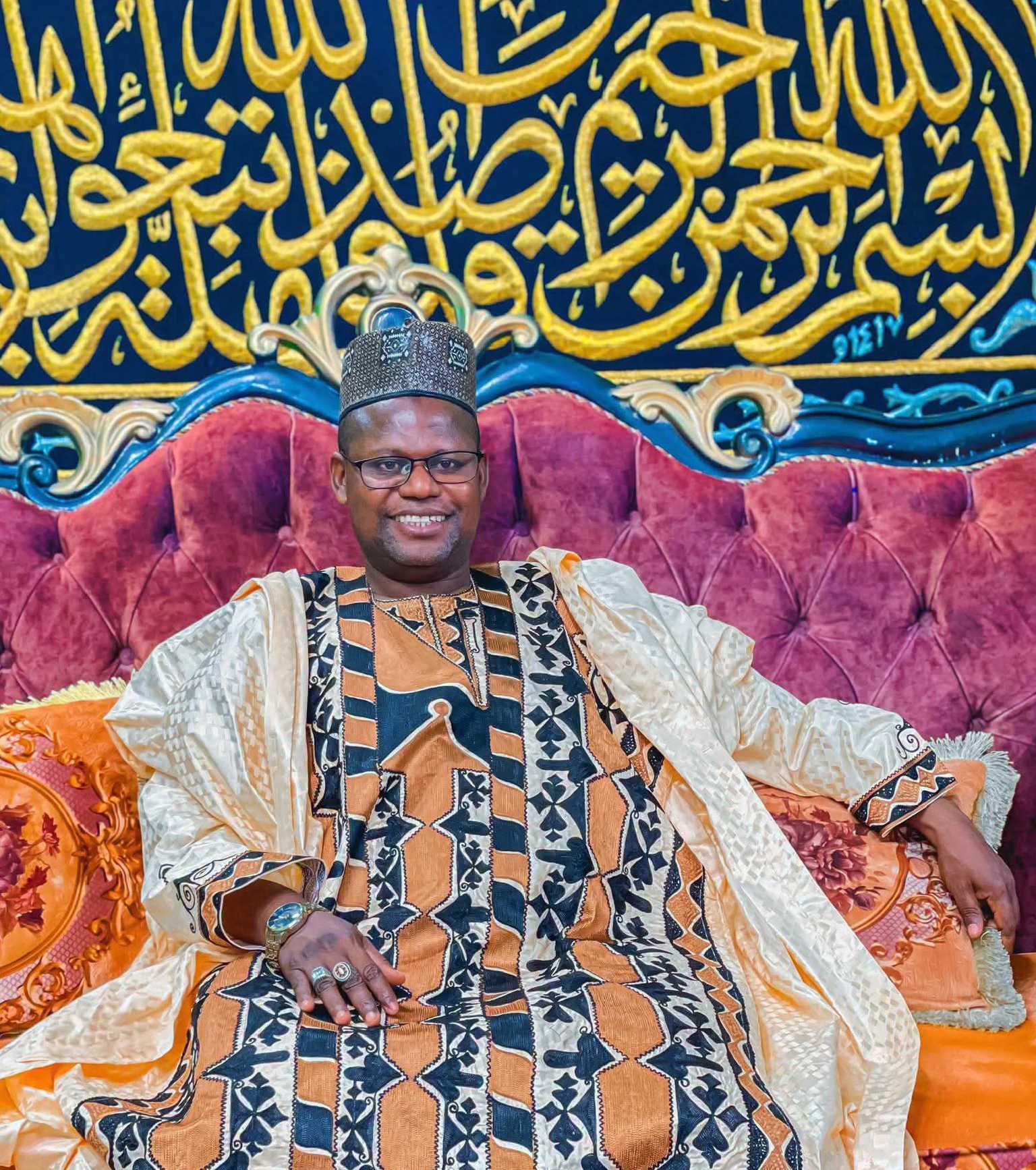
Imam Murtadha Gusau
The killing of Katsina-based Islamic preacher Sheikh Yahaya Ibrahim Masussuka should serve as a warning against the dangers of religious extremism, sectarian hostility and the reckless attribution of blame before investigations are concluded.
Sheikh Masussuka was reportedly shot dead alongside his associate, Adamu Abubakar, by gunmen in Dutsin-Ma, Katsina State, on Monday, October 26, 2026. His death has generated tension, with allegations circulating on social media and among religious circles that members of Ahlus-Sunnah wal-Jama’ah, particularly the Salafiyyah and Izalah movements, were responsible.
Those allegations have been complicated by an audio statement in which the terrorist group Ansaru reportedly claimed responsibility for the killings. The group was also reported to have cited Masussuka’s religious views, advocacy for interfaith dialogue and condemnation of violent extremism among its grievances against him.
These claims must be properly investigated and independently established. However, they underscore an important point: religious disagreements, however intense, must never become a licence for violence, and suspicion must never be mistaken for proof.
The danger of collective blame
Masussuka was a controversial religious figure whose Qur’an-centred teachings, including his rejection of the authority of Prophetic Hadith, brought him into theological disagreements with mainstream Islamic scholars.
In November 2025, he reportedly petitioned the Katsina State Government over alleged insults and threats from members of the Izalah movement. Such a history of disagreement may explain why some people quickly suspected his religious opponents after his killing. It does not, however, establish their responsibility for the crime.
In a society where religious identity can easily become a source of division, the temptation to blame an entire movement for the actions of individuals is dangerous. It can inflame tensions, provoke retaliation and endanger innocent people.
No religious group should be held collectively responsible for a crime without credible evidence. Equally, no individual or organisation should be shielded from investigation merely because of its religious affiliation or public standing.
The appropriate response to the killing is a thorough, impartial investigation that identifies the perpetrators, establishes their motives and brings those found culpable to justice.
The Katsina State Police Command and other relevant authorities must be allowed to carry out their responsibilities without pressure from partisan interests or religious factions. Members of the public, meanwhile, should resist the temptation to spread unverified allegations or mobilise others against people they suspect.
Justice cannot be secured through rumours, online accusations or reprisals. It requires evidence, due process and the courage to accept the outcome of a credible investigation.
Islam’s position on the sanctity of life
As a Muslim, I consider the protection of innocent life a fundamental obligation. The deliberate killing of an innocent person is a grave offence, and no interpretation of religion should be used to justify murder, intimidation or acts of terror.
Allah says in the Qur’an:
“Whoever kills a soul unless for a soul or for corruption done in the land—it is as if he had slain mankind entirely. And whoever saves one—it is as if he had saved mankind entirely.” (Qur’an 5:32)
This teaching places an enormous moral responsibility on every believer. Human life cannot be treated as disposable simply because someone holds a different opinion, belongs to another religious group or challenges a particular interpretation of scripture.
The Qur’an also instructs Muslims to invite people to the way of their Lord with wisdom and good counsel, and to engage them in the best possible manner (Qur’an 16:125).
This principle is particularly important when religious differences become contentious. Disagreement should be addressed through scholarship, dialogue and reasoned argument—not threats, intimidation or violence.
Ahlus-Sunnah wal-Jama’ah, like other Muslim communities, should be judged by the conduct of its adherents and the teachings they uphold, rather than by allegations that have not been established. Those who identify with the Sunnah must demonstrate through their conduct that their commitment to the faith is inseparable from justice, mercy and respect for human life.
At the same time, the rejection of terrorism must be universal. Violence does not become acceptable because its perpetrators claim to defend a religious cause, and no group can acquire immunity from scrutiny by invoking Islam.
Knowledge must defeat extremism
One of the most effective ways of confronting religious extremism is to promote sound Islamic scholarship and responsible religious leadership.
The history of Islam offers examples of scholars who confronted dangerous interpretations through knowledge and dialogue. Abdullah ibn Abbas, a Companion of the Prophet Muhammad (PBUH), is widely remembered in Islamic tradition for engaging the Khawarij, an early extremist group, in theological argument and challenging their interpretations of religious texts.
The lesson is that mistaken beliefs should be confronted with evidence, patience and sound scholarship. Violence against people suspected of holding erroneous views only deepens division and makes peaceful engagement more difficult.
Religious leaders therefore have a special responsibility to ensure that their sermons, teachings and public statements do not encourage hatred or legitimise harm against others. They must distinguish between correcting an idea and attacking the dignity or safety of the person who holds it.
This responsibility extends to social media, where provocative messages and unverified allegations can spread rapidly. Religious disputes that might otherwise remain confined to scholarly discussions can become public confrontations when users circulate inflammatory claims without checking their accuracy.
Muslims should refuse to participate in online campaigns that dehumanise opponents, encourage collective punishment or portray entire communities as enemies. The pursuit of truth requires intellectual honesty, while the defence of religion requires good character.
The Prophet Muhammad (peace be upon him) is reported to have said that a Muslim is one from whose tongue and hand other people are safe. This teaching offers a practical standard by which believers should assess their conduct.
If our words expose innocent people to threats, or our actions endanger their lives, we must examine whether we are truly reflecting the values we profess.
Mercy is not weakness
The distinction between religious conviction and religious intolerance must be clearly understood. A person can hold firmly to a theological position without insulting, threatening or persecuting those who disagree.
Indeed, mercy does not require Muslims to abandon their beliefs. It requires them to uphold those beliefs without violating the rights of others.
The Prophet’s conduct provides a model of restraint and compassion. In a well-known account in Sahih al-Bukhari, a Bedouin urinated in the Prophet’s Mosque, prompting some Companions to react angrily. The Prophet instructed them to leave the man alone and have the affected area cleaned, explaining that people had been sent to make matters easier, not harder.
The lesson is not that wrongdoing should be ignored. Rather, correction should be proportionate, informed and directed towards addressing the problem instead of humiliating or destroying the person responsible.
This approach is relevant to contemporary religious disagreements. A person who expresses a controversial interpretation of Islam should be answered with knowledge and appropriate dialogue. Where conduct violates the law, the authorities should respond through lawful procedures. Neither theological disagreement nor public anger justifies private punishment.
Similarly, allegations of blasphemy, disbelief or deviation must not be treated as permission for individuals to take the law into their own hands. Accusations of this nature can have devastating consequences and must never become instruments for settling personal scores or advancing sectarian interests.
A responsibility shared by leaders and citizens
The killing of Sheikh Masussuka demands more than condemnation. It calls for a collective commitment to prevent further violence.
The police must investigate the killings professionally and pursue those responsible. Religious leaders must calm their followers and reject attempts to exploit the tragedy. Political and community leaders must discourage inflammatory rhetoric, while media organisations and social media users must verify information before publishing or sharing it.
The government should also pay attention to the conditions that allow extremist groups to recruit, intimidate communities and spread violent ideologies. Effective security measures must be accompanied by credible religious education, community engagement and opportunities for young people to seek guidance from knowledgeable and responsible scholars.
Above all, the authorities must ensure that the pursuit of justice does not become a pretext for harassment or reprisals against innocent people.
The killing of one person must not lead to the persecution of another. Nor should the grief of a victim’s family be exploited to deepen divisions within the Muslim community.
Ahlus-Sunnah wal-Jama’ah adherents have a responsibility to reject violence committed in the name of Islam and to demonstrate that their commitment to the Sunnah is reflected in patience, compassion and respect for justice. Other religious communities and ideological groups have the same obligation to reject violence and hold their members accountable for wrongdoing.
The protection of innocent life is not the exclusive responsibility of one sect. It is a shared moral and civic duty.
Justice, not vengeance
The circumstances surrounding Sheikh Masussuka’s death must be established through a credible investigation. If Ansaru’s reported claim of responsibility is substantiated, the group’s involvement must be confronted through lawful security and judicial measures. If evidence implicates any other individuals, they too must answer for their actions.
Until then, Nigerians must resist the urge to turn suspicion into certainty or religious disagreement into collective condemnation.
The true test of religious commitment is not the intensity with which one denounces opponents, but the willingness to uphold truth and justice even when emotions run high. Faith should encourage self-restraint, protect human dignity and inspire people to seek peaceful solutions to their differences.
Nigeria has already paid a heavy price for violence driven by extremism and communal suspicion. The country cannot afford to allow another killing to become a trigger for fresh hostility.
Let the death of Sheikh Yahaya Ibrahim Masussuka strengthen, rather than weaken, our resolve to protect innocent lives, promote responsible religious dialogue and ensure that every allegation is tested against evidence.
Islam must not be used as a cover for terrorism, and religious disagreement must never become an excuse for murder. The path forward is clear: reject extremism, condemn false accusations, protect the innocent and allow justice to take its course.
Imam Murtadha Muhammad Gusau is the Chief Imam of Nagazi-Uvete Jumu’ah Mosque and the late Alhaji Abdur-Rahman Okene’s Mosque, Okene, Kogi State, Nigeria.
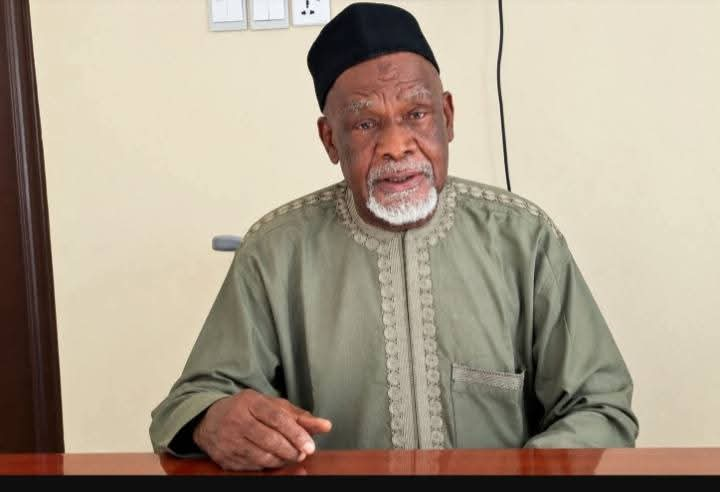
Prof Ibrahim Bello-Kano (IBK)
Malam Ibrahim Mu’azzam is arguably the most influential person and university teacher in my academic and intellectual development. Although I studied Sociology rather than Political Science, I audited his courses and attended his lectures throughout my early and later undergraduate years.
One of the qualities that distinguished him then, and which he has retained to this day, is his charismatic personality and the natural attraction he exerts on students through his wide-ranging knowledge, teaching expertise and remarkable ability to inspire intellectual curiosity. Students passionate about ideas and critical thinking were always drawn to his approach to introducing complex concepts to an often bewildered classroom.
Malam Mu’azzam, as we fondly call him, was a magnet for ideas and a model of critical intellectual engagement. In those days, he probably had one of the largest personal libraries or private studies. Scores of undergraduate and postgraduate students trooped to his home, which he moved to after leaving the university quarters.
We marvelled at his extraordinary collection of books spanning numerous disciplines, far beyond his formal academic specialisation and teaching responsibilities. His study contained, and continues to contain, books on a wide range of subjects, including the philosophy of science, theology, education, English, linguistics and, of course, classic and highly acclaimed works in the social sciences, Political Science and Geography.
I still remember an incident in 1988 when Malam and I travelled to the University of Nigeria, Nsukka, for an Academic Staff Union of Universities (ASUU) delegates’ conference. I accompanied him to the university bookshop and watched him purchase books across a variety of academic disciplines. That experience inspired me to follow his example by building a collection of books from different fields—a habit I have sustained to this day.
Despite his formal retirement after a long career at Bayero University, Kano (BUK), Malam remains intellectually active. He continues to work with us at the Ibrahim Mu’azzam Institute of Philosophy, organised by the Centre for Information Technology and Development (CITAD).
His continued engagement is a remarkable testament to his enduring contributions to teaching, critical scholarship and the advancement of knowledge within and beyond the academic community. Malam Mu’azzam’s influence extends far beyond the classroom, inspiring generations of students and scholars to embrace intellectual curiosity, independent thought and lifelong learning.
Prof Ibrahim Bello-Kano (IBK), teaches at Bayero University, Kano.
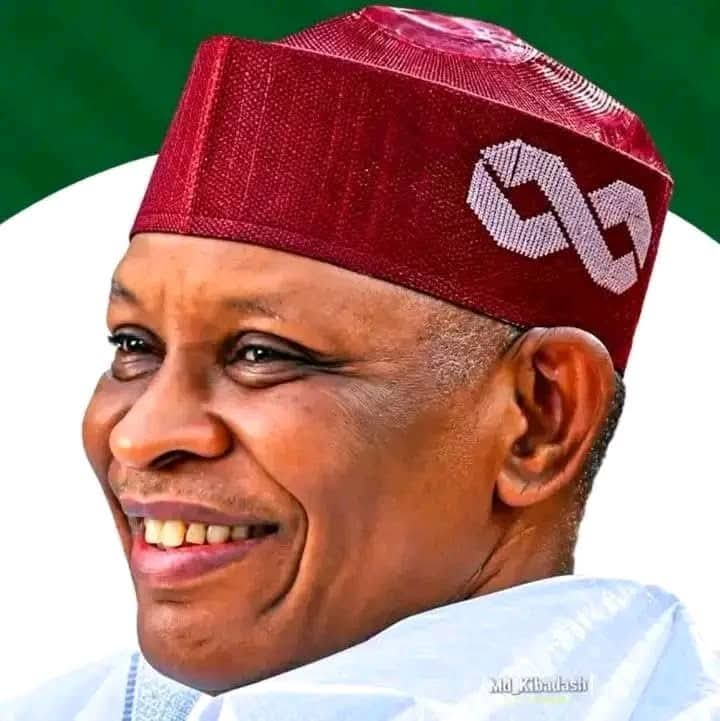
Mustapha Muhammad
As the 2027 general elections draw nearer, the signs pointing towards a possible victory for Alhaji Abba Kabir Yusuf in his bid for a second term as Executive Governor of Kano State are becoming clearer by the day. The road, once fraught with political obstacles, conflicts, and challenges, appears to be clearing rapidly. Victory is increasingly within sight, God willing.
The foundation of Governor Yusuf’s political momentum rests on his administration’s performance, astute political manoeuvring, successful consensus-building during party primaries, and proactive reconciliation efforts. By bringing key political figures from Kano’s three senatorial districts—South, North, and Central—under one umbrella, coupled with the perceived decline in the influence of the Kwankwasiyya movement following widespread defections to the All Progressives Congress (APC), Governor Yusuf has positioned himself favourably ahead of the forthcoming election.
He stands out among the contenders for the Kano governorship. His political resilience and strategic departure from what he considers the troubled waters of the New Nigeria Peoples Party (NNPP) demonstrate his ability to navigate complex political challenges in pursuit of victory.
Below are some of the key factors driving Governor Yusuf’s political momentum ahead of the 2027 general elections.
Transformative Governance and Administrative Scorecard
Over the past three years, Governor Abba Kabir Yusuf has implemented people-oriented projects and policies aimed at improving the lives of Kano residents across critical sectors.
Educational Revitalisation
Increased budgetary allocation: Funding for education rose from 29.5 per cent in 2024 to 30.5 per cent in 2025 and reached 31.5 per cent in 2026, out of a total state budget exceeding ₦1.47 trillion.
Massive recruitment: Nearly 20,000 teachers, including personnel recruited under the Kano State Better Education for All (BESDA) initiative, were employed to address critical teacher shortages in classrooms.
Infrastructure upgrades: Nearly 400 schools across the state’s 44 local government areas (LGAs) have undergone complete renovation, alongside ongoing construction projects.
Academic excellence: Kano State led national performance rankings in the National Examinations Council (NECO) examinations in 2025 and 2026. In 2026, the state produced 74,413 candidates who obtained at least five credits, including English Language and Mathematics, surpassing Lagos State, with 72,496 candidates, and Oyo State, with 55,543.
Healthcare Modernisation and Pension Delivery
Primary healthcare overhaul: More than 340 primary healthcare centres across the 44 LGAs have been renovated.
Hospital expansion: At least 10 new general hospitals have been constructed in underserved LGAs, while work is ongoing on six additional facilities to ensure that every LGA has a dedicated general hospital.
Modern equipment: Health facilities have been equipped with CT scanners, dialysis units, ultrasound machines, and automated laboratory analysers.
Settlement of pension arrears: Of the inherited ₦48 billion backlog of pension and gratuity liabilities, the administration has disbursed more than ₦32 billion to retirees.
Agricultural Development and Rural Infrastructure
Farm mechanisation and subsidies: The state procured 98 tractors and 48 combine harvesters while introducing a 50 per cent fertiliser subsidy programme across all LGAs.
Irrigation expansion: The rehabilitation of the Watari Irrigation Scheme expanded irrigation coverage by 1,000 hectares, with the aim of boosting year-round agricultural production.
Road networks and urban renewal: Eighteen of the 34 planned five-kilometre rural road projects have been completed, with solar streetlights installed. In addition, 12 of the 24 planned urban renewal road projects, covering approximately 76 kilometres, have been delivered.
Bridge reconstruction: The Kubaraci-Kura Bridge was restored, reopening important economic and transportation corridors.
Empowerment and Skills Acquisition
Social safety nets: Monthly stipends of ₦50,000 are provided to 5,200 women, while grants of ₦150,000 have been distributed to youths across the state.
Entrepreneurship: Twenty-six technical and entrepreneurship institutes have been revitalised to provide practical vocational training and equip beneficiaries with relevant skills.
Political Realignment and Party Unity
Governor Yusuf demonstrated political foresight by defecting to the All Progressives Congress (APC). His decision, in the view of his supporters, was timely and strategically informed by the need to secure his political future.
The subsequent defections from the NNPP by members of the Kwankwasiyya movement have, according to this argument, strengthened the case for his political realignment. The move also positioned him and his supporters within a political platform they consider more advantageous ahead of the 2027 elections.
Furthermore, as the state’s APC leader, Governor Yusuf successfully managed the consensus process during the party primaries, resulting in what supporters described as a “no victor, no vanquished” outcome.
His ongoing reconciliation efforts have also helped bring political stakeholders from Kano’s three senatorial districts together, strengthening the prospect of a united political front ahead of the 2027 polls.
With his administration’s reported achievements, political realignment, and reconciliation efforts, Governor Yusuf’s supporters believe he is well positioned to secure a second term in office.
No doubt, Alhaji Abba Kabir Yusuf, the Executive Governor of Kano State, is traversing the path to victory in the 2027 general elections.
Mustapha Muhammad is the Chief Press Secretary to the Executive Governor of Kano State, Alhaji Abba Kabir Yusuf. He writes from Kano.

Kano Task Force Arrests Suspected Gang Sponsor ‘Malam Keya’ in Rivers

Kano water agency strengthens security at Joda waterworks

Kano Police foil kidnap plot, arrest two suspects in Gezawa

Sheikh Masussuka’s killing: why sectarian blame must not replace justice

Rumfa Old Boys Class ’84 launches three-year academic improvement programme

Kano must make government procurement work for made-in-Kano

Indonesian scholar proposes waqf model to reform almajiri education in Nigeria

Nigeria’s Data Demand Surges 47% as Stakeholders Seek Fresh Investment in Digital Infrastructure

Kano Settles N32bn Pension, Gratuity Liabilities, Says Gov Yusuf

