
Headlines
Why street harassment cases in Kano are under-reported


Zulaiha Danjuma
The coordinator National Human Rights Commission (NHRC) Shehu Abdullahi has identified three factors that increase the number of under-reported cases of street harassment in Kano state
Mr. Abdullahi told KANO FOCUS that the three factors are; Non regard of Street harassment as a form of sexual and Gender Based Violence (SGBV), Stigma, and Lack of awareness

Non-regard of street harassment as a form of SGBV
Mr. Abdullahi said the reason why street harassment cases are under-reported is because it is not considered as a case of SGBV by victims
“Throughout the year 2023 they were not more than 10 cases of street harassment that got reported to the commission, unlike cases of rape that we have a lot of data”
“Victims do not take it as serious as they take other cases of sexual and gender based violence”
“The number of street harassment cases are usually minimal, especially if the incident has not gotten to the level of certain sexual abuses” Mr. Abdullahi said
Stigma
Mr. Abdullahi said most of the cases that relate to street harassment are usually entangled in work related relationships
“We receive cases of sexual harassment in public places concerning clients, visitors or even work colleagues”
“If a married woman is been harassed in a public place due to the work sitting by a client or colleague she may feel awkward to report because of the interpretation society will give to the whole case if it’s exposed”
” Even her husband may start to suspect a fowl play, that may affect her work,” he said.
Lack of Awareness
The coordinator said many people are not aware that street harassment could lead to other forms of sexual and gender based violence, hence, they do not considered street harassment as a serious offense be to reported.
“No matter how small an offense is if it is not reported and handle by the provisions of the law there will definitely be an increase of such offense.
“When people are not punished for committing offenses like street harassment, more people will take it upon themselves to commit more of such offense” he said.
Victims shared their experience
Some victims of various forms of street harassment shared their experience with Kano Focus. One of them is Aisha Abdulkadir, a tertiary student and an intern at a popular local radio station in Kano state
Ms. Abdulkadir said the kind of street harassment experience she had was of verbal abuse and derogatory comments
“It was on 1st may 2023 I was going to my class three security guards in my school started making sneak noises and hissing at me to get my attention.
“I was on a call as I walked towards them I didn’t respond to them while they made efforts to get my attention, so when I got close enough they started to yell and shout insulting and derogatory words at me.
“They queried me for not responding to their call and I told them that I didn’t know they were speaking to me since they didn’t address me directly.
“Then they just started to verbally haul abused and insults at me and even threatened that they had the right to rusticate me from the school, ” she said.
Maryam Lamin (not her real name) had a similar experience while working on the streets of Sharada in Kano state
She suffered verbal abuse from a young man just for turning down his romantic advances.
“I was working to see a friend that lived few blocks away from where I met the boy who started to follow me and profess love to me.
“He asked for my name and my phone number which I declined, he continued to follow me and pushed me harder to give him my contact but I simply walked on and ignored him.
“At some point he got really angry and started to shout at me saying that I was not even beautiful and he was just trying to help me by speaking to me.
“He even when no to rain abuses on my mother, verbally insulting me and saying who was I to ignore him,” she recalled.
Ms Lamin went on to say that the encounter shocked her and made her sad because she had never believed she could have such an experience.
I wasn’t expecting being groped at a market
25 years old Zarah Bulma (not her real name) said when a stranger at the popular kwari market robbed his genitals against her buttocks she froze.
“I never expected such a thing, I have heard about such incidents in the market and public places but I never thought it would happen to me.
“We were all clustered together trying to move through the large amount of goods laying on the road when suddenly I felt something rub against my buttocks.
“At first I thought it was because of the cluster of people standing so close to each other so I tried to adjust and move forward a bit, when i suddenly felt a male pushing and rubbing against my buttocks.
“I froze for a split second because I was in shock, then I used my elbows to hit the man in his stomach area, immediately he hurriedly turn back and walked away.
“I never got a good look at his face I only saw that he was wearing white, ” she said.
Similarly, a journalist, Hadiza Yusuf narrated to KANO FOCUS how a man unsolicitedly showed her his genitals at a Petrol station on her way to cover a story.
“In November 2023, I was supposed to go to a local government area to cover a story with a colleague, so I had to wait for my colleague around Unguwa uku.
“Before unguwa uku there is a junction and by the junction is a Petrol station where I decided to stand while waiting for my colleague.
Ms Yusuf added that a few trailers were packed inside the Petrol station which provided a temporary shade.
“So I stayed by the side of two trailers blocking the sun and shielding me from the full glare of the public.
“When suddenly a man started walking up to me unzipped his trousers and brought out his genitals.
“I was shocked, and the man start saying I should come and take, I was shocked and wandered what he meant by that statement.
“He continued to walk up closer to me saying that I should come and take, so I just pretended that I didn’t know what he was talking about, ” she said.
Ms Yusuf said she was shocked that a man well dressed and looking responsible could exhibit such behavior.
“I then had to leave the place and I went and stood at the main road, when he saw that I moved away he then pretended that nothing happened and zipped up.
“But he didn’t leave, he stood and kept on watching me, then he walked closer to me again and stood beside me then started saying in Hausa ‘zo muje mana’ (come lets go), this was while i was now standing at the main road and not inside the petrol station anymore.
“I then left that place again, so he would leave me alone but he kept following me. So, I stood my ground and refused to move any further, because I knew he couldn’t do anything crazy in the full glare of the public, then he got tired and left, ” she said.
According to UN Women harassment is any improper and unwelcome conduct that might reasonably be expected or perceived to cause offense or humiliation to any person. Street harassments are any verbal, physical or physiological harm done to people in public spaces
The UN women said harassment may take either forms of words, gastures, or actions which tend to annoy, alarm, demean, intimidate, belittle, humiliate or embarrass another or which creates an intimidating, hostile or offensive work environment.
In Nigeria, according to a 2019 report by Guardian Newspaper with support from Code for Africa Lagos state ranked the highest state with market harassment experiences in the country with a figure of 71.1%. The report also said that among the demography largely affected by this kind of street harassment were females between the ages of 21-25 and 31-35, representing a percentage of 26.5% and 21.7% respectively.
Despite the fact the Guardian Newspaper report did not capture incidents of street harassment in Kano state, Kano Focus gathers that the perpetration of varying kinds of street harassment exist in the state.
But these incidents are rarely if ever reported to security agencies or in the media for different socio-cultural reasons, among others.
The issue of street harassment though not explicitly stated in the Penal code, which stand as the body of law used in Kano state and other Northern states in Nigeria.
The Penal code did make references to harassment in Section 285, where is says this, ” Whoever commits an act of gross indecency upon the person of another without his consent or by the use of force or threats compels a person to join with him in the commission of that act, shall be punished with imprisonment for a term which may extend to 7 years and shall ; he liable to fine”.
KANO FOCUS reached out the Kano state police command through it’s public relations officer SP Abdullahi Haruna Kiyawa on whether the command receives and handles cases of alleged street harassments.
However, Mr. Kiyawa was not available to speak to the reporter as of the time of filing this report.

Nasiru Yusuf Ibrahim
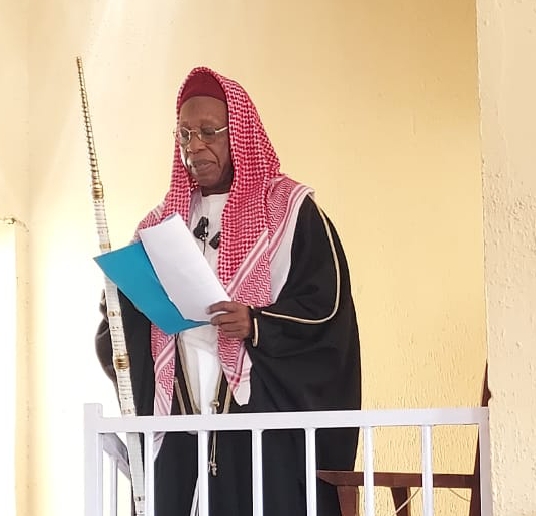
Dr Goni Faruk Umar has urged Muslims to embrace Taqwa in their daily lives, describing it as a foundation of Islam and a key to righteous conduct and success in this world and the hereafter.
KANO FOCUS reports that the Islamic scholar made the call while delivering a Juma’a sermon at the New Juma’a Mosque, Rumfa College, Kano.
In the sermon, Dr Goni Faruk Umar explained the meaning of Taqwa using classical Islamic scholarship, including an account involving Umar ibn al-Khattab and the companion Ubayy ibn Ka’b to illustrate the concept.
According to the account cited in the sermon, Sayyadina Ubayy once asked Khalifa Umar bin Khattab whether he had ever walked along a thorny path. When Khalifa Umar bin Khattab answered in the affirmative, Sayyadina Ubayy asked how he navigated it. Khalifa Umar bin Khattab replied that he gathered his clothes and proceeded cautiously to avoid being pricked.
Sayyadina Ubayy then explained that this was the essence of Taqwa: being constantly mindful of one’s actions and carefully avoiding what displeases Allah.
Dr Goni Faruk Umar said Taqwa should not be limited to acts of worship but should also guide Muslims’ conduct in contemporary society, particularly in their use of digital platforms and social media, control of the tongue, and relationships within the family.
He urged worshippers to exercise restraint in their speech, act responsibly online and uphold their obligations to family members in accordance with Islamic teachings.
The cleric also highlighted the spiritual and worldly benefits of Taqwa, including relief from hardship, ease in personal affairs, forgiveness of sins and increased rewards in the hereafter.
Quoting verses from the Qur’an, he cited Allah’s promise in Surah At-Talaq, verses 2 and 3, that whoever fears Him will be granted a way out of difficulties and provided for from sources they could not have anticipated.
He also referred to Qur’an 65:4–5, which promises ease in affairs, the removal of sins and the multiplication of rewards for those who maintain Taqwa.
The scholar reminded Muslims that worldly life is temporary and that the hereafter is their permanent destination. He therefore urged them to regard Taqwa as the best provision for the journey beyond this life.
Citing Qur’an 2:197, he emphasised that the best provision for the hereafter is Taqwa, urging believers to remain conscious of their responsibilities to Allah.
The sermon also featured prayers and salutations upon Prophet Muhammad (peace be upon him), his family and companions, in accordance with the Qur’anic instruction in Surah Al-Ahzab, verse 56.
Dr Goni Faruk Umar concluded by encouraging Muslims to remain steadfast in faith, follow the guidance of the Prophet and make righteousness a guiding principle in their daily lives.
Nasiru Yusuf Ibrahim
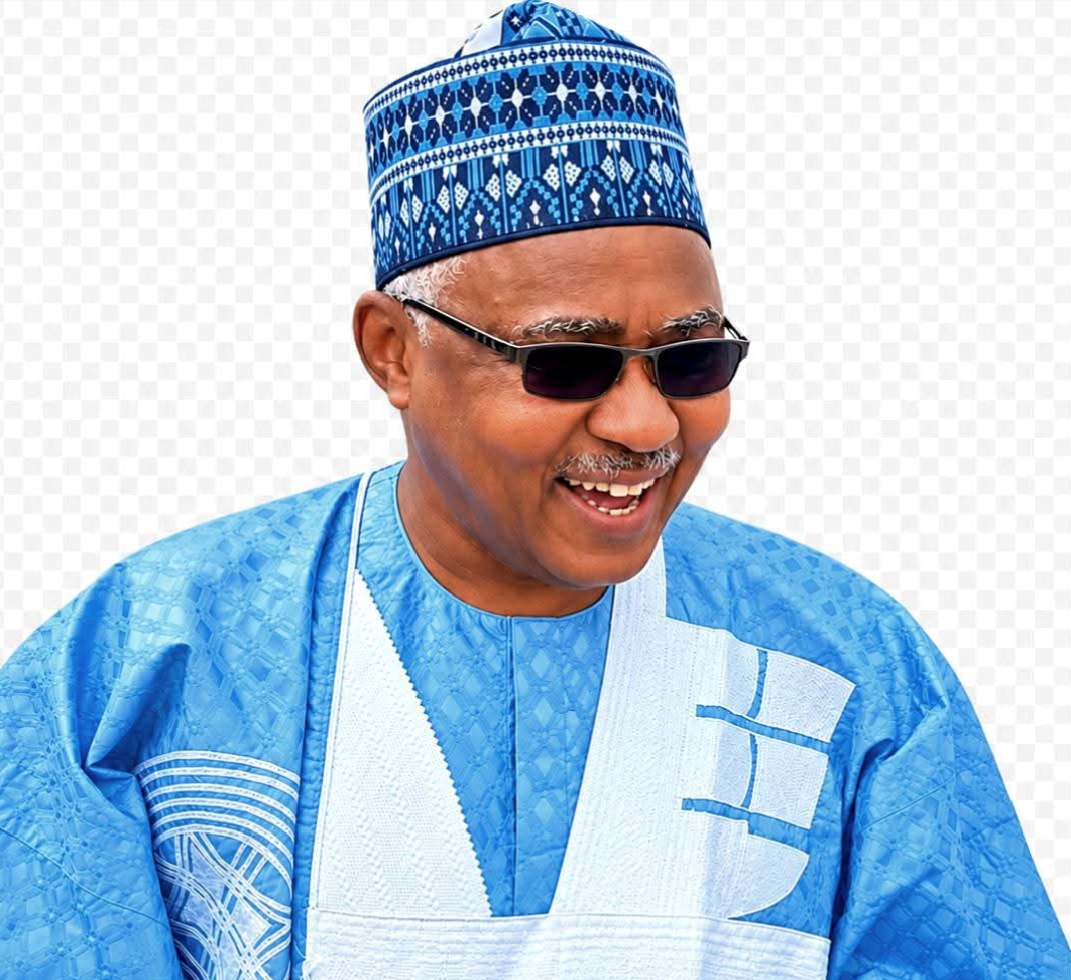
Political allies and loyalists of former Managing Director of the Nigerian Ports Authority (NPA), Arc Aminu Dabo, have begun resigning from the All Progressives Congress (APC) in Kano State following his withdrawal from the ruling party.
KANO FOCUS reports that the supporters, operating under the political group Dabo Alheri Ne, reportedly include members across Kano State’s 44 local government areas.
Barely two days after Dabo announced his resignation from the APC, a prominent stakeholder of the group, Garba Zakiru Dambatta, said members had welcomed the decision and were showing solidarity by submitting their resignation letters to their respective ward party chairmen.
Dambatta, a former APC chairman in Dambatta Local Government Area, said the group’s members were disappointed with what they described as the prolonged marginalisation of Mr Dabo and his supporters within the party.
According to him, despite Mr Dabo’s contributions to the APC and efforts to strengthen the party and manage disagreements among its members, some key stakeholders had continued to sideline him and his loyalists in party activities.
Dambatta reaffirmed the group’s commitment to standing by Mr Dabo’s political decisions and supporting his future political journey.
He also urged the former NPA managing director not to succumb to political pressure or reverse his decision to leave the party.
“This step you have taken, we have the conviction that it is the beginning of a new chapter of goodness in your life,” Dambatta said.
Among the prominent members of the group identified as supporting Mr Dabo’s decision are Abba Rabee’u, a former Senior Special Assistant on Political Awareness; Almustapha Jilani Danmalam, a former Senior Special Assistant on Education; Jamilu Abdullahi Zangon-Mata, a former Senior Special Assistant on Entrepreneurship; and Fahd A. Dabo, a former Special Assistant on Youth Mobilisation.
The individuals reportedly served during the second term of former Kano State Governor Abdullahi Umar Ganduje.
The group also said several other party loyalists and supporters were backing Dabo following his resignation.
However, the statement did not provide the number of members who had formally resigned from the APC or indicate whether the party leadership had responded to the development.

Nasiru Yusuf Ibrahim
Five players of Kano Pillars Amputee Football Club have been invited to the national camp of Nigeria’s Special Super Eagles ahead of the 2026 Amputee Football World Cup in Mexico.
KANO FOCUS reports that invited players are Isah Yusuf, Abba Musa, Habu Friday, Emanuel Betel and Usman Ahmed. They are currently in Abuja with the national team as preparations intensify for the global tournament.
The Team Manager of Kano Pillars Amputee Football Team, Jamilu Uba Adamu, disclosed this in an interview with Ashiru Rabiu Gidan Tudu, Information Officer of the Kano State Sports Commission.
Adamu described the invitation as recognition of the players’ dedication, discipline and outstanding performances.
He expressed confidence that the players would represent Kano State and Nigeria with honour at the championship.
According to him, the call-up also demonstrates Kano Pillars’ commitment to nurturing talented amputee footballers and contributing to the development of the sport in Nigeria.
The 2026 Amputee Football World Cup is scheduled to take place from November 13 to 22 in San Juan de los Lagos, Mexico. A total of 24 countries, including seven African nations, are expected to participate.
The Executive Chairman of the Kano State Sports Commission, Muhammad Tukur Babangida, congratulated the five players on their invitation, describing it as well deserved.
Babangida expressed confidence that they would justify the confidence reposed in them by the national team selectors.
He assured the players of the commission’s continued support and urged them to remain focused, disciplined and committed to making Kano State and Nigeria proud on the international stage.

Dr Goni Faruk Umar calls on muslims to embrace taqwa in daily life

Dabo’s resignation triggers wave of defections from APC in Kano

Five Kano Pillars Amputee Players Invited to Special Eagles Camp Ahead of World Cup

BUK Professor advocates microfinance to tackle food insecurity, poverty

General Elections 2027: Abba Kabir Yusuf traverses the path to victory

Kano leads again as NECO successes rise to 74,413
Kano tops states in 2026 NECO results, Governor Yusuf hails students

Kano Govt Suspends Durbar Processions, Horse Riding in Metropolis

ACF begins Dangote Refinery IPO sensitisation campaign in Kano

