
Headlines
Dangote refinery begins production of petrol


The facility to begin sale immediately
Nasiru Yusuf Ibrahim
The 650,000 barrels per day Dangote refinery has concluded the test production of petroleum and will begin sale immediately.
KANO FOCUS reports that this will bring much needed relief to Nigerians currently experiencing excruciation petrol scarcity in towns and cities across the country.

It was gathered that all the parameters for certifying the suitability of any refining asset have been satisfactorily ticked by the superstructure owned by Africa’s richest person, Mr Aliko Dangote.
The country despite spending billions of dollars on turnaround maintenance of its four official refineries for over two decades has been unable to get them to work.
Nigeria which consumes about 66 million litres of petrol daily on the average, currently spends a huge chunk of its budget, exceeding $10 billion by some estimates on the importation of the road fuel every year.
The development is expected to save the country several billions of dollars in foreign exchange as well as enhance the local availability of the critical fuel heavily used by businesses and homes.
In the same vein, Africa’s largest oil refining facility, is on the brink of producing significant volumes of petrol and the fuel could be made available as early as this week, Bloomberg reported on Monday.
Describing it as a landmark moment with the potential to transform the global market for the fuel, the report quoting two sources, stated that that product testing has started in earnest.
The giant new facility near the commercial hub of Lagos is on the verge of producing large amounts of the fuel and will be able to process 650,000 barrels a day of oil when at full capacity, turning more than half of that into petrol.
The ramp up is likely to be welcomed within the country, given that the state oil company — Nigeria’s main importer of fuel — said its ability to supply gasoline is being disrupted by debt and rising prices, Bloomberg stressed.
Dangote’s production is expected to impact billions of dollars of trade in fuel markets regionally and beyond as Nigeria remains a global demand sink for the fuel, receiving almost 250,000 barrels a day in shipments last year, mostly from Europe, according to data from analytics firm Vortexa Ltd.
Key to the plant’s petrol output is a unit called a reformer, which produces blendstock for the road fuel. That has started operating, with petrol production expected to begin by the end of the week, one of the people told the international news agency. Another said petrol would be rolled out this week.
At full rates, the refinery is expected to be able to produce about 330,000 barrels a day of petrol, according to Randy Hurburun, senior refinery analyst at consultancy Energy Aspects Ltd. That’s more than 1 per cent of global demand for the road fuel, which is about 27 million barrels a day.
Still, those volumes are a long way off, with Energy Aspects forecasting about 90,000 barrels a day of production in the fourth quarter, increasing to almost 250,000 in the second half of next year. Key to raising output further is another unit called a residue fluid catalytic cracker.
The refinery has been gradually ramping up after years of delays. The plant’s owner, Aliko Dangote, said in July the plant was aiming to start petrol production from August.
In response to questions about the various steps involved in ramping up gasoline output, a spokesman for Dangote told Bloomberg “we are on track”.
In the same vein, a Reuters report said on Monday that the refinery had begun processing petrol after delays caused by recent crude shortages, quoting an executive of the company.
The $20 billion refinery began operations in January with output of products including naphtha and jet fuel. The refinery promises to ease oil producer Nigeria’s costly reliance on imported oil products.
“We are testing the product (petrol) and subsequently it will start flowing into the product tanks,” said Devakumar Edwin, a vice president at Dangote Industries Limited. He did not however say exactly when the petrol would hit the local market.
Edwin said state-oil firm, the Nigerian National Petroleum Company Limited (NNPC), Nigeria’s sole importer of petrol, would buy the product exclusively.
“If no one is buying it, we will export it as we have been exporting our aviation jet fuel and diesel,” Edwin said.
The delivery of petrol into the Nigerian market will ease NNPC’s struggle to supply the local market. The company is reeling with debts of $6 billion to oil traders for supply since January, Reuters reported.
This has affected its ability to supply the local market where fuel queues have persisted since July.

Nasiru Yusuf Ibrahim
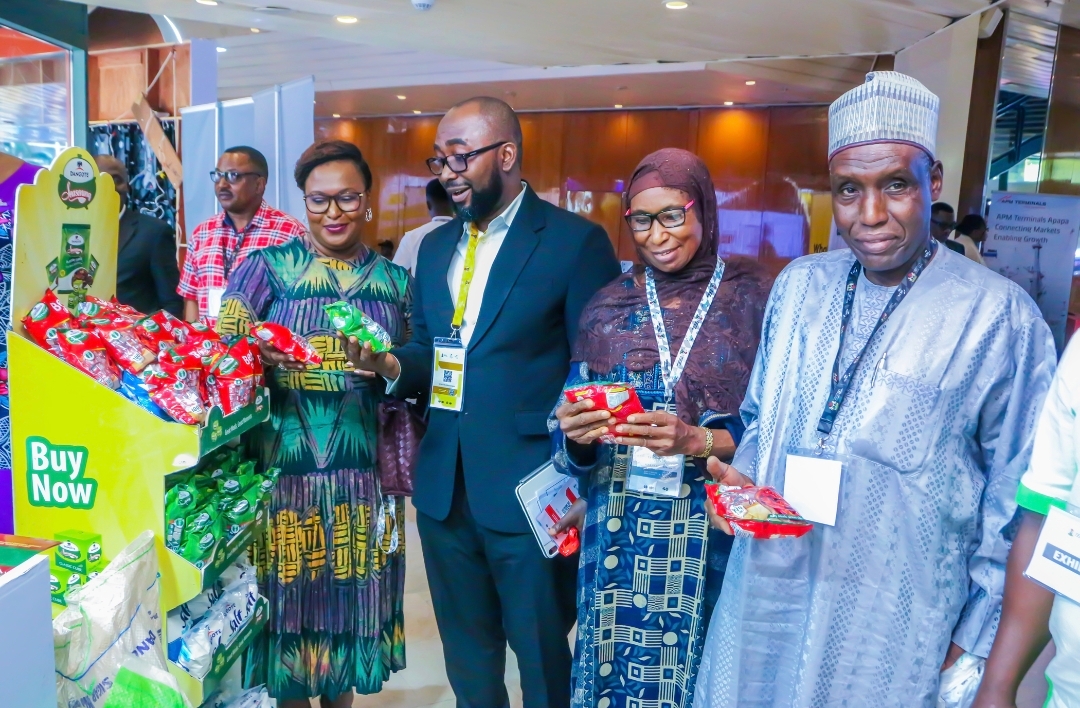
Nascon Allied Industries Plc, a subsidiary of Dangote Industries Limited, and manufacturer of the popular Dangote Salt and Dangote Seasoning brands is set to unveil its research-driven seasoning products at the 2026 Kano Trade Fair.
KANO FOCUS reports that the diversified food products portfolio will be unveiled during the Dangote Special Day on Thursday December 3, 2026, at the ongoing Kano International Trade Fair.
The new seasoning range, comprising Dangote Classic, Dangote Beef Seasoning and Dangote Chicken Seasoning, will be unveiled to customers and participants at the Kano Trade Fair by the Regional Director and Senior Adviser to the President of Dangote Group, Fatima Wali-Abdurrahman, and the Managing Director/Chief Executive Officer of NASCON Allied Industries Plc, Aderemi Saka, in collaboration with the Kano Chamber of Commerce, Industry, Mines and Agriculture (KACCIMA).
Dangote Industries Limited is one of the sponsors of the 47th Kano International Trade Fair with the theme: Repositioning Nigeria’s Economy Through Industrialization, Innovation and Sustainable Trade Development Strategy.
A statement from the Branding and Corporate Communication Department of the company said other strategic business units of the company participating in the Kano Trade Fair include: Dangote Cement Plc, Dangote Sugar Refinery, Dangote Sinotruk, Dangote Packaging, Dangote Fertiliser Limited and Dangote Petroleum Refinery.
However, the unveiling of Nascon’s new seasoning range is expected to be one of the major highlights of the Dangote Group Special Day.
The statement said: “Kano’s rich commercial heritage, extensive distribution networks and strategic position as one of West Africa’s leading trading centres make it a vital market for Nascon and the Dangote brand.
“We therefore invite consumers, visitors and other stakeholders to visit our pavilion to discover and experience our new Dangote Seasoning products. We also extend a warm invitation to distributors, prospective investors and business partners interested in exploring opportunities and becoming part of our expanding distribution network.”
Speaking on Dangote’s sponsorship, participation and unveiling of new products, President of the Kano Chamber of Commerce, Industry, Mines and Agriculture (KACCIMA), Ambassador Ambassador Usman Hassan Darma commended the company for the partnership, adding that the new research-based Seasonings will be accepted by customers and consumers, not only in Kano, but the entire Northern Nigeria.
He said the KACCIMA was ready to partner with the company in deepening market acceptability for the newly innovative products, adding that the KACCIMA-Dangote relationship has come a long way.
He said: “Kano has remained one of West Africa’s foremost commercial centres, with a rich trading heritage that predates modern Nigeria. For generations, the city has built a strong reputation as a hub for commerce, agriculture, textiles, manufacturing and enterprise.
“Its vibrant entrepreneurial culture is driven by a well-established network of traders, manufacturers, distributors and small and medium-sized enterprises, making Kano a critical player in Nigeria’s commercial and industrial landscape.
“Beyond Kano, Northern Nigeria holds immense economic potential across key sectors, including agriculture, livestock, mining, solid minerals, food processing, renewable energy and manufacturing. These sectors offer significant opportunities for investment, industrial growth, job creation and sustainable economic development.
Nasiru Yusuf Ibrahim
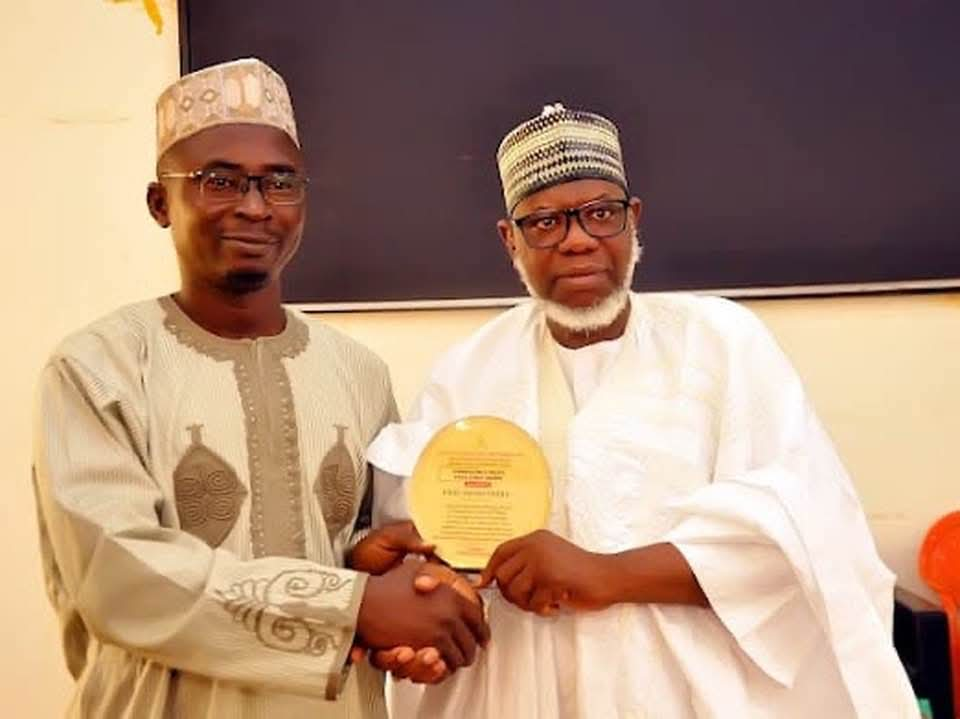
The Ahmadu Bello University (ABU), Zaria, Kaduna State, has honoured the Executive Secretary of the Nigerian Educational Research and Development Council (NERDC), Professor Salisu Shehu, for his contributions to educational advancement.
KANO FOCUS reports that the honour, titled Curriculum and Policy Excellence Award, was conferred on Prof Shehu by ABU’s Faculty of Education during its Roundtable on Education Sector Reforms held on Tuesday.
The NERDC disclosed this in a post on its official Facebook page on Thursday.
Prof Shehu participated in the roundtable as a discussant, where he shared insights on curriculum development and educational policy.
According to the council, the faculty recognised his expertise in curriculum dynamics and education policy, noting that his contributions had enriched discussions on national education sector reforms.
The award recognises his work in advancing curriculum development and shaping education policy in Nigeria.
Headlines
Islamic Forum defends NERDC boss, Prof. Salisu Shehu, over allegations surrounding curriculum reforms
Nasiru Yusuf Ibrahim
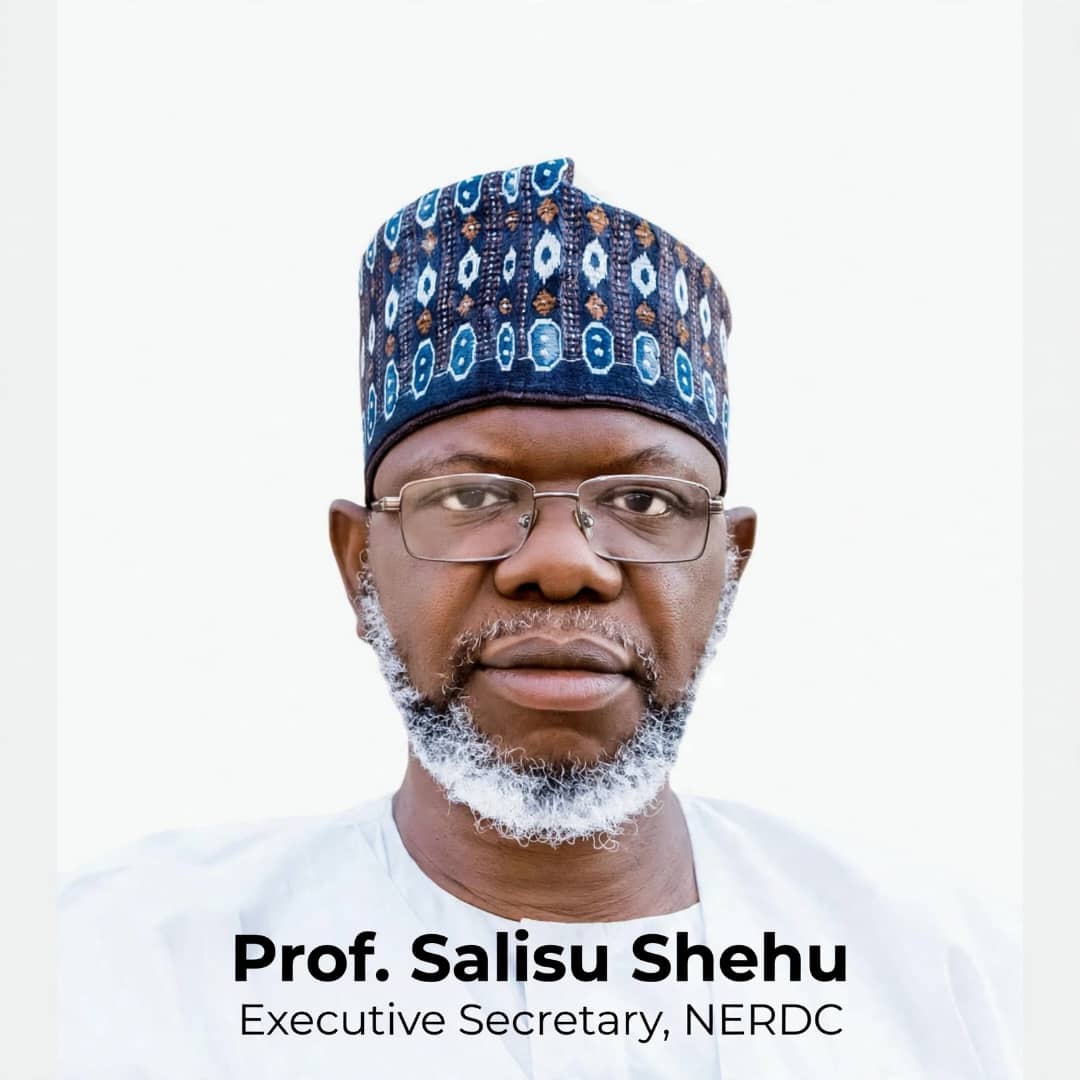
The Islamic Forum of Nigeria (IFN) has defended the Executive Secretary of the Nigerian Educational Research and Development Council (NERDC), Professor Salisu Shehu, against allegations and religious profiling over his leadership of the council and the ongoing national curriculum reforms.
KANO FOCUS that the Forum described the allegations as baseless and misleading, insisting that Professor Shehu’s professional record and performance should be assessed on the basis of verifiable facts rather than his religious identity.
In a statement issued on Tuesday and signed by its Acting Executive Secretary, Dalhatu Muhammad Gwarzo, the organisation said attempts to portray Shehu’s religious background and scholarly contributions to Islamic thought as evidence of an alleged hidden agenda at NERDC were unfair.
It said public institutions and their leaders could be scrutinised, but such assessments should be guided by facts, objectivity and national interest.
The Forum said Shehu’s appointment by President Bola Tinubu in December 2024 was based on his academic and administrative experience, describing him as a professor of Educational Psychology at Bayero University, Kano, with a doctorate from Usmanu Danfodiyo University, Sokoto.
It cited his previous positions at Bayero University, including pioneer Director of the Institute of Continuing Education and pioneer Dean of the School of Continuing Education, where it said he helped expand access to higher education for working-class and non-traditional learners.
The organisation also highlighted his tenure as Director of the Centre for Islamic Civilization and Interfaith Dialogue at the university, saying he promoted religious harmony, interfaith dialogue and peaceful coexistence.
It further cited his service as pioneer Vice-Chancellor of Al-Istiqamah University, Sumaila, Kano State, where it said he oversaw the institution’s take-off, secured regulatory approvals and established academic programmes.
According to the Forum, Shehu also served for a decade as Executive Secretary of the Islamic Forum of Nigeria and as Deputy Secretary-General of the Nigerian Supreme Council for Islamic Affairs before focusing fully on his national assignment in 2025.
On his performance at NERDC, the organisation said Shehu had initiated institutional reforms, including the refurbishment and reactivation of the council’s printing press at its South-West Zonal Office in Lagos.
It also cited the modernisation of the NERDC library and the establishment of an Academic Programmes Committee to strengthen educational research.
On the controversial national curriculum reforms, the Forum said the review followed the council’s statutory multi-stakeholder process across the six geopolitical zones.
It explained that curriculum development involved subject specialists, educators and representatives of different religious and regional backgrounds, with the process subject to institutional and ministerial approval.
The revised curriculum, it said, was designed to reduce subject overload, strengthen core competencies and practical vocational skills, and reintroduce Nigerian History alongside Citizenship and Heritage Studies.
The Forum also said Shehu had maintained a zero-tolerance approach to administrative malpractice, including issuing public disclaimers against fraudulent schemes seeking to exploit the curriculum review exercise.
It urged media organisations, commentators and members of the public to examine the approved national curriculum and assess the NERDC chief based on his competence, character and performance.
The organisation reaffirmed its confidence in Shehu’s integrity and commitment to an inclusive education system, saying Nigeria’s education reforms required experienced scholars and administrators.

Dangote Salt To Unveil New Seasoning Formulas at 2026 Kano Trade Fair

ABU honours NERDC Executive Secretary Salisu Shehu for contributions to education

Islamic Forum defends NERDC boss, Prof. Salisu Shehu, over allegations surrounding curriculum reforms

WHO, UNICEF commend Kano govt over healthcare projects, 484 tricycle ambulances

Dangote Cement records 60% drop in road accidents, honours 35 drivers

Uganda woos Dangote for $billions oil refinery, fertiliser, salt investments

Governor Yusuf swears in six commissioners, three advisers, 19 permanent secretaries

Gov Yusuf Nominates Spokesperson, Sunusi Bature Dawakintofa as Commissioner

Kano Association of Persons with Disabilities Affirms New State Executive Through Consensus

