
Headlines
Police arrest eight over political clash in Bichi

Ibrahim Khalil
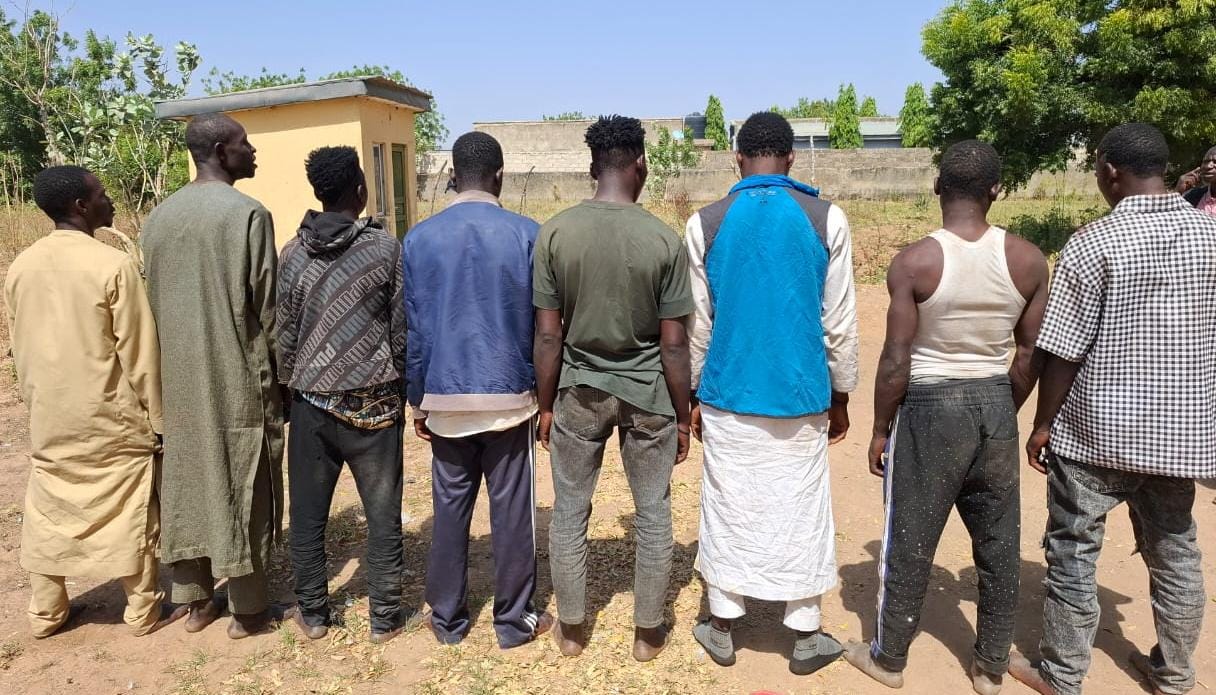
The Kano State Police Command has arrested eight suspects following a political clash between supporters of the All Progressives Congress (APC) and the New Democratic Congress (NDC) in Bichi Local Government Area.
KANO FOCUS reports that the clash, which occurred at about 4:45 p.m. on Sunday, November 15, reportedly resulted in the destruction of campaign banners, billboards and vehicles, as well as injuries to five people.

The police said normalcy had been restored in the area following the swift deployment of officers to contain the violence.
In a statement issued on Monday, the Police Public Relations Officer, Abdullahi Haruna Kiyawa, said 13 vehicles were vandalised during the incident, while five injured persons were taken to hospital for treatment.
He added that the police arrested eight suspects in connection with the clash and recovered dangerous weapons and other items.
The recovered items included a gariyo, two cutlasses, two hard sticks, a bottle of solution and a substance locally known as “Suck and Die”.
Kiyawa said the suspects had been transferred to the State Criminal Investigation Department (SCID), Bompai, for investigation and would be charged to court upon its conclusion.
The Commissioner of Police, Kano State Command, condemned the violence and destruction of campaign materials, warning political supporters against actions capable of disrupting public peace.
He said the command would not tolerate any breach of law and order before, during or after the political season.
The police commissioner also urged political activities to be conducted peacefully and in accordance with the law, stressing that no individual or group was above the law.
The command called on political leaders, party supporters and members of the public to shun violence and report suspicious activities to the nearest police station.
It said the situation in Bichi remained relatively calm, adding that security monitoring was ongoing.

Nasiru Yusuf Ibrahim
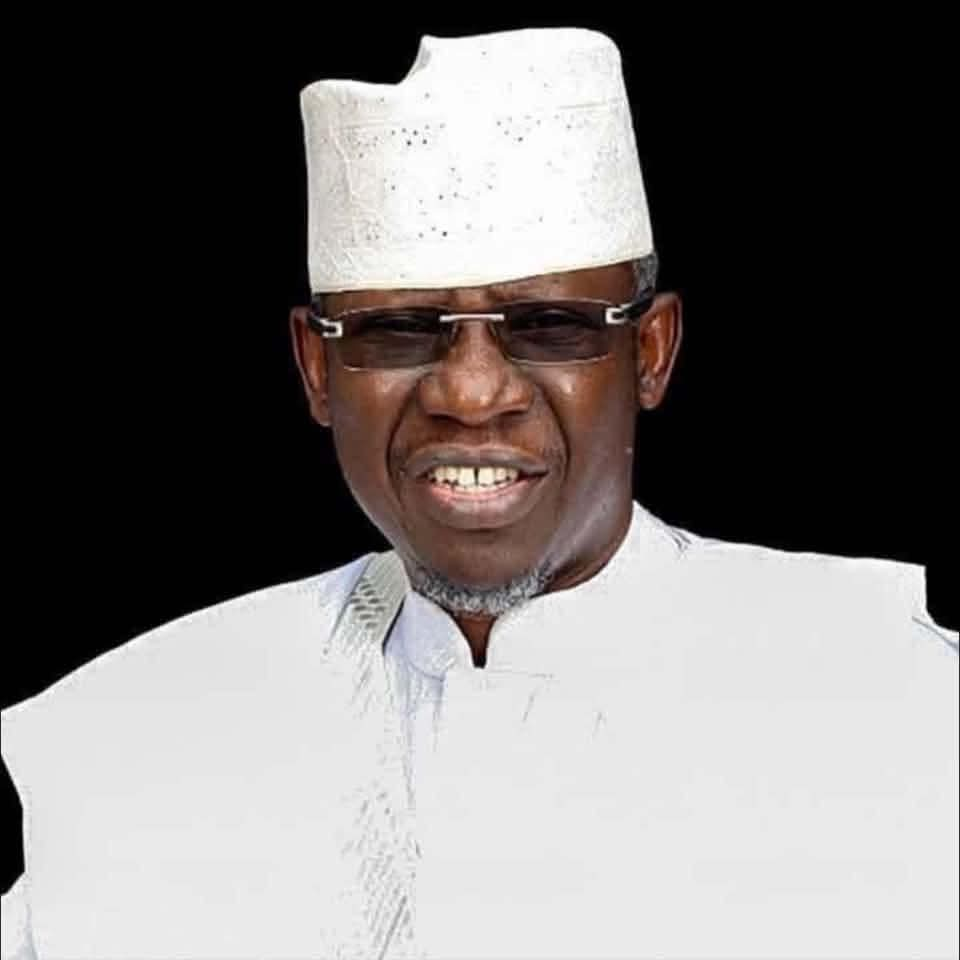
The Kano State governorship candidate of the African Democratic Congress (ADC), Ibrahim Ali Amin, popularly known as Little, has constituted a campaign council to coordinate the party’s activities ahead of the forthcoming governorship election.
KANO FOCUS reports that the council is expected to oversee campaign operations and mobilisation across the state.
In a statement announcing the appointments, Adnan Mukhtar, Director of Media and Strategic Communication, said Alhaji Aminu Labaran Baba had been appointed chairman, while Hon. Bala Yau Bayco would serve as Director-General.
Yusuf Mamman Bature was named secretary of the council.
Other appointments include Hon. Mamina Bako Lamido as Director of Contact, with Hon. Abdullahi Dalhatu Dan Kano as deputy.
Alhaji Nasir Tahir was appointed Director of Support Groups, while Hon. Aliyu Ibrahim Muhammad would serve as his deputy.
Mukhtar himself was named Director of Media and Strategic Communication, while Alhaji Nasiru Hussaini Agalawa was appointed Director of Finance.
Other members include Hon. Magaji Yau Indabawa, Director of Public Affairs; Abba Abdulhadi Kofar Waika, Director of Youth Mobilisation; and Naja’atu Tasiu Abbas, Deputy Director of Youth Mobilisation.
Hon. Sharu Garba Umar Gwammaja was appointed Director of Special Duties.
For women mobilisation, Aisha Ibrahim Hassan, popularly known as Humaira, was appointed director, while Zahra Ibrahim Aminu was named deputy director.
The council also appointed Aisha Ibrahim Captain as Deputy Director of Women Mobilisation for Kano South, Binta Sayyada for Kano Central, and Amina Mahmud for Kano North.
The statement said additional directorates and appointments would be announced later.
The campaign council is expected to coordinate the ADC candidate’s political outreach, strategic communication and grassroots mobilisation across Kano State.
Ibrahim Khalil
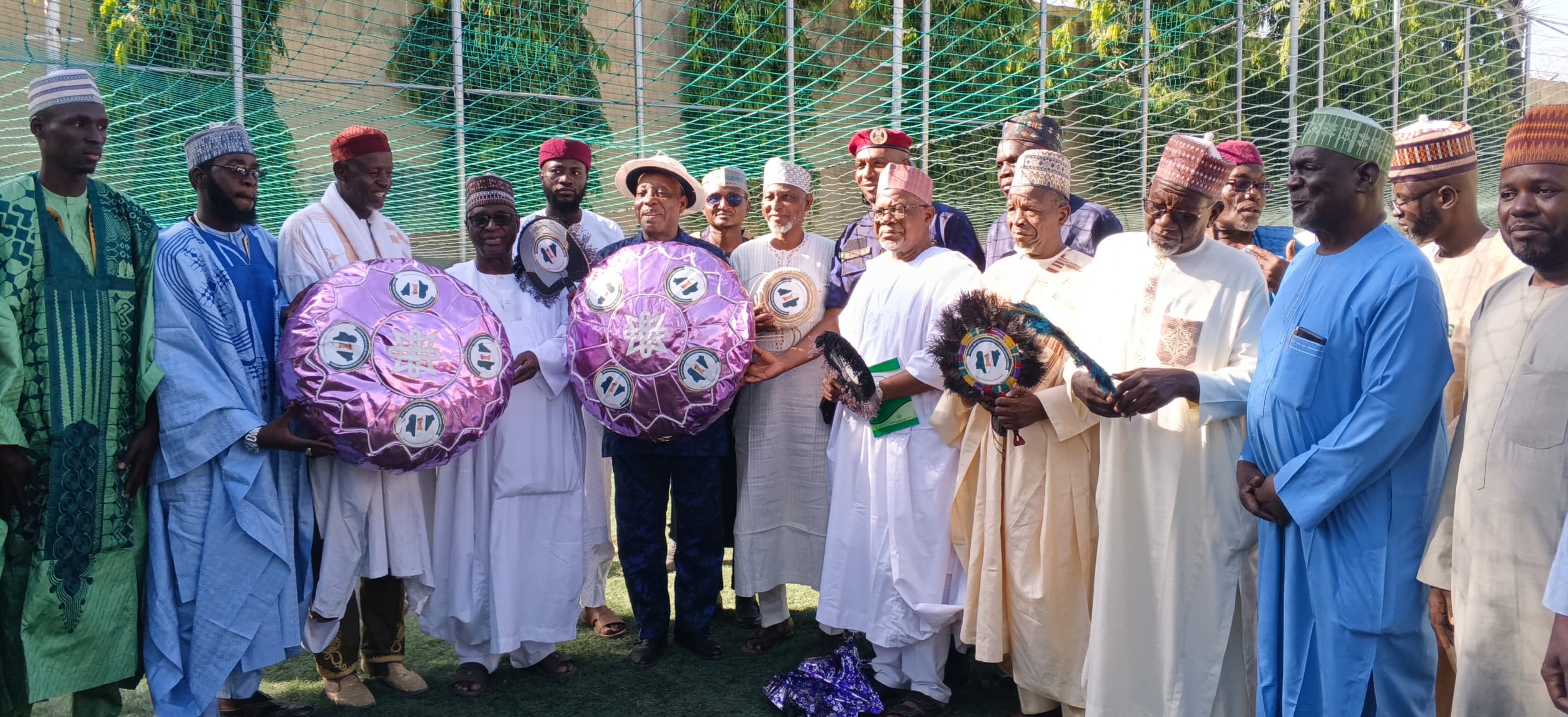
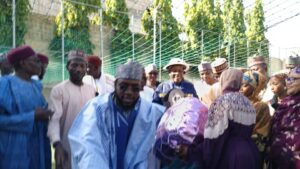
The Tafiyar Matasa Forum and the Civilian Joint Task Force (CJTF) in Kano State have honoured former chairman of the Arewa Consultative Forum (ACF), Dr Goni Farouk Umar, for his contributions to community development, education and youth empowerment.
KANO FOCUS reports that the Tafiyar Matasa Forum, which has its national office in Abuja, said it selected Umar from more than 100 nominees in recognition of his commitment to public service and development in Kano State and beyond.
The organisation also appointed him as one of its national patrons.
Dr Goni Faruk Umar and Umar Ahmad Baba
Speaking at the event, the Kano State Chairman of the forum, Umar Nuhu Tahir, said young people had benefited significantly from Dr Umar’s philanthropic activities and contributions to society.
He said the former ACF chairman had supported educational development and provided opportunities for thousands of people to acquire skills and become self-reliant.
Tahir said the contributions informed the forum’s decision to recognise and honour him.
Also speaking, the Kano State Commander of the Civilian Joint Task Force, Umar Ahmad Baba, said the organisation was established in the state to strengthen security and support conventional security agencies.
He explained that while some states established similar groups in response to security challenges, Kano decided to establish the CJTF as a proactive measure to complement the efforts of security agencies.
According to him, the organisation currently operates offices across 35 local government areas of Kano State and has more than 2,500 members.
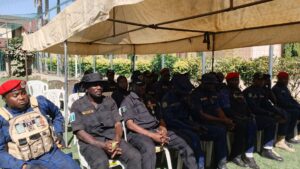
Baba disclosed that the Arewa Consultative Forum, under the leadership of Dr Goni Farouk Umar, had supported the CJTF with operational equipment, training and financial assistance estimated at about N1 million.
In his remarks, Dr Umar thanked the two organisations for recognising his contributions, pledging to continue supporting their activities towards promoting development and peaceful coexistence in Kano State and Nigeria.
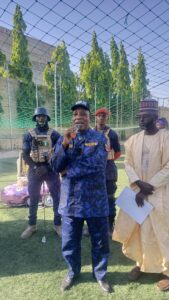
Dr Goni Faruk Umar
He said the recognition would further encourage him to sustain his efforts towards community development and youth empowerment.
Add this paragraph after the section on the CJTF’s contributions and before Dr Umar’s remarks:
The event also featured goodwill messages from friends and associates of Dr Umar, including Alhaji Mahdi Sadiq, Ambassador Bala Sani and Hajiya Zainab Audu, daughter of former Kano State Governor, Alhaji Audu Bako.
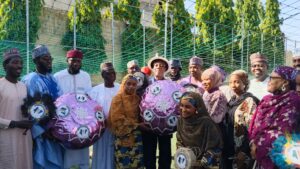
Hajiya Zainab described Dr Umar as a father figure who maintained a cordial relationship with their family and continued to support them following the death of her father, Alhaji Audu Bako.
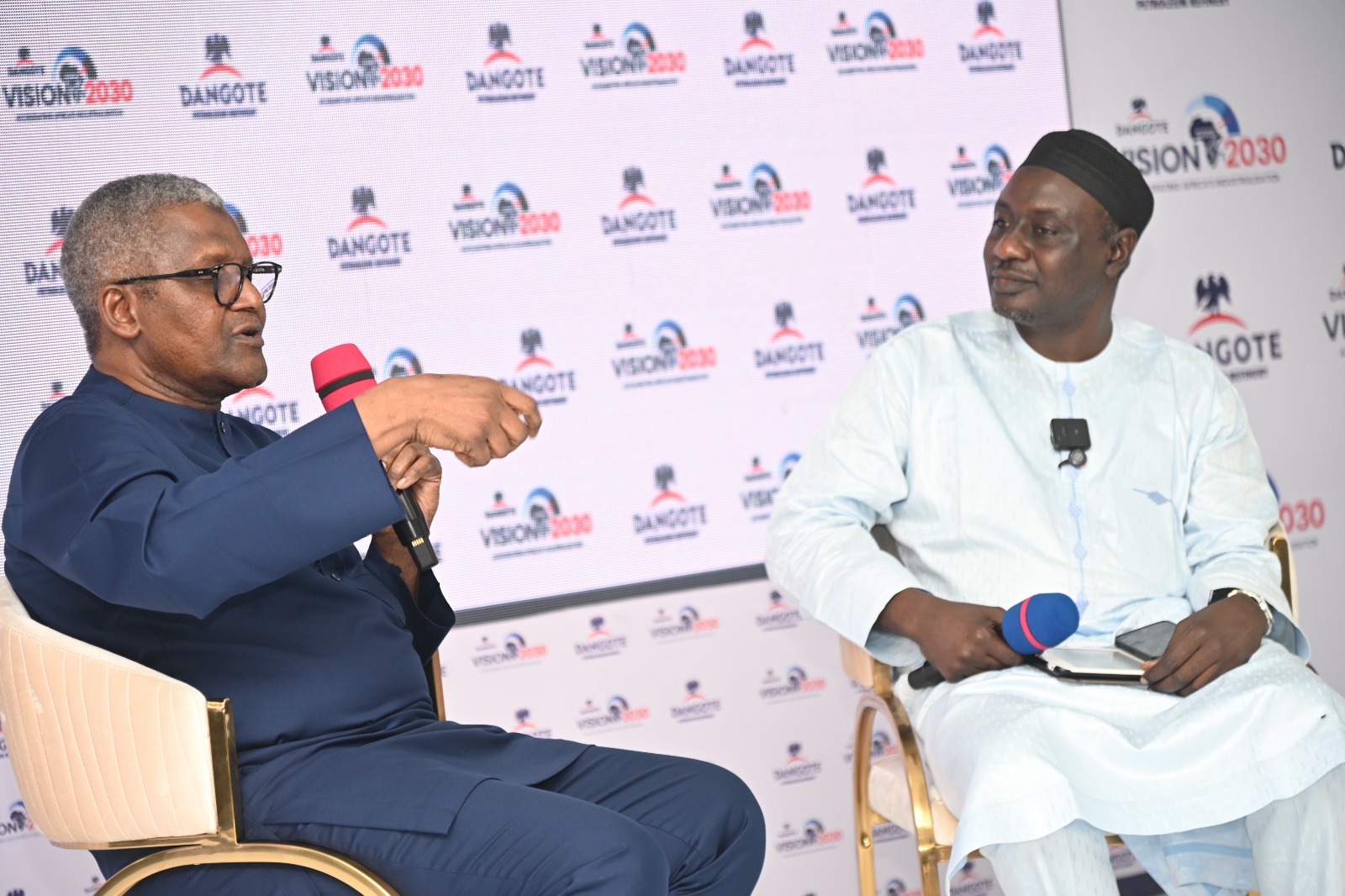
…Says reliable electricity, job creation key to tackling insecurity
Nasiru Yusuf Ibrahim
President and Chief Executive of Dangote Industries Limited, Aliko Dangote, has announced plans to increase his group’s investment target in Africa from $50 billion to about $70 billion under its Vision 2030 programme.
KANO FOCUS reports that Dangote also disclosed plans for a 10,000-megawatt power generation intervention across Africa, potentially including Nigeria, as part of efforts to address electricity shortages and accelerate industrial development.
Dangote made the disclosures while addressing creative industry stakeholders from Northern Nigeria, including content creators, journalists, bloggers, entertainers and Kannywood actors.
He said expanding production, creating jobs and ensuring reliable electricity supply were critical to unlocking Nigeria’s economic potential and addressing insecurity.
“We initially planned to invest $50 billion. We are now looking at increasing that to about $70 billion in Africa,” he said.
The industrialist identified inadequate electricity supply as one of the major obstacles to business growth, particularly for small and medium-sized enterprises (SMEs), warning that businesses relying on petrol and diesel generators would find it difficult to remain profitable.
He said the group currently generated nearly 1,500 megawatts of electricity for its operations, adding that the capacity could increase to between 4,500 and 5,000 megawatts by the completion of Vision 2030.
“Across the group, we currently have almost 1,500 megawatts. By the time we complete Vision 2030, that could rise to between 4,500 and 5,000 megawatts,” he said.
“That is captive power—electricity for our own operations. Separately, part of the vision is to intervene in power generation with 10,000 megawatts across Africa, potentially including Nigeria.”
Responding to a question on the economic decisions that could improve the living conditions of ordinary Nigerians, Dangote said electricity was central to the country’s development.
He argued that although individuals and businesses could install alternative power systems such as solar, such measures would not address the wider electricity challenge facing the country.
“Installing solar power for yourself does not mean the wider problem has been solved. Other people may not have that option,” he said.
He described SMEs as essential drivers of economic activity, noting that large companies played an important role in supporting smaller businesses.
“A vibrant economy is driven by small and medium-sized enterprises. Large companies such as ours help sustain those businesses, but SMEs are essential to economic activity. When you generate electricity using diesel or petrol, it becomes very difficult to make money,” he said.
Dangote expressed confidence in Nigeria’s entrepreneurial potential, saying the country had yet to fully harness the opportunities offered by its large economy.
He urged the government to focus on creating an enabling environment through consistent and business-friendly policies, while encouraging private enterprises to invest, expand production and create employment opportunities.
“Government’s principal responsibility is to create an enabling environment through good policies. With the right policies, businesses can invest and create jobs,” he said.
The industrialist also identified agriculture and solid minerals as sectors with significant investment opportunities, particularly in Northern Nigeria.
He, however, called for a shift from exporting raw materials to processing them locally, arguing that value addition would strengthen the economy and reduce dependence on imported finished products.
“It is not only about us; it is about Nigeria and the African continent. We should not simply export raw materials and then buy back the processed products at many times the price. That is the pattern we want to change,” he said.
Dangote said investment in infrastructure, including ports, would help producers access wider markets and improve the country’s capacity to process and export goods.
“Without production, we will continue to face economic difficulties. We must build a productive economy,” he added.
Reflecting on his business journey, Dangote attributed the expansion of his conglomerate to focus, financial discipline and the consistent reinvestment of profits.
He said the group’s transition from trading to manufacturing was driven by its decision to produce goods it already understood, leveraging existing customers, distribution networks and market knowledge.
“The logical next step was backward integration: producing the things we were already importing,” he said.
He also advised entrepreneurs to exercise financial discipline, avoid spending profits before they were realised and be prepared to discontinue ventures that were no longer commercially viable.
“Give it your best effort, but when you do the numbers and they are not adding up, you must be willing to leave,” he said.
Despite the challenges facing businesses, Dangote assured that his group would continue investing, urging smaller enterprises to take advantage of opportunities created by major industrial projects.
“People like us will continue investing. People like you can build businesses around those investments—as suppliers, producers and service providers,” he said.

Religious Identity Should Not Be a Test of Fitness for Public Office
Rejoinder to Sahara Reporters on the Appointment of Prof. Salisu Shehu as Executive Secretary of NERDC

ADC governorship candidate appoints campaign council in Kano

Police arrest eight over political clash in Bichi

Dangote Sinotruk rolls out Nigeria’s first locally assembled electric heavy-duty truck

Uganda woos Dangote for $billions oil refinery, fertiliser, salt investments

Governor Yusuf swears in six commissioners, three advisers, 19 permanent secretaries

Veteran NTA manager Dahiru Biso loses wife at 58

Gov Yusuf Joins APC Leaders at Kaduna Presidential Campaign Flag-Off as Kano Delegation Draws Attention

