
Headlines
Kano Assembly reinstates 5 suspended lawmakers

Nasiru Yusuf
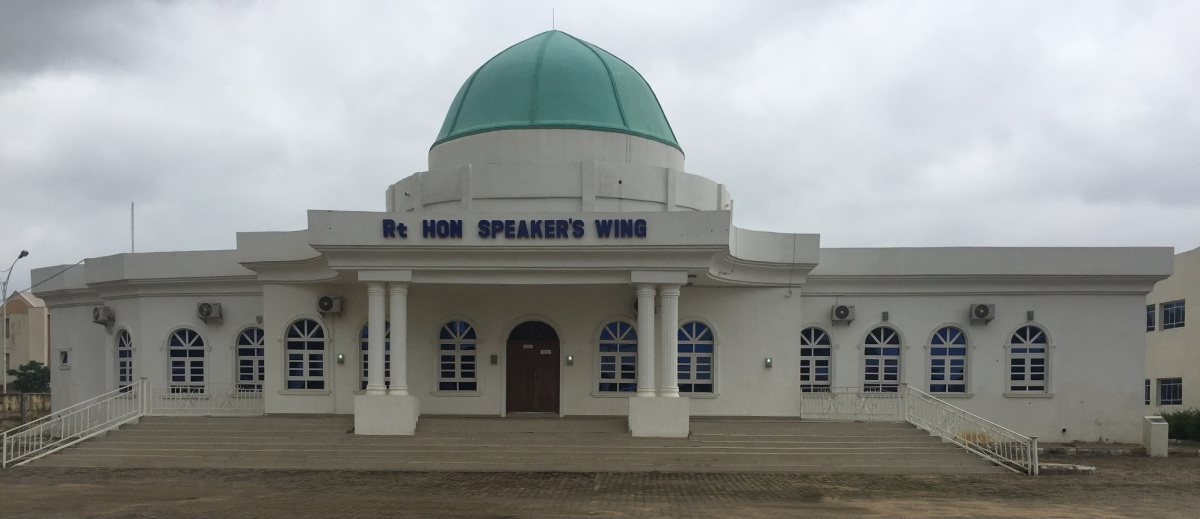
The Kano state House of Assembly has on Tuesday reinstated five lawmakers suspended for opposing investigation of deposed Emir of Kano Muhammad Sanusi II.
Kano Focus reports that the lawmakers participated in Tuesday’s plenary chaired by the speaker of the House Abdulazeez Garba Gafasa.
It could be recalled that the Assembly had on Monday March 3 suspended five members for six months for causing a rowdy session.
The Assembly had descended into chaos over the report of its committee that investigated allegations against Muhammad Sanusi II, who was later deposed by the state government as Emir of Kano.

Court reinstates suspended Kano legislators
Sanusi dethronement: Kano assembly suspends 5 lawmakers
The suspended members are Garba Yau Gwarmai (APC) Kunchi/Tsanyawa Constituency, Labaran Abdul Madari (APC) Warawa Constituency, and Mohammed Bello (APC) Rimin Gado/Tofa Constituency.
The rest are Isyaku Ali Danja (PDP) Gezawa Constituency and Salisu Ahmed-Gwamgwazo (PDP) representing Kano Municipal Constituency.
“The five members were suspended for violating the rules of the house, especially Order IV Sub 4 a, b, d and e disrupted the sittings of the house and prevented proceedings from going on.
“They behaved violently and even attempted to snatch away the mace in a clear attempt to sabotage the sitting of the House,” the speaker said.
Three weeks later, the House suspended its plenary session on March 27, 2020 in compliance with COVID-19 protocol.
Court nullifies suspension
Also on June 3rd a Federal High Court sitting in Kano set aside the suspension of the five members.
The lawmakers in an originating summons urged the court to declare their suspension as a violation of Section 109 of the 1999 Constitution as amended.
They said that the section stipulates and guarantee their tenure in office.
Mr Jimoh, Counsel to the lawmakers, said that the suspension contravenes article 13 of the African Charter on people’s and human rights and Section 109 of the Constitution.
The presiding Judge, Justice Allagoa agreed with the submission of the counsel to the lawmakers.
Mr Allagoa, in his judgment, said that the suspension was unconstitutional, null and void.
He also ordered the Speaker and the Kano State House of Assembly to pay salaries and allowances of the five suspended members.
House failed to reinstate members
However, when the House failed to reinstate the lawmakers, they went back to Federal High Court, Kano and obtained an order compelling the Assembly to reinstate them in compliance with the judgment.
Kano Focus reports that the court granted the order and issued a form 48 which directed the house to reinstate the members in line with the judgment delivered on June 3rd.
However, the Assembly through its counsel Ibrahim Aliyu on Thursday June 18 filed an application requesting the court to set aside the form 48 it issued directing the House to comply with judgment on reinstating the five lawmakers pending the hearing and determination of appeal filed in Court of Appeal, Kano division.
When the matter was called on Monday March 29, counsel to the five lawmakers Nuraini Jimoh appealed to court to adjourn the matter to enable them prepare counter affidavit as they were served on Wednesday June 24.
The trial judge Justice Lewis Allagoa adjourned the matter to Monday July 6 for hearing the motion.






Ibrahim Khalil
The Kano State Police Command has arrested eight suspects in separate operations targeting drug peddling and thuggery in Panshekara and Kunchi/Ghari Local Government Area.
KANO FOCUS reports that the command disclosed this in a statement issued on Thursday by its spokesperson, CSP Abdullahi Haruna Kiyawa, on behalf of the Commissioner of Police, Ibrahim Adamu Bakori.
According to the statement, the operations, conducted on September 9, 2026, were part of the command’s intelligence-driven efforts to tackle drug abuse, thuggery and violent crimes across the state.
It said operatives of the Surveillance Team attached to Panshekara Police Division, acting on credible intelligence at about 2:30 p.m., intercepted eight suspects, including a 21-year-old man identified as Samson Yakubu of Samegu Quarters, at a suspected criminal hotspot.
A search of the suspects reportedly led to the recovery of 15 Pregabalin capsules, five Diazepam tablets, 10 Exol tablets and some quantity of dried leaves suspected to be Indian hemp.
The police said the suspects were in custody and undergoing interrogation, while investigations were ongoing to establish the source of the suspected illicit drugs and identify other members of the alleged syndicate.
In a related operation conducted between 1 p.m. and 9 p.m. the same day, operatives of the Kunchi/Ghari Division carried out a coordinated market patrol and raid at Matanfada Market.
The command said the area had been identified as a place where youths allegedly intimidate traders and residents during market sessions.
Five suspects were arrested during the operation. They were identified as Abdullahi Isah of Dustin; Haruna Isah of Daqarawa Village; Habu Badamasi of Dan Taimu Village; Gambo Ya’u of Kura Village; and Abubakar Dahiru of Farau Village.
The police said investigation was ongoing to identify and arrest other suspected accomplices, while exhibits recovered during the operation had been taken into custody as evidence.
CP Bakori commended the operatives for what he described as their professionalism and swift response, assuring residents that the command would sustain its operations against drug abuse, thuggery and other violent crimes.
“In line with the IGP’s policing vision and our mandate to ensure a safe and secure Kano, we will continue to be proactive,” the commissioner said.
“We are sending a clear message to criminal elements that Kano State will not be a breeding ground for their activities.”
The command also appreciated members of the public, community leaders and vigilante groups for providing information that aided the operations.
It urged residents to remain vigilant and report suspicious movements or activities to the nearest police station.
The command said all suspects would be charged to court after the conclusion of investigations.
Nasiru Yusuf Ibrahim
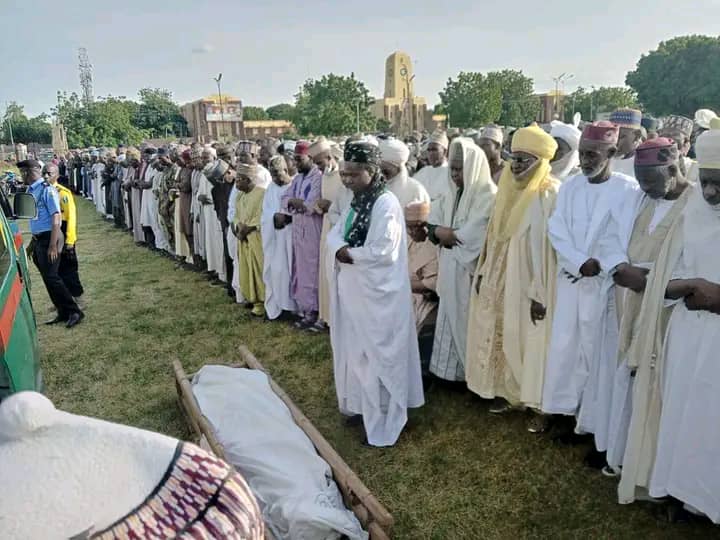
The funeral prayer for the late Shehu Kabir Bayero, Barde Kerarriya of Kano and District Head of Dorayi, was held on Thursday evening at Kofar Kudu, Kano Emir’s Palace.
KANO FOCUS reports that the prayer was led by the Chief Imam of Khamsus Salawati Mosque, Kofar Kudu, Malam Bello, and attended by hundreds of people from different parts of Kano State.
Among those who attended were the Secretary to the Kano State Government, Alhaji Umar Faruk; representative of the Emir of Kano, Matawallen Kano, Alhaji Aliyu Ibrahim Matawalle; Chief of Staff to the Kano State Government House, Dr Sani Wali; as well as district heads and members of the Muslim community.
Shehu Kabir Bayero died in a hospital in Egypt following a period of illness. He is survived by his wives, children and other relatives.
Until his death, the late Bayero served as Commissioner of Police in Gombe and Osun states before retiring from the Nigeria Police Force.
Following his retirement, the late Emir of Kano, Alhaji Ado Bayero, appointed him as the Barde Kerarriya of Kano and District Head of Takai Local Government Area after the death of his father, the late Kabir Bayero, an elder brother of the former emir.
He later served as District Head of Gwarzo.
Due to his wealth of experience in security matters, the current Emir of Kano, Khalifa Muhammadu Sanusi II, subsequently reassigned him as District Head of Dorayi, where he was expected to contribute to the sustenance of peace and security in the area.
The late district head was remembered for his service to the state and his experience in security and traditional administration.
May Allah forgive his shortcomings, have mercy on his soul and grant him Jannatul Firdaus. Ameen.
Nasiru Yusuf Ibrahim
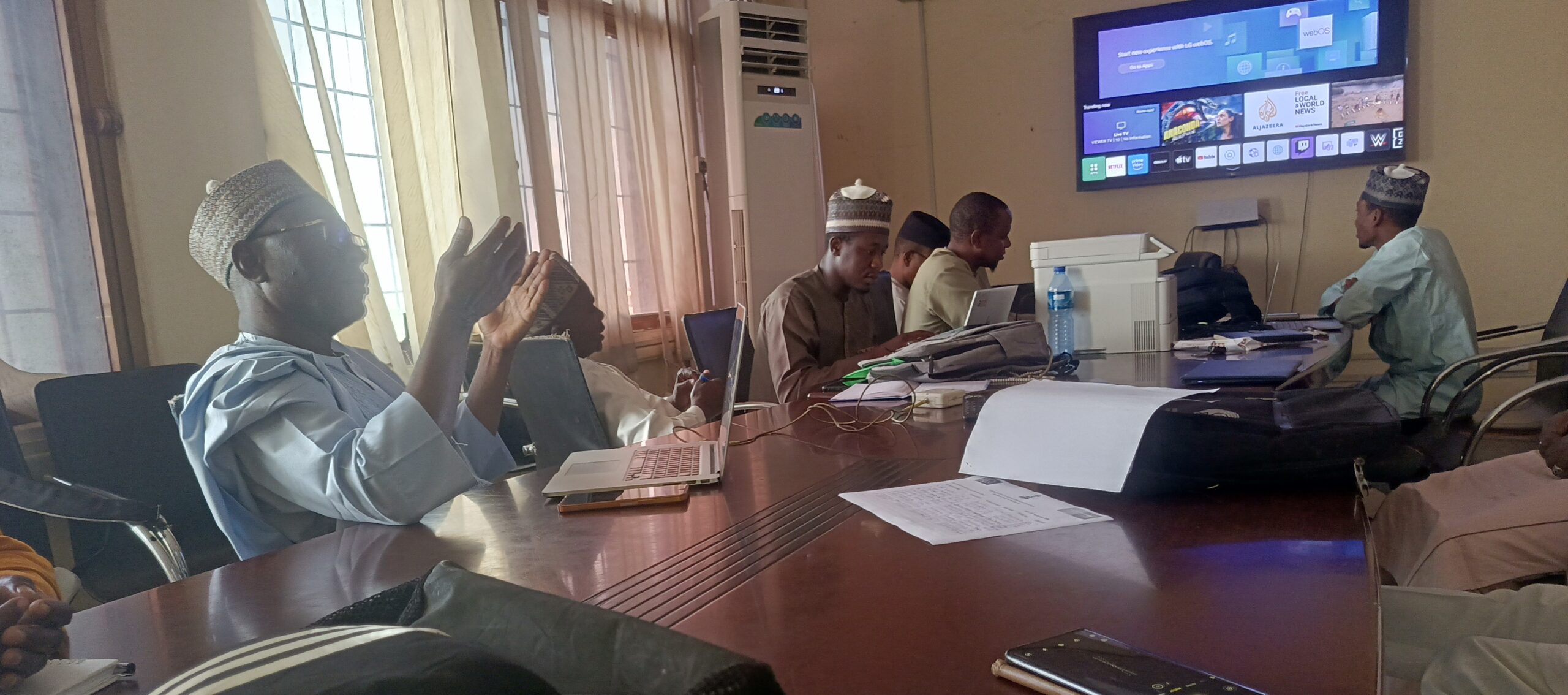
The Kano State Ministry of Education, with support from the United Nations Children’s Fund (UNICEF), has held a planning meeting on the implementation and effective utilisation of the Nigeria Learning Passport (NLP) in the state.
KANO FOCUS reports that the meeting brought together relevant stakeholders from various ministries, agencies and development partners working in the education sector.
According to Malam Naziru Sirajo, deputy director EMIS and statistics in the Ministry of Education, the meeting was aimed at reviewing the current status of the Nigeria Learning Passport in Kano and developing a coordinated plan to strengthen its implementation, content utilisation, course completion, monitoring of learners’ progress and certification.
The Nigeria Learning Passport is a digital learning platform designed to provide Nigerian children and young people with access to curriculum-aligned educational content, including lessons, learning materials and assessments.
The platform is also designed to support learning continuity, including for learners facing limited or intermittent internet connectivity, while providing teachers and education stakeholders with digital resources to complement classroom instruction.
In Kano, the initiative is expected to strengthen awareness and utilisation of digital learning, while building the capacity of master trainers and technical teams to support schools, teachers and learners in using the platform effectively.
The effective utilisation of the Nigeria Learning Passport is expected to expand access to quality digital learning resources, promote independent learning, strengthen digital literacy and support improved learning outcomes and greater equity in access to educational opportunities.

Kano Police Arrest Eight in Drug, Thuggery Raids

Funeral Prayer Held for Late Shehu Kabir Bayero

Kano holds planning meeting on implementation of Nigeria learning passport

Kwankwaso, Gov Yusuf, Amnesty International Condemn Killing of Ibrahim Khalil Dan Shagamu

Kano Police arrest two suspects over death of Ibrahim Khalil Danshagamu

Kano State Out-of-School Children Survey Report 2026: From Evidence to Impact — A Roadmap For Educational Development

Kano schools to resume Sunday for 2026/2027 academic session

From Grade Level 03 to Director: A 35-Year Journey of Resilience and Service

Justice Abdullahi Mahmud Bayero of Court of Appeal Dies in Egypt

