
News
Congolese Regulator Understudies Nigeria’s Telecoms Market


Nasiru Yusuf
Faith in the operational excellence and regulatory efficiency that have become the marks of Africa’s foremost regulator, the Nigerian Communications Commission (NCC), was demonstrated recently when a delegation from the Congo-Brazzaville Telecommunications Regulations Authority (CTRA) visited the NCC on a benchmarking tour.
KANO FOCUS reports that the delegation from the central African nation purposively paid a scheduled visit to NCC, essentially to understudy the latter’s policies, practices and programmes that have made it a model telecommunications regulatory authority on the Continent and beyond.
The Congolese team led by CTRA’s Network Director, Benjamin Mouandza, spent three days at the NCC Head Office in Abuja, where it was exposed to key result-oriented regulatory activities, frameworks, programmes and policies of NCC, with the objective to explore how such operational frameworks could be adapted by the African nation noted for its huge rainforest reserves.

In the letter written to the Executive Vice Chairman (EVC) of NCC, Umar Danbatta, the Congolese regulator had indicated interest to gain more insights into three areas of NCC’s regulatory activities, namely, management of issues associated with Quality of Service (QoS), SIM Boxing and Call Masking, as well as telecom equipment type-approval process.
In response to the request, Danbatta had graciously accepted to host the team and further directed relevant departments of NCC, including Special Duties (SD); Technical Standards and Network Integrity (TSNI); and the Compliance Monitoring and Enforcement (CME) directorates to interact with the team to provide necessary information sharing that may be useful to the Congolese counterpart.
Addressing the CTRA team, the NCC’s Director, TSNI, Bako Wakil, spoke extensively on the Key Performance Indicators (KPIs) institued by NCC on QoS and how these KPIs are measured and monitored by the Commission toward ensuring improved service delivery to the Nigeria’s ever-growing telecoms consumers. He said this also helped to improve Quality of Experience (QoE) of the consumers.
On type-approval process, Wakil stated that the Commission had developed a rigorous type-approval process to ensure that telecoms equipment, including terminal devices, manufactured in line with international standards and specifications are brought into the country.
“The NCC is serious about type-approval process like other processes, because non-type approved devices and equipment which are also not manufactured to international standards and specifications have negative implications for quality of service delivery on the networks,” he said.
Wakil also spoke extensively, to the admiration of the Congolese team, on call masking and highlighted measures the NCC had put in place to address the menace.
He described call masking as “the practice of sending international calls to an operator but disguising the calls as if they were local by sending the calls on the local interconnect route with a local number in the national numbering plan instead of the original international calling number.”
In a related presentation to the visiting team on SIM boxing fraud and efforts being taken by the NCC to combat the menace, NCC’s Director, CME, Ephraim Nwokonneya, spoke on the problems created by fraudulent practice of SIM Boxing, including threat to national security, loss of revenue to service providers and the government.
Additionally, he asserted the anti-competitive practices associated with such acts among licensees as well as the general economic implications so evident in revenue loss.
However, Nwokonneya itemised solutions to SIM Boxing fraud from a regulatory perspective. He declared that regulators can deploy anti-SIM boxing and call masking solutions, be proactive and effective in monitoring and enforcement, collaboration with the industry and law enforcement agencies, capacity building through training and skill acquisition programmes, as well as the review of the Enforcement Regulations and enabling laws.
More importantly, Nwokonneya told the Congolese telecoms regulator team that collaboration between the regulator and the industry is required to effectively combat the menace of SIMBox Fraud, Call Masking and Call Refiling in conjunction with deployment of technological solution and well trained staff.
From the presentations, it was made clear that the scale of call masking and SIMBoxing has been on the downward decline in Nigeria while the number of complaints from subscribers on incorrectly displayed calling numbers has also reduced substantially.
To prove that NCC processes emplaced to combat the menace are succeeding, Nwokonneya stated that there has been a significant and noticeable improvement in the display of correct international calling numbers into Nigeria networks.
The NCC Directors also reiterated that the Commission is also taking strategic actions on SIM Registration, the National Identification Number (NIN) and the Subscriber Identity Module (SIM) linkage policy.
The NCC team informed the visitors that a maximum of four SIM numbers are permissible to be registered per subscriber per network requirement. This is another measure deployed by the NCC to tackle SIMBoxing which usually requires multiple SIMs to flourish.
The NCC team emphasised that the combination of regulatory action and deployment of technology solutions have helped to put the menace of call masking and SIMBoxing in the Nigeria’s telecoms sector under check.
Commenting on the benefits of the visit, CTRA’s Mouandza, said the choice made by the Congolese regulator to visit NCC on a benchmarking tour has been worthwhile. “We have come to understand how the regulator in Nigeria has been handling some salient regulatory issues and matters in the country as it relates to telecoms.
“In the course of this visit, I can say that our objective has been achieved. The experience has been very rich, we have learnt many things. We thank the EVC and his team for accepting to host us. We are more positioned now to replicate some of the things we have learnt in our telecoms market back home,” he said.
The Congolese officials had practical demonstrations of the issues earlier discussed, especially the nature of technologies that have been deployed by the NCC to independently and remotely monitor, measure and validate QoS on the networks of mobile operators in the country.
It will be recalled that the visit by the Congolese team came barely a month after the NCC hosted officials from Sierra Leone’s National Telecommunications Commission (NATCOM), who equally visited NCC to benchmark the Nigeria’s telecom regulator’s policies, programmes and regulatory activities.
Over the years, the NCC has constantly received delegations from telecoms regulators in Africa and this trend has remained a major boost for Nigeria’s global ranking as a model in telecommunications regulation.
Suffice it to say, that, these benchmarking visits have eloquently reinforced NCC’s leadership status in operational efficiency, collaborative partnership, and commitment to intra-African solidarity in the telecommunications sphere.

Nura Abdullahi
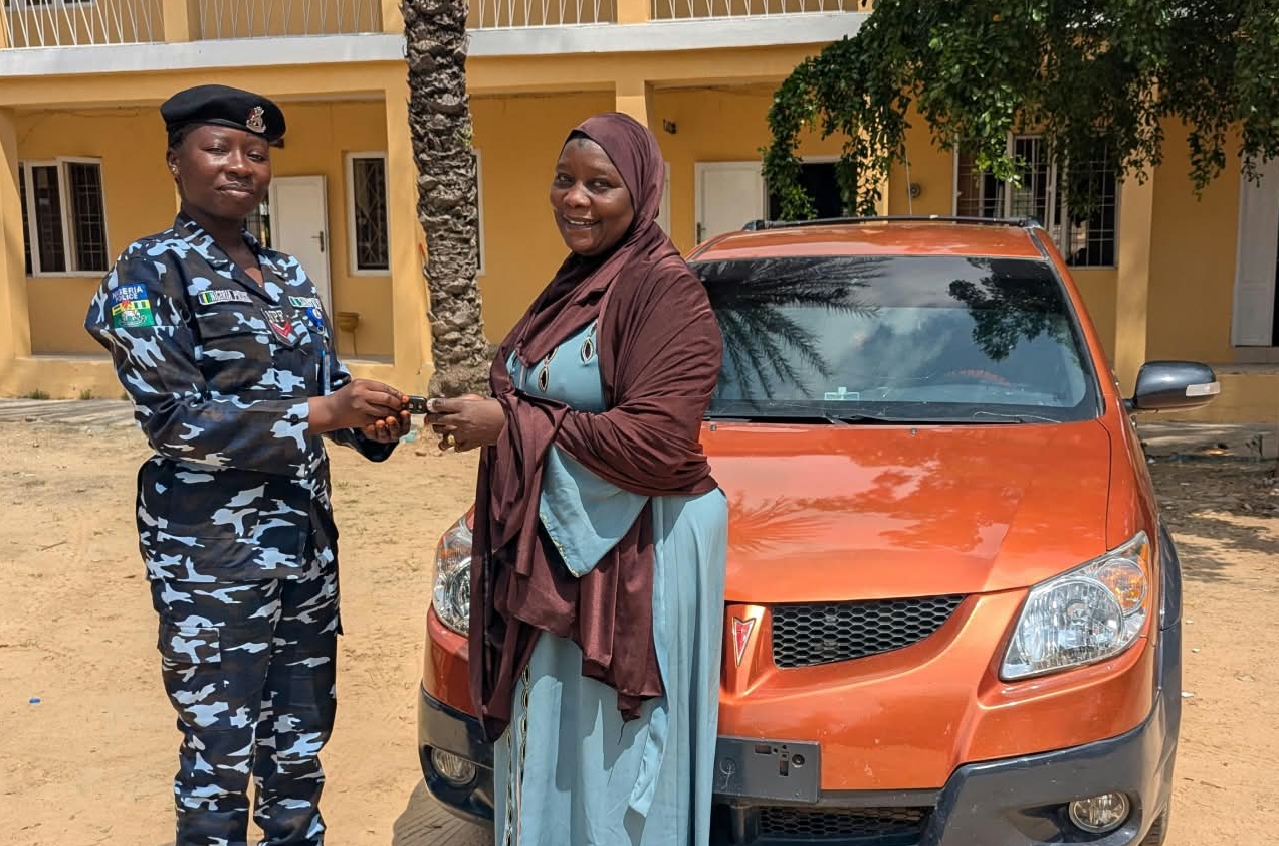
The Kano State Police Command has handed over two recovered vehicles to their rightful owners following intelligence-led operations.
KANO FOCUS reports that the recovered properties, comprising an orange Vibe motor vehicle and an ash-coloured Haojue motorcycle, were formally handed over to their owners at the Command Headquarters in Bompai, Kano, during the week.
The command disclosed this in a press release issued on Friday, by its Police Public Relations Officer, CSP Abdullahi Haruna Kiyawa.
According to the statement, the handover followed the completion of ownership verification, authentication of relevant documents and other necessary procedures.
The beneficiaries expressed gratitude to the police, commending the command for its professionalism, commitment to justice and prompt return of their properties.
They described the recovery and handover as evidence of responsive and people-friendly policing.
The Commissioner of Police, Ibrahim Adamu Bakori, congratulated the owners and said the exercise aligned with the policing vision of the Inspector-General of Police, Olatunji Rilwan Disu.
The vision, according to the statement, emphasises the protection of lives and property, the return of recovered stolen property to victims of crime, and the promotion of public trust through transparent and accountable service delivery.
CP Bakori assured residents that the command would continue working to improve security across Kano State and ensure that recovered stolen property was returned to its legitimate owners after due verification.
The police urged anyone seeking further information to contact the investigating police officer on 08140081608 or visit the office of the Police Public Relations Officer at the Bompai Police Headquarters, Kano.
Ibrahim Khalil
The Joint National Association of Persons with Disabilities (JONAPWD), Kano State Chapter, will hold its leadership election on Saturday, October 10, 2026, to elect new executives for the association.
KANO FOCUS reports that the election will take place at the Social Welfare Department, Gyadi-Gyadi Court Road, Kano.
Ahead of the exercise, the Chairman of the JONAPWD Kano State Chapter Electoral Committee, Malam Yusha’u Ibrahim Kofar Waika, has urged members, accredited delegates and representatives of the various disability clusters to arrive at the venue on time.
He said punctuality and adequate preparation were necessary to ensure a smooth and orderly electoral process.
Kofar Waika also called on all disability clusters to make the necessary arrangements and participate actively in the election.
The exercise is expected to usher in a new leadership for the association in Kano State.
The election is an important step towards strengthening democratic participation, unity and inclusive leadership among persons with disabilities in the state.
It is also expected to support effective representation and advocacy for the rights and welfare of persons with disabilities.
Nasiru Yusuf Ibrahim
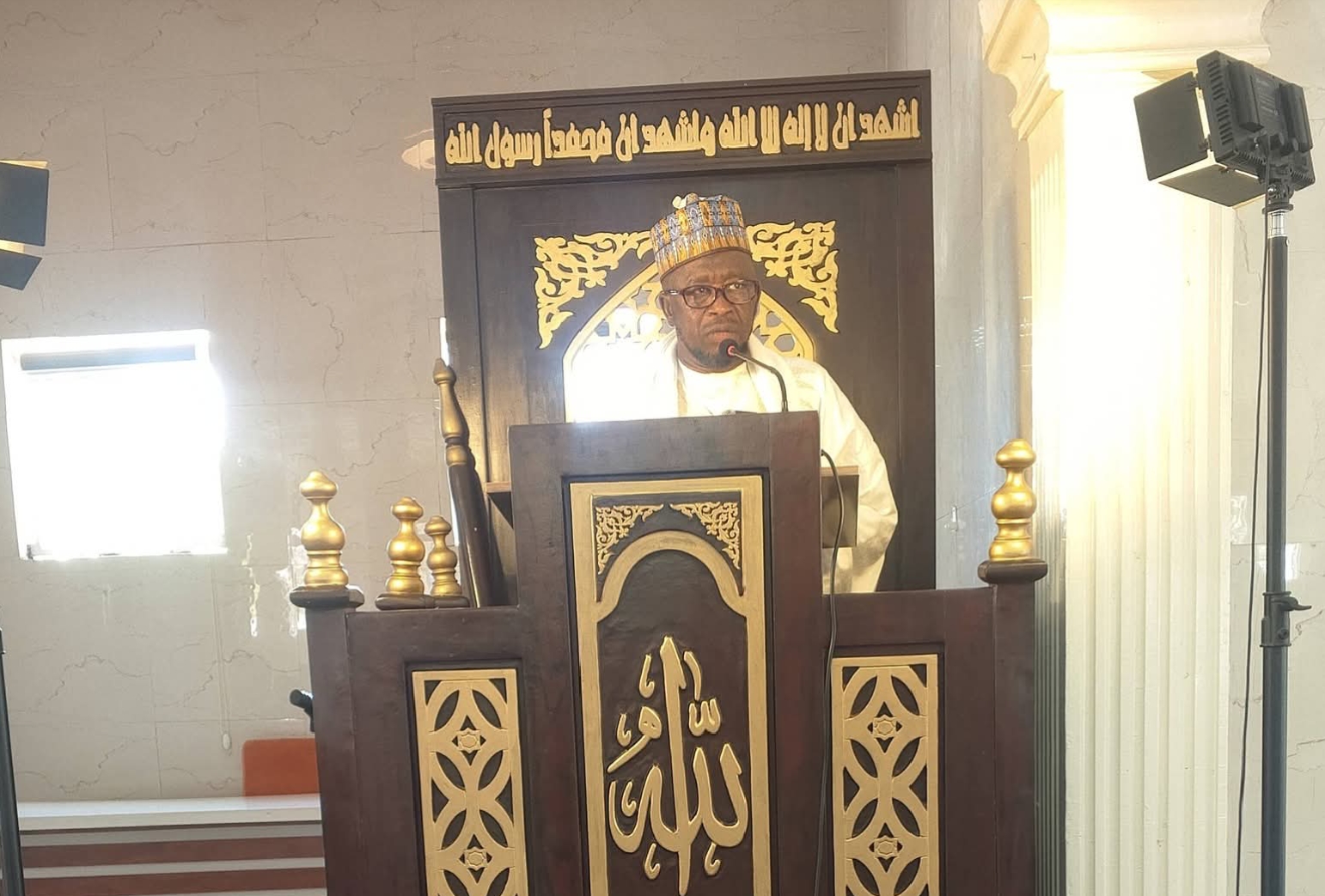
Imam Nura Garba Mato has urged Muslims to remain conscious of their actions, saying that divine reward and punishment often correspond to the nature of people’s deeds.
KANO FOCUS reports that the imam made the call while delivering a Friday sermon at Jami’u Ansar wal Muhajirun Jumaa Mosque, Cotton Ginnery Layout, Zawaciki, Kano State.
The sermon, titled “Al-Jazā’u Min Jinsil-‘Amal” (Recompense Is According to the Nature of Deeds), focused on the Islamic teaching that people’s actions have consequences and that good deeds attract divine reward.
Imam Mato said Allah had established enduring principles in human life that do not change, urging Muslims to understand these principles and allow them to guide their conduct.
He explained that one of these principles was that recompense corresponds to the nature of one’s actions, stressing the importance of living righteously and fulfilling one’s responsibilities to Allah and fellow human beings.
The imam called on Muslims to observe *taqwa* (consciousness of Allah), remain steadfast in their faith and follow the teachings and traditions of Prophet Muhammad (peace be upon him).
He also highlighted the importance of helping people in difficulty, easing the burdens of others and showing compassion to fellow Muslims.
Quoting a prophetic tradition, the imam emphasised that whoever relieves a Muslim of a hardship in this world will receive relief from Allah on the Day of Resurrection.
He further explained that whoever conceals the faults of a fellow Muslim would receive Allah’s concealment of their faults on the Day of Resurrection, while those who make things easier for people in difficulty would receive Allah’s assistance in this world and the Hereafter.
The sermon also underscored the importance of supporting others, noting that a Muslim’s relationship with Allah should be reflected in their treatment of fellow human beings.
Imam Mato urged Muslims to reflect on their deeds and recognise that their conduct carries consequences, encouraging them to embrace good actions, assist those in need and uphold the teachings of Islam in their daily lives.
He stressed that Muslims should make righteousness, compassion and service to others central to their lives in pursuit of Allah’s pleasure and success in the Hereafter.
Kano Police return recovered car, motorcycle to owners

JONAPWD Kano to hold leadership election Saturday

“As You Sow, So Shall You Reap”: Imam Reminds Muslims of Divine Justice

Kano Govt Orders Retired Civil Servants to Vacate Offices, Hand Over Government Property

Nigeria’s Data Demand Surges 47% as Stakeholders Seek Fresh Investment in Digital Infrastructure

Kano leads again as NECO successes rise to 74,413
Kano tops states in 2026 NECO results, Governor Yusuf hails students

INEC holds campus debate on elections, democracy at BUK

Kano Govt Suspends Durbar Processions, Horse Riding in Metropolis

