
Headlines
Kano Polytechnic land encroachment: Murdering the giant asleep


Kabir Dalha Kabir and Salihu Sule Khalid
It is no longer news that the Kano State government is hell bent on confiscating the Kano State Polytechnic land that is meant for extension of the numerous programs that the Institution is accredited for as well as new ones.
The land in question is a fenced bounded land within the polytechnic boundary and is now the only available land for extension for the institution that lacks various infrastructure like staff offices, students classrooms, lecture theatres, laboratories, workshops, sport complex, etc.
The land is bounded by the School of General Studies from the West, by KSP staff houses and Central Administration from the North, by AKSCIL and School of Management Studies from the East and by the fence erected by KSP from the South, showing that the land is fully bounded by institutional facilities, so I wonder how can residential buildings survive?
It is really sad to also understand that some people within us are involved in this dastardly act.

Residential Plots
It is also rumored that the land is believed to be already allocated to some few important personalities within and outside the state for personal use or political patronage.
The plan of the land according to some reports is containing 108 of plots of GRA sizes.
It is also rumored that the plots are already on sale, ranging from N8,000,000.00-N13,000,000.00 per plot.
Even though there are some strong evidences of the existence of this unfortunate encroachment we will still call it a rumor for now.
I am of the opinion that those people behind this evil plan are not lovers of the people and the government of Kano State.
I am saying this because anybody that will promote the encroachment of such a land in a time when the Kano state government is giving free education at the Primary and Secondary school levels is not a patriotic citizen of our state.
Public versus Personal Interests
Why should the only available KSP land for expansion be grabbed for residential or personal interest?
There is nowhere in the world were personal interest overrides a public interest.
Whenever these two interests collided, the public interest is always considered above the personal one.
This is so anywhere.
The encroached KSP land is of utmost public interest that is reserved for extension and expansion of the institution.
If for any reason it is to be utilized, then it should never be for personal conversion as it is being speculated now.
Since the policy of free education of this government stopped at the secondary school level, then what the tertiary institutions need is infrastructural development through building more classrooms, lecture theatres, staff offices, recreational facilities and so on for their reserved lands, but not conversion to personal use by the few.
Construction not Compensation
I think Kano State Polytechnic being one of the oldest in the country needs more land for expansion not compensation.
The information I received on Friday is that the Kano State government has proposed a compensation for the possible confiscated land.
That 65.73 hectares of virgin land in Bagadawa (a place after Dawanau, along Bichi road) is being dangled to the Kano State Polytechnic community as a compensation.
But the problem is what Kano State Polytechnic need now is not compensation for an already reserved fenced land, but rather infrastructural development on that same land.
If for all these years, Kano State government could not be able to build a single classroom for the institution, even though there is available land to do that, and also the Management of KSP could not do that because they don’t have the funds to, then how does the government thinks a virgin 65-hectare land can be developed in even 10 year period for a conducive learning atmosphere?
Is the government saying residential houses will now be built in the midst of these institutions that bounded the contentious KSP land? Is that arrangement right?
What Legacy?
Are we now saying the only legacy that the Kano State government will leave to KSP community is the allocation of their reserved land to private individuals?
I believe Kano State Polytechnic has great potential if well harnessed.
The Kano State Polytechnic has five schools under its watch.
It is running more than 60 accredited programs with more than 20 now in their final assessment stage.
If this institution is not helped with infrastructure and more land, then I think the little it has must be left to it.
This is the third or fourth time that KSP land is being forcefully confiscated.
While some states are busy giving more land to their public institutions, ours is here confiscating the little that is left.
This is so sad indeed.
We must tell ourselves the home truth that no matter what anybody thinks, this government’s decision is fatally wrong; as such it must be looked at with open hearts.
It is not in the best interest of the people of Kano state and it will fatally injure the educational system of the state.
It will also make nonsense of the free educational policy of the Government.
You are murdering the polytechnic in particular and education in general.
May almighty Allah save us from us, amin ya rabbi.
Kabir Dalha Kabir and Salihu Sule Khalid are staff members of the Kano State Polytechnic.



Nasiru Yusuf Ibrahim
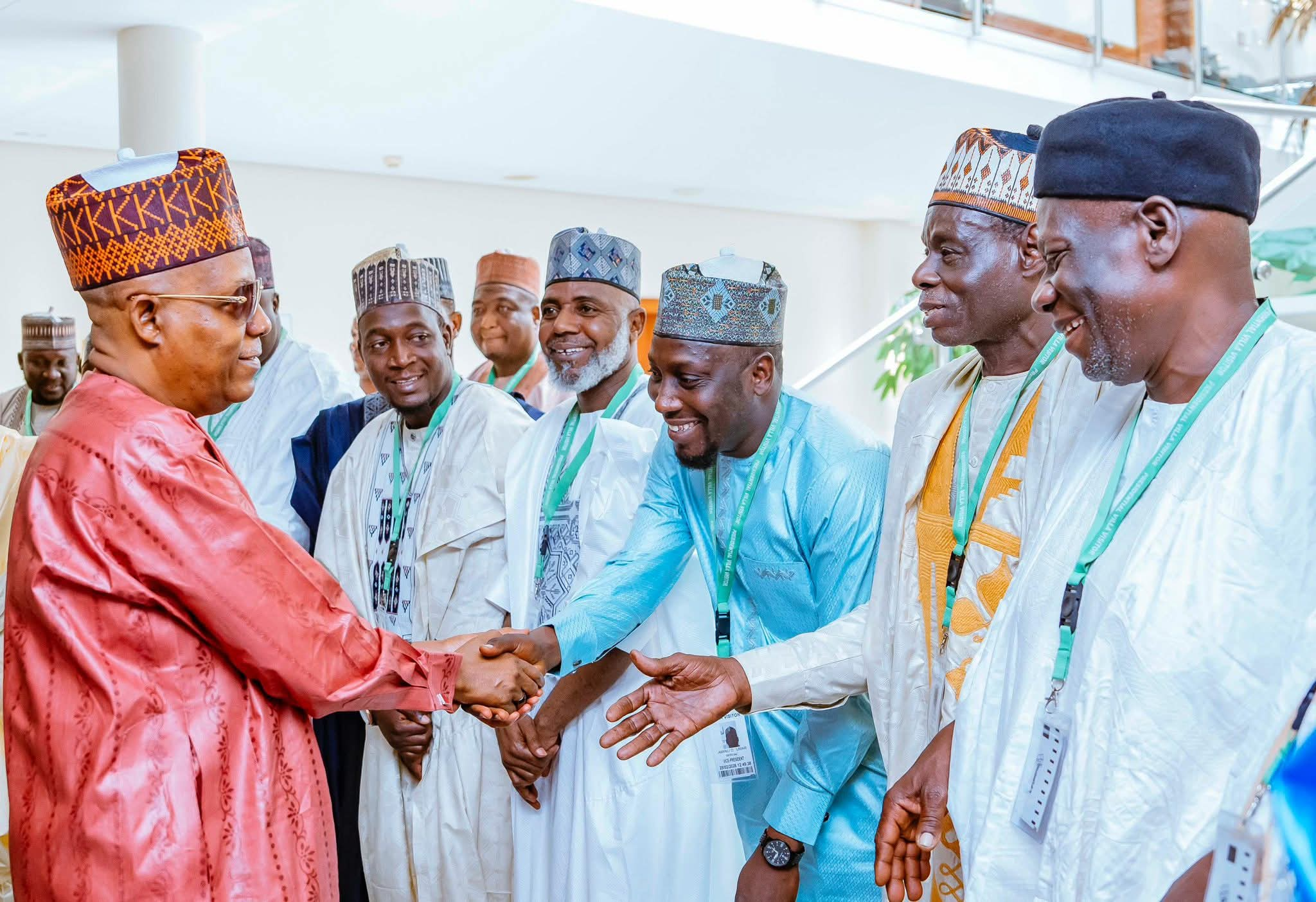
Nigeria’s Vice President, Kashim Shettima, on Tuesday received a delegation from the Association of Kano Business Community at the Presidential Villa, Abuja, during a thank-you visit to President Bola Ahmed Tinubu.
KANO FOCUS reports that the delegation expressed appreciation to the Federal Government for its support to traders and other victims affected by the recent fire incident that razed several sections of the popular Singer Market in Kano.
Speaking during the meeting, the Vice President reaffirmed the Federal Government’s commitment to collaborating with the Kano State Government and relevant agencies to prevent a recurrence of fire outbreaks in markets across the state.
He assured the delegation that President Tinubu has the interests of Kano people at heart, noting that the N5 billion approved as immediate relief for victims was based on the findings of a preliminary assessment of the damage caused by the inferno.
Shettima reiterated that the Federal Government would continue to support efforts aimed at restoring commercial activities and strengthening safety measures in markets to protect lives and property.
Nasiru Yusuf Ibrahim
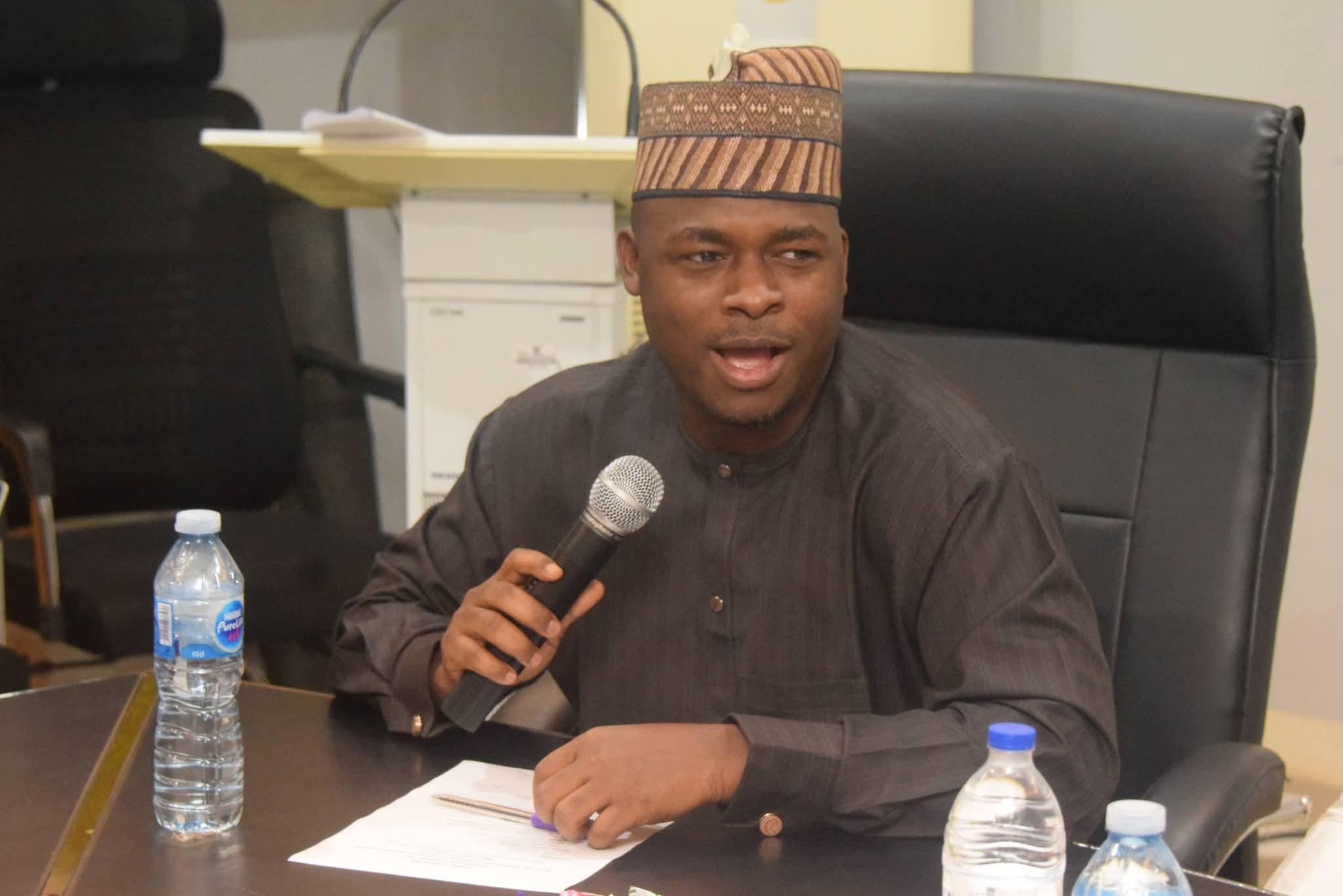
The Kano State Government has inaugurated a 23-member committee to oversee the transparent and equitable distribution of financial assistance and relief materials to victims of the recent Singer Market fire disaster.
KANO FOCUS reports that the inauguration was carried out on behalf of the Secretary to the State Government, Umar Faruq Ibrahim, who chairs the committee. The event was presided over by the state Attorney-General and Commissioner for Justice, Abdulkarim Kabiru Maude.
According to the Attorney-General, the committee comprises representatives from key government agencies, security services, the Kano Emirate Council, religious leaders, and affected traders.
He said the panel’s mandate includes assessing the extent of losses, verifying genuine victims, ensuring timely distribution of support, and recommending measures to prevent future fire incidents.
The intervention follows support approved by President Bola Ahmed Tinubu, as well as contributions from the APC Governors Forum. It also comes in addition to earlier assistance provided by Governor Abba Kabir Yusuf and the Deputy Senate President, Barau I. Jibrin.
The state government reaffirmed its commitment to supporting victims of the disaster and restoring commercial activities at Singer Market.
Nasiru Yusuf Ibrahim
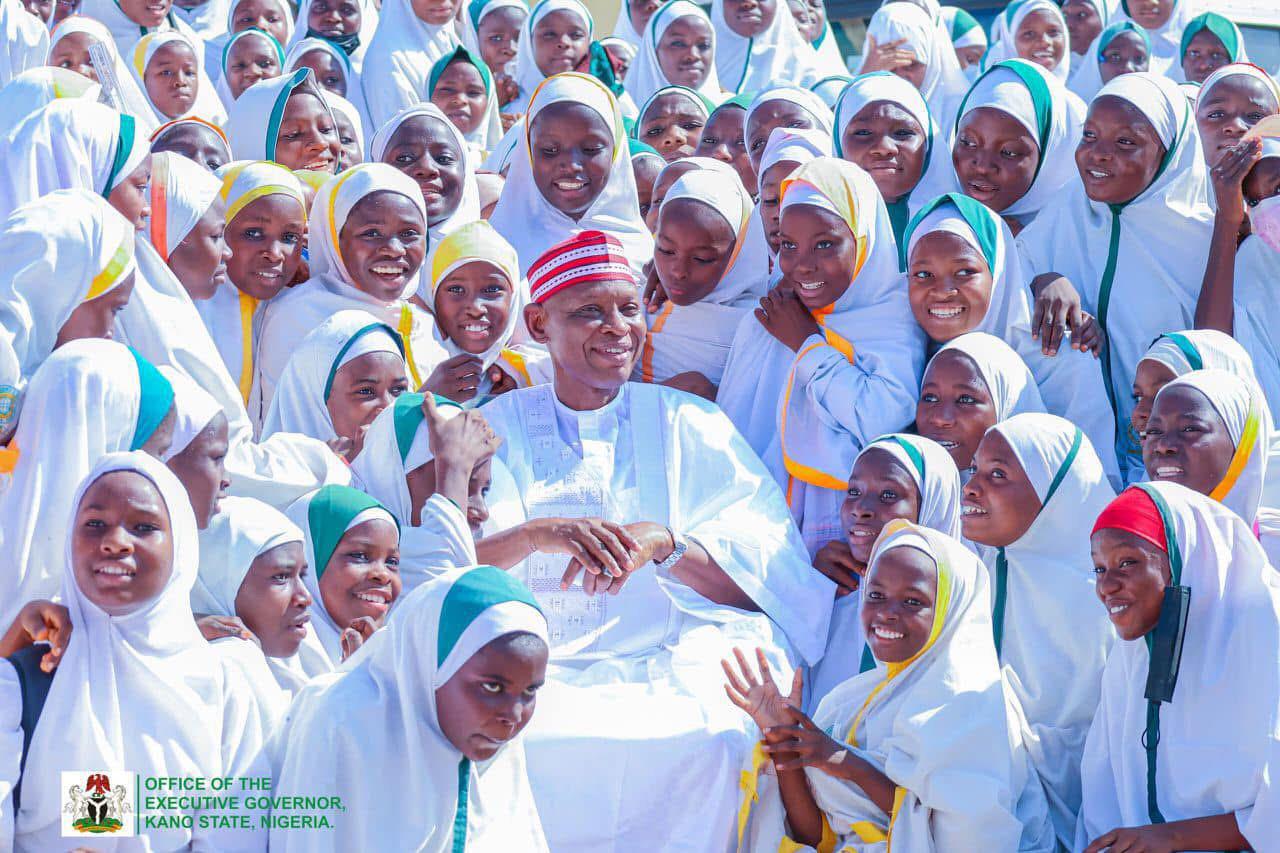
The Kano State Government has announced Saturday, March 1, 2026, as the commencement date for the Eid-el-Fitr break for all public and private primary and post-primary schools in the state.
KANO FOCUS reports that the announcement, contained in the approved 2025/2026 academic calendar, applies to both day and boarding schools across the state.
According to a statement issued by the Director of Public Enlightenment, Musbahu Aminu Yakasai, parents and guardians of pupils and students in boarding schools are expected to convey their wards home by the early hours of Friday, February 28, 2026.
The statement further explained that boarding school students are to resume on Sunday, March 22, 2026, while day students are to resume on Monday, March 23, 2026.
It added that the second term will continue from Sunday, March 22, 2026, and end on Saturday, April 18, 2026.
The government directed all public and private schools in the state to comply strictly with the directive, warning that non-compliance would be treated as a breach of government instructions.
The Commissioner for Education, Ali Haruna Abubakar Makoda, urged parents and guardians to ensure full compliance with the approved resumption dates.
He appreciated parents and residents of the state for their continued cooperation and support to the ministry, and wished pupils and students a successful completion of the Ramadan fast and hitch-free Sallah celebrations.

Kano business community thanks FG for N5bn Singer market relief

Kano Govt inaugurates 23-member committee to disburse Singer market fire relief

Kano Govt announces March 1 for schools’ Ramadan break

NCC board chair hosts licensed telecoms operators in Lagos

Stakeholders seek stronger nutrition financing at local government level

Lami Maccido, first person to appear on screens of NTA Kano, CTV 67, dies at 72

Governor Yusuf Appoints Acting DG for Pilgrims Board, Names Provost for Anti-Corruption Institute

Kano govt investigates reported disease outbreak in Garko community

K-SAFE appeals to Kano Executive Council to pass revised education bill

