
Headlines
Kano city is now the killing field of COVID-19 pandemic in Africa–Prof. Yusuf


By Prof. Usman Yusuf
25th April 2020
I raised alarm in an article I wrote which was published in the Daily Trust Newspaper (page 6) on April 22nd, 2020 on how COVID-19 was ravaging Kano city. I opined that if urgent action was not taken by the Federal Government, the city could become the epicenter of the virus on the African continent. Recognizing the disastrous consequences of such a scenario, I offered recommendations that could help stem the slide.
Today, I raise my voice again, this time to join the growing chorus of people both within and outside the State who are horrified by Kano State Government’s (KNSG) cavalier response to this pandemic seeing it as a growing danger to the lives of people in Kano, its neighbors and also a threat to our National Security.
Nigeria as a nation needs to wake up to the ever-present danger of the cascading domino effect of COVID-19 infection in Kano spreading to the Northwest zone, the Northwest zone infects the rest of the North, the North infects the whole nation, Nigeria infects the West African subregion, which then infects the rest of Africa, thereby destabilizing the whole continent.

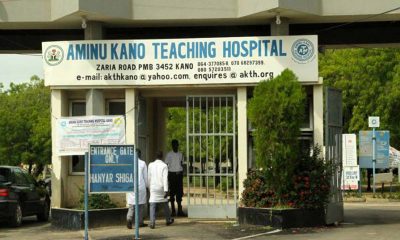
A heart-breaking audio clip making rounds on social media of a grieving grandmother who had just lost her son-in-law to COVID-19 in Kano city sums up the feeling of helplessness of people in the city. She was venting her frustrations at NCDC officials in Kano who switched off their phones and those at their HQ. in Abuja that refused to return her calls when she desperately needed them. She narrated how her son-in-law was initially taken to a Private Hospital then transferred to Aminu Kano Teaching Hospital (AKTH) where he died shortly after arrival.
It is now common knowledge in Kano that NCDC officials in the city are not responding to people’s distress calls because they are short-staffed and have no working materials or Personal Protective Equipment (PPE). This unacceptable situation has resulted in many of them being infected by the virus, resulting in the closure of the only test center in Kano.
Below is an example of one of the many distress calls and text messages I have been receiving from unknown Kano residents:
“Good afternoon Prof., One of my staff lost his mother today Friday 24th, April 2020 to circumstances similar to COVID-19 with (sudden fever, coughing, and rapid breathing). When we went to bury her at 9.30 am, we discovered that my mother’s body was the 18th to be buried since dawn (a time span of 3-4 hours). Why is the Kano State Governor denying COVID-19 deaths in Kano? People should please speak up and get us help.”
There are also reliable reports indicating that cemetery workers in the city have been censored and directed by State officials not to give any interviews divulging the number of burials.
The Kano State Government (KNSG) is clearly downplaying and denying these deaths just like officials in Wuhan, China did at the beginning of the pandemic. In fact, the Governor appeared on Channels TV, spouting these denials while in the same breath asking for N15b aid from the Federal Government. The next day, his Commissioner of Health appeared on the same Station stating it was just 640 deaths in six days. Kano State, in spite of its population density, is the most notorious state where social distancing measures are least enforced and obeyed, with youths still playing football while gatherings in mosques and weddings continue as if all is well.
As a result of his negligence, Gov. Ganduje is also exporting COVID-19 to the neighboring states of Katsina and Jigawa by repatriating hundreds of Almajiris who are most likely infected by COVID-19 to their States of origin. This, in my opinion, was a very thoughtless and dangerous action.
The Governor initially set up a State Task Force with his daughter as a member. Despite being a Medical Resident, she is said to wield so much power that even the Deputy Governor defers to her and the educated views of senior medical professionals are not taken seriously. The task force is now virtually moribund since its key members went into isolation after testing positive for the virus.
I urge all sons and daughters of Kano wherever you are, to step up and raise your voices to save your people from this catastrophe, silence is not an option at this defining moment.
Governor Abdullahi Umar Ganduje must bear full responsibility before man and God Almighty for the chaos that is costing the lives of so many souls which is simply a reflection of his poor leadership, incompetence, corruption, and lack of compassion for his people.
The Federal Government needs to urgently step in to stem the rising death count before it is too late.
In summary
(a). COVID-19 death toll is undeniably rising daily in Kano
(b). KNSG lacks the will, capacity, compassion, transparency, or the trust of its people to arrest the situation
(c). KNSG is in denial and doing all in its power to hide these deaths.
(d). Healthcare workers in Kano are in mortal danger without PPE.
(e). Private Hospitals are shutting down due to fear of infecting their staff and for lack of capacity to deal with COVID-19 patients.
(f). Government hospitals are increasingly getting overwhelmed with poor staffing, lack of PPE, drugs, consumables, bed spaces, or ventilators.
(g). The only COVID-19 Testing Centre in Kano has now been shut down, leaving millions of people in the whole NW zone without access to testing.
(h). People are living in fear, uncertainty, anger, frustration, and feel abandoned by both the state and federal governments.
(i). Concerns about social unrest are real and should be taken seriously by both the State and Federal governments.
Recommendations
(I). Immediate and forceful Federal presence in Kano.
(ii). The Presidential Task Force should relocate to Kano and make it its new theatre of operation reporting to the President.
(iii). People should immediately be provided with food supplies to enable humane but strict enforcement of total lockdown, which remains the only way of breaking the spread of the virus.
(iv). The President should address the Nation on these deaths with specific plans on what the FGN will do.
(v). NCDC lab in Kano should immediately be opened with increased testing capacity.
(vi). Healthcare workers should immediately be provided with PPE.
(vii). Hospitals need drugs, consumables, ICU spaces, and ventilators.
(viii). All Deaths and infections from COVID-19 should be properly recorded.
(ix). Swabs should be taken for the COVID-19 test from all corpses to enable proper mapping of the spread of the virus and the protection of contacts.
(x). Recruit an Army of Contact Tracers from local Nurses and Community Health Extension Workers (CHEWS) to help in tracing contacts.
(xi). Engage Traditional, Religious, and Community leaders (xii). Aggressive public education campaign
Usman Yusuf is a Professor of Haematology-Oncology and Bone Marrow Transplantation.





Nasiru Yusuf Ibrahim
The management of Bayero University, Kano (BUK) has commenced a preliminary investigation into allegations linking a person reportedly identified as one of its students to acts of online impersonation and financial misconduct circulating on social media.
In a statement issued by the Director of Public Affairs, Lamara Garba, on behalf of the Registrar, the university said it had taken note of the claims being discussed in public commentary and across various online platforms.
The statement noted that BUK maintains strict standards of conduct, discipline, and character for all students throughout the duration of their studies, adding that any behaviour capable of bringing the name and reputation of the institution into disrepute is treated with the utmost seriousness.
According to the university, the alleged actions of an individual student should not be seen as a reflection of the values or character of Bayero University Kano as an institution.
“In view of the allegations, the University has commenced a preliminary inquiry to ascertain the facts surrounding the matter. The appropriate University authorities are reviewing the issue in line with the institution’s established rules and disciplinary procedures governing students’ conduct,” the statement said.
The management also commended the public-spirited efforts of Professor Farooq Kperogi and other individuals who provide financial assistance to students in need, particularly by supporting registration fees and other educational expenses.
The university noted that such acts of generosity continue to play an important role in expanding access to education and supporting deserving students.
BUK assured members of the public that if the allegations are substantiated, appropriate disciplinary measures will be taken in accordance with the university’s regulations and relevant laws.
The institution also urged the public to allow the investigative process to run its course and to refrain from speculation or the spread of unverified information.

Ibrahim Khalil
The Governor of Kano State, Abba Kabir Yusuf, has relieved the State Head of Service, Alhaji Abdullahi Musa, of his appointment with immediate effect.
KANO FOCUS reports that the development was disclosed in a statement issued on Tuesday evening by the Director-General, Media and Publicity, Government House Kano, Sunusi Bature Dawakin Tofa.
According to the statement, the decision forms part of the ongoing efforts of the current administration to reposition the state civil service for greater efficiency, discipline, and improved service delivery across government institutions.
Governor Yusuf expressed appreciation to the outgoing Head of Service for his contributions and dedication to the service of Kano State during his tenure.
“We wish him the best in his future endeavours and pray for his continued success in all aspects of life,” the governor said.
The governor also directed that Hajiya Bilkisu Shehu Maimota, Permanent Secretary, Administration and General Services at the Cabinet Office, should serve as Acting Head of Service pending the appointment of a substantive replacement.
The statement further directed the outgoing Head of Service to hand over the affairs of the office to the acting Head of Service no later than Wednesday, March 11, 2026.

Nasiru Yusuf Ibrahim
The Board Chairman of Belraados Limited and Kano State Chairman of the Arewa Consultative Forum (ACF), Dr. Goni Faruk Umar, on Saturday met with the former President of Brazil, Mr. Michel Temer, during the opening dinner of the 26th Expodireto Cotrijal in Brazil.
KANO FOCUS reports that Dr. Umar was seen exchanging a handshake with the former Brazilian leader at the event held in Não-Me-Toque, a city in the southern part of Brazil hosting the annual international agribusiness exhibition.
The Expodireto Cotrijal is one of the largest agricultural trade fairs in Latin America, attracting policymakers, agribusiness investors, researchers and stakeholders from across the globe to discuss innovations and opportunities in the agricultural sector.
Participants at the event are expected to explore partnerships and share ideas aimed at boosting agricultural productivity and strengthening international cooperation in agribusiness.

BUK probes student over alleged Facebook fraud

Gov. Yusuf relieves Kano Head of Service of appointment

Disabled student seeks urgent fix for faulty elevator at Northwest University Kano

Resident raises concern over rising lawlessness, poor urban planning in Kano

Kwaru Foundation Provides Free Eye Care to Over 1,100 Residents in Kano

Lami Maccido, first person to appear on screens of NTA Kano, CTV 67, dies at 72
Kwaru Foundation Provides Free Eye Care to Over 1,100 Residents in Kano

K-SAFE commends Kano for timely school census, inclusion of non-formal education data

Kano to distribute 16,906 desks to primary schools in 13 LGAs

