
Headlines
Ganduje’s 2nd term worst in Kano history – Opposition

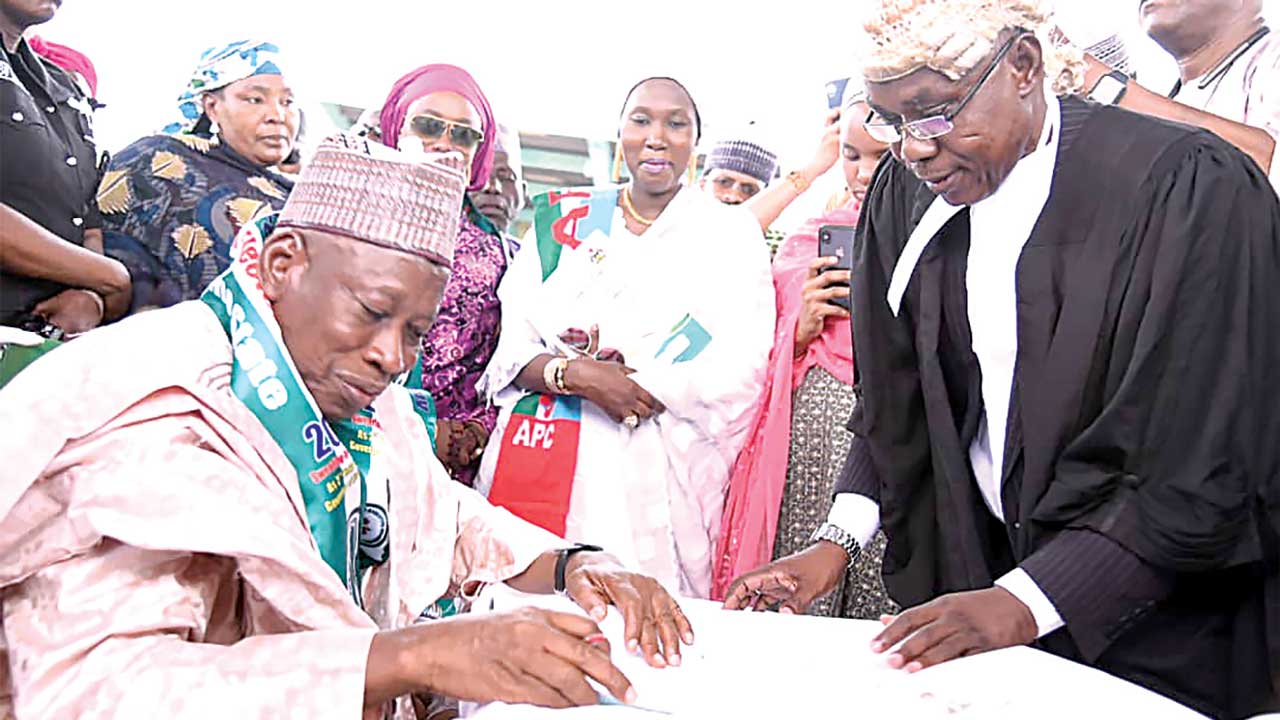
Abubakar Dangambo and Nasiru Yusuf
Kano state governor, Abdullahi Ganduje’s second term is the worst in history according to the opposition Peoples’ Democratic Party, a charge that the government has dismissed.
Former PDP chairman and Kwankwasiyya stalwart Umar Haruna Doguwa made the accusation in an interview with Kano Focus marking the first anniversary of Mr Ganduje’s second term.
Mr Doguwa said Ganduje’s administration has not introduced a single new project within the year under review.
“In terms of infrastructure I have not seen anywhere within one year where one block of new project was put. Just check. New project? This year? No.”

COVID-19: AKTH resumes specialty clinics Monday
COVID-19: 28 Almajirai repatriated to Kano test positive–Official
Mr Doguwa also accused the Ganduje administration of destroying both the traditional and religious heritages of Kano state within the year.
“Kano traditional institution is known far and even beyond Africa. But it was destroyed by only one person for his selfish desire.
“I am referring to the balkanisation of Kano emirate and subsequent dethronement of Emir Muhammad Sanusi ll. This cannot be forgotten.
“Secondly, take Kano as the centre of commerce and religious learning.
“Even in that learning, there was no time in the history of Kano when system of Islamic learning was worst hit, like this one year of Ganduje administration.
“You know the issue of Almajirai which was supposed to be modernised, but destroyed by this administration.
“The worst is branding a particular group of Ulama as anti-government.
These two actions have direct consequences on government progress,” Mr Doguwa said.
Free or Borrowed Education?
The opposition politician also faulted the implementation of free and compulsory education policy by the Ganduje administration.
He accused Mr Ganduje of excluding tertiary students from the program’s beneficiaries as he claimed was the case during the Kwankwaso administration.
“It should also be on record that total free education being operated by Rabiu Musa Kwankwaso was given free of charge, without any foreign or local loan from anywhere.
“The so-called free education being operated by governor Ganduje is for a cost.
“Though it is partly funded by some donors, I learnt that he has collected N15 billion loan, for what?” Mr Doguwa said.
He also criticised the handling of the COVID-19 pandemic by the Ganduje administration.
“The way it was handled was nothing to write home about.
“Poor people were put in lockdown without palliatives.
“Even in the steering committee you put children you loved against professionalism. People were not fully sensitised.
“Look, the governor made a pronouncement that the government will give palliatives to 500,000 people of Kano out of about 20 million population.
“Even at that, the governor later said they are starting with 50,000 people, where only four people were selected from each political ward. It is just a sham, and it will not solve the problem.” Mr Doguwa said.
Our government has done well
However, Kano state commissioner for youths and sports, Kabiru Ado Lakwaya dismissed the allegations as mere ranting by the opposition.
Mr Lakwaya told Kano Focus that despite challenges, the government has achieved huge successes in the areas of education, health, economy, youths, transportation and infrastructure.
He said Mr Ganduje is championing the integration of Almajiri into the formal education sector.
“The policy on Almajiri repatriation will continue as it sees the move an opportunity to make life better for them as citizens.
“It is a collective effort by northern governors to tackle insecurity in the region.” He said.
The commissioner also said contrary to claims by the opposition of lapses in the handling of Covid 19 pandemic, Mr Ganduje was the first governor in Nigeria to set up an isolation centre even before the virus reached Kano.
“He imposed movement restrictions and banned inter-states movement all in an effort to prevent the spread of the virus in Kano.” Mr Lakwaya said.
He also dismissed allegations that the government’s only achievement was the balkanization of the Kano Emirate.
“Even the opposition are now happy with the creation of the new Emirates as it helps in developing their communities.
Much needs to be done
Meanwhile, a political analyst, Kabiru Sufi said Mr Ganduje’s second term has achieved a pass mark in the education sector.
Mr Sufi, who holds a PhD in Political Science, told Kano Focus that the government needs to double its efforts to fulfil its promises in education.
“A special launch was made a bill has been taken to the state assembly to secure funds for the program.”
“Launching the program is not enough, as more need to be done, government should redouble effort to actualize the projects, but fairly speaking, government needs to do more.” Mr Sufi said.
The political scientist said the government has also recorded success in infrastructural development though most of the projects are still under construction.
He however argued that critical sectors like agriculture and water supply were not given deserve priority yet, and water supply continues to remain major problem for Kano residents.
Mr Sufi said the government has failed to fulfil its promise of establishing a world class cancer centre though it has launched the project.
He added that the COVID-19 pandemic has exposed many problems in the health sector which need serious attention.

Nasiru Yusuf Ibrahim
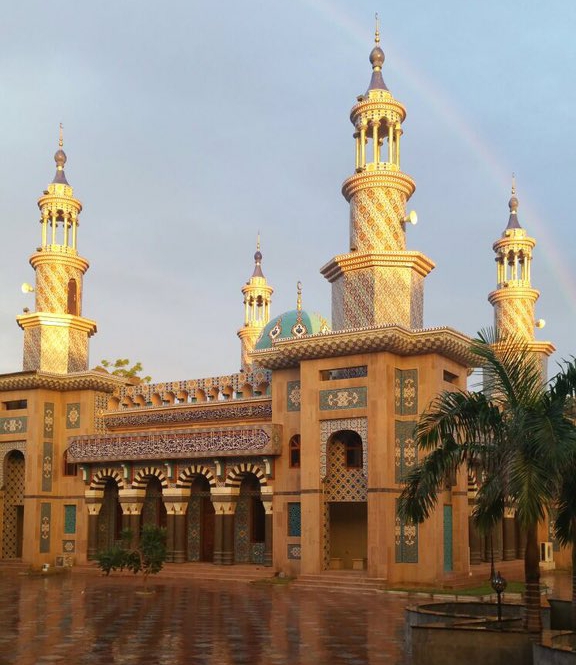
The Chief Imam of Nagazi-Uvete Jumu’ah and the late Alhaji Abdur-Rahman Okene’s Mosques in Okene, Kogi State, Sheikh Murtadha Muhammad Gusau, has called on Muslims to safeguard their wealth from calamity by faithfully paying Zakah.
Delivering his Friday sermon on Ramadan 3, 1447 AH (February 20, 2026), Imam Gusau emphasised that Zakah is not a loss but a divine mechanism for purification and protection of wealth.
According to him, wealth is not preserved through stinginess or hoarding but through obedience to Allah by giving out the prescribed portion to the needy.
“Zakah cleanses wealth from greed and spiritual impurities and blesses the remainder with increase and barakah,” he said, quoting the Prophet Muhammad (Peace be upon him) as saying: “Wealth never decreases from charity.” (Muslim).
The cleric explained that paying 2.5 per cent of eligible wealth purifies the remaining 97.5 per cent, adding that Zakah is not a voluntary act of generosity but an obligation and a right due to the poor.
Citing the Qur’an, Imam Gusau referenced Surah Al-Baqarah (2:261), where Allah likens those who spend in His cause to a grain that grows seven ears, each bearing a hundred grains. He described Zakah as “the most profitable investment,” promising returns both in this world and in the Hereafter.
He also warned against withholding Zakah, recalling a hadith recorded in Sahih Bukhari in which the Prophet Muhammad (Peace be upon him) said that wealth hoarded without paying Zakah would appear on the Day of Judgment as a poisonous snake encircling its owner’s neck.
The Imam highlighted historical examples, noting that during the reign of Umar ibn Abd al-Aziz, proper administration of Zakah led to widespread prosperity to the extent that collectors reportedly struggled to find eligible recipients.
Imam Gusau narrated the well-known story of three men among the Children of Israel—one leprous, one bald and one blind—whom Allah tested with wealth after curing their ailments. According to traditions recorded in Bukhari and Muslim, only the formerly blind man acknowledged Allah’s favour and shared his wealth, earning divine pleasure, while the others faced punishment for their ingratitude.
He described Zakah as one of the five pillars of Islam, quoting the hadith: “Islam is built upon five…”—testifying that there is no deity worthy of worship except Allah and that Muhammad is His Messenger, establishing prayer, giving Zakah, performing Hajj, and fasting Ramadan.
The cleric stressed that Zakah applies only to wealth that reaches a minimum threshold (nisab) and is capable of growth, noting that Islam does not impose it on personal belongings such as homes, vehicles or household items.
He further explained that the Shari’ah requires only a small portion—often one-fortieth—of qualifying wealth, describing the system as just and merciful. He cited the Prophet’s instruction to Mu’adh ibn Jabal when he was sent to Yemen, directing that Zakah be taken from the wealthy and returned to the poor without seizing the best of people’s possessions.
Imam Gusau warned that greed had destroyed past nations, quoting the Prophet’s caution: “Beware of greed, for greed destroyed those before you.” (Muslim).
He noted that Zakah purifies the soul from miserliness and strengthens faith, describing it as proof of sincerity in belief. He also pointed to its social benefits, saying it addresses poverty, supports debtors and stranded travellers, and fosters brotherhood and social harmony.
Referring to early Islamic history, he recounted how Abu Bakr al-Siddiq fought tribes that refused to pay Zakah after the Prophet’s death, declaring that Zakah is the right of wealth and inseparable from prayer.
“Zakah is a bridge of Islam—whoever crosses it is saved, and whoever turns away from it is ruined,” Imam Gusau said.
He urged Muslims to calculate and pay their Zakah promptly and joyfully, describing it as a shield against calamity and a source of peace rather than punishment.
The sermon concluded with prayers for the victory of Islam, security in the land, righteous leadership, and well-being in this world and the Hereafter.
Imam Murtadha Muhammad Gusau can be reached via gusauimam@gmail.com
or 08038289761.

Ibrahim Khalil
The Federal Fire Service (FFS), Kano State Command, has confirmed a fire outbreak at the Fatima Simra Multi-Purpose Market in Dakata, Kano, in the early hours of Thursday, assuring the public that the blaze has been successfully contained.
In a statement issued on Friday, and signed by the Command’s Public Relations Officer, Al-Hassan Ahmad Kantin, the Service disclosed that it received a distress call at about 5:11 a.m.
According to the statement, firefighters were immediately mobilised to the scene, where they commenced operations in collaboration with other emergency responders to bring the situation under control.
The FFS said the swift response and coordinated efforts of personnel prevented the fire from spreading to adjoining structures and properties within the market and surrounding areas.
“Damping down and overhaul operations are currently ongoing to eliminate any hidden embers and prevent possible re-ignition,” the statement added.
The Service noted that the actual cause of the fire remains unknown and will be determined after a comprehensive investigation by the appropriate authorities.
It also appreciated the cooperation of market stakeholders and members of the public during the emergency response, urging residents and business owners to remain vigilant and adhere strictly to fire safety measures, particularly in markets and other commercial centres.
The Command assured that a detailed report would be made available upon conclusion of the investigation.

Nasiru Yusuf Ibrahim
The Kano State Police Command has announced movement restrictions and other security measures ahead of the February 21, 2026 by-elections into the Kano Municipal and Ungogo State Constituencies.
KANO FOCUS reports that the decision followed a meeting of the Kano State Inter-Agency Consultative Committee on Election Security (ICCES), chaired by the State Resident Electoral Commissioner of the Independent National Electoral Commission (INEC), Amb. Zango Abdu, mni, on Thursday February 19, 2026.
In a statement issued by the Police Public Relations Officer, CSP Abdullahi Haruna Kiyawa, on behalf of the Commissioner of Police, CP Ibrahim Adamu Bakori, the Command said comprehensive security arrangements had been concluded to ensure a peaceful, free, fair, credible and transparent exercise.
According to the statement, movement of motor vehicles, tricycles and motorcycles will be restricted in Kano Municipal and Ungogo Local Government Areas from 12:00 a.m. to 6:00 p.m. on Saturday, February 21, 2026, being election day. The restriction will not apply to vehicles on essential services such as ambulances, fire service trucks, and those conveying electoral officials and accredited observers.
The Command further stated that only eligible voters would be allowed access to polling units, while only agents officially identified by INEC would be permitted to operate at the centres.
It warned that carrying weapons of any kind is strictly prohibited, adding that individuals wearing clothing or carrying items bearing political party logos will not be allowed at polling units. Loitering around voting centres will also not be tolerated.
The Police Command also announced that state security outfits, including vigilante groups, neighbourhood watch personnel, Hisbah and KAROTA officials, will not be allowed at polling units during the exercise.
The Command assured residents of its commitment to maintaining peace and neutrality throughout the electoral process, stressing that security agencies would remain apolitical, professional and impartial in the discharge of their duties.
Residents and visitors to the affected local government areas were urged to cooperate with law enforcement agencies to ensure a hitch-free exercise. Members of the public were also encouraged to report suspicious activities or emergencies through the designated police emergency numbers.
The Command wished the people of Kano State a peaceful and successful by-election.

Friday Sermon: Imam Gusau urges Muslims to protect wealth through Zakah

Fire Service confirms outbreak at Dakata Market, says blaze contained

Kano Police announce movement restrictions ahead of assembly by-elections

ATCON delegation pays courtesy visit to NCC leadership in Abuja

Lami Maccido, first person to appear on screens of NTA Kano, CTV 67, dies at 72
Lami Maccido, first person to appear on screens of NTA Kano, CTV 67, dies at 72

Governor Yusuf Appoints Acting DG for Pilgrims Board, Names Provost for Anti-Corruption Institute

Kano Hospitals Board opens recruitment for consultant pediatricians

Kano govt investigates reported disease outbreak in Garko community

