
Headlines
INVESTIGATION: Multimillion Naira e-learning centres abandoned, decay amidst shortage of facilities in Kano


Nasiru Yusuf
Despite a multimillion-naira contract awarded for the construction of e-learning centres in five local government areas of Kano North Senatorial District, the facilities do not exist and students still travel far distances to prepare and take the University and Tertiary Matriculation Examination (UTME).
What are more, investigations show that the major contract was unlawfully awarded to a serving senator, Barau Jibrin, who initiated the constituency project.
The National Information Technology Development Agency (NITDA), an agency under the Federal Ministry of Communication and Digital Economy, in 2015 awarded the contract for the construction of e-learning centres at Gwarzo, Tofa, Bichi, Kabo and Dambatta local governments at the cost of N193, 270,850 as part of the constituency projects in Kano State.
KANO FOCUS reports that the e-learning centres were supposed to provide basic information and communication technology (ICT) services to beneficiaries, especially indigent students who have no access to the internet for their online application, registration and computer-based examinations. Years later, students are still left stranded and have to incur additional travel costs whenever they take online examinations.

Senator sponsors unlawfully get the contract for constituency project
Investigations showed that the NITDA secured approval from the bureau of public procurement for the contract to be awarded through selective bidding and the building job was awarded to Sinti Nigeria Limited, which is owned by Senator Barau Jibrin who facilitated the project. The senator’s children – Shawal Jibrin, Khalil Jibrin and Zainab Jibrin – are listed as directors while he is listed as a shareholder.
Research conducted by the reporter using an online business registration tool, NG-check.com, showed that the company was registered on December 21, 2000, and is located at Plot No. 170, zone A7 M-TEL Street, Wuse ll, Abuja. Its current registration status is unknown, meaning that it has not been filing returns with the CAC.
By using a company in which he has interests or owns to execute a government contract, Senator Jibrin breached Section 5 of the Code of Conduct Bureau and Tribunal Act, which deals with the conflict of interest. The section says: “A public official shall not put himself in a position where his personal interest conflicts with his duties and responsibilities.”
The senator also breached S 2(b) 5th Schedule Part 1 of the 1999 Constitution, as amended which precluded public officials from engaging in or managing private businesses.
The project description
The main contract comprises the construction of five buildings to serve as e-learning centres in five local government secretariats namely Gwarzo, Tofa, Bichi, Kabo and Dambatta. Although there were no details of the selective tendering process, the award was made to Sinti Nigeria Limited, a 2019 report by Independent Corrupt Practices and Other Related Offences Commission (ICPC) seen by this reporter revealed.
The ICPC report queried a number of irregularities in the execution of the project. For instance, the report noted that buildings were not equipped with computers, internet facilities, printers, photocopiers, fans, air-conditioning sets as required. There was no proper project documentation, especially from NITDA. The Bills of Quantities (BOQ) that should specify the quantities and specifications of items supplied was unavailable.
The report also noted that from the records, 100% payment was made to the contractors at the commencement of the project and no explanation was given for this action.
The report concluded that the e-learning centres were not constructed at the appropriate locations where communities would have direct access to them.
Interestingly, two years later when this reporter visited the sites, the centres are yet to be opened for public use. Instead, the buildings have been converted into study centres of the National Open University on Nigeria (NOUN).
When contacted the spokesperson of NOUN Ibrahim Sheme explained that the study centre was handed over to the university by senator representing Kano North Mr Jibrin.
According to him “the NOUN guidelines prescribe that for any Community Study Centre to be established, the host community should provide all the necessary facilities and a substantial number of staff and hand them over to the University. That’s what happened in Kano and several other states. Before your inquiry, I did not even know that the Study Centres in question were initially e-learning centres.”
Bichi
Bichi is one of the oldest local governments in Kano State and it is the most developed local government in term of infrastructure in Kano North senatorial zone.
The Bichi e-learning centre constructed under the 2015 constituency project and later converted to study centre under the National Open University of Nigeria (NOUN) only has one computer laboratory with old desktop computers that appear not to be in use, a server room, few offices with one generator set. It is located opposite local government secretariat in Bichi.

Bichi e-learning centre
There are only two accredited UTME centres in the local government. One at Federal College of Education (Technical) and another private one and findings revealed that they are not enough as students travel to Kano metropolis and other neighbouring states to write JAMB computer based examination.
Some UTME candidates interviewed by this reporter said they have to travel to as far as Jigawa and Bauchi states to sit for the examinations, due to non-availability of UTME accredited centres in their respective local government areas.
One of the UTME candidates from Bichi, Abubakar Ibrahim, said he travelled to Bauchi State to write the exams due to lack of space in the centre in Bichi.

Abubakar Ibrahim
“I left Bichi at 12.00 pm a day to the examination date to Misau in Bauchi state. I arrived Misau at 6:30 in the evening. After finding the centre, I then started looking for accommodation. Because I don’t know anyone, I approached a mosque, presented myself to the Imam and ask his permission to pass the night in the mosque, and he obliged.
“Ths examination marked my first contact with computer. Prior to this, I have never operated a computer in my life. My appeal to authorities is they should make more UTME centres available in each local government area to address the plight of travelling to far places,” Ibrahim said
Another candidate who wrote his UTME at Hussaini Adamu Federal polytechnic, Kazaure, Jigawa State in 2020, Mubarak Bashir, told this reporter that he had to pass a night at Kazaure to avoid missing the examination.

Mubarak Bashir
He recalled that he was able to get accommodation at the residence of a lecturer of the institution courtesy of a relative who is a National Youth Service Corps (NYSC) member in the school.
“The journey was quiet challenging. My boarding school experience made me cope with the challenges encountered. If we have enough centres it would address the challenge of travelling to far distance places,” Bashir said.
Gwarzo
Unlike Bichi, Gwarzo Local Government Area does not have any UTME centre and applicants have to travel to Kano metropolis or neighbouring states to write JAMB examination.
A visit to the supposed e-learning centre constructed to serve the community, showed that the building has been taken over by livestock. A sheep was seen having a nap in front of the main entrance. However, there was a signboard indicating it was converted to study centre of National Open University (NOUN). No equipment was found in the building.
Gwarzo e-learning centre
A resident of the area, Aliyu Muhammad Usman, who sat for 2020 UTME at Hussaini Adamu Federal Polytechnic Kazaure, Jigawa State, said he travelled to Kazaure at 4.00 am on the day of the examination, because he did not have anywhere to sleep.

Aliyu Muhammad Usman
Usman wondered why government could not construct a designated test centre in Gwarzo to reduce the burden of travelling to other places.
For Mustapha Muhammad, a resident of Gwarzo local government who sat FOR his 2020 UTME examination at Kano University of Science and Technology (KUST) Wudil, the journey was a nasty experience.

Mustapha Muhammad
Muhammad recalled that on the day of the examination he slept at Mariri quarters in Kano metropolis, before proceeding to Wudil early in the morning.
A young lady, Khadija Sani Usman, told this reporter that she nearly missed her UTME at Gandun Albasa quarters, Kano because she arrived the centre late.

Khadija Sani Usman
“I pray we get a centre in our local government, so that students do not have to travel for writing UTME or even miss the exam for arriving late,” she prayed.
Another lady, Rafiat Mansur Sani, said she wrote her UTME at Kabuga quarters in Kano metropolis due to lack of designated centres in Gwarzo LGA. She lamented how some candidates from distant places arrived examination centres late and this affected their performance.

Rafiat Mansur Sani
Kabo
Findings showed that the e-learning project was facilitated by senator representing Kano North, Barau Jibrin, as a constituency project. In spite of this, his local government area, Kabo, does not have a functional accredited UTME centre. The e-learning centre constructed there was converted to NOUN study centre.

Kabo e-learning centre
A resident of Kabo, Abubakar Hashim, who wrote his Joint Admissions and Matriculation Board (JAMB) examination at Jigawa State College of Legal and Islamic Studies, Ringim, narrated how armed robbers attacked him on his way back to Kano.
He recalled that he initially was scheduled to take his examination at Federal University Dutse, Jigawa state capital on Friday.
“I left Kabo on Thursday to Dutse. Upon my arrival, I went straight to the centre where I met some candidates protesting. After asking, I was told that, while students were writing their exams the previous day, the generator broke down and the management of the centre failed to fix it until the system shut down many candidates.
“While I was wandering, anti-riot mobile policemen arrived and dispersed the protestors. After escaping the scene, I met a student who offered to provide me with accommodation.
“When I arrived at the centre the next day to take my exams, I found out that JAMB had postponed my exams to Saturday and also changed the venue to Jigawa state College of Legal and Islamic Studies, Ringim.
“From there, I packed my luggage and moved to Ringim. After the exams, I have to sell my phone to pay transport fare back home. Sadly, on our way back to Kano, armed robbers stopped our vehicle and robbed us our belongings on broad daylight,” Hashim recounted
Tofa
The story is also the same at Tofa Local Government Area. The e-learning facility has been converted to NOUN study centre. Upon inquiry, one of the workers said the centre has fifty desktop computers in its e-learning facility where students write their semester examinations.
He, however, told this reporter that the e-learning facility is no longer functioning, because the generator, which supplied the centre with power, has been stolen.

Dambatta e-learning centre
Due to this, students now take their examinations elsewhere pending the supply of another generator.
A resident of the area, Nazir Isa Sani, informed this newspaper that he wrote his 2020 UTME in Bauchi State. He said he was among many candidates who were supported by the Kano state government during the exams.
“I had a better experience because the state government provided a luxurious bus that conveyed us to Bauchi. Upon our arrival, we were lodged in a hotel where we slept. In the morning, they took us to our respective centres where we wrote our exams,” Sani recalled.
Civil Society Organization reacts
The chairman of the Civil Society Action Coalition on Education for All (CSACEFA), Dr Auwalu Halilu, noted that access to education is key to the development of any society, community or nation.

Dr Auwalu Halilu
He, therefore, expressed concern about the shortage of UTME examination centres, especially in rural local governments.
“The concern is most of these students from rural LGAs need to come to Kano metropolis where there are CBT centres or moved to other states to access these services.
“There are computer centres in these LGAs but they are not functioning. That is why we are advocating for simpler ways for the community members to access these types of services,” Halilu said.
On the conversion of e-learning centres, Halilu said, “it is the responsibility of community members and civil society members like us to make sure these centres are properly utilised for the purpose they are being built for. For example, if there is a constituency project executed by the federal government to construct an e-learning centre in particular LGA, and the e-learning is being converted to something else, then it is not the fault of the government per se. What are members of the community and CSOs doing to draw the government’s attention that the e-learning centres have been converted?
“However, the government should see it as part of its responsibility to do the right thing. Part of doing the right thing is that, when you construct an e-learning centre, there should be a monitoring system that will ensure that citizens are really utilizing these centres. For example, when you go to some of the centres, you see air conditions and computers being kept in a store, and not utilised. These are types of materials when stayed for a longer period without use; it will become useless and obsolete.”
Community Leaders speak
A retired headmaster at Bichi, Muhammad Shu’aibu, said the local government needs an e-learning centre to meet ICT to the demands of its residents.

Malam Muhammad Shu’aibu
He recalled that his son had to travel to Daura, Katsina State to write his UTME amidst security challenges bedevilling the area due to the shortage of computer-based test centres in Bichi Local Government Area.
Also commenting, Chairman, Gwarzo Local Government Awareness and Development Network, Aminu Rabi’u Na’abba, said prior to the introduction of the Computer Based Test, there were five centres for writing JAMB examination.

Comrade Aminu Rabi’u Na’abba
On the conversion of the e-learning centre to NOUN study centre, Na’abba said although having Open University in Gwarzo is a welcome development, it would have been better to host it in a separate structure. This according to him will grant the community access to e-learning facilities and distance learning.
Na’abba said the conversion is unnecessary, as there is enough landmass in the area to construct NOUN study centre.
An Activist from Tofa local government and Kano state chairman of Kungiyar Muryar Talaka (Voice of the Voiceless Network) Balarabe Yusuf Babale Gajida expressed disappointment on the lack of IT infrastructure in Tofa and neighboring Dawakin Tofa and Rimingado LGAs, adding that the situation is subjecting students wishing to write computer based examinations to unnecessary hardship.
He hoped that the e-learning facility converted to NOUN study centre in Tofa will be open to communities who need IT services, as access to distant learning is equally an important intervention.
The chairman of Kabo Development Forum, Isma’il Hussain Kanye, expressed optimism that if judiciously utilised, the e-learning centre in his LGA can provide IT services to communities as well as serve distance-learning purposes.
How shortage of IT infrastructure affects rural communities
A lecturer with Department of Information Technology, Bayero University, Kano, Dr. Ibrahim Sa’id Ahmad Babura argued that the introduction of computer-based examination was done in haste without provision of required IT infrastructure.
According to him many rural local governments in Nigeria lack IT penetration, thereby denying students the opportunity to explore their full potentials.
“Most people in rural areas are poor and, it is very difficult for people from rural communities to proceed with higher education if they don’t have computer centres to take the exams. The major implication is the restriction of rural communities to quality higher education.
“Many students in rural communities are quite intelligent, quite capable, but they are not familiar with how to use computers. They don’t have them in their schools. So many of them will end up failing the exams, not because they don’t have the capacity to pass the exams, but they don’t have the knowledge of how to use computers,” he said
On the conversion of e-learning centres to NOUN study centres, Babura noted that it is not a bad idea as long as it is open to rural communities to learn basic computer skills.
He also opined: “It may not be totally wrong for the centres to be used by NOUN, especially if they are under utilised. However, it may be an opportunity for NOUN to continue giving training on computer education to rural communities.
The academic advised that government should provide state of the art computer laboratory in secondary schools that will be used as JAMB CBT examinations.
“The e-learning centres constructed as constituency projects should continue to be used as CBT centres and there should be more. Actually, we should have at least two secondary schools attached to one CBT centre. Students don’t have to travel long distance, or come to the city or local government headquarters to write JAMB. It should be as close to them as it is in urban communities. Just because you are in rural area, it should not be difficult for you to sit for this examination.
“Considering the present insecurity, it will not be ideal for students to be travelling all over just because they want to write JAMB examination. E-learning centres should be built closer to these communities,” Dr. Babura advised.
Legislators own constituency projects and not the agency – NITDA
Curiously, when confronted with our findings, the Director General, National Information Technology Development (NITDA), Malam Kashifu Inuwa Abdullahi, said that constituency projects domiciled in the agency are within the purview of the sponsoring legislator and not the executing agency.
“MDAs have no control over it (constituency project) apart from execution, according to the way it was put in the budget. It is not an NITDA project, it is a constituency project executed by NITDA and handed over to the sponsor,” he said.
On the reason behind obtaining selective tender, Abdullahi referred this reporter to the agency’s head of corporate communication and external relations, Hadiza Umar.
When contacted, Mrs. Umar said the reason for the tender is due to the fact that there was a lack of professional contractors who were competent in ICT projects at the time.
“In this case, considering the complexity of the projects and lack of many professional contractors who are competent in ICT projects at the time, NITDA requested the Bureau’s ‘no objection’ to adopt restricted tendering in inviting selected competent contractors to execute the e-learning centres,”Mrs Umar argued.
Asked for procurement details, including the contact of the contractor, Umar said the search for the document containing the details of selected contractors invited for restricted tendering might take longer time.
“We will have to go search where we keep old documents, because the project was executed in 2015,” she said.
Other contractors also failed to deliver
While the senator cornered the main contract for himself, the supply and installation of computer systems, Internet facilities, photocopier, printers, scanners, solar system, generating set, air-conditioning set and other accessories was awarded to Telfonica Blizzard Company and Advanced Data Services Limited.
While Telfonica Blizzard Company supplied the items at Gwarzo, Kabo and Bichi for the contract sum of N55.15 million, Advanced Data Services Limited supplied those at Dambatta and Tofa at a contract sum of N38.65 million.
Telfonica Blizzard Company limited is located at No. 2 Ikeja close, off Oyo Street, Garki Area 2, Abuja and was registered on December 5, 2014. The company’s status is not known and its directors are listed as Yakubu Orisankoko, Aretta Anah and Debare Egbede.
Advance Data service, which was incorporated in Abuja on October 28, 2014, is located at No. 6 Ijebu Ode Close, Area 2, Garki Abuja. Its current status is unknown. Its listed directors are Adebayo Anjorin and Bola Rilau Bello.
* This investigation is supported by the John D. and Catherine T. MacArthur Foundation and the International Centre for Investigative Reporting.

Nasiru Yusuf Ibrahim
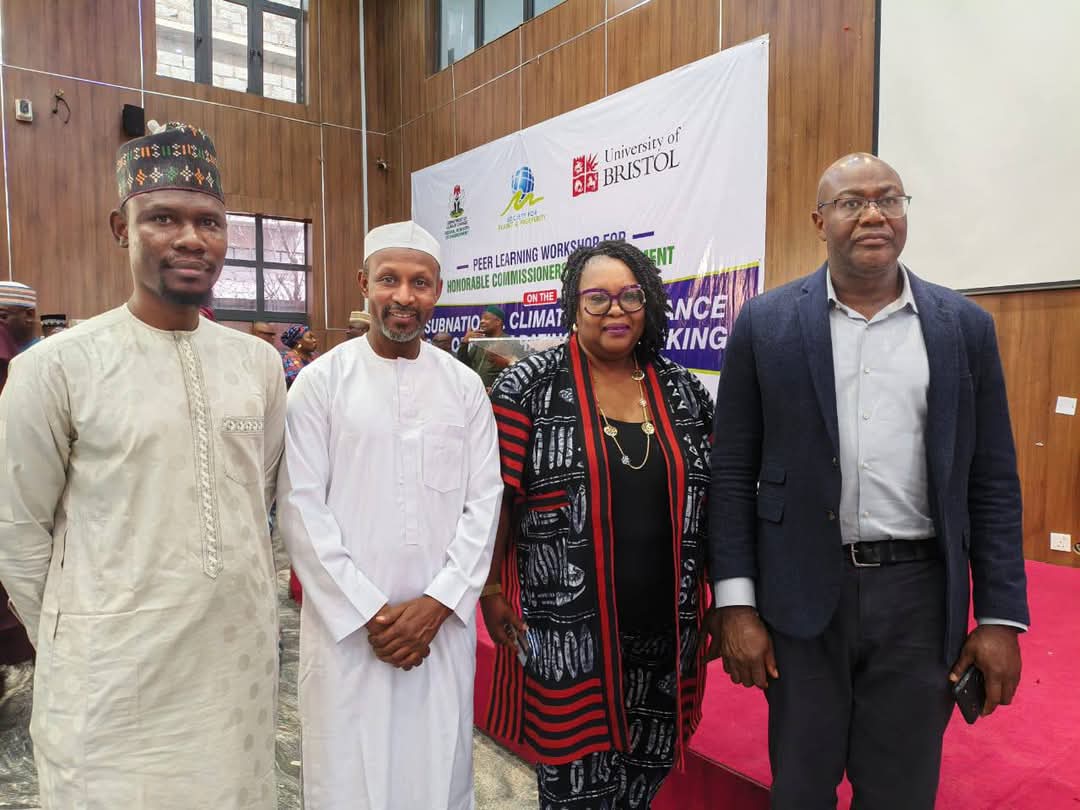
Kano State has strengthened its position as a leading subnational actor in climate governance following a strategic departmental meeting of the Kano State Ministry of Environment and Climate Change.
KANO FOCUS reports that a major highlight of the meeting was the state’s intensified support for Nigeria’s Second Biennial Transparency Report (BTR2) under the United Nations Framework Convention on Climate Change (UNFCCC). The ministry disclosed that ongoing collaboration with sectoral ministries, departments and agencies (MDAs) across Energy, Agriculture, Forestry and Other Land Use (AFOLU), Waste and Industrial Processes is ensuring credible and harmonised greenhouse gas emissions data in line with the transparency requirements of the Paris Agreement.
In what officials described as a significant milestone, Kano has been selected as one of three pilot states under the UK PACT programme to develop a Measurement, Reporting and Verification (MRV) system. The initiative is expected to institutionalise structured emissions reporting, strengthen accountability mechanisms and support tracking of Nigeria’s Nationally Determined Contributions (NDCs).
In a statement signed by Dr. Umar Saleh Anka, Director of Climate Change, the ministry also announced the commencement of preparations for the third edition of the Climate Governance Performance Ranking. The exercise aims to enhance methodological rigour, promote peer learning, improve transparency and deepen stakeholder engagement in climate action.
Further consolidating the state’s leadership role, the Commissioner for Environment was recently appointed Regional Lead (North West) of the Community of Practice for Environment and Climate Change, a move expected to strengthen regional collaboration and policy coordination.
The statement added that, the state government reaffirmed its commitment to strengthening institutional systems, improving emissions transparency and advancing coordinated climate action across Nigeria.
Nasiru Yusuf Ibrahim
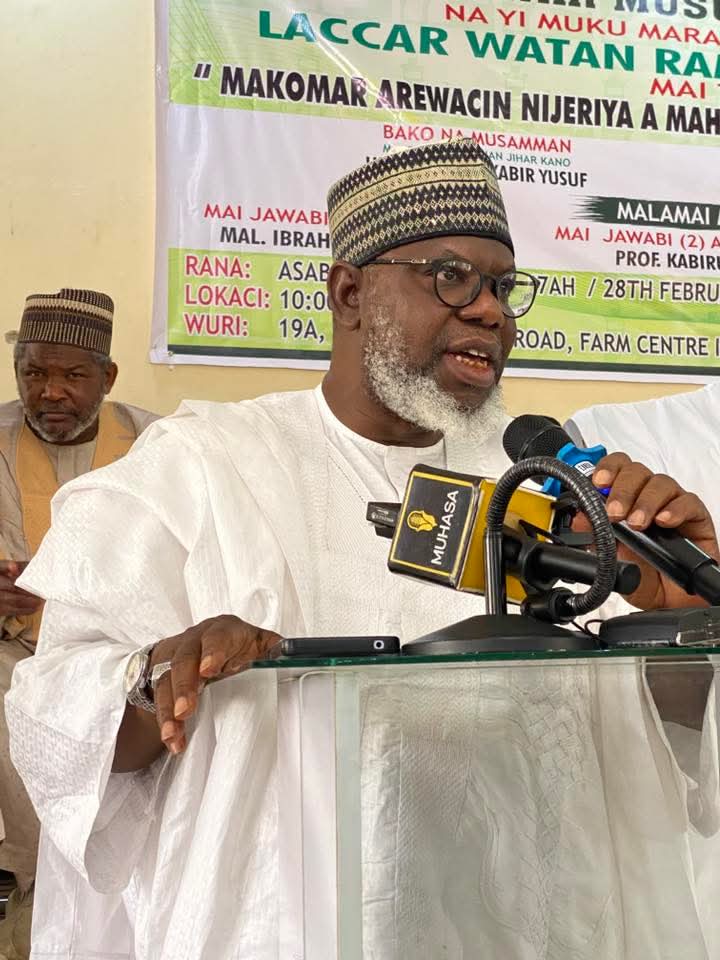
The Executive Secretary of the National Educational Research and Development Council, Prof. Salisu Shehu, has disclosed that only 30 per cent of school-age children in Northern Nigeria are currently attending school.
KANO FOCUS reports that Prof. Shehu made the revelation on Saturday while delivering a lecture at the 10th Ramadan Lecture organised by the Islamic Forum of Nigeria in Kano.
He said Nigeria presently has over 20 million out-of-school children, a figure he noted is rising due to armed banditry in the North-West and insurgency in the North-East. According to him, the closure of many schools in some states as a result of insecurity has further worsened the situation.
The educationist also expressed concern over the shortage of teachers in schools, despite increasing retirements, deaths, transfers and career changes among teaching staff. He lamented that examination malpractice, combined with weak oversight, has led to what he described as a collapse of the education system in Northern Nigeria.
“Products of examination malpractice are now becoming teachers and lecturers, thereby perpetuating the cycle,” he said.
Prof. Shehu warned that lack of access to education is contributing to thuggery and banditry in the region, stressing that education produces responsible citizens, while ignorance breeds irresponsibility.
He urged Northern governors to declare a state of emergency in the education sector and prioritise funding and reforms. He also advised citizens to establish education endowment funds, citing examples from Bangladesh and Malaysia where Muslim communities have addressed similar challenges through charitable initiatives.
The professor criticised what he described as misplaced priorities, questioning why some governors sponsor pilgrimages while many citizens lack access to basic education and quality healthcare.
Presenting a paper on the fate of Northern Nigeria in terms of security, Alhaji Ibrahim Ado Kurawa linked climate change and global warming to the worsening security challenges in the North-East. He identified the longstanding farmer-herder conflict as a root cause of banditry in the North-West.
Kurawa noted that insecurity has contributed to making the North-East and North-West the poorest regions in the country. He expressed dismay that Northern Nigeria has failed to effectively address the issues of almajiranci and out-of-school children since the First Republic.
He called for sincerity in governance, political reforms and greater collaboration among Northern groups such as the Arewa Consultative Forum (ACF) and the Northern Elders Forum (NEF), alongside the Islamic Forum of Nigeria.
On the economic outlook of the region, Prof. Kabiru Isa Dandago decried rising poverty, unemployment, overdependence and the high cost of living as major challenges confronting Northern Nigeria. He advocated for a strategic development plan and urged voters to elect credible leaders as a pathway to change.
In his address, the Chairman of the Islamic Forum of Nigeria, Gen. Ahmad Muhammad Daku, said the 2026 edition marked the 10th anniversary of the annual Ramadan lecture series. Represented by Alhaji M.T. Bello, he noted that the topics were carefully selected to address contemporary issues affecting Northern Nigeria.
The Acting Executive Secretary of the Forum, Alhaji Dalhatu Gwarzo, appreciated the lead presenters, particularly Prof. Shehu, for their contributions. He announced that a team of rapporteurs had been constituted to compile the papers and comments for a post-Ramadan roundtable discussion with stakeholders.
Gwarzo also revealed plans to publish a compendium of the ten Ramadan lectures delivered over the past decade for the benefit of the Muslim community. He urged Muslims to pray for Northern Nigeria, the country and the world amid prevailing challenges.
He further appealed to political leaders to ensure proper implementation of the new Computer-Based Test (CBT) policy for candidates sitting for the West African Examinations Council (WAEC) senior secondary school examinations.
Former Secretary to the Kano State Government, Alhaji Sule Yahaya Hamma, said 80 per cent of Northern Nigeria’s problems could be addressed by governors, urging them to take decisive action in their respective states.
Chairman of the Council of Ulama, Malam Ibrahim Khalil, emphasised patriotic leadership as a solution to current challenges, citing the example of Khalifa Umar bin Abdulaziz as a model of responsible governance.
Other dignitaries at the event included the Emir of Rano, Amb. Muhammad Isa Umaru, and the Madakin Zazzau, Alhaji Munir Jafaru.
Nasiru Yusuf Ibrahim
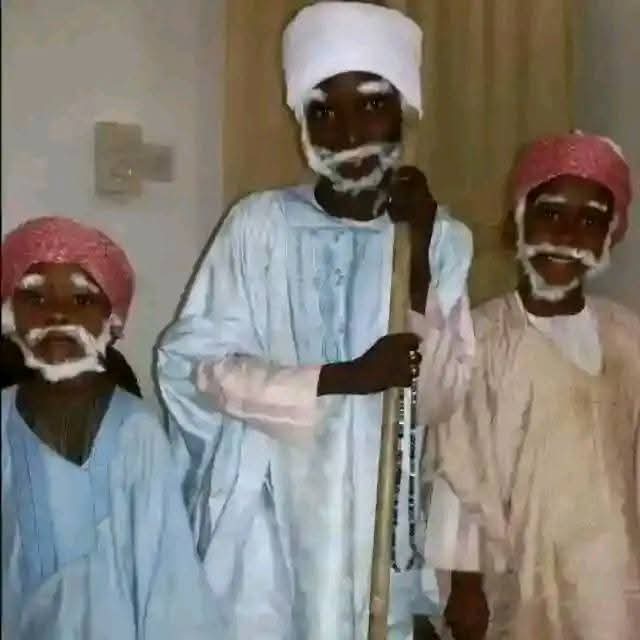
The Kano State Police Command has announced the suspension of the traditional Tashe performance usually held during the month of Ramadan, citing security concerns.
KANO FOCUS reports that in a public announcement issued on Saturday, the Command said the decision was taken in liaison with the Kano State Government to safeguard public safety and prevent criminal elements from exploiting the festivities.
The statement noted that the annual Tashe event has, in recent times, been used by some individuals to perpetrate crimes such as thuggery, handset snatching and drug abuse. According to the police, adequate security measures have been put in place to curb such activities and ensure a peaceful Ramadan period across the state.
The Commissioner of Police, Ibrahim Adamu Bakori, urged parents, guardians and members of the public to cooperate with security agencies by cautioning their children and wards against engaging in activities that could disrupt law and order. He warned that anyone found violating the law would face the full consequences.
The Command, however, extended its best wishes to residents of Kano State for a successful and peaceful Ramadan fast.
For emergencies, the police advised residents to contact the Command through its designated helplines or use the “NPF Rescue Me” application available on the Google Play Store.

Kano emerges as MRV pilot state, advances climate governance

Only 30% of school-age children attend school in Northern Nigeria – Prof. Shehu

Daneji community honours former Kano NDLEA commander

Kano state Police command suspends Tashe cultural performance

Kano business community thanks FG for N5bn Singer market relief

Lami Maccido, first person to appear on screens of NTA Kano, CTV 67, dies at 72

Governor Yusuf Appoints Acting DG for Pilgrims Board, Names Provost for Anti-Corruption Institute

Kano govt investigates reported disease outbreak in Garko community

Kano begins Ramadan food distribution as Gov. Yusuf constitutes feeding committee

