
Headlines
Kano releases N1 billion for girls’ education related projects – GEP


The Kano State Government has so far released more than N1.02 billion for girls’ education related projects in its 2022 budget.
KANO FOCUS reports that Hajiya Mairo Bello, the Co-chair, Girl Education Partnership, an NGO, made this known in Kano on Saturday, at the dissemination of the Kano State 2022 girl education budget performance with citizens and relevant stakeholders.
The dissemination was supported by Partnership to Engage, Reform and Learn (PERL), a governance programme of the UK Foreign, Commonwealth and Development Office (FCDO).
Bello explained that while N868.6 million was released for girls’ specific budget lines, N155.5 million were released for both boys and girls related education projects.

Cross section of participants
She said that of the N868.6 million, N32.9 million was for feeding, N116.6 million for transitional examination, N177.6 million for National Examination Council, and N90 million for National Board for Arabic and Islamic Studies examination.

Others, she said, included N12 million for the State Agency for Mass Education, while N132 million was released for renovations of girls’ secondary schools.
She added that N12.5 million was also released for repairs of shuttle buses for transportation of girls to school, under the state’s Girl Education Project.
She particularly commended the state government for the release of 12.5 million for the repair of 20 shuttle buses for the transportation of girls to schools within the metropolitan towns of the state.
She explained that the development was the result of consistent advocacy to government agencies by citizens groups to push for increased investment on girls’ education.

Cross section of participants
“This is a milestone for us, because the shuttle buses will support in transporting girls from poor households to school at no cost.
“This will significantly increase girls’ access to education by removing transportation and distance barriers.
“It also provides security as a safety measure by taking the girls from their homes to school and returning them back to their houses safely.
“This, in the long run, will increase girls’ school enrolment, retention, transition, and completion,” she said.
Read also: Super Falcons lose 0-4 to world champions US in friendly
She said that an analysis of the 2021 budget supported by PERL, shows that only three per cent of the total state budget was specific to girls’ interventions.
This, she said, prompted the citizens group to conduct series of advocacies to relevant government agencies to increase budgetary allocation for specific girls’ education interventions.

Cross section of participants
According to her, the advocacy yielded significant results with the creation of budget lines for girls’ education projects in the state.
Bello said that one of the budget lines was N20 million for the purchase of 10 shuttle buses for Girl Education within eight metropolitan local government areas and repair of 20 grounded vehicles for the girl education pppproject.
“Another budget line was N20 million for the construction of and rehabilitation of toilets for children and students with special needs in girls’ schools across the three Senatorial Zones in the state.
“A total of N50 million was also allocated to enhance inclusive education for girls with disabilities across the state and N120 million for the recruitment of female teachers for basic and secondary schools.
“Similarly, N15 million was allocated for the construction of blocks of classrooms, provision of furniture, instructional materials, and supply of buses for girls in primary and secondary schools,” she said.
She explained that of all the allocations amounting to N225 million, N12.5 million had been released for repair of shuttle buses.
She also said that a memo for the release of N100 million for the recruitment of female teachers and N19.6 million for the renovation of toilet facilities in girls’ schools were being processed for releases.

Cross section of participants
Earlier, Hajiya Hajara Suleiman, PERL State Partnership Facilitator in the state, said that the objective of the meeting was to provide an overview and update on the girl education budget.
She added that the meeting was also organised to disseminate findings from the relevant ministries, departments and agencies with girl specific education projects.
“The meeting was also organised to identify possible ways for further engagement with stakeholders that will facilitate budget releases and implementation of girls’ education projects,” Suleiman said.
In his remarks, Special Adviser to Kano state governor on free and compulsory education and co-chair girls education partnership (GEP), Dr. Kabiru Shehu commended the effort of citizens on the consistent advocacies they embarked on to ensure funds allocated in the MDAs responsible for the implementation of Girl Education are released.
He noted that, over one hundred and ninety million naira additional support funds were provided by the state to sponsor female students SSCE examination.
Also speaking the state chairman of State Based Management Committee (SBMC) Tijjani Haladu Baraya, pointed out that as part of efforts to uplift the standard of education, Kano state government had set up a committee to oversee the renovation of 22 schools across the state.
He pointed out that, the ongoing project, under Kano state urban planning development authority (KNUPDA) gave special consideration to four girls secondary schools.
A member of GEP and Kano state Coodinator CSACEFA, Dr. Auwal Halilu said citizens analysed the releases of the 2022 budget.
He highlighted that, findings revealed more insights on how to improve girls education in Kano.
In his presentation titled ‘Girls education and releases for 2022 budget’ Comrade Safiyanu Lawan Bichi of Kano budget working group and member GEP, brought to light that ministry for local government, SUBEB and Agency for Mass Education have releases on girls education.
He also urged the partnership to use the session to set out committees that will follow up releases and track implementation from other MDAs that are responsible for the delivery of Girl Education projects.
The event tagged: Dissemination of 2022 budget performance with citizens and relevant stakeholders, supported by PERL- ECP brought together traditional rulers, government officials, civil society organizations, journalists, women groups, PWD, members of GEP and other relevant stakeholders in the Educational Sector.

Nasiru Yusuf Ibrahim
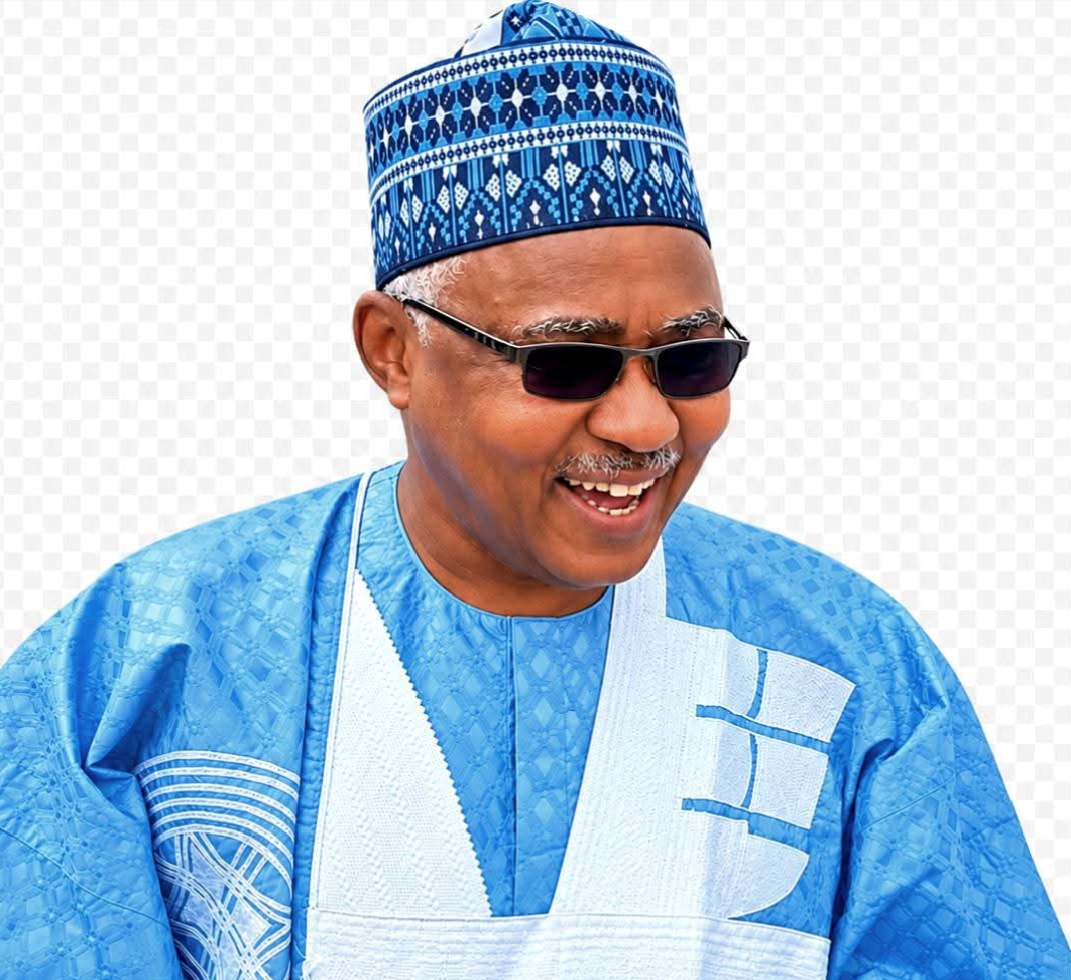
Political allies and loyalists of former Managing Director of the Nigerian Ports Authority (NPA), Arc Aminu Dabo, have begun resigning from the All Progressives Congress (APC) in Kano State following his withdrawal from the ruling party.
KANO FOCUS reports that the supporters, operating under the political group Dabo Alheri Ne, reportedly include members across Kano State’s 44 local government areas.
Barely two days after Dabo announced his resignation from the APC, a prominent stakeholder of the group, Garba Zakiru Dambatta, said members had welcomed the decision and were showing solidarity by submitting their resignation letters to their respective ward party chairmen.
Dambatta, a former APC chairman in Dambatta Local Government Area, said the group’s members were disappointed with what they described as the prolonged marginalisation of Mr Dabo and his supporters within the party.
According to him, despite Mr Dabo’s contributions to the APC and efforts to strengthen the party and manage disagreements among its members, some key stakeholders had continued to sideline him and his loyalists in party activities.
Dambatta reaffirmed the group’s commitment to standing by Mr Dabo’s political decisions and supporting his future political journey.
He also urged the former NPA managing director not to succumb to political pressure or reverse his decision to leave the party.
“This step you have taken, we have the conviction that it is the beginning of a new chapter of goodness in your life,” Dambatta said.
Among the prominent members of the group identified as supporting Mr Dabo’s decision are Abba Rabee’u, a former Senior Special Assistant on Political Awareness; Almustapha Jilani Danmalam, a former Senior Special Assistant on Education; Jamilu Abdullahi Zangon-Mata, a former Senior Special Assistant on Entrepreneurship; and Fahd A. Dabo, a former Special Assistant on Youth Mobilisation.
The individuals reportedly served during the second term of former Kano State Governor Abdullahi Umar Ganduje.
The group also said several other party loyalists and supporters were backing Dabo following his resignation.
However, the statement did not provide the number of members who had formally resigned from the APC or indicate whether the party leadership had responded to the development.
Nasiru Yusuf Ibrahim
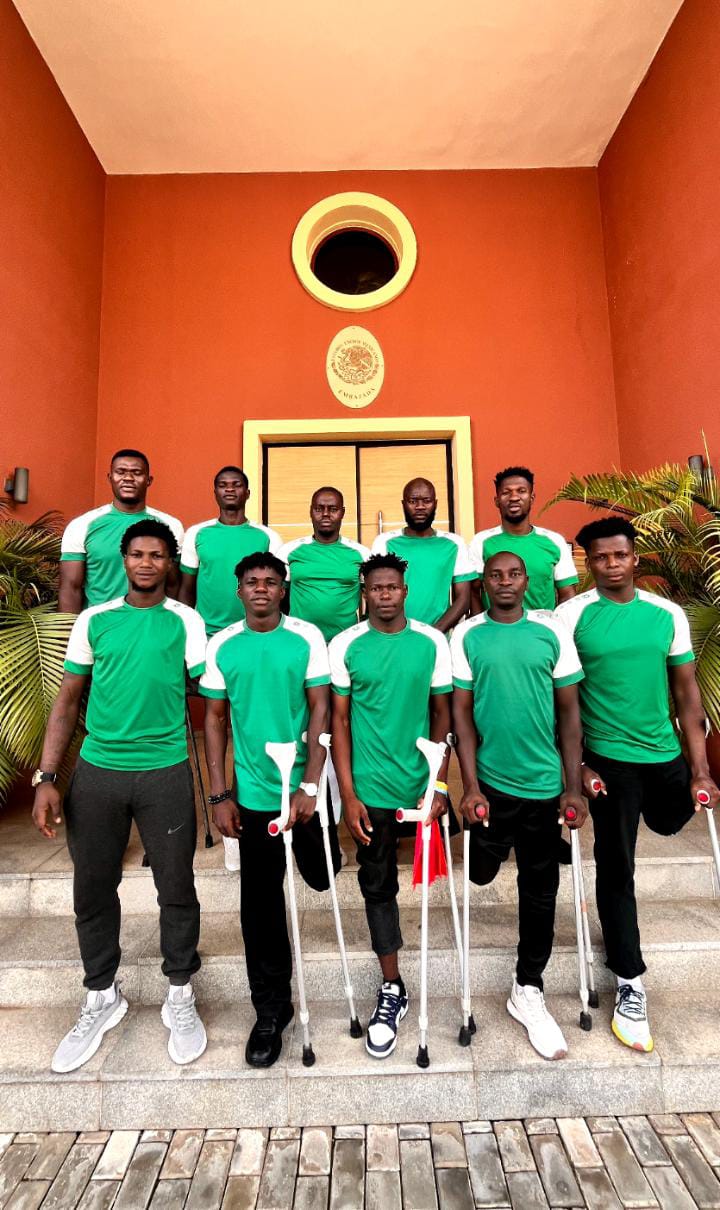
Five players of Kano Pillars Amputee Football Club have been invited to the national camp of Nigeria’s Special Super Eagles ahead of the 2026 Amputee Football World Cup in Mexico.
KANO FOCUS reports that invited players are Isah Yusuf, Abba Musa, Habu Friday, Emanuel Betel and Usman Ahmed. They are currently in Abuja with the national team as preparations intensify for the global tournament.
The Team Manager of Kano Pillars Amputee Football Team, Jamilu Uba Adamu, disclosed this in an interview with Ashiru Rabiu Gidan Tudu, Information Officer of the Kano State Sports Commission.
Adamu described the invitation as recognition of the players’ dedication, discipline and outstanding performances.
He expressed confidence that the players would represent Kano State and Nigeria with honour at the championship.
According to him, the call-up also demonstrates Kano Pillars’ commitment to nurturing talented amputee footballers and contributing to the development of the sport in Nigeria.
The 2026 Amputee Football World Cup is scheduled to take place from November 13 to 22 in San Juan de los Lagos, Mexico. A total of 24 countries, including seven African nations, are expected to participate.
The Executive Chairman of the Kano State Sports Commission, Muhammad Tukur Babangida, congratulated the five players on their invitation, describing it as well deserved.
Babangida expressed confidence that they would justify the confidence reposed in them by the national team selectors.
He assured the players of the commission’s continued support and urged them to remain focused, disciplined and committed to making Kano State and Nigeria proud on the international stage.
Ibrahim Khalil
A chieftain of the All Progressives Congress (APC) in Kano State, Aminu Dabo, has resigned as the party’s caucus chairman in Dambatta Local Government Area and withdrawn his membership of the ruling party.
KANO FOCUS reports that Dabo, a former Managing Director of the Nigerian Ports Authority (NPA), announced his resignation in a letter dated October 7, 2026, addressed to the APC chairman of Dambatta Gabas Ward.
In the letter, personally signed by him, Dabo said he took the decision after careful consideration of personal reasons and his future endeavours.
He confirmed his resignation during a telephone conversation from Abuja on Wednesday, saying he had formally submitted the letter to the appropriate party officials in Dambatta for necessary action.
“I remain grateful for the cordial relationship I enjoyed and appreciative of the experience gained during my time of service,” he said.
The former NPA managing director also thanked the party’s leadership for the opportunity and confidence reposed in him to contribute to its development and progress during his membership.
“I sincerely appreciate the support and opportunity I have received from the party leadership,” he added.
A statement issued by Abdullahi Othman, Media and Publicity Aide to Dabo Dabo, said the former NPA MD did not disclose further details about his reasons for leaving the APC in the resignation letter.

Dabo’s resignation triggers wave of defections from APC in Kano

Five Kano Pillars Amputee Players Invited to Special Eagles Camp Ahead of World Cup

BUK Professor advocates microfinance to tackle food insecurity, poverty

General Elections 2027: Abba Kabir Yusuf traverses the path to victory
Former NPA MD Aminu Dabo resigns as APC caucus chairman in Dambatta

Kano leads again as NECO successes rise to 74,413
Kano tops states in 2026 NECO results, Governor Yusuf hails students

Kano Govt Suspends Durbar Processions, Horse Riding in Metropolis

ACF begins Dangote Refinery IPO sensitisation campaign in Kano

