
Opinion
Be Dutiful To Your Mother, You Will Be Blessed And Succeed Here And The Hereafter!


Be Dutiful To Your Mother, You Will Be Blessed And Succeed Here And The Hereafter!
By Imam Murtadha Gusau

In the name of Allah, the Most Gracious, the Most Merciful
All praise is due to Allah the All Knowing Creator. He placed mercy in the hearts of the mothers. To the point that the animal raises its hoof away from her son with mercy fearing that she will step on him. We praise Allah for His guidance. He ordained the religion for His servants. And distributed rights between them. He has given each person who has rights their rights:
“Allah makes clear to you [His law], lest you go astray. And Allah is Knowing of all things.” [Qur’an, 4:176]
Dear brothers and sisters! The Messenger of Allah (Peace be upon him) visited the grave of his mother and wept, and caused those around him to weep. He said:
“I asked my Lord for permission to pray for forgiveness for her and He did not give me permission, and I asked Him for permission to visit her grave and He gave me permission.” [Muslim]
He (Peace be upon him) did not do that except to uphold her rights and to be dutiful towards her.
Respected servant of Allah! Be conscious of Allah and obey Him. And know what is due upon you of rights so that you can fulfill them. For there are rights purely to Allah such as the acts of worship. And rights related to our parents, our relatives, our neighbours and the people that we interact with. He the Exalted mandated them upon us. It is part of
His religion that He ordained for us. And on the day of Resurrection He will hold us accountable for it.
Muslim brothers and sisters! There is no right due upon a person that is bigger and greater after the right of Allah Almighty and the right of His Messenger (Peace be upon him) than the rights of the parents. That was demonstrated by the texts of the Qur’an and Sunnah. And Allah Almighty took a covenant in this regard from those who were before us. Allah Almighty says:
“And [recall] when We took the covenant from the Children of Israel, [enjoining upon them], “Do not worship except Allah; and to parents do good.” [Qur’an, 2:83]
And He the Glorified mandated in our Shari’ah with the strongest and most eloquent terms, and He coupled it with Tawhid of Him and prohibition of associating others with Him. He the Most High says:
“Worship Allah and associate nothing with Him, and to parents do good.” [Qur’an, 4:36]
And He says:
“And your Lord has decreed that you worship not except Him, and to parents, good treatment.” [Qur’an, 17:23]
Allah expressed it in terms of the decree which is from the strongest expressions of commanding and mandating. And the decree of a judge is carried out. And Allah is the most just of judges. And the fairest and most powerful of them. Rather He made dutifulness to the parents an instruction that He enjoined upon His servants. Allah Almighty says:
“Say, “Come, I will recite what your Lord has prohibited to you. [He commands] that you not associate anything with Him, and to parents, good treatment.” [Qur’an, 6:151]
Then He the Most High concluded the verse with:
“This has He instructed you that you may use reason.”
The mother takes precedence over the father with respect to dutifulness. And she has more rights due to her from her son than the rights owed by the son to his father. Because the pure Shari’ah came with this and she is the weaker of the two parents. And because she was pregnant, gave birth and nursed. Allah Almighty says:
“His mother carried him, [increasing her] in weakness upon weakness, and his weaning is in two years.” [Luqman: 14]
And in another Qur’anic verse He says:
“And We have enjoined upon man, to his parents, good treatment. His mother carried him with hardship and gave birth to him with hardship, and his gestation and weaning [period] is thirty months.” [Al-Ahqaf: 15]
And this was indicated in the Sunnah as narrated by Abu Hurairah (may Allah be pleased with him) who said:
“A man came to Messenger of Allah (Peace be upon him) and asked, “Who among the people is most deserving of my fine treatment?” He (Peace be upon him) said, “Your mother.” He again asked, ”Who next?” “Your mother”, the Prophet (Peace be upon him) replied again. He asked, “Who next?” He (the Prophet (Peace be upon him)) said again, “Your mother.” He again asked, “Then who?” Thereupon he (Peace be upon him) said,” Then your father.” [Bukhari and Muslim]
And in another Hadith he (Peace be upon him
said:
“Allah enjoins you to treat your mother’s kindly” -three times- “Allah enjoins you to treat your fathers and the closest and the next closest kindly…” [Ibn Majah]
And Muawiyah Bin Haidah (may Allah be pleased with him) said:
“O Messenger of Allah! Who is most deserving of my fine treatment?” He (Peace be upon him) said, “Your mother, then your mother, then your mother, then your father, then your nearest, then nearest.” [Abu Dawud and Ahmad]
Based on these Hadiths, the mother has three rights and the father has one right. Therefore, a son should allocate three quarters of his dutifulness to his mother, and a quarter for his father. However, many people do not understand this matter.
And ingratitude towards the mother is a greater crime than ingratitude towards the father. Even though all ingratitude towards parents is a great crime. And as Prophet (Peace be upon him) indicated in the books of Bukhari and Muslim that Allah Almighty has forbidden ingratitude towards mothers.
It is obligatory to maintain good relations with the mother and being dutiful to her and treat her in the best fashion even if she is a disbeliever while not obeying her in sin. Allah the Most High says:
“But if they endeavour to make you associate with Me that of which you have no knowledge, do not obey them but accompany them in [this] world with appropriate kindness.” [Luqman: 15]
And Asma’ the daughter of AbuBakr (may Allah be pleased with them) said:
“My mother came to me during the lifetime of Allah’s Messenger (Peace be upon him) and she was a polytheist. So I sought a verdict from the Messenger of Allah (Peace be upon him) stating: my mother came seeking my kindness, shall I maintain good relations with her?” He (Peace be upon him) replied, “Yes, maintain good relations with your mother.” [Bukhari and Muslim]
We ask Allah Almighty to grant us the religious knowledge and putting it into practice and to help us with being dutiful to our parents and excellence in kindness towards them. As Prophet Ibrahim (Peace be upon him) said:
“Our Lord, forgive me and my parents and the believers the Day the account is established.” [Qur’an, 14:41]
Dear servants of Allah! Whoever is seeking the greatest deeds and reward should know that gratitude to the mother is one of the wide doors of paradise. It is not neglected except by those who have deprived themselves.
It was narrated that Mu’awiyah Bin Jahimah As-Sulaimi came to the Messenger of Allah (Peace be upon him) three times seeking to accompany him in Jihad. Each time he (Peace be upon him) responded to him:
“Woe to you! Is your mother still alive?’ He said: ‘Yes.’ He (Peace be upon him) said: ‘Go back and adhere to her leg (serve her), for there is Paradise.” [Ibn Majah]
And from this, some righteous people adopted the practice of kissing the feet of their mother. A righteous man used to kiss his mother’s feet every day and once when he was late in meeting his brothers they asked him where were you? He said: I was basking in a meadow of Paradise, for it has reached us that paradise is under the feet of the mothers.
When the mother of Qadi (Judge) Iyyas passed, he wept and it was said: What makes you weep Abu Wathilah?! He responded:
“I had two open doors to paradise and one of them closed.”
And Muhammad Bin Al-Munkadir (may Allah have mercy on him) said:
“My brother Umar spent the night in prayer while I massaged my mother’s leg. And I would not like to replace my actions with his.”
And Hisham Bin Hassan said:
“I said to Al-Hassan: Indeed I learn the Qur’an while my mother is waiting with the dinner. Al-Hassan responded: Having dinner with your mother through which you please her is more beloved than performing a voluntary Hajj.“
Respected brothers and sisters! Where are the people with regards to being dutiful towards their mothers and looking after them? And serving them in accordance to these great Hadiths and traditions indicating the rights of the mother and the virtue of being dutiful towards her.
Beware dear servants of Allah for the rights of our mothers upon us are many. And being dutiful towards them is among the greatest obligations. And there are many textual evidences in this regard. And from them is the instruction of Allah to Prophet Isa (Jesus Peace be upon him) that he uttered as an infant:
“And He has made me blessed wherever I am and has enjoined upon me Prayer and Zakah as long as I remain alive. And [made me] dutiful to my mother, and He has not made me a wretched tyrant.” [Maryam: 31-32]
Today, I conclude my sermon with this and send prayers of blessings and peace upon our beloved Prophet as your Lord commanded. Allah Almighty says:
“Indeed, Allah confers blessing upon the Prophet, and His angels [ask Him to do so]. O you who have believed, ask [Allah to confer] blessing upon him and ask [Allah to grant him] peace.” [Qur’an, 33:56]
O Allah, guide us with those whom You have guided, grant us well-being among those You have granted well-being, be an ally to us along with those whom You are an ally to, and bless what You have bestowed upon us, and save us from the evil of what You have decreed. For verily You decree and none can decree over You. He whom You support can never be humiliated. Glory is to You, our Lord, You are Blessed and Exalted.
O Allah, We ask You for all that is good, in this world and in the Hereafter, what we know and what we do not know.
O Allah, we seek refuge with You from all evil, in this world and in the Hereafter, what we know and what we do not know.
O Allah, we ask You for the good that Your servant and Prophet has asked You for, and we seek refuge with You from the evil from which Your servant and Prophet sought refuge.
O Allah, we ask You for Paradise and for that which brings one closer to it, in word and deed, and we seek refuge in You from Hell and from that which brings one closer to it, in word and deed. And we ask You to make every decree that You decree concerning us good.
Dear servants of Allah! Indeed, Allah orders justice and good conduct and giving to relatives and forbids immorality and bad conduct and oppression. He admonishes you that perhaps you will be reminded.
Remember Allah, the Great – He will remember you. Thank Him for His favours – He will increase you therein. And seek forgiveness from Him – He will forgive you. And be conscious of Him – He will provide you a way out of difficult matters. And, establish the prayer.
All praises and thanks are due to Allah alone, Lord of the worlds. May the peace, blessings and salutations of Allah be upon our noble Messenger, Muhammad, and upon his family, his Companions and his true and sincere followers.
Murtadha Muhammad Gusau is the Chief Imam of Nagazi-Uvete Jumu’ah and the late Alhaji Abdur-Rahman Okene’s Mosques, Okene, Kogi State, Nigeria. He can be reached through: gusauimam@gmail.com or +2348038289761.
This Jumu’ah Khutbah (Friday sermon) was prepared for delivery today Friday, Rabi’ul Awwal 04, 1444 AH (September 30, 2022).

Opinion
After two years of promises: What is holding back Kano’s Commission for Persons with Disabilities?
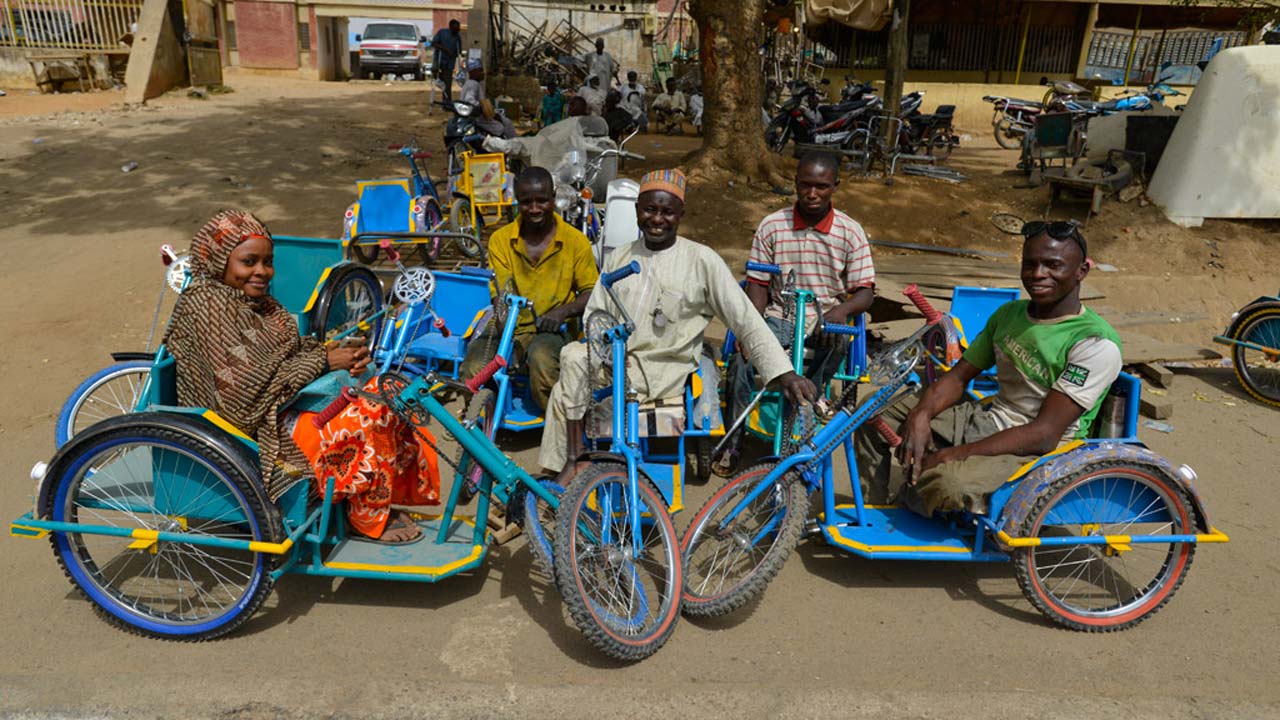
By Hannatu Suleiman Abba
During the review of the New Nigeria Peoples Party (NNPP) blueprint at Babale Suite—organised by the AMG Foundation—I vividly recall a series of engagements on the party’s commitment to establish a Commission for Persons with Disabilities if elected. At the event, the Director General of Media, Malam Sanusi Bature, who represented the NNPP gubernatorial candidate, Engr. Abba Kabir Yusuf, spoke clearly about this intention.
Following the election victory, expectations among persons with disabilities and their advocates were understandably high. The proposed commission was widely seen as a critical step toward advancing inclusion, protecting rights, and ensuring coordinated support for persons with disabilities across Kano State.
On December 28, 2023, a press release issued by the Director General of Media, Malam Sanusi Bature, announced that the Kano State Government was set to establish the Commission for Persons with Disabilities in 2024. The statement, conveyed through the governor’s deputy, Comrade Aminu Abdussalam Gwarzo, reaffirmed the administration’s commitment to improving the lives of persons with disabilities.
More than a year later, however, the commission is yet to be established.
In the meantime, the Commissioner for Women, Children and Special Needs, Hajiya Amina Abdullahi (HOD), has continued to carry persons with disabilities along in her ministry’s activities. Through the Director of Special Needs, Dr. Binta Bala, the ministry has promoted inclusivity and engagement. These efforts are commendable and reflect genuine goodwill.
Similarly, Governor Engr. Abba Kabir Yusuf has personally participated in several interventions supporting persons with disabilities—an effort I can attest to as a firsthand witness.
Yet, a critical question remains: can these interventions truly replace the role of a fully established Commission for Persons with Disabilities that serves all disability clusters?
The answer, quite clearly, is no.
A commission is not merely symbolic. It provides structure, continuity, accountability and institutional representation—elements that isolated interventions, no matter how well-intentioned, cannot sustainably guarantee. The absence of such a commission has left many persons with disabilities in Kano State facing persistent challenges, particularly in access to healthcare, education, entrepreneurship and broader social development.
The establishment of a Commission for Persons with Disabilities is essential to bridging existing gaps in government interventions and ensuring coordinated, equitable and inclusive support across all disability groups.
If Kano State successfully domesticates and operationalises this law, it would set a powerful precedent for other northern states—some of which are already making efforts, but lack a strong, unified model to emulate.
As an advocate for marginalised groups, I have held several discussions with key stakeholders, including Abdulrazak Ado Zango, on the transformative impact such a commission could have on the lives of persons with disabilities in Kano State. Beyond service delivery, a commission would serve as a formal platform for inclusion in policymaking and decision-making processes that directly affect persons with disabilities.
While the government’s efforts to give persons with disabilities a voice are sincerely appreciated, it must be emphasised that the establishment of the Commission for Persons with Disabilities remains the most effective, sustainable and institutional path toward meaningful change and full inclusion in Kano State.
Two years after the promise, the question still lingers: what is holding Kano back?
Hannatu Suleiman Abba is a humanitarian journalist and Founder of Beyond Inclusion Media. She can be reached via hannatusuleimanabba@gmail.com
If you’ve ever wondered where to experience the best online shopping in Nigeria, you’re not alone. The shift toward digital buying has transformed how Nigerians shop — from fashion and electronics to home appliances and groceries. One of the fastest-rising names leading this change is Nujora.ng, a trusted platform designed to make shopping easier, faster, and more rewarding for both buyers and local sellers.
Why Online Shopping Is Booming in Nigeria
Nigerians are increasingly turning to online shopping for convenience, better prices, and access to products that aren’t always available in local markets. The ease of browsing and comparing prices from your phone has made e-commerce part of everyday life.
With platforms like Nujora.ng, buyers can enjoy smooth transactions, quick delivery, and reliable customer support — all while supporting homegrown businesses.
Why Nujora.ng Is Your Go-To Online Marketplace
When it comes to the best online shopping experience in Nigeria, Nujora offers more than just a place to buy and sell. It’s a growing community marketplace built around trust, affordability, and local connection.
Here’s why shoppers love Nujora:
🛍️ Wide Range of Products: From fashion to electronics, beauty, and home essentials.
🚚 Fast Delivery: Items are delivered quickly from nearby vendors.
🤝 Trusted Sellers: Verified local sellers ensure genuine products.
💰 Affordable Deals: Competitive pricing with no hidden costs.
🌍 Support Local: Every purchase helps small Nigerian businesses grow.
Calling All Local Sellers – Join Nujora Today!
Are you a business owner, vendor, or artisan looking to grow your sales?
Nujora.ng is your opportunity to take your business online without the stress of building a website. Our mission is to empower local entrepreneurs to reach thousands of new customers easily.
Here’s what sellers get when they join:
A user-friendly dashboard to upload and manage products.
Direct access to nearby buyers.
Marketing and visibility support from Nujora’s team.
Secure transactions and fast payouts.
Join Nujora today — the future of online selling is local, and Nujora is here to make it happen.
Visit www.nujora.ng to start selling now.
Final Thoughts
The best online shopping in Nigeria isn’t just about convenience — it’s about connection. With Nujora.ng, buyers get quality and speed, while sellers gain exposure and growth. Together, we’re building a smarter, more inclusive marketplace that keeps commerce local and digital.
Start your journey today at www.nujora.ng — discover amazing deals, support local sellers, and experience Nigeria’s most convenient way to shop online.

Aliyu Isa Aliyu, Ph.D
During my time as the financial secretary of NNPP in Kano state and other political engagements, I saw clearly how many of the so-called fake Kwankwasiyya loyalists behaved. They always came with sweet promises, showing deep respect for Kwankwaso’s leadership and pretending to be his strongest disciples. They claimed they would defend the party’s ideology even with their lives. But the moment they got what they wanted, whether it was an election victory, recognition, or political favour, they slowly pulled away. Their loyalty was never to the Kwankwasiyya movement, but only to their own ambitions. Personally, I never regarded their loyalty, never praised them, and never wasted my time writing about them.
What surprised me most was Kwankwaso’s ability to take all of this without holding any grudges. Time and again, he welcomed them back whenever they were politically stranded. Instead of shutting them out, he gave them another chance, teaching us that leadership is not about revenge but about building bridges, even with those who once betrayed you. Many of us in the party leadership found it hard to understand this level of patience, but over time, I came to see it as part of what makes him a rare politician in Nigeria.
This same cycle has repeated itself in every election season. Politicians who abandoned kwankwasiyya the most critical times would always return in desperation, and Kwankwaso would open the doors again. For him, the bigger picture has always been the growth of the movement and the empowerment of the masses, not the small politics of exclusion. But from my own experience, I have seen both the strength and weakness of this approach. The strength is Kwankwaso’s unmatched generosity and forgiveness, but the weakness is the opportunism of those who treat leadership as a shortcut to power. In 2024, some of them worked tirelessly with all kinds of deceit just to secure tickets for their boys as local government chairmen, but thankfully Madugu Kwankwaso was firm and did not fall into their trap.
Now the time has come for our leader, Senator Kwankwaso, to reflect on his political generosity and take the right stand. It is better to lose an election with true loyalists than to win with those sabbatical politicians who only come for their selfish gains. Nobody can deny that they contributed to NNPP’s growth in Kano, but the truth is that the sacrifices Kwankwaso made for them are far greater than what they have done for him or the movement. Before their defection to NNPP in 2022, there were committed people already vying for those positions, but they were pleaded to step down and hand over the tickets for free. You cannot build a political movement with people who carry two faces. In politics, you are either here or there; there is no middle ground. Kwankwasiyya is not only about winning elections, it is also about discipline and sacrifice. We won clearly in 2019 before the election was declared inconclusive, and we still won in 2023 despite the odds. If Almighty Allah has destined our victory in 2027, no betrayal can stop it, no matter who leaves Kwankwasiyya.
– Aliyu Isa Aliyu, Ph.D

Faroukgate: Dangote takes petition against Ex-NMDPRA boss to EFCC

Imam Gusau warns against silence in the face of injustice

Kano Assembly backs Yusuf’s planned defection to APC

NCC, CBN to Introduce refund framework for failed airtime, data transactions

SUBEB, PLANE train teachers to boost English language learning in Kano primary schools

Kano SUBEB releases list of shortlisted candidates for teachers’ recruitment exam

Delayed, Weaker Harmattan Signals Climate Change Impact Across Northern Nigeria – Anka

Kwankwaso considers ADC Alliance with Atiku, Obi as opposition forces realign ahead of 2027

Gov. Yusuf Signs N1.47trn 2026 Budget into Law

