
Opinion
2023: Why I Will Vote for Tinubu – Dr Tilde

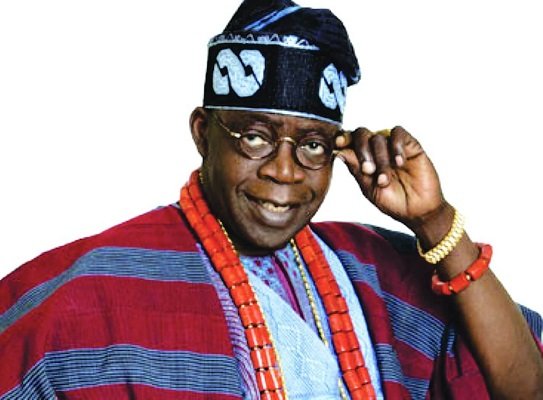
Dr. Aliyu U. Tilde
On 25 February 2023, I will pick this voter’s card, walk to the polling centre and cast my vote for His Excellency, Chief Ahmed Bola Tinubu, the Jagaban Borgu. This is a firm commitment given after a history of association, honour, demographic reality, constitutional requirement, weighing pros and cons as well as the personalities of the candidate and his running mate.
Association

In 2011, I supported the presidential candidature of Nuhu Ribadu. Together we travelled and met with the Jagaba many times in Lagos. Why I pitched my tent with Ribadu then, apart from sharing many things like age, world view, personality, background, geography, etc, was the firm belief that no matter how popular is a northern candidate, he needs to crossover to the South for additional votes and geographic spread that the constitution stipulates. For Buhari to run again that year, 2011, after two previous unsuccessful attempts, would be an exercise in futility as it indeed proved to be after failure of the last minute CPC/ACN merger attempt then. The results did not tie to warrant the second round as calculated in Buhari’s quarters. In 2015 the merger was done and victory was achieved. Elections are about law and numbers. No magic.
There will hardly be any southerner better fit for the position of a partner to the North than the Jagaba today. He is our Abiola, if not better. As some of my readers rightly said, he has patronized us many times: Atiku in 2007 under AC, Ribadu in ACN (2011) and Buhari in APC (2015). This is a consistent friend in need. Honour begets reciprocity.
Victimization
Furthermore, I am aware that the Muslim identity of the Jagaba has been used to disenfranchise him politically three times. In 2011, Buhari was not keen on the merger that required Pastor Bakare to withdraw for Tinubu because he Buhari was opposed to a Muslim-Muslim ticket after receiving over a decade of bashing from the southern press over shariah.
In 2015, Tinubu was bluntly and brutally told at a caucus meeting that he cannot deputize for Buhari because he was Muslim. He swallowed that and presented Osinbajo.
For the third time, for 2023, the some people want to crucify him for picking a Muslim as deputy against all odds. He believes that the Muslim identity of his running mate will earn him the winning vote and choosing a Northern Christian that will upset the Muslims will deny him our vote.
How honorable would I look if I would I turn my back against a friend in need who earlier provided platforms for my brothers and now believe in my capacity to rescue him? What if my son will contest the Presidency tomorrow and he goes to the Southwest to ask for support? And that day will come, when a northerner will again be in need of that alliance. Let us behave wisely. 2023 is not the end of Nigeria. We must guard the honour that we are known for.
Repeat Disaster
Southern partners of the north have been changing over the years but they remain constantly relevant. The North must not return to those days of serial losses by promoting a candidate acceptable only to it. This is the situation that the Atiku ticket presents today, regrettably.
Our brother, the Wazirin Adamawa, His Excellency, Alhaji Atiku Abubakar, has failed, against all advice, to patiently nurture the support of the South-south in 2011 after losing the ticket to the incumbent. Instead, he supported Buhari of the opposing CPC. Worse still, in 2015 he abandoned the the PDP, led 5 governors in rebellion against the southern President, claiming that it was the north’s turn, and decamped to APC to humiliate Jonathan out of power. Still after Bubari’s 8 years, in 2022, he blocked the emergence of Southeast and south-south candidates, claiming that rotation is a party matter.
Now he has gone to the south-south cup in hand and they paid him back in his own coins. This produced Peter Obi ticket and the G5; two blocks that will deny him the traditional PDP votes in the Southeast and South-south. Southwest is already effectively blocked against him by Tinubu.
The Waziri is effectively left with the North. Here, Benue, Plateau and Southern Kaduna are not likely to vote for “another Fulani”, as we heard them declare repeatedly. The votes of the Muslim North are themselves divided for and against him, not united as they were for Buhari. Borno and Yobe, will massively vote for APC. The ruling party even for kinship will also take Kwara and Kogi. Then incumbency will retain for APC the states of Kaduna, Niger, Zamfara, Gombe and possibly Katsina. Yes, Waziri will get Adamawa and Taraba and possibly Sokoto and Kebbi. Bauchi and Nasarawa are still uncertain for him. Kano belongs to Kwnkwaso, things being equal.
Then as Babachir and some anti-muslim irredentists are threatening northern Muslims of humiliation, a block vote, including Kano, in favour of the Muslim-Muslim ticket is possible. That will seal the fate of Atiku decisively.
Now, this calculus does not add up to an electoral win in any way. It is a recipe for the disasters of 2003, 2007 and 2011 to repeat themselves.
Existential Threat
Babachir’s insolence is an evil that must be disproved and defeated by both Muslims and Christians. Those who failed to earn the APC VP ticket should return and introspect on why they were not considered electorally viable enough to win it, not resort to blackmailing and threatening Muslims. That will only prove the evil that they are, which made it right for the Jagaba to reject them in the first place. Nobody can publicly say he will teach 120 million citizens a lesson and be allowed to succeed unless if those citizens are worse than donkeys. No lion can stand an army of 120 million donkeys. None.
Now Babachir’s insult has pushed even the reluctant Muslims to prove their electoral worth as they are increasingly rallying behind the Muslim-Muslim ticket. The majority well-meaning Christians should also do the same. Babachir is posing an existential threat to all northerners. If there is a Christian who will be fair to Muslims tomorrow, I and many Muslims will vote for him, as many of us did for Obasanjo and Jonathan between 1999 and 2011. But a genocidal psychopath of whatever religion does not deserve to be even a deputy local government chairman anywhere in this country. Let us leave him to grumble and crumble alone.
Same faith tickets are not new in Nigeria and they are presently practiced in all predominantly Christian States like Plateau, Benue, Edo and even in a number of Southwestern states where Muslims are predominant. Their Muslims have not threatened our national security for their selfish reasons as Babachir and his gang of rejects are doing up here. Tam.
Pros and Cons
Beyond the acquaintance, honour of reciprocity, averting past electoral disasters suffered by the North and the existential challenge of the Babachirs, the Tinubu/ Shettima ticket presents a lot of pros which my readers expressed when I asked their opinion on the my Facebook page last week. I share the views of those who are convinced of the Jagaba’s record performance in Lagos, arguably the best that the country has known of a governor since 1999, which, according to the readers, came from his courage, team work, modernity, foresight, talent hunting, etc.
For a person who also believes in efficiency, I cannot but be attracted to the Jagaba. Nigeria needs system upgrading and in some areas even disk reformatting. The Jagaba is the perfect person with the record to handle that squarely. No one better than him can pursue digital reform in commerce, taxation, education, governance, communications, etc. His pragmatism and penchant for modernity is needed to solve our security and other challenges. Who can project the success story of Lagos at the national level better than its original author—the Jagaba? None of my readers has denied him these qualities.
From among my readers who are opposed to the Tinubu Presidency are a number of cons which arise from five sources: the perceived limitations of age and the much touted fake stories of his sickness; the accusation of supporting OPC to kill Hausas in Lagos and their molestation while he was governor; the perception of tribalism, as the Igbo and Hausa too are accused of by others; his affiliation to APC and the President, seeing what the readers consider as the failure of the government in many areas in the past 8 years; and the predominantly Christian nature of his house.
Well on the first and last issues, the runner-up candidate, the Waziri, cannot completely acquit himself either. He too is old. Being over 70 he must have evidently slowed down and cannot disclaim having age associated illnesses. Above 60, one must have one or two. They both have slip tongues as President Buhari did in Germany and suffered issues of memory many times. Jos where both misnamed their parties—PDAPC and APDP—was no coincidence. Kwankwaso had it once in Kano too: NPCP. Mischief makers do not deserve our attention.
Even at 61, I have had many times that I could not recall names instantly. The brain just fails to retrieve the information from the disk as fast as when I was much younger. I had the privilege of meeting the Jagaba recently and was surprised that he negated those stories by holding me to a night conversation of one hour after a long day he had in Ebonyi. I watched him appear from his room, walked towards me straight, shook my hands and sat right beside me. There was no sign, then and not in his appearance at Chatham House and the BBC a week later, of a debilitating sickness as purported and he appears to get increasingly stronger. He is alert and he still argues his points as it better than the other candidates.
In any case, the strength of any leader is not in the class of his weight; otherwise, America would have made Tyson a President. It is in the people a leader rallies around him. To be fair to the Jagaba whose talent-hunting obsession is renowned, his Presidency as an institution will run be unhindered by his age. He cannot have our best, the Kashims, the Elrufai’s, the Ribadus, the Hadizas, the Modibbos, the Arabis, etc. and fail to perform. But if he will resort to family and friends instead of competence, then I concede that his age will become aggravating. He is not as old as Mahathir Mohammed or Joe Biden after all, not minding similar attacks from Trump during the 2020 campaigns which the latter has proven wrong.
All said about age, as Muslims, we must believe that “no soul shall die except by the will of God, a decree determined”, as He said in the Qur’an. Period. Furthermore, the constitution has foreseen that and made the necessary provisions, whether an elected President is living or dead.
The Christian component of the Waziri’s family cannot be denied and neither is he a better practicing Muslim than the Jagaba. None of them is a Sheikh or Imam, anyway. We are in the same boat.
The OPC related killings cannot be ascribed to the Jagaba just because he was the Governor of Lagos. We northerners in particular must understand that by now better than anyone. Unfortunately for the Jagaba, he was the Guinea Pig of insurrection in this dispensation. When the OPC came, we had no experience of Plateau, Boko Haram and Bandits. Is it justified for anyone now to equally accuse Governors Sheriff, Shettima, Zulum, Yari, Bello, El-rufa’i or even the President, who has all our war arsenal at his command, of being supporters or financiers or Boko Haram or Bandits? What will be our reaction—believe him or refute him? So if the late Sheikh Jafar were alive, he would have withdrawn his fatwa on the Jagaba for he would have known the hard way that Governors do not have the power of controlling high level violence. They can only cooperate with the Federal Government, which the Jagaba did and OPC was quelled though not before it left many innocents dead, as Boko Haram and bandits are doing for over a decade today.
All the major tribes accuse each other of tribalism. President Buhari is accused of preferring Hausa Muslims in appointments. The Hausa see the Yoruba as more tribal than them though. But the Jagaba has set a record to reckon here. More than any governor, he has elevated non-natives of Lagos including Hausas to levels of commissioners, helped many grow their businesses in Lagos including Dangote. Of course, as with Buhari in 1984 or Elrufai in FCT and now in Kaduna, anyone wanting to modernize cities has to encroach on the business spaces of the common man who is fond of erecting illegal structures. The Jagaba cannot modernize Lagos by magic. He has to touch such structures belonging to commoners too. But all said, I think his inclination for merit in administration will blunt his natural instinct of kinship, which we all share anyway. He may not give 3 ministries to a single Hausaman—as Buhari did to Fashola—but he will not suppress northern talent at all. His record denies that flatly.
Finally, there is nothing he can do regarding the failure of APC. He is undoubtedly its chieftain but not more. Do you want him to decamp to PDP on that count? The President and members of his cabinet should carry their cross—and so should governors, each in his own domain. The Jagaba has acknowledged the successes of the President and has promised to build on his good works. Where necessary, he will change course, surely. I am Bola Ahmed Tinubu, he told the BBC. Come again. Is the alternative—the PDP—in a better position than the APC when it comes to failure of administration?
So put generally, the pros of the Tinubu Presidency will by far outweigh its cons. Yet, there is another pillar of the ticket we must mention before we conclude this piece—the backup.
Kashim Shettima
In his choice of a running mate, the Jagaba has picked a very strategic one. Choosing Kashim earns him not only a reliable and loyal VP, but also a credible one. His Excellency, Alhaji Kashim Shettima, the former Governor of Borno State and a present senator, is not only highly competent but also carries a political aura that can shelter the entire North, coming from the prestigious Kanuri tribe and with the personal humility to listen, respect, engage and accommodate all. He is among our best. You can see him admirably reaching out to so many people and groups everyday, not taking anyone for granted. Yet, even as a future VP, former Governor and a Senator, he will go to the kettle and personally prepare coffea for his guest. That is humility personified.
The Jagaba did not look for a lackluster yes man of no firm roots. He went for a talent that is both loyal and strong enough to support the President, humble enough to follow him and honest enough to caution him. That is my friend and Kanuri master, Kashim. With the Jagaba as the President and him as the VP, I can find no safer shelter among the 2023 presidential camps.
Come with Me
These are my reasons for answering the call to support the Tinubu/Shettima ticket. And I call on every dispassionate mind to do so for the sake of unity and progress of our country. I am not only promising this cause my vote and that of my family, but I will also work hard to earn it many more, as much as my talent, body and resources can afford me in the next two months. Come with me.
May God be with us and guide us to what is best for our dear country as we vote for the next President on 25 February 2023.



Lamara Garba Azare
In Kano State, compassion has found structure. It has found funding. It has found direction. Under the leadership of Governor Abba Kabir Yusuf, healthcare is no longer a privilege negotiated by wealth; it is a right strengthened by policy. What is unfolding across the state is more than reform. It is a moral commitment woven into governance. It is Abba Care.
At the heart of this transformation is the introduction of free antenatal care and free delivery services for pregnant women in public health facilities. For countless families, this single decision has lifted a burden carried in silence for years. Pregnancy, once shadowed by fear of hospital bills, is gradually becoming a journey supported by public responsibility.
A visit to Murtala Muhammed Specialist Hospital in the heart of Kano tells the story better than statistics ever could. The maternity sections are vibrant with activity. Pregnant women arrive daily for routine checks, scans and medical consultations. The waiting areas are filled not with despair, but with expectation. The large turnout reflects renewed trust in government facilities. It demonstrates that when care is made accessible, citizens respond.
The visible reduction in maternal mortality in the state is no accident. It is the natural outcome of access. When women attend antenatal clinics regularly, complications are detected early. When deliveries take place in properly equipped facilities under trained supervision, risks are significantly reduced. Lives are saved quietly, steadily and consistently.
But Abba Care goes beyond maternity services. Through the initiative and the Basic Health Care Provision Fund interventions, free medical services are extended to pregnant women, children under five, sickle cell patients, the elderly aged 65 and above, and persons living with disabilities. It embraces those who often stand at the fragile edges of society. It ensures that vulnerability does not translate into abandonment.
Beyond direct service delivery, the administration has deliberately strengthened and revitalised key health institutions. While the Kano Health Trust Fund and the Drug and Medical Consumables Supply Agency predated the current administration, they have received renewed direction and operational momentum.
When this government assumed office, drug availability in public health facilities stood at below 30 percent. Today, availability has risen to over 95 percent, ensuring that patients who visit government hospitals are far more likely to receive the medicines prescribed to them. That shift has restored confidence in public facilities and reduced the burden of out-of-pocket spending.
Similarly, the Kano Health Trust Fund, once relatively unknown within the system, has emerged as a strong pillar of support across the sector. The Fund provides financial backing to primary, secondary and tertiary health facilities. It supports health-related Ministries, Departments and Agencies and extends assistance to health training institutions. In doing so, it strengthens infrastructure, manpower development and service delivery across multiple levels of care.
Most significantly, the recent establishment of the Kano State Centre for Disease Control has positioned the state as a pioneer in subnational health security, making Kano the first in Nigeria to create such a structure with regulatory authority over communicable and non-communicable diseases. Together, these institutions form a coordinated framework that reinforces the government’s commitment to quality, accessible and resilient healthcare delivery.
Speaking on the mandate of the Centre, its Director-General, Prof. Muhammad Adamu Abbas, described the agency as a defining milestone in the state’s public health journey. He explained that the Centre is designed not only to respond to outbreaks but also to strengthen surveillance systems, coordinate rapid response teams, regulate disease control programmes and deepen community engagement in prevention efforts. According to him, the agency has already undertaken case management activities, public sensitisation campaigns and field investigations in communities where suspected infectious diseases were reported. He reiterated its commitment to preparedness, transparency, scientific evidence and strong collaboration with partners and stakeholders.
Equally reassuring is the Kano State Emergency Medical Services and Ambulance System (KN-SEMSAS). This initiative provides free emergency response and treatment to victims of automobile accidents, gunshot wounds, violent attacks and other critical situations. Pregnant women in distress, patients with hypertension, people living with HIV and individuals battling terminal illnesses are attended to without hesitation over payment. In moments when seconds matter, government intervention becomes the difference between survival and tragedy.
The circle of compassion widens further. Inmates of correctional and rehabilitation homes, as well as elderly residents in Shahuci homes, are also beneficiaries of free medical services. These are citizens who might otherwise be overlooked in policy conversations. Yet under this administration, they are remembered, included and protected.
There is philosophy in this approach. A government reveals its character by how it treats the weakest among its people. When the elderly can access treatment without fear of cost, dignity is restored to ageing. When children under five receive free care, the foundation of the future is strengthened. When persons living with disabilities are covered, inclusion becomes practical rather than rhetorical.
Governor Abba Kabir Yusuf’s leadership style reflects calm resolve. He does not merely speak about compassion; he institutionalises it. Abba Care is not charity. It is structured empathy translated into sustainable intervention. It recognises that public office is a trust and that power must bend toward the protection of life.
Across Kano, families now speak with relief rather than anxiety. A father no longer calculates whether he can afford treatment for his sick child. A mother no longer postpones clinic visits due to registration fees. An elderly citizen walks into a health facility knowing that age has not diminished his worth in the eyes of government.
Healthcare reform may appear technical on paper, filled with acronyms and budgets. On the ground, however, it is deeply human. It is the smile of a discharged patient. It is the cry of a newborn delivered safely. It is the quiet gratitude of a grandmother whose blood pressure is managed without financial strain.
Abba Care represents a broader belief: that development must begin with people. Roads and buildings matter, but healthy citizens matter more. By investing in maternal health, emergency services, chronic illness care and protection for the vulnerable, Kano State is shaping a future anchored in human wellbeing.
Since the introduction of this policy, the impact is visible. Confidence is growing. Trust between government and the governed is deepening.
More importantly, in safeguarding mothers, children, the elderly, the sick and the marginalised, Kano safeguards tomorrow. Abba Care stands not merely as a policy, but as a living reminder that leadership, when guided by humility and compassion, can touch lives in the most profound ways.
Lamara Garba Azare, a veteran journalist, writes from Kano.

Abubakar Shehu Kwaru
There is an adage that behind every successful leader stands a dependable ally—one who offers moral discipline, commitment, ability and an unwavering desire to make meaningful impact. Leadership is rarely a solo endeavour; it thrives on loyalty, sound counsel and shared vision.
It is widely acknowledged that a good leader is one who listens to the views, suggestions and constructive criticism of close associates on matters of socio-economic and political importance. In Kano’s political landscape, one of such tested and proven leaders is Murtala Sule Garo, who has served in various capacities and was presented by the All Progressives Congress (APC) as its deputy governorship candidate in the 2023 elections.
The political milestones recorded by Garo cannot be separated from the dedication, loyalty and strategic support of those around him. Prominent among these trusted allies is Honourable Lamin Sani Kawaji, the current Chairman of the APC Caucus in Nassarawa Local Government Area.
It would not be an exaggeration to describe Honourable Kawaji as one of the key commanders supporting their “grand commander” and youthful political leader, Honourable Garo. For nearly two decades, I have maintained a close and personal relationship with both men, observing firsthand their political evolution and shared journey.
In Honourable Kawaji, I have found an honest and principled leader—hardworking, disciplined, punctual and accountable. He is a man who matches words with action and exemplifies prudence and reliability in public service.
Born and raised in the ancient city of Kano over five decades ago, Kawaji has built an impressive record across various spheres of public life. Despite the inevitable challenges and bottlenecks that accompany political growth, he has remained steadfast—an attribute common to many successful individuals.
Popularly known as “Dan Sani” among admirers, he hails from the respected family of the renowned Islamic scholar, Sheikh Sani Zawiyya of Koki quarters in Kano Municipality. His upbringing laid the foundation for his discipline and commitment to community service.
Honourable Lamin Sani Kawaji was first elected Executive Chairman of Nassarawa Local Government Council in 2013 and was re-elected for a second term in 2016. During his tenure, he initiated policies and programmes that transformed the council, ensuring that residents benefitted from the dividends of democracy.
His administration prioritised improvements in education, healthcare service delivery, infrastructural development, youth and women empowerment, and the creation of a conducive atmosphere for commercial activities. Public service efficiency also received significant attention under his leadership.
Like his political ally and mentor, Honourable Garo, Kawaji also served as the Kano State Chairman of the Association of Local Governments of Nigeria (ALGON), further strengthening his credentials in grassroots governance.
Upon the expiration of his tenure as Executive Chairman, the then Governor of Kano State, Abdullahi Umar Ganduje, appointed him Special Adviser on Local Government and Chieftaincy Affairs. Following Garo’s nomination as the APC deputy governorship candidate alongside Nasiru Yusuf Gawuna in 2023, Kawaji was appointed Commissioner for Local Government and Chieftaincy Affairs to replace him in the ministry.
In that capacity, he performed beyond expectations, consolidating reforms and sustaining administrative efficiency.
Political observers will recall that Garo and Kawaji played significant roles in the APC’s 2019 electoral success, which secured a second term for Governor Ganduje and his deputy.
Today, Honourable Kawaji remains a grassroots politician committed to complementing governance efforts in Kano State, including developmental initiatives under the present administration of Abba Kabir Yusuf.
Indeed, the partnership between Honourable Lamin Sani Kawaji and Honourable Murtala Sule Garo demonstrates the enduring value of loyalty, teamwork and shared political vision. With faith, perseverance and strategic collaboration, their journey in public service continues to reflect the timeless maxim: one with God is always in the majority.
Abubakar Shehu Kwaru is a seasoned journalist who writes from Mandawari Quarters in Gwale Local Government Area of Kano State.
Opinion
2027 begins in Kano: Abba Kabir Yusuf formally received into APC as Tinubu consolidates northern political stronghold

Lamara Garba
From the moment Vice President Kashim Shettima touched down at Malam Aminu Kano International Airport, the ancient city shifted into a different rhythm. The roads leading from the airport were not merely crowded; they were alive. Traders, market women, civil servants, and artisans abandoned their stalls and workplaces for a glimpse of the visiting dignitaries. Young men climbed rooftops and signposts, while elderly men in flowing babbar riga stood shoulder to shoulder with restless students waving party flags.
The chants rolled like thunder along Airport Road, through Fagge quarters, down Murtala Mohammed Way, and into the arteries leading to the city’s historic heart. It was not the choreography of hired enthusiasm; it was organic, loud, and unmistakable.
By the time the convoy approached the iconic Sani Abacha Stadium, the streets had become a river of humanity. The stadium itself seemed too small to contain the emotion that poured into it. In that moment, one truth stood firm: this was no routine political reception. It was a public declaration of belonging — that Governor Abba Kabir Yusuf belongs to the people of Kano, and that the people, in turn, belong to him.
The formal reception of Governor Yusuf by the national leadership of the All Progressives Congress (APC) was described as a homecoming. Yet it felt deeper — almost philosophical. At its highest form, politics is about alignment: of interests, of vision, of destiny. On that day, Kano appeared to signal that its destiny must sit at the table where national decisions are shaped.
Representing President Bola Ahmed Tinubu, Vice President Shettima addressed the sea of supporters with deliberate clarity. Kano, he noted, is too strategic to stand at the margins of Nigeria’s future. His tone carried both political calculation and historical awareness. Kano has always been more than a state; it is a compass. When Kano moves, Nigeria feels it. When Kano speaks, the federation listens.
His remarks were not mere pleasantries. They underscored the significance of Governor Yusuf’s entry into the APC — not as a simple addition, but as the strengthening of a pillar. Kano’s economic vibrancy and political consciousness, he suggested, are integral to the broader national development agenda.
The Chairman of the Progressive Governors’ Forum, Hope Uzodinma, described Yusuf’s defection as a return home. In politics, the language of homecoming is potent; it softens rivalry and reframes past tensions as steps toward reunion. Uzodinma went further, calling Kano the “brain” of Nigerian politics — a metaphor that resonated deeply with the crowd. A brain directs, calculates, and interprets. By that logic, Kano’s alignment with the APC signals direction for the country.
Similarly, the party’s National Chairman, Nentawe Yilwatda, portrayed the moment as an infusion of fresh momentum. He spoke of progressive ideals and shared responsibility, emphasising that the governor’s entry would enrich rather than dilute the party’s character.
Standing like an elder statesman observing the unfolding of history, former National Chairman Abdullahi Umar Ganduje declared the party in Kano stronger and more united than ever. In Kano’s political theatre, unity is currency. His words suggested that previous fractures had been stitched into a single fabric.
Yet beyond the speeches was the quiet but powerful statement made by the crowd itself. No script can manufacture such enthusiasm. Thousands who lined the streets and filled the stadium were not merely witnessing a political transaction; they were affirming their governor. Their presence was a reminder that leadership, ultimately, is validated by followership.
Governor Yusuf balanced gratitude with principle. He pledged that his new political alignment would not compromise his pursuit of fairness and justice. Defections often invite suspicion, but he framed his decision as pragmatic rather than opportunistic — a strategic move to widen the channels through which Kano’s aspirations could be realised.
There was symbolism, too, in the earlier announcement of federal support for Kano’s recovery from recent challenges. The financial backing from the federal government and the governors’ forum was presented not merely as relief but as evidence of partnership. In politics, resources often follow relationships. By stepping into the APC fold, Kano was not simply changing party colours; it was strengthening its access to the levers of federal influence.
What unfolded at the stadium was layered. On the surface, it was a mega rally filled with music, banners, and applause. Beneath that surface, it was a recalibration of political equations ahead of 2027. Kano’s electoral weight can tilt national outcomes. Any party that secures Kano secures more than votes; it secures narrative dominance in the North.
Philosophically, the event underscored a timeless truth about power: it abhors isolation. In a federal system as complex as Nigeria’s, alignment between state and centre often determines the pace of development. The rally conveyed a shared understanding that Kano’s ambitions are best pursued in concert with the ruling party at the national level.
As the sun dipped over the ancient city and the crowds gradually dispersed, one could sense that something had shifted. Kano had spoken — not in whispers, but in waves. Whether history will judge the decision kindly remains to be seen. But on that Monday in February, the message was unmistakable: the political map of Kano had been redrawn, and the ink was still fresh.
Lamara Garba, a veteran journalist, writes from Kano.

Gov. Yusuf mourns former Kano finance commissioner, Prof. Dandago

Abba Care: A Lifeline of Compassion in Kano State
GATCOSA President, Prof. Kabiru Isa Dandago is dead

BUK clinches Northwest 3×3 basketball title at ABU Zaria

Kano rolls out emergency medical services, deploys 20 Ambulances

Lami Maccido, first person to appear on screens of NTA Kano, CTV 67, dies at 72

Kano begins Ramadan food distribution as Gov. Yusuf constitutes feeding committee

Kano Police announce movement restrictions ahead of assembly by-elections

K-SAFE appeals to Kano Executive Council to pass revised education bill

