
Opinion
2023: Why I Will Vote for Tinubu – Dr Tilde

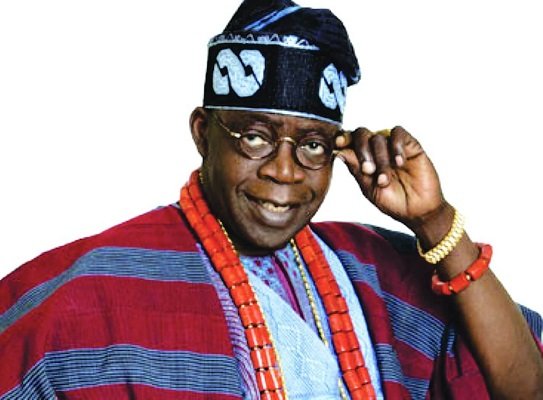
Dr. Aliyu U. Tilde
On 25 February 2023, I will pick this voter’s card, walk to the polling centre and cast my vote for His Excellency, Chief Ahmed Bola Tinubu, the Jagaban Borgu. This is a firm commitment given after a history of association, honour, demographic reality, constitutional requirement, weighing pros and cons as well as the personalities of the candidate and his running mate.
Association

In 2011, I supported the presidential candidature of Nuhu Ribadu. Together we travelled and met with the Jagaba many times in Lagos. Why I pitched my tent with Ribadu then, apart from sharing many things like age, world view, personality, background, geography, etc, was the firm belief that no matter how popular is a northern candidate, he needs to crossover to the South for additional votes and geographic spread that the constitution stipulates. For Buhari to run again that year, 2011, after two previous unsuccessful attempts, would be an exercise in futility as it indeed proved to be after failure of the last minute CPC/ACN merger attempt then. The results did not tie to warrant the second round as calculated in Buhari’s quarters. In 2015 the merger was done and victory was achieved. Elections are about law and numbers. No magic.
There will hardly be any southerner better fit for the position of a partner to the North than the Jagaba today. He is our Abiola, if not better. As some of my readers rightly said, he has patronized us many times: Atiku in 2007 under AC, Ribadu in ACN (2011) and Buhari in APC (2015). This is a consistent friend in need. Honour begets reciprocity.
Victimization
Furthermore, I am aware that the Muslim identity of the Jagaba has been used to disenfranchise him politically three times. In 2011, Buhari was not keen on the merger that required Pastor Bakare to withdraw for Tinubu because he Buhari was opposed to a Muslim-Muslim ticket after receiving over a decade of bashing from the southern press over shariah.
In 2015, Tinubu was bluntly and brutally told at a caucus meeting that he cannot deputize for Buhari because he was Muslim. He swallowed that and presented Osinbajo.
For the third time, for 2023, the some people want to crucify him for picking a Muslim as deputy against all odds. He believes that the Muslim identity of his running mate will earn him the winning vote and choosing a Northern Christian that will upset the Muslims will deny him our vote.
How honorable would I look if I would I turn my back against a friend in need who earlier provided platforms for my brothers and now believe in my capacity to rescue him? What if my son will contest the Presidency tomorrow and he goes to the Southwest to ask for support? And that day will come, when a northerner will again be in need of that alliance. Let us behave wisely. 2023 is not the end of Nigeria. We must guard the honour that we are known for.
Repeat Disaster
Southern partners of the north have been changing over the years but they remain constantly relevant. The North must not return to those days of serial losses by promoting a candidate acceptable only to it. This is the situation that the Atiku ticket presents today, regrettably.
Our brother, the Wazirin Adamawa, His Excellency, Alhaji Atiku Abubakar, has failed, against all advice, to patiently nurture the support of the South-south in 2011 after losing the ticket to the incumbent. Instead, he supported Buhari of the opposing CPC. Worse still, in 2015 he abandoned the the PDP, led 5 governors in rebellion against the southern President, claiming that it was the north’s turn, and decamped to APC to humiliate Jonathan out of power. Still after Bubari’s 8 years, in 2022, he blocked the emergence of Southeast and south-south candidates, claiming that rotation is a party matter.
Now he has gone to the south-south cup in hand and they paid him back in his own coins. This produced Peter Obi ticket and the G5; two blocks that will deny him the traditional PDP votes in the Southeast and South-south. Southwest is already effectively blocked against him by Tinubu.
The Waziri is effectively left with the North. Here, Benue, Plateau and Southern Kaduna are not likely to vote for “another Fulani”, as we heard them declare repeatedly. The votes of the Muslim North are themselves divided for and against him, not united as they were for Buhari. Borno and Yobe, will massively vote for APC. The ruling party even for kinship will also take Kwara and Kogi. Then incumbency will retain for APC the states of Kaduna, Niger, Zamfara, Gombe and possibly Katsina. Yes, Waziri will get Adamawa and Taraba and possibly Sokoto and Kebbi. Bauchi and Nasarawa are still uncertain for him. Kano belongs to Kwnkwaso, things being equal.
Then as Babachir and some anti-muslim irredentists are threatening northern Muslims of humiliation, a block vote, including Kano, in favour of the Muslim-Muslim ticket is possible. That will seal the fate of Atiku decisively.
Now, this calculus does not add up to an electoral win in any way. It is a recipe for the disasters of 2003, 2007 and 2011 to repeat themselves.
Existential Threat
Babachir’s insolence is an evil that must be disproved and defeated by both Muslims and Christians. Those who failed to earn the APC VP ticket should return and introspect on why they were not considered electorally viable enough to win it, not resort to blackmailing and threatening Muslims. That will only prove the evil that they are, which made it right for the Jagaba to reject them in the first place. Nobody can publicly say he will teach 120 million citizens a lesson and be allowed to succeed unless if those citizens are worse than donkeys. No lion can stand an army of 120 million donkeys. None.
Now Babachir’s insult has pushed even the reluctant Muslims to prove their electoral worth as they are increasingly rallying behind the Muslim-Muslim ticket. The majority well-meaning Christians should also do the same. Babachir is posing an existential threat to all northerners. If there is a Christian who will be fair to Muslims tomorrow, I and many Muslims will vote for him, as many of us did for Obasanjo and Jonathan between 1999 and 2011. But a genocidal psychopath of whatever religion does not deserve to be even a deputy local government chairman anywhere in this country. Let us leave him to grumble and crumble alone.
Same faith tickets are not new in Nigeria and they are presently practiced in all predominantly Christian States like Plateau, Benue, Edo and even in a number of Southwestern states where Muslims are predominant. Their Muslims have not threatened our national security for their selfish reasons as Babachir and his gang of rejects are doing up here. Tam.
Pros and Cons
Beyond the acquaintance, honour of reciprocity, averting past electoral disasters suffered by the North and the existential challenge of the Babachirs, the Tinubu/ Shettima ticket presents a lot of pros which my readers expressed when I asked their opinion on the my Facebook page last week. I share the views of those who are convinced of the Jagaba’s record performance in Lagos, arguably the best that the country has known of a governor since 1999, which, according to the readers, came from his courage, team work, modernity, foresight, talent hunting, etc.
For a person who also believes in efficiency, I cannot but be attracted to the Jagaba. Nigeria needs system upgrading and in some areas even disk reformatting. The Jagaba is the perfect person with the record to handle that squarely. No one better than him can pursue digital reform in commerce, taxation, education, governance, communications, etc. His pragmatism and penchant for modernity is needed to solve our security and other challenges. Who can project the success story of Lagos at the national level better than its original author—the Jagaba? None of my readers has denied him these qualities.
From among my readers who are opposed to the Tinubu Presidency are a number of cons which arise from five sources: the perceived limitations of age and the much touted fake stories of his sickness; the accusation of supporting OPC to kill Hausas in Lagos and their molestation while he was governor; the perception of tribalism, as the Igbo and Hausa too are accused of by others; his affiliation to APC and the President, seeing what the readers consider as the failure of the government in many areas in the past 8 years; and the predominantly Christian nature of his house.
Well on the first and last issues, the runner-up candidate, the Waziri, cannot completely acquit himself either. He too is old. Being over 70 he must have evidently slowed down and cannot disclaim having age associated illnesses. Above 60, one must have one or two. They both have slip tongues as President Buhari did in Germany and suffered issues of memory many times. Jos where both misnamed their parties—PDAPC and APDP—was no coincidence. Kwankwaso had it once in Kano too: NPCP. Mischief makers do not deserve our attention.
Even at 61, I have had many times that I could not recall names instantly. The brain just fails to retrieve the information from the disk as fast as when I was much younger. I had the privilege of meeting the Jagaba recently and was surprised that he negated those stories by holding me to a night conversation of one hour after a long day he had in Ebonyi. I watched him appear from his room, walked towards me straight, shook my hands and sat right beside me. There was no sign, then and not in his appearance at Chatham House and the BBC a week later, of a debilitating sickness as purported and he appears to get increasingly stronger. He is alert and he still argues his points as it better than the other candidates.
In any case, the strength of any leader is not in the class of his weight; otherwise, America would have made Tyson a President. It is in the people a leader rallies around him. To be fair to the Jagaba whose talent-hunting obsession is renowned, his Presidency as an institution will run be unhindered by his age. He cannot have our best, the Kashims, the Elrufai’s, the Ribadus, the Hadizas, the Modibbos, the Arabis, etc. and fail to perform. But if he will resort to family and friends instead of competence, then I concede that his age will become aggravating. He is not as old as Mahathir Mohammed or Joe Biden after all, not minding similar attacks from Trump during the 2020 campaigns which the latter has proven wrong.
All said about age, as Muslims, we must believe that “no soul shall die except by the will of God, a decree determined”, as He said in the Qur’an. Period. Furthermore, the constitution has foreseen that and made the necessary provisions, whether an elected President is living or dead.
The Christian component of the Waziri’s family cannot be denied and neither is he a better practicing Muslim than the Jagaba. None of them is a Sheikh or Imam, anyway. We are in the same boat.
The OPC related killings cannot be ascribed to the Jagaba just because he was the Governor of Lagos. We northerners in particular must understand that by now better than anyone. Unfortunately for the Jagaba, he was the Guinea Pig of insurrection in this dispensation. When the OPC came, we had no experience of Plateau, Boko Haram and Bandits. Is it justified for anyone now to equally accuse Governors Sheriff, Shettima, Zulum, Yari, Bello, El-rufa’i or even the President, who has all our war arsenal at his command, of being supporters or financiers or Boko Haram or Bandits? What will be our reaction—believe him or refute him? So if the late Sheikh Jafar were alive, he would have withdrawn his fatwa on the Jagaba for he would have known the hard way that Governors do not have the power of controlling high level violence. They can only cooperate with the Federal Government, which the Jagaba did and OPC was quelled though not before it left many innocents dead, as Boko Haram and bandits are doing for over a decade today.
All the major tribes accuse each other of tribalism. President Buhari is accused of preferring Hausa Muslims in appointments. The Hausa see the Yoruba as more tribal than them though. But the Jagaba has set a record to reckon here. More than any governor, he has elevated non-natives of Lagos including Hausas to levels of commissioners, helped many grow their businesses in Lagos including Dangote. Of course, as with Buhari in 1984 or Elrufai in FCT and now in Kaduna, anyone wanting to modernize cities has to encroach on the business spaces of the common man who is fond of erecting illegal structures. The Jagaba cannot modernize Lagos by magic. He has to touch such structures belonging to commoners too. But all said, I think his inclination for merit in administration will blunt his natural instinct of kinship, which we all share anyway. He may not give 3 ministries to a single Hausaman—as Buhari did to Fashola—but he will not suppress northern talent at all. His record denies that flatly.
Finally, there is nothing he can do regarding the failure of APC. He is undoubtedly its chieftain but not more. Do you want him to decamp to PDP on that count? The President and members of his cabinet should carry their cross—and so should governors, each in his own domain. The Jagaba has acknowledged the successes of the President and has promised to build on his good works. Where necessary, he will change course, surely. I am Bola Ahmed Tinubu, he told the BBC. Come again. Is the alternative—the PDP—in a better position than the APC when it comes to failure of administration?
So put generally, the pros of the Tinubu Presidency will by far outweigh its cons. Yet, there is another pillar of the ticket we must mention before we conclude this piece—the backup.
Kashim Shettima
In his choice of a running mate, the Jagaba has picked a very strategic one. Choosing Kashim earns him not only a reliable and loyal VP, but also a credible one. His Excellency, Alhaji Kashim Shettima, the former Governor of Borno State and a present senator, is not only highly competent but also carries a political aura that can shelter the entire North, coming from the prestigious Kanuri tribe and with the personal humility to listen, respect, engage and accommodate all. He is among our best. You can see him admirably reaching out to so many people and groups everyday, not taking anyone for granted. Yet, even as a future VP, former Governor and a Senator, he will go to the kettle and personally prepare coffea for his guest. That is humility personified.
The Jagaba did not look for a lackluster yes man of no firm roots. He went for a talent that is both loyal and strong enough to support the President, humble enough to follow him and honest enough to caution him. That is my friend and Kanuri master, Kashim. With the Jagaba as the President and him as the VP, I can find no safer shelter among the 2023 presidential camps.
Come with Me
These are my reasons for answering the call to support the Tinubu/Shettima ticket. And I call on every dispassionate mind to do so for the sake of unity and progress of our country. I am not only promising this cause my vote and that of my family, but I will also work hard to earn it many more, as much as my talent, body and resources can afford me in the next two months. Come with me.
May God be with us and guide us to what is best for our dear country as we vote for the next President on 25 February 2023.



Safiyanu Bichi
When Abia State Governor Alex Otti recently pulled off his shoe and proudly declared, “This is Aba Made,” the gesture went beyond the shoe itself. It offered a simple but powerful demonstration of what deliberate government patronage can do for local industry.
The message for Kano is equally important: where is Made-in-Kano in government procurement?
This is a question Kano can no longer afford to ignore.
For decades, Kano has been one of Nigeria’s important commercial and industrial centres. The state has a long tradition of manufacturing, textile production, leatherwork, furniture making, tailoring, metalwork, food processing and a wide range of small and medium-scale enterprises.
Yet having businesses and skilled artisans is not enough. Local industries need markets, and government procurement is one of the largest markets available in any economy.
The Kano State Government spends billions of naira annually on infrastructure, furniture, uniforms, clothing, construction materials, office equipment, vehicles, signage and other goods and services. The critical question is how much of this expenditure remains within Kano and how much leaves the state.
This is where a deliberate Kano Local Content Policy becomes necessary.
Every major state government project and Bill of Quantities (BOQ) should, where technically and economically feasible, contain a clearly defined local-content component. A target of 40 per cent Kano content could provide a practical starting point.
The idea is not to sacrifice quality or value for money. Rather, it is to ensure that qualified Kano-based businesses are given a fair opportunity to compete for government patronage.
If the government buys furniture from Kano manufacturers, contracts uniforms from local textile and garment producers, procures locally manufactured footwear and leather products, and sources other goods and services from competent businesses within the state, public expenditure can generate a multiplier effect across the local economy.
The money does not simply disappear after a government contract is executed. It circulates.
A furniture company pays its workers. Workers spend their earnings in local markets. Manufacturers purchase materials from other businesses. Transporters earn income. Artisans receive more orders. Businesses expand and potentially employ more people.
In other words, government procurement can become an instrument of economic development.
This is particularly important at a time when Kano needs to create more productive opportunities for its growing population, especially young people.
The state does not have to begin from scratch. Kano already possesses the human capital, entrepreneurial culture and business networks required to support a stronger local-content regime.
What is needed is deliberate policy, transparent implementation and consistent monitoring.
The government could begin by identifying categories of goods and services that can realistically be sourced within Kano. It could establish a database of qualified local manufacturers, contractors, artisans and suppliers, while maintaining clear standards for quality, pricing and delivery.
There should also be safeguards against turning local-content policy into another avenue for patronage. The objective should not be to favour politically connected businesses. It should be to create opportunities for genuine Kano-based enterprises that can meet established standards.
That distinction matters.
A successful local-content policy must combine local patronage with competition, quality, transparency and accountability.
The experience highlighted by Governor Otti offers Kano an opportunity for reflection. A simple act of wearing a locally made product can draw attention to an entire ecosystem of producers, workers and entrepreneurs behind that product.
Kano can create its own version of that story.
Imagine a government school furnished by Kano manufacturers, public institutions using locally produced furniture, uniforms supplied by Kano garment producers, official events showcasing locally produced textiles and leather goods, and government projects deliberately creating opportunities for competent local suppliers.
That would make “Made-in-Kano” more than a slogan.
It would make it part of government’s economic strategy.
Kano has the people. Kano has the skills. Kano has the entrepreneurs. Kano has the markets.
What is required is a deliberate decision to connect government spending with the productive capacity of the state.
Let Kano Government buy Made-in-Kano.
A 40 per cent Kano Local Content target should not be treated as another political promise. It should be the beginning of a measurable procurement policy that keeps more public money within the Kano economy, strengthens local businesses, supports jobs and helps rebuild the productive foundation of the state.
The real question is no longer whether Kano can produce.
The question is whether Kano is ready to buy what Kano produces.
Safiyanu Bichi is a member of the Kano Budget Working Group.
Dr Auwalu Halilu
Kano State has recorded the highest number of candidates nationwide who obtained at least five credits, including English Language and Mathematics, in the 2026 Senior School Certificate Examination (SSCE) conducted by the National Examinations Council (NECO).
The state recorded 74,413 candidates meeting the benchmark, up from 68,159 in 2025. The increase represents 6,254 additional successful candidates, or approximately 9.2 per cent year-on-year growth.
Kano’s 2026 figure placed it ahead of Lagos, which recorded 72,496 candidates, and Oyo, with 55,543 candidates.
The result marks the second consecutive year in which Kano recorded the largest absolute number of candidates meeting the five-credit benchmark, including English Language and Mathematics.
The development provides an important opportunity to reflect on the direction of education in the state. While the figures are significant, the relevant measure here is the absolute number of successful candidates. Kano has one of Nigeria’s largest school-age populations and examination cohorts, meaning that the scale of achievement involves tens of thousands of young people attaining a credential that can open pathways to tertiary education, technical and vocational education, employment and further training.
Educational outcomes are rarely produced by a single intervention. They typically emerge from the interaction of financing, teachers, infrastructure, learning materials, school leadership, assessment, family support, community participation and accountability.
Kano’s recent performance should therefore be viewed within the wider pattern of sustained investment and reform in the state’s education sector.
State of emergency on education
One of the defining decisions of the current administration was the declaration of a State of Emergency on Education in June 2024.
The declaration acknowledged structural challenges including inadequate classrooms, teacher shortages, overcrowding, poor learning environments, large numbers of out-of-school children and shortages of teaching and learning materials.
It subsequently created a platform for accelerated interventions in classroom construction and renovation, teacher recruitment, school furniture, textbooks and learning materials, school uniforms, examination support and broader system strengthening.
Its significance lies not only in individual projects but also in the signal that education has been placed at the centre of the state’s development priorities.
Kano’s budgetary pattern is another indicator of the priority attached to education.
In 2024, education accounted for approximately 29.95 per cent of the state budget. In 2025, the allocation rose to about N168.35 billion, representing roughly 31 per cent of the budget. For 2026, approximately N405.35 billion was allocated to education, again accounting for around 30 per cent of the state’s overall spending plan.
Consistency across successive budget cycles is important because education transformation requires predictable financing. Children remain in school for many years, teachers require continuous professional development, infrastructure needs maintenance and learning reforms take time to mature.
However, budget allocation should not be treated as the final measure of success. Sustainability requires transparent reporting on releases, actual expenditure, procurement, outputs and learning outcomes.
Kano should increasingly publish the full chain from budget commitment to classroom-level impact.
Examination support
For low-income families, examination fees can determine whether a young person completes secondary education with a recognised certificate.
The government’s examination sponsorship therefore represents both an education intervention and a social-protection measure.
In 2025, the state approved more than N3 billion for examination registration support covering approximately 141,000 students across qualifying examinations, including WAEC, NECO, NABTEB and NBAIS. Additional support was provided to eligible students in community and voluntary schools.
In 2026, the intervention expanded substantially, with approximately N4.4 billion committed to examination fees for more than 150,000 students.
By absorbing these costs for eligible learners, government reduces the risk that poverty becomes the final barrier between years of schooling and an examination certificate.
The policy is particularly important in a state with a very large population and significant numbers of economically vulnerable households. Examination sponsorship should therefore be viewed as an equity measure that widens participation and helps ensure that family income does not alone determine access to final certification.
Teachers remain central
Classrooms and learning materials are essential, but teachers remain the human engine of the education system.
Kano has pursued large-scale teacher recruitment and absorption as part of its reforms. In September 2025, the state announced the absorption of 4,315 former BESDA volunteer teachers into permanent and pensionable employment.
In July 2026, appointment letters were presented to 8,588 teachers, comprising 4,900 newly recruited and trained teachers and 3,688 BESDA teachers.
These numbers matter because teacher shortages affect class sizes, subject coverage, instructional time and learning outcomes.
Recruitment, however, must be matched by effective deployment. Rural communities, underserved local government areas, girls’ schools and schools with shortages in English, Mathematics, science and technology subjects require particular attention.
Continuous professional development is equally important. The state’s work around the revised competency-based basic education curriculum should be sustained so that teachers are equipped to develop critical thinking, creativity, digital literacy, entrepreneurship, civic values and problem-solving skills rather than relying mainly on rote learning.
Infrastructure and learning materials
The condition of a school shapes attendance, dignity, safety and concentration. Kano has therefore invested in classroom renovation, construction, furniture and other school-level inputs.
Reported interventions include more than N1.9 billion for the renovation of primary school classrooms and approximately N2.925 billion for additional classroom construction.
In 2024, the government also announced the distribution of 73,800 three-seat desks across the state’s 44 local government areas.
Large-scale provision of school uniforms has complemented these investments. Reports indicated the distribution of hundreds of thousands of uniforms, while a further N1.148 billion was approved in 2025 for free uniforms for Primary One pupils in the 2025/2026 academic session.
These may appear to be simple inputs, but a uniform, desk, textbook or safe classroom can be decisive for a child from a low-income household.
The next challenge is to ensure that infrastructure and materials are equitably distributed, properly maintained and linked to measurable improvements in attendance and learning.
Partnerships remain important
Kano’s education challenge is too large for state resources alone. Sustainable transformation requires effective collaboration with federal institutions, development partners, civil society, communities and the private sector.
UBEC-supported interventions have contributed classrooms and teacher support across the state, while programmes such as the UK-supported Partnership for Learning for All in Nigeria (PLANE), UNICEF, Plan International and Save the Children have supported education planning, foundational literacy and numeracy, teacher development, data generation and teaching and learning materials.
The most sustainable partnerships are those that strengthen government systems rather than create parallel structures.
As externally funded programmes close, Kano will need to institutionalise effective approaches, retain trained personnel, budget for successful interventions and preserve the data and monitoring systems developed through such partnerships.
Beyond the NECO table
The movement from 68,159 successful candidates in 2025 to 74,413 in 2026 represents 6,254 additional young people meeting the five-credit benchmark, including English Language and Mathematics.
These are not merely examination statistics. Each number represents a student, a family, teachers, school leaders and communities.
At Kano’s population scale, even modest improvements in system effectiveness can affect tens of thousands of young people.
Education policy should therefore be understood not only as social-sector spending, but also as human-capital investment, poverty reduction, economic development and social stability.
A young population becomes a demographic dividend only when young people acquire knowledge, skills, values and opportunities.
NECO performance is an important indicator, but examination success should not become the final objective of education.
Kano needs young people who can read with comprehension, use mathematics, think critically, communicate effectively, solve problems, use technology, work collaboratively, create enterprises and participate responsibly in society.
The education strategy should therefore connect basic and secondary education more deliberately with technical and vocational education, tertiary education, entrepreneurship, digital skills, innovation and labour-market opportunities.
The long-term test of education investment is not only how many candidates pass an examination, but how effectively graduates convert education into productive lives and social contribution.
What comes next
The second consecutive NECO achievement also raises questions about how the gains can be sustained and deepened.
Kano should develop a medium- and long-term financing framework that protects education investment while shifting attention from allocation alone to releases, expenditure efficiency and value for money.
The Ministry of Education should publish an annual education performance report by local government area covering enrolment, attendance, retention, transition, completion, learning outcomes, teachers, infrastructure, WASH, school safety, gender, disability inclusion, examinations and financing.
Government should also analyse NECO results beyond absolute numbers by tracking percentage pass rates, local government and school performance, subject-level outcomes, gender gaps, urban-rural differences and year-on-year trends.
Examination sponsorship for indigent learners should be protected, with transparent eligibility criteria and a digital beneficiary database to improve targeting, prevent duplication and track beneficiaries’ progression.
Teacher quality should receive as much attention as teacher numbers through institutionalised continuous professional development, mentoring, classroom observation and data-driven deployment, particularly in underserved rural communities and critical subjects.
There is also a need for incentives for rural teacher deployment, including accommodation, transportation support and career incentives that make difficult-to-reach postings more attractive and sustainable.
Learning should be measured before the final examination. Regular state-level assessments in literacy, numeracy, science and other competencies at key stages can help identify and address learning gaps early.
The state should also establish a preventive maintenance culture involving education authorities, school leadership, School-Based Management Committees and communities so that renovated facilities remain functional.
Action on out-of-school children should be intensified through ward- and household-level data to identify who is out of school, why they are out, where they live and what interventions are required.
Girls’ education should remain a priority through sustained scholarships, re-entry opportunities, safe learning environments, WASH facilities, female teacher deployment and community engagement.
School safety and resilience should also be strengthened through early-warning systems, safeguarding, emergency preparedness, community intelligence and collaboration with relevant security institutions.
Digital education should be expanded through improved access to devices, connectivity, digital learning resources and teacher digital competence, including in rural schools.
Credible technical and vocational education and training pathways should also be expanded to give secondary-school leavers stronger routes into technical education, apprenticeships, entrepreneurship and employable skills.
An education research and innovation hub could further connect government, universities, civil society and development partners to evaluate reforms, generate evidence, test innovations and translate research into policy.
Civil society, professional bodies, the media and platforms such as K-SAFE, CSACEFA, OGP and GEP should also be supported to monitor commitments, expenditure and outcomes constructively.
A story of shared responsibility
The emerging Kano education story is encouraging.
In 2025, 68,159 candidates obtained five credits and above, including English Language and Mathematics, in NECO. In 2026, the number rose to 74,413 — 6,254 additional successful young people in one year.
Behind the figures is a wider pattern of public investment: education receiving around 30 per cent of successive budgets; billions of naira committed to examination sponsorship; thousands of teachers recruited or absorbed; classrooms renovated and constructed; desks, uniforms and learning materials provided; and partnerships strengthened with federal institutions and development organisations.
These investments provide an enabling environment for improved participation and learning outcomes.
At the same time, the NECO result should not be attributed to any single intervention or individual. Students, teachers, parents, school leaders, communities, education agencies, federal institutions and development partners all contribute to educational outcomes.
The stronger lesson is that sustained political prioritisation and public investment can create conditions in which progress becomes possible.
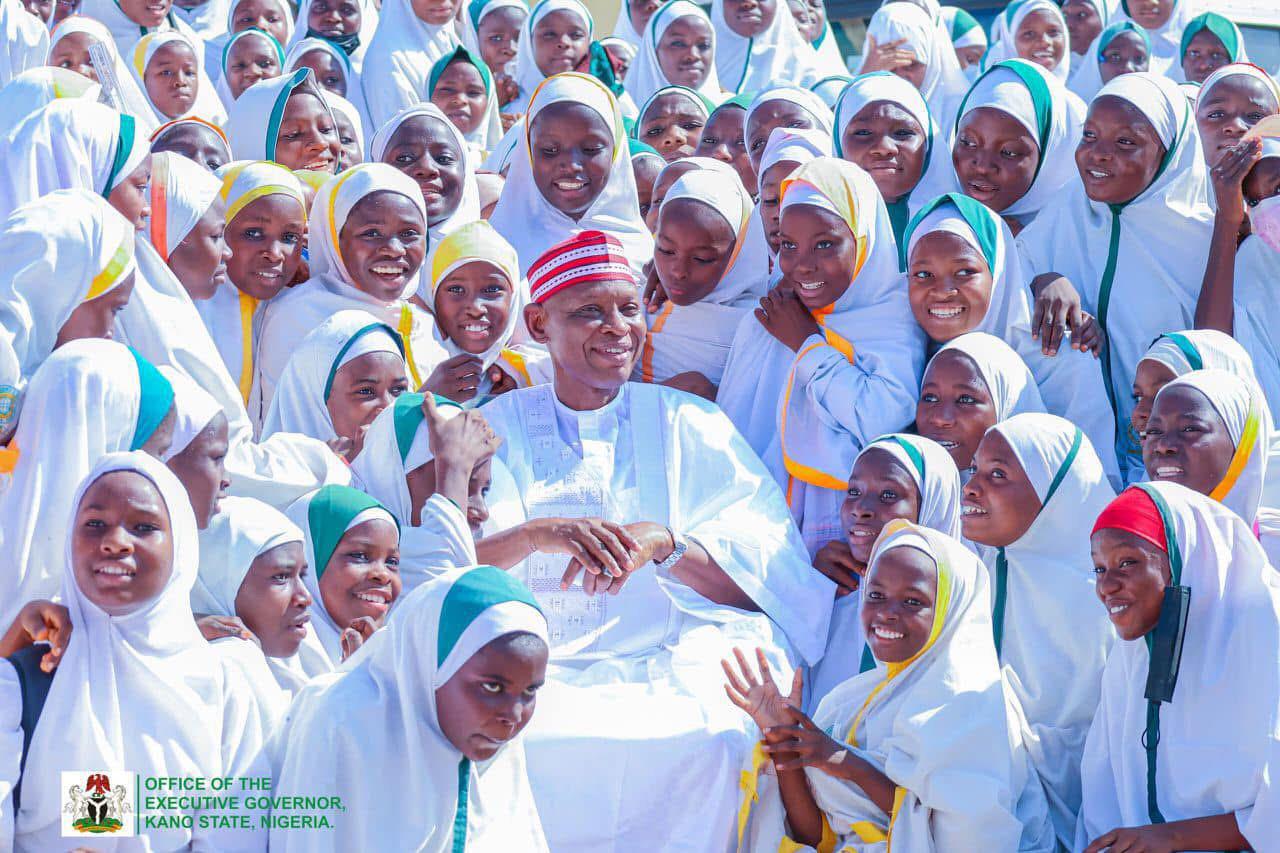
Governor Abba Kabir Yusuf and the Kano State Government deserve recognition for placing education prominently within the state’s development agenda, while teachers, parents, communities and, above all, the students deserve recognition for converting opportunity into achievement.
The second consecutive NECO achievement should therefore send two messages: celebration that progress is being recorded, and responsibility to sustain and deepen that progress.
Kano’s ambition must ultimately be larger than leading a national table in absolute candidate numbers.
It should be a state where every child enters school, every child learns, every learner is safe and included, every teacher is competent and supported, and every young person leaves education with the knowledge, character and skills needed to build a productive life.
Education transformation is not achieved in one budget year, one examination cycle or one administration. It is a generational project.
When a society consistently invests in its children, strengthens its teachers, supports its schools and holds its institutions accountable, it is not merely funding education — it is investing in its future.
Dr Auwalu Halilu, Co-Chair (CSO), Kano State Accountability Forum on Education (K-SAFE).

Lamara Garba
Kano is beginning to speak with a more united political voice. As the 2027 general elections draw closer, politicians who once occupied different political camps are increasingly converging under the banner of the All Progressives Congress (APC), creating a political landscape that is noticeably different from the familiar pattern of fierce rivalry and fragmentation.
The arrival of prominent politicians, former elected officials, party leaders and thousands of supporters from different political backgrounds is therefore more than a routine exercise in political realignment; it signals an emerging consensus around stability, continuity and the search for a broader political platform capable of carrying Kano into its next chapter.
The significance of this development extends beyond the movement of politicians from one party or political group to another. It represents an emerging political convergence and a growing search for unity, stability and a shared vision for Kano. The entry of prominent political figures on Saturday, 5th September 2026, including Senator Rufa’i Sani Hanga and former Governor Kabiru Ibrahim Gaya, alongside other experienced politicians and stakeholders, has added a new dimension to the political equation in the state. Their movement into the APC, together with the reported influx of thousands of new members, suggests that Kano’s political landscape is undergoing a significant realignment as the state prepares for another crucial electoral contest.
Politics is ultimately a game of confidence. Political platforms may change and alliances may evolve, but people are generally drawn towards where they see hope, opportunity and the prospect of a better future. That is why the growing political convergence around Governor Abba Kabir Yusuf and the APC deserves attention. The movement of politicians into the APC is undoubtedly significant, but the more important question is why the political landscape is changing.
One possible explanation lies in the growing public acceptance of Governor Yusuf and the direction of his administration, particularly its emphasis on people-centred policies, human capital development and programmes intended to improve the lives and prospects of citizens.
At the heart of this approach is a simple but profound philosophy: government must ultimately be about the people. The greatest political strength of any leader does not lie only in the number of influential personalities standing beside him, but in the confidence of ordinary citizens who believe that government understands their needs and aspirations. People do not live on political slogans; they live with the consequences of government policies. Parents worry about the education and future of their children, young people seek opportunities to develop their potential, families require access to essential services, while communities expect development that they can see and experience. It is in this relationship between government and the people that Governor Yusuf has sought to build the political foundation of his administration.
The emphasis on people-centred policies and human capital development reflects an understanding that the most valuable resource of Kano State is not merely what lies beneath its soil or the structures that stand above it, but its people. A government that invests in people is investing in the future; a society that educates its children is preparing tomorrow’s leaders; a government that creates opportunities for young people is building hope; and leadership that places human development at the centre of governance is laying a foundation that can outlive any political administration. This is why the question of continuity has become increasingly important as Kano moves towards 2027.
Development is not an event; it is a process. No meaningful policy achieves its full potential overnight. Educational investments require time, human capital programmes require consistency, while development plans need stability of leadership and the patience of the people. The argument for the continuity of Governor Yusuf’s administration must therefore be viewed beyond the narrow prism of political ambition. It is about allowing policies to mature, consolidating development programmes, deepening investments in the people and giving a government that has established a development direction the opportunity to take that journey further. This provides a philosophical foundation upon which the case for a second term can be made.
There is also a broader political significance in the growing convergence of leaders and supporters under the APC. For years, Kano politics has been characterised by intense competition, and political rivalry is not necessarily a bad thing because democracy thrives on choices, competing ideas and different visions for society. However, competition must never become a permanent source of division. The people of Kano deserve an election season that inspires confidence rather than fear, and they deserve political leaders who understand that the collective interest of the state is greater than personal disagreements. The growing unity therefore deserves to be encouraged because the coming together of political leaders with different histories and backgrounds provides an opportunity for Kano to reduce tension and strengthen democratic stability as 2027 approaches.
Kano is too politically important to remain trapped in endless divisions. Its population, commercial influence and political consciousness make it impossible to ignore, and whatever happens politically in Kano often carries consequences beyond its borders. The state therefore requires leadership capable of uniting rather than dividing, inspiring confidence rather than uncertainty, and placing development above partisan bitterness. Governor Yusuf’s growing political acceptance and the expanding support for the APC offer an opportunity to build such a broad political consensus, although political unity must always be accompanied by responsibility.
The arrival of influential politicians and thousands of new supporters should not create complacency. Rather, it should strengthen the determination of the government and the party to deliver more meaningful results. The true measure of political popularity is not the size of the crowd at a rally, but the confidence that remains in the hearts of the people after the political excitement has faded. That confidence must be earned continuously through performance, inclusive governance, accountability and policies that address the real needs of citizens. Governor Yusuf and the APC therefore have an opportunity to present the people of Kano with a compelling argument as 2027 approaches, but that argument should not rest merely on promises. It must rest on performance, policies and the visible impact of governance.
The people will ask what has been achieved, what has changed, what opportunities have been created and what remains to be done. They will ultimately decide whether the journey deserves to continue, and that is the essence of democracy. Yet the growing political convergence in Kano has already provided an important indication of the changing mood. The decision of prominent political figures and thousands of their supporters to come together under one broad political platform reflects a growing belief that unity and continuity may offer Kano a stronger path towards the future.
The coming together of these political forces has also helped to reduce some of the anxieties traditionally associated with election seasons. Where leaders are willing to dialogue, cooperate and place the larger interest of society above personal differences, the political atmosphere becomes more stable. For Governor Abba Kabir Yusuf, however, the greatest task remains governance. Political support can be won, but public confidence must be sustained; a leader must continue to listen to the people, a government must continue to respond to their needs, and development must continue to reach beyond political speeches into the daily lives of citizens.
The strongest argument for a second term will therefore be found not merely in the number of politicians who have joined the APC, but in the number of people whose lives have been touched by the policies and programmes of the administration. That is the true meaning of people-centred governance. As Kano moves towards 2027, the state appears to be entering a new political phase in which the convergence of experienced politicians, the growing support for the APC and the increasing confidence in Governor Yusuf have created a momentum that cannot easily be ignored. But the most important political force remains the people, and they will have the final word.
If the administration continues to deepen its people-centred policies, strengthen human capital development, sustain public confidence and promote political inclusion, then the argument for continuity will become even stronger. The politicians may have found a common umbrella, but the ultimate purpose of politics must remain the welfare of the people. If the emerging unity in Kano is sustained and translated into purposeful governance, then the road to 2027 may become more than a contest for political power; it may become a collective decision about the future Kano wants to build and the leadership it believes should continue that journey.
For Governor Abba Kabir Yusuf and the APC, unity has created an opportunity, but performance must justify it. The political realignment may be gathering momentum, but the enduring question will remain whether that momentum can be converted into better governance, greater opportunity and a more united Kano. In the final analysis, it is the people who will decide, and their verdict will be shaped not simply by political alliances, but by their lived experience of governance.
Lamara Garba, a veteran journalist, writes from Kano.

Kano Govt Orders Retired Civil Servants to Vacate Offices, Hand Over Government Property

Nigeria’s Data Demand Surges 47% as Stakeholders Seek Fresh Investment in Digital Infrastructure

Kano must make government procurement work for made-in-Kano

Kano Settles N32bn Pension, Gratuity Liabilities, Says Gov Yusuf

Family Planning: Experts Urge Nigeria to Remove Barriers to Contraceptive Access

Kano leads again as NECO successes rise to 74,413
Kano tops states in 2026 NECO results, Governor Yusuf hails students

INEC holds campus debate on elections, democracy at BUK

Kano Govt Suspends Durbar Processions, Horse Riding in Metropolis

