
News
Corruption allegations: 107 groups protest in Lagos, urges Tinubu to cleanse EFCC


A conglomeration of about 107 Anti-Corruption crusade groups led by Crime and Corruption Monitors, has impressed on the incoming administration of President-elect, Bola Ahmed Tinubu to ensure the Economic and Financial Crimes Commission (EFCC) is cleaned of entrenched corrupt leadership symbolized by its current Chairman Abdulrasheed Bawa.
KANO FOCUS reports that this follows a protest by the Anti-Corruption crusade Conglomerate, which was terminated at the Youths Sports Complex, Lagos.

The groups pointed out that EFCC is an important government agency in Nigeria, established primarily to rid the society of corruption and not conceived as an agency for settling scores for political godfathers.
The convener of the conglomerate, Idowu Bello who read the statement in Lagos warned that “If a government agency expected to fight crime is found going about its business in a manner that mimics witch-hunt and selective justice while also being unable to deal with the corruption going on within its own workforce, the nation is headed for real time crises, conflict of confidence.”
He noted that despite government’s claim of making the fight against corruption and related practices a top priority, EFCC, the agency charged with the execution of the war, is in questions over mounting allegations of monumental corrupt practices.
“Allegations that about 80 per cent of cases under EFCC investigation are not taken to court. EFCC offices now literally serve as courtrooms.
“Last week, Zamfara state governor, Bello Matawalle, alleged that Bawa demanded the sum of $2million from him as bribe to stop a purported probe against him.
“Even before Abdulrasheed Bawa was presented as substantive EFCC Chairman, he has been arrested and detained by the anti-graft agency in 2019 for selling at least 244 trucks worth between N20-30 million each to his proxies at N100,000 per unit.
“He is also accused of recently expanding a large amount of money to the tune of $300,000 for hotels and other activities, which is far and beyond his income as civil servant, during a visit to Mecca with his family on a lesser Hajj.
“There are also allegations of connivance with the Attorney General of the Federation, Abubakar Malami in auctioning of sea vessels holding crude oil seized by the Federal Government, violating Section 31(2) and (4) of the EFCC Act 2004.”
According to him, Malami and Bawa also allegedly authorized the sale of vessels by companies under EFCC prosecution for similar offence of illegal bunkering.
“Bawa and Malami were fingered in the discontinuation of a N25billion criminal charge against Senator Danjuma Goje without any justification after over seven years of diligent investigation and prosecution.
“Equally, the incident of Abel Isah, an EFCC cadet in Sokoto who was allegedly beaten to death by superior officers for refusing to sign off on incomplete exhibits is still fresh in the minds of Nigerians,” the statement read.
The Crusaders however, demanded the immediate sack of Bawa as EFCC Chairman and to be subjected to wholistic probe the way his predecessor Ibrahim Magu was treated.
“Like every other agency of government everywhere, there are global standards of practice for officials who had been accused of gross misconduct to step aside while investigations were conducted to ascertain the veracity of the allegations.
“As pointed out earlier several eminent eminent Nigerians have claimed to possess evidence of corrupt practices, breach of public trust and abuse of office against the EFCC and its Chairman, Abdulrasheed Bawa.
“It is based on the above observations that the Crime and Corruption Monitors and 107 Anti Corruption Crusade Groups deem it necessary to demand that Abdulrasheed Bawa excuses himself from office and surrender for investigation.
“We demand that if Bawa remains adamant, he be forced out and subjected to comprehensive probe the way his predecessor Ibrahim Magu was made to do.
“Since it is obvious by now that the Buhari administration which brought Abdulrasheed Bawa is not disposed to initiating action, we call on the incoming President Bola Ahmed Tinubu to make it first priority to cleanse the EFCC of corrupt leaders.
“Corruption is one of the most serious social and security challenges facing Nigeria today which is the more reason why Tinubu should see it as an existential matter that needs to be addressed and tackled robustly and defeated once for all.
“No nation can aspire to greatness or seek to remain secure and safe when corruption and other corrupt practices are allowed to find their way into all its vital institutions including the agency saddled with the responsibility of fighting it.
They added that, for this reason, corruption must be confronted with the entire will and resolve of the incoming administration beginning with thorough cleansing of the EFCC by first getting Bawa out and subjecting him to probe before extending action to cover other organs and tiers of government in Nigeria without exception.
“Failure to do so will indubitably mean that every effort made the anti-graft agency is headed by suspicious leaders will defeat all development endeavours of the incoming administration and render its task the more difficult and futile.
“We remind the President-elect that National challenges such as the corruption we are faced with should not be treated with levity and condescension. Neither should action be limited to targeted individuals or tiers of government. On the contrary, corruption is a cross-national issue that affect every one of us regardless of where we live or come from,” the statement read.

Nasiru Yusuf Ibrahim
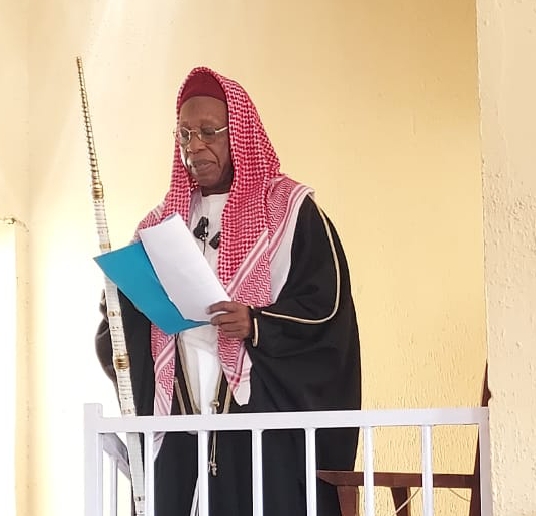
Dr Goni Faruk Umar has urged Muslims to embrace Taqwa in their daily lives, describing it as a foundation of Islam and a key to righteous conduct and success in this world and the hereafter.
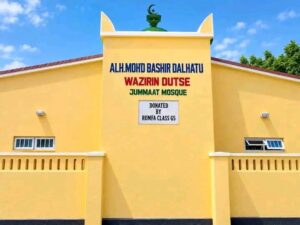
KANO FOCUS reports that the Islamic scholar made the call while delivering a Juma’a sermon at the New Juma’a Mosque, Rumfa College, Kano.
In the sermon, Dr Goni Faruk Umar explained the meaning of Taqwa using classical Islamic scholarship, including an account involving Umar ibn al-Khattab and the companion Ubayy ibn Ka’b to illustrate the concept.
According to the account cited in the sermon, Sayyadina Ubayy once asked Khalifa Umar bin Khattab whether he had ever walked along a thorny path. When Khalifa Umar bin Khattab answered in the affirmative, Sayyadina Ubayy asked how he navigated it. Khalifa Umar bin Khattab replied that he gathered his clothes and proceeded cautiously to avoid being pricked.
Sayyadina Ubayy then explained that this was the essence of Taqwa: being constantly mindful of one’s actions and carefully avoiding what displeases Allah.
Dr Goni Faruk Umar said Taqwa should not be limited to acts of worship but should also guide Muslims’ conduct in contemporary society, particularly in their use of digital platforms and social media, control of the tongue, and relationships within the family.
He urged worshippers to exercise restraint in their speech, act responsibly online and uphold their obligations to family members in accordance with Islamic teachings.
The cleric also highlighted the spiritual and worldly benefits of Taqwa, including relief from hardship, ease in personal affairs, forgiveness of sins and increased rewards in the hereafter.
Quoting verses from the Qur’an, he cited Allah’s promise in Surah At-Talaq, verses 2 and 3, that whoever fears Him will be granted a way out of difficulties and provided for from sources they could not have anticipated.
He also referred to Qur’an 65:4–5, which promises ease in affairs, the removal of sins and the multiplication of rewards for those who maintain Taqwa.
The scholar reminded Muslims that worldly life is temporary and that the hereafter is their permanent destination. He therefore urged them to regard Taqwa as the best provision for the journey beyond this life.
Citing Qur’an 2:197, he emphasised that the best provision for the hereafter is Taqwa, urging believers to remain conscious of their responsibilities to Allah.
The sermon also featured prayers and salutations upon Prophet Muhammad (peace be upon him), his family and companions, in accordance with the Qur’anic instruction in Surah Al-Ahzab, verse 56.
Dr Goni Faruk Umar concluded by encouraging Muslims to remain steadfast in faith, follow the guidance of the Prophet and make righteousness a guiding principle in their daily lives.
Nasiru Yusuf Ibrahim
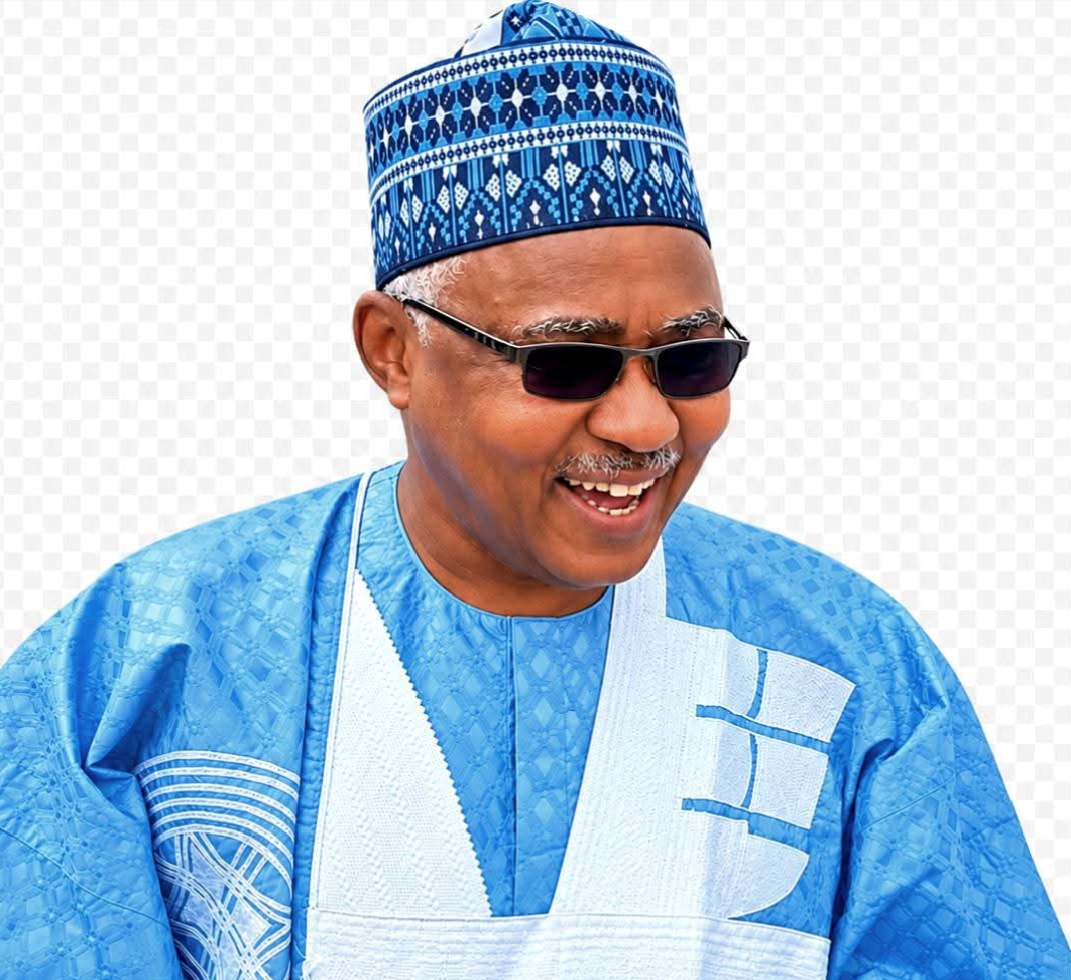
Political allies and loyalists of former Managing Director of the Nigerian Ports Authority (NPA), Arc Aminu Dabo, have begun resigning from the All Progressives Congress (APC) in Kano State following his withdrawal from the ruling party.
KANO FOCUS reports that the supporters, operating under the political group Dabo Alheri Ne, reportedly include members across Kano State’s 44 local government areas.
Barely two days after Dabo announced his resignation from the APC, a prominent stakeholder of the group, Garba Zakiru Dambatta, said members had welcomed the decision and were showing solidarity by submitting their resignation letters to their respective ward party chairmen.
Dambatta, a former APC chairman in Dambatta Local Government Area, said the group’s members were disappointed with what they described as the prolonged marginalisation of Mr Dabo and his supporters within the party.
According to him, despite Mr Dabo’s contributions to the APC and efforts to strengthen the party and manage disagreements among its members, some key stakeholders had continued to sideline him and his loyalists in party activities.
Dambatta reaffirmed the group’s commitment to standing by Mr Dabo’s political decisions and supporting his future political journey.
He also urged the former NPA managing director not to succumb to political pressure or reverse his decision to leave the party.
“This step you have taken, we have the conviction that it is the beginning of a new chapter of goodness in your life,” Dambatta said.
Among the prominent members of the group identified as supporting Mr Dabo’s decision are Abba Rabee’u, a former Senior Special Assistant on Political Awareness; Almustapha Jilani Danmalam, a former Senior Special Assistant on Education; Jamilu Abdullahi Zangon-Mata, a former Senior Special Assistant on Entrepreneurship; and Fahd A. Dabo, a former Special Assistant on Youth Mobilisation.
The individuals reportedly served during the second term of former Kano State Governor Abdullahi Umar Ganduje.
The group also said several other party loyalists and supporters were backing Dabo following his resignation.
However, the statement did not provide the number of members who had formally resigned from the APC or indicate whether the party leadership had responded to the development.
Nasiru Yusuf Ibrahim
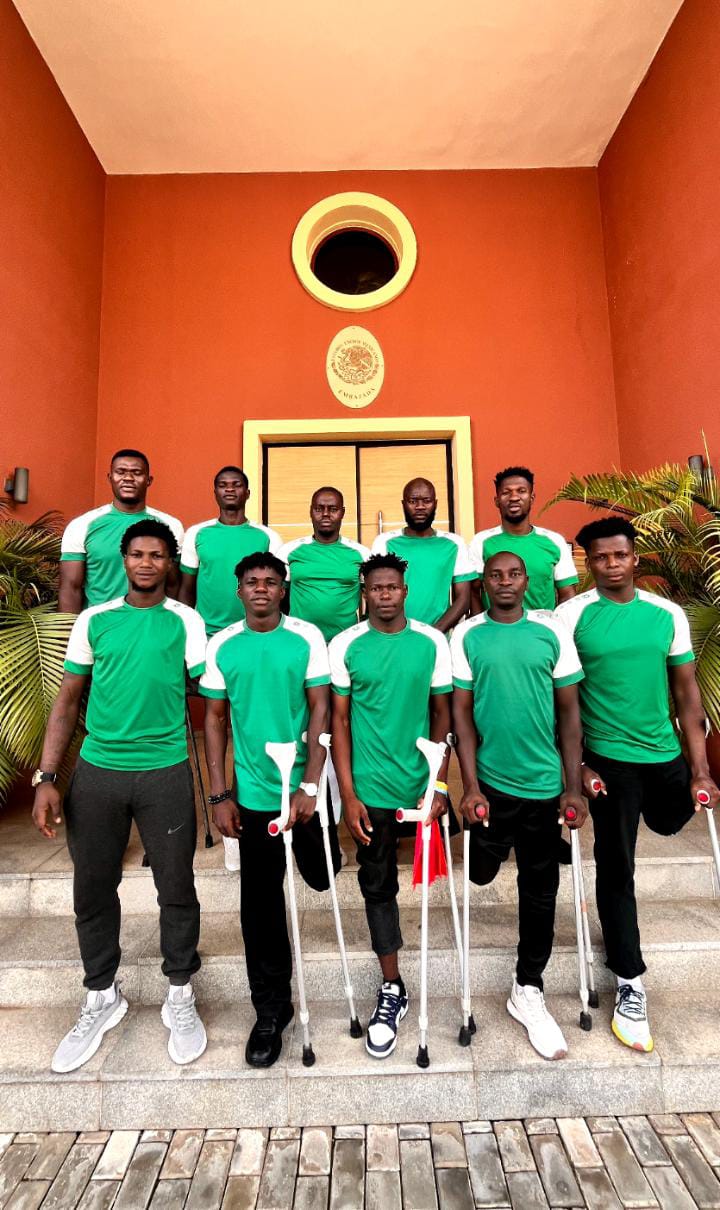
Five players of Kano Pillars Amputee Football Club have been invited to the national camp of Nigeria’s Special Super Eagles ahead of the 2026 Amputee Football World Cup in Mexico.
KANO FOCUS reports that invited players are Isah Yusuf, Abba Musa, Habu Friday, Emanuel Betel and Usman Ahmed. They are currently in Abuja with the national team as preparations intensify for the global tournament.
The Team Manager of Kano Pillars Amputee Football Team, Jamilu Uba Adamu, disclosed this in an interview with Ashiru Rabiu Gidan Tudu, Information Officer of the Kano State Sports Commission.
Adamu described the invitation as recognition of the players’ dedication, discipline and outstanding performances.
He expressed confidence that the players would represent Kano State and Nigeria with honour at the championship.
According to him, the call-up also demonstrates Kano Pillars’ commitment to nurturing talented amputee footballers and contributing to the development of the sport in Nigeria.
The 2026 Amputee Football World Cup is scheduled to take place from November 13 to 22 in San Juan de los Lagos, Mexico. A total of 24 countries, including seven African nations, are expected to participate.
The Executive Chairman of the Kano State Sports Commission, Muhammad Tukur Babangida, congratulated the five players on their invitation, describing it as well deserved.
Babangida expressed confidence that they would justify the confidence reposed in them by the national team selectors.
He assured the players of the commission’s continued support and urged them to remain focused, disciplined and committed to making Kano State and Nigeria proud on the international stage.

Dr Goni Faruk Umar calls on muslims to embrace taqwa in daily life

Dabo’s resignation triggers wave of defections from APC in Kano

Five Kano Pillars Amputee Players Invited to Special Eagles Camp Ahead of World Cup

BUK Professor advocates microfinance to tackle food insecurity, poverty

General Elections 2027: Abba Kabir Yusuf traverses the path to victory

Kano leads again as NECO successes rise to 74,413
Kano tops states in 2026 NECO results, Governor Yusuf hails students

Kano Govt Suspends Durbar Processions, Horse Riding in Metropolis

ACF begins Dangote Refinery IPO sensitisation campaign in Kano

