
Headlines
Hajj 2023: Kano begins distribution of 32kg luggage, N65m Sallah gift to pilgrims in Makkah


Nasiru Yusuf Ibrahim
Kano State Pilgrims Welfare Board has commenced the distribution of 32 Kg main luggage and N65m Sallah gift to its Pilgrims.
KANO FOCUS reports that the exercise which started on Wednesday is being supervised by the director operations in the board Alhaji Kabiru Adamu Panda.
Speaking during the exercise Panda spelt out the modalities and guidelines for the distribution of the bags, adding that each pilgrim will get his bag before the commencement of the journey back to Nigeria.

Panda urged all Pilgrims to be law abiding and not to exceed the forty kilograms as directed by the National Hajj Commission (NAHCON).
Panda explained that 8kg hand luggage was given to each pilgrim before leaving Kano and another 32kg will be given to them through their local government Centre officers (COs).
The Director further stated that any pilgrim that packed more than the required kilograms may end up losing some of the goods as the Airlines will not condone excesses in the bags.
Panda warned against putting Zam Zam water and other contraband in the main luggage and assured all Pilgrims that they will collect their 5 litters on arrival in Kano.
Commenting on N65m Sallah gift to pilgrims, Panda thanked Governor Abba Kabir Yusuf for the gesture adding that each pilgrim will receive his 50 Saudi Riyal while collecting the 32kg luggage.
Some of the beneficiaries Alhaji Ilyasu Muhammad (Kura) and Hajiya Zainab Muhammad (Dala) thanked Governor Abba Kabir Yusuf for the gesture and prayed to Almighty Allah to guide him in steering the affairs of the State.

Headlines
Abdulaziz unveils project inspection initiative, trains APC social media inflluencers at Arewa media summit
Nasiru Yusuf Ibrahim
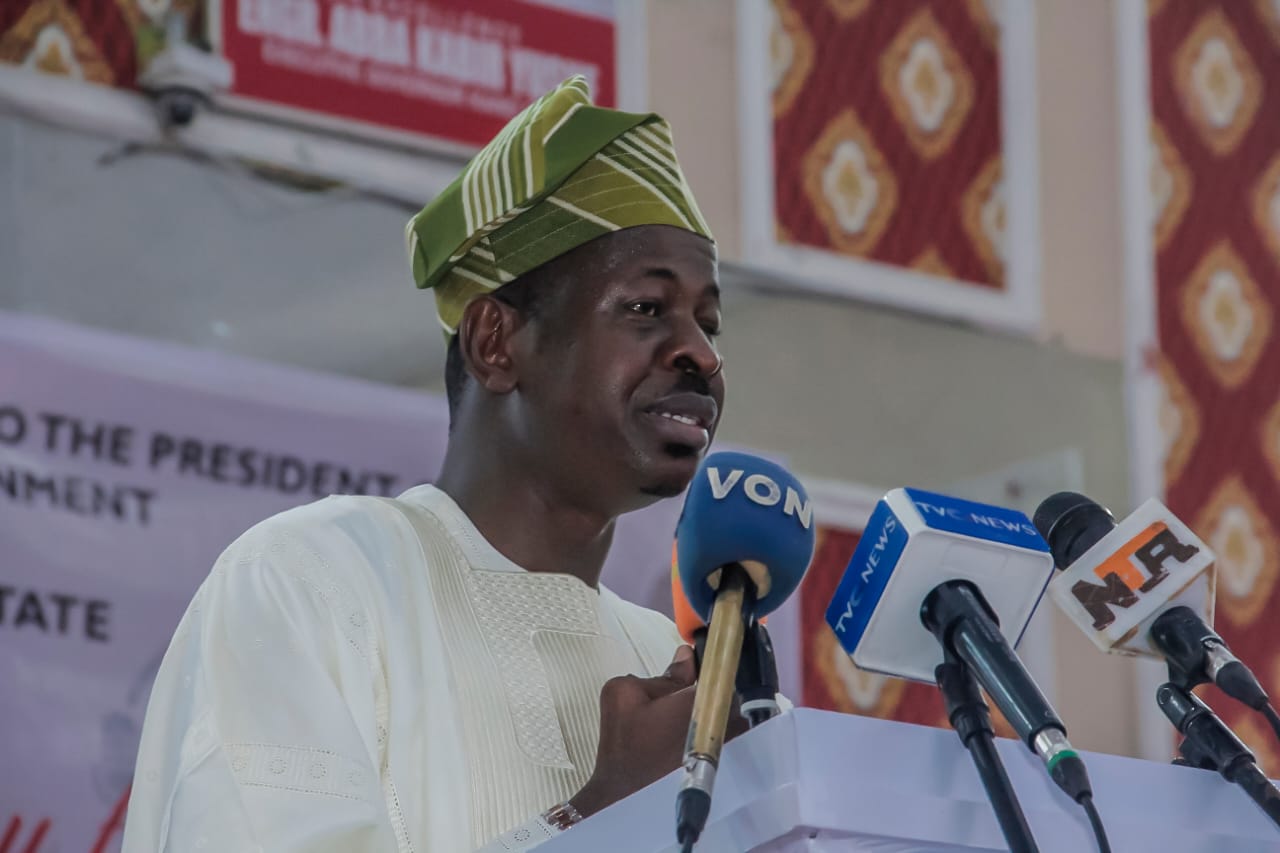
The Senior Special Assistant to President Bola Ahmed Tinubu on Media and Public Enlightenment, Abdulaziz Abdulaziz, has unveiled a regional project inspection initiative aimed at showcasing key development projects in Northern Nigeria, while urging journalists and social media influencers to uphold ethical communication and combat misinformation.
Speaking on Monday at the maiden Arewa Media Summit in Kano, organised by his office, Abdulaziz said the gathering was conceived to strengthen dialogue between government, citizens and the media through accountability, responsibility and ethical communication.
He said effective governance depends on transparency, responsible civic engagement and a professional media that serves as a bridge between leaders and the people through factual and balanced reporting.
The presidential aide also cautioned social media influencers, who command large online audiences, to verify information before publication and avoid content capable of creating division, particularly as the country approaches the 2027 general elections.
According to him, more than 100 All Progressives Congress (APC) social media communicators were trained ahead of the summit to enhance their capacity to communicate government policies, programmes and achievements effectively.
Abdulaziz also unveiled the Gani Ya Kori initiative, a regional project inspection tour designed to spotlight landmark projects executed by President Bola Ahmed Tinubu and Northern state governors that have received limited public attention.
“The initiative will help ensure that citizens are adequately informed about development projects and government interventions across the region,” he said.
The summit also featured a keynote address by the Minister of Information and National Reorientation, Mohammed Idris, who urged journalists and social media influencers to deny bandits and terrorists the publicity they seek.
“The media has an indispensable role in denying violent extremists the publicity they seek while promoting unity, resilience and hope,” the minister said.
He stressed that democracy flourishes when government remains transparent, citizens participate responsibly and the media performs its constitutional role with professionalism, fairness and integrity.
Idris observed that while the digital revolution has transformed communication by making every smartphone a broadcasting platform, it has also accelerated the spread of fake news and disinformation capable of undermining national unity and public confidence.
Declaring the summit open, Kano State Governor Abba Kabir Yusuf called on other states to emulate Kano’s Special Reporters Initiative, through which more than 150 young people have been deployed to ministries, departments, agencies and the state’s 44 local government areas to strengthen government communication and public enlightenment.
KANO FOCUS reports that the summit attracted journalists, broadcasters, filmmakers, digital content creators, academics, policymakers and communication professionals from across Northern Nigeria to deliberate on the theme, “Government, Citizens: Accountability, Responsibility and Ethical Media Practice.”
Nasiru Yusuf Ibrahim
The Kano State Government says it has executed 1,508 development projects worth more than N928 billion across the state’s 44 local government areas since Governor Abba Kabir Yusuf assumed office, with about 80 per cent of constituency projects awarded between 2023 and 2025 already completed.
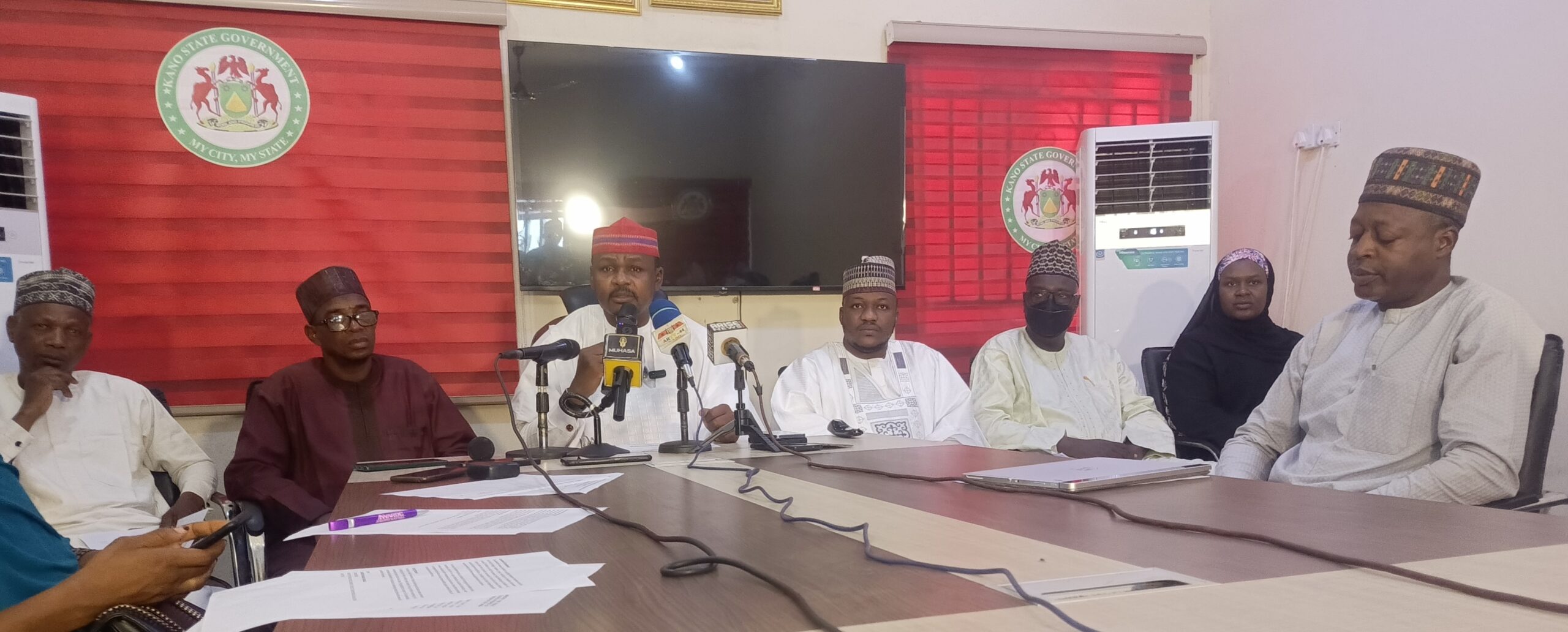
KANO FOCUS reports that the Commissioner for Public Procurement, Projects Monitoring and Evaluation, Comrade Nura Iro Ma’aji Sumaila, disclosed this during an international press briefing on the administration’s infrastructure development programme.
According to Comrade Sumaila, the projects cover critical sectors including roads, urban renewal, education, healthcare, security and other social infrastructure.
He said 799 of the projects have been completed, while 709 are at various stages of execution. He added that the state is also implementing 619 constituency projects through members of the Kano State House of Assembly.
The commissioner noted that about 80 per cent of the constituency projects have been completed. However, he said some projects remain unfinished because of rising construction costs caused by inflation.
He said the government has submitted a request to Governor Abba Kabir Yusuf for an upward review of contract sums to enable contractors complete the affected projects.
Breakdown of projects
Comrade Sumaila said the administration spent over N169 billion on urban renewal projects, including road rehabilitation, drainage construction and other metropolitan infrastructure.
He said another N118 billion was committed to constructing five-kilometre roads in 38 local government areas to improve connectivity across the state.
According to him, the government also awarded contracts worth over N6.8 billion for the construction of Kano State Neighbourhood Watch security divisions in 36 local government areas.
He added that rural infrastructure projects covering education, healthcare and other social interventions across the 44 local government areas account for contracts valued at more than N397 billion, while other ongoing projects have a combined value of about N255 billion.
Commitment to transparency
The commissioner said the Ministry of Public Procurement, Projects Monitoring and Evaluation would continue to ensure compliance with due process and technical standards in the execution of government projects.
He said the ministry’s mandate includes monitoring projects to ensure value for money and prudent utilisation of public resources.
According to him, the administration’s investments in infrastructure are intended to improve mobility, strengthen security, expand access to education and healthcare, improve water supply and stimulate economic growth across the state.
Nasiru Yusuf Ibrahim
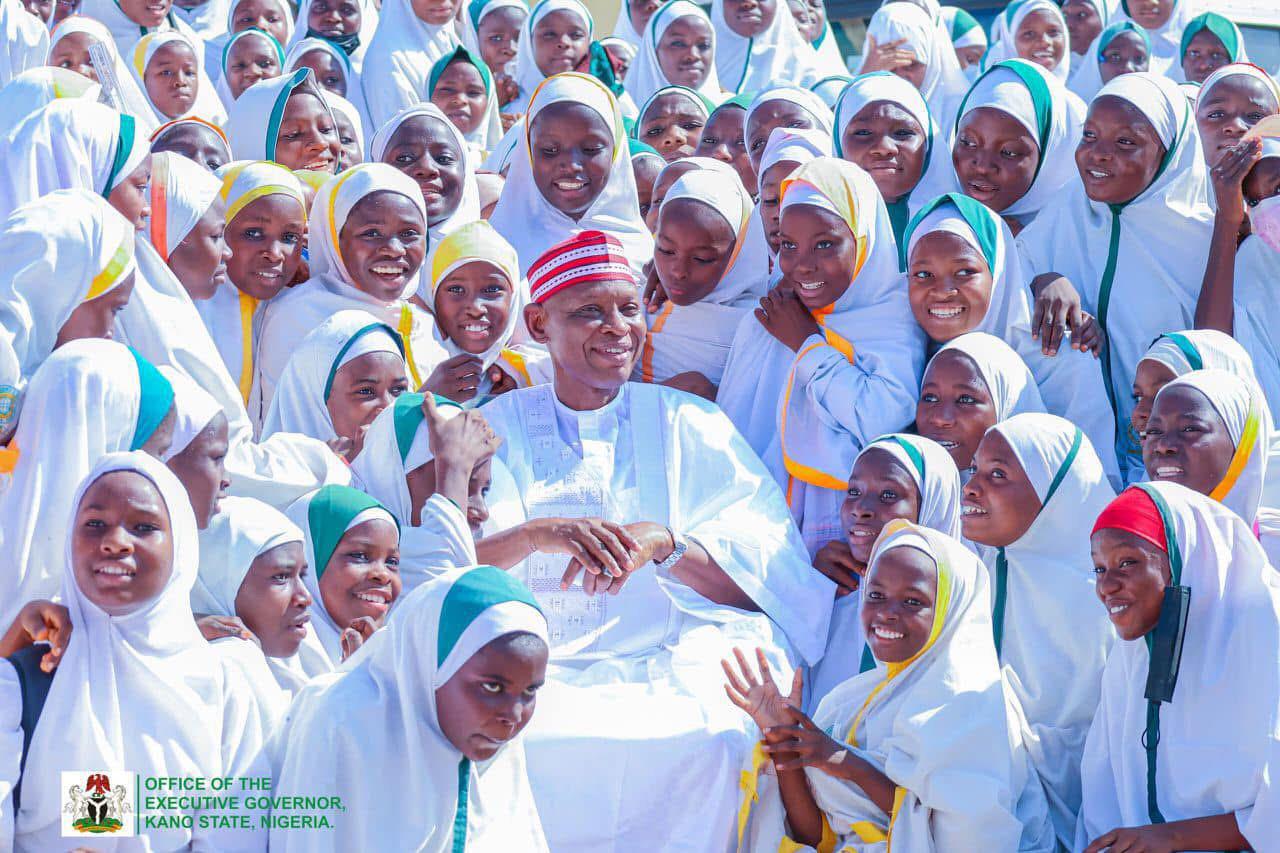
Kano State has emerged as the highest-ranked sub-national government in the Economic Community of West African States (ECOWAS) for education spending, according to the latest Sub-National Education Spending Index developed by the University of Paris.
KANO FOCUS reports that the ranking places Kano State first among 209 first-level sub-national governments across 15 ECOWAS member countries, underscoring the state’s growing reputation for prioritising investment in education.
According to the published index, Kano topped the rankings with an overall S-WAESI score of 87.21, outperforming other leading regions, including Dakar and Saint-Louis in Senegal. Lagos State was the second Nigerian state on the list, ranking 16th overall.
The assessment evaluated states and regions using the S-WAESI (Sub-National Weighted Aggregate Education Spending Index) methodology, which measures government commitment to education through indicators such as actual education expenditure, spending per student, budget execution, education priority, transparency and evidence-based reporting.
The methodology assigns 35 points to actual education spending, 25 points to spending per student, 20 points to budget execution, 10 points to education priority and 10 points to transparency.
The report indicated that Kano excelled largely due to its strong actual education spending and budget execution, making it the best-performing sub-national government in the region.
The ranking covered states, regions, districts and municipalities across Nigeria, Senegal, Ghana, Côte d’Ivoire, Sierra Leone, Liberia, Benin, Burkina Faso, Mali, Niger, Togo, Guinea, Guinea-Bissau and Cabo Verde.
Kano State Accountability Forum on Education (K-SAFE) said the recognition reflects Kano State Government’s sustained investment in expanding access to education, improving school infrastructure and strengthening educational planning and budget implementation.
KANO FOCUS reports that the achievement is expected to further boost the state’s profile as a leader in education reform within West Africa and provide additional momentum for ongoing efforts to improve learning outcomes across the state.
The latest ranking comes amid renewed attention on education financing across ECOWAS, with experts increasingly emphasising transparent budgeting, efficient resource utilisation and sustained public investment as critical drivers of quality education.

Gov. Yusuf appoints Dr. Aminu Magashi co-chair of Kano anti-drug abuse task force

Gov. Yusuf tasks media on truthful reporting, patriotism

Kano launches free 48-hour emergency treatment scheme for accident victims, other critical cases

K-SAFE hails Gov. Yusuf as Kano tops ECOWAS education spending ranking

Abdulaziz unveils project inspection initiative, trains APC social media inflluencers at Arewa media summit
Kano ranks best in ECOWAS on education spending index

Kano recruits over 16,000 teachers, begins 10-year education reform plan
Kano emerges top beneficiary as World Bank rewards states with $27m for reforms

Kano delegation participates in international labour conference in Geneva

