
Headlines
Don’t set Nigeria on fire over Kano Gov’ship – S’west Hausa leaders


Nasiru Yusuf Ibrahim
Hausa Traditional Rulers in South West on Saturday warned political leaders not to set Nigeria ablaze over the Kano State governorship poll.
KANO FOCUS reports that there is a palpable tension in Kano ahead of the Supreme Court judgment on the disputed election.
The two major political parties in the state, the New Nigeria People’s Party (NNPP) and the All Progressives Congress (APC), last week signed another peace accord to maintain decorum ahead of the last leg of the legal battle challenging Governor Abba Yusuf’s election.
Last month, the Court of Appeal sitting in Abuja upheld the sack of Governor Yusuf of the NNPP and declared Nasiru Yusuf Gawuna, the APC governorship candidate as the duly elected governor of the state.

In a unanimous judgment of a three-member panel delivered by Justice Moore Adumein, the appellate court dismissed the appeal filed by the Kano Governor against the judgment of the State Governorship Election Petition Tribunal, which declared Gawuna, as the winner of the state’s governorship election held on March 18.
But Hausa leaders in the South West met in Abeokuta, Ogun State, on Saturday, where they expressed concerns on the building tension in Kano State.
The leaders under the aegis of South West Hausa Traditional Rulers Association of Nigeria described the development in Kano as “frightening.”
Reading the position of the traditional rulers, the Sarki of Sagamu, Alhaji Inuwa Garba, called on Nigerian leaders to “use their knowledge and political wisdom in dealing with the Kano problem so as to avoid violence and mayhem.”
According to him, any crisis that arises from Kano may spread across Nigeria due to its centrality and political influence in the North and Nigeria; the relative dominance of Kano State economically in the Northern Region and Nigeria as a whole; the multi-ethnicity of Kano residence especially the Southwest people, whom are mostly traders and workers, and the general political awareness of the people and social influence.
Garba said, “As elders and traditional leaders, we are particularly worried that our South West hardworking people might be caught up in the centre of the impasse since they are in possession of various assets like houses, shops and other businesses with immense investment.
“As a matter of fact, we are appealing to our esteemed leaders to use their knowledge and political wisdom in dealing with the Kano problem so as to avoid violence and mayhem.
“Not only that, the Kano problem might easily spread to other parts of the country as it happened during the ill-fated President Shagari era where the problem emanates from truncating democracy in the South West.
“As such, with due regard to saving the people, their lives and property, we hope the elders and leaders will apply the wisdom to save the situation.”
He said the leaders were out to ensure peace and harmony reign in the country.
Source: Daily Trust

Nasiru Yusuf Ibrahim
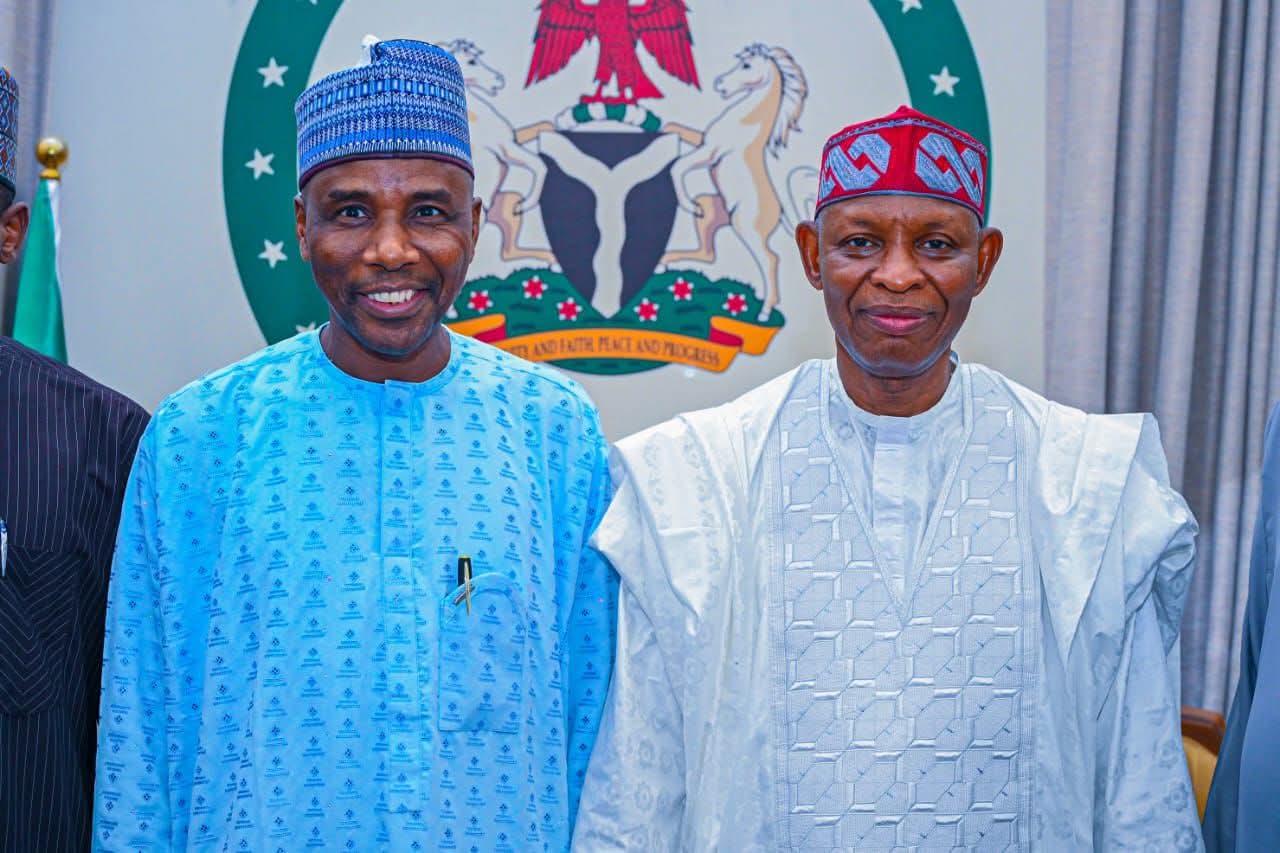
Kano State Commissioner for Education, Gwani (Dr.) Ali Haruna Abubakar Makoda, has been appointed Director-General for Kano North of the All Progressives Congress (APC) Presidential and Governorship Campaign Council for the 2027 general elections.
KANO FOCUS reports that yhe appointment was conveyed in a letter dated October 21, 2026, and signed by Kano State Governor Abba Kabir Yusuf, who is the chairman of the campaign council.
According to the letter, Makoda’s appointment recognises his capacity, experience and expected contributions to the party’s success in the forthcoming elections.
The governor urged the commissioner to discharge his responsibilities with dedication, commitment and a strong sense of responsibility, while working with other members of the council to achieve their collective objectives.
Gov Yusuf congratulated Makoda on the appointment and expressed confidence in his ability to bring his experience and commitment to bear on the effective performance of his duties.
The appointment places Makoda in a key campaign leadership position for Kano North as the APC prepares for the 2027 presidential and governorship elections.
Nasiru Yusuf Ibrahim
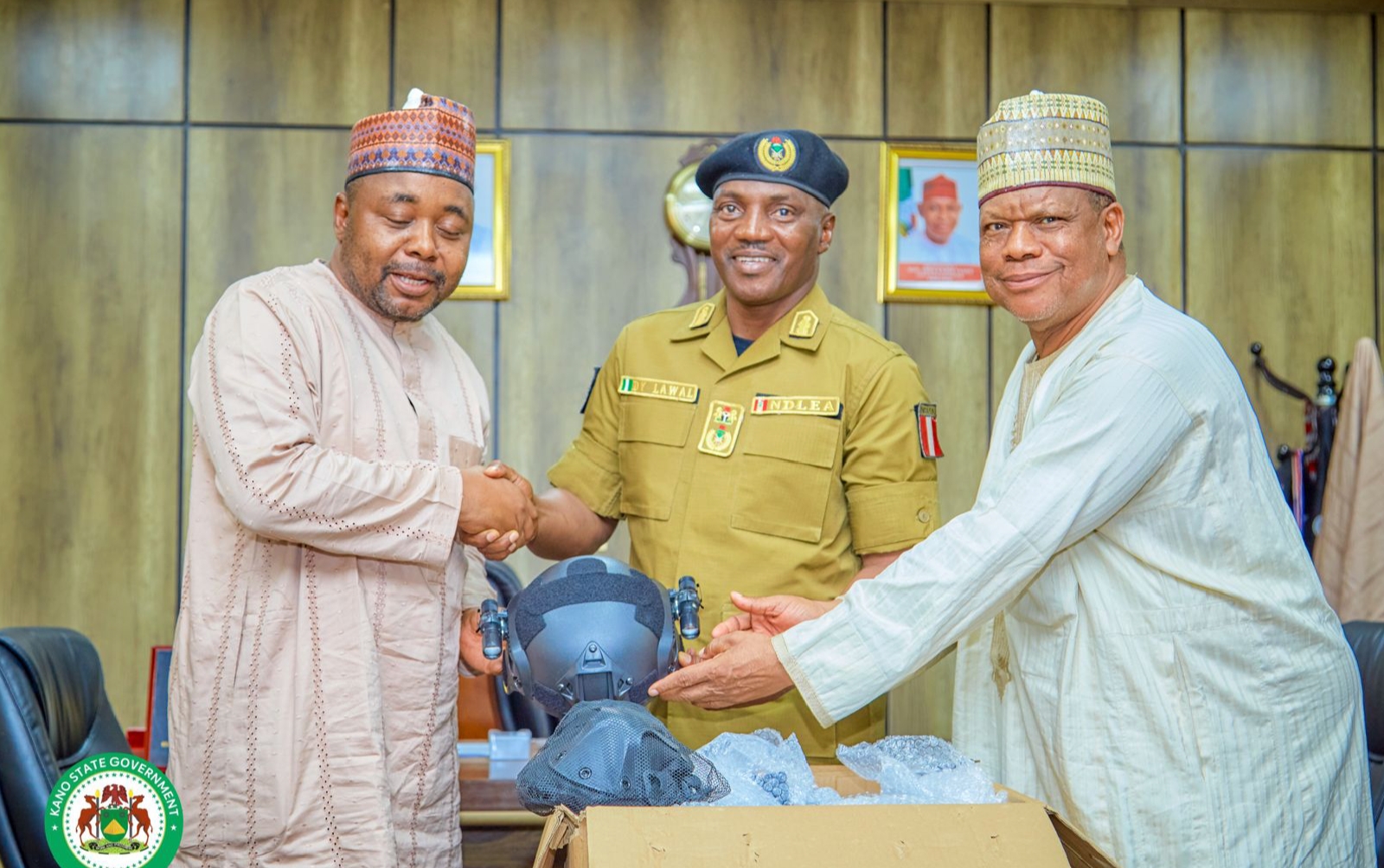
The Kano State Government has donated operational equipment to the National Drug Law Enforcement Agency (NDLEA), Kano Strategic Command, to strengthen efforts to combat drug abuse and illicit drug trafficking in the state.
KANO FOCUS reports that the items were presented on Thursday, October 22, 2026, by the Chairman of the Kano State Multi-Agency Task Force on Drug Abuse and Illicit Trafficking, Barrister Muhuyi Magaji Rimin Gado, on behalf of Governor Abba Kabir Yusuf.
In a statement issued by Lamara Garba, Secretary of the Media and Publicity Committee of the task force, Magaji said the donation demonstrated the state government’s commitment to tackling drug-related offences, which he described as a major contributor to social vices.
He expressed concern over the growing scale of substance abuse, saying the challenge required coordinated efforts by government institutions, security agencies and other stakeholders.
Magaji said the Yusuf administration was committed to providing the necessary support to agencies responsible for combating drug abuse and illicit trafficking.
He stressed that effective collaboration among relevant institutions was essential to curbing the menace and protecting young people from the dangers of substance abuse.
Receiving the equipment, the Kano Strategic Commander of the NDLEA, CN Dahiru Yahaya Lawan, thanked the governor and the state government for the intervention, describing it as timely.
Lawan said the items would enhance the command’s operational capacity and strengthen its efforts to combat drug abuse and illicit trafficking.
He assured the state government that the equipment would be used judiciously for its intended purpose.
The NDLEA commander also called on residents, community leaders and other stakeholders to support law enforcement agencies, stressing that the fight against drug abuse was a collective responsibility.
The donation reflects the state government’s efforts to strengthen inter-agency cooperation and provide operational support for the campaign against drug-related offences, with the aim of promoting a safer, drug-free society.
Nasiru Yusuf Ibrahim
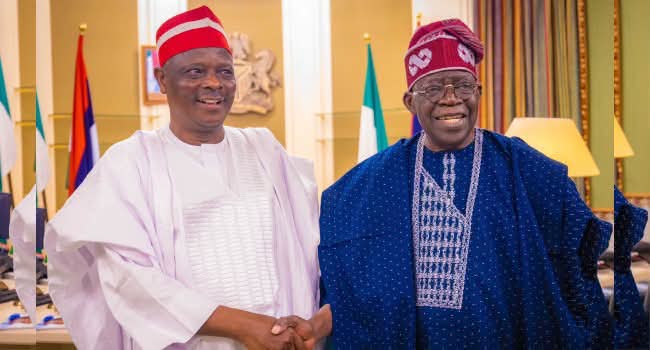
President Bola Tinubu has congratulated former Kano State governor, Senator Rabiu Musa Kwankwaso, on his 70th birthday, saying their political differences will not diminish his affection for the former minister.
KANO FOCUS reports that Tinubu described Kwankwaso as a friend and influential progressive politician, acknowledging his contributions to Kano State and Nigeria over decades of public service.
The President conveyed his message in a statement issued by the Special Adviser to the President on information and strategy, Bayo Onanuga on Wednesday, to mark Kwankwaso’s 70th birthday.
Tinubu recalled that his relationship with Kwankwaso dated back to 1992, when both served in the National Assembly, with Kwankwaso in the House of Representatives and Tinubu in the Senate.
He also recalled that they became governors of their respective states in 1999 as members of the group popularly known as the Class of ’99 Governors.
According to the President, the group played important roles in laying the foundation for Nigeria’s current democratic system.
Tinubu noted that their political paths diverged over the years before they came together in 2013 to form the All Progressives Congress (APC).
“Since then, history and service have kept us intertwined,” he said.
The President acknowledged Kwankwaso’s record as a two-term governor of Kano State, former Minister of Defence, former senator representing Kano Central Senatorial District and former presidential candidate.
He also referred to Kwankwaso’s current role as a presidential running mate, noting that the former governor remained an influential figure in the country’s political landscape.
Tinubu said their membership of different political parties and participation on competing platforms in the January 2027 election would not affect their longstanding relationship.
“As the former governor marks this milestone, I wish him good health, personal fulfilment, and many more years of engagement in the nation’s democratic process,” the President said.
The congratulatory message highlighted the longstanding political association between the two leaders, which has continued despite differences in their political affiliations.

Kano commissioner Makoda appointed APC campaign DG for Kano north

Kano govt donates equipment to NDLEA to boost war against drug abuse

Malam Ibrahim Mu’azzam: A Teacher of Teachers and a Lifelong Inspiration

Tinubu celebrates Kwankwaso at 70, says political differences won’t affect relationship

Peter Obi celebrates Kwankwaso at 70, hails partnership in service to Nigeria

Kano leads again as NECO successes rise to 74,413
Kano tops states in 2026 NECO results, Governor Yusuf hails students

ACF begins Dangote Refinery IPO sensitisation campaign in Kano

Kano Govt Suspends Durbar Processions, Horse Riding in Metropolis

